REVIEW · ROME
Private Tour of Caracalla Baths and Circus Maximus
Book on Viator →Operated by TOURIKS · Bookable on Viator
Roman baths weren’t quiet back then. This private tour turns Caracalla into a real 3rd-century routine, then places you at Circus Maximus where the Ludi crowds once roared.
I love how an archaeologist guide explains what you’re seeing in a way that feels practical, like you’re learning how Romans lived. I also like the sterilized headsets, which help you catch every detail while you’re walking through big rooms and open ruins.
One thing to consider: there’s a moderate amount of walking and you’ll be on uneven ancient surfaces, so you’ll want comfortable shoes.
In This Review
- Key things you’ll notice
- Caracalla and Circus Maximus: two sites, one Roman day-in-the-life
- The private format and why headsets matter here
- Stop 1: Terme di Caracalla and the “typical day” walking route
- What to expect in the rooms
- Roman engineering at the heart of Caracalla: underfloor heating and temperature control
- Mosaics, geometry, and the details most people miss
- Stop 2: Circus Maximus in 30 minutes—Ludi, crowds, and mythic origins
- What you might wish you had more time for
- When the guide adapts your pace, it changes the whole experience
- Price and value: what $311.87 per person is really paying for
- Getting there and staying comfortable: the practical stuff that matters
- Who this tour suits best (and who might want a different plan)
- Should you book this Private Tour of Caracalla Baths and Circus Maximus?
- FAQ
- How long is the private tour?
- Is the entrance ticket included for Caracalla Baths?
- Do I need a ticket for Circus Maximus during the tour?
- Where does the tour start and end?
- Is hotel pickup included?
- What happens if the weather is bad or I cancel?
Key things you’ll notice
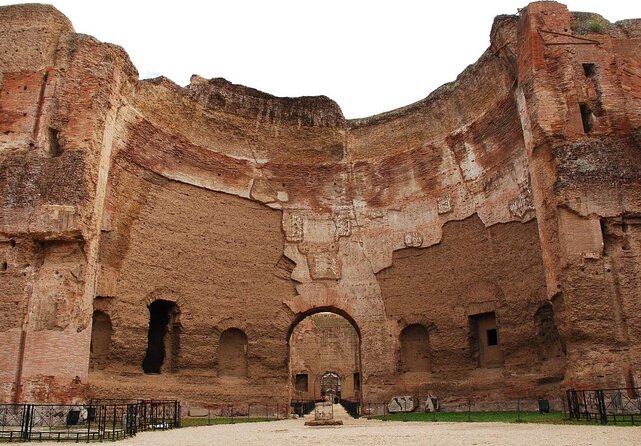
- Caracalla as a full day at the baths: you’ll go step-by-step through how Romans used the complex
- Roman engineering that affects your senses: how they handled underfloor heating and temperature control
- Mosaics with geometric patterns: you’ll see details beyond the main walls
- Circus Maximus with Ludi focus: it’s about the games, the crowds, and the mythic origins
- Private group + headset audio: just your party, and you won’t strain to hear
Caracalla and Circus Maximus: two sites, one Roman day-in-the-life
If you’ve visited Rome and felt like a lot of ruins are just… ruins, this tour is a useful antidote. You don’t just look at stone. You follow a guided flow that turns Caracalla Baths into a typical day in the 3rd century AD, then carries that energy over to Circus Maximus where public spectacle ruled.
What makes the pair work is the contrast. Caracalla is personal and body-focused—wellness, services, and engineered comfort. Circus Maximus is loud and civic—games, public drama, and the scale of mass entertainment.
The best part is how the guide connects the physical space to daily habits, so you’re not stuck reading captions. You’re getting the “how would this work?” feeling, especially with the heating system topic.
You can also read our reviews of more private tours in Rome



The private format and why headsets matter here
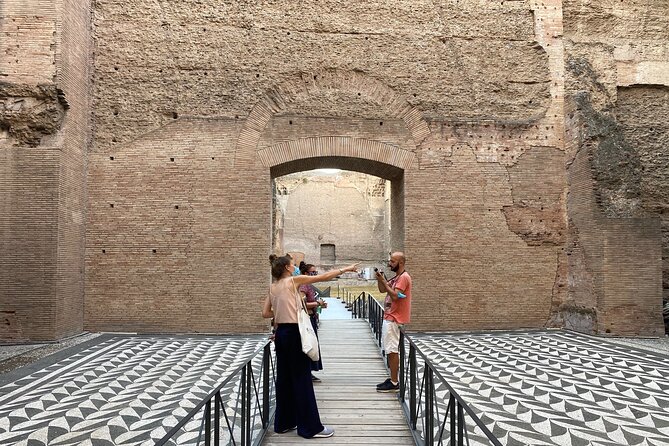
This is a private tour, so it’s only your group. That matters at Caracalla because the layout can feel big and directional, and you benefit from not having to match your pace to strangers.
You also get sterilized headsets. In practical terms, that means you can keep your attention on the mosaics, wall lines, and room transitions instead of turning your head every time the guide talks. It’s especially helpful outdoors at Circus Maximus, where sound can carry or disappear depending on the moment.
A detail I appreciate: the tour includes full on-site assistance. You’ll have support throughout, which helps when you’re moving from one major ruin area to another and you want the experience to feel smooth rather than chaotic.
Stop 1: Terme di Caracalla and the “typical day” walking route
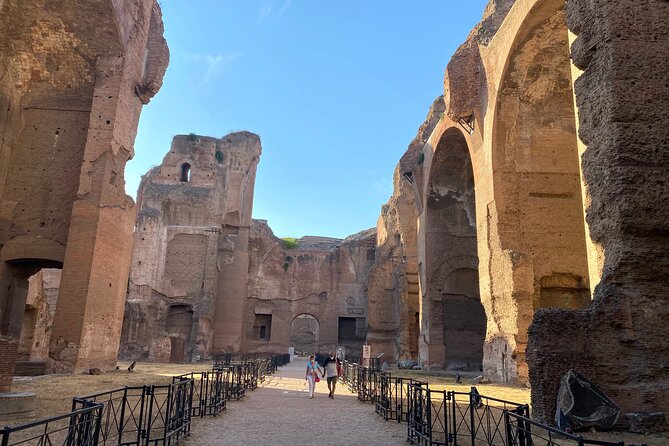
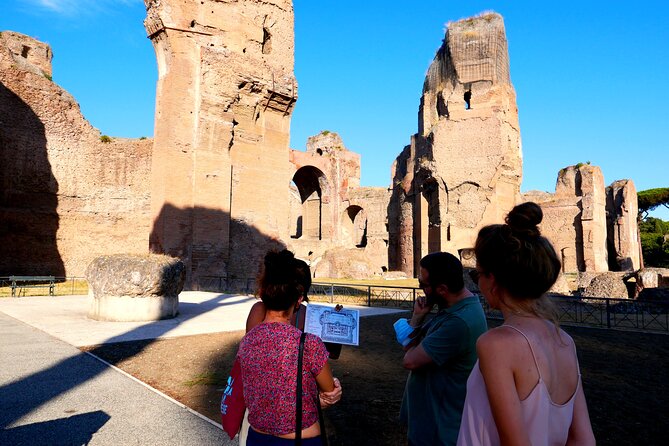
Terme di Caracalla is one of Rome’s best-preserved bath complexes, and your guide uses that to your advantage. You’ll start in a setting with gigantic walls and monumental rooms, then move through it as if you were following the logic of a Roman bath day.
The key idea isn’t to see everything at once. It’s to see the sequence. You’ll go through the exact steps of a typical day at the baths in the 3rd century AD, which is a huge upgrade from a rushed highlights walk.
You’ll also notice how broad the baths were. Your route includes a bizarre range of services offered in this ancient-days-SPA for the wellness of body and mind. That’s a useful reminder: Romans weren’t just washing. They socialized, relaxed, and used the complex as a major wellness and service hub.
What to expect in the rooms
Plan on getting close to:
- Gigantic walls and large architectural spaces
- Monumental rooms where the scale hits you
- Mosaics with geometric motifs across the site
A small drawback: because the experience is focused and time-boxed, you won’t have unlimited “wandering time” at every corner. You’ll be guided through what matters most for understanding the baths, and then you can continue exploring on your own at the end.
Roman engineering at the heart of Caracalla: underfloor heating and temperature control
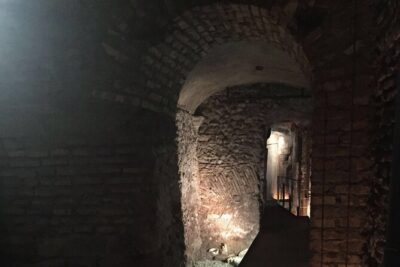
Caracalla isn’t just impressive because it’s large. It’s impressive because it shows serious engineering thinking. Your guide walks you through how the Romans perfected underfloor heating and how they handled maintaining the desired temperature in each room.
This is where the tour becomes more than scenery. Roman baths can feel like a fun theme, but the heating piece adds real substance. You start to see why baths were a technological flex, not just a leisurely pastime.
The underfloor heating was labor-intensive, and that detail is important. It helps you understand why the baths represented wealth and organization. Keeping spaces comfortable takes planning, effort, and ongoing management—meaning the bath day wasn’t casual in the engineering sense.
If you like architecture or you’ve ever wondered how older buildings stayed comfortable, you’ll get a satisfying answer here. The guide’s job is to translate the engineering into something you can visualize while you’re standing in the ruins.






Mosaics, geometry, and the details most people miss
The tour doesn’t treat Caracalla like a one-note stop. You’ll get close looks at decorative pieces, including geometric motifs on mosaics across the complex.
Why this matters for you: mosaics are often the fastest way to turn a ruin from “big wall” into “someone cared about this place.” When you connect those patterns to a bath day routine, the site stops feeling random.
Even better, the guide’s approach keeps the details tied to function. You’re not just being shown pretty art—you’re learning how different rooms and services fit together, and where decoration fits into that daily experience.
One practical note: mosaics often sit where you need to pause, look up, and then adjust your footing to get a clear view. Bring the patience for short stops, and you’ll get more out of the visit.
Stop 2: Circus Maximus in 30 minutes—Ludi, crowds, and mythic origins
Then you move to Circus Maximus, and the vibe shifts immediately. The time is shorter—about 30 minutes—but the guide makes the most of it by focusing on what the place did.
You’ll stand where one of the largest sports arenas in history once operated, and you’ll learn about the Roman “Ludi,” the spectacular public celebrations that could last for several days. That multi-day element helps you picture Circus Maximus as a sustained event, not a one-off show.
From there, your imagination does the heavy lifting—chariot races, gladiator fights, and the clamor of the public—while you’re actually on the ground where it happened. This kind of guiding is more effective than just telling you “huge arena, big crowd.” You’re meant to experience the scale and energy.
You’ll also get a mythic angle. The guide walks you through the circus’s foundations in early myths and Gods, taking you back to a quasi-legendary era before Rome itself. That adds a different flavor to the stop, especially if you want more than just sports history.
What you might wish you had more time for
Because Circus Maximus is brief on purpose, you won’t get a long, slow, “stay forever” exploration. Instead, you’ll get a focused orientation—exactly where the imagination should land—then you’re free to keep going on your own after the tour ends.
When the guide adapts your pace, it changes the whole experience
One of the best signs of a strong tour operator is how they handle real-life needs. In this case, the experience is built around a professional guide who can adapt when walking is a concern for someone in your group.
That’s a big deal in ruins. Caracalla involves moderate walking, and the site can demand attention to footing. If your party includes someone who moves slower, you’ll want to ask the guide to adjust the route and pace, and this tour format is designed to be cooperative about that.
For you, that means the tour is less likely to feel rigid. You’re there for understanding and comfort as much as sightseeing.
Price and value: what $311.87 per person is really paying for
At $311.87 per person, this isn’t a budget stop. But for a private 1 hour 30 minute experience that includes a professional archaeologist guide, headsets, and entrance fees to Caracalla Baths, the value math is pretty straightforward: you’re paying for guided interpretation and convenience, not just access.
Here’s what you’re getting that you can’t easily replicate yourself:
- A structured route that turns Caracalla into a typical bath-day sequence
- Engineering-focused explanation on underfloor heating and temperature control
- Mosaics and geometric details explained in context
- Circus Maximus guided through Ludi and mythic origins
And you’re not paying for Circus Maximus entry since it’s ticket free during the tour.
The tradeoff: you’re paying for depth in a short window. So if your ideal Rome day is long and slow, you may prefer separate time for each site. If you want the “best guided hit” without spending half your day figuring things out, this price can make sense.
Getting there and staying comfortable: the practical stuff that matters
Your meeting point is Viale Aventino, 3, 00153 Roma RM, Italy, and the tour ends inside the Baths of Caracalla at Viale delle Terme di Caracalla, 00153 Roma RM, Italy. No hotel pickup is included, so plan on getting yourself to the start point.
The good news: it’s near public transportation, which keeps the logistics from becoming a second trip. The walking is described as moderate, so you should wear comfortable shoes—especially since you’ll be moving through ancient surfaces that aren’t designed for flip-flops and good moods.
Weather matters too. The experience requires good weather, and that’s worth respecting in Rome. If conditions are off, you don’t want to fight the day.
Also, confirmation is received at booking, and service animals are allowed. If you’re under 18, you’ll need valid document or proof of ID, which is normal but still important.
Who this tour suits best (and who might want a different plan)
This tour fits you best if:
- You want guided context at both Caracalla and Circus Maximus
- You like Roman engineering topics, especially heating and temperature control
- You’re tired of ruins that feel like a scavenger hunt
- You prefer a private experience with headset audio
You might look for something else if:
- You want a long, self-paced visit with lots of free roaming
- You’re not into explanations and would rather browse quietly
- You have very limited mobility and need a minimal-walking experience (the tour does involve moderate walking)
One smart way to decide: think about your Rome energy. If you want one guided “Roman life” session that you can build on afterward, this works well. If you want hours of independent exploring, consider mixing self-guided time at Caracalla with a shorter orientation elsewhere.
Should you book this Private Tour of Caracalla Baths and Circus Maximus?
I’d book it if you want your Rome time to feel guided but not scripted. The standout strength is the combination of a typical 3rd-century bath day at Caracalla plus a focused, story-driven take on Circus Maximus and the Ludi.
Do it if you care about details like mosaic geometry and how Romans handled underfloor heating and room comfort. The headset setup and private format also make it easier to actually hear what matters while you’re walking.
Skip it only if you’re chasing a long, unstructured wander. This tour is designed to teach you quickly and clearly, then leave you to continue exploring at your own pace inside the Baths of Caracalla.
FAQ
How long is the private tour?
It’s approximately 1 hour 30 minutes total.
Is the entrance ticket included for Caracalla Baths?
Yes. Entrance fees to the Caracalla Baths are included, and you’ll also use sterilized headsets during the visit.
Do I need a ticket for Circus Maximus during the tour?
No. The Circus Maximus stop is listed as free for admission.
Where does the tour start and end?
It starts at Viale Aventino, 3, 00153 Roma RM, Italy and ends inside the Baths of Caracalla at Viale delle Terme di Caracalla, 00153 Roma RM, Italy.
Is hotel pickup included?
No. Hotel pickup and drop-off are not included.
What happens if the weather is bad or I cancel?
The experience requires good weather. If it’s canceled due to poor weather, you’ll be offered a different date or a full refund. You can cancel for a full refund up to 24 hours in advance.