REVIEW · ROME
Private Rome Tour See Works by Bernini, Caravaggio & Michelangelo
Book on Viator →Operated by Real Barcelona Tours · Bookable on Viator
Rome in Baroque mode is a feast for your eyes. This private walking tour strings together some of the most talked-about sights tied to Bernini, Caravaggio, and Michelangelo, with a finish that lands you in the middle of the action—without the big crowd chaos.
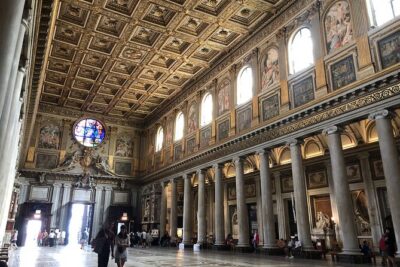
I especially like the way it’s built around church interiors, not just outdoor views. And I like that you get a guide who can connect each artwork to the place you’re standing in, including the Bernini angel, Michelangelo’s Christ the Redeemer, and Caravaggio in the Contarelli Chapel.
One thing to consider: the experience depends on your guide’s English clarity, and churches can close unexpectedly. If that happens, the plan may pivot on the spot, which can be great—or frustrating if you came only for one exact room.
In This Review
- Key points before you go
- Why this Baroque route feels efficient (and worth the private price)
- Piazza di Spagna start: the walk begins where your eyes already know where to look
- Sant’Andrea delle Fratte: Bernini’s angel sculpture in the first real stop
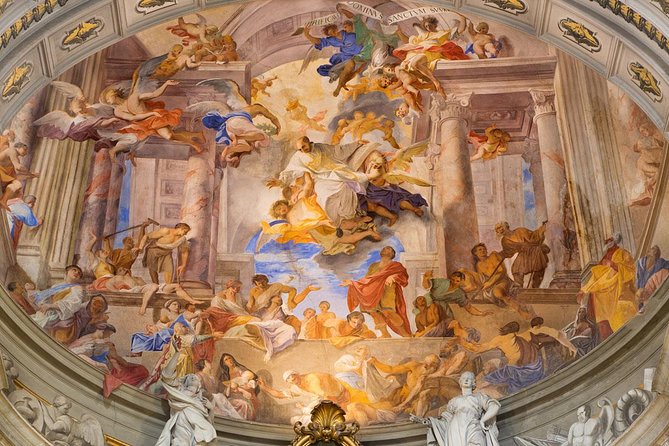
- Chiesa di Sant’Ignazio and Piazza Sant’Ignazio: Jesuit baroque drama nearby
- Santa Maria Sopra Minerva: Michelangelo’s Christ plus a Gothic curve in Rome
- San Luigi dei Francesi: Caravaggio in the Contarelli Chapel
- Sant’Agostino in Campo Marzio: Caravaggio and Raphael together
- Piazza Navona finale: where stories and fountains do their job
- Timing, pace, and what happens when a church is shut
- English clarity and art explanations: why your guide matters
- Dress code, shoes, and what to bring for a smooth church crawl
- Meeting point and getting there without stress
- How much is this private tour worth at $341.78?
- Who should book this (and who might skip it)
- Should you book this Bernini–Caravaggio–Michelangelo private walk?
- FAQ
- How long is the private Rome tour?
- How much does it cost per person?
- Where do we meet and where does the tour end?
- Is this tour private?
- What stops are included during the 3-hour walk?
- Are entrance tickets included?
- What is the dress code for churches?
- Can I get a full refund if I change my plans?
Key points before you go
- A tight 3-hour route that hits major names—so you get big payoff without spending your whole day in transit
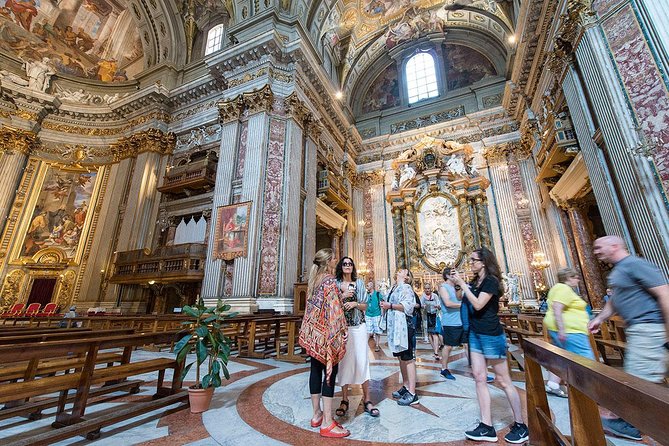
- Bernini, Michelangelo, Caravaggio, and Raphael show up across different churches, not just one museum stop
- Church entry is listed as free for each stop, so you’re not burning money on tickets mid-walk
- Private means personalized pacing: it’s your group only, and you can ask questions as you go
- Dress code is strict: cover knees and shoulders, or entry can be refused
- Expect some walking and uneven surfaces, so pack comfort over style
Why this Baroque route feels efficient (and worth the private price)
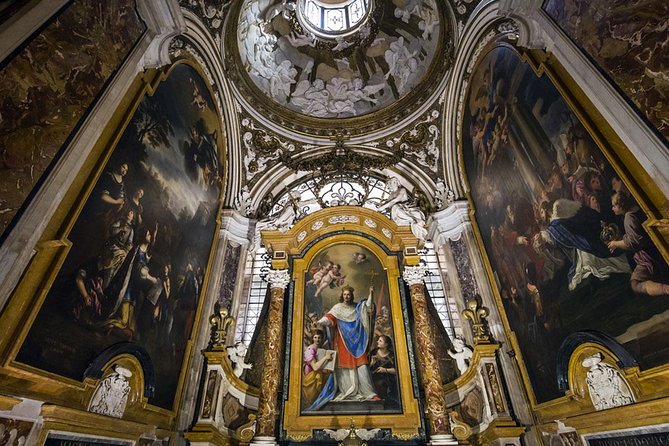
This tour is designed for people who want Rome’s high-drama art—Baroque sculpture and religious painting—but don’t want to spend the day guessing where to go next. In about three hours, you move from one landmark church to another and see works tied to four heavyweight artists.
The value question here is simple: $341.78 per person is not a budget move. But you’re buying three things: a professional guide, a private format, and a route that clusters famous works close enough to feel practical. If you like your art talk in real time—standing in front of the exact sculpture or chapel—this format usually feels better than doing the same sights on your own with a generic guidebook.
You can also read our reviews of more private tours in Rome

Piazza di Spagna start: the walk begins where your eyes already know where to look
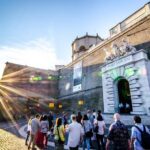
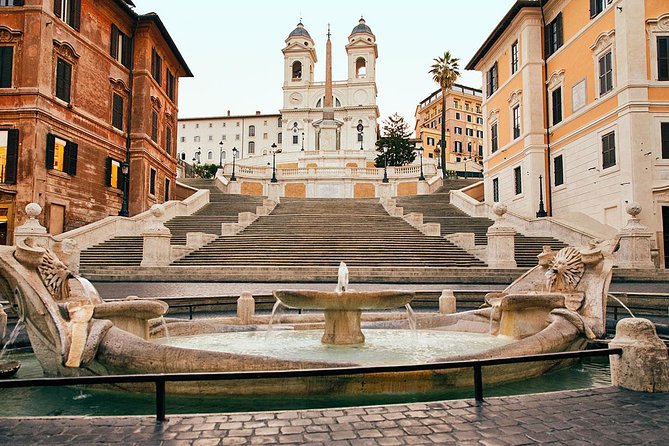
You meet at Piazza di Spagna, by the Spanish Steps, specifically in front of the Spanish Embassy of the Vatican area. It’s a smart start point because you’re already surrounded by landmark energy, and it’s easy to orient quickly before the tour gets into the quieter church interiors.
From here, you start moving into the baroque scene in a way that feels like it has momentum. The opening is also a nice reminder that Baroque Rome is not just masterpieces—it’s streets, sightlines, and the way you transition from one artistic zone to the next.
Sant’Andrea delle Fratte: Bernini’s angel sculpture in the first real stop
This is the kind of start that sets the tone. The tour heads to Sant’Andrea delle Fratte, an 1826 church, and you actually go inside to see Bernini’s angel sculpture.
Why it’s a strong early stop: you get a true “wow” moment early, before you’ve tired out your legs. And the setting matters. Standing in the church for the sculpture changes how you read it—details that can feel abstract from photos turn into something more immediate when you’re there.
Tip for the visit: keep an eye on what your guide points out first. With works like this, the quickest way to enjoy it is to get your bearings on the symbolism and placement, then let your eye follow.
Chiesa di Sant’Ignazio and Piazza Sant’Ignazio: Jesuit baroque drama nearby
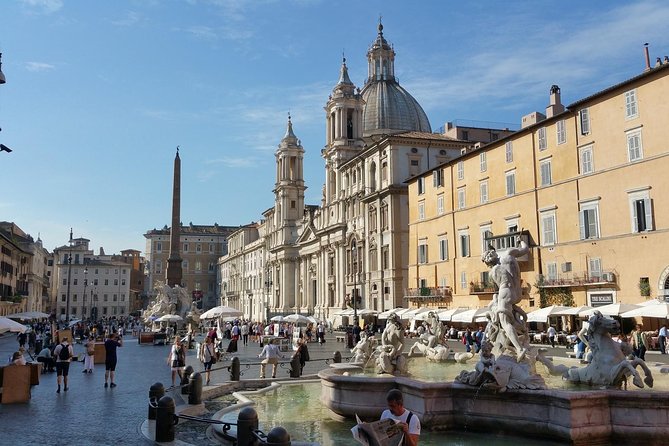
Next comes Chiesa di Sant’Ignazio di Loyola and nearby Piazza Sant’Ignazio. These are short visits on paper, but they matter because they keep the theme of Baroque Rome as a lived environment—art meant to move you, not just impress you.
You’ll be walking only a few blocks between the church and the square, so it doesn’t feel like the “church hopping” trap where you spend half the time relocating. It’s a clean rhythm: see the interior, then step out to reset and absorb what you learned.
One practical note: on some days, churches can be closed unexpectedly. When that happens, the guide may adjust the walk and bring you to other relevant stops nearby, so don’t assume you’ll only ever see the plan exactly as written.
Santa Maria Sopra Minerva: Michelangelo’s Christ plus a Gothic curve in Rome
Then you reach Santa Maria Sopra Minerva, where you can see one of the few examples of Gothic architecture in Rome—a contrast that helps the tour feel more than just a checklist of famous names.
This stop is also where Michelangelo’s Christ the Redeemer comes in. The point isn’t only the author’s name. It’s the idea of how Rome layers styles and eras in one compact area, and how that influences what the artwork feels like in context.
If you tend to rush in churches, slow down just for this one. A contrast like Gothic in Rome plus a major sculptor’s work is the sort of combo that sticks in your memory longer than “another Baroque church.”
San Luigi dei Francesi: Caravaggio in the Contarelli Chapel
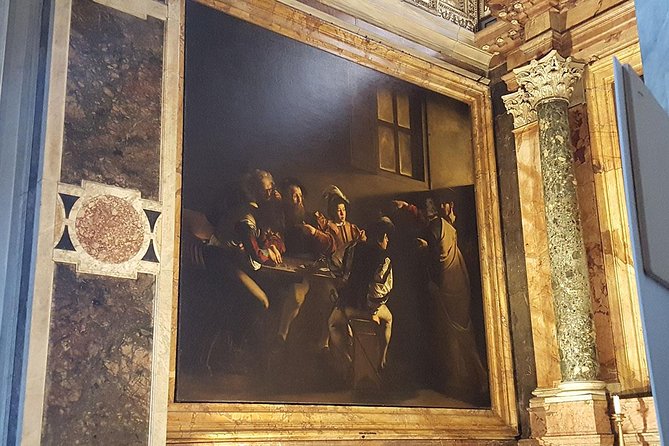
After the Minerva stop, the tour heads to San Luigi dei Francesi, and this is where you’ll get Caravaggio’s masterpieces—specifically in the Contarelli Chapel.
This is the stop many people quietly hope for, because Caravaggio’s religious paintings tend to feel intense and human at the same time. The chapel setting also helps: you’re not just viewing an image in a frame; you’re looking at it as part of a space designed to hold attention.
Practical advice: if your guide’s English is clear, this is the moment when the explanation can really pay off. The better your guide’s art commentary is, the more you’ll notice what makes Caravaggio’s approach distinctive inside that chapel.
Sant’Agostino in Campo Marzio: Caravaggio and Raphael together
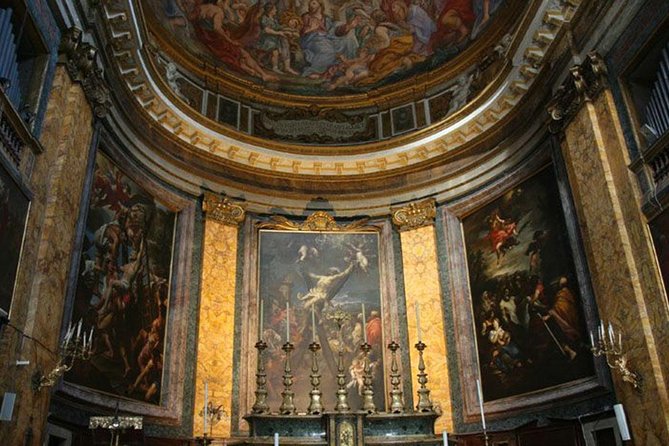
Next you’ll arrive at Sant’Agostino in Campo Marzio. This church is described as a XIV-century site where you can see works by Caravaggio and Raphael.
I like this stop because it broadens the story beyond a single “superstar artist moment.” You’re still in the same overall Baroque/Renaissance conversation, but the contrast helps you understand how different painters aimed for emotional impact in different ways.
Don’t treat this as a bonus stop. Give it the same mental attention as the earlier ones. If you’re going to pay for a private guide, you’ll want them to explain how these works relate—why they show up here, and what they’re doing within the space.
Piazza Navona finale: where stories and fountains do their job
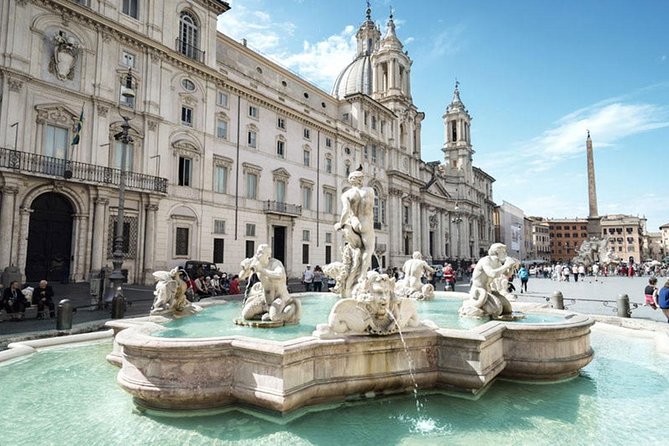
The walk ends at Piazza Navona, one of the most famous squares in Rome, with churches and fountains around you. Since you’re finishing here, it’s a good place to slow down for photos and for one more round of guide insights.
You’ll also get the kind of finish where your guide shares anecdotes and lesser-known details that you wouldn’t easily spot on your own. That’s especially useful at Navona because it’s a visually loud setting—without context, you can end up with lots of photos and not much memory.
Timing, pace, and what happens when a church is shut
The tour is about 3 hours total, with short visits at each stop. That means your pace stays brisk enough to keep energy up, but not so rushed that you feel trapped.
One real-world consideration: churches can close unexpectedly. On the best-guided days, your guide pivots to other nearby locations so the overall goal still lands. On weaker-guide days, you may feel like the replacement plan isn’t explained well, which can make the experience feel flat.
So here’s my practical takeaway: if you care most about art explanations—not just seeing the spaces—arrive on time, dress correctly, and be ready to ask questions. That’s how you steer the experience back toward meaning if something changes.
English clarity and art explanations: why your guide matters
The guide quality is the biggest swing factor in how satisfying this tour will feel.
Some guides deliver clear, patient explanations that connect the artwork to the church setting and the broader artistic time period. With guides like Anna or Chiara, the tour can feel like a real conversation where you’re not afraid to ask why a detail matters.
But there’s also a risk: if your guide’s English is hard to follow, the explanations can become basic—more like pointing out what you already see rather than giving the “art history in plain language” effect you paid for. You can’t control who you get, but you can control how you prepare.
If you’re worried about language fit, come with 2 or 3 questions in mind—such as what to look for first in Caravaggio at the Contarelli Chapel, or how Bernini’s angel is meant to read in that church setting. A strong guide can take even simple questions and turn them into a meaningful answer.
Dress code, shoes, and what to bring for a smooth church crawl
This tour has a dress code for places of worship. That means no shorts and no sleeveless tops, and your knees and shoulders must be covered for both men and women. If you don’t meet the rules, entry can be refused—so don’t gamble with a “close enough” outfit.
Also plan for comfort. You’ll be doing a moderate amount of walking, and churches can have surfaces that aren’t ideal for stiff shoes. Bring comfortable shoes and a refillable water bottle.
Weather is handled in the sense that the tour operates in all weather conditions. Rome’s weather can swing quickly, so dress for that reality.
Meeting point and getting there without stress
You start at Piazza di Spagna and finish at Piazza Navona. The good news: both areas are well connected to public transportation, so you’re not locked into a taxi plan.
Arrive a bit early. The tour instructions are clear: be on time, or you risk losing entry and missing the tour. Since churches may be involved, arriving late can turn into more than just inconvenience.
How much is this private tour worth at $341.78?
At $341.78 per person, this is pricey compared with group tours. But it’s not just paying for movement—it’s paying for a guide who can connect the dots across Bernini, Michelangelo, Caravaggio, and Raphael in real locations.
Here’s how I’d judge value for your own trip:
- If you want a guided art experience (not just a photo walk), private format often pays off fast.
- If you enjoy asking questions and getting explanations that are tailored to your interest, the per-person cost starts to make sense.
- If your top priority is minimizing cost, you might prefer a cheaper group option or DIY route with a printed guide. But you’ll miss some of the “what you’re seeing and why it matters” talk.
Also note: group discounts are listed, which can help if you’re booking with others. And with average booking around 68 days in advance, it’s worth reserving early if your dates are fixed.
Who should book this (and who might skip it)
This works best if you:
- care about seeing major works connected to major names like Bernini, Michelangelo, Caravaggio, and Raphael
- want a private experience where you can ask questions
- can handle a moderate walking day and the church dress code
It may not be ideal if you:
- have limited mobility, since there’s walking involved and it’s not listed as suitable for limited mobility
- dislike art explanations and mainly want views and photos (because you’re paying for the guide part)
- are sensitive to language barriers, since the quality of English clarity can impact how much you get out of the art commentary
Should you book this Bernini–Caravaggio–Michelangelo private walk?
If you’re spending a limited amount of time in Rome and you want the art hits without scrambling all over the city, I’d say yes—as long as you’re okay with church entry rules and you value a guided explanation.
I’d especially recommend it if your ideal day includes standing in front of real artworks and getting a guide’s take, not just ticking off landmarks. Pick this tour when you want the story to come with the pictures.
If you’re unsure about guide language, come prepared with a few focused questions. A good guide can turn that into a great tour even on days when something changes due to church closures.
FAQ
How long is the private Rome tour?
The tour lasts about 3 hours.
How much does it cost per person?
The price is $341.78 per person.
Where do we meet and where does the tour end?
You meet at Piazza di Spagna (00187 Roma RM) and the tour ends at Piazza Navona (00186 Roma RM).
Is this tour private?
Yes. It’s listed as a private tour/activity, and only your group will participate.
What stops are included during the 3-hour walk?
You’ll visit churches and nearby squares including Sant’Andrea delle Fratte, Sant’Ignazio di Loyola, Santa Maria Sopra Minerva, San Luigi dei Francesi, Sant’Agostino, and you’ll finish at Piazza Navona, with Piazza di Spagna as the start.
Are entrance tickets included?
Each stop is listed with admission ticket free, and the tour includes the professional guide and the private format. Food and drinks are not included.
What is the dress code for churches?
You must cover your knees and shoulders. No shorts or sleeveless tops are allowed for both men and women, and you may be refused entry if you don’t follow the dress requirements.
Can I get a full refund if I change my plans?
You can cancel up to 3 days in advance for a full refund. If you cancel less than 3 full days before the start time, the amount paid won’t be refunded.
If you want, tell me your travel month and whether you’ll be going solo or with someone. I can suggest the best “arrival strategy” for this kind of church-heavy route.