REVIEW · ROME
PRIVATE Civita di Bagnoregio and Orvieto Wine Tasting -Ebike tour
Book on Viator →Operated by TopBike Rental and Tours · Bookable on Viator
Two cliff towns, one stress-free e-bike day. This private Civita di Bagnoregio and Orvieto e-bike tour is built to get you beyond Rome without the usual hassle, with round-trip train tickets included and a guide pacing the day from the first pedal to the final dinner. I especially like how the route mixes countryside sights along the Tiber Valley with two very different medieval stops—Civita’s bridge-to-a-plateau magic, then Orvieto’s cliffside streets and Duomo.
One heads-up: you’re covering about 54 km with roughly 800 m of climbing, so this is best if you’re comfortable riding for distance even with electric assist.
In This Review
- Key points worth knowing before you go
- Rome to the Tiber Valley: how the day really starts
- TopBike setup: Cannondale e-bikes, helmets, and practical gear
- The first real riding: Tiber Valley views and the Alviano reserve
- Civita di Bagnoregio: the bridge town that used to be abandoned
- The ride to Orvieto: why you should expect climbs, even on e-bikes
- Orvieto’s Duomo and lanes: what the included lift helps with
- The wine cellar dinner: the payoff meal in Orvieto
- Cycling safety and route style: what you can count on
- Price and value: is $373.54 worth it?
- Who this e-bike tour fits best
- Should you book this Civita di Bagnoregio and Orvieto e-bike tour?
- FAQ
- What languages are the guides?
- Is transportation between Rome and the towns included?
- How much cycling is involved?
- What food and wine are included?
- Is the Duomo di Orvieto entrance included?
- Can I cancel and get a full refund?
Key points worth knowing before you go
- Train included, bike on-board, less Rome logistics
- Cannondale e-bikes with anti-puncture tires plus a mandatory helmet
- Civita di Bagnoregio access is included, so you don’t waste time at entry points
- Orvieto’s lift ticket is included, which helps on a day with hills
- Lunch box and a wine-cellar dinner mean fewer meals to plan on your own
- Planned routes have limited traffic, but you should still be ready for a full-day ride
Rome to the Tiber Valley: how the day really starts
This tour starts at Via Labicana, 49 at 8:00 am. You begin with a quick check-in and bike setup at TopBike Rental & Tours, then you cycle to the train station. The big benefit here is that your ride day doesn’t begin with a long transport slog across the city.
Once you’re on the train, the guide handles the flow while you take in the countryside. After about an hour’s ride (by train) up toward northern Lazio, you switch from rail to pedal power on electric bikes. That rail-to-ride rhythm is great if you like fresh legs for the first real views instead of starting the day stuck in traffic or overthinking transfers.
You can also read our reviews of more food & drink experiences in Rome

TopBike setup: Cannondale e-bikes, helmets, and practical gear
You’ll ride Top Quality Cannondale e-bikes with anti-puncture tires, which matters more than it sounds. Flat tires on a long day kill momentum, and these bikes are designed to keep the ride smooth. Helmets are mandatory and provided free, so you can show up without bringing your own.
You also get a handlebar bag and water in a biodegradable bottle. That’s a small thing, but it helps you keep your hands free and your essentials where you can reach them. If you’re touring in November–March, the operator recommends gloves, and I’d listen—cool mornings make even e-bike days feel longer.
The first real riding: Tiber Valley views and the Alviano reserve
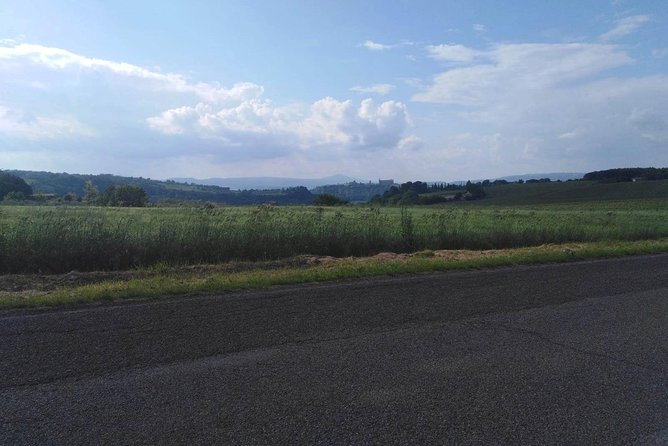
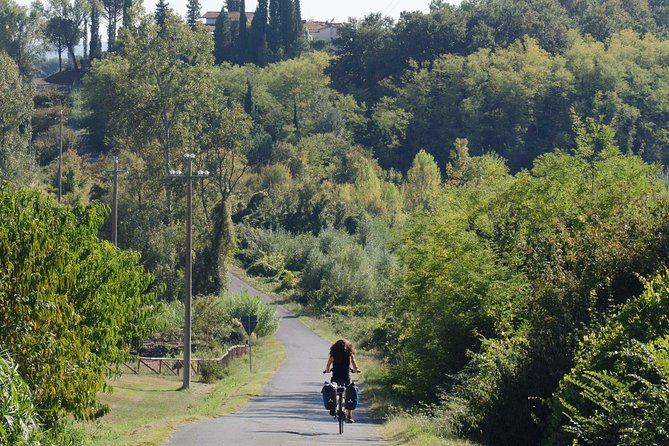
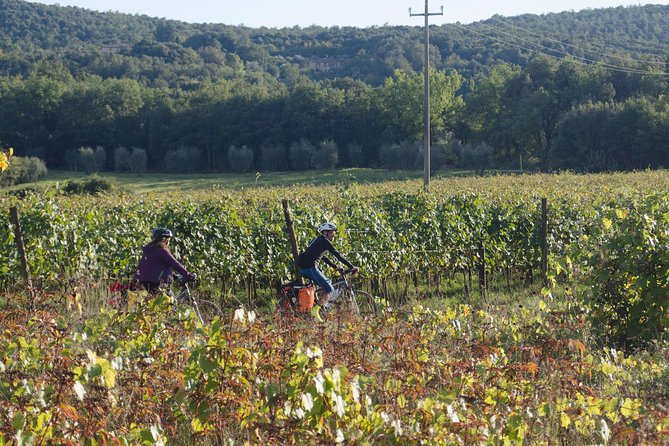
After the initial train stretch, the guide leads you through countryside around the Tiber Valley. The route includes the Oasis of Alviano, described as a nature reserve area. Even when the day is mostly about towns, having a protected nature stretch gives you a breather from stone walls and cobblestones.
The pace here is important: with electric assist, you can keep a steady effort without feeling like you’re saving your energy for one dramatic moment. I like this kind of structure because it reduces the mental load. You don’t have to decide when to rest; the guide builds in time for stops and transitions, including lunch later.
Civita di Bagnoregio: the bridge town that used to be abandoned
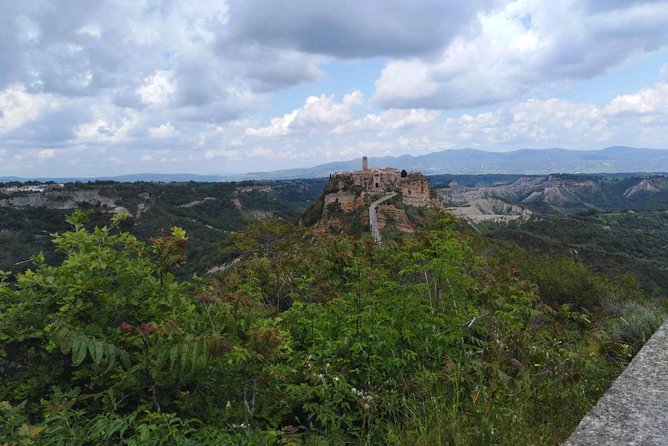
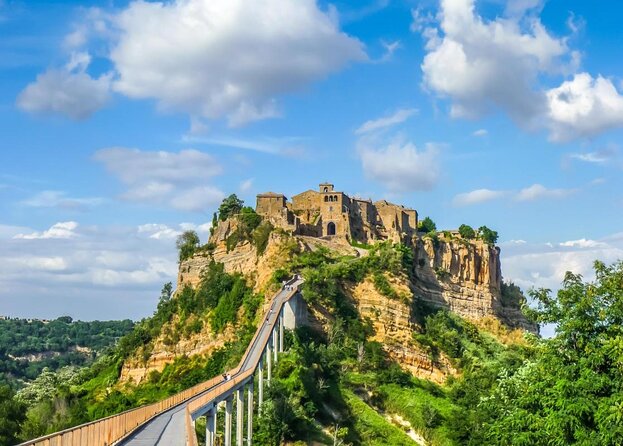
Then comes Civita di Bagnoregio, perched on a steep rock plateau and connected to the outside world by a narrow bridge. This is one of those places where the setting tells the story before you even read a sign. The town is famously associated with earthquakes that once led to it being abandoned, and today it’s “back” largely because artists recognized the spell of the place and helped restore it.
The practical payoff for you: you get the feeling of stepping into a medieval art studio-in-the-open, with restaurants and art galleries filling many of the restored spaces. Your visit window is about 30 minutes, and that time limit is actually good. Civita can feel surreal, and a shorter visit keeps it from dragging when your legs are already working for the day.
My suggestion: use your 30 minutes for viewpoints and the main pedestrian lanes, not for trying to do every door and gallery. If you slow down too much, you’ll end up rushing at the end and missing the views that made you want Civita in the first place.
The ride to Orvieto: why you should expect climbs, even on e-bikes
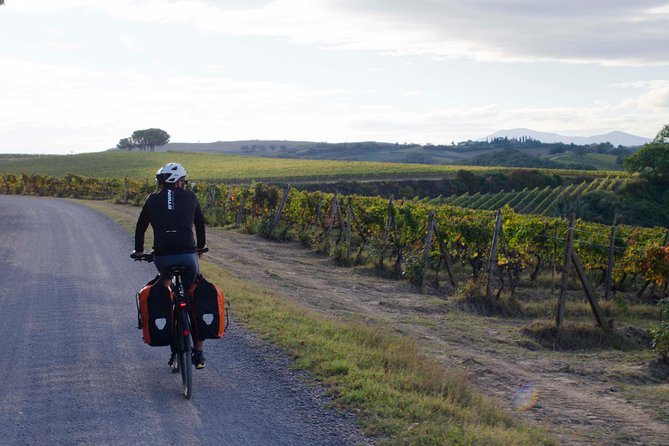
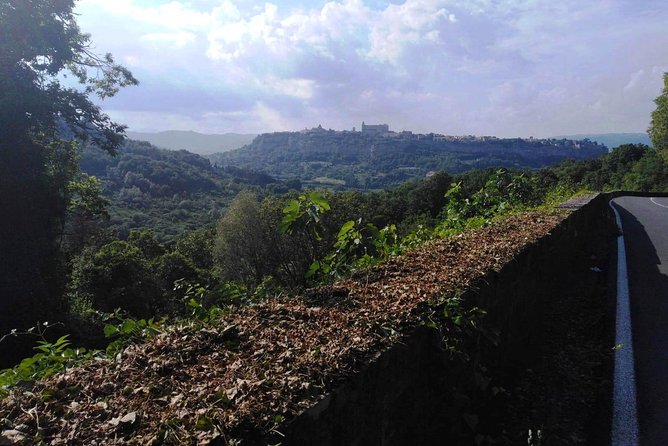
Next you pedal toward Orvieto, with a few upward climbs along the way. This is where the day shifts from “scenery wandering” to “active touring.” The good news is that the bikes are electric assist, so you’re not brute-forcing every hill.
The reality: this isn’t a gentle loop. The overall tour covers about 36 miles (54 km) with about 880 yards (800 m) of elevation, and it’s marked intermediate. Also, the route is about 95% asphalt, so you’ll mostly be on solid surfaces rather than rough trails. Still, if your idea of cycling is a short city spin, this day can surprise you.
I’d plan for steady effort and treat it like a long workout with rewards. If you’re even mildly worried about stamina, this is the moment to feel it—because Orvieto is built on cliffs, and the approach is part of the show.
You can also read our reviews of more cycling tours in Rome
Orvieto’s Duomo and lanes: what the included lift helps with
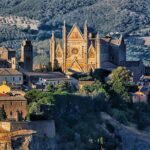
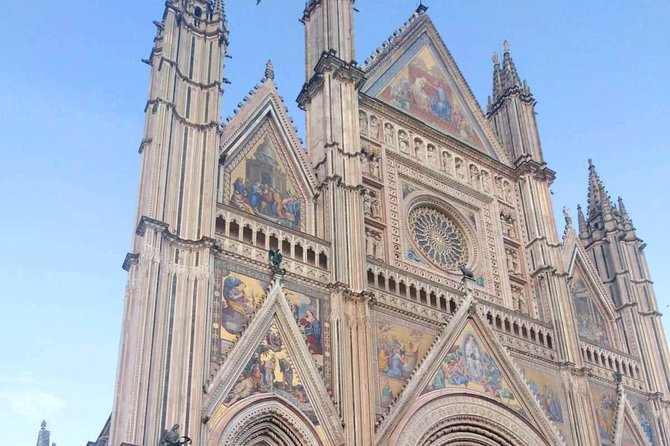
Once Orvieto comes into view, it’s clear why the town sits where it does. You’re looking at a medieval city laid out for drama: cliffs, tight streets, and a cathedral that looks like it belongs in another era.
The itinerary includes visiting the Duomo di Orvieto, a 14th-century cathedral with a Gothic façade considered a masterpiece of the Late Middle Ages. You’ll have about 1 hour for the stop. The important catch: Duomo entrance isn’t included, so if you want to go inside, you should budget time and money for that separately.
Also included is a ticket for the lift up in Orvieto. That’s a smart inclusion for this kind of cycling day. It helps you manage energy so you can enjoy the town rather than arrive to the Duomo already cooked. On a full-day route with climbs already in your legs, a lift option is the difference between sightseeing and suffering.
What I’d do during your Orvieto time: start with the cathedral area first, then walk the narrow cobblestoned lanes while your energy is still solid. Orvieto is the kind of place where wandering is the point, but only if you’re not too tired to notice small details like street angles and long sightlines.
The wine cellar dinner: the payoff meal in Orvieto
By the time you finish cycling and cathedral time, you’ll likely feel like food is a life plan. The tour addresses that with a hearty meal in one of Orvieto’s wine bars (and dinner in an Orvieto wine cellar is included).
The meal includes classic Italian comfort—cheese, salami, salad, pasta, and plenty of local wine. This part matters because it turns the day’s rhythm into something memorable. You’re not just ticking off two towns; you’re ending in the local tradition that Orvieto is built for: wine, conversation, and a meal that doesn’t pretend you need to “keep it light.”
I like that the wine portion is included with dinner. It removes decision fatigue at the end of a long day, which is when most people start making practical mistakes—like choosing the wrong meal spot while tired. Here, the schedule carries you.
Cycling safety and route style: what you can count on
The operator states that tours follow carefully planned routes with limited access to traffic, and some stretches have no traffic at all. That’s reassuring if you prefer calm riding rather than motorbike-and-car stress.
Still, this is a full day that begins in Rome. One key consideration from real-world ride experience: even with good planning, you can run into busier sections when transitioning between areas. Your best move is simple—stay alert, keep your line, and treat the city segments as training, not a sightseeing moment.
The helmet requirement helps too, and the e-bike assistance makes the ride more accessible than a pure bike day. Just don’t confuse electric assist with “easy.” The route’s distance and elevation are still the distance and elevation.
Price and value: is $373.54 worth it?
At $373.54 per person, this isn’t the cheapest way to see Civita and Orvieto. But the pricing makes more sense when you total what’s bundled.
You get:
- e-bike rental (Cannondale)
- professional guide
- lunch box
- dinner and wine in Orvieto
- train tickets (round-trip)
- entrance ticket for Civita di Bagnoregio
- Orvieto lift ticket
- helmet, handlebar bag, and water
When a tour includes train transport, bikes, and both meals, you’re paying for convenience and coordination, not just movement. That’s a strong value play if you want an efficient day without spending your energy researching schedules and ticket options.
Where the price can feel steep is if you don’t plan to buy multiple individual things anyway, or if you’d rather do Orvieto and Civita on your own with a slower timeline. But for an active, guided, “two towns in one day” style trip, this is priced in a way that lines up with what you actually avoid.
Who this e-bike tour fits best
This trip fits best if you:
- like cycling and are comfortable riding for most of the day
- want a guided day that reduces planning stress
- enjoy towns with strong atmosphere: Civita’s clifftop art vibe and Orvieto’s cathedral-and-street feel
It’s less ideal if you want a mostly-flat, short ride. Even with electric assist, the stated 54 km and 800 m climbing are real. This is the kind of tour where you’ll feel happy after the day because you worked for it, not because you barely moved.
Should you book this Civita di Bagnoregio and Orvieto e-bike tour?
If you want the practical version of an epic day—train included, bikes organized, and dinner sorted—this is a strong choice. I’d book it if you’re excited by medieval cliff towns and you can handle a full cycling day even with e-assist.
I’d think twice only if you’re expecting a casual stroll-and-photos tour. The ride is the core of the experience, and the climbs plus distance are part of why Orvieto and Civita feel like rewards instead of just stops.
FAQ
What languages are the guides?
The tour is offered with a guide in English or Dutch. You choose your preferred option when booking.
Is transportation between Rome and the towns included?
Yes. Round-trip train tickets are included, and you cycle to the train station as part of the day.
How much cycling is involved?
You’ll cover about 54 km (36 miles) with approximately 800 m of elevation. It’s rated intermediate and uses an electric-assist bike.
What food and wine are included?
A lunch box is provided, and dinner and wine in Orvieto are included.
Is the Duomo di Orvieto entrance included?
No. The Duomo di Orvieto stop is included for exploration time, but cathedral entrance isn’t included.
Can I cancel and get a full refund?
Yes. You can cancel for a full refund up to 24 hours before the experience starts.