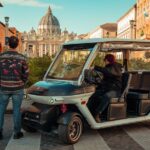
Wind in your hair, Rome at full volume. This private open-top Mercedes E-Class tour mixes classic sites with quick, scenic stops, all guided end-to-end by an English-speaking licensed guide. You’ll glide past monuments, then hop out for short looks at Roman power, views, and playful surprises.
I especially love how fast this feels. In about 2 hours, you cover big visual hits like Circo Massimo, the Orange Garden panorama, Janiculum’s fountain view, and Castel Sant’Angelo—without doing the heavy walking marathon.
The main drawback is comfort and consistency. The ride can feel tight in the back seats, and while wine/water/sweets are listed as included, one past experience had refreshments that didn’t match the expectation—so it’s smart to confirm what’s offered right at the start.
In This Review
- Quick hits
- Rolling Rome in an open-top Mercedes E-Class
- Price and value: what $252.33 buys you
- Pickup, timing, and comfort (so you’re not surprised)
- Circo Massimo: Rome’s arena of chariots and power
- Giardino degli Aranci: the Orange Garden panorama hit
- Janiculum Hill and Fontana dell’Acqua Paola: the fountain with a story
- Quartiere Coppede: fairy-tale castles in early 20th-century Rome
- Piazza della Repubblica and the Thermae of Diocletian
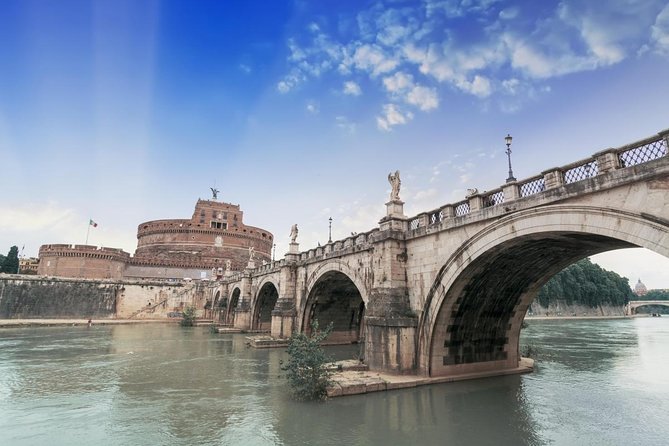
- St. Angelo Bridge and Castel Sant’Angelo: from mausoleum to fortress to pope residence
- Bocca della Verità: the silly truth test at Santa Maria in Cosmedin
- Should you book this private cabriolet tour?
- FAQ
- Is this tour private?
- How long is the private cabriolet tour?
- Do you pick up from my hotel?
- What language is the guide?
- Is Colosseum entry included?
- Are tickets required for the stops?
- What happens if the weather is poor?
- What is the cancellation window?
Quick hits
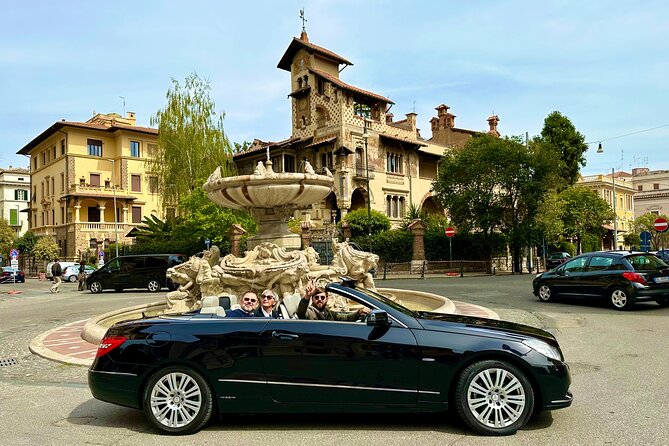
- Open-top Mercedes E-Class makes even short streets feel special, with big sightlines from the road
- Orange Garden + Janiculum deliver some of Rome’s most photogenic angles in minimal time
- Short, 15-minute stops keep the pace moving (great if you only have a day)
- Free admission at the listed stops means you’re paying more for time and guidance than tickets
- Castel Sant’Angelo and the bridge approach give you a cinematic view without waiting for hours
- Bocca della Verità adds a fun, low-effort finale at Santa Maria in Cosmedin
Rolling Rome in an open-top Mercedes E-Class
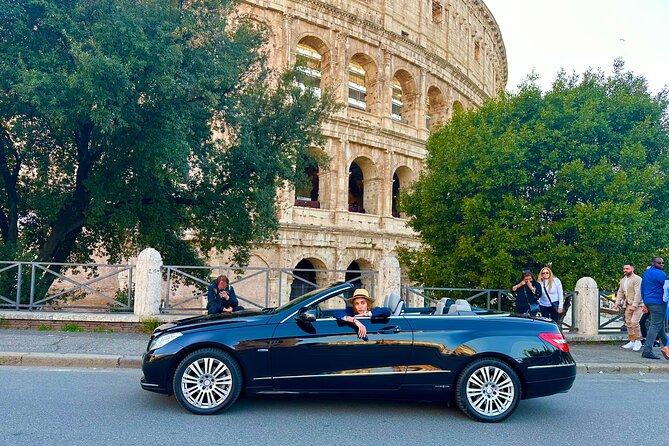
This tour is built around one simple idea: Rome is meant to be seen at street level, with motion. The open-top Mercedes-Benz E-Class cabriolet turns the city into a moving viewpoint. You’re not stuck behind glass or forced to walk between far-flung spots with sweaty regret. You get that Rome rhythm—narrow lanes, quick pauses, and sudden views that make you sit up.
The real win is how it changes your perception. From inside a parked car, Rome can feel like a set of monuments. From an open-top cabriolet, it feels like one continuous scene. You’ll pass through areas you might not target on your own, then stop just long enough to orient yourself and take photos that actually look like Rome.
And because it’s private, the guide can shape the pace to your group. That matters on a route that mixes big-name landmarks with smaller, stranger corners like the Art Nouveau Quartiere Coppede.
You can also read our reviews of more private tours in Rome
Price and value: what $252.33 buys you
At $252.33 per person, this is not a budget tour. You’re paying for three things that add real value:
- Two-way transfers (pickup from your hotel or the nearest car access point, then back again)
- A licensed guide who explains what you’re seeing as you go
- The entire experience in an open cabriolet, not just a quick photo moment
If you’re trying to see a lot in a short window, the price starts to make more sense. Many standard Rome tours trade comfort and time for lower cost—this one trades money for speed, guidance, and that convertibility-to-Rome experience.
That said, this is still a 2-hour tour with limited stop times. So if your goal is a deep museum day, you’ll want to pair it with longer, ticketed experiences separately. And if you care most about Colosseum interior access, note that this is an outside look only—more on that later.
Pickup, timing, and comfort (so you’re not surprised)
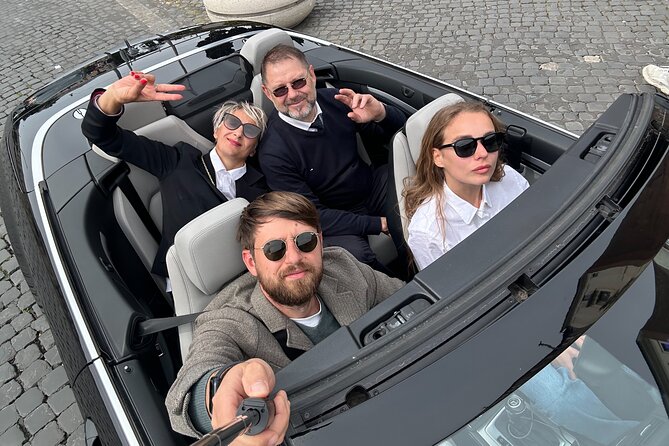
Plan on a meet-up at Piazza della Repubblica. If your hotel is in a car-accessible area, you may be picked up right at your hotel. If not, you’ll meet at the nearest practical car-access point, and you’ll need to share your address when booking.
The tour runs for about 2 hours. The time is intentionally sliced into short viewing windows—roughly 15 minutes per main stop—plus driving time between locations. That fast format is a strength if you like “see it, understand it, move on.”
Open-top cars also change your comfort needs. Wind is part of the deal, so bring sunglasses and something light for breezy moments. One more practical note: seating can be tight toward the back. If you’re booking with taller adults or people who hate cramped space, consider requesting seats accordingly where possible (or just treat the back-seat part as a short ride, not a lounge).
Finally, the tour includes wine, water, and sweets in the car. Still, because one past departure described a mismatch, I’d suggest a quick, friendly check when you get in the car: ask what’s included for your specific ride and when it will be served. That small step prevents disappointment.
Circo Massimo: Rome’s arena of chariots and power
Your first stop is Circo Massimo, the enormous arena where chariot races once shaped social life and politics. This place wasn’t just entertainment. The scale matters: it’s described as able to hold around 250,000 spectators, which is why it dwarfs amphitheaters in significance. The guide’s explanation turns the ruins into context—why this arena was built so large, and how power was displayed through spectacle.
What I like here is the viewpoint logic. Circo Massimo sits on the slopes of the hills around Palatine and Aventine, and it connects to the imperial sense of watching from above. You’re getting the feeling of a city where elite access and public drama were intertwined.
At this stop, you’re not hunting for hidden details like you might inside a museum. You’re absorbing scale. Take a few minutes to look outward and imagine the movement—chariots, dust, noise, and that sense of mass attention.
Giardino degli Aranci: the Orange Garden panorama hit
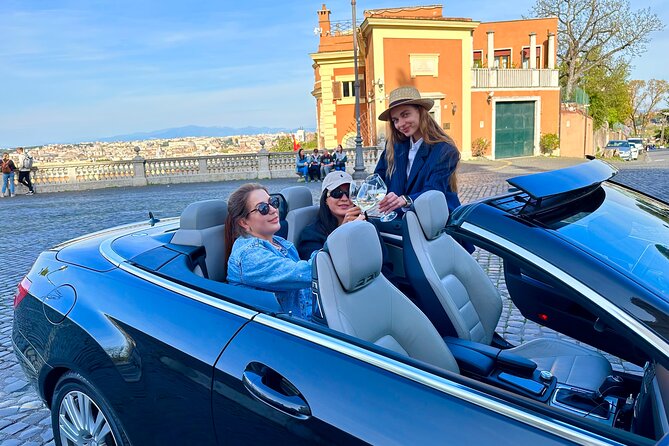
Next comes the Giardino degli Aranci, known as the Orange Garden. The draw is simple: it’s one of the best places to get a clean, framed city view without a lot of effort.
Here’s what makes the stop special. From the garden, you can see St. Peter’s Cathedral’s dome in the distance, framed by Roman pines. It’s a view that feels designed for photos, but it’s also popular for real moments—sunset meetups, dates, and wedding photo sessions.
Fifteen minutes isn’t a long time, so don’t over-plan. I’d aim for a quick loop:
- Find the view angle that frames St. Peter’s dome
- Snap your photos
- Then pause and just watch the light shift for a minute or two
If your timing lines up with late afternoon, this stop becomes the most memorable moment of the ride. Even if it doesn’t, it still gives you that “Rome is huge and layered” feeling.





Janiculum Hill and Fontana dell’Acqua Paola: the fountain with a story
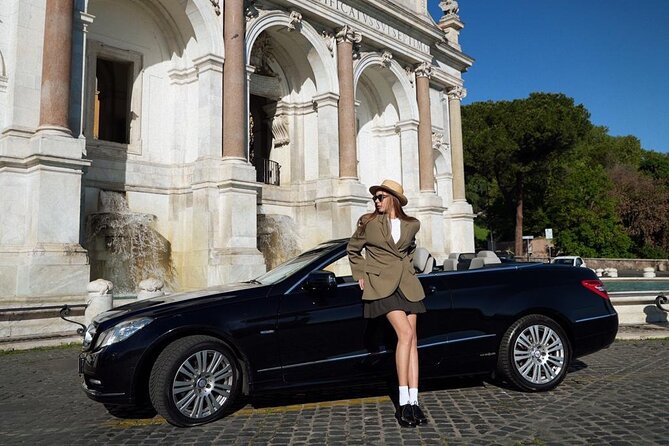
Then you head to Fontana dell’Acqua Paola on the Janiculum Hill side. This isn’t only about water. It’s about restoration and ambition.
The fountain’s backstory is tied to Pope Paul V. After he restored a ruined Roman aqueduct, he built a large fountain in his honor. For about 100 years, it was described as the largest fountain in Rome. That kind of “big gesture” matters in Rome—leaders used projects like this to signal reach, permanence, and control.
You also get one of the ride’s best rewards: a major city view from the hill. This is a stop where the guide’s storytelling adds weight. The view is impressive, but the context makes it feel earned instead of just scenic.
Quartiere Coppede: fairy-tale castles in early 20th-century Rome
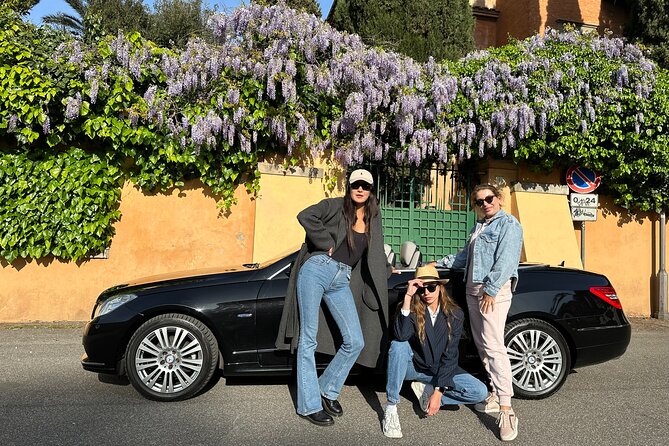
Next is Quartiere Coppede, an area created in the early 1900s and named after Luigi Coppede. If Roman ancient sites are about scale and power, Coppede is about imagination.
You’ll feel like you’ve stepped into a visual prank: castle-like buildings that don’t match each other, yet all belong to the same dream. That “different-from-everything” quality is exactly what I’d want in a 2-hour day. It breaks the pattern of only seeing ruins and churches.
This is also a great stop for architecture lovers. Guides like Alex have a reputation for pointing out design choices and explaining how the neighborhood works visually. If you like noticing details—balconies, facades, and playful symmetry—this one will make you slow down.
Piazza della Repubblica and the Thermae of Diocletian
At Piazza della Repubblica, you’ll see the Thermae of Diocletian, the massive ancient baths dating to the 3rd century AD, built for about 15,000 visitors. The key idea here is to treat baths as social infrastructure, not just a place to wash. This was Rome’s communal energy system—heat, leisure, conversation, and status.
After the empire fell, the baths survived well, and later a famous layer was added: in the 1500s, Michelangelo created one of the largest churches inside the ancient bath structure. The effect is time-stacking. You’re looking at a building that got reused because it was too solid, too useful, too impressive to discard.
Fifteen minutes here is enough to grasp the scale and then notice the contrast of eras—ancient massiveness held inside later sacred architecture. If you’re the kind of person who loves seeing how old structures become new spaces, you’ll appreciate this stop.
St. Angelo Bridge and Castel Sant’Angelo: from mausoleum to fortress to pope residence
Your route then leads to St. Angelo Bridge and Castel Sant’Angelo. The walk-through time is short, but the architectural storyline is strong.
Castel Sant’Angelo began as the mausoleum of Emperor Hadrian and his family. Later it became part of the fortress wall, then shifted roles again—prison and residence for the pope. That sequence tells a classic Roman story: power structures get repurposed as leadership changes.
The bridge approach adds extra drama. From here, you get a clearer read of how the castle dominates the river crossing, almost like a stage prop for history. This is also a practical stop for photos because the location is naturally “framed” by the bridge and river lines.
If you only take a few photos this day, make at least one from this area. It’s the kind of view that looks good even if you take it quickly.
Bocca della Verità: the silly truth test at Santa Maria in Cosmedin
For the finale, you’ll stop at Bocca della Verità, the famous marble mask said to bite the hand of liars. It sits in the portico of Santa Maria in Cosmedin.
Even if you roll your eyes at the legend, it’s worth doing because it’s easy, iconic, and low-stress. It gives your 2-hour day a human, playful ending after a string of big historic structures.
This is also one of the stops where I recommend matching the moment. Don’t just snap one photo and move on. Take 2 minutes, do the mask bit, laugh once, and let the day’s pace settle.
And yes, this is where the tour’s included refreshment plan becomes part of the memory. The tour listing includes wine, water, and sweets in the car, and some past departures have described a prosecco-like finish while looking over the city. If that’s your style, it’s a nice way to turn the ride into something you’ll remember beyond the photos.
One more important reality check: one past experience said wine/snacks weren’t provided the way they were expected. That doesn’t mean it’s always the case, but it does mean you should ask what’s included for your date and when you’ll receive it.
Should you book this private cabriolet tour?
Book it if you want:
- A short, guided way to hit major viewpoints plus a few offbeat Rome corners
- The convertible experience—open-air Rome changes how the city feels
- A guide-led day where explanations make ancient and later sites click
Skip it or think twice if:
- You want Colosseum entry. This tour explicitly does not include Colosseum admission, and you see it from the outside only.
- You’re very budget-focused. At $252.33 per person, you’re paying for private access, transfers, and the cabriolet experience.
- You hate cramped seating. The back of the car can feel tight, so prioritize comfort preferences.
If you’re doing Rome for the first time and you have one tight window, this tour is a strong choice. It’s designed to give you a clear Rome map in your head—then leave you ready to explore deeper on your own for the parts that hooked you most.
FAQ
Is this tour private?
Yes. It’s a private tour/activity, so only your group participates.
How long is the private cabriolet tour?
The duration is about 2 hours.
Do you pick up from my hotel?
Pickup is offered if your hotel isn’t in a restricted part of town. If it is, the operator will suggest the nearest meeting point from your location (the listed start point is Piazza della Repubblica).
What language is the guide?
The tour is offered in English.
Is Colosseum entry included?
No. The Colosseum entrance is not included. You’ll see it from the outside.
Are tickets required for the stops?
The listed stops are marked as admission ticket free, but you won’t have Colosseum entrance included.
What happens if the weather is poor?
This experience requires good weather. If it’s canceled due to poor weather, you’ll be offered a different date or a full refund.
What is the cancellation window?
You can cancel for a full refund up to 24 hours before the experience starts.