REVIEW · ROME
Guided tour of the Vatican Museums and Sistine Chapel in Spanish
Book on Viator →Operated by EnRoma.com · Bookable on Viator
Michelangelo plus crowds equals strategy. This tour helps you see both without the chaos taking over. You get a Spanish guide, headphones, and timed access that keeps you moving from the Sistine Chapel into the Vatican Museums in about 3 hours.
I especially like the way they start with the Sistine Chapel. That 20-minute window gives you a real chance to focus on the frescoes instead of saving the best for last. I also love the small-group size of up to 20 people, which makes explanations feel personal even in a packed place.
One possible drawback: Vatican space is Vatican space. Even with a smooth route, you should expect crowd energy, and the itinerary isn’t designed for strollers or mobility-adapted paths.
In This Review
- Key points before you go
- First stop strategy: Sistine Chapel with your bearings set
- Vatican Museums without the worst line stress
- What you’ll see in the Museums: from courtyards to sculptures
- What the guide actually does for you (beyond facts)
- Pacing and crowd reality: why some parts feel rushed
- Logistics you can’t ignore: meeting point, timing, and ending at St. Peter’s
- Dress code and carry rules: avoid last-minute stress
- Price and value: is $110.47 worth it?
- Who should book this Spanish Vatican tour?
- Should you book it?
- FAQ
- FAQ
- How long is the Vatican Museums and Sistine Chapel tour?
- Is the guide provided in Spanish?
- Does the tour include tickets and headphones?
- Can I avoid the long queues for the Vatican Museums?
- How big is the group?
- Where do we meet and where does the tour end?
- What are the dress requirements?
- Is there free cancellation?
- Do I need to print my ticket?
Key points before you go
- Spanish guide + audio headsets: easier listening, less strain, more understanding.
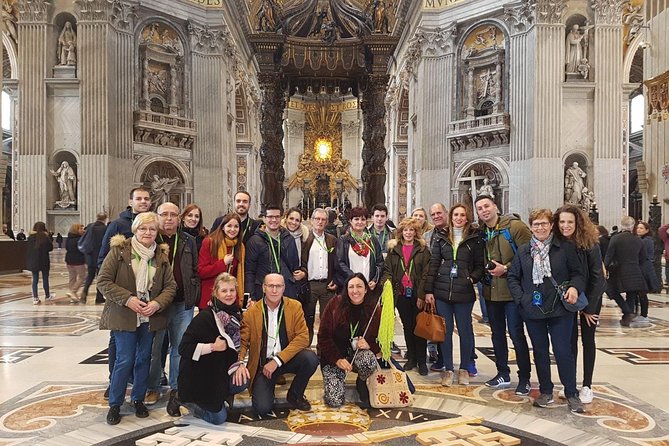
- Small group (max 20): better control in tight corridors.
- Sistine Chapel first: you see Michelangelo’s ceiling before the day gets away from you.
- Museums without queues: you avoid the worst line stress at the entrance.
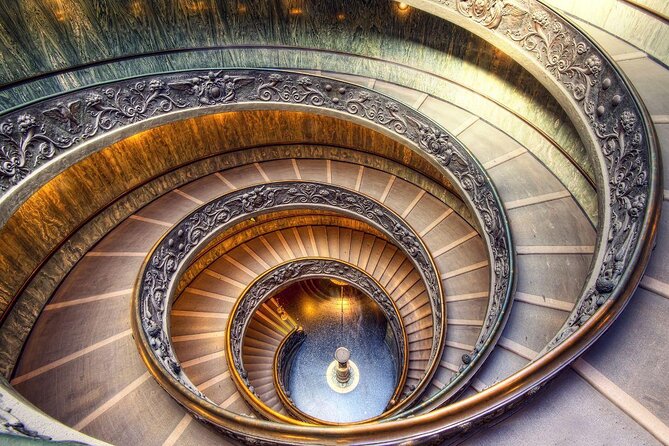
- Classic highlights included: Pineapple Courtyard, Laocoon, Candelabra Gallery, Maps, and the chance to see Raphael Stays.
First stop strategy: Sistine Chapel with your bearings set
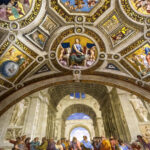
The Sistine Chapel is the headline. So it makes sense to treat it like the main event, not a warm-up. Starting there means you’re fresh, you’re oriented, and your attention is still sharp when you look up.
During the stop, you’ll get about 20 minutes inside, with admission covered. That time matters. The Sistine Chapel is not a place where you can casually stroll and still understand what you’re seeing. You need a pause-and-look rhythm: glance, read the scene in your mind, then look again with a story in front of you.
A guided talk in Spanish helps you connect what you’re seeing to what it means—especially for the Creation sequence and the judgment imagery that people come for. The best part, in my mind, is that the structure of the visit gives you actual time to admire the frescoes, not just a quick pass through.
You can also read our reviews of more guided tours in Rome



Vatican Museums without the worst line stress
After the chapel, you shift into the Vatican Museums. This is where “without queues” becomes more than a selling point. It changes your whole mood.
Instead of spending your energy stuck in the entrance grind, you spend it walking, learning, and making sense of what’s around you. That’s a big deal when you’re paying for a guided visit and want the experience to feel worth your time, not just worth your ticket.
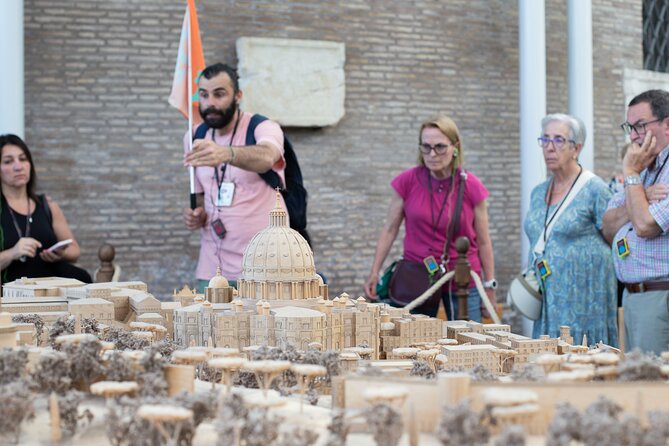
The walking route is about 2 hours 30 minutes for the Museums portion. That’s long enough to cover major works and architectural moments, but short enough that you don’t lose the plot. And because the group is limited to 20, you’re less likely to get swallowed by the crowd in a way that makes you feel lost.
What you’ll see in the Museums: from courtyards to sculptures
The Museums route is paced like a story. You start outdoors-ish, then move into the collections in a way that feels chronological: origins, then masterpieces, then showpieces.
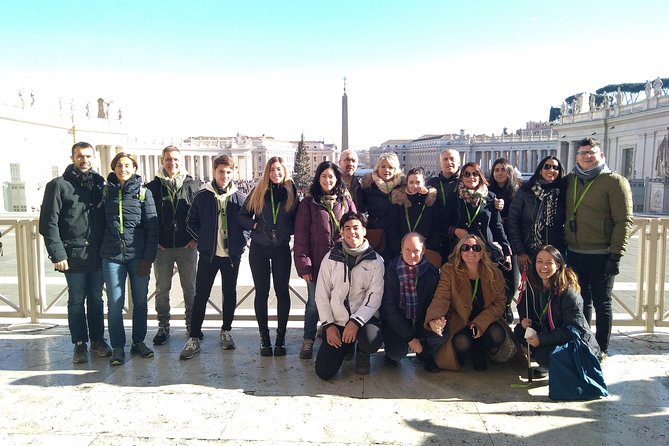
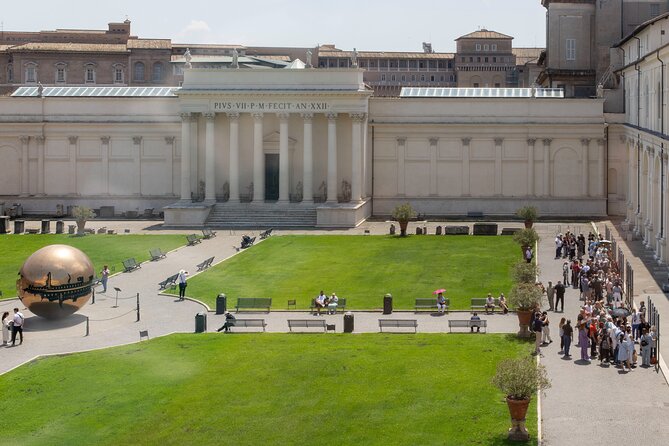
Pineapple Courtyard (Patio of the Pineapple) is where many first-time visitors get their bearings. It’s a visual break before you hit galleries. You’ll also get guided context for the spaces, not just a list of rooms.
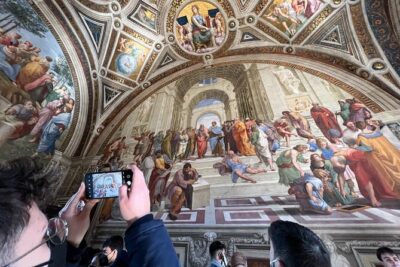
Next comes the sculpture focus, including a stop for ancient masterpieces such as Laocoon. This is one of those works that changes how you see the whole Vatican collection. You realize these rooms aren’t just for paintings and ceiling drama. They’re also a museum of eyes trained on form, motion, and power.
Then you move into the Candelabra Gallery and beyond, with stops that connect decorative detail to larger themes. After that, you’ll pass through the Maps and textile works areas. (Yes, the materials can sound niche on paper, but in person they add texture to the experience. You start seeing how the Vatican collects not only objects, but ideas about the world.)
There’s also a conditional highlight: Raffaello Stays. You’ll go there only when crowd flow allows. This is honest, and it’s useful for you to know. If it happens, it’s a bonus. If it doesn’t, the rest of the tour still covers enough to feel complete.
What the guide actually does for you (beyond facts)
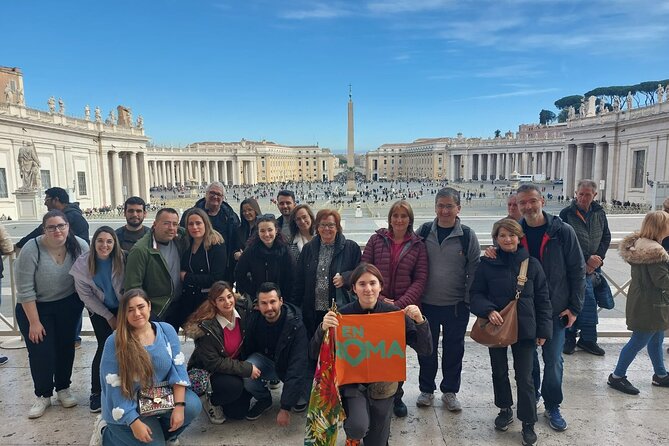
In a place like the Vatican, a guide isn’t just for dates. The real value is crowd control and interpretation.
A good Spanish guide will explain what you’re seeing in a way that helps you stop guessing. They’ll point out the story inside the art—who the people are, what the scenes signal, and why certain works mattered to the Vatican’s identity over time.
You’ll also hear commentary that makes the Museum rooms feel connected. Otherwise, galleries can melt together. You’ll walk into one corridor, then another, and suddenly you’re surrounded by great objects but can’t remember what stood for what. Guidance helps you keep track.
And because you get headphones, you’re not stuck yelling across the group or straining to catch Spanish through echoes. That small comfort adds up when you’re walking and standing for long stretches.
Pacing and crowd reality: why some parts feel rushed
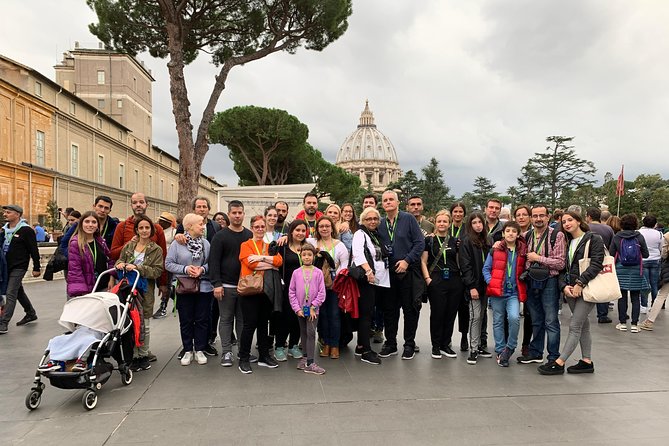
Here’s the truth you need: the Vatican is crowded. Even at the best time, you’re dealing with a constant tide of people.
That can show up in two ways. First, some corridors feel like you’re herded along. You might not get the slow, lingering experience you hoped for in every gallery. Second, security and visitor flow can create moments where your guide has to keep things moving to stay on schedule.
This doesn’t mean the tour is bad. It means you should calibrate expectations. The tour is designed to cover a lot of must-sees in a controlled format. If you want to spend hours in one room, you’ll need separate time before or after the guided visit.
Still, the trade-off tends to be worth it: you get key highlights plus context, without burning your morning in long entry lines.
You can also read our reviews of more museum experiences in Rome



Logistics you can’t ignore: meeting point, timing, and ending at St. Peter’s
The meeting point is Viale Giulio Cesare, 138 (00192 Rome). Plan to arrive a bit early. The tour starts at the indicated time, and they recommend you show up on time or even a few minutes before so everyone can settle in and start smoothly.
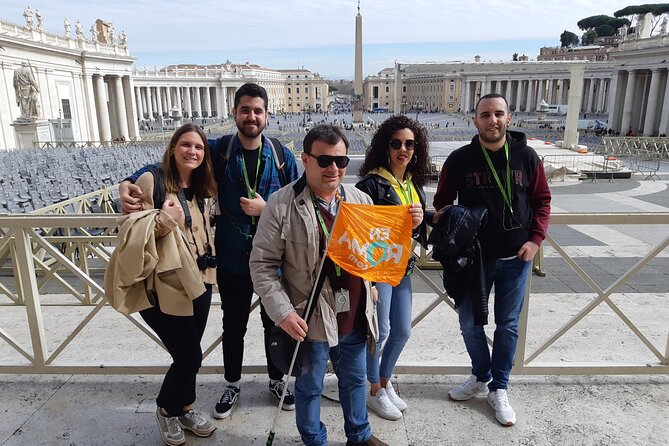
The tour ends at Saint Peter’s Square (Piazza San Pietro, 00120, Vatican City). That’s useful because you’re dropped right where you want to be for your next steps—seeing the square, grabbing a coffee, or walking on toward more Vatican-area sights.
They note the start location is near public transportation. So you don’t need a complicated plan to get there, which is exactly what you want when your schedule is already tight.
You’ll also use a mobile ticket, which saves time compared to printing and handling paper on the go.
Dress code and carry rules: avoid last-minute stress
Places of worship rules are taken seriously here, so check this before you leave your hotel.
Wear long pants or a skirt and covered shoulders. If you show up dressed casually, you might be stopped or asked to adjust, which kills momentum on a timed tour day.
For items, leave big stuff at home. Large umbrellas, oversized backpacks, and sharp objects can’t be carried. If you travel with a bigger daypack, think about bringing the smallest bag you can manage.
These rules sound strict, but they help keep lines moving and security steps predictable. Following them makes your whole experience smoother.
Price and value: is $110.47 worth it?
At $110.47 per person, this isn’t a bargain. It’s a paid, guided, ticket-included experience with several real advantages:
- Admission tickets are included, so you’re not doing extra purchasing on the day.
- Headphones are included, which improves the quality of the explanations.
- Skip-the-queue entry into the Museums is the big one. If you’ve ever stood in a long entrance line in Rome, you already know what this is worth in energy.
Duration is about 3 hours, which is also relevant for value. You’re not buying a half-day commitment, but you are buying enough time to see major works plus the Sistine Chapel in one go.
When is it best to book? The tour is often booked about 39 days in advance on average. That suggests you’ll usually want to reserve ahead—especially if you have a tight visit window.
If you’re the type who wants a guided plan inside the Vatican without spending hours sorting logistics, the price starts to make sense. If you prefer total freedom and long unguided wandering, you might find you get more value from a lighter-entry option and self-paced time after.
Who should book this Spanish Vatican tour?
This tour fits best if you want:
- a Spanish-language guide with clear explanations
- a small group experience that’s easier to manage in crowds
- a structured route that hits big highlights without you piecing things together
- a plan that gets you into the Museums without fighting the longest lines
It may not be the right fit if:
- you need a route adapted for mobility difficulties or you’re traveling with a stroller
- you want lots of unstructured time in every room
- you strongly prefer to take your time purely at your own pace
Should you book it?
If your goal is to see the Sistine Chapel and the major Vatican Museums highlights in one guided session, I’d book this. The biggest wins are practical: skip-the-queue entry, headphones, and a route that starts with the chapel so you don’t risk missing your best moment later.
Do it with realistic expectations about crowds. You’ll get a guided, efficient experience that’s heavy on the essentials and lighter on slow roaming. If that matches your travel style, this tour is a smart way to spend a few hours in Vatican City and come away with more than just photos.
FAQ
FAQ
How long is the Vatican Museums and Sistine Chapel tour?
The tour lasts about 3 hours total.
Is the guide provided in Spanish?
Yes. You’ll have a guide who speaks Spanish.
Does the tour include tickets and headphones?
Yes. Admission tickets and headphones are included, along with the guided service.
Can I avoid the long queues for the Vatican Museums?
Yes. The tour includes entrance without queues, which helps you skip the worst lines.
How big is the group?
The group size is limited to a maximum of 20 people.
Where do we meet and where does the tour end?
You meet at Viale Giulio Cesare, 138, 00192 Rome, and the tour ends at Saint Peter’s Square, Piazza San Pietro, 00120.
What are the dress requirements?
You should wear long pants or a skirt and keep shoulders covered.
Is there free cancellation?
Yes. You can cancel for a full refund up to 24 hours in advance of the experience start time.
Do I need to print my ticket?
No. It’s a mobile ticket.