REVIEW · ROME
Percy Jackson Tour for Kids at the Capitoline Museums of Rome with Special Guide
Book on Viator →Operated by Rome Tours with Kids by Maria and her team · Bookable on Viator
This is Rome, but with myth instead of lectures, and that makes it work fast for kids. I like how the Percy Jackson angle turns the origin story of Romulus and Remus into a real treasure hunt. I also like that you start in the gorgeous Piazza del Campidoglio before heading into the Musei Capitolini for the main museum highlights. One thing to plan around: it’s a walking tour, so expect heat and kid-energy management—especially on summer days.
The big win here is pacing. Instead of long explanations, the guide keeps the group involved while you move through some of Rome’s most recognizable museum spaces, including the statue-focused center of the square and the museum’s connected building layout. If your child loves mythology (or just loves anything interactive), this tour can feel like a game that happens to teach.
The tour runs about 2 hours 30 minutes, in English, with morning or afternoon options so you can match it to your family’s rhythm. You’ll get a private-style experience where only your group participates, not a loud crowd scene.
In This Review
- Key highlights you’ll actually notice
- Why the Capitoline Museums work for Percy Jackson fans
- Piazza del Campidoglio: the Percy treasure hunt before the museum
- Musei Capitolini inside: tunnels, She-Wolf, and the founders of Rome
- Guides that keep kids engaged: what I’d watch for
- Timing, pacing, and choosing morning or afternoon
- Price and value: is $313.24 per person worth it?
- Practical tips for a smoother, happier museum tour
- Should you book this Percy Jackson kids tour?
- FAQ
- How long is the Percy Jackson tour for kids at the Capitoline Museums?
- What language is the tour offered in?
- Is admission included?
- Where do we meet for the tour?
- Is this tour private?
- Can I cancel for free?
Key highlights you’ll actually notice
- Percy Jackson themed mythology that links Greek and Roman stories you’ll recognize from books and movies
- Treasure hunt start at Piazza del Campidoglio, including the horse statue of Marcus Aurelius
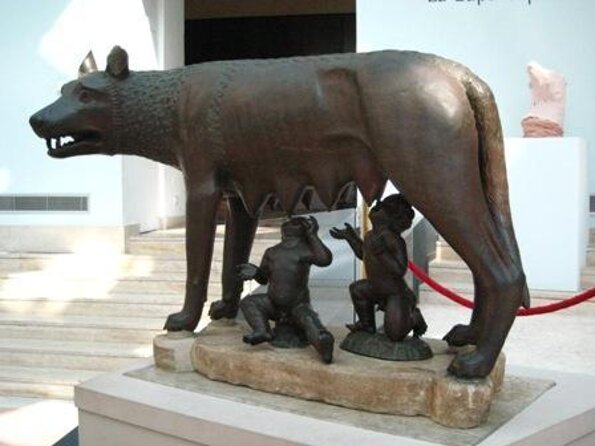
- She-Wolf and Romulus and Remus storytelling inside the Musei Capitolini
- Capitoline Museums layout explained on the move, including the tunnel connection between buildings
- Kid-first guidance, with tools like visual aids on an iPad and hands-on cards for language play
- Flexible timing with both morning and afternoon tour choices
Why the Capitoline Museums work for Percy Jackson fans
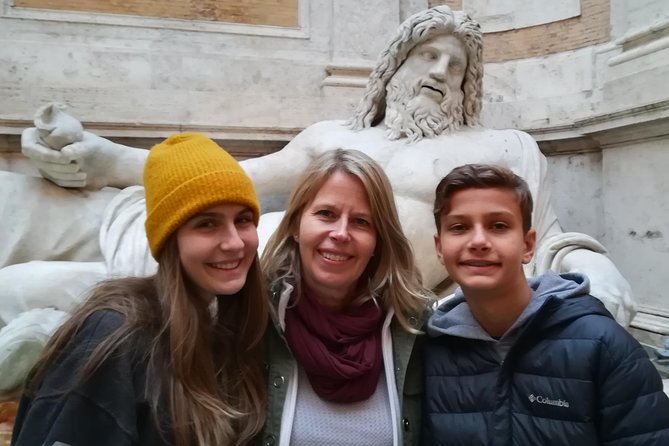
If your kid says museums are boring, this tour is designed to fight that idea from the start. The Capitoline Museums can be a lot for adults too—multiple spaces, famous names, and layers of Roman art and artifacts. The smart trick here is using a Percy Jackson framework to make the stories feel current and personal, not like distant schoolwork.
You’ll also get the setting right away. The tour starts in Piazza del Campidoglio, a square that looks like it was designed for drama. Michelangelo’s redesign gives it a strong, recognizable shape, and the center point is filled with symbols. From there, the guide can connect what kids see (statues, animals, monuments, scenes) with what they hear (founders, myths, Rome’s beginnings).
And for families, there’s another quiet benefit: the whole experience is structured around attention spans. You’re not expected to stand still for long lectures. Instead, you’re moving, listening, and answering questions—then moving again.
You can also read our reviews of more guided tours in Rome



Piazza del Campidoglio: the Percy treasure hunt before the museum
You begin at Capitoline Museums in Piazza del Campidoglio, Piazza del Campidoglio, 1, 00186 Roma RM, Italy, and the first phase is quick and focused—about 20 minutes.
What makes this start special is the way it sets the stage. In the middle of the square stands the equestrian statue of Emperor Marcus Aurelius. Even if you only notice the pose and the scale, it’s the kind of landmark that helps kids feel like they’re in the real Rome from their stories. The square itself is trapezoid-shaped with an oval pattern on the ground, plus an elegant staircase and grand buildings along three sides. That combination makes it easier for a guide to create a “quest” feeling, because the environment already looks like part of a game board.
Then comes the treasure hunt. This is where the tour earns its kid focus: instead of telling history at a distance, your guide uses interaction to get kids involved. The mythology thread connects to Rome’s origin story—Romulus and Remus—and the guide uses facts and cues kids can hold onto. You’ll likely hear about how ancient Romans framed their city’s beginnings, and the guide will keep you from falling into the classic museum trap: seeing a lot, remembering little.
Drawback to consider: this is still outside. On very hot days, you may want to bring water and plan for breaks if your child needs them. The activity is designed to keep them engaged, but bodies still run on temperature.
Musei Capitolini inside: tunnels, She-Wolf, and the founders of Rome

The main museum portion is about 2 hours 10 minutes, with admission included for this part. The Musei Capitolini spans two buildings designed by Michelangelo, and the connection between them is an underground tunnel. That matters more than it sounds, because it turns logistics into story. You’ll go from one set of spaces to another without losing the thread of the guide’s narration, and the tour doesn’t feel like a random museum walk.
Inside, you’ll meet the images that anchor Rome’s myth and identity:
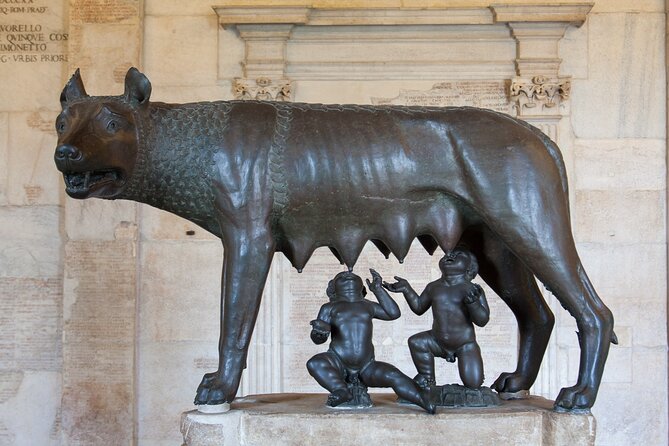
- the She-Wolf, often treated like a symbol of the city itself
- the story of Romulus and Remo, the legendary founders
- and key artistic and archaeological treasures tied to the myth and its cultural background
This is also where the Percy Jackson connection becomes useful. The guide leads you through Greek and Roman mythology that overlaps with what kids may already know from popular stories. Instead of treating mythology as a separate topic, the guide links it to what you’re seeing on the walls and in the sculptures.
One detail I really like for families: the tour is designed to avoid “stuffy lectures.” In practice, that means you’re usually doing something besides listening. A few guide tools that show up in this kind of kids-focused approach include visual support on an iPad and playful cards that help kids work through ancient language. In one family experience, the guide even used a visual tool to help kids picture what an ancient scene would have looked like, which can make the difference between polite attention and real interest.
A small practical consideration: museums can be dimmer and busier than you expect. The tour is built for kids, but you should still manage movement and expectations—especially if your child gets restless when sound carries or when they have to look up at tall displays.
Guides that keep kids engaged: what I’d watch for
The guide makes or breaks a kids museum tour, and this one clearly prioritizes that. The experience is led by Rome Tours with Kids by Maria and her team, and families have highlighted multiple guides for keeping children focused and included.
Examples of what shows up in the experience:
- Donato kept a Percy Jackson–loving 11-year-old engaged and made museum time feel informational without getting heavy.
- Alessandra managed a tour even when her young participant was tired in hot weather, using attention and interaction to keep excitement going. One playful structure included a race where parents and children played against each other, with the kids winning.
- Martina used iPad visuals and activity cards that help kids connect images and ideas, including simple ways to translate ancient Latin through fun prompts.
Even if your guide uses different tools, the goal stays the same: the guide stays with the kids, answers questions on the spot, and uses story structure to help the mythology “stick.” That’s the kind of guiding that helps kids feel like they’re part of the narrative, not just spectators.
If your child asks lots of questions, this can be a good match. The format encourages questions and lets kids talk about what they learned afterward.
Timing, pacing, and choosing morning or afternoon
You’ll have two options to choose from—morning and afternoon. That’s not just convenient; it’s a strategy.
Morning tours tend to feel easier on everyone because crowds are usually lighter and the day is cooler. Afternoon tours can work well too, especially if your child does better with a later start after a nap or a slow morning. The tour duration stays around 2 hours 30 minutes, so plan your day so your kids aren’t rushed right before or after.
Because the tour includes both outdoor space (Piazza del Campidoglio) and indoor museum galleries, you’ll want to think like a parent:
- Light layers help you shift between sun and indoor air
- Comfortable shoes matter because you’re walking through museum spaces and between connected areas
- Bring a water plan even if you’re not eating during the tour
Food and drink aren’t included, so don’t assume you’ll have an easy snack stop built into the route. If your kids need something, plan it outside the tour window.
Also keep an eye on messages. Due to the Jubilee, some monuments may be under restoration. That can mean small changes to what you see or how you pass through areas, so message updates are worth reading.
You can also read our reviews of more museum experiences in Rome




Price and value: is $313.24 per person worth it?
At $313.24 per person for a kid-focused guided experience that lasts about 2.5 hours, the value depends on what you’re trying to solve.
This price is paying for:
- a kid-friendly professional guide
- a more “guided by interaction” approach than a typical audio-guide museum visit
- admission included for the main museum portion (with the first stop free for that short start segment)
- a private-style format where only your group participates
If you have one child who gets bored fast in museums, or you’re traveling with kids who love a specific story world like Percy Jackson, this can be a smart spend. Instead of spending hours trying to keep attention yourself, you’re buying a structure that turns art and artifacts into questions, challenges, and story connections.
If you’re traveling with older kids who already love museums and can self-guide comfortably, you might not need a specialist guide. But if your child needs movement, a storyline, and a guide who can answer “why is that there?” in kid-friendly language, the cost can feel reasonable.
One more detail: the tour is often booked about 41 days in advance on average. That suggests families plan ahead for these slots, so if your dates are fixed, booking early can help you get the time window you prefer.
Practical tips for a smoother, happier museum tour
Here are the things that will make your day easier, based on how this kind of tour runs and what’s included.
Plan snacks outside the tour. Food and drink aren’t part of the experience. If your kids run on routine, you’ll be happier if they eat before the tour or have a planned stop right after.
Bring water and sun protection. The first part starts in an outdoor square, and the tour still has a long total time. Even if you’re not walking nonstop, you’ll feel the heat on your head and neck.
Expect short, guided attention moments. The guide is there to keep kids involved, but you should still help your child by entering with a simple mindset: listen, look, answer, move.
Use the mobile ticket. A mobile ticket is included, which usually means less stress at check-in. Still, keep your phone charged and your ticket easy to pull up.
Choose the tour time that fits your kid. Morning or afternoon helps, so match it to your child’s energy level, not just your schedule.
Read any Jubilee update messages. Some monuments could be under restoration, which might change small routes or access. Staying flexible is part of getting the best experience.
Should you book this Percy Jackson kids tour?
Book it if:
- your child is a Percy Jackson and mythology fan
- your kid needs interaction and movement to stay engaged
- you want a Rome museum experience that connects stories to real landmarks and artworks
- you’re traveling as a family and prefer a private-style group setting over managing a crowded tour
Skip it or consider alternatives if:
- your child strongly dislikes walking or museum time, even with a story theme
- you’re hoping for a short, mostly seated experience
- you plan to eat during the tour, since food and drink aren’t included
For many families, this tour hits the sweet spot: myth, recognizable symbols like the She-Wolf, and a guide who knows how to keep questions coming without turning it into a long lecture.
FAQ
How long is the Percy Jackson tour for kids at the Capitoline Museums?
It runs about 2 hours 30 minutes, with the experience split between a short start at Piazza del Campidoglio and the main museum time at the Musei Capitolini.
What language is the tour offered in?
The tour is offered in English.
Is admission included?
Admission is included for the Musei Capitolini portion, and the first stop at Piazza del Campidoglio is listed as free for the short start period.
Where do we meet for the tour?
You start at Capitoline Museums, Piazza del Campidoglio, 1, 00186 Roma RM, Italy, and the tour ends back at the meeting point.
Is this tour private?
Yes. It’s listed as a private tour/activity, so only your group participates.
Can I cancel for free?
Yes. You can cancel up to 24 hours in advance for a full refund. If you cancel less than 24 hours before the start time, the amount paid is not refunded.