REVIEW · ROME
Papal Churches of Rome Special Jubilee Tour with Private Guide
Book on Viator →Operated by Raphael Tours & Events · Bookable on Viator
Rome’s saints, mosaics, and relics are close together.
This private walking tour strings together three major papal-related sites in about 3 hours, starting at Santa Maria Maggiore—one of the four papal basilicas—and continuing to two lesser-known basilicas with serious art and devotional history. You’ll also hear how the churches tie into Jubilee traditions, like the holy gate that’s opened during jubilees, as you move through spaces shaped by centuries of worship.
I especially like the focus on world-class mosaics and relics without wasting time on the usual crowd routes. Santa Maria Maggiore’s Roman-times mosaics and the later chapels, paintings, and tombs give you a whole timeline in one building. Then Santa Prassede delivers more mosaic storytelling, with scenes that culminate in a Savior figure in a medallion.
One thing to plan for: the dress code is strict—knees and shoulders covered, no shorts or sleeveless tops—so if you show up dressed casually, you may be turned away. The other practical consideration is the price point ($340.34 per person), which can feel steep unless you’re going as a pair or you really want a private, slower pace with a guide.
In This Review
- Key things I’d prioritize on this tour
- The big idea: a Jubilee-flavored church walk in 3 hours
- Santa Maria Maggiore: early Christian bones, papal add-ons, and the holy gate
- San Pietro in Vincoli: the basilica named for the chains
- Santa Prassede: mosaics with a Savior medallion and a Bernini surprise
- How the route and timing keep this tour feeling efficient
- Price and value: $340.34 per person for a private, 3-stop art-and-relics focus
- Dress code and what to wear so you don’t get turned away
- What kind of traveler will love this most
- Should you book the Papal Churches of Rome Special Jubilee Tour?
- FAQ
- FAQ
- How long is the Papal Churches of Rome Special Jubilee Tour?
- Where does the tour start and end?
- What churches are included?
- Is the tour private?
- What is included in the price?
- Are admission tickets required for the churches?
- Do I need to dress a certain way?
- Is hotel pickup or drop-off included?
- When will I receive confirmation after booking?
- What’s the cancellation policy?
Key things I’d prioritize on this tour
- A private route through 3 basilicas that keeps you moving, but not rushing
- Santa Maria Maggiore’s mosaic layers, from early Christian Rome to later papal additions
- The chains at San Pietro in Vincoli, tied to the basilica’s name and annual visibility
- Santa Prassede’s mosaic program, including the Savior medallion and multiple restoration eras
- Papal and Baroque-era connections, including a Bernini work you can see on site
The big idea: a Jubilee-flavored church walk in 3 hours
This tour works because it doesn’t treat churches like checklist stops. It’s built like a short walk through Rome’s devotional art history—starting with a papal basilica that holds onto its early structure, then moving to two basilicas where relics and mosaics tell you what people treasured and why.
You’re on your feet for the whole experience, but the route is tight. That matters in Rome, where “close together” can still mean a long trek when you hit traffic, lines, and wrong turns. Here, you start at Piazza di Santa Maria Maggiore and finish at Via Urbana, so you end in an area where you can keep exploring without retracing your steps.
I also like that the tour is private. In practice, that means your guide can pace you based on what grabs your attention—mosaics, specific chapels, or the story behind a relic—rather than keeping a group on a strict timer.
You can also read our reviews of more guided tours in Rome
Santa Maria Maggiore: early Christian bones, papal add-ons, and the holy gate
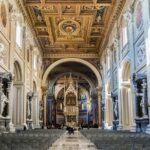
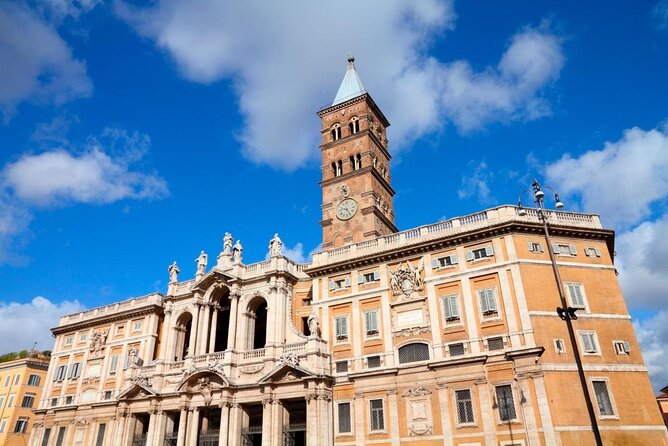
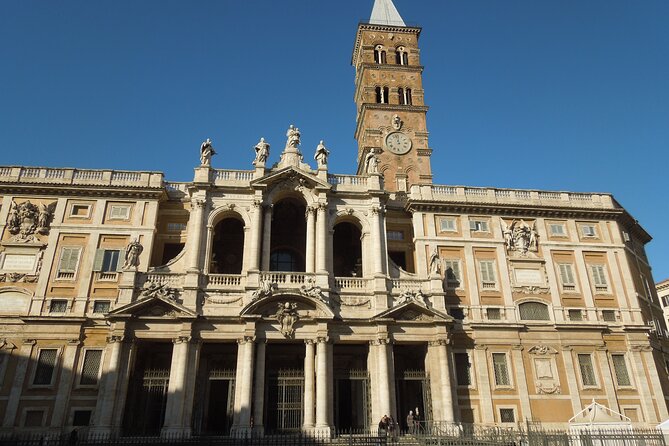
The tour begins at Basilica di Santa Maria Maggiore on the Esquilino hill. It’s one of Rome’s four papal basilicas, and what makes it especially worthwhile is that it’s the only one that preserved the original early Christian structure, with later additions layered on top.
You’ll enter through one of the five doors, and your guide should explain what makes the doors special, including the holy gate tradition. Jubilee visitors often hear about the holy gate because it’s opened during jubilees, but on this tour you’ll connect that tradition to the basilica itself, not just as a headline.
Inside, you can expect a lot of visual payoff packed into about an hour:
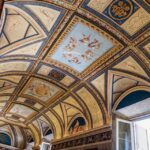
- Well-preserved mosaics from Roman times: this is where you see the continuity of early Christian art style and symbolism.
- Chapels of Pope Sixtus V and Pope Paul V: this is the papal layer—how leadership shaped worship spaces over time.
- Paintings by disciples of Raphael and Michelangelo: even if you aren’t hunting for artists’ signatures, it’s a strong chance to recognize workshop style and Renaissance gravity.
- Medieval relics and tombs of pontiffs: the basilica isn’t just pretty; it’s a memory machine for the church leadership that came before.
- The tomb of Gian Lorenzo Bernini, one of Rome’s most famous Baroque architects: even if you only know the name from street-level sightseeing, it’s grounding to see him connected here, not just around the city.
Potential drawback at this stop: Santa Maria Maggiore is a major church, so expect it to feel busy when you arrive. Your best move is to listen closely to what your guide points out—your time is limited, and this basilica has a lot of corners that can swallow an hour if you’re not careful.
San Pietro in Vincoli: the basilica named for the chains
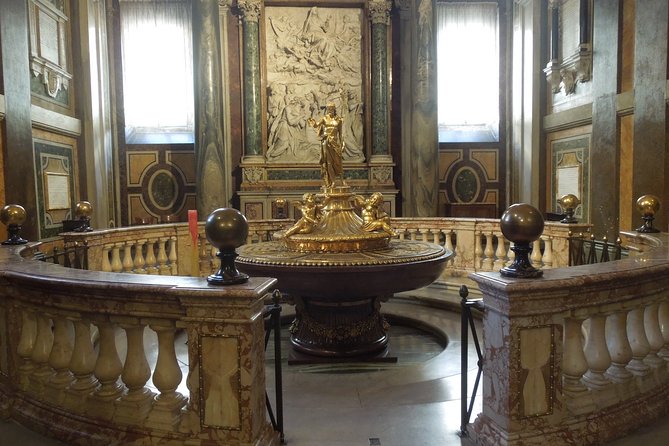
Next you head to San Pietro in Vincoli, also known as the Eudoxana basilica. This one is built in the 5th century, and it has a specific origin story: it was associated with Licinia Eudoxia, daughter of Theodosius II (Emperor of the East). Its story also connects to Elijah Eudocia and the transfer of the chains of Saint Peter.
Here’s what you should pay attention to: the basilica’s name comes from the chains preserved under the high altar. Those chains connect to Latin terminology like vincula, and the basilica keeps the relic presented in a way that can be visible to the faithful on August 1st each year.
During your visit, you’ll learn how the place got its name before you focus on the relic itself. It’s a great contrast to Santa Maria Maggiore. Santa Maria Maggiore is about layers—early structure, later chapels, Renaissance art, and Baroque-era connections. San Pietro in Vincoli is more concentrated. It points you toward one devotional object and builds meaning around it.
Why I like this stop for first-time Rome visitors: it’s a reminder that Rome’s religious art isn’t only aesthetic. It’s also about evidence—what’s claimed, what’s preserved, and how it’s shown to people year after year.
Practical note: plan to stay close to your guide in this stop. The relic-centered story can be easy to lose if you drift, and your hour passes quickly in a church environment.
Santa Prassede: mosaics with a Savior medallion and a Bernini surprise
The final stop is Basilica di Santa Prassede, close by in the Esquilino area. This basilica was built in the 9th century and restored multiple times over the centuries—so you’ll want to watch for how the mosaics manage to look both old and carefully maintained.
Santa Prassede is known for mosaic intensity. Your guide will show you mosaics with saints, and they’ll lead you toward the part of the visual program that culminates in a figure of the Savior within a medallion.
You’ll also look at other mosaics positioned around key architectural zones:
- on the walls that culminate in the vault
- at the triumphal arch and in the apse
- at the bottom of the nave area, where the overall composition becomes easier to read as a single story
And then there’s a detail that makes this stop feel extra rewarding: you can also admire the first sculptural work by Bernini. If you’re learning Rome by sight, this is a nice bridge from mosaic art to sculptural legacy.
Potential drawback at this stop: the mosaic story can be visually overwhelming if you don’t have someone guiding your eye. If you’re the type who likes to photograph everything, you may spend time framing shots and lose the thread. Lean on the guide for sequencing—where to look first, what to notice second, and what the church wants you to see as the climax.
How the route and timing keep this tour feeling efficient
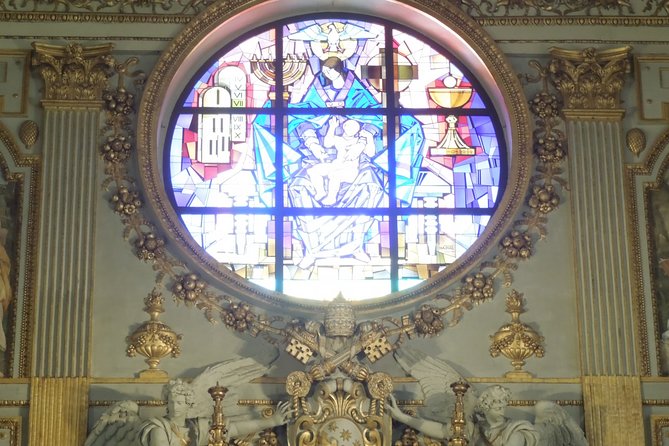
This tour is about 3 hours, and each basilica is allotted roughly one hour. That timing is ideal for Rome church visits because it avoids the common problem: you get inside and suddenly you’ve spent 90 minutes in the first place just because you liked it.
You’ll meet your guide at Piazza di Santa Maria Maggiore and finish on Via Urbana. Ending on a street like that is helpful. You’re not whisked back to a meeting point miles away—you’re positioned to keep wandering on your own, especially if you like popping into small churches and stopping for coffee between sights.
Also included is a mobile ticket, which can make entry smoother. And since this is a private tour, the pace should be yours. If you want 10 extra minutes reading a chapel name or looking at a tomb, you’ll likely be able to ask.
One more practical thing: the meeting point is near public transportation. If you’re building a day around multiple sites, that saves time and stress.
You can also read our reviews of more private tours in Rome

Price and value: $340.34 per person for a private, 3-stop art-and-relics focus
At $340.34 per person for a private guide, this isn’t a bargain-basement option. The value comes from two places.
First, you’re paying for focused interpretation. With three basilicas in three hours, you need a guide who can point you to the exact chapels, relics, tombs, mosaics, and art connections that matter. That’s where private really helps—especially in churches, where you can easily miss the “why” even when everything is right in front of you.
Second, the tour includes admission at each stop (Santa Maria Maggiore, San Pietro in Vincoli, and Santa Prassede list free admission tickets). So you’re not stacking extra entry fees on top of the guide cost. The “expensive part” is the guiding and time, not surprise museum charges.
Who this price makes sense for:
- couples or small groups who want private pacing
- people who care about mosaics, papal history, and relic context
- anyone who wants to go beyond the usual Rome headlines in a short window
Who might hesitate:
- solo travelers on a tight budget (private costs hit hardest solo)
- people who only want a quick exterior stroll and don’t care about inside art details
Dress code and what to wear so you don’t get turned away
This tour requires a dress code for places of worship. Plan for:
- no shorts
- no sleeveless tops
- knees and shoulders must be covered for both men and women
If you don’t follow it, you might risk refused entry. In practical terms, that means bring a light layer even in warm weather, and wear pants or a skirt that covers your knees. Simple fix. No drama. And honestly, it makes your visit smoother because you’re not trying to solve clothing problems mid-day.
What kind of traveler will love this most
I think this tour suits people who want more meaning than a photo tour. If you like understanding why a church is called what it’s called—like San Pietro in Vincoli and its preserved chains—you’ll enjoy the way your guide connects names, relics, and architecture.
It also works well if you’re:
- a history-minded traveler who likes timelines
- a mosaic fan who wants concentrated visual examples
- someone who prefers a guide to help you navigate without wandering
And because it ends at Via Urbana, it’s a good start or a good mid-day anchor if you’re planning to keep exploring Rome afterward.
Should you book the Papal Churches of Rome Special Jubilee Tour?
I’d book it if you want a short, private, inside-focused church route that covers mosaics, relics, tombs, and papal connections in a way that’s easy to follow. The three stops connect nicely: early Christian structure and papal additions at Santa Maria Maggiore, a relic-driven story at San Pietro in Vincoli, then mosaic intensity and a Bernini link at Santa Prassede.
I would hold off if $340.34 per person feels too high for your budget or if you’re traveling solo and don’t care much about mosaics and relic context. In that case, a cheaper group option might fit better.
FAQ
FAQ
How long is the Papal Churches of Rome Special Jubilee Tour?
The tour lasts about 3 hours.
Where does the tour start and end?
It starts at Piazza di Santa Maria Maggiore and ends on Via Urbana.
What churches are included?
You visit Basilica di Santa Maria Maggiore, San Pietro in Vincoli, and Basilica di Santa Prassede.
Is the tour private?
Yes. It’s a private tour, so only your group participates.
What is included in the price?
A local guide and the private tour are included, and the tour uses a mobile ticket.
Are admission tickets required for the churches?
No. Admission is listed as free for each stop.
Do I need to dress a certain way?
Yes. You must cover knees and shoulders. Shorts and sleeveless tops are not allowed, and you may risk refused entry if you don’t comply.
Is hotel pickup or drop-off included?
No. Hotel pickup and drop-off are not included.
When will I receive confirmation after booking?
Confirmation is received within 48 hours of booking, subject to availability.
What’s the cancellation policy?
Free cancellation is available up to 24 hours before the experience starts for a full refund. If you cancel less than 24 hours before, the amount paid is not refunded.