REVIEW · ROME
Jewish Rome District, Old Ghetto and Trastevere Private Tour
Book on GetYourGuide →Operated by Crazy4rome srls · Bookable on GetYourGuide
Jewish Rome reads like a walking timeline. This private 3-hour route connects the oldest Jewish community in the Western world with the streets of Trastevere, mixing Jewish landmarks, Roman leftovers, and the feel of older Rome. You’ll move from the old Ghetto area down toward the river, crossing major historic points along the way.
I especially like how the guide keeps the story clear, from early Jewish roots to the creation of the ghetto in the 1500s, then the later shift after Rome became Italy’s capital. I also love that this is truly private, with an official expert guide and the chance to ask questions as you go.
One consideration: you’re walking cobblestones and narrow lanes for about 3 hours, so you’ll want comfortable shoes and a calm pace. If you’re sensitive to crowds around historic sites, plan for the fact that these areas are popular.
In This Review
- Key things to know before you go
- A 3-hour Jewish Rome + Trastevere route that actually makes sense
- Starting by Teatro di Marcello: get oriented before the story gets heavy
- The old Ghetto area: from early roots to the 1555–1870 confinement period
- Piazza Mattei, Portico d’Ottavia, and Via della Reginella: Roman geometry in Jewish streets
- Fabricio Bridge and Tiber Island: the river crossing that sharpens the story
- Great Synagogue of Rome: why 1901–1904 changes everything
- Trastevere to Piazza Trilussa: cobblestones, old houses, and a satisfying finish
- Private guide quality, skip-the-line entry, and what the $456.21 price really covers
- Should you book this Jewish Rome District, Old Ghetto and Trastevere private tour?
- FAQ
- How long is the Jewish Rome District, Old Ghetto and Trastevere private tour?
- Where do I meet, and where does the tour end?
- Do I need tickets for the sights on this tour?
- What languages are available for the live guide?
- Is the tour wheelchair accessible?
- Is free cancellation available?
Key things to know before you go
- The route links centuries: from early Jewish presence to the ghetto period and on to the Great Synagogue built in 1901–1904
- You’ll see major names in one pass: Piazza Mattei, Portico d’Ottavia, Via della Reginella, and the Great Synagogue of Rome
- Fabricio Bridge is part of the walk: you cross the oldest remaining bridge in Rome (dating to 62 B.C.)
- Tiber Island and the river approach: a natural switch from ghetto streets toward Trastevere
- Trastevere stays old-school: narrow winding streets and cobblestones lined with ancient houses
- Private guide, multiple languages: Spanish, English, French, German, Italian, Portuguese, Russian
A 3-hour Jewish Rome + Trastevere route that actually makes sense
This is a compact tour, but it’s built around logic: geography first, then history. You start in the old Jewish quarter near Capitoline Hill and work your way toward the river, then continue into Trastevere, where the streets feel like a living maze.
What makes this timing work is that the stops aren’t random. You’re not just popping into places; you’re moving through the same area that shaped the community—then stepping into the older Roman-feeling neighborhood that grew on the far side.
Also, you get a private official expert guide for the whole walk. That matters here because Jewish Rome isn’t just a few buildings—it’s a set of laws, changes in citizenship, and community life that you’ll understand better when someone connects the dots on the street.
You can also read our reviews of more private tours in Rome



Starting by Teatro di Marcello: get oriented before the story gets heavy
Your meeting point is at the exit of Antico Caffè del Teatro di Marcello, right at Via del Teatro di Marcello, 42. From there, you can quickly anchor yourself in central Rome—close to big ancient landmarks, but also close to the lanes that later became the Jewish district.
Early in the walk, your guide sets expectations: you’re going to cover the old neighborhood’s timeline, not memorize dates like a school lesson. This is the part that helps later, because once you understand where you are relative to the river and key streets, the rest of the route feels like one connected map.
Then the tour shifts into the ghetto story, so it’s good to start fresh. If you arrive flustered, you’ll feel it once the conversation turns to the creation of the ghetto and the forced move of Jewish residents.
The old Ghetto area: from early roots to the 1555–1870 confinement period
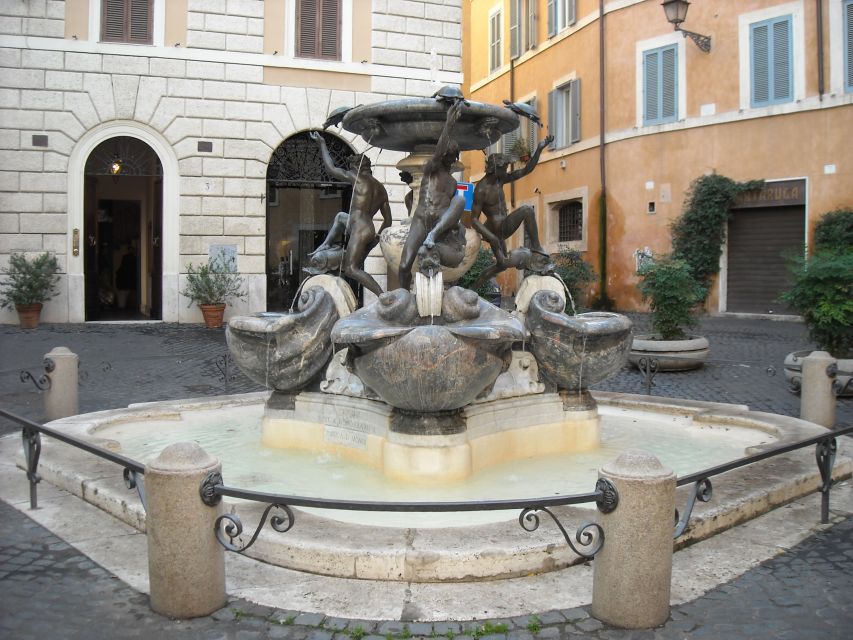
The Jewish community of Rome is described as the oldest in the Western world, with presence dating back to the 2nd century B.C. You’re not just told this—you get pointed toward the area where that community’s later history became shaped by Roman rule.
The ghetto itself was created between 1555 and 1870 and placed at the foot of Capitoline Hill. In practical terms, that meant the Jewish population was forced to live in a defined space, and it became the center of community life: shops, kosher restaurants, and daily rhythm in one concentrated area.
Then the story pivots. After Rome became the capital of Italy, the old ghetto was dismantled and Jewish people were granted citizenship. That switch—from forced segregation to legal citizenship—is a major turning point, and your guide’s job is to keep it clear so you can feel the difference between periods as you walk through the streets.
This stop is usually around 30 minutes, which is long enough to absorb the setting without dragging you to the point of fatigue before the next landmarks.
Piazza Mattei, Portico d’Ottavia, and Via della Reginella: Roman geometry in Jewish streets
After the ghetto orientation, you move to Piazza Mattei. This square is a handy mental break—an open space where the city’s layout becomes easier to read. Your guide uses the views around the piazza to connect what you’re seeing now with how the area developed over time.
Next comes the Portico d’Ottavia, which gives you a tangible link to ancient Rome in the middle of the Jewish district story. It’s one of those places where architecture does part of the explaining: you can see how Roman building styles and public spaces shaped movement and daily life around the neighborhood.
Then you head along Via della Reginella, where the street feel changes again. Narrow lanes and turns are part of the experience because they match how Trastevere and the older quarters operate—less like a grid, more like finding your way through a maze.
Each of these stops takes about 20 minutes, and I like that pace. You’re given time to look, but you’re not stuck with just a long lecture. You’ll also get a sense of how the ghetto wasn’t a sealed museum. It sat inside real Rome—ancient structures, everyday street life, and the constant push and pull of city change.
Fabricio Bridge and Tiber Island: the river crossing that sharpens the story
One of the most memorable parts is the walk across Fabricio Bridge, dating to 62 B.C. It’s the oldest bridge left in Rome, so it acts like a time marker with actual stone and actual foot traffic. Even if you’ve seen other Roman bridges, crossing this one adds a special weight because you’re doing it while the story is still about community geography.
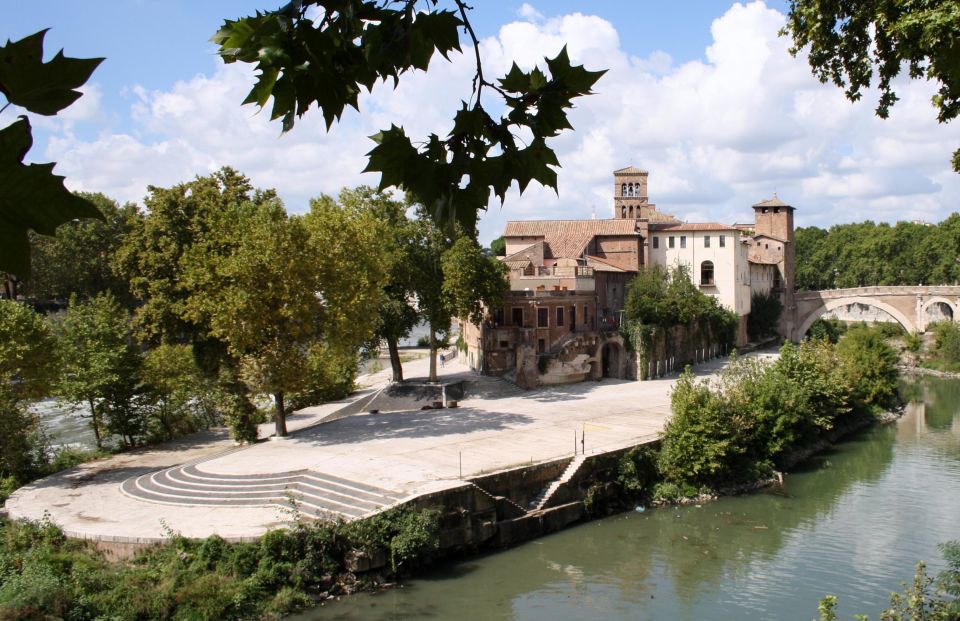
From there, you reach Tiber Island, another key piece of the route. The tour uses this as a turning point: you’re leaving the tight fabric of the ghetto streets and approaching an area shaped by river activity and outside movement—merchants, sailors, fishermen, and foreigners.
Then the walk naturally continues toward Trastevere. This matters because Trastevere isn’t just a separate neighborhood you visit. It’s part of the same “Rome you can walk” chain, where the river changes the feel of what kind of Rome you’re in.
This portion is timed so you don’t feel rushed. Around 20 minutes for Tiber Island gives you a moment to look outward, catch your breath, and reset before the last neighborhood stretch.






Great Synagogue of Rome: why 1901–1904 changes everything
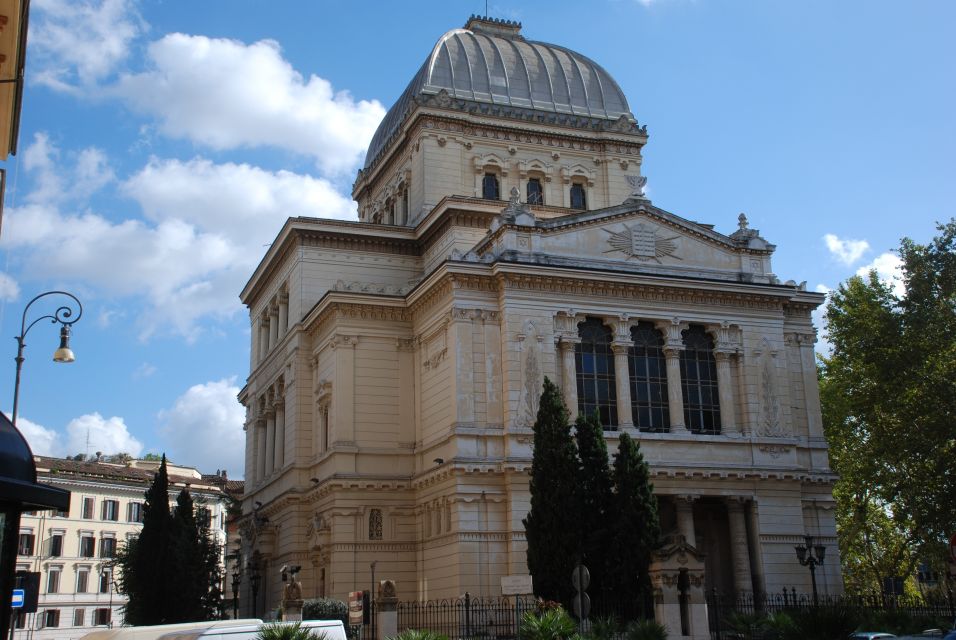
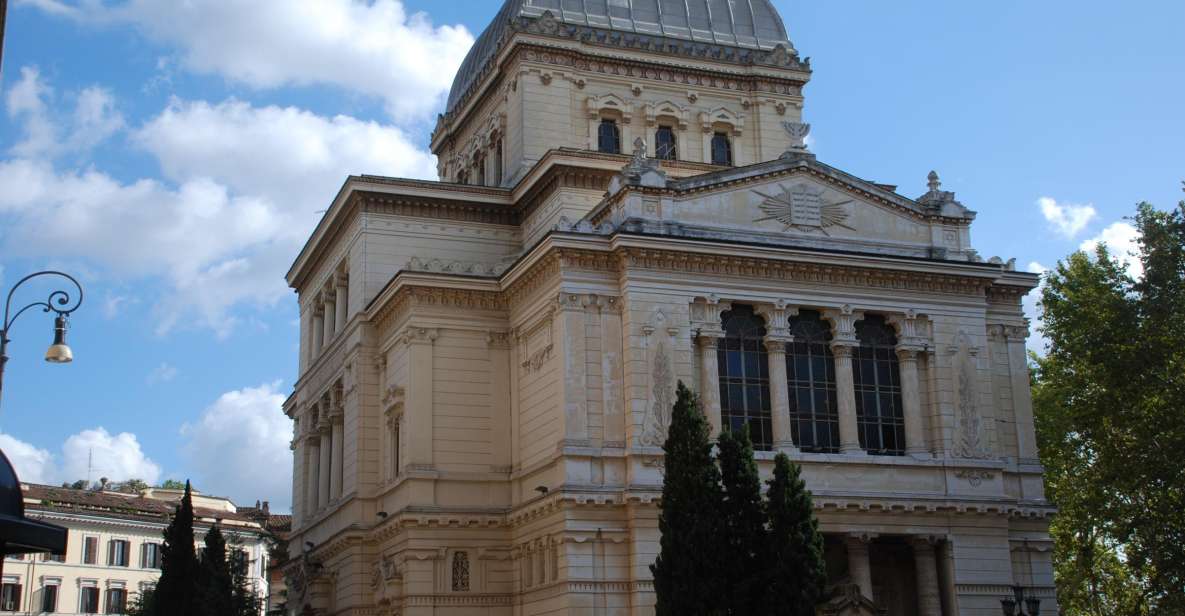
The Great Synagogue of Rome is a centerpiece for the route. After the shift to citizenship, a monumental temple was built between 1901 and 1904, and it was created to celebrate that event. Your guide explains the significance of the timing—not just that the building exists, but why it was built when it was.
This synagogue is still described as the main Jewish temple in Rome, so it’s the kind of stop that grounds everything you’ve learned earlier. You’ll leave the ghetto story behind in one sense, but not in meaning. Instead of focusing only on confinement, you’re now looking at a visible statement of community life and permanence.
Plan for a guided stop of about 20 minutes. It’s enough time to understand the big idea without turning it into a strict checklist. Also, the tour includes skip-the-line entry via a separate entrance, so you spend less time waiting and more time hearing the context you came for.
Trastevere to Piazza Trilussa: cobblestones, old houses, and a satisfying finish
The final stretch is Trastevere, where the street character changes in your legs and your eyes. This part of the tour is all about how the neighborhood looks and feels: narrow, winding streets, cobblestone paths, and ancient houses that keep the old texture of the area.
Your guide uses Trastevere’s street maze to reinforce themes from earlier in the tour. The district developed on the right bank of the river as a commercial zone, shaped by merchants and sailors and the constant presence of newcomers. That mix helps you understand why Trastevere can feel both historic and lived-in.
You end around Piazza Trilussa, where the walk lands you in a lively public space without forcing you to sprint through the last minutes. It’s a good finishing point because it gives you an easy transition: you can keep wandering on foot afterward or regroup for dinner.
The Trastevere stop is about 20 minutes, which is just enough time to absorb the vibe and take a few photos without turning the tour into a slow shuffle.
Private guide quality, skip-the-line entry, and what the $456.21 price really covers
This tour is priced at $456.21 per group up to 1 for a 3-hour private walk. That means you’re paying for privacy and time with an official expert guide, not sharing the cost across a big group.
For me, the value is in three practical things you actually feel:
- A private guide for 3 hours, so you can ask questions and adjust pacing
- Skip-the-line via a separate entrance, which reduces dead time at key sites
- A route that connects multiple major landmarks into one coherent walk, instead of making you piece it together with separate bookings
The guide service is offered by Crazy4rome srls, and the tour is described as private with live guiding in Spanish, English, French, German, Italian, Portuguese, and Russian. So if you’re traveling with a language preference, you’re more likely to get a comfortable match.
Also, the tour notes no tickets required, which is a relief for planning. You can focus on walking, listening, and looking instead of figuring out what to purchase ahead of time for each stop.
Finally, there’s a simple logistical note: luggage or large bags aren’t allowed. So if you’re traveling with shopping bags or a bulky daypack, plan to travel light.
Should you book this Jewish Rome District, Old Ghetto and Trastevere private tour?
If you want a focused, human-scale way to understand Jewish Rome and then finish in Trastevere without wasting hours on transit, I’d book it. This is especially worth it if you care about context—how the community’s geography changed from the ghetto period to the era when the Great Synagogue was built.
Book it if you’re comfortable walking about 3 hours on uneven cobblestones and narrow lanes. If that kind of pavement is tough for you, you might want to rethink the route length or ask the operator about the best way to manage slower pacing.
For what you get—private expert guidance, a historically connected itinerary, and skip-the-line entry—I think the $456.21 private-group price is easier to justify than a standard group tour when you want real clarity instead of rushing through stops.
FAQ
How long is the Jewish Rome District, Old Ghetto and Trastevere private tour?
The tour lasts 3 hours.
Where do I meet, and where does the tour end?
You start at the exit of Antico Caffè del teatro di Marcello (Via del Teatro di Marcello, 42). The tour ends at Piazza Trilussa.
Do I need tickets for the sights on this tour?
No tickets are required, and the tour includes skip-the-line entry through a separate entrance.
What languages are available for the live guide?
The live tour guide is available in Spanish, English, French, German, Italian, Portuguese, and Russian.
Is the tour wheelchair accessible?
Yes, the tour is wheelchair accessible.
Is free cancellation available?
Yes. You can cancel up to 24 hours in advance for a full refund.