REVIEW · ROME
Ancient Rome: Archeological area Largo Argentina
Book on GetYourGuide →Operated by TOURISTATION · Bookable on GetYourGuide
Rome has a way of turning a city square into a history lesson. At Ancient Rome’s Largo Argentina archaeological area, you’re standing on ground tied to more than 2,000 years of life—and one of the sharpest tragedies in Roman legend. I like how the ruins feel close and human-sized, not distant and postcard-flat.
What I really enjoy is the mix of temples and street-level archaeology. And I also like the included 30-minute multimedia presentation, because it helps you translate what you see into what the place was trying to be.
One thing to consider: this is not a guided walking tour. You’ll get audio and materials, but if you want a live guide telling you every detail, you may feel a bit on your own.
In This Review
- Key things to know before you go
- Largo Argentina: a square where Rome has layers
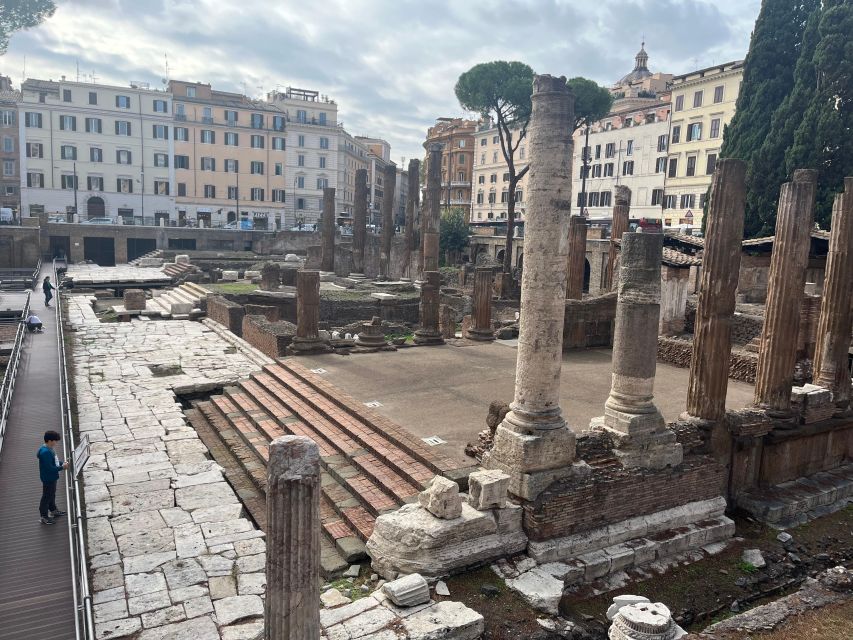
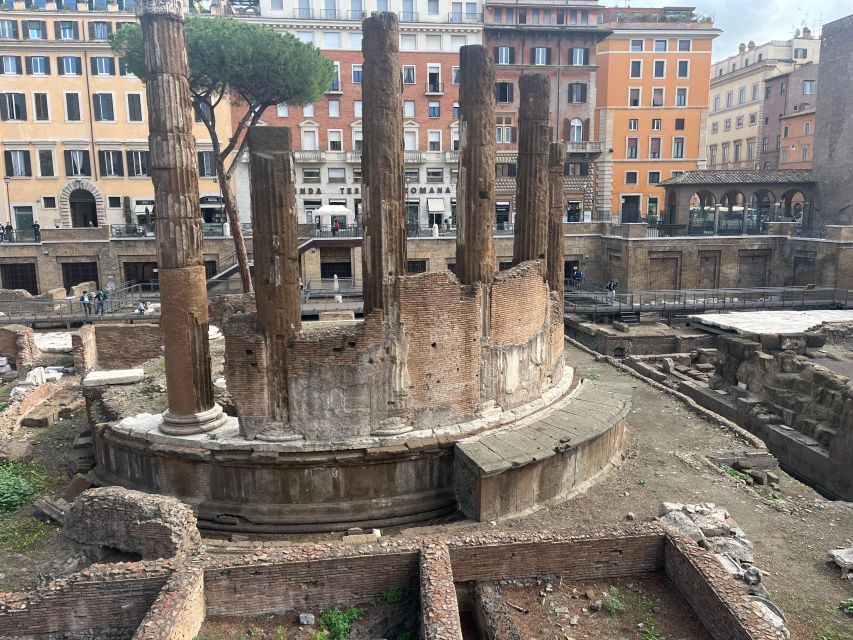
- What you’ll actually see: temples, Curia of Pompey, and the “ancient island”
- The 30-minute multimedia video: how it helps you see what’s invisible
- Audio guide in English: self-guided, but not self-blank
- Entering the excavations: what “reserved entrance” really means for you
- Timing and duration: how to make one hour feel like more
- Price and value: is $23 a good deal for Largo Argentina?
- Ticket pickup at Touristation Aracoeli: what to expect and how to avoid stress
- Practical rules you should follow before you arrive
- Who this is best for—and who might skip it
- Should you book Ancient Rome: Archeological area Largo Argentina?
- FAQ
- How long is the Ancient Rome: Archeological area Largo Argentina experience?
- Where do I redeem my voucher for this activity?
- What’s included with the ticket?
- Is there a guided tour?
- What language is the audio guide available in?
- What should I bring, and what items are not allowed?
Key things to know before you go
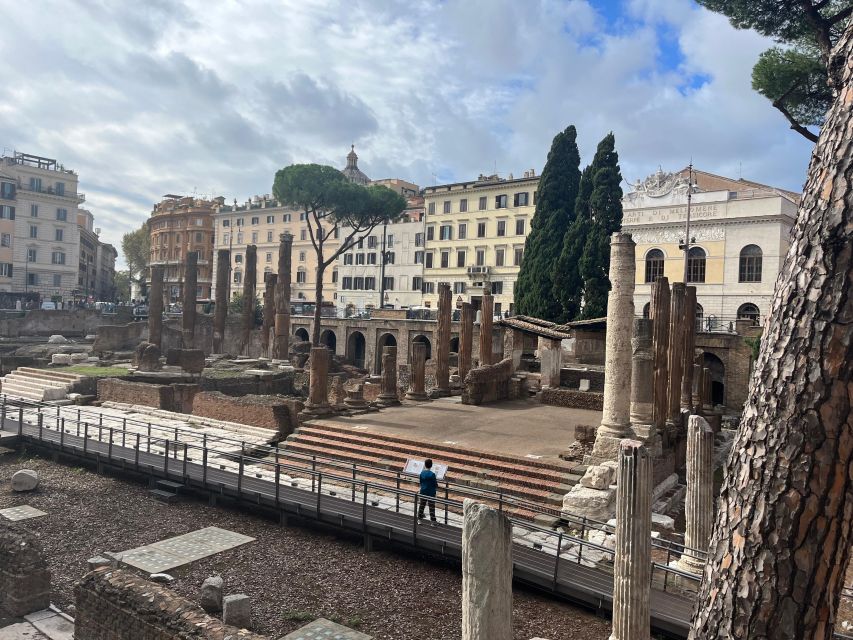
- Caesar’s assassination location: you’ll visit remains linked to the killing on the Ides of March, 44 BC.
- Four temples from the 4th to 1st centuries BC: multiple layers, not just one monument.
- A site that kept living for 2,000+ years: imperial phases and even medieval structures survive.
- Built-in context via a 30-minute multimedia video: it helps you picture the vanished buildings.
- Audio guide in English: you control the pace as you move through the area.
- Pick-up is at Touristation Aracoeli: plan a short walk from the office to the excavations.
Largo Argentina: a square where Rome has layers
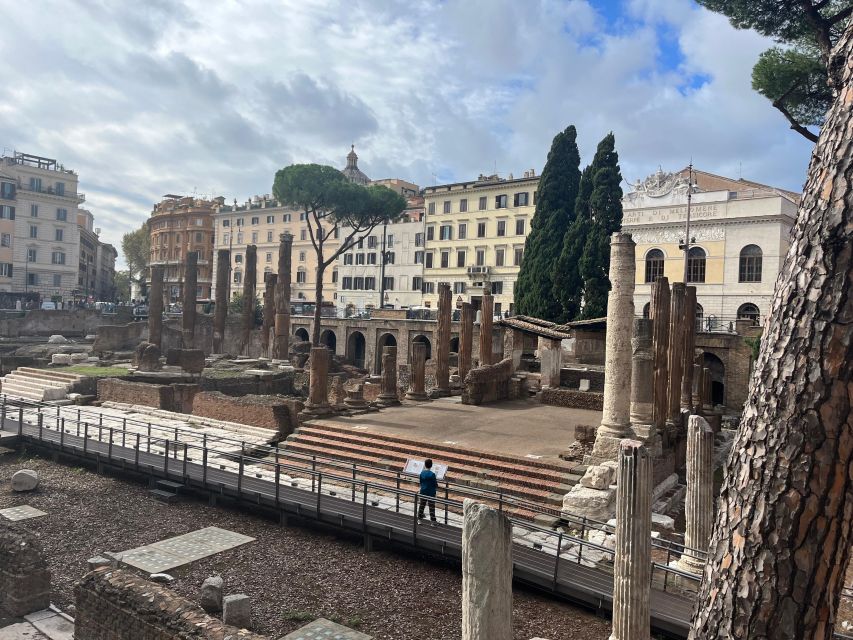
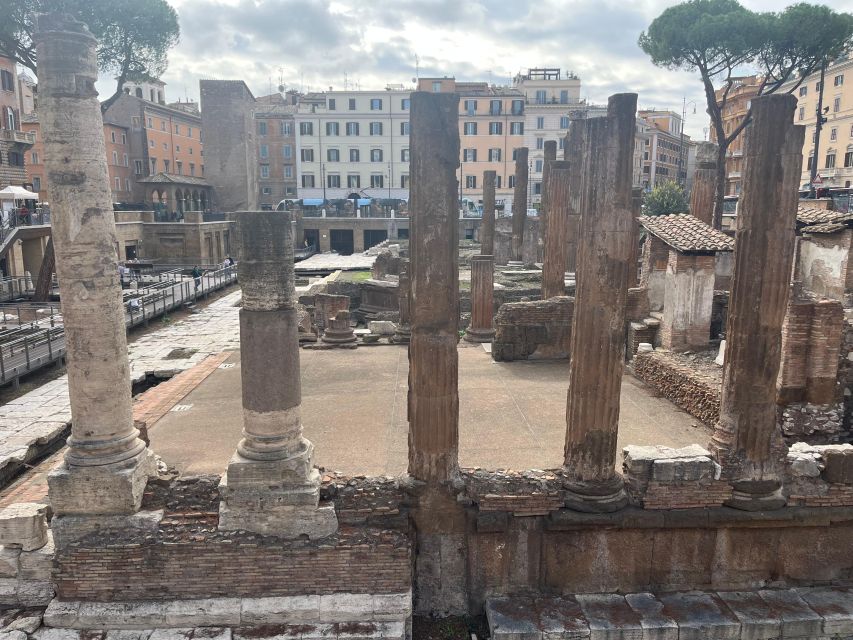
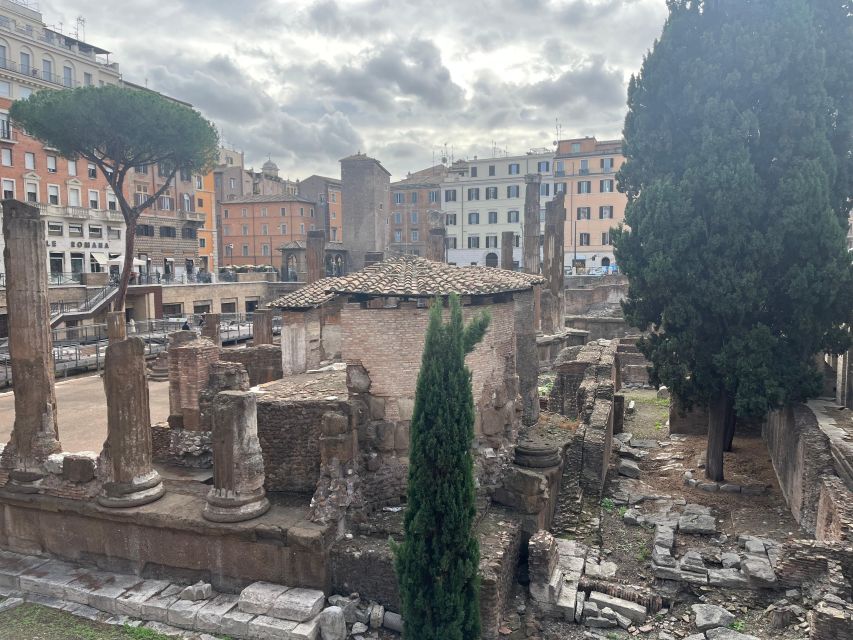
Largo di Torre Argentina is one of those rare Rome sights where the past isn’t behind velvet ropes. It’s right there, in the open air, spread out in excavated pockets that feel like you stepped into a time machine made of stone and tuff. The “wow” isn’t just that it’s old. It’s that it’s old and still legible—you can sense how the space changed as Rome changed.
The site matters because it lived through different eras. You can see architectural pieces from different periods: not only early sacred buildings, but later Roman phases and structures that show up after centuries of upheaval. That uninterrupted timeline is part of the emotional punch here. You’re not just looking at one snapshot—you’re looking at repeated reuse of the same sacred ground.
And then there’s the darker reason people come: the area is tied to the assassination of Julius Caesar. Even if you know the story already, seeing the physical remains connected to the claim gives it a different weight.
You can also read our reviews of more tours and experiences in Rome.



What you’ll actually see: temples, Curia of Pompey, and the “ancient island”
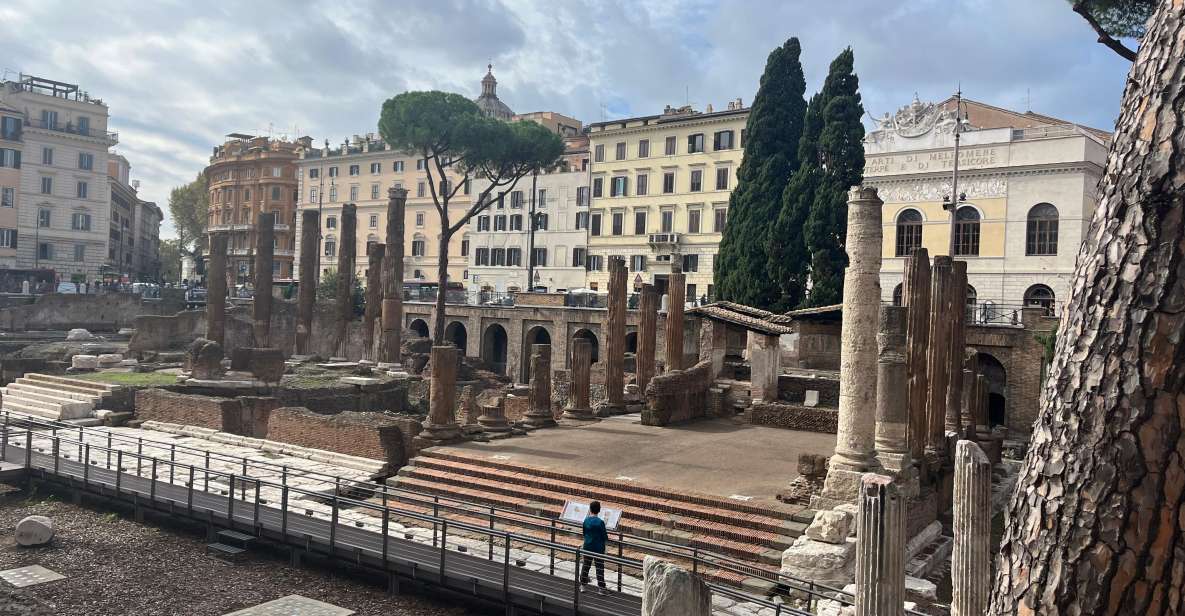
This isn’t a museum with one room and a few plaques. It’s a carved-out archaeological area with multiple zones, so the visit feels like moving through chapters.
You’ll get to admire four temples dating from between the 4th and 1st centuries BC. That span is important. Temples weren’t built all at once here and then forgotten. They reflect long-running religious importance—sacred architecture designed to last, even when the political world around it changed.
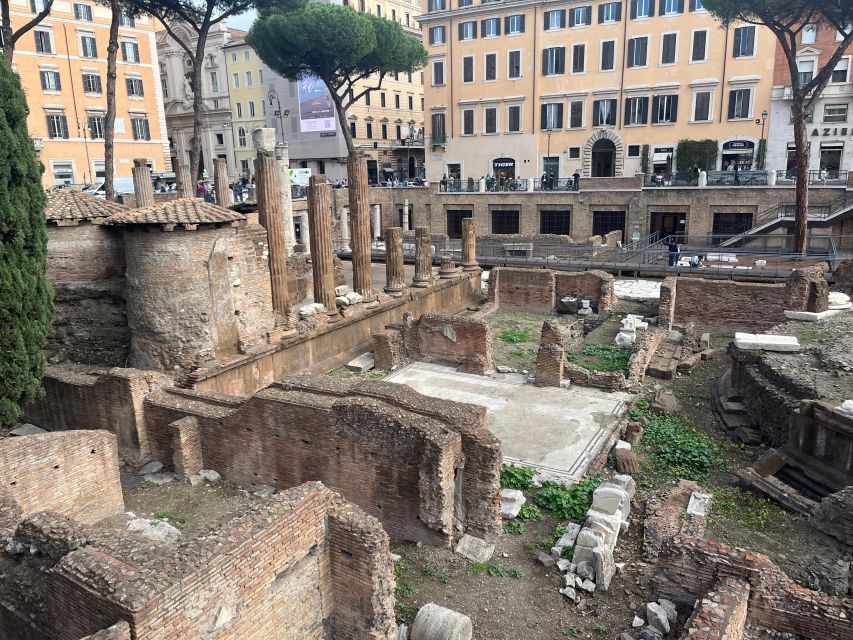
Next comes the part most people remember: the remains related to the Curia of Pompey, connected to where Julius Caesar was killed on the Ides of March in 44 BC, as reported by ancient sources. You’re not standing at a movie set. You’re looking at archaeological evidence—specifically the tuff base associated with the setting. That detail matters because tuff is the building stone that shaped so much of Rome.
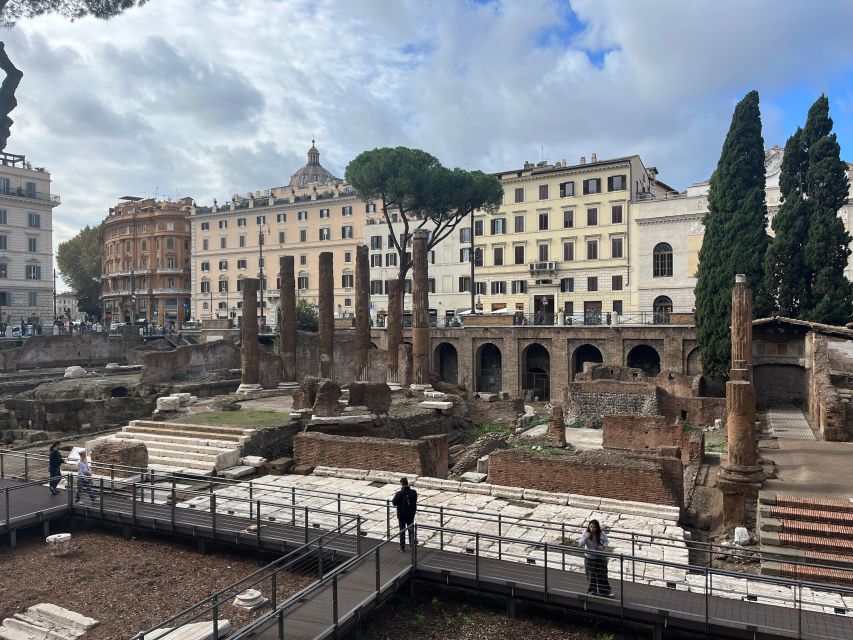
Finally, there’s the feeling that you’re visiting an “ancient island” surrounded by modern movement. The excavations sit in the middle of today’s city. Even though the ruins are exposed, they don’t feel random; they feel like a preserved core of something larger that used to fill the area.
The 30-minute multimedia video: how it helps you see what’s invisible
One of the included items that makes this experience work is the 30-minute multimedia video. Without it, a lot of archaeological sites can feel like a pile of stones with good lighting. With it, you get help mapping the ruins to what they would have looked like when they were in use.
The video functions like a translator. You start learning the “shape” of the place before you start walking. That’s especially useful at Largo Argentina, because the highlights are spread out: temples in one area, and Caesar-related remains in another, plus evidence of later occupation. When the visuals line up with the site, the stone starts to make sense.
I also like that this doesn’t demand your attention for hours. Thirty minutes is long enough to set the scene, but short enough that you won’t feel trapped by screens. You can still go outside and let the site do the talking.
Audio guide in English: self-guided, but not self-blank
This activity includes an App Audioguide of Rome in English, plus reserved entrance to the excavations. Since a guided tour isn’t included, your experience will depend on how you use the audio. The upside is control: you can pause when something catches your eye, or move along quickly if you’re already familiar with Roman architecture.
The audio approach fits well with Largo Argentina because you’re not doing a long walking circuit. The space is compact, but layered. That means the audio content can stay focused on what you’re seeing right now—temples, architectural phases, and the Caesar connection.
A practical tip: pace yourself so you don’t finish the audio before you’ve had time to look at what it’s describing. If you speed through, you’ll miss the best part of archaeological sites—the moment when interpretation clicks into the actual shapes and materials in front of you.
Entering the excavations: what “reserved entrance” really means for you
You’ll have entrance reserved specifically for the Largo Argentina excavations, and the experience is described as allowing you to skip the ticket line. In practice, that’s most useful when the site is busy. Even a small time-saving can matter when you’re juggling multiple top sights in a short trip.
That said, I want you to calibrate expectations. A lot of the site is visible from the outside. If you’re already standing nearby and the line looks short, skipping it may feel less important than you hoped. Also, there is a small underground museum area, so if you expect a huge museum, you might be surprised.
Reserved entrance mainly helps you get in smoothly and start the video/audio sequence without delays. You’re buying access plus context, not just the privilege of walking through a gate.






Timing and duration: how to make one hour feel like more
The duration is 1 hour. For a city like Rome, that’s a manageable commitment. It also keeps the experience tight: you’re not forced into a long schedule where you end up tired and scanning details you can’t absorb.
Here’s how I’d plan it so it lands well: place this stop when you still have energy to pay attention. The Caesar angle is compelling, but the real value is in seeing the architecture and timeline. If you arrive right after a packed day at several major sites, you may find you’re reading rather than experiencing.
Another timing note: the scheduled time on your booking refers to when you arrive at the ticket office (the Touristation Aracoeli location). The office is at Piazza d’Aracoeli 16, and you’ll redeem your voucher there. You should expect the walk from the office to the archaeological area to be short—think “quick city transfer,” not a long trek.
Price and value: is $23 a good deal for Largo Argentina?
At about $23 per person for a 1-hour experience, you’re paying for a few specific components:
- Reserved entrance to the excavations
- A 30-minute multimedia video
- An English audio guide
- Assistance at the meeting point
- A paper map and WiFi
Value comes down to your learning style. If you enjoy Roman history, architecture, and want help visualizing what you’re seeing, this price can feel fair because you’re not just buying entry—you’re buying interpretation tools.
If you mostly want the outside view and quick photos, you might feel this is pricier than it needs to be, since much can be seen from street level and the underground museum is described as small. In other words: the ticket is best if you want to understand, not just look.
Ticket pickup at Touristation Aracoeli: what to expect and how to avoid stress
Your meeting point is TOURISTATION ARACOELI, Piazza d’Aracoeli 16. It helps to know what to look for: there’s a fountain and orange flags in front of the office entrance.
The key practical point is timing. Your selected time corresponds to the office visit. Get there a little early so you’re not rushing with a passport in hand.
Also, keep in mind what’s allowed. You’ll want to travel light and cleanly—no large bags. If you’ve got day-trip luggage, this might not be your moment to lug it around Rome.
Practical rules you should follow before you arrive
This site has restrictions, and they’re worth respecting so you don’t get turned away at the entrance. You should bring a passport. Pets aren’t allowed, and you should avoid glass objects, alcohol and drugs, and luggage or large bags.
These rules are typical for archaeological sites, but they matter here because the excavations aren’t a big hall you can roam freely with oversized items. Plan for a simple, compact visit.
If you’re traveling with a camera or anything breakable, double-check what you’re carrying. Rome is flexible, but sites are not always.
Who this is best for—and who might skip it
This stop is best for you if you like:
- Roman political history, especially the Caesar story
- Architecture that spans centuries (not just one famous ruin)
- A short, structured history encounter you can fit into a busy day
You’ll likely get the most out of it if you’re the type who enjoys turning “I’ve heard of that” into “I can picture the setting.” The multimedia video and English audio guide are doing real work here.
On the flip side, if your top priority is a long, guided, conversation-heavy experience, or if you already know Roman architecture well and don’t need audio context, you might decide the outside view plus nearby exploring is enough. In that case, the experience is still interesting—but the extra cost may not feel necessary.
Should you book Ancient Rome: Archeological area Largo Argentina?
Yes, I’d book it if you want a focused, one-hour introduction to a major Roman turning point—Caesar’s assassination context, the surrounding sacred space, and four temples from the late Republic era. The included video and audio guide make the $23 feel more like education than just entry.
I wouldn’t rush to book if you’re only interested in a quick look from the street or you expect a large museum experience. The underground museum is described as small, and much of the site is visible outside.
If you’re trying to choose between spending money on this versus a bigger timed attraction, ask yourself one question: do I want to understand what I’m seeing? If the answer is yes, Largo Argentina is a smart, efficient use of your time in Rome.
FAQ
How long is the Ancient Rome: Archeological area Largo Argentina experience?
The duration is 1 hour.
Where do I redeem my voucher for this activity?
You redeem your voucher at TOURISTATION ARACOELI, Piazza d’Aracoeli 16. There is a fountain and orange flags in front of the office entrance.
What’s included with the ticket?
It includes a 30-minute multimedia video, reserved entrance to the Largo Argentina excavations, the App Audioguide of Rome (English), assistance at the meeting point, a paper city map, and WiFi.
Is there a guided tour?
No. A guided tour is not included.
What language is the audio guide available in?
The audio guide is available in English.
What should I bring, and what items are not allowed?
Bring a passport. Pets aren’t allowed, and you also can’t bring glass objects, luggage or large bags, or alcohol and drugs.