REVIEW · ROME
Houses of Augustus and Livia Private Tour with Roman Forum and Palatine Hill
Book on Viator →Operated by Through Eternity Tours · Bookable on Viator
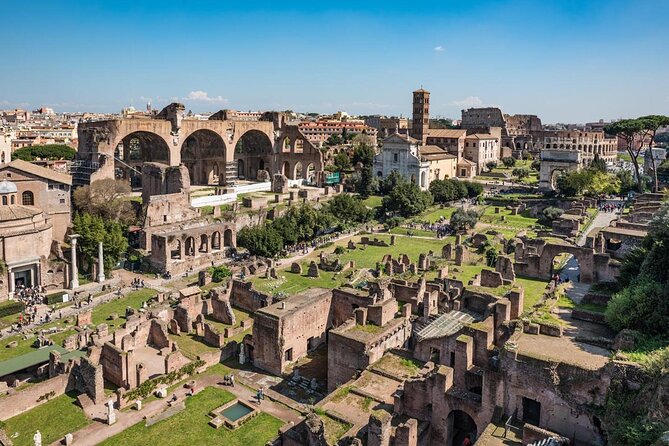
Rome’s power center in one tidy loop. This private tour focuses on three big-ticket sites—Roman Forum, House of Augustus and Livia, and Palatine Hill—with expert English commentary and admission tickets built into the price. If you like your Rome visits structured and not pieced together from ticket lines and guesswork, this format does that work for you.
I especially like the value math here: you get skip-the-line entry and an expert private guide, not just a timed walk. I also like the group-friendliness, since headsets are provided for groups of 6 or more, so you can hear the guide without craning your neck through crowds.
One consideration: three sites in about 3 hours can feel fast if your group stops often to ask long questions or takes lots of photos. To keep it smooth, you’ll want everyone to show up on time and stay close to the guide during transitions.
In This Review
- At a glance: what makes this tour work
- Start at Largo Corrado Ricci, End on Palatine Hill
- Roman Forum in a focused, guided hour
- House of Augustus and Livia: seeing imperial Rome with a guide
- Palatine Hill: wider context after the Forum
- Price and logistics: what you’re really paying for
- Private-group pacing: headsets, questions, and staying together
- Who should book this Augustus, Forum, and Palatine tour?
- Should you book it?
- FAQ
- What sites are included on this private tour?
- How long is the tour?
- Is skip-the-line access included?
- Are admission tickets included?
- Do you provide headsets?
- What language is the tour offered in?
- Where does the tour start and end?
- Is transportation or food included?
- Can the tour change due to the Jubilee?
At a glance: what makes this tour work
- Skip-the-line access plus admission tickets included at each major stop
- English-speaking private guide for your group, not mixed tours
- Headsets for 6+ people, which helps a lot on crowded ruins
- One-hour blocks at each site to keep the story coherent
- Start at Largo Corrado Ricci and end on Palatine Hill, so you finish right near your next move
- Jubilee restoration updates possible, meaning a few things may change on the ground
Start at Largo Corrado Ricci, End on Palatine Hill
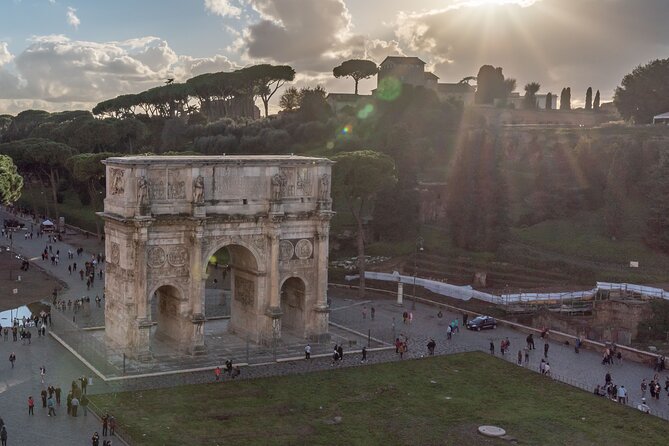
This tour meets at Largo Corrado Ricci, 43 (00184 Roma) and finishes on Palatine Hill at Via di S. Gregorio, 30 (00186 Roma). That ending point is useful: you’re not marching back across town afterward. It also means you can plan your next stop around the Palatine area rather than re-timing everything from scratch.
You’ll get a mobile ticket, and the experience is confirmed at booking. The meeting location is described as near public transportation, which matters in Rome where traffic and walking times can be unpredictable. If your group is traveling with a mix of ages or mobility comfort levels, being near transit helps you avoid last-minute stress.
The tour is private, so it’s only your group. That’s a real quality-of-life upgrade on sites that get packed, because you can keep your pace and question style consistent. It also means the guide can steer you toward what your group cares about most—within the time window.
And because the tour includes entrance, you’re less likely to lose time buying tickets or negotiating lines. In Rome, that can be the difference between a good afternoon and a rushed one.
You can also read our reviews of more private tours in Rome



Roman Forum in a focused, guided hour
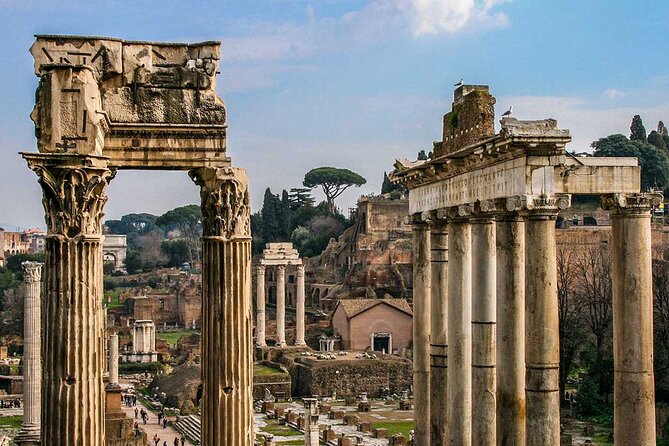
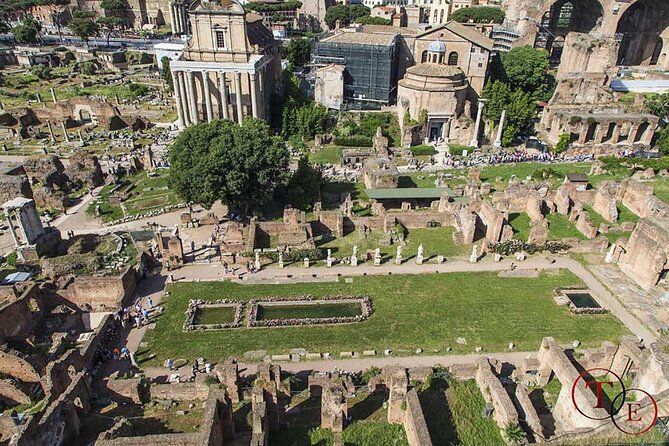
The Roman Forum is the first stop, with a 1-hour visit and the admission ticket included. This is the place where you can feel how layered Rome is—public life, power, and myth all sitting on top of each other in the same walking area. The guided format matters here because the Forum can look like a field of ruins unless someone connects the dots.
Expect the guide to talk as you walk, using the time to give structure instead of dumping dates. If your group is six people or more, you’ll use headsets, which makes it easier to follow explanations even when the crowd thickens or you’re not standing shoulder-to-shoulder.
One practical tip: plan to stay attentive during the transition from the street into the ruins. The Forum is the sort of site where small orientation details help a lot. Once you understand the guide’s landmarks, the rest of the hour becomes easier to absorb.
Potential drawback? The Forum’s one-hour block means you can’t do it slowly. That’s not a flaw—just a trade. If your group tends to linger and read every panel, you might feel slightly time-pressured. If that’s you, you’ll enjoy this tour most if your group chooses questions over long stops.
House of Augustus and Livia: seeing imperial Rome with a guide
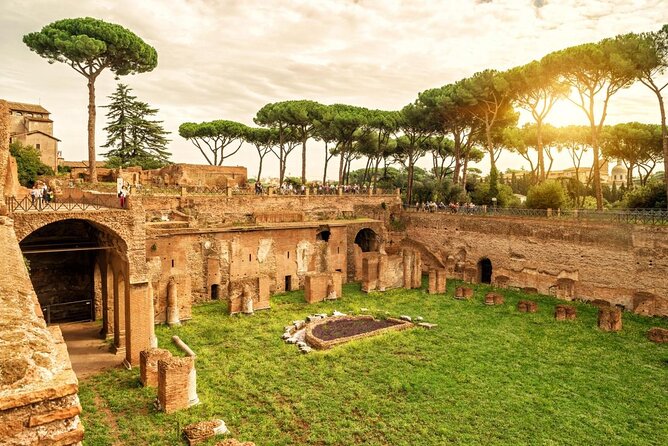
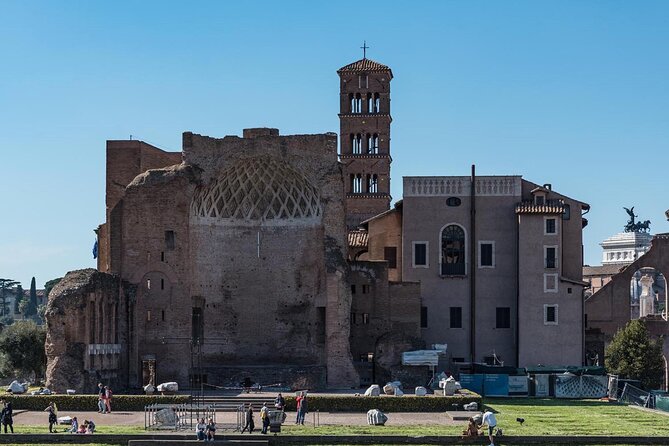
Next comes the House of Augustus and Livia, again about one hour with admission included. This is a different kind of Rome moment than the Forum. Instead of civic spaces, you’re moving into the world of an imperial residence, where the scale and layout are meant to signal status.
A guided private visit helps because it turns the space from stones into story. You can ask why certain areas feel designed for display or how the site fits into what you just saw in the Forum. That continuity is the point of doing these stops back-to-back rather than separately.
This is also where a good guide can make the visit feel personal for your group. One review highlighted how Marta delivered standout commentary, and another noted Brandon’s friendly, history-driven approach. Vittorio was praised for answering questions and pointing out more obscure structures, which is the kind of payoff you want in a museum-like site segment.
If you care about connecting what you studied to what you see, this stop is especially satisfying. One reviewer tied their Latin education to the Forum experience, and that same “classroom-to-stones” mindset usually lands well when you move from public life to elite life.
Practical note: any time you’re touring a house site, plan for uneven footing and tighter navigation. Wear solid shoes and keep your group together. You’ll spend less time waiting and more time listening.
Palatine Hill: wider context after the Forum
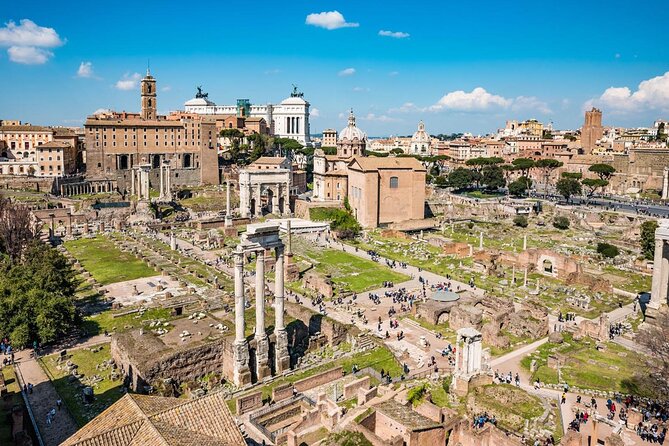
The final major stop is Palatine Hill, also about one hour with the admission ticket included. Palatine is the kind of place where scale helps. The hill setting naturally widens your frame, so your brain can connect the Forum area to the bigger “where power lived” picture.
I like this stop as a closer because it gives your legs a change of pace. You’re still in ruins territory, but the setting helps you see why the Palatine area mattered. A private guide can point out orientation cues so you don’t just wander uphill and hope the story makes sense.
If your group is into viewpoints, this is usually where you’ll get them—at minimum, you’ll get a sense of Rome’s layout because you’re on higher ground. Just don’t assume every angle is open or quiet. This is Rome, so bring patience and plan to share space.
One more reason the Palatine stop is valuable: it’s a natural wrap-up. After the Forum and an imperial residence visit, you’re ready to step back and understand the broader setting. That’s exactly what Palatine does well.
And since the tour ends here (on Via di S. Gregorio), you can keep exploring without recalculating your itinerary from the start point.
Price and logistics: what you’re really paying for
The price is $295.26 per person for about 3 hours. That number can look steep until you break down what’s included. Here’s what you get that usually costs extra when booked separately: skip-the-line access, admission tickets at each site, an expert English-speaking private guide, and headsets for groups of 6 or more. The tour also says all fees and taxes are included.
That “no surprise fees” element matters more than people think. Rome is famous for nickel-and-diming visitors at the last minute. When the big line items are handled upfront, you can focus on the visit instead of the bill.
Now the clear-offs: transportation to and from the meeting and end points isn’t included. Food and beverages aren’t included either, and gratuities are optional. That’s normal, but it affects how you plan your timing. If you’re doing this earlier in the day, you’ll want a simple food plan nearby or accept that you’ll eat afterward.
For value, also consider the “private” part. You’re paying for your group’s time with a guide who can shape explanations to your pace. Reviews praised guides like Siriki and noted how passion and enthusiasm can make the whole Forum experience feel like the best visit they’ve had. That’s what you’re paying for: a focused, human explanation inside expensive ticketed spaces.
My advice: if your group includes people who get annoyed by crowded audio tours, or if you want the guide to answer questions, this pricing starts to look more like a convenience fee that saves stress.






Private-group pacing: headsets, questions, and staying together
This tour is designed for groups that want a real conversation. It’s private, meaning only your group participates. That alone changes the feel of the visit. You’re not squeezed into someone else’s route, and your guide can adjust how long you linger at the parts that grab your attention.
Headsets are provided when your group is 6 or more. That’s a big deal on ruins where wind, distance, and crowd noise can make normal speaking frustrating. With headsets, you’re more likely to follow the full storyline the guide builds across stops.
One pattern I’d aim for: make your questions short and specific. That helps your guide cover the big themes without feeling like the schedule is always slipping. If your group tends to run long on questions, you can still do that—but you’ll need to accept a shorter amount of time per stop.
Also, the tour moves from start point to an end point on Palatine Hill. So you’ll want your group to stay organized with bags, water, and meeting gear. The meeting is a fixed location and the finishing point is on the hill, so don’t plan on splitting up for long.
Finally, there’s a Jubilee-related warning: some monuments may be under restoration. That could mean slight changes on what’s accessible or what the guide emphasizes. It doesn’t mean the tour is cancelled, but it does mean flexibility is smart.
Who should book this Augustus, Forum, and Palatine tour?
This tour fits best if you have a group size that benefits from a private guide and clear audio. It’s also a great match for first-timers who want the core “Rome power” trio without having to plan three separate ticket strategies.
You’ll likely enjoy it if your group includes people who like questions. Multiple guides tied to these tours—Marta, Brandon, Vittorio, and Siriki—were praised for taking time to answer and for bringing enthusiasm to the Forum explanation. That’s exactly the kind of energy that keeps a big site from feeling like just walking.
It’s also a strong choice for families, friends, or co-workers. The headset option for six-plus people signals that it’s built with group comfort in mind. And because admission tickets are included, it’s easier to keep everyone aligned on what’s covered.
If you’re planning around the Jubilee, keep your eyes open for messages from the operator. Restoration can affect monuments, and the guide may adjust focus accordingly. Rome in major public periods can be a little more “under construction,” so build in calm.
Most travelers can participate. Still, like any multi-site ruins day, you should expect lots of walking over uneven surfaces. If your group has mobility limits, plan your comfort level and bring suitable footwear.
Should you book it?
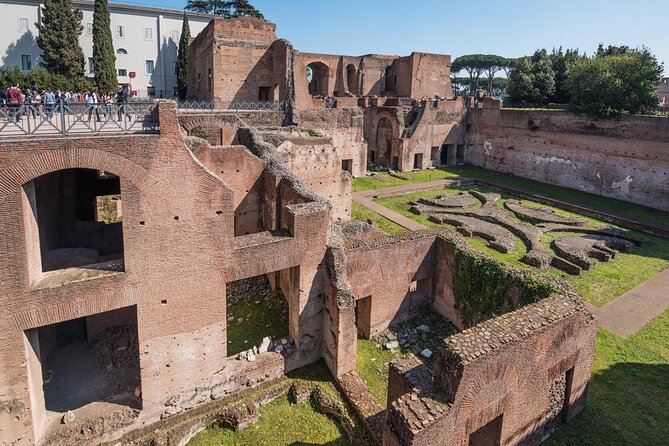
If you want a smooth, guided hit of the Roman Forum plus two imperial-focused stops, I think this one is worth booking. The big reason is the structure: skip-the-line entry, admission tickets included, expert English commentary, and headsets for bigger groups.
Book it if you have a group that benefits from private guidance and you’d rather pay for a clean experience than piece it together yourself. The tour is also showing strong demand—on average it’s booked well in advance—so securing your preferred time before your plans solidify is smart.
Skip it only if you want a slow, unguided wander with lots of independent reading and detours. This is built around an efficient rhythm, not a self-guided marathon. If that sounds like you, you’ll be happier with a more open-ended plan.
FAQ
What sites are included on this private tour?
The tour covers the Roman Forum, the House of Augustus and Livia, and Palatine Hill, in that order.
How long is the tour?
It runs for about 3 hours.
Is skip-the-line access included?
Yes. Skip-the-line access is included.
Are admission tickets included?
Yes. Admission tickets are included for each stop.
Do you provide headsets?
Headsets are provided for groups of 6 or more.
What language is the tour offered in?
The tour is offered in English.
Where does the tour start and end?
It starts at Largo Corrado Ricci, 43, 00184 Roma RM, Italy and ends at Palatine Hill, Via di S. Gregorio, 30, 00186 Roma RM, Italy.
Is transportation or food included?
No. Transportation to and from the meeting and end points, plus food and beverages, are not included.
Can the tour change due to the Jubilee?
Yes. Due to the Jubilee, some monuments may be under restoration, and you may receive messages about potential changes.