REVIEW · ROME
Guided tour of Roman Forum & Palatine Hill
Book on GetYourGuide →Operated by Hili srl · Bookable on GetYourGuide
Rome’s political heart is still in view. This semi-private 2-hour walk through the Roman Forum and Palatine Hill is led by a licensed local guide, with the route beginning at Trajan’s Column and running through the key places where ancient Romans voted, spoke, and staged triumphs. I love the small group size (up to 14 people) because Ruggero can actually give you clear answers instead of herding a crowd. One catch: Roman Forum entry tickets are not included, so you’ll need to buy them ahead of time.
I also love the payoff on Palatine Hill. You get spectacular views over the ruins, plus a proper photo-and-walk moment near areas tied to imperial life and the Farnese gardens. With a guided pace built for a 2-hour experience, you come away with a sense of what you’re looking at, not just where you walked.
In This Review
- Key things to know before you go
- Starting at Trajan’s Column: where the walk gets its focus
- Imperial Fora: the state’s big-stage neighborhoods
- Roman Forum core: speeches, elections, and the Temple of Romulus
- Arch of Titus: a dramatic punctuation mark in the route
- Temple of Venus and Roma: religion meets civic identity
- Palatine Hill: spectacular views and the best perspective on imperial space
- Farnese gardens and Domus Augustana: seeing how emperors lived
- Your itinerary in motion: how the 2 hours usually feel
- Price and value: what you’re paying for (and what you must add)
- Who this guided Roman Forum and Palatine Hill tour suits best
- Should you book Ruggero’s Roman Forum and Palatine Hill tour
- FAQ
- How long is the guided tour?
- Is the tour guided in English?
- How big is the group?
- Where do I meet the guide?
- Where does the tour end?
- Are Roman Forum tickets included in the price?
- What are some of the main stops on the tour?
- Is this tour suitable for wheelchair users?
- What’s the cancellation policy?
- Is there an option to pay later?
Key things to know before you go
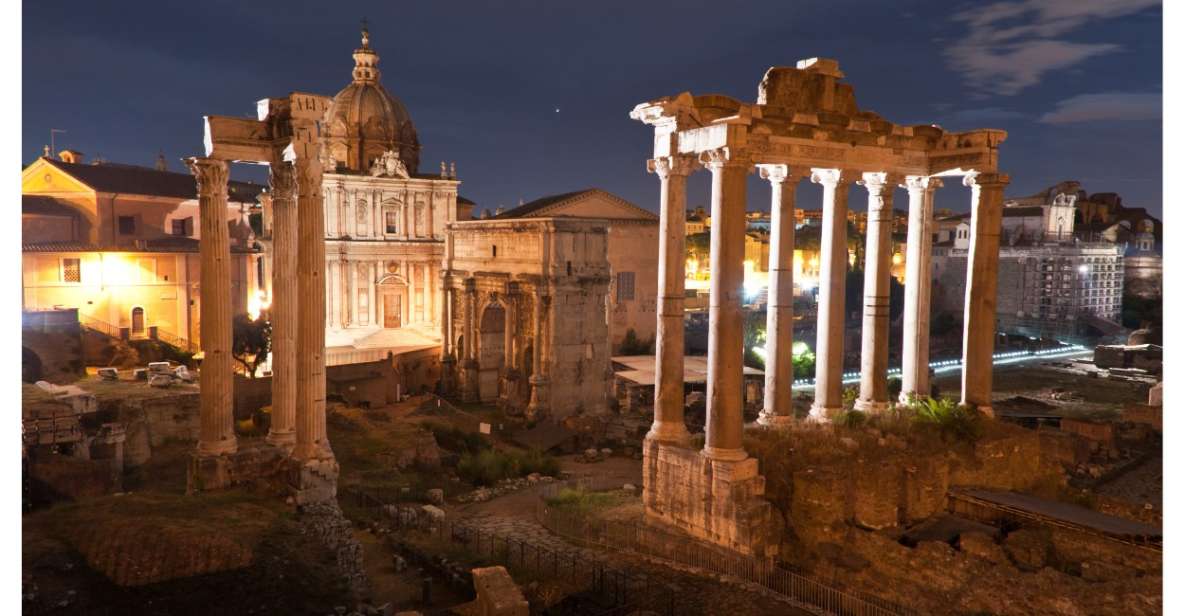
- Licensed local guide Ruggero leads the whole route in English, from Trajan’s Column to the Arch of Constantine.
- Up to 14 people keeps it semi-private, so the explanations feel personal rather than rushed.
- Roman Forum plus Palatine Hill are covered in one shot, letting you connect politics, religion, and imperial power across the hill-and-forum landscape.
- Major monuments are timed into the walk, including the Arch of Titus and the Temple of Venus and Roma.
- You’ll get viewpoints, including a top perspective from Palatine Hill and photo time focused on the best ruins angles.
- Roman Forum tickets aren’t included, so plan extra minutes for booking online or stopping at the ticket desk.
Starting at Trajan’s Column: where the walk gets its focus
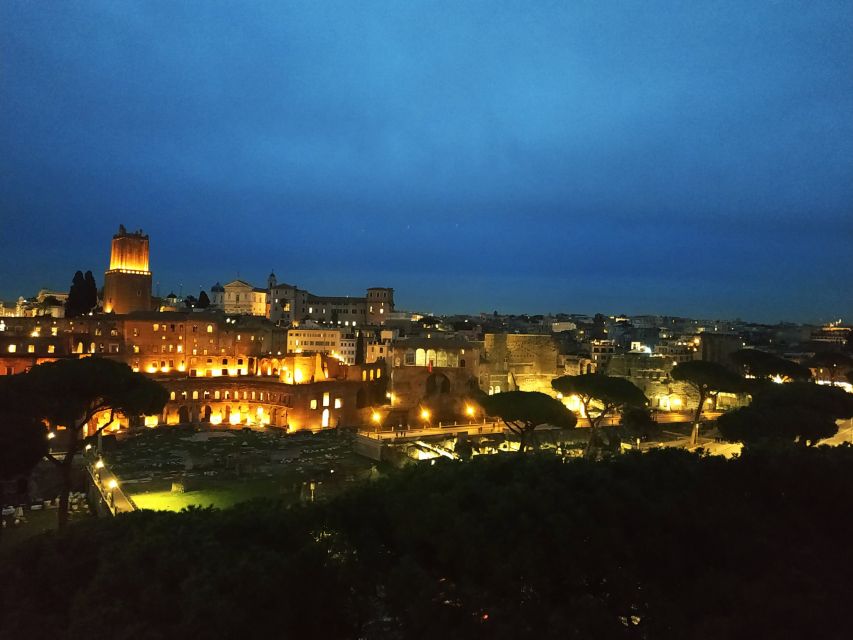
You’ll meet your guide Ruggero at the front of Trajan’s Column, near the gate. That matters more than it sounds. Trajan’s Column is a strong visual anchor, and starting there helps you get your bearings fast before you move into the maze of ancient structures.
From the start, this tour is designed to do more than list monuments. You’re led to interpret what the space meant in daily Roman life: places for public speech, civic decisions, and state ceremony. If you’ve ever felt lost in the Forum, this beginning point and guided context make a big difference.
You can also read our reviews of more guided tours in Rome



Imperial Fora: the state’s big-stage neighborhoods
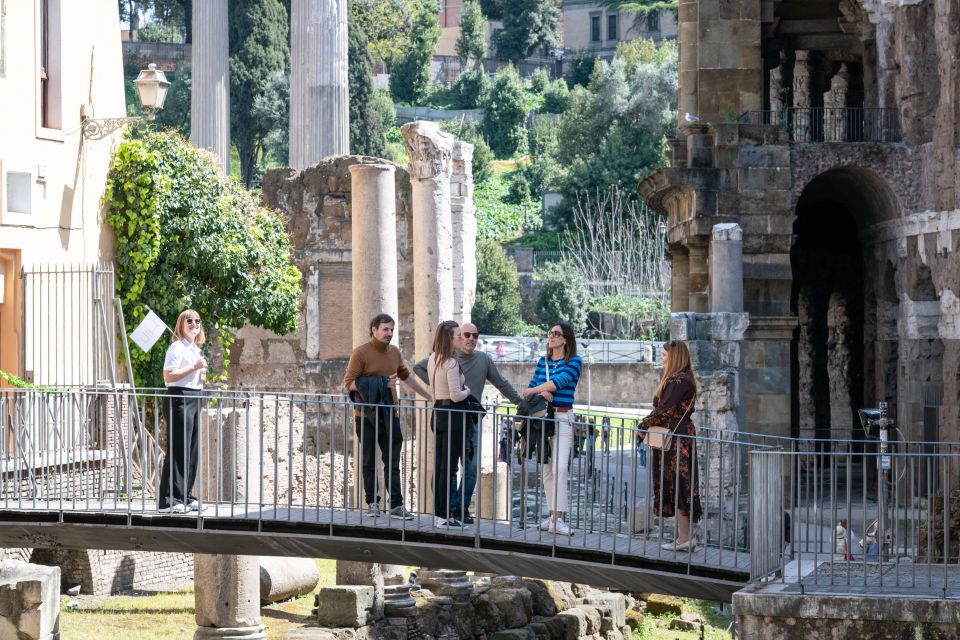
Next comes Imperial Fora, with a short guided visit. Think of this as the Roman government’s performance space. Even in ruins, you can read the intention: these were not casual plazas. They were designed for power to be seen and felt.
In a compact tour, you don’t get to linger everywhere, but the timing works. A guided stop here sets up what you’re about to see in the Roman Forum itself. When you understand the idea of imperial planning and public messaging, the later monuments stop feeling like scattered stones.
A small consideration: because the tour is only about two hours, you’ll be moving steadily. If you want to slow down for every photo or read every plaque, you might feel the pace. If you like a guided storyline, the tempo is a plus.
Roman Forum core: speeches, elections, and the Temple of Romulus
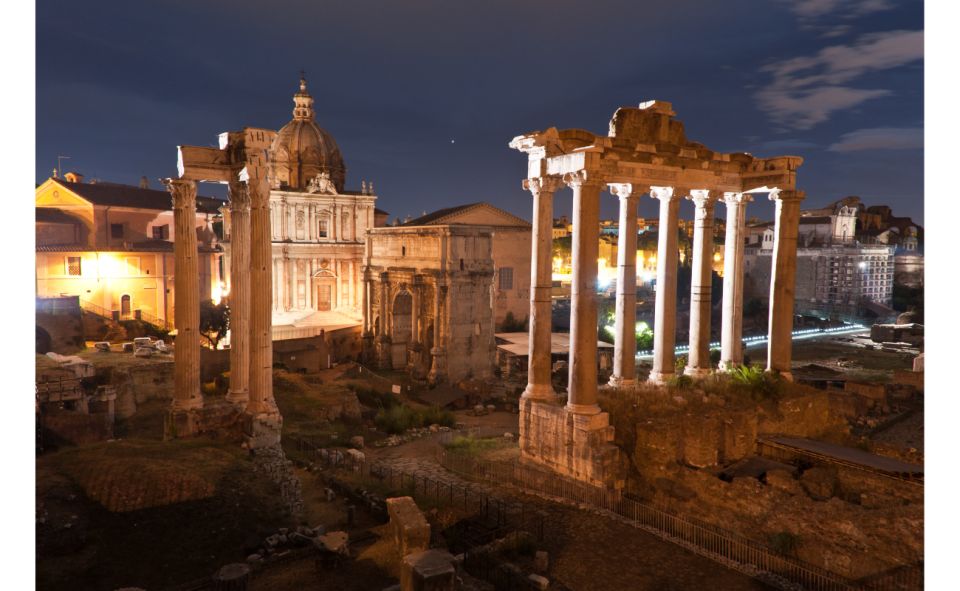
The Roman Forum stop is the heart of the itinerary, with a guided visit that’s longer than the quick monument checks elsewhere. This is where you really connect the physical space to Roman civic life.
You’re taken through key themes: triumphal processions and elections, plus public speeches where politics wasn’t behind a desk—it was in the open. That context helps you look beyond what’s broken. When you know why people gathered, the Forum becomes more than ruins underfoot.
You’ll also see the Temple of Romulus mentioned as an architectural wonder within the Roman Forum. Even if you’re not a specialist in Roman architecture, a guided explanation is useful here because the Forum layout can look confusing at first glance. You start to recognize that the Romans built symbolic meaning into their civic spaces, not just buildings for shelter.
Arch of Titus: a dramatic punctuation mark in the route

Then you’ll pause at the Arch of Titus, with a short guided visit. Arches in Rome weren’t random decoration. They marked events, celebrated victories, and helped turn history into a visible message.
In this tour, it functions like punctuation. After the civic-focus of the Forum, the arch gives you a clear shift toward state power and public narrative. It’s a quick stop, but it helps you keep the tour’s story straight: governance and religion weren’t separate in ancient Rome—they were interlinked, and the monuments reflect that.
Temple of Venus and Roma: religion meets civic identity
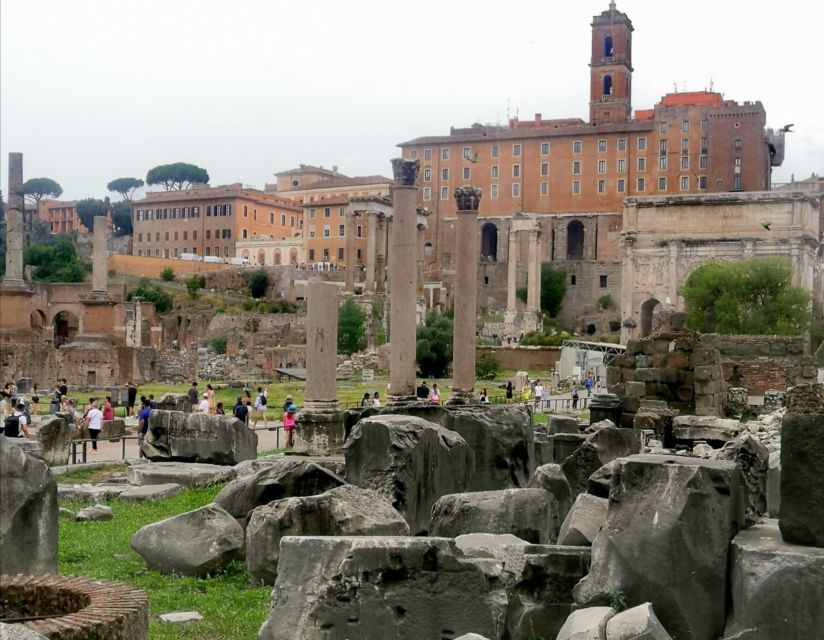
Next is the Temple of Venus and Roma, another guided stop designed to be informative without taking over your limited time. This is one of those spots where the name alone is a clue to the message: it connects religious devotion with civic identity.
The tour approach here is practical. You’re guided to view the Temple area as part of the same public world as elections and speeches. That makes the Forum and its surroundings feel coherent, even though you’re walking through separate sites.
If you’re the kind of visitor who likes to understand why Romans built what they built, this stop gives you a concrete anchor. You’ll leave with a better sense of how Rome used religious space to support public life.






Palatine Hill: spectacular views and the best perspective on imperial space
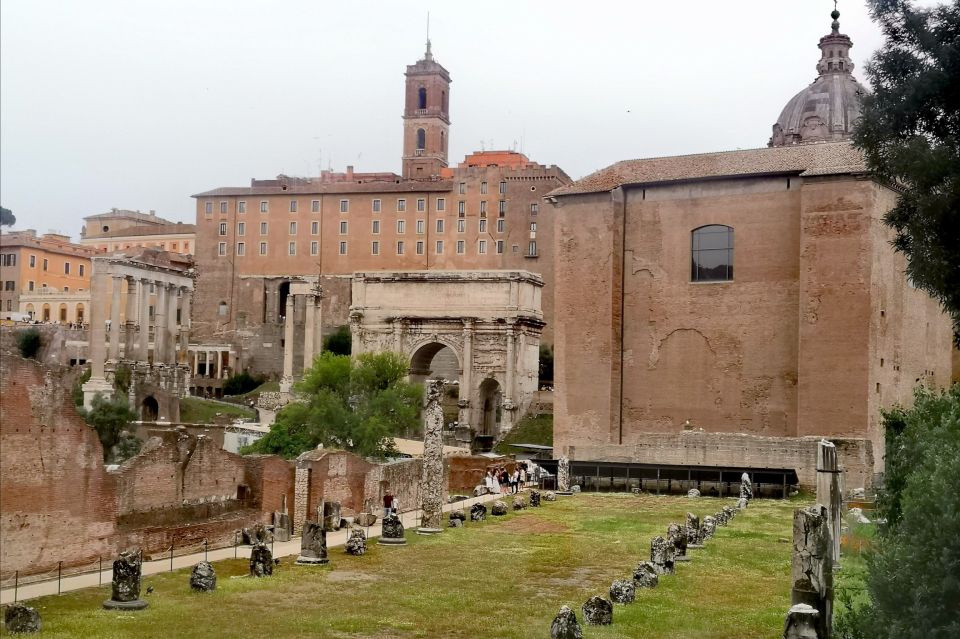
Now for the big visual reward. You’ll walk up to Palatine Hill and take in breathtaking views of the ruins from the hill. Palatine is where the scenery and the story lock together.
You’ll have a photo stop and guided time here (about 30 minutes), which is a gift in a two-hour tour. It’s enough time for you to look around, not just pass by. From this elevation, you can better understand how the Forum below relates to the imperial areas above. The ruins start to make spatial sense.
The tour also points you toward views of the ruins of homes of the emperors. That’s the key shift from the civic space of the Forum. On Palatine Hill, you’re looking at how power lived—literally built into the topography of the city.
Farnese gardens and Domus Augustana: seeing how emperors lived

After the hill viewpoint, the itinerary moves to Domus Augustana with a guided visit. This stop helps you bridge the gap between a view and an imperial “home” concept—what being close to power looked like in daily life.
You’ll also hear about the Farnese gardens as part of what you see after entering Palatine Hill. Even if you’re not spending time on garden details, knowing it’s part of the Palatine experience changes how you read the area. It’s not just bare ruins. It’s a layered site—ancient structures viewed through later landscapes.
Domus Augustana is especially helpful if you want the tour to do more than hit the famous sights. It gives you a sense of Roman imperial domestic space, which is a different angle from triumphs, speeches, and temples. You end up with a fuller picture of how Rome used the same city for public performance and private control.
Your itinerary in motion: how the 2 hours usually feel
This tour is structured to keep momentum without turning into a speed-walk. The stops are spaced so you get a blend of explanation and looking time:
- Short guided visits at Imperial Fora, the Arch of Titus, and the Temple of Venus and Roma.
- A deeper focus at the Roman Forum.
- A longer, viewpoint-heavy segment on Palatine Hill.
- A final look at Domus Augustana before you finish at the Arch of Constantine.
Because the total duration is about 2 hours, you’ll want to decide your priorities before you arrive. If you love history facts, the guided narration is set up for you. If you primarily want photos, the Palatine Hill photo time is where you’ll get the most value. If you’re hoping to read every fragment and climb off-path to see more, this may feel tight.
Price and value: what you’re paying for (and what you must add)
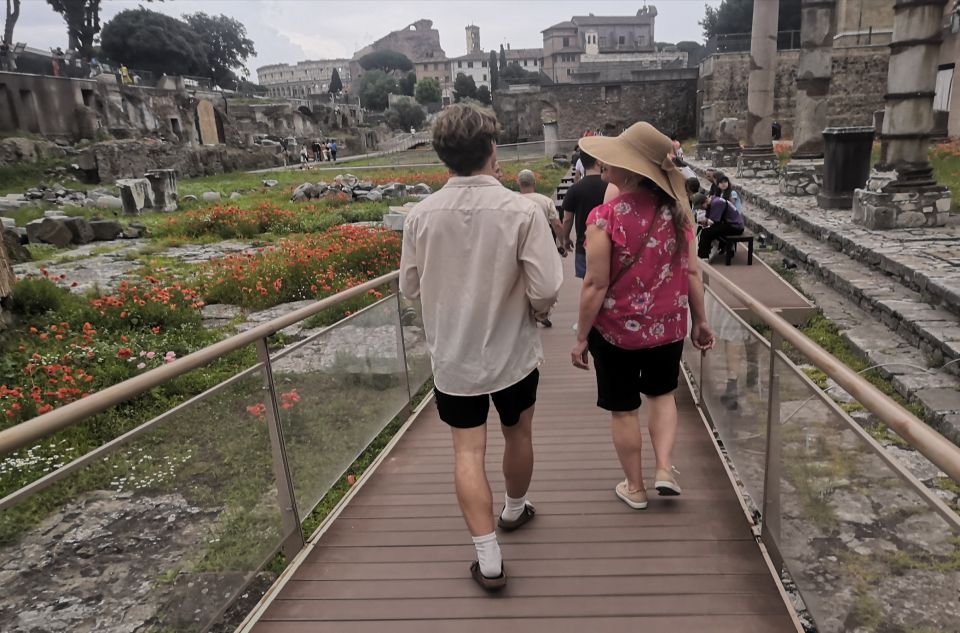
The price is listed at $78.17 per person for a 2-hour English guided experience. On paper, that’s a fair rate for two major sites with a licensed guide and a semi-private group size limited to 14 people.
What you’re really buying is interpretation. The Roman Forum and Palatine Hill can look like a ruin field until someone connects the dots. Here, Ruggero’s role is to give you a storyline: civic life in the Forum, political symbolism through major monuments, then imperial space on Palatine Hill.
Your main extra cost is straightforward: Roman Forum tickets are not included. The good news is you have options to avoid delays, like purchasing online in advance or buying at the ticket desk before the tour.
So, is it good value? If you want a guided walkthrough across both areas in one go, yes. If you prefer to wander slowly with a self-guided map, you might save money by doing it on your own.
Who this guided Roman Forum and Palatine Hill tour suits best
This tour fits best if you:
- Want an English explanation while you walk the key sites of the Roman Forum and Palatine Hill.
- Like small-group experiences rather than large crowds.
- Care about understanding what you’re seeing, not only checking boxes.
- Enjoy viewpoints and photo opportunities as part of the visit, especially from Palatine Hill.
It may be less ideal if you:
- Need wheelchair accessibility, since it’s not suitable for wheelchair users.
- Want a long, slow sit-down museum style visit. This is a walking tour with guided stops.
Should you book Ruggero’s Roman Forum and Palatine Hill tour
I’d book it if your top goal is clarity. This is the kind of route where a guide helps you connect the Forum’s civic purpose to Palatine’s imperial meaning. The small group size is a real quality-of-life factor, and the emphasis on views gives you an “I get it now” moment without spending hours lost.
Book it with two practical ideas in mind: reserve your spot early so your schedule matches the available start times, and buy your Roman Forum entry tickets in advance since they’re not included. If you do those two things, you can show up, meet Ruggero at Trajan’s Column, and spend two hours learning how ancient Rome powered itself—politically, religiously, and personally on Palatine Hill.
FAQ
How long is the guided tour?
The tour duration is 2 hours.
Is the tour guided in English?
Yes. The live tour guide speaks English.
How big is the group?
The tour is limited to a maximum of 14 people.
Where do I meet the guide?
Your guide Ruggero will meet you in front of Trajan’s Column, near the gate.
Where does the tour end?
The activity ends back at the meeting point.
Are Roman Forum tickets included in the price?
No. Tickets for the Roman Forum are not included, and you need to purchase them in advance (online to avoid the line or at the ticket desk).
What are some of the main stops on the tour?
You’ll visit stops such as Imperial Fora, the Roman Forum, the Arch of Titus, the Temple of Venus and Roma, Palatine Hill, Domus Augustana, and you finish at the Arch of Constantine.
Is this tour suitable for wheelchair users?
No. It is not suitable for wheelchair users.
What’s the cancellation policy?
Free cancellation is available up to 24 hours in advance for a full refund.
Is there an option to pay later?
Yes. You can reserve now and pay later, meaning you keep your travel plans flexible and pay nothing today.