REVIEW · ROME
Private Tour of Ancient Ostia with Exclusive Guide and Skip-the-line Tickets
Book on Viator →Operated by Ostia Tours · Bookable on Viator
Ostia Antica is Rome’s port city ruins. This private tour gives you skip-the-line access plus an exclusive guide so you can make sense of what you’re seeing—streets, homes, and public buildings—without getting lost in the weeds. It’s also close enough to feel practical: you’re not giving up your whole day just to reach another set of ruins.
What I like most is the focus on the big visual hits—mosaic floors and frescoed walls—and the way a good guide connects them to daily life in a real ancient city. I also like the structure of the walk: you move through the site in a way that makes the ruins feel laid out, not random rubble.
One thing to consider: private transportation isn’t included, so you’ll need to handle how you get to the meeting point at Viale dei Romagnoli (Lido di Ostia). Add in about 2 km of walking (with breaks), and you’ll want comfy shoes and a plan for getting back.
In This Review
- Key Things You’ll Notice on This Ostia Antica Tour
- Why Ostia Antica Feels Special Without the Big-City Chaos
- Skip-the-Line Tickets: The Time Saver That Matters Most
- Where the Tour Starts in Lido di Ostia (and Why That’s Useful)
- A 3-Hour Route That Works: Cardo, Decumanus, and City Logic
- Baths, Amphitheater, and the House of Diana: What to Look For
- Mosaics and Frescoes: How an Expert Helps You See Them Better
- Your Guide: Why the Best Part Isn’t the Ticket
- Price and Value: Is $320.49 per Person Worth It?
- Who This Tour Suits Best (and Who Might Prefer Something Else)
- Weather and Timing: The One Thing That Can Change Your Day
- Should You Book This Private Ostia Antica Tour?
- FAQ
- How long is the Private Tour of Ancient Ostia?
- Is admission included?
- Does the tour include transportation to the site?
- Where do we meet for the tour?
- How much walking is involved?
- Is the tour private?
- What language is the tour in?
- What happens if the weather is bad?
- FAQ
- Is there free cancellation?
- Are children allowed?
Key Things You’ll Notice on This Ostia Antica Tour
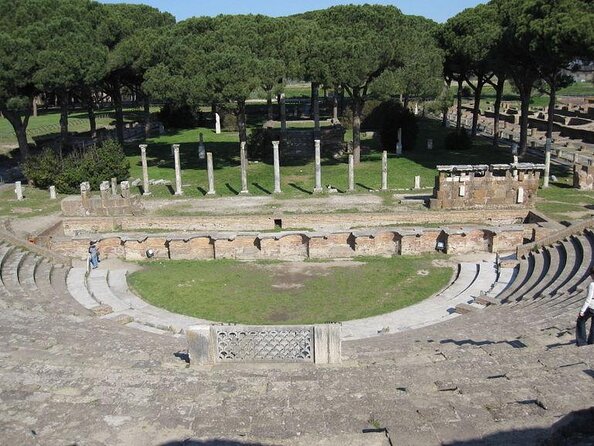
- Guaranteed skip-the-line tickets so you can spend time looking at ruins, not waiting
- An archaeologist-style guide experience that turns buildings into stories (Paola and Laura have been guiding groups)
- A guided route that follows ancient city logic, like the Cardus and Decumanus street plan
- Major highlights in 3 hours: baths, amphitheater, and the House of Diana
- About 2 km of walking with breaks, so you’re not doing a nonstop slog
Why Ostia Antica Feels Special Without the Big-City Chaos

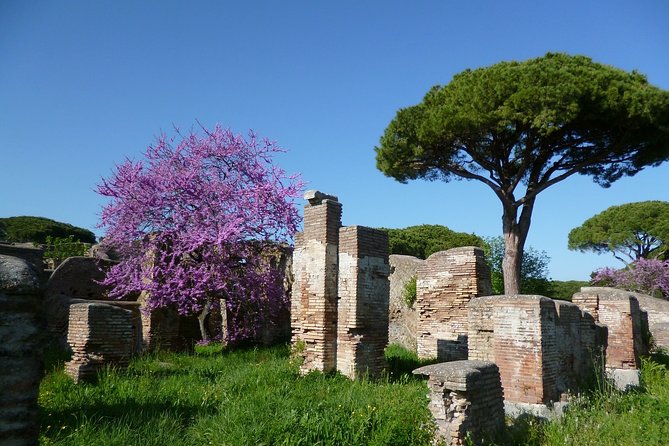
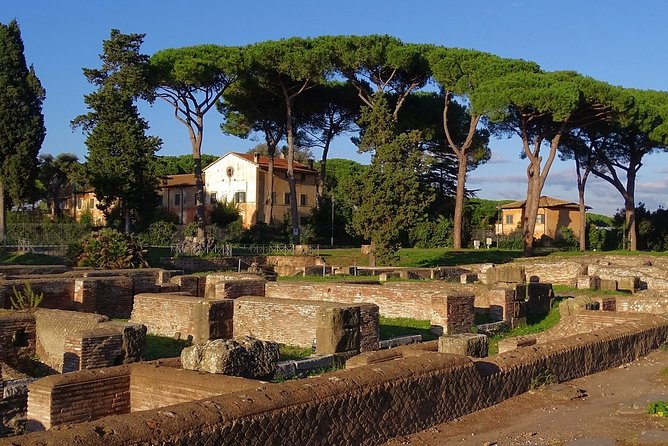
Ostia Antica is the ancient port city that fed Rome and watched the Tiber. The site is often compared to Pompeii, and I get why: you’re walking through stone streets and public spaces that look like they were paused mid-life.
The real win is context. You start learning the city’s development in stages—from an early settlement and military camp (castrum) to a walled urban area—and that history helps the buildings click. When you see a bath complex or an amphitheater after you know how the city was organized, it stops being just impressive and starts being understandable.
And it’s close to Rome: the ancient camp was set up roughly 16 miles from the city to monitor the river entrance and protect Rome. That proximity makes it a smarter use of time than far-flung day trips, especially if you want ruins plus a guide who can interpret what you’re looking at.
You can also read our reviews of more tours and experiences in Rome


Skip-the-Line Tickets: The Time Saver That Matters Most

This tour includes guaranteed skip-the-line tickets for the Parco Archeologico di Ostia Antica ruins. That’s not a small detail on busy days. Instead of losing your momentum to entry lines, you start exploring and your guide can use that first stretch to orient you fast.
You’ll also get a mobile ticket. That matters because it keeps your day simpler—no frantic hunting for paper tickets, no last-minute confusion right at the entrance. If you hate the idea of spending your vacation time multitasking with logistics, this is the kind of setup that reduces stress.
The guide’s value stacks right on top of the skip-the-line win. You’re not just saving minutes; you’re also getting earlier context, so you can better appreciate the baths, amphitheater, and major houses as you move through them.
Where the Tour Starts in Lido di Ostia (and Why That’s Useful)
The meeting point is Viale dei Romagnoli, Lido di Ostia RM, Italy. The tour ends back at that same meeting point, which makes planning your return easier.
One practical catch: private transportation is not included. So you’ll want to think ahead about how you’ll reach the Lido area. The good news is the meeting point is listed as near public transportation, so you’re not stuck needing a private driver just to get started.
If you’re traveling with kids or you just prefer not to overbook your day, the simple start-and-finish setup helps. You can build the rest of your afternoon around an easy return back to the same point rather than guessing how you’ll get from the park back to wherever you’re staying.
A 3-Hour Route That Works: Cardo, Decumanus, and City Logic
The tour runs about 3 hours and includes admission, with roughly 2 km of walking and breaks to sit and enjoy the site. That distance is manageable if you wear comfortable shoes, but it’s still real walking. The site is big, so the guided pacing is what keeps it from feeling overwhelming.
As you walk, the route follows the ancient city layout. The castrum phase used the classic Roman street grid: the Cardus and Decumanus, with main streets forming the backbone of movement. Knowing that ahead of time changes how you interpret what’s around you, because it turns walls and ruins into an actual plan.
You’ll also get reminders that Ostia grew in phases. The settlement history you’re given stretches back to the early part of the first millennium BCE, and then you hear about later fortifications and walls. Even if you don’t memorize dates, the idea of the city adapting over time makes the ruins feel less static.
A small drawback of ruins tours like this: some parts of the park are less visually dramatic than the big highlight zones. A guide helps here, because they point out what looks plain at first but matters for understanding how the city functioned.
Baths, Amphitheater, and the House of Diana: What to Look For
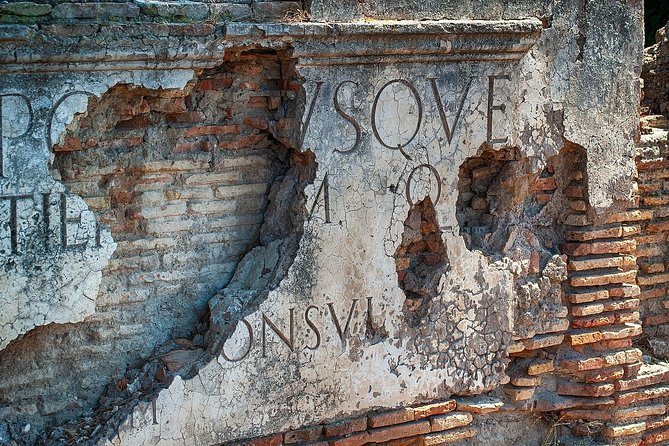
This tour’s highlight list is strong because it mixes public life, entertainment, and domestic space. You’ll see the baths, amphitheater, and the House of Diana, plus many of the standout decorative elements.
Start with the baths. Roman bathing wasn’t only about hygiene; it was a social and cultural routine. In a place like Ostia, baths show how the port city served Rome’s broader way of life. When a guide ties the layout to how people would have moved through the space, you can imagine the rhythm of the day rather than just admiring stone.
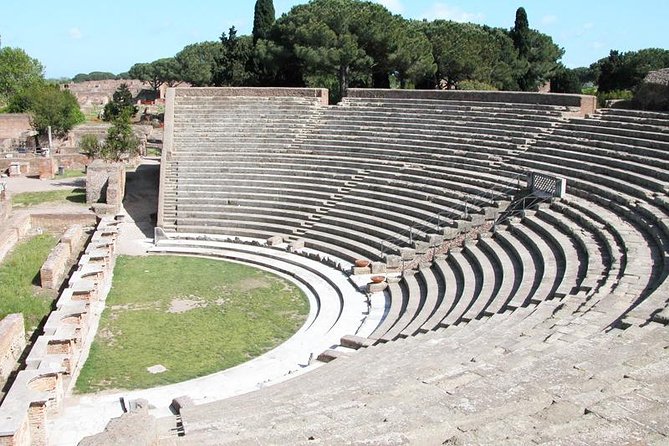
Next comes the amphitheater. This is where you can connect the city to entertainment and gatherings, and it also helps you understand who the city was built for. Even with limited time, you’re looking at a structure that tells you a lot about civic life.
Then there’s the House of Diana, where the focus shifts to home and luxury. The key visual payoff across the tour is mosaic floors and frescoed walls over roughly 2,000 years old. That kind of decoration is easy to appreciate, but a guide will help you read what it suggests about wealth, taste, and how rooms were used.
If you’re a visual person, this is a great fit. You’re not only hearing history; you’re watching the site show off what it was built to impress.
You can also read our reviews of more guided tours in Rome






Mosaics and Frescoes: How an Expert Helps You See Them Better
Mosaics can feel repetitive if you only have time for quick photos. With a guide, you learn what to notice—patterns, locations, and how decorative choices fit the function of a room.
The same goes for frescoed walls. Seeing age-old pigment is one thing; understanding why those areas were painted, and what the design likely meant for the people inside, is another. This tour’s structure supports that. You’re not dropped in and told to explore blindly.
The tour also benefits from being private. Only your group participates, which means the guide can slow down when you want more detail and move on when you’re ready to keep walking. That flexibility is often the difference between a rushed “check the box” ruin visit and one that feels meaningful.
Your Guide: Why the Best Part Isn’t the Ticket
The included local guide is a core part of the value. When you’re dealing with a large site like Ostia Antica, translation is only step one. What you really want is interpretation: why something was built there, who likely used it, and what the layout tells you.
In the experience of past groups, archaeologist guides like Paola and Laura have delivered that mix of enthusiasm and clear context. One of the recurring strengths described is pacing—giving the right amount of information, not drowning the tour in facts. Another strength is friendliness and engagement, which matters when you’re walking and stopping repeatedly.
If you’re the type who asks questions when something catches your eye, a private tour is a big advantage. You can steer toward what interests you—decoration, street design, or how the port city may have worked—without worrying the group will be left behind.
English is offered, which is great for clarity as you move from one building type to another. You don’t want to guess at what you’re seeing when the site is giving you subtle clues about function.
Price and Value: Is $320.49 per Person Worth It?
At $320.49 per person for about 3 hours, this is not a budget option. The value comes from a specific bundle: skip-the-line admission, a local guide, and a private group experience.
For me, the math works best when one or more of these are true:
- You care about saving time at the entrance through guaranteed skip-the-line tickets
- You want the ruins explained in context, not just pointed out
- You’re traveling with a small group and prefer a private pace over joining a larger group
The price also makes more sense when you consider what isn’t included. Private transportation isn’t part of the tour, so you’re paying for the guide and tickets, not for getting you to and from the site. If you already know you can reach Lido di Ostia easily, the overall cost feels more like paying for expertise rather than paying for convenience.
Also, the tour notes group discounts. If you’re traveling with people and can align schedules, that can help you stretch the value further.
Who This Tour Suits Best (and Who Might Prefer Something Else)
This tour fits best if you want a guided ruin visit that doesn’t feel random. I’d recommend it for:
- Couples and small groups who want a private experience and time saved at entry
- History-minded travelers who enjoy architecture, mosaics, and how Roman cities were planned
- Families with older kids, since children must be accompanied by an adult and the tour includes sit breaks
It may feel less ideal if you want a purely self-guided walk with no structure. The site is large, and you’ll get the most out of this tour when you let the guide set a path.
And if you’re sensitive to walking distance, remember the tour involves about 2 km on foot with breaks. It’s doable for most people in comfortable shoes, but it’s not a totally sedentary experience.
Weather and Timing: The One Thing That Can Change Your Day
The experience requires good weather. If it’s canceled due to poor weather, you’ll be offered a different date or a full refund. That means you should plan with some flexibility when you book.
That’s also why the guide and skip-the-line setup are so valuable. Good weather days are the days you’ll want to get inside quickly and spend your energy on the site itself, not on waiting around.
Should You Book This Private Ostia Antica Tour?
If you want the best shot at understanding Ostia Antica in a short visit, I think this is a strong choice. The combination of skip-the-line tickets, a local guide, and a focused 3-hour route aimed at the biggest highlights (baths, amphitheater, House of Diana, and decorative art) makes it a smart way to see the ruins without feeling overwhelmed.
Book it if you value time, explanation, and a private pace. Skip it if you’d rather handle ruins on your own and you’re not excited about mosaics, street planning, and how a Roman port city functioned.
FAQ
How long is the Private Tour of Ancient Ostia?
It runs about 3 hours.
Is admission included?
Yes. Ostia Antica admission tickets are included, and you get guaranteed skip-the-line entry.
Does the tour include transportation to the site?
No. Private transportation is not included. The meeting point is near public transportation.
Where do we meet for the tour?
The start location is Viale dei Romagnoli, Lido di Ostia RM, Italy.
How much walking is involved?
The tour includes approximately 2 km of walking, with breaks to sit and enjoy the site.
Is the tour private?
Yes. It’s a private tour/activity, and only your group participates.
What language is the tour in?
The tour is offered in English.
What happens if the weather is bad?
The experience requires good weather. If it’s canceled due to poor weather, you’ll be offered a different date or a full refund.
FAQ
Is there free cancellation?
Free cancellation is available. You can cancel up to 24 hours in advance for a full refund.
Are children allowed?
Most travelers can participate. Children must be accompanied by an adult.