REVIEW · ROME
Full-Day Guided Historical Tour of Cascia and Assisi
Book on Viator →Operated by The Italian Dreams Travel · Bookable on Viator
Two saints, one long day. This full-day guided trip connects Cascia and Assisi with a tight plan, hotel pickup, and visits you’d struggle to string together on your own. I like the 12 travelers max group size for calmer church time and better guide attention. I also like that key stops are marked as free-admission and built around hands-on explanations.
The main drawback is practical: it’s a long day starting at 6:30am, and lunch isn’t included, so you’ll want to think ahead before you get on the bus. If you’re hoping for a lazy, late-morning pace, this one will feel brisk.
One thing I appreciated in the feedback I saw for this operator is how the guides can really set the tone. A guide named Federico is specifically praised for attention and pacing, and in Assisi the guide experience can be very detailed and calm—exactly what you want when churches are quiet and you need context fast.
In This Review
- Key things that make this day trip work
- Why Cascia and Assisi in one day makes sense
- Getting there: 6:30am pickup and a 12-hour pace
- Stop 1: Monastero di Santa Rita da Cascia and the cloister feeling
- Stop 2: Cascia sanctuary highlights, churches, and the small-town rhythm
- Stop 3: Basilica Papale e Sacro Convento in Assisi—lower and upper churches
- Stop 4: Assisi Centro Storico—churches, cathedral, and views from above
- Price and what you’re really paying for ($417)
- Who should book this (and who should skip it)
- Should you book this full-day Cascia and Assisi tour?
- FAQ
- How long is the Cascia and Assisi full-day tour?
- What time does pickup start, and how do they find you?
- What group size should I expect?
- What language is the tour offered in?
- Is lunch included?
- Can I cancel and get a full refund?
Key things that make this day trip work
- Small group (max 12) keeps the experience focused, not chaotic.
- Hotel minivan pickup starts early, with the driver finding you right under the hotel.
- Two-in-one pilgrimage route links Saint Rita’s world to Assisi’s Saint Francis in one day.
- Free-admission stops are part of the deal, so you spend less time figuring out tickets.
- Assisi’s basilica is a built-in comparison: lower and upper churches reflect two different design eras.
- Local product tasting gives you a break that’s still on-theme with Cascia.
Why Cascia and Assisi in one day makes sense
If you’ve ever thought, I want to see Santa Rita and also get to San Francesco—but I don’t want to plan two separate trips—this is the kind of day that makes that feel realistic. Cascia and Assisi are both deeply tied to faith, but they’re not the same mood.
Cascia leans inward: cloisters, prayer spaces, sanctuary complexes. Assisi is more layered in style and sightlines: big architecture, historic corners, and multiple famous churches within a compact center. Put together, you get a full “journey” arc without spending extra nights.
The guide format also helps. When you’re moving from place to place in Umbria, it’s easy to miss the point. Here, you’re not just collecting photos. You’re being told what you’re looking at and why it matters.
You can also read our reviews of more guided tours in Rome



Getting there: 6:30am pickup and a 12-hour pace
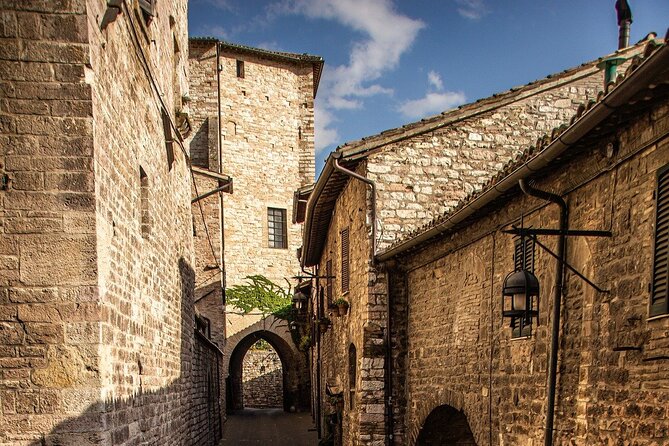
Start time is 6:30am, and the minivan pulls up under your hotel. The company calls you to make the pickup point obvious. That’s a small thing, but it matters when you’re tired and it’s still dark out.
This is a 12-hour day in total. That means your schedule will feel “structured,” not flexible. You’ll get church time, guided time, and transit time all packed in. The upside is you don’t have to coordinate anything once you’re on the road. The downside is you’ll want to manage your energy.
My practical advice:
- Wear comfortable shoes with grip. Historic stone can be slick.
- Bring a water bottle. Lunch isn’t included.
- Expect to stand and walk through multiple complexes.
Also note the tour is English. If you need a different language, there’s an added €30 per person cost listed for other languages.
Stop 1: Monastero di Santa Rita da Cascia and the cloister feeling
Your first big moment is Monastero di Santa Rita da Cascia, where Saint Rita lived as an Augustinian nun for 40 years. The monastery setting is the type of place that changes your volume. Even before you hear explanations, the space itself signals quiet and reverence.
You’ll visit the cloistered areas and have a chance to pray near the Solemn Bank. That “pray nearby” element is important. You’re not only sightseeing. You’re stepping into a living devotional atmosphere, which is the difference between checking a building off and actually understanding the place.
A key practical detail: the stop is listed at about 3 hours and the admission ticket is shown as free. That can reduce friction and keep the day moving.
One consideration: monastery spaces often mean smaller, slower-moving areas. If you’re sensitive to crowds, coming early helps. If you’re feeling rushed, don’t. Use the guided time to understand what you’re looking at first, then take your own slow moments afterward.
Stop 2: Cascia sanctuary highlights, churches, and the small-town rhythm
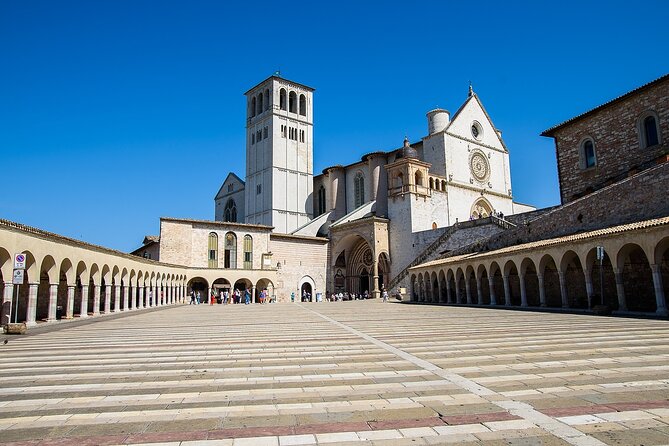
Cascia isn’t only one church. It’s a whole sanctuary complex with multiple linked spaces: the basilica, lower basilica areas, monasteries, and other parts of the Sanctuary of Santa Rita da Cascia.
As you move through the religious sites, you’ll also notice Cascia’s layered identity—parts of the town feel like a pilgrimage engine, but the streets and buildings still read as a real community.
Here are the specific sights you’ll be guided through:
- The Basilica and Lower Basilica within the Sanctuary of Santa Rita
- San Francesco (church of San Francesco, as part of the complex context)
- A former church of Sant’Antonio Abate that dates to the 15th century but was reshaped in the Baroque period. Inside, you’ll see two fresco cycles from the 15th century
- Santa Maria della Visitazione, originally collegiate and of Lombard origin, but heavily remodeled after earthquake damage. Inside you’ll find a wooden crucifix from the 1400s
- Sant’Agostino, with frescoes attributed to Umbrian and Perugian schools
- Civic buildings tied to Cascia life, including Palazzo Carli (municipal library), Palazzo Frenfanelli (municipality), and Palazzo Santi (civic museum)
- A Roman temple site linked to Villa San Silvestro
- The hamlet of Roccaporena, tied to Saint Rita’s birthplace
- The Chiavano plateau
- Local product tasting
This mix is what makes Cascia special on a guided day. You’re not just seeing one famous façade. You’re watching the town’s story unfold in layers: medieval devotion, Renaissance art, Baroque change, and later repairs after earthquakes.
A drawback to consider: Cascia involves a lot of “look closely” moments in a relatively short time. If you’re the type who wants to stare at details for ages, you’ll need to balance your patience with the group schedule. The good news is that free admission and guided routing keep you from losing time hunting doors and tickets.
Stop 3: Basilica Papale e Sacro Convento in Assisi—lower and upper churches
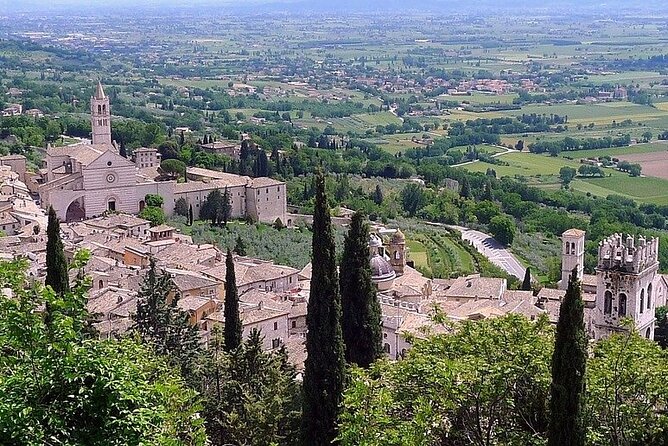
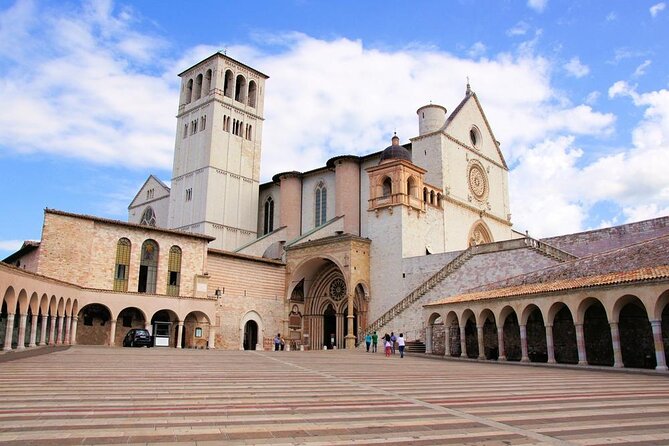
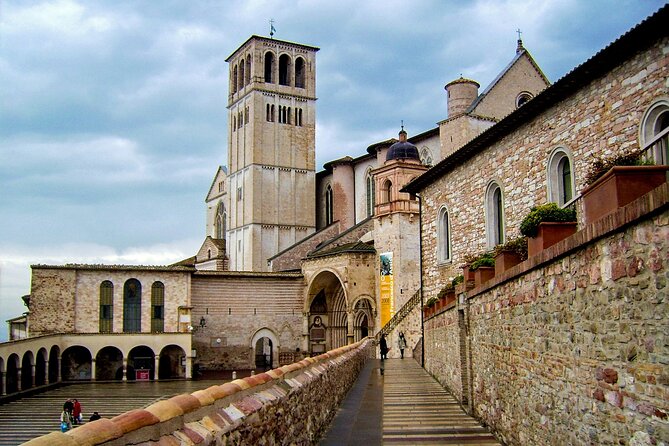
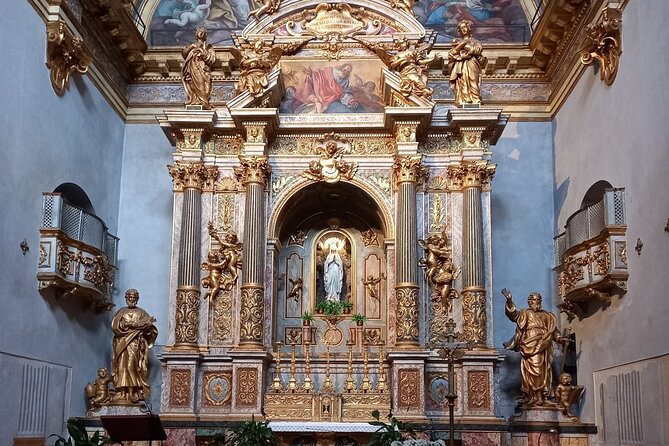
Assisi’s centerpiece on this tour is the Basilica Papale e Sacro Convento di San Francesco d’Assisi. This is where the day really gains architectural variety.
The basilica is made of two superimposed churches:
- The lower church
- The upper church
They connect to two different building phases, and the style difference is the whole point. The lower level ties to an Umbrian Romanesque look with Lombard derivations. The upper level leans toward French Gothic style. So instead of seeing one church style, you’re comparing two eras in the same sacred complex.
Both interiors are described as extraordinary, and in practice that means you’ll want to slow down. When you’re in a place that has this much contrast stacked vertically, the guide’s job is to point out what you might otherwise miss—especially the “why” behind the architectural shift.
This stop is about 3 hours and also listed with free admission. That tends to make the timing smoother and keeps your attention on the experience, not paperwork.
Practical note: two levels can mean stairs and movement. If you have mobility limits, it’s worth thinking about how you handle vertical transitions before you go.
You can also read our reviews of more historical tours in Rome
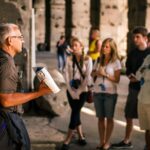


Stop 4: Assisi Centro Storico—churches, cathedral, and views from above
After the basilica complex, the tour moves into Assisi’s Centro Storico for about 3 hours of guided highlights. This is your chance to connect the big-name sites with the small streets and viewpoints that make Assisi feel like Assisi.
You’ll cover:
- Basilica di Santa Chiara
- Chiesa Nuova
- Cattedrale di San Rufino
- The Roman Amphitheatre
- The Rocca Maggiore (the fortress area)
- Piazza del Comune
This is a good balance of religious and civic-historic features. You also get variety in what you’ll look at. One moment you’re in a church; the next you’re seeing Roman remains; then you’re on a higher spot that helps you understand the town’s layout.
One consideration: even with a guided route, Assisi’s center is compact and easy to walk. Comfortable shoes matter again. Also, if you want quiet reflection over photo stops, aim for the churches where you can spend a few extra minutes after the guide’s main briefing.
Price and what you’re really paying for ($417)
At $417 per person, the sticker price can feel high until you translate it into what the day includes. Here’s what you’re paying for in practical terms:
- Round-trip pickup and drop-off from your Rome hotel
- A tour escort for the whole trip
- A small group capped at 12
- A packed day with major religious sites, plus local product tasting
- Stops marked as free admission ticketed in the schedule you’re given
- Mobile ticket (so you’re not scrambling with paper)
What’s not included is the big obvious cost: lunch. So you’re buying a lot of guided movement and site access, but you’ll still need to budget your meal.
When is the price “good value”? If you want:
- One-day structure without planning transit and site timing
- A guide to explain the differences between sites (especially the basilica’s lower vs. upper churches)
- Less crowd pressure through a small group
When might it feel expensive? If you’re the type who prefers to move independently, linger longer in fewer places, and you already know what you want to see.
My suggestion: treat this as a “guided payoff” day. You’re paying for the clarity and the efficiency.
Who should book this (and who should skip it)
This is a strong fit if you:
- Want a religious history day that connects two major destinations
- Appreciate guided explanations over self-guided guessing
- Like small groups and don’t want a massive bus experience
- Are okay with an early start and a full schedule
You might skip it if:
- You need a slower pace and lots of free time for wandering without schedule pressure
- You hate stairs and tight church interiors (two-level basilica + walking in Assisi center can be demanding)
- You’re hoping lunch is included (it isn’t), and you don’t want to think about where you’ll eat
It’s also a decent option for first-timers in the region because the day is organized to cover major anchor sites in both towns.
Should you book this full-day Cascia and Assisi tour?
If you want Cascia and Assisi together in one day, and you value a guide to make the sights make sense, this is a booking worth serious consideration. The small-group size, hotel pickup, and the focused route through Santa Rita and San Francesco are the biggest reasons to choose it.
Book it if your priority is clarity and guided connections—especially the contrast between Cascia’s sanctuary complex and Assisi’s basilica structure. Pass if you’re looking for a relaxed, flexible day or you’d rather pay for fewer guided elements.
If you do book, plan for the practical reality: start early, wear good shoes, and handle lunch on your own.
FAQ
How long is the Cascia and Assisi full-day tour?
The tour runs for about 12 hours.
What time does pickup start, and how do they find you?
The start time is 6:30am. The minivan arrives under your hotel, and the customers are called to warn them.
What group size should I expect?
The tour has a maximum of 12 travelers.
What language is the tour offered in?
The tour is offered in English. Other languages are available for an additional €30 per person.
Is lunch included?
No, lunch is not included.
Can I cancel and get a full refund?
Yes. You can cancel up to 24 hours in advance for a full refund.