REVIEW · ROME
From Rome to Ostia Antica
Book on Viator →Operated by Italy Rome Tour · Bookable on Viator
Ostia Antica feels like a time capsule. This private tour gives you private pickup from central Rome, then drops you right into a remarkably preserved ancient city. I especially like how much of daily life is still visible: houses, shops, and public spaces with frescoes and mosaics that make the site feel real, not like a pile of stones.
My second favorite part is the guided context. You learn what Ostia meant for Rome’s empire, why it sat at the “mouth” of the Tiber, and how silting and lower sea levels pushed the harbor about 3 km inland. The one drawback is that this is an outdoor archaeological area, so in summer you’ll want water, a hat, and sunscreen and you’ll feel the heat faster than you might expect.
In This Review
- Key things you’ll notice on this Ostia Antica tour
- Why Ostia Antica is such a smart pick from Rome
- Getting there the easy way: Rome pickup and round-trip transport
- Your core stop: Parco Archeologico di Ostia Antica
- Frescoes, mosaics, baths, and the feel of daily life
- How the seaport story makes sense while you walk
- A truly private format that can fit your pace
- Price and value: what $567.16 per person really covers
- When to go and how to stay comfortable at Ostia
- Meet the people behind the experience: guides and the drive
- What your 4–5 hours will feel like (roughly)
- Should you book this Rome to Ostia Antica tour?
- FAQ
- What is the duration of the Rome to Ostia Antica experience?
- Where does the tour take place?
- What time does the tour start?
- Is transportation included?
- Are Ostia entry tickets included?
- Do you get a guided visit?
- Is lunch included?
- Is this tour private or shared?
- How does ticketing work?
Key things you’ll notice on this Ostia Antica tour
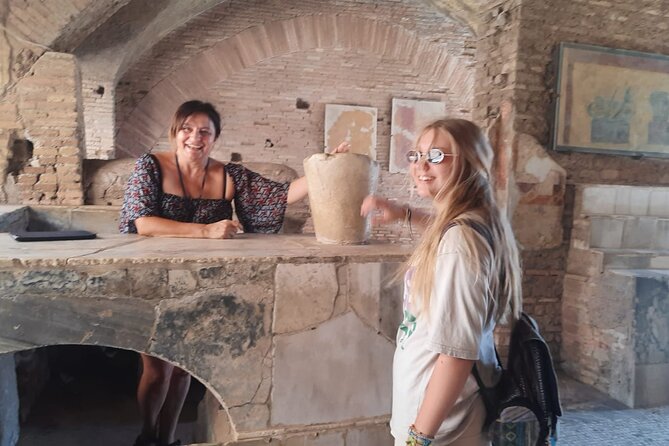
- Door-to-door pickup from Rome saves time versus figuring out buses and schedules
- A guided visit inside the ruins for about 2–3 hours helps you connect the details
- Official entry ticket included so you’re not scrambling at the last minute
- A smart “big picture” format: you can see a lot in a few hours without rushing
- Early start at 8:30 am helps you experience the site at a calmer pace
- Frescoes and mosaics make it easier to picture how people lived and shopped
Why Ostia Antica is such a smart pick from Rome
Ostia Antica is the kind of Roman site that makes you sit up and pay attention. It’s close enough to do in half a day, but it isn’t a tiny fragment. You’re looking at a whole working city—houses, shops, public buildings—laid out in a way that helps you imagine everyday routines.
What makes it especially satisfying is the mix of scale and preservation. The ruins aren’t just foundations; they still show decoration, including frescoes and mosaics. That visual evidence is what turns a “history stop” into something you can actually interpret while you walk.
And the location story adds extra meaning. Ostia means mouth in Latin, and in ancient times this was the harbor area at the mouth of the River Tiber. Over time, silting and a drop in sea level shifted the coastline, so the site is now about 3 km from the sea. A guide really helps here, because you’re seeing physical clues while you’re learning why the city’s role changed.
You can also read our reviews of more tours and experiences in Rome.



Getting there the easy way: Rome pickup and round-trip transport
Reaching Ostia Antica by public transportation can be tricky, and this is where the value starts to show. Instead of timing buses, transfers, and walking from stops, you get private transportation with pickup from the center of Rome.
Start time is 8:30 am, and the total experience runs about 4 to 5 hours. That timeframe matters because Ostia is the kind of place where you want enough time to see the main parts without feeling pinned down by late arrivals or return-trip stress.
You also have a driver who speaks English. That can sound like a small detail, but it adds comfort, especially when you’re moving between Rome and the site. One nice bonus is the on-the-way commentary: you can expect the drive to include pointers about things you can see, not just dead time in a van.
Your core stop: Parco Archeologico di Ostia Antica
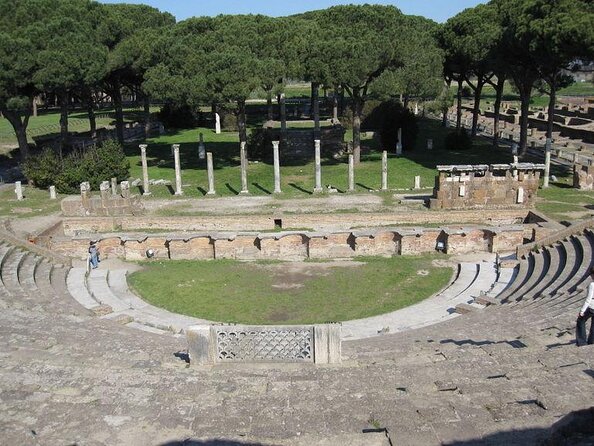
Your main stop is the Parco Archeologico di Ostia Antica, and the guided portion is about 3 hours (with admission tickets included). This is designed as a focused visit, not a full-day marathon. That makes it a strong match for people who want a deep-feeling ancient city experience without sacrificing the rest of your Rome day.
The guide’s job is to connect what you see with how Ostia worked during the Roman empire. You’ll cover the role of Ostia as Rome’s seaport, plus the reasons the city faded as maritime conditions changed. As you walk, you’re not only learning names—you’re learning cause and effect: how a harbor-dependent city rises, then what happens when the coastline shifts.
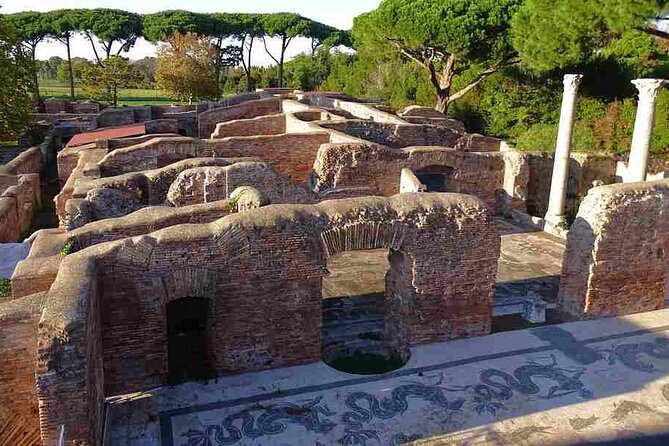
You’ll also be seeing the ruins in a way that highlights real life. Look for the remains of houses and shops, and pay attention to public buildings where decoration survives. Those frescoes and mosaics are what bring the site to life, because they show decoration and spending priorities, not just street layouts.
Frescoes, mosaics, baths, and the feel of daily life
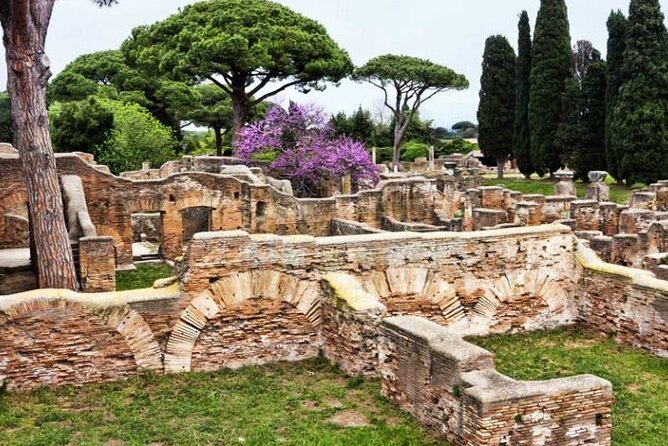
This is where Ostia Antica wins for me. In Rome’s big-ticket sites, you might get a lot of monuments. At Ostia, you get the texture of ordinary existence.
The ruins include spaces tied to living and working—kitchens and household areas, plus public-use features such as bath spaces. Even if you’re not a “museum person,” these kinds of fragments help your brain do the right thing: you start picturing water, heat, food prep, street activity, and shopping.
The frescoes and mosaics are the standouts. They let you see that people once used these places as more than functional locations. Even in ruins, the decorative work signals status and pride. A good guide will point out the practical reality: why certain buildings held attention and how decoration fit into the rhythms of city life.
If you’re the type who likes to understand how a place functioned, this portion delivers. It’s one thing to hear about a Roman port; it’s another to walk through a city layout where you can sense the flow of daily needs.
How the seaport story makes sense while you walk
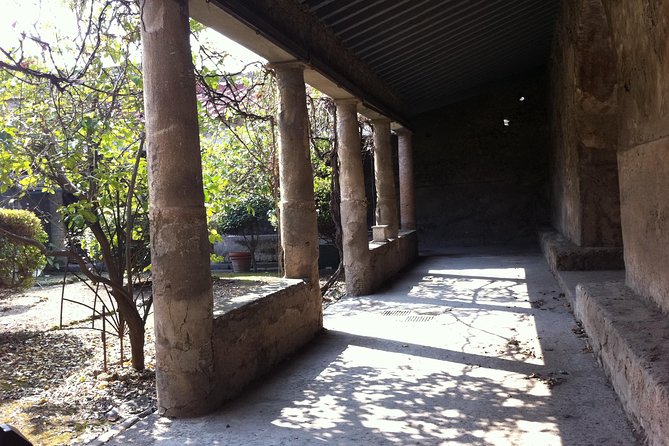
Ostia Antica’s backstory has a clear arc, and you’ll understand it faster with guided interpretation. The city’s Latin name—mouth—refers to its location at the mouth of the Tiber. That was the geographical advantage: goods and people could move through a natural water route tied to Rome.
Then comes the slow shift that changed everything. Due to silting and a drop in sea level, the harbor gradually became less accessible. The site is now roughly 3 km from the sea, and that detail matters because it explains the city’s decline.
A guide helps you “see” that transformation. Instead of treating the ruins as static, you start reading them as evidence of a system that lost its advantage. That’s the kind of storytelling you can carry with you even after you leave the site.



A truly private format that can fit your pace
This is a private tour/activity, meaning only your group participates. That matters because Ostia Antica rewards walking pace. If you stop to look at a mosaic, compare patterns, or ask questions, you won’t be pushed along to match the timing of a larger crowd.
It’s also described as customizable for your group. In practice, that usually means you can spend a bit more or less time on the parts you care about most, as long as the overall visit stays within the planned time window.
One more quiet benefit: a private format can make the whole experience feel calmer. One of the most common joys from guides at this site is that it often feels less crowded and less hectic when you arrive early and you have guided focus.
Price and value: what $567.16 per person really covers
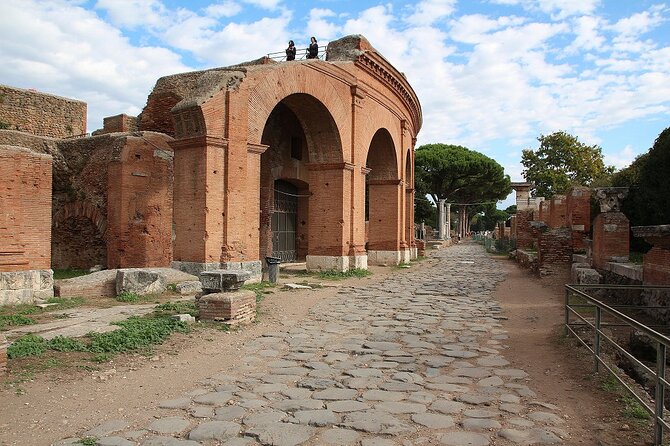
The price listed is $567.16 per person. That sounds steep if you’re comparing it to public transit, but this tour is doing several things at once: round-trip private transport, official guided time inside Ostia, and ticket entry included.
Here’s what you’re paying for, in plain terms:
- Private transportation from the center of Rome, which removes route-planning and waiting time
- Official guide time for about 2–3 hours in the archaeological area
- Ostia scavi tickets included, so you aren’t juggling entry logistics
- A driver who speaks English, plus time on the way for orientation
Lunch isn’t included, so plan to add your own meal outside the site. Still, if you value time, comfort, and clarity, the package can feel like good sense. Ostia Antica is not the kind of place where you want to half-pay attention while also dealing with travel friction.
Also worth noting: there are group discounts mentioned. If you’re traveling as a small group, you may find this becomes more appealing.
When to go and how to stay comfortable at Ostia
This tour starts at 8:30 am. That early timing is useful because you’re walking through an outdoor archaeological area. Even when the site isn’t packed, morning light can still be intense, and summer heat can hit hard.
A practical tip from real-world experience: bring water, a hat, and sunscreen in warm months. Wear comfortable shoes because you’ll be on uneven ground, and you’ll likely want a slower pace at points where the guide is pointing out frescoes and mosaic details.
If you’re sensitive to heat, plan to prioritize hydration and shade breaks during the guided time, rather than saving it for later. Your tour time is only a few hours, and you’ll enjoy it more if you’re not fighting the sun.
Meet the people behind the experience: guides and the drive
The experience is led by an official tour guide for the 2–3 hour visit, and you’ll ride with an English-speaking driver. Beyond the roles, the names that show up in praise matter because they hint at what kind of attitude you can expect.
I’ve seen specific positive mentions of guides such as Nadia, noted for being personable, and a driver named Luca, recognized for pointing out sites of interest along the route. You may also see involvement from Max Parini, who’s been thanked directly in connection with this kind of trip.
Even if your assignment is different, the pattern is clear: this isn’t just about moving you from point A to B. The goal is to make the walk make sense.
What your 4–5 hours will feel like (roughly)
Think of your day like this:
- You start in Rome at 8:30 am and head out by private transport.
- You arrive and spend about 3 hours with a guide inside the archaeology area, focused on the port-city story and the preserved remains.
- You then return to Rome in time to keep the rest of your day open for other sights or a relaxed lunch.
That structure is the sweet spot for a first visit. You’ll see enough to feel oriented in the city’s layout and its dramatic shift away from the sea, without exhausting yourself.
Should you book this Rome to Ostia Antica tour?
If you want to see an ancient city that feels lived-in rather than staged, I think this is a strong yes. You’re getting the key ingredients: preserved ruins with frescoes and mosaics, guided context that explains why the harbor city changed, and private pickup that saves you from the biggest logistical headache.
Book it if:
- You’d rather pay for comfort than spend energy on public transit timing
- You care about understanding how people lived, not just taking photos
- You want a focused half-day that still leaves room for the rest of Rome
Skip it or consider alternatives if:
- You already enjoy navigating public transportation and you have extra time to spare
- You’re traveling on a strict budget and want to reduce costs even if it increases effort
One final note for decision-making: this experience is non-refundable and can’t be changed for any reason, so lock in your schedule with confidence.
If your plan includes Ostia Antica at all, this tour is a smart way to do it—smooth getting there, real guidance once you arrive, and a visit designed to leave you with a clear understanding of the seaport city that once fed Rome.
FAQ
What is the duration of the Rome to Ostia Antica experience?
The tour runs about 4 to 5 hours total, with about 3 hours at Parco Archeologico di Ostia Antica and an official guided visit lasting 2 to 3 hours.
Where does the tour take place?
The experience is in Rome, Italy, with the archaeological site stop at Parco Archeologico di Ostia Antica.
What time does the tour start?
The start time is 8:30 am.
Is transportation included?
Yes. The tour includes private transportation with pickup offered and round-trip transport to and from the center of Rome.
Are Ostia entry tickets included?
Yes. Ostia scavi tickets are included.
Do you get a guided visit?
Yes. You’ll have an official tour guide for about 2–3 hours in Ostia Antica.
Is lunch included?
No. Lunch is not included.
Is this tour private or shared?
This is a private tour/activity. Only your group will participate.
How does ticketing work?
A mobile ticket is included, and you’ll receive confirmation at time of booking.