REVIEW · ROME
Flexible Private Tour of Rome with English Speaking Driver
Book on Viator →Operated by Driverinrome · Bookable on Viator
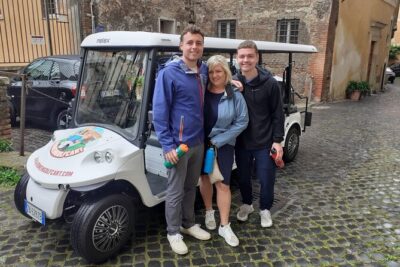
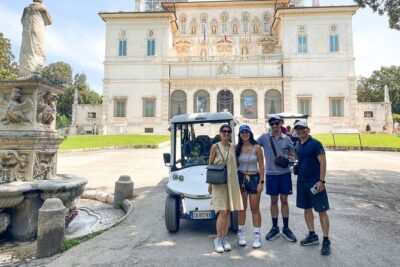
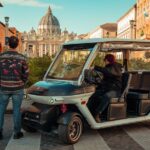
Traffic is Rome’s secret boss. A flexible private Rome drive with an English-speaking driver helps you cover major sights fast while setting your pace, with hotel pickup and live commentary along the way. One thing to plan for: your driver isn’t a licensed tour guide, so explanations happen from inside the vehicle, not at the curb.
You’re also in an air-conditioned sedan or minivan, which makes a big difference in warm weather. And the stops on this route are marked admission ticket free, so you’re spending time on Rome, not hunting ticket counters.
In This Review
- Key Highlights to Expect
- Why a Private Drive Beats Buses and Cabs in Rome
- Morning Setup: 8:00 AM Pickup and the Real Meaning of “7 Hours”
- Piazza Navona: Baroque Drama in Open-Air Form
- Trevi Fountain: Quick Access to a Worldwide Icon
- Victor Emmanuel II Monument, Circo Massimo, and Palatine Hill
- The Victor Emmanuel II Monument
- Circo Massimo: Ancient Entertainment, Still Felt in the Ground
- Palatine Hill and the Domus Augusti
- Pantheon and an Ancient Open-Air Theatre: Where Rome’s Brains Show
- The Pantheon: A Temple That Became a Church
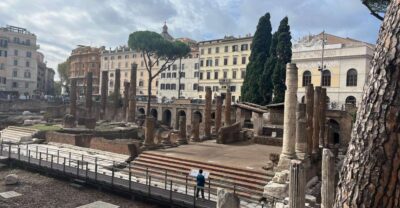
- The Open-Air Theatre From the Late Roman Republic
- St. Peter’s Basilica: The One Hour That Changes the Day
- Price and Value: What $667.37 Covers for Up to 3 People
- Getting the Most From Your Driver (Without Expecting Guide-Level Narration)
- What This Itinerary Really Feels Like as a Day
- Who This Tour Fits Best
- Should You Book This Private Rome Drive?
- FAQ
- FAQ
- What time does the tour start?
- Is pickup included?
- Is this a private tour?
- How many people can be in a group?
- What language is the tour commentary in?
- Are entrance tickets included for the stops?
- Can the order of stops change?
- Is the driver a licensed tour guide inside the sites?
Key Highlights to Expect
- Hotel pickup in central Rome means less hassle before you even start sightseeing
- English live commentary keeps the story going while you’re moving between neighborhoods
- Route flexibility lets you slow down, speed up, or swap priorities as you go
- A tight mix of “icon stops” and deeper monuments without turning your day into a workout
- St Peter’s Basilica gets real time at about 1 hour, not a drive-by
Why a Private Drive Beats Buses and Cabs in Rome
Rome is beautiful, but it’s also traffic-heavy, slow-moving, and full of one-way streets. A private car with an English-speaking driver solves a very specific problem: you get where you want to go without spending your energy on figuring out the flow of roads.
What I like most is that you’re not “touring Rome” so much as moving through it. You can stop when the light is right, when you want a coffee break, or when you’d rather linger at a fountain than rush to the next photo spot.
You can also read our reviews of more private tours in Rome


Morning Setup: 8:00 AM Pickup and the Real Meaning of “7 Hours”
This tour starts at 8:00 am with pickup from your centrally located hotel in Rome. The total time is about 7 hours, give or take, but the schedule is built to feel manageable rather than frantic.
You’ll ride in an air-conditioned sedan or minivan, and dress smart casual. If you’re traveling with kids or anyone who gets tired easily, this format tends to work well because you’re not stuck between transit transfers and long walks.
One practical note: if you’re not ready to leave at the assigned time, they can’t guarantee the itinerary or extra duration. So set your morning up like you’re catching a flight—ready, on time, and not negotiating with your own espresso order.
Piazza Navona: Baroque Drama in Open-Air Form
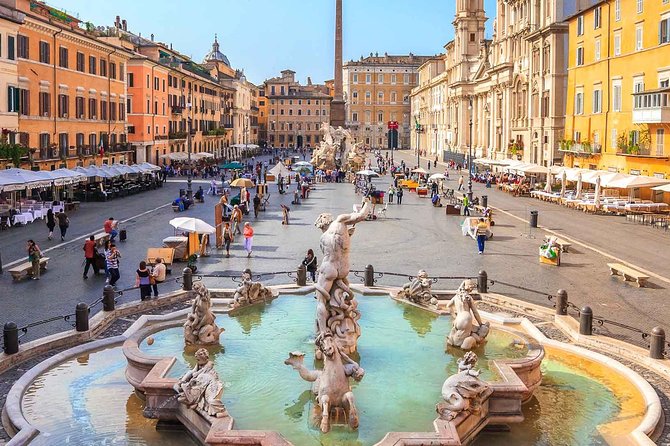
Your first major stop is Piazza Navona, one of Rome’s most atmospheric squares. It sits on the site of the old Stadium of Domitian from the 1st century AD, which means the space itself has always been built for crowds and spectacle.
In the middle, the Fontana dei Quattro Fiumi (Fountain of the Four Rivers) anchors the scene. This is also the kind of place where you can tell the story of Rome just by looking around—architecture above, sculptures and water at eye level, and street life surrounding it.
You’ll have about 25 minutes here. That’s enough time to take in the fountain, wander the edges for a view angle, and still be moving before the day gets too hot or too packed.
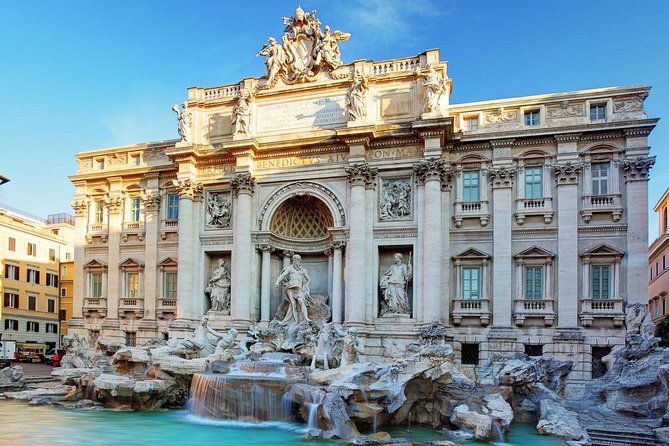
Trevi Fountain: Quick Access to a Worldwide Icon
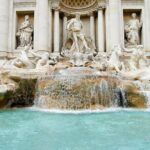
Next comes Trevi Fountain, the big, famous Baroque showpiece everyone recognizes. It’s the largest Baroque fountain in the city, and yes, it’s appeared in major films, including La Dolce Vita.
The practical value of this stop is timing. You’re not standing around wondering how to fit it into your day—you’re scheduled for about 20 minutes, which is long enough to see it clearly and short enough that you’re not tied up forever.
If you’re trying to do Rome efficiently on a first trip, Trevi is the one stop that can easily swallow your day if you’re unprepared. Here, it’s treated like what it is: an icon you enjoy, photograph, and move past to keep momentum.
Victor Emmanuel II Monument, Circo Massimo, and Palatine Hill
This stretch is where the tour starts doing more than just ticking off postcard Rome.
You can also read our reviews of more tours and experiences in Rome




The Victor Emmanuel II Monument
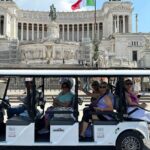
You’ll also stop at the monument built in honor of Victor Emmanuel II, the first king of a unified Italy, located between Piazza Venezia and Capitoline Hill. Even if you don’t know the whole political story, you’ll immediately understand why it’s a landmark: it’s massive, central to the area, and built to command attention.
Expect a short stop—enough to orient yourself and grab the view without turning it into a long museum outing.
Circo Massimo: Ancient Entertainment, Still Felt in the Ground
Then you get Circo Massimo, an ancient chariot-racing stadium and mass entertainment venue. It sits in the valley between the Aventine and Palatine Hills, and it was the first and largest stadium in ancient Rome.
This is a good “breather stop” because you can watch the space, feel the scale, and understand why Rome loved public spectacle. You’re there for about 10 minutes, but it gives you context before you step into more structured history.
Palatine Hill and the Domus Augusti
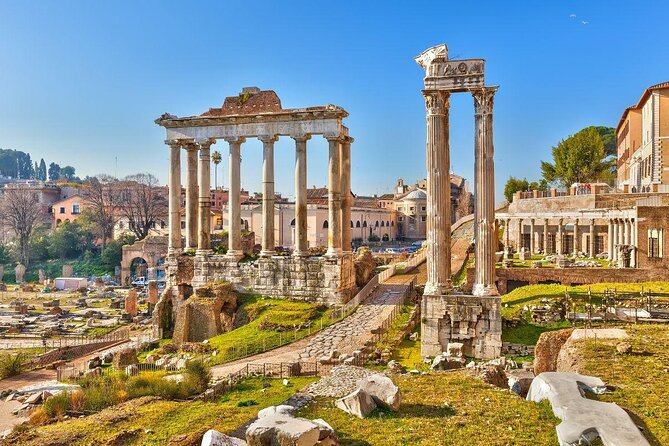
Finally, you’ll reach Palatine Hill, where the tour focuses on the Domus Augusti—the House of Augustus. This is described as the first major site upon entering the hill area, and it’s historically identified as the primary residence complex for Augustus.
It’s also close to the Hut of Romulus and tied to Rome’s foundation stories. You’ll have about 10 minutes here, which won’t turn you into an expert, but it does give you a real sense of place: you’re standing on the edge of where power lived.
Pantheon and an Ancient Open-Air Theatre: Where Rome’s Brains Show
If I want one stop that feels instantly “real” even without a long guided walk, it’s the Pantheon.
The Pantheon: A Temple That Became a Church
The Pantheon started as a Roman temple commissioned by Marcus Agrippa and later completed under Hadrian, likely dedicated around 126 AD. What’s interesting is that the construction details are tied to an earlier inscription that survived the earlier temple’s fire—Hadrian chose not to inscribe a new one, keeping the old text.
Today, you see the result of that long timeline in a single, breathtaking space. The tour gives you about 20 minutes here, which is enough to appreciate the scale and geometry, then step back outside to reset before the next ancient layer.
The Open-Air Theatre From the Late Roman Republic
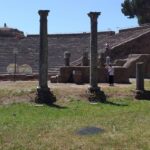
After the Pantheon, you’ll stop at an ancient open-air theatre built in the closing years of the Roman Republic. It was used for drama and song performances, so it wasn’t just a place for spectacle—it was built for culture.
This is another quick stop (about 10 minutes in the schedule), but it works because by now you’ve seen Rome as empire, then as daily life, then as performance culture.
St. Peter’s Basilica: The One Hour That Changes the Day
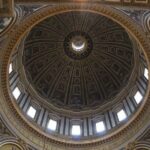
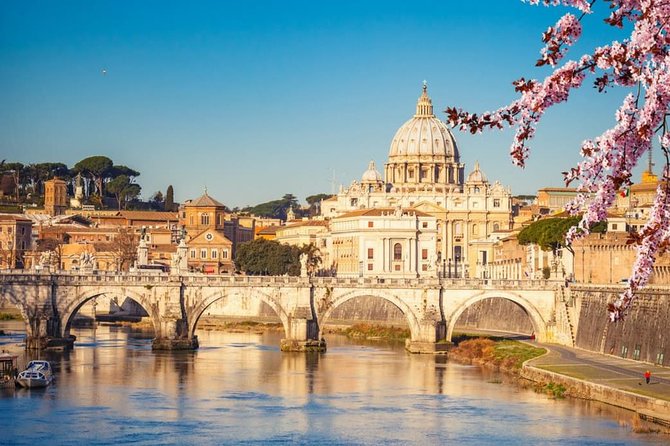
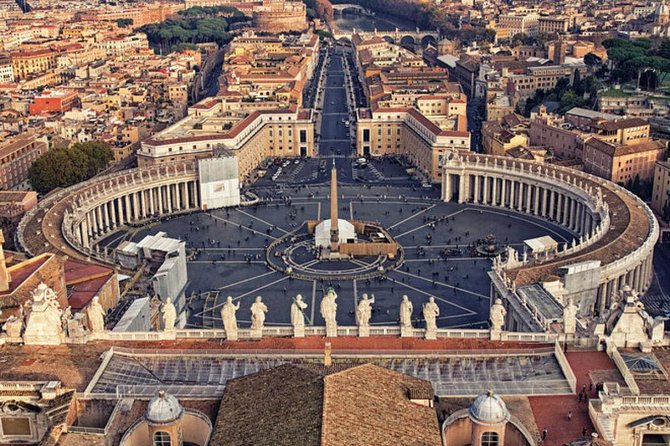
The highlight of the day for many people is St. Peter’s Basilica, with about 1 hour on site. You’ll enter the vast space of St. Peter’s Square through Bernini’s colonnades, which gives you that “Christendom’s biggest church” feeling right away.
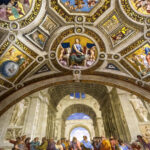
Inside, the tour description emphasizes scale and detail: the basilica rests on 800 pillars, houses 44 altars, and includes famous artwork and sacred objects such as the Pieta by Michelangelo. You’ll also see the gilded Papal canopy suspended over the altar where the Pope celebrates mass, plus the gilt-bronze throne in the apse.
A practical reality: this is the one stop where you want to move at your own pace. If you rush, you lose the sense of why the building is still a magnet for human attention centuries later. If you slow down, you’ll feel the craftsmanship and the sheer visual weight of the place.
Price and Value: What $667.37 Covers for Up to 3 People
The price is $667.37 per group, up to 3 people. That means your value depends heavily on your group size.
- If you book with 3 people, your effective cost is about $222 per person for a full day of private transport and English live commentary.
- If you book as two, it’s roughly $334 per person.
- If it’s just one person, you’ll pay the full group price.
Now the real value isn’t just “having a driver.” It’s having someone who can handle Rome’s traffic patterns and get you between major sights without you constantly recalculating plans. One driver style that comes up often is the ability to adjust stops to match what you want to see that day. People have also praised specific drivers by name—like David, Damiano, and Fabrizio—for clear explanations in English and a friendly, confident presence behind the wheel.
What’s included matters too. You get a private vehicle, live commentary, and hotel pickup. What’s not included is food and drinks, plus there’s no separate walking tour guide inside the sites. So think of this as a transport-plus-narration day, not a museum deep-dive with someone following you in every building.
Getting the Most From Your Driver (Without Expecting Guide-Level Narration)
This tour is built around a key limitation: your driver is not a licensed tour guide. Italian rules mean the driver can explain and comment attractions from inside the vehicle, but they can’t provide extended elaboration once you’re outside.
That actually shapes how you should use the experience. Treat the car ride as your “classroom.” Ask questions before you step out. If you want more detail at a specific stop, take a few moments to read the context signs quickly and focus your time on what’s visible right in front of you.
Also, since the tour is described as flexible and customizable to your pace and interests, you should feel comfortable saying what matters most. If your priorities are the Vatican area plus ancient Rome, you’ll likely lean into that. If fountains and major landmarks are your top targets, you’ll probably spend more time there and less elsewhere.
And because the vehicle is air-conditioned, you’ll usually feel fresher by the time you reach the big anchor stop at St. Peter’s Basilica.
What This Itinerary Really Feels Like as a Day
This route is designed as a “big hits with breathing room” plan. You’re moving between major landmarks—Piazza Navona, Trevi, a unification monument area, Circo Massimo, Palatine Hill, the Pantheon—then you finish with a long Vatican anchor.
The stop times tell you the philosophy:
- Icon squares get enough time to enjoy (25 minutes at Piazza Navona; 20 at Trevi).
- Ancient sites get short, meaningful context (around 10 minutes each).
- The Pantheon gets about 20 minutes for scale and atmosphere.
- St. Peter’s Basilica gets about 1 hour because it’s the day’s emotional and visual climax.
That’s why the tour works well for first-time visitors or anyone short on time: you get orientation, you see the essentials, and you aren’t stuck walking from place to place all day.
Who This Tour Fits Best
I’d put this in the category of “smart first Rome day” if any of these apply:
- You’re short on time and want a guided overview across multiple neighborhoods
- You dislike big crowds but still want the famous sights
- You’re traveling with someone who gets footsore easily
- You want flexibility to slow down for photos, shopping, or a meal break
It also suits small groups, since it’s private and limited to up to 3. Service animals are allowed, and the general participation note says most travelers can join.
Should You Book This Private Rome Drive?
Book it if you want Rome in one day without turning it into a walking test. The strongest reason is value: a private car with hotel pickup, English live commentary, and a route that balances icons (like Trevi and the Pantheon) with ancient sites (Circo Massimo and Palatine Hill), then caps with 1 hour at St. Peter’s Basilica.
Skip or reconsider if you’re the kind of traveler who expects a licensed guide to stand with you and explain inside every site. Because your driver can comment only from inside the vehicle, the level of in-building storytelling is limited by design.
If you’re deciding between DIY and this tour, I’d lean private. It’s one of the easiest ways to get your bearings fast and make the rest of your trip better, because you’ll know what you want to return to on foot.
FAQ
FAQ
What time does the tour start?
The start time is 8:00 am.
Is pickup included?
Yes. Pickup is offered at your centrally located hotel in Rome.
Is this a private tour?
Yes. It’s private, and only your group will participate.
How many people can be in a group?
It’s priced per group for up to 3 people.
What language is the tour commentary in?
The tour includes an English-speaking driver with live commentary.
Are entrance tickets included for the stops?
The stops listed are marked admission ticket free, and the tour does not include food and drinks or a walking tour guide inside sites.
Can the order of stops change?
Yes. The order of stops may vary, and the tour can be personalized to your pace and interests.
Is the driver a licensed tour guide inside the sites?
No. Your driver is not a licensed tour guide, and they can comment and explain attractions only from inside the vehicle.