REVIEW · ROME
Doria Pamphilj Palace Gallery and Museum Private Tour with Local Guide
Book on Viator →Operated by Raphael Tours & Events · Bookable on Viator
Royal art, fast access, zero waiting. At the Doria Pamphilj Palace, you get skip-the-line entry and a guided walk through rooms built for looking slowly—so the art lands the way it should.
What I like most is the chance to connect the masterpieces to their original home. You’ll spend real time with works associated with names like Caravaggio and Bernini, while your guide explains what you’re actually seeing. I also love the way the tour routes you through the Blue, Red, Yellow, and Green Rooms, each one with its own look and story.
One consideration: there’s no hotel pickup, so you’ll need to make your own way to the meeting point on Via del Corso. That’s easy if you’re already central, but it matters if you’re staying far out.
In This Review
- Key things to know before you go
- Skip-the-Line at Palazzo Doria Pamphilj: Why This Tour Works
- Your 2.5 Hours Inside: What the Visit Feels Like
- Blue, Red, Yellow, and Green Rooms: The Palace Stops You’ll Remember
- Royal Apartments, Chapel, and the Throne Room Moment
- The Art List Sounds Famous. The Tour Makes It Personal.
- A Guide You Can Adapt To: Private, Customizable, and Human
- Logistics in Rome: Meeting on Via del Corso and Staying on Time
- Price and Value: Is $343.17 Worth It?
- Who This Private Tour Fits Best
- Should You Book This Doria Pamphilj Palace Tour?
- FAQ
- How long is the Doria Pamphilj Palace Gallery and Museum private tour?
- Is this tour private?
- Does the tour include skip-the-line entry?
- What is included in the price?
- Can I bring food or drinks into the palace?
- Is there free cancellation?
Key things to know before you go
- Skip-the-line entry so your time goes to art, not queue drama
- Art historian guide who keeps the story tied to what you’re looking at
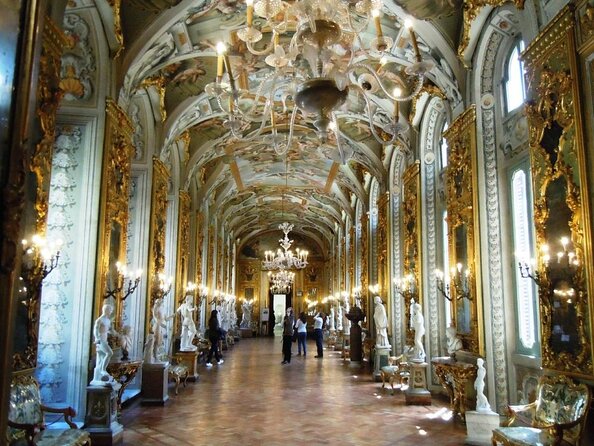
- Royal apartment route through the Blue, Red, Yellow, and Green Rooms
- Major artists in context including Raphael, Velazquez, Caravaggio, Carracci, and Bernini
- Private and adjustable to your interests, with time to linger and rest
Skip-the-Line at Palazzo Doria Pamphilj: Why This Tour Works
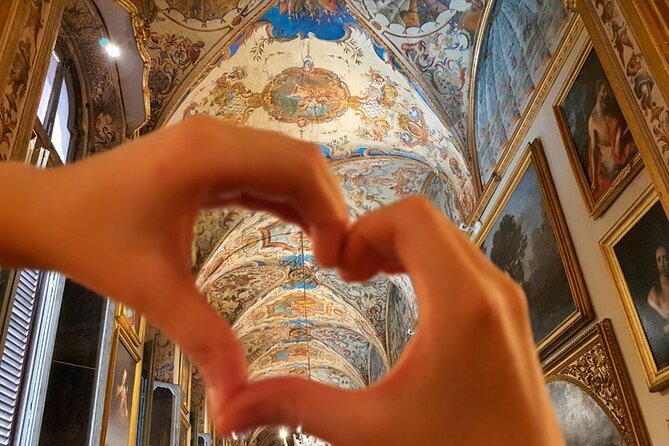
Rome can be a great place to slow down—until you run into lines. This tour matters because it gets you past the slow part fast, using pre-paid skip-the-line tickets. Then you’re inside the palace with an expert guiding your eyes, not trying to guess what’s important.
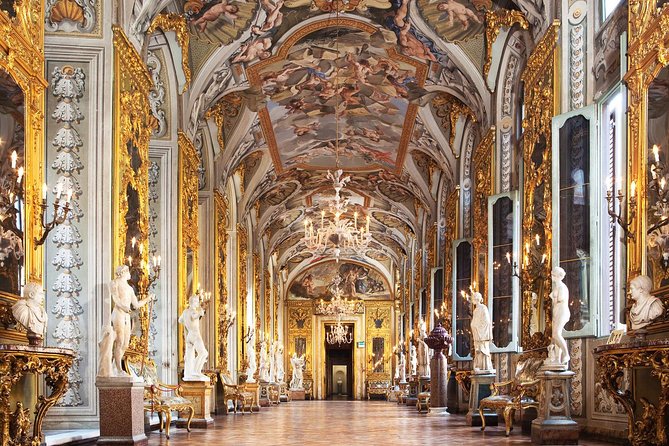
The setting is also a big deal. The Doria Pamphilj Palace isn’t a white-wall museum experience. You’re looking at major art and decorative rooms as part of a real residence history, which changes how you feel about the place.
And since it’s private, you’re not trapped in a one-size-fits-all script. If you care more about painting technique, family politics, or just how the rooms are arranged, your guide can steer the conversation.
You can also read our reviews of more guided tours in Rome



Your 2.5 Hours Inside: What the Visit Feels Like
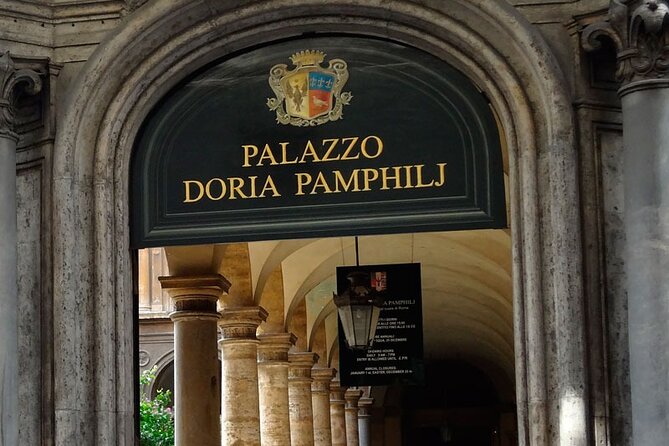
The tour runs about 2 hours 30 minutes, and it’s built around a guided sequence of the palace’s public-to-semi-private spaces. You’ll meet your guide outside the palace and then go straight in with your ticket, which keeps the start smoother than many Rome attractions.
Inside, expect a steady walking pace with built-in moments to pause. This matters because palace rooms move at a human speed: you’re not just “checking boxes.” You’ll also be able to linger a bit on artworks you connect with, especially the ones your guide brings into focus.
One practical note: the palace restricts personal food and drinks except water. You won’t want to bring snacks inside, so plan for a coffee or light bite before you go.
Blue, Red, Yellow, and Green Rooms: The Palace Stops You’ll Remember
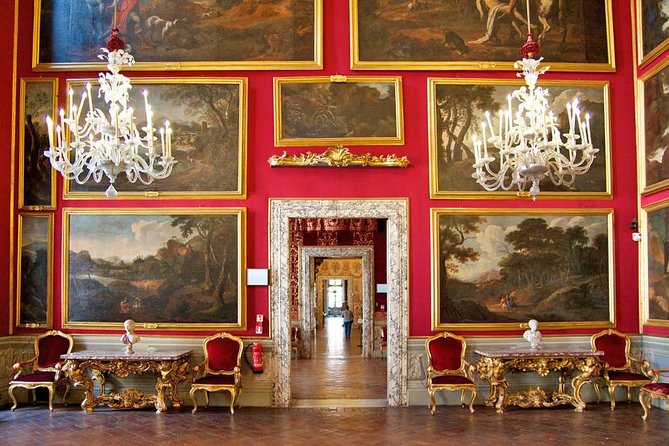
These four rooms are the emotional center of the tour. They’re the kind of spaces that make you think, so you stop. The guide helps you read the decoration instead of just admiring it.
In each of the colored-room stops, you’ll see:
- Tapestries and decorative furnishings meant to project status
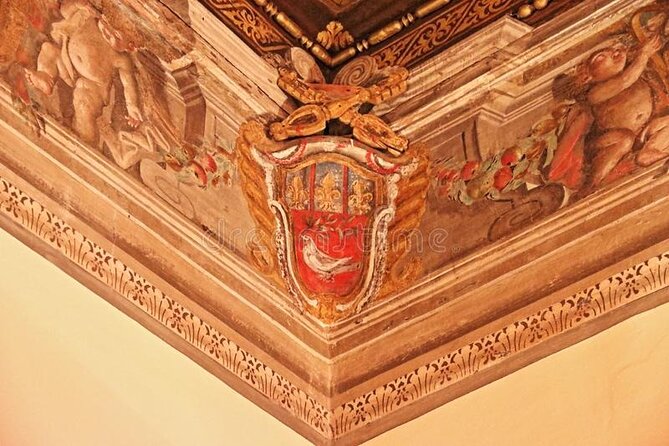
- Fresco work and painted details that reward close looking
- Eye-catching bird’s-eye view paintings and unusual decorative elements
The names sound decorative, but they’re also a shortcut for your brain. By the time you’ve moved through Blue, Red, Yellow, and Green, you’ll start to understand the palace as a whole set of linked rooms, not random interiors stacked in one building.
This is also where a good guide makes a real difference. For example, guides like Max have been praised for explaining the art and the history behind specific paintings, not just repeating labels. That’s exactly what you want in a palace like this, where the visuals are intense.
Royal Apartments, Chapel, and the Throne Room Moment
After the colored rooms, the tour continues through the broader palace experience. You’ll get a look at royal apartment spaces and key highlight areas, including the chapel and the Throne Room.
The chapel stop is worth paying attention to because it changes the rhythm. Instead of only picture after picture, you get a quieter, more intimate space that helps you imagine ceremony and daily life. Even if you’re not religious, the setting tells you how art and decoration were used to frame authority.
Then comes the Throne Room, the kind of room that makes you understand why people once believed power needed a stage. Your guide will connect the room’s purpose to how the collection and the palace were managed. If you’re the type who likes politics and power dynamics as much as painting, you’ll likely enjoy this part.
In the same way, guides such as Damiano have been noted for connecting artworks not only to art history but also to the politics and people around them. That approach is especially useful in spaces like these, where the building and the objects work together.
The Art List Sounds Famous. The Tour Makes It Personal.
You’ll see works tied to major names, including Raphael, Velazquez, Brueghel, Caravaggio, Carracci, and Bernini. On paper, that’s an impressive lineup. In real life, the tour goal is to make those names mean something.
Here’s the value of going guided: many major artworks are famous for reasons that are easy to forget once you’re standing in front of them. A guide can point out what changes from painting to painting—how the composition pulls your eye, what the details imply, and what the collection choices reveal about the family behind it.
I like this approach because it avoids the museum “drive-by.” You’re not rushing to see everything. You’re learning to see the important parts of fewer works more clearly.
It also helps if you’re a Caravaggio fan. One highlight from guide-led experiences is time spent on the Caravaggios, with the freedom to linger. That’s a rare luxury in Rome, where many sights force you to keep moving.
You can also read our reviews of more private tours in Rome






A Guide You Can Adapt To: Private, Customizable, and Human
Because it’s a private tour, your guide can tailor the emphasis to your interests. If you’re drawn to painting, you can spend more time with the works and how they were made. If you’re more into the family story and how the collection grew, you’ll get more of that angle too.
This is also where the human touch shows up. Some guides, like Giorgio, have been praised for delivering the experience as an under-visited Roman stop where the context matters. That matches the palace’s character: the less crowded environment lets you pay attention without constantly looking over your shoulder.
And if timing gets messy, you’ll be glad you have a human guide system rather than a rigid group tour. One example: Tommy and the office behind the tour were described as helpful and accommodating when a late arrival happened due to cancelled trains. That doesn’t mean the palace becomes a magic wand, but it does suggest the service mindset is practical.
Logistics in Rome: Meeting on Via del Corso and Staying on Time
You meet at Via del Corso, 305, 00186 Roma RM. The tour ends back at the same meeting point, so you’re not stuck in a complicated maze of transit plans afterward.
The location is central, which is the good news. The practical trade-off is that you’ll need to show up on your own. There’s no hotel pickup and drop-off, so build time for getting there calmly. The meeting area is near public transportation, which helps if you’re using trams or metro connections.
Timing-wise, you can choose either a morning or afternoon departure. In Rome, I usually prefer the earlier slot when the day is still fresh and you want to feel like you’re in control. If you like sleeping in or you’ve got morning plans elsewhere, the afternoon option can work just as well—especially because the palace visit depends more on room-by-room attention than on long outdoor walking.
Price and Value: Is $343.17 Worth It?
At $343.17 per person, this isn’t a “budget museum” option. But you’re not just paying for entry. You’re paying for:
- a professional art historian guide
- a private experience
- guaranteed skip-the-line access
- admission included during the visit
For me, that’s the core value equation: you’re buying time and clarity. The palace is not huge in the way some Rome monuments are, so the guided pacing can make your visit feel full instead of fragmented.
If you compare this to doing it on your own, skip-the-line can reduce stress, but it won’t replace interpretation. In a place like Doria Pamphilj, where rooms and collections connect, a strong guide helps you understand why the family assembled what they did, and what the decorative choices are signaling.
This tour tends to be a good fit if you’re:
- already interested in Renaissance and Baroque art
- okay paying for a smaller, higher-touch experience
- visiting Rome on a schedule where you want fewer, better stops
If you’re in Rome mainly for highlights-and-photos, you might decide to spend less and do it solo. But if your goal is real art understanding in a real palace environment, the price can feel fair.
Who This Private Tour Fits Best
This is especially appealing if you:
- like art history but don’t want the study part to feel like homework
- want to see the Doria Pamphilj Palace without turning it into a self-guided puzzle
- appreciate a route through themed rooms, not just a hallway tour
- want flexibility—stopping for a rest or lingering on favorites
It’s also a good option for repeat Rome visitors. One reason people fall in love with this palace is that it doesn’t follow the standard tourist “only the big ones” pattern. That means you can still feel like you discovered something, even if you’ve walked Rome before.
And if you’re traveling with kids, the tour still works as long as they’re accompanied by an adult. Children 5 and under are free, and there’s no dress code required.
Should You Book This Doria Pamphilj Palace Tour?
If you want a Roman palace visit that feels organized, art-focused, and less rushed, I’d book it. The combination of skip-the-line access plus an art historian guide is the key. It turns a beautiful building into a guided story you can actually follow.
I’d skip it only if you’re determined to travel ultra-budget, or if you’re not interested in art context and you just want general wandering. In that case, you can visit on your own and still enjoy the rooms. But you’ll likely miss the “why this matters” layer that makes the whole experience click.
If you’re deciding between the morning and afternoon option, pick the slot that best matches your energy. Either way, plan to arrive ready for a focused palace visit where small details matter.
FAQ
How long is the Doria Pamphilj Palace Gallery and Museum private tour?
It’s about 2 hours 30 minutes.
Is this tour private?
Yes. It’s a private tour, so only your group participates.
Does the tour include skip-the-line entry?
Yes. The tour includes guaranteed skip-the-line entry, using pre-paid skip-the-line tickets.
What is included in the price?
You get a professional art historian guide, a private tour, and admission ticket included for the visit.
Can I bring food or drinks into the palace?
Personal food and drinks aren’t allowed in the palace except water.
Is there free cancellation?
Yes. Free cancellation is available, and you can cancel up to 24 hours in advance for a full refund.