REVIEW · ROME
Colosseum Night Tour with Underground and Arena access
Book on Viator →Operated by Roman Tours · Bookable on Viator
Rome’s Colosseum sounds different after dark. This after-hours guided tour brings you into parts most visitors never see, including the underground tunnels and the arena floor. Add in headsets and a small-group feel, and you’ve got a night plan that’s more than just sightseeing.
I love the way the atmosphere changes everything: quieter grandstands, cool air, and that eerie sense of what used to happen below. I also like that you’re not stuck in a crowd shuffle, because the 1 hour 15 minutes pacing is designed to keep you moving while still letting you look closely.
One thing to consider: this experience is expensive for the time you’re inside. If you mainly want a long, show-like production or super-detailed lecture-style storytelling, you might feel the tour is a bit brief.
In This Review
- Quick hits before you go
- Why the Colosseum at night feels worth the effort
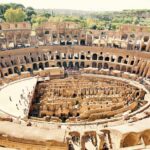
- What you actually see: grandstands, underground tunnels, and the arena floor
- The underground part: why it’s the highlight (and how to enjoy it)
- Your guide and the headset setup: what matters for understanding
- Arena-floor photos and the Gate of Death moment
- Palatine Hill and Roman Forum: your self-guided bonus
- Timing, meeting point, and how not to lose your underground access
- Price and value: what you’re paying for at €142.59
- Who this Colosseum night tour is best for
- Should you book this night tour?
- FAQ
- How long is the Colosseum Night Tour with Underground and Arena access?
- Is the tour offered in English?
- What parts of the Colosseum can I access on this tour?
- Are Palatine Hill and the Roman Forum included?
- Do you provide headsets?
- What is the maximum group size?
- What ID do I need to enter?
- What time should I arrive at the meeting point?
Quick hits before you go
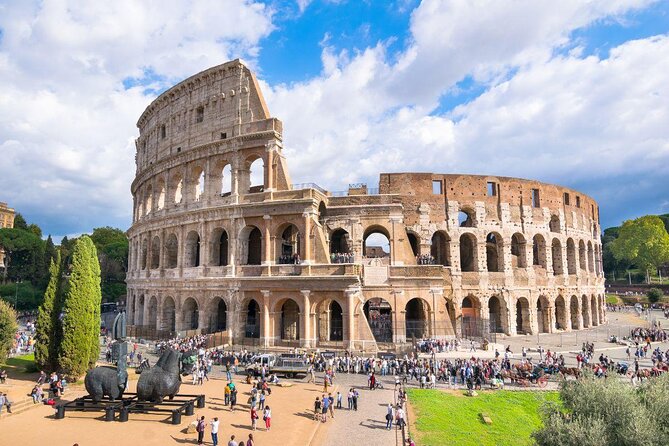
- Underground access to tunnels and chambers (with remnants of cages, plus wooden elevators and gladiator rooms)
- Arena floor entry through the Gate of Death, so you’re standing where the action once played out
- After-hours timing that helps you avoid the worst daytime crowds
- Headsets included, which make it easier to catch the guide clearly in a busy stone arena
- Small group size capped at 25 travelers
- Tickets bundled: Colosseum entry plus self-guided Palatine Hill and Roman Forum
Why the Colosseum at night feels worth the effort
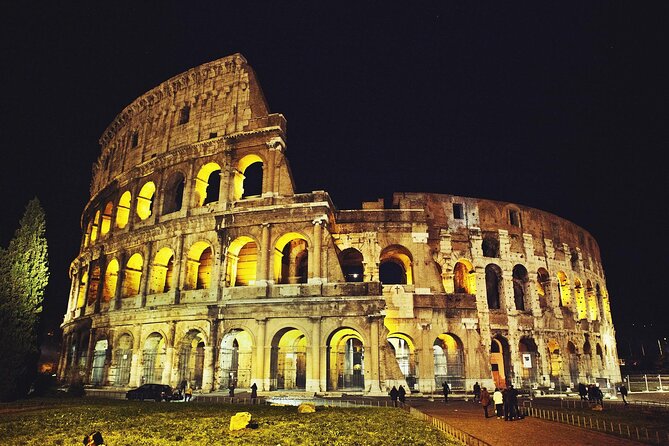
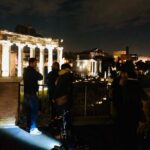
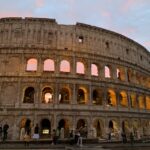
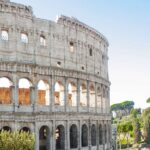
Daytime at the Colosseum can feel like a well-organized line. At night, the whole place loosens up. You get the same monumental scale, but with softer light, calmer movement, and fewer people competing for the same photo angle.
This tour leans into that night-time mood. You start by seeing the grandstands and main structure areas with a guided flow, then you move into the parts that make the Colosseum feel less like a ruin and more like a machine. The underground section is where the building stops being just impressive and starts being specific—tunnels, chambers, staging spaces, and the practical routes used to move animals and gladiators.
Even the temperature can work in your favor. In colder months, you might be chilly at the start, then warmer once you’re inside and moving through stone corridors. It’s one of those “dress for the walk, not for the monument” Rome moments.
You can also read our reviews of more evening experiences in Rome

What you actually see: grandstands, underground tunnels, and the arena floor
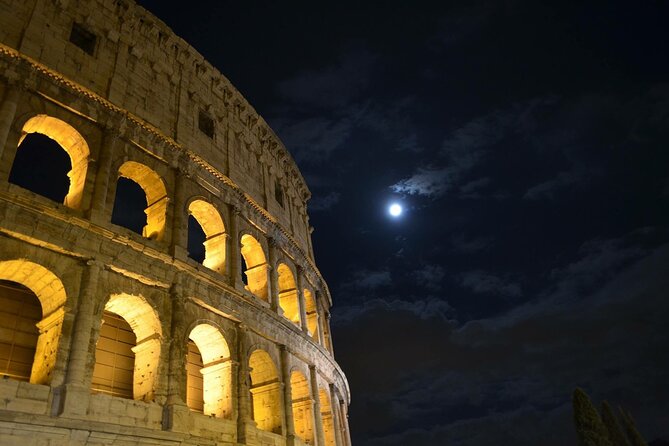
This isn’t a basic nighttime ticket. You’re taken into main Colosseum areas with guided access, and then you get exclusive entry into the underground network and chambers below.
Here’s the sequence you can expect in plain terms:
- Grandstands first
You begin with the higher viewing areas, which helps you understand the Colosseum’s layout before you go under it. Looking down from above gives context for what the arena floor would have controlled.
- Down into the underground
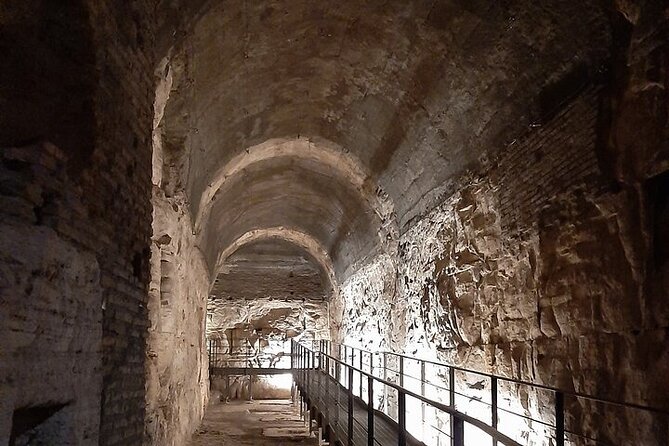
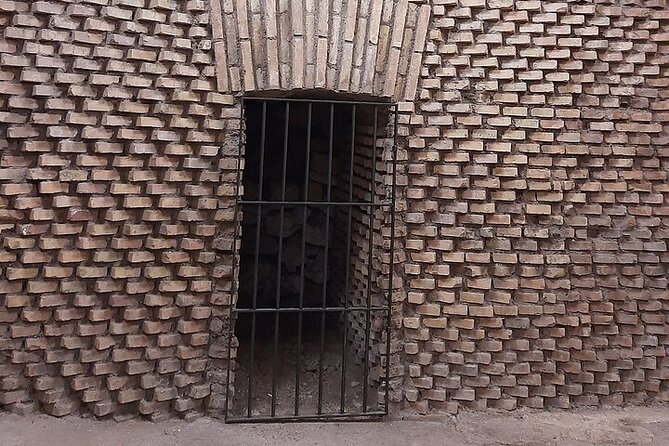
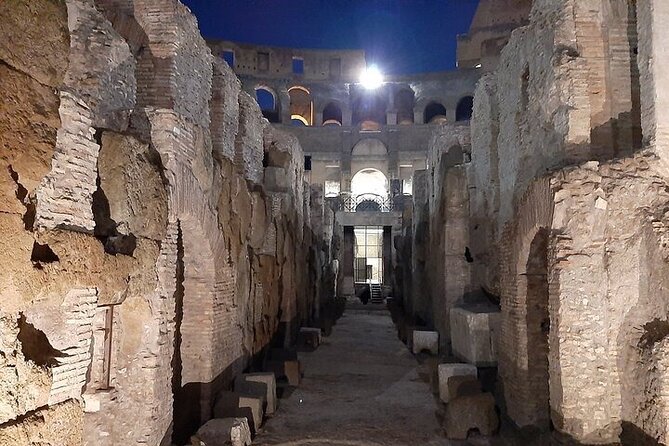
You enter restrictive areas where lions, tigers, and other fearsome animals were kept. You’ll also see remnants of cages, plus the wooden elevators and gladiator rooms used as part of the staging system. This is not just “cool dark rooms.” It’s the logistical backbone of the Colosseum.
- Up to the arena floor via the Gate of Death
Then you step out into the arena itself through the archway known as the Gate of Death. It’s an iconic name, but it also lands because you’ve already learned what it connects to underneath.
- Stories from the guide under the moonlight
The guide ties it together with the human side: how fighters waited, how the building functioned, and why the staging spaces mattered.
If you’ve already seen the Colosseum in daylight, this is the key difference. Daytime tours show you the shell; this type of tour tries to show you the working parts.
The underground part: why it’s the highlight (and how to enjoy it)
Most people remember the arena image, but the underground is where your brain finally clicks. You’re walking through the spaces that make the Colosseum feel like a system of routes, not just a big bowl.
What you’ll notice down there:
- The caged-animal remnants make the space feel unsettling in a very real way.
- The wooden elevator mechanisms help explain how items and people could be raised into view.
- The gladiator rooms give you a sense of waiting and preparation—before the public moment.
The upside of this section is that it changes your photos from “pretty ruin” to “story with atmosphere.” The downside is that it can feel quick. Underground tours are time-sensitive, and you’re also moving through the space as a group, not drifting around like a self-guided museum.
So if you love stopping to read every plaque and study every corner, you may wish you had extra time. If you like a guided walkthrough that keeps momentum and gives you key context fast, the underground works brilliantly.
Your guide and the headset setup: what matters for understanding
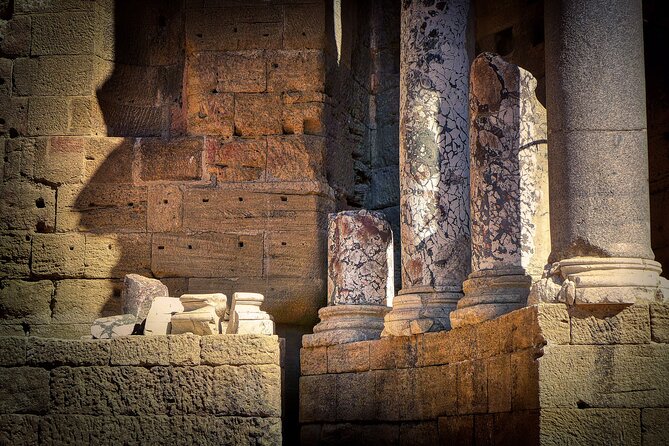
Good guides make the Colosseum feel personal. Not-so-great guides make it feel like facts being tossed at you.
The tour includes headsets, and that’s a big deal here. Underground spaces and nighttime sound can make normal voice volume unreliable, and headsets help you catch the guide clearly. If you’re sensitive to accents or speech speed, this feature can be the difference between understanding the story and merely hearing background noise.
That said, a few visitors have flagged that English comprehension can vary by guide. My practical advice: treat the headset like a tool, not a formality. Put it on properly, keep it from slipping, and don’t be shy about leaning in when the guide pauses to point things out.
Group size can also affect how the guide manages pace. With a maximum of 25 travelers, you’re not in a mega-crowd, but you should still expect a steady flow rather than long freestyle time.
Arena-floor photos and the Gate of Death moment
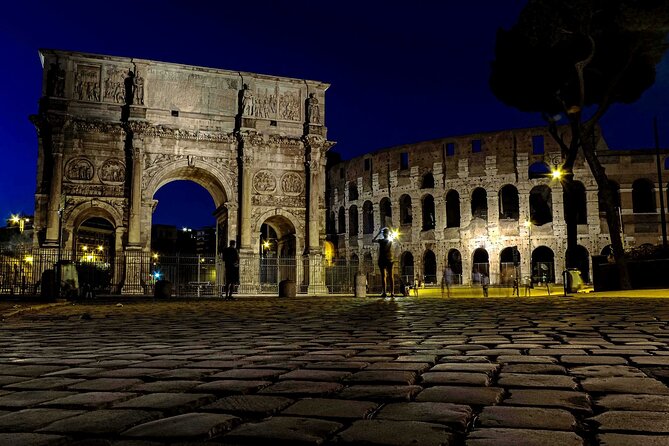
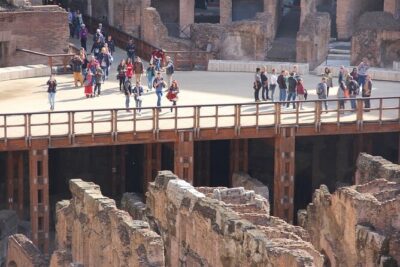
Stepping onto the arena floor is the emotional payoff. Once you’ve walked the underground chambers, the arena feels earned rather than instantly familiar.
Going through the Gate of Death matters because it’s not a random doorway. You’ve just seen the waiting rooms and staging spaces, so the archway has weight. You’re standing in the transition point between preparation and performance.
For photos, nighttime can be a friend:
- The lighting can create dramatic contrast.
- Fewer people can mean less jostling.
- You often get more breathing room for a few solid shots.
One tip I’d give you: plan for a short burst. The tour moves, and the best photos often come right after your group stops moving. If you wait too long while chatting or staring, you may miss the window.


Palatine Hill and Roman Forum: your self-guided bonus
This ticket also includes admission to Palatine Hill and the Roman Forum, self-guided. That’s a smart add-on because you can build your own mini “Rome history loop” after the Colosseum.
Think of it like this:
- The Colosseum tour gives you the theater and the machinery.
- Palatine Hill and the Roman Forum give you the backdrop of power, daily life, and political drama.
You’ll still rely on your own pace there, because the inclusion is explicitly self-guided. If you want the most value, do the Colosseum at night (as planned), then use the included access to connect it to the surrounding city story the next day or later the same day, depending on how your schedule works.
Timing, meeting point, and how not to lose your underground access
This tour ends back at the meeting point, so you’re not stuck with a long travel leg afterward. Still, the schedule is strict because the underground access has a timed window.
Here’s the no-drama rule: arrive early. The tour instructions state you must be at the meeting point 20–25 minutes before the tour starts. If you’re late, you may lose entry to the underground sections, because access is denied once the Colosseum timing passes.
Your meeting point is listed as Colosseum in Rome (00184). It’s also described as near public transportation. That matters because you’ll want a plan that doesn’t depend on taxis arriving exactly on time.
Also note the ID requirement: each person must bring a valid passport or ID document that matches the name used at booking. With timed entry, even small mismatches can cause delays or denied entry—so keep it simple and double-check your booking details.
Price and value: what you’re paying for at €142.59
The price is $142.59 per person, and yes, that can sting—especially compared with a cheaper daytime visit.
Here’s the value math that makes this price feel less random:
- The included admission ticket for the Colosseum and arena is valued at €24 per person.
- There’s also a Colosseum reservation fee listed as €2 per person.
- You’re getting headsets, a licensed English guide, and the big ticket item: exclusive underground and arena floor access that standard entry typically doesn’t include.
The tour’s duration is about 1 hour 15 minutes, so you’re paying for a concentrated package. If you enjoy short, high-impact experiences—especially ones that give access rather than just views—you’ll likely feel the value.
If you want a longer, slower museum-style session, or you’re hoping for a full “gladiator show,” you could feel shortchanged. Also, a gladiator battle reenactment is not part of this experience; it takes place at another location in Rome.
So the question isn’t just is it expensive. The question is: do you want underground staging access and arena-floor entry in one guided night slot? If yes, this is the kind of pricing you’re choosing.
Who this Colosseum night tour is best for
I think this tour fits best if you:
- Want less crowd pressure than the day schedule.
- Care about the Colosseum as an engineering and staging system, not just a photo spot.
- Like guided context but don’t want a 3-hour marathon.
- Prefer a small-group feel (maximum 25 travelers).
It may be less satisfying if you:
- Expect a big dramatic reenactment show.
- Need very long stops for reading and self-paced exploration.
- Get frustrated by rushed pacing in tight time slots.
Because the underground and arena sections drive the itinerary, the tour also works well for travelers who have already seen Rome’s main sights and want one “access moment” that feels different.
Should you book this night tour?
If you can swing the price, I’d book it for the same reason I’d book any access-heavy tour: it’s not just nicer timing. It’s different access.
Choose this Colosseum Night Tour with Underground and Arena access if you want the feeling of being inside the Colosseum’s working world—tunnels, staging spaces, and the arena floor through the Gate of Death—without the daytime crush.
Skip it (or consider a daytime option) if you only want general views, plan to spend most of your time reading at your own pace, or you’re looking for a longer show-style experience. The best-case version of this tour is short, focused, and atmospheric. If that matches your style, it’s an easy yes.
One last practical note: this experience is non-refundable and cannot be changed, so lock it in with confidence and keep your arrival time serious.
FAQ
How long is the Colosseum Night Tour with Underground and Arena access?
The tour duration is approximately 1 hour 15 minutes.
Is the tour offered in English?
Yes. The tour is offered in English.
What parts of the Colosseum can I access on this tour?
You get entry to the Colosseum guided areas, plus access to the underground tunnels and chambers, and you also go onto the arena floor.
Are Palatine Hill and the Roman Forum included?
Yes. Admission to Palatine Hill and the Roman Forum is included, and it is self-guided.
Do you provide headsets?
Yes. Headsets are included so you can hear your official guide clearly.
What is the maximum group size?
The tour has a maximum of 25 travelers.
What ID do I need to enter?
You must present a valid passport or ID document that matches the name provided at the time of booking.
What time should I arrive at the meeting point?
You should be at the meeting point 20–25 minutes before the tour starts, because underground entry is time-sensitive.