REVIEW · ROME
Colosseum and Palatine Hill: Unveil Rome’s Ancient Spectacles
Book on Viator →Operated by ROMA IN TOURS · Bookable on Viator
Ancient Rome, packed into two focused hours. This small-group tour strings together the Colosseum, the Roman Forum, and the Palatine Hill with timed entry so you’re not just looking at ruins—you’re learning what they meant.
I especially like the way you move from arena to politics to myth in one go, with a guided story line through the Roman Forum. I also like the included admissions and reservation setup, so your visit starts with less friction than doing it all on your own.
One thing to consider: this is a shared tour (up to 24 people), and if your chosen time slot changes, you may be moved to another time on the same day.
Top reasons I’d choose this tour
- Timed entry for three major sites so you spend more time inside and less time figuring things out
- Certified English guide to connect the Colosseum, Via Sacra, and Palatine Hill into one story
- Colosseum reservation fee is included, plus the Colosseum, Roman Forum, and Palatine Hill entrance tickets
- Three stops, roughly 40 minutes each, designed for a tight overview without dragging
- Mobile ticket plus online support, which matters when you’re arriving at the right moment
In This Review
- Why this Colosseum, Forum, and Palatine combo is the smart play
- Entering the Colosseum: Flavian Amphitheater in plain view
- The Roman Forum and Via Sacra: where public life used to run
- Palatine Hill: myths of Romulus and Remus, plus emperor residences
- Value check: what you pay for, and why it can be worth it
- Group size, guide style, and how to set your expectations
- Meeting point and getting there with less stress
- When plans change: time shifts and last-minute seating
- Who should book this tour (and who might not)
- Should you book Colosseum and Palatine Hill?
- FAQ
- FAQ
- What’s included in the Colosseum and Roman Forum admissions?
- How long is the tour?
- Is this tour private?
- What language is the tour offered in?
- Do I need a passport or identification document?
- Is there a mobile ticket?
- Where does the tour meet?
- What happens if my selected time isn’t available?
- Is food or hotel transfer included?
Why this Colosseum, Forum, and Palatine combo is the smart play
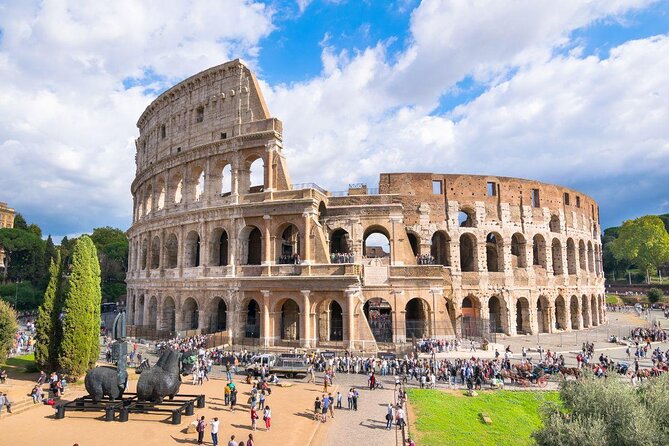
If you’re squeezing Rome into a short schedule, this is one of the more efficient ways to hit the big three of Ancient Rome without bouncing between separate tours. The core value here is not just access to the sites—it’s the order. You start with the Colosseum, then move into the Forum, then end on the Palatine Hill, where you can look at the city’s layout and understand why power, religion, and legend all clustered in the same area.
I like tours that help you read what you’re seeing. Here, the focus is very practical: you’re not just staring at stone. You’re shown what to pay attention to and how the stories connect across sites—especially when you walk the main street of Ancient Rome, the Via Sacra, and then climb to the Palatine Hill, where the city’s myth starts.
The time block is also clean. It’s listed as about 2 hours, and the route is built around three main segments of about 40 minutes each. That’s ideal for first-timers who want the backbone of Rome’s ancient story and don’t want to spend a whole day commuting and searching for entrances.
Entering the Colosseum: Flavian Amphitheater in plain view
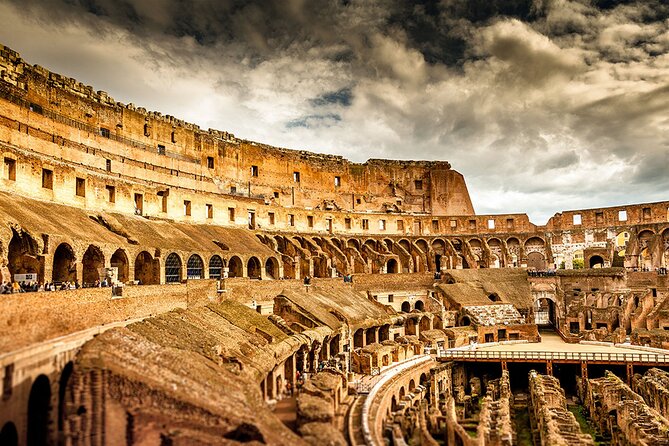
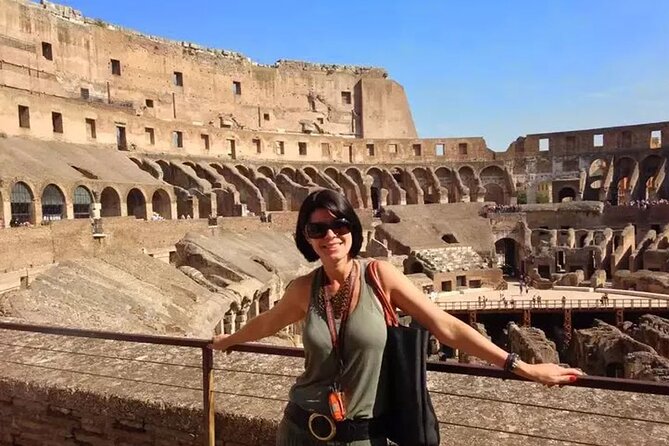
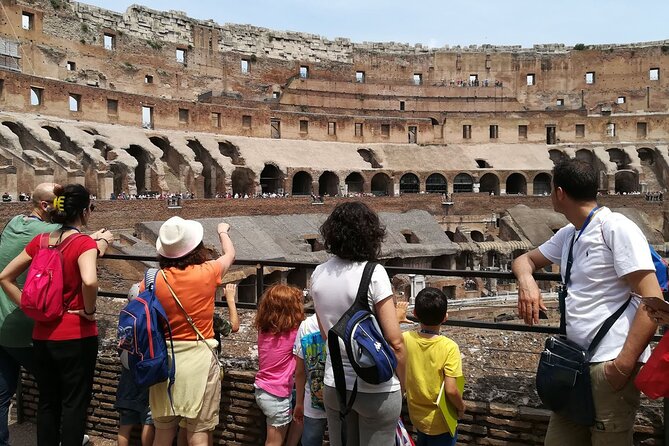
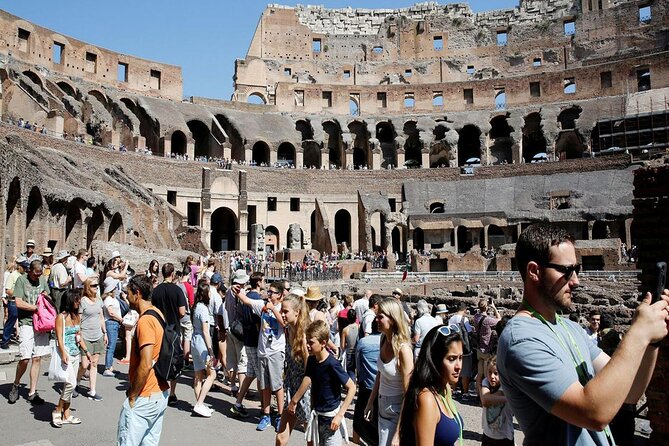
The Colosseum is the obvious star, but what makes it worth paying for is how much meaning is packed into its structure. This arena—originally the Flavian Amphitheater, also called Amphitheatrum Flavium—was built on the eastern edge of the Roman Forum. Construction started under Vespasian in 70 AD, finished under Titus, and it was inaugurated on 21 April 80 AD, with later changes during Domitian’s reign around 90 AD.
Here’s the point you’ll likely appreciate once you’re inside: the Colosseum isn’t just a huge ruin. It’s a snapshot of Roman engineering and Roman showmanship—scaled to hold roughly 50,000 to 87,000 spectators. Even if the exact number varies by estimate, the scale is the message. This was built to impress, and it was built in the heart of the city.
The tour also addresses the name “Colosseum.” It wasn’t the original name in Latin. The term spread later in the Middle Ages and comes from a deformation of the Latin adjective colosseum, loosely tied to the idea of colossal. That little linguistic detail helps you notice how history layers over history: you’re not only seeing antiquity—you’re seeing how later Romans and Europeans reinterpreted it.
Practical tip for your day: plan to concentrate here first. The Colosseum stop includes admission ticket time, and you’ll want your energy. After this, you’ll be walking and moving through multiple zones of ancient structures.
You can also read our reviews of more tours and experiences in Rome.



The Roman Forum and Via Sacra: where public life used to run
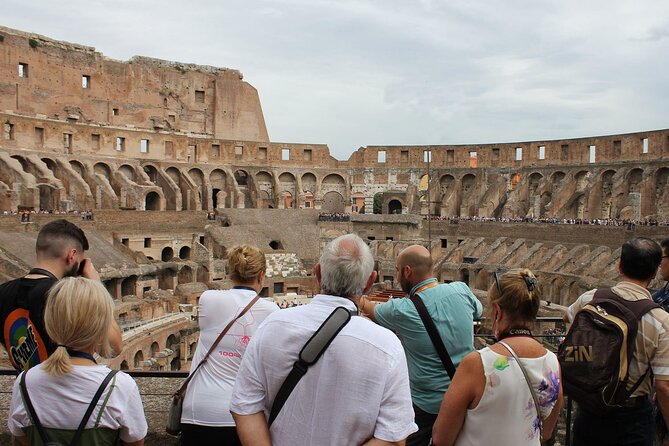
After the Colosseum, the tour shifts from spectacle to government and religion, which is exactly how Rome makes sense. The Roman Forum—Forum Romanum—is described as a rectangular forum surrounded by ruins of major ancient civic buildings. It began as a marketplace, and citizens called it the Forum Magnum, or simply the Forum.
The route includes a stroll along the Via Sacra, the main street of Ancient Rome. This is where parades and triumphs happened, including those connected with emperors like Augustus and Hadrian, and military generals in triumphal processions. Seeing the physical corridor matters because it’s how you understand movement and power in one line: Rome celebrated itself right through the middle.
You’ll also enter parts of the complex that go beyond surface-level viewing. The tour is set up to include the interior of the old Senate, the dwellings of the Vestal Virgins, and Temples of Vesta, plus areas connected to Septimius Severus and the Triumphal Arches of Titus. If you’ve ever felt that the Forum can be confusing—too many fragments, not enough narrative—this is the main reason a guided route is valuable.
One careful consideration: the Forum is a ruin field. Even with a guide, you’ll be moving through spaces that don’t feel like a single building. What you gain is interpretation: you’re shown what the spaces were used for, and that can turn a jumble into a map.
If you want your photos to look better than the usual “I stood in front of rocks” shots, pay attention to orientation. The Via Sacra walk is the backbone segment—if you keep your bearings, your whole understanding improves.
Palatine Hill: myths of Romulus and Remus, plus emperor residences
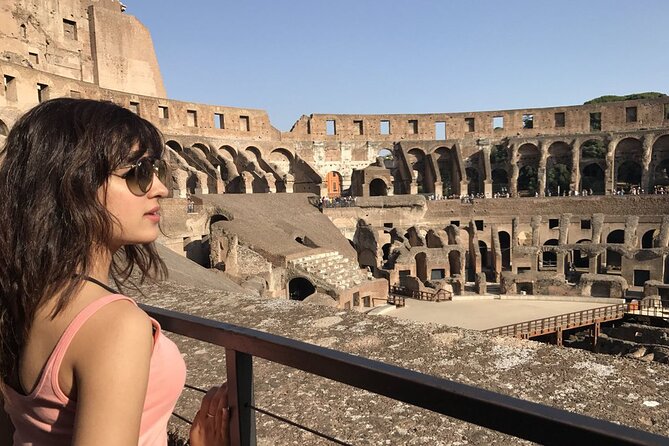
Many Rome visitors rush past the Palatine Hill because the Colosseum gets all the camera time. That’s a mistake. The Palatine is connected to everything you just heard, and it’s set up to give you that bigger-picture feeling even in a short visit.
The hill towers over the Roman Forum and the Circus Maximus, and you can still see ruins of ancient palaces from a distance. Those palaces were home to emperors, and the hill also connects to temples—so it’s not only political power, but religious and ceremonial meaning too.
Then there’s the myth. This is where the story of Romulus and Remus belongs at the level of place. You’re not just hearing a bedtime legend. You’re standing on a site tied to Rome’s origin narrative, with the Forum and arena below. The result is that the founding myth starts to feel like part of the same landscape as the civic life you saw next door.
For me, this stop is the best moment to slow down mentally. Even if your feet are moving, your mind can switch modes: from arena spectacle (Colosseum) to civic identity (Forum) to origin and residence (Palatine). That sequence gives you a clearer understanding of why Rome built upward on this hill and why stories and rulers lived close together.
Value check: what you pay for, and why it can be worth it
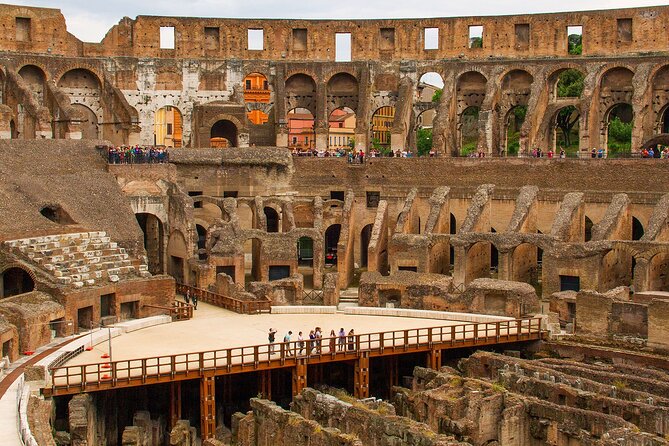
At $162.19 per person, the price can look steep at first glance—until you match it to what’s actually included.
This tour includes:
- a certified guide
- mobile tickets
- entrance ticket to Palatine Hill
- entrance ticket to the Roman Forum
- Colosseum entrance ticket (and the Colosseum reservation fee, valued at €2 per person)
- online support and an online consultant who sends boarding information
So you’re not paying purely for a walk-and-talk. You’re paying for access handling plus guidance across three major sites in a compressed time window. The big ticket item is the Colosseum reservation and entry, which is explicitly included and valued on the provided info.
Also, this tour is offered in English, which matters if you’re comparing it to cheaper options that might be limited on language. When you’re trying to understand Roman politics, religion, and architecture in real time, language clarity is part of the value.
The one “cost” you should mentally plan for is time and pace. It’s about 2 hours total, with three stops, so you’re getting an overview rather than a long, slow crawl. If you love reading every inscription and spending ages per monument, you might want more time in each place. But if you want the core story efficiently, this pricing makes more sense.
Group size, guide style, and how to set your expectations
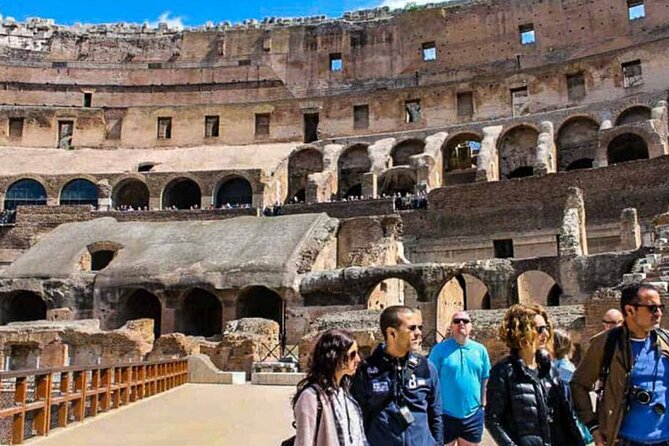
This is a shared tour, with a maximum group size of 24. It’s also described as having a private tour guide—so don’t assume you’ll have a one-on-one experience. In practice, you should expect a guide working with a group pace and a schedule that keeps everyone moving.
The duration is tight, and that can affect how much back-and-forth Q&A you’ll get. A short guided segment means the guide will focus on key stories that help the sites click. In some cases, guides can be particularly strong at English and clarity; one named example from available feedback is Francesca, highlighted for being knowledgeable and pleasant with excellent English.
Your best move is to come with a few questions ready, but also accept that time is limited. This tour is built to provide a guided path through the Colosseum, Forum, and Palatine Hill, not to stretch into a custom seminar.






Meeting point and getting there with less stress
The meeting point is Via di S. Giovanni in Laterano, 14, 00184 Roma RM, Italy, and the tour ends back at the meeting point. It’s also listed as near public transportation, which is helpful because you’re coordinating with a timed entry experience.
This tour uses a mobile ticket, and you’ll receive boarding information online, with support available at the time of boarding. A helpful detail: you’re asked to leave a WhatsApp number where support can contact you after booking. If you’re traveling with a local SIM issue or you don’t use WhatsApp much, sort that ahead of time so you don’t miss instructions.
Most importantly, bring the right identity document. Each traveler must present a valid passport or identification document that matches the name provided at booking for entry into the Colosseum and Roman Forum. That’s not a suggestion—this is part of what keeps entry smooth.
When plans change: time shifts and last-minute seating
Two scheduling realities are worth knowing up front.
First, if your chosen time isn’t available, you can be transferred to another time on the same day. The provided info explains that these changes are outside the control of the operators, so you should avoid booking other tight activities right next door in time.
Second, for last-minute reservations (same day or overnight), if seats are unavailable, you may be placed on the day following your reserved date. That doesn’t mean it will happen, but it’s a real possibility. If Rome is tight and you’re only in town for one day, that matters.
These points don’t ruin the tour. They just change how you should plan your overall day: give yourself breathing room.
Who should book this tour (and who might not)
This is a good fit if you want:
- the big ancient sites covered in a short window
- a guided narrative through the Colosseum, Via Sacra, and Palatine Hill
- included admissions and reservation handling
- English commentary
It may be less ideal if you:
- need a completely private experience
- want lots of open-ended question time and a slow pace
- have very strict timing constraints with no flexibility for same-day time shifts
Should you book Colosseum and Palatine Hill?
I’d book this tour if you’re prioritizing efficiency and clarity. The combination makes sense: spectacle first (Colosseum), then civic religion and triumph routes (Roman Forum and Via Sacra), then origin and imperial residence (Palatine Hill). With admissions and the Colosseum reservation fee included, you’re paying for more than just a walking guide.
I would think twice if your schedule is razor-thin or if you’re expecting a true private, no-group experience. The tour is shared, and same-day time changes are possible. If that won’t stress you, you’re in a solid position to get a lot of Roman meaning in a short, well-organized window.
FAQ
FAQ
What’s included in the Colosseum and Roman Forum admissions?
Your tour includes entrance tickets for the Colosseum, the Roman Forum, and Palatine Hill, plus the Colosseum reservation fee.
How long is the tour?
It’s listed at about 2 hours, with three main segments (Colosseum, Roman Forum, and Palatine Hill).
Is this tour private?
No. It’s a shared group tour with a maximum group size of 24.
What language is the tour offered in?
The tour is offered in English.
Do I need a passport or identification document?
Yes. Each traveler must present a valid passport or identification document that matches the name used during booking for entry to the Colosseum and Roman Forum.
Is there a mobile ticket?
Yes. The tour uses a mobile ticket.
Where does the tour meet?
The meeting point is Via di S. Giovanni in Laterano, 14, 00184 Roma RM, Italy, and the tour ends back at the meeting point.
What happens if my selected time isn’t available?
If the chosen time isn’t available, you’ll be transferred to another time on the same day. This is not guaranteed to match your exact plan.
Is food or hotel transfer included?
No. Food and drink are not included, and round-trip hotel transfers are not included.