REVIEW · ROME
Vatican: Guided Tour Vatican Museums and Sistine Chapel
Book on GetYourGuide →Operated by Habemus Tours · Bookable on GetYourGuide
Some places work better when time is tight. This Vatican Museums and Sistine Chapel tour gives you priority access and clear guide audio in a small group. You’ll move through big, art-heavy rooms with someone who knows what to point out.
I especially like the pairing of authorized guidance plus a headphone set. It makes the visit easier to follow when the galleries get crowded and noisy.
The one drawback to plan for is simple: this is a popular stop, so security checks in peak season can add waiting time, even with priority entry.
In This Review
- Key highlights worth your attention
- Priority access: what it really changes at the Vatican
- Small-group touring with live guidance (and why headphones matter)
- The route inside the Vatican Museums: where your time goes
- Cortile del Belvedere: the courtyard that sets the tone
- Museo Pio Clementino: sculpture focus with context
- Gallery of the Candelabra and the theater of display
- Gallery of Tapestries: visual storytelling without the rush
- Gallery of Maps: a smart break that feels less overwhelming
- The big-name works you’ll hear about (and how to actually see them)
- Sistine Chapel: how your guide helps you see the fresco program
- Price and value: what you’re paying for at $95.78
- Practical tips that make this tour easier (and more comfortable)
- Dress code: plan for shoulders and knees
- What to bring
- Security reality check
- Small-group pace
- Not suitable for wheelchair users
- Who should book this Vatican Museums and Sistine Chapel tour?
- Should you book this guided tour?
- FAQ
- How long is the Vatican Museums and Sistine Chapel guided tour?
- Where do I meet the tour guide?
- Does this tour include tickets and priority entry?
- Are headphones included?
- What languages are available for the live guide?
- What’s included in the tour price?
- Is the tour wheelchair-friendly?
Key highlights worth your attention
- Skip-the-line entry via a separate entrance so you avoid the longest museum crush
- Small group (max 10) for a calmer pace and more time on questions
- Headphones included so the guide stays understandable in busy galleries
- Sistine Chapel viewing time with guidance focused on what you’re seeing
- Major Vatican Museum rooms on the route, including Gallery of Maps and Museo Pio Clementino
- Multiple language options (English, French, Italian, Spanish, Portuguese)
Priority access: what it really changes at the Vatican
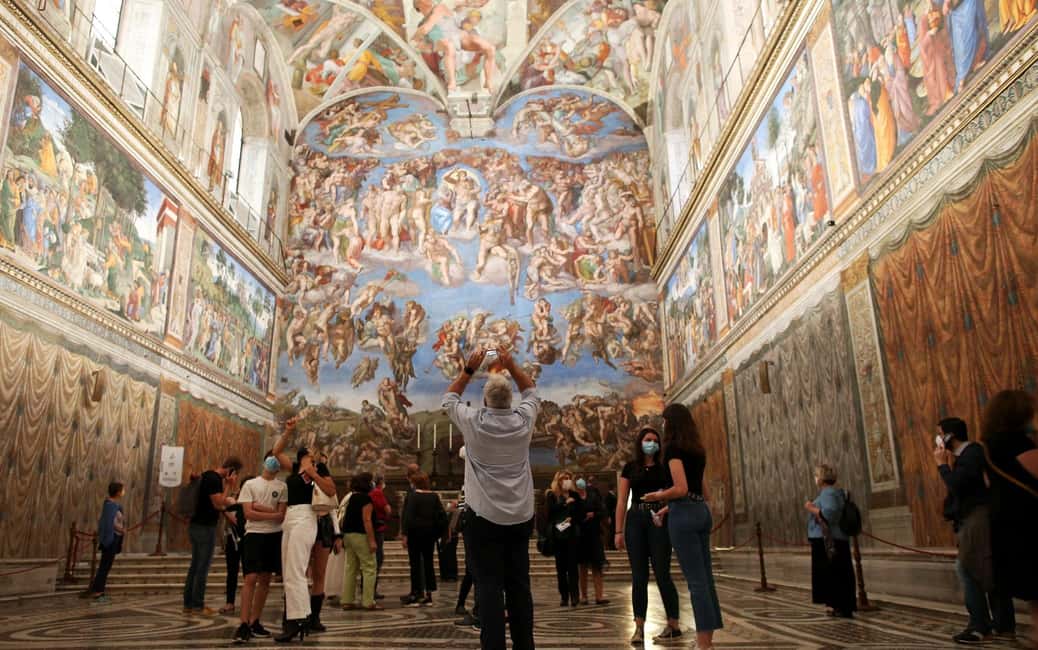
The Vatican Museums can feel like a maze on your best day. The big win here is priority admission to both the Vatican Museums and the Sistine Chapel. In practice, that means you’re spending less time stuck at the main entrance bottleneck and more time inside where the art is.
That matters because crowds shape your experience. In peak season, security checkpoints can take up to 30 minutes. Even when your entry is efficient, you still need to account for the reality of crowds in Vatican City. Priority helps, but it doesn’t make the Vatican magically empty.
I also like that the tour doesn’t just promise access—it pairs it with a guide who can keep you oriented. When you’re walking from sculpture galleries to fresco walls, it’s easy to lose the thread. A good guide helps you connect the dots instead of treating the visit like a checklist.
You can also read our reviews of more guided tours in Rome



Small-group touring with live guidance (and why headphones matter)
This tour runs with a small group of up to 10 participants. That’s a sweet spot: not so small that you feel rushed, not so big that you’re forever waiting for others to catch up. You get a more human pacing through rooms that otherwise move like a conveyor belt.
The second major advantage is the headphone set. Even with a live guide, museums can be loud—people talking, footsteps scuffing, and the occasional audio leak from other tours. Having the narration in your ear means you don’t have to lean in or strain to understand. You can keep your eyes on what matters: the works themselves.
And the guide language options are broad—English, French, Italian, Spanish, and Portuguese. If you’re traveling with someone who doesn’t speak Italian (or you don’t), this is one less headache to plan around.
One more thing I appreciate: you’re escorted from the meeting point into the museum entrance flow. That reduces the usual “where do we go next?” stress. When you have limited time, small frictions add up fast.
The route inside the Vatican Museums: where your time goes
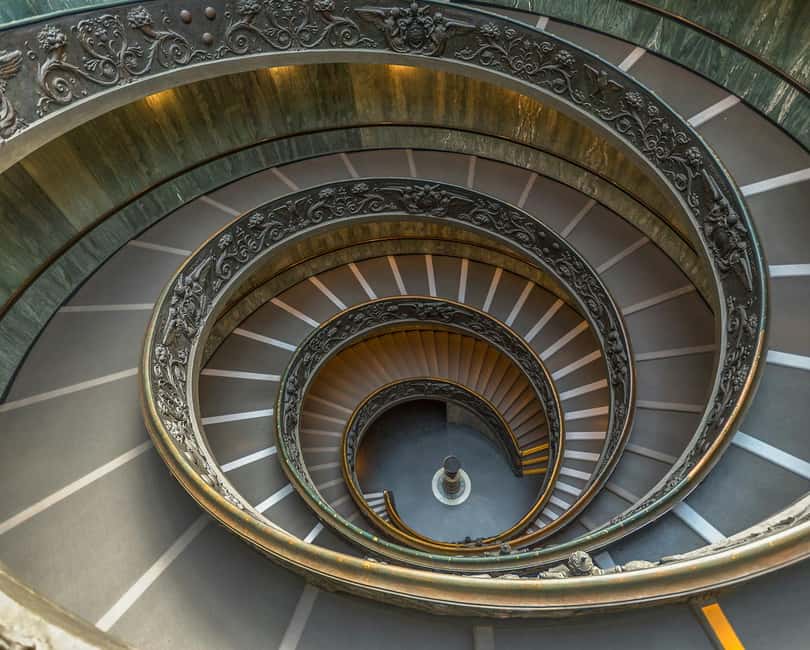
Your tour doesn’t waste time jumping randomly. It follows a sequence that gives you a sense of how the Vatican’s collecting and display traditions work. You’ll walk through well-known gallery clusters and major stops rather than wandering.
Here’s what to expect as the tour moves through the museums.
Cortile del Belvedere: the courtyard that sets the tone
The Cortile del Belvedere is one of those spaces that instantly tells you the Vatican Museums are organized like an indoor complex, not a single building. You’re in a setting that feels designed for viewing—lines, open sightlines, and a strong “look here” layout.
Why this stop is useful on a guided format: it helps you get your bearings. Before you’re surrounded by statues and artworks, you understand the geography of what comes next. It’s also a mental reset. If you start with rooms packed wall-to-wall, you’ll miss how the museum is arranged.
Museo Pio Clementino: sculpture focus with context
Next comes Museo Pio Clementino, a key sculpture museum area. This is where you start seeing how much the Vatican’s collection leaned into classical forms and historical importance.
You’ll be listening for the guide’s explanation of not just what you’re looking at, but why these pieces matter and how they were collected. The museum’s sculpture rooms can be overwhelming if you only see them as “a lot of statues.” With live guidance, you start noticing details—poses, myth connections, and why certain works became famous enough to be constantly referenced.
This is also where you’ll hear about headline sculptures such as Laocoon and His Sons. It’s the kind of work that looks dramatic from any angle, and your guide can help you notice the storytelling in the motion and expressions.
You can also read our reviews of more museum experiences in Rome



Gallery of the Candelabra and the theater of display
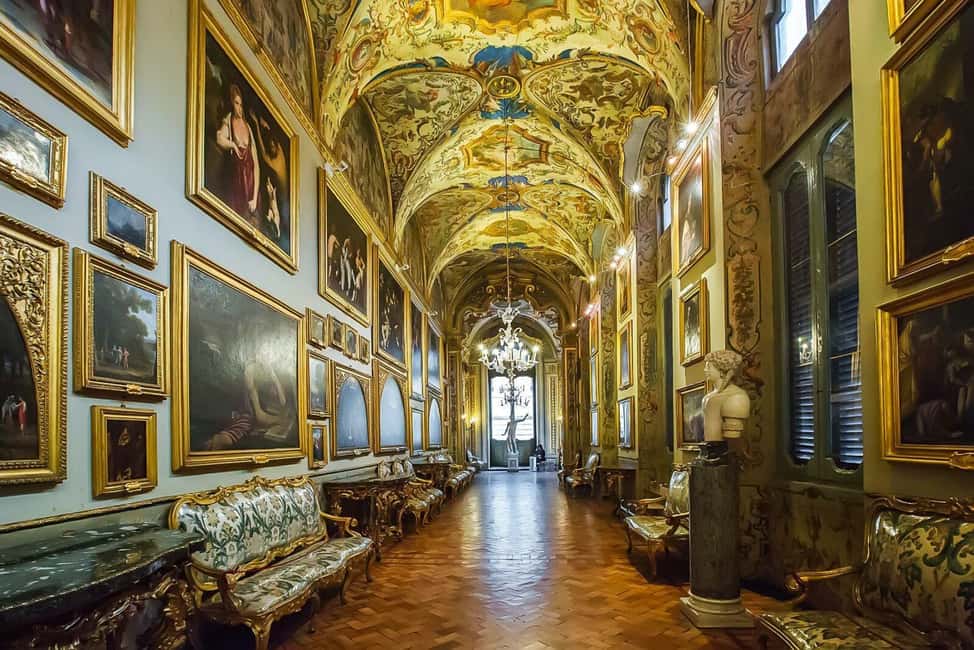
Then you move into the Gallery of the Candelabra. The name is literal, but the point of the room is bigger than the objects themselves. It’s a classic example of how the Vatican turns display design into part of the experience.
If you’ve ever been in a museum where you can’t “read” the room, this helps. The guided commentary keeps you from zoning out and makes the gallery layout feel purposeful. You’re not just seeing sculptures; you’re seeing the museum’s staging choices.
Gallery of Tapestries: visual storytelling without the rush
The route continues into the Gallery of Tapestries. Even though tapestries are textiles, the room is still about atmosphere and narrative. You’ll get guided interpretation that helps you connect the artwork to the wider themes you’re hearing across the tour.
One practical note: this is still a very popular museum space. Expect crowds, and expect to move in the flow. A small group helps here—your tour stays together and you don’t end up stuck behind a wall of other visitors.
Gallery of Maps: a smart break that feels less overwhelming
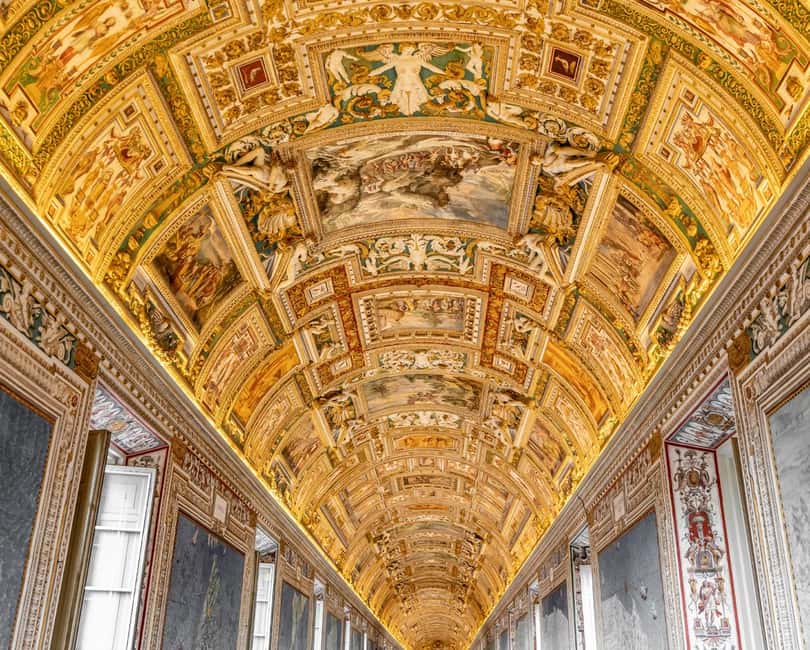
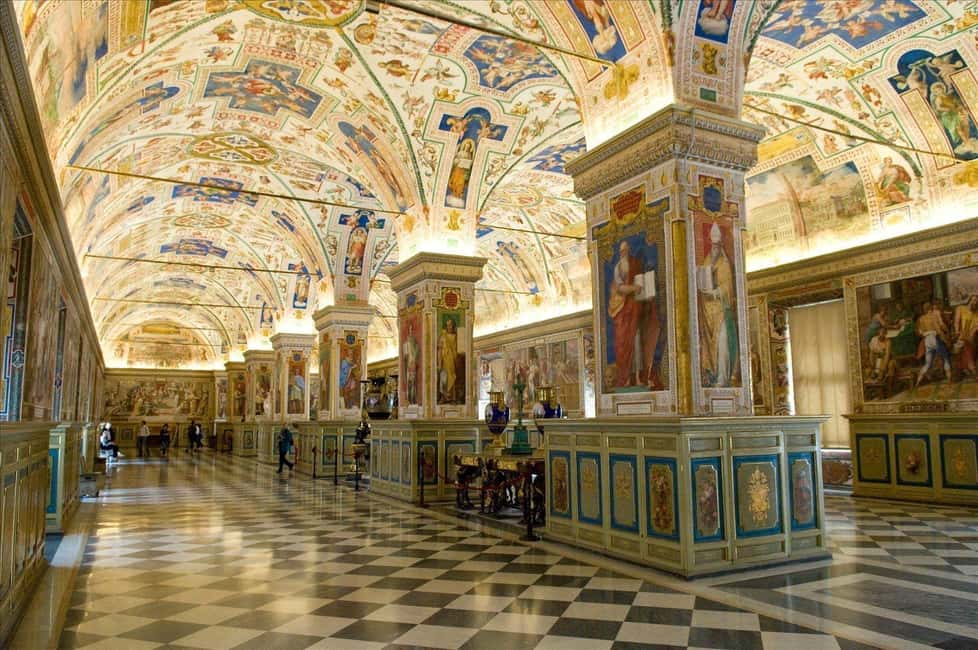
The Gallery of Maps is one of the most surprising stops because it’s a different kind of visual experience. Instead of sculptures and ceiling-height drama, you get a wide view of cartographic work, with lots to look at.
This stop is valuable because it gives your brain something fresh. It also helps you understand how the Vatican framed knowledge and discovery in its collections. If you’ve only seen art museums where everything is strictly paintings and sculpture, this adds a “how people thought” layer.
Your guide’s job here is important: you’ll get help reading what you’re seeing so the maps don’t blur into background decoration.
The big-name works you’ll hear about (and how to actually see them)
Even without being a specialist, you can enjoy this tour if you listen for what the guide emphasizes. The route highlights several famous pieces, including:
- Laocoon and His Sons: a standout for emotion and movement—watch how the figures communicate drama.
- Apollo Belvedere: a classic expression of idealized form; it’s worth taking a moment to compare posture and style.
- Belvedere Torso: one of those works that reminds you why fragmentary pieces still matter—composition and anatomy can still tell a story even without a full body view.
Here’s the trick: don’t just “look at famous.” Look for what changes between works—tone, pose, myth reference, and the way the Vatican curated meaning through display. With live guidance and headphones, you can do that without feeling lost.
Also, the guide gives you time to process key rooms rather than rushing straight past everything. In a museum like this, the fastest way to feel disappointed is to feel like you sprinted. A guided format gives you a chance to slow down at the important spots.
Sistine Chapel: how your guide helps you see the fresco program
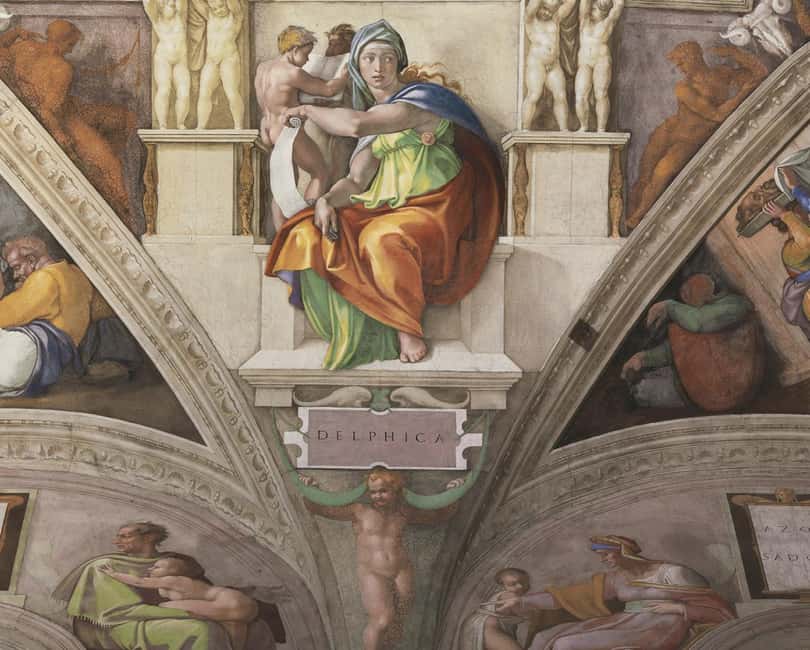
The ending shift is the Sistine Chapel, which is where many people get starry-eyed—and where many people accidentally rush. This tour is built to bring you to the Chapel with context, then give you time to look at the frescoes.
What you’ll focus on: Michelangelo’s scenes across the ceiling and the overall impact of the chapel’s painted narrative. You’ll be guided through major biblical depictions, including the Last Judgment.
A practical way to enjoy it is to use the guide’s pacing as your permission to look longer. The Chapel isn’t one artwork; it’s a whole system of images. If you try to read it alone and fast, it all becomes one large “wow.” If you have narration and time, you start separating the scenes and understanding how they connect.
There’s also a simple realism: the Sistine Chapel is crowded and quiet. That’s why the audio setup and a guide’s direction are so useful. You can keep your eyes on the ceiling without losing the key points.
Price and value: what you’re paying for at $95.78
At $95.78 per person, this tour isn’t the cheapest way to enter. But the value is in what’s included and what that saves you.
You’re paying for:
- Priority entrance tickets for the Vatican Museums and the Sistine Chapel
- An authorized guide with live commentary
- A headphone set so you can hear the guide clearly
The value equation is time + expertise. At the Vatican, time spent hunting for the right path, figuring out what’s important, or waiting in the wrong line can steal your enjoyment. Priority entry helps reduce friction. The guide helps you avoid the common trap of seeing “a lot” without really understanding “why.”
The duration is about 2.5 hours, which is also part of the value. You get a concentrated, high-impact visit without turning your day into an all-day museum marathon.
Practical tips that make this tour easier (and more comfortable)
A few details matter here because the Vatican has rules and because the site draws huge crowds.
Dress code: plan for shoulders and knees
You must follow the dress code: shoulders and knees must be covered. That means no short skirts and no sleeveless shirts.
Also, consider the practical side: you’ll be walking and standing in museum rooms and then in a large religious space. Bring a layer if you tend to get cold, but keep it compliant with the shoulders/upper-body rule.
What to bring
Bring passport or ID card (a copy is accepted). If you have one, a student card is also mentioned as useful.
Security reality check
Peak season security lines can take up to 30 minutes. You can’t ignore that. Your best move is to arrive early and avoid last-minute panic.
Small-group pace
Because this is a small group limited to 10 people, you should expect a guided flow. If you arrive late, you won’t be able to join or reschedule and won’t be eligible for a refund. Build in buffer time.
Not suitable for wheelchair users
This tour is listed as not suitable for wheelchair users. If mobility needs are part of your planning, you’ll want a different Vatican format designed for accessibility.
Who should book this Vatican Museums and Sistine Chapel tour?
I think this tour is a strong choice if you want:
- A fast, focused route through the Vatican Museums without getting lost
- Someone to explain what you’re seeing, especially in sculpture rooms and the Chapel
- A clearer audio experience thanks to the headphone set
- A small-group atmosphere that doesn’t feel like a herd
It may not fit you if:
- You want total freedom to wander at your own rhythm (this is guided and structured)
- You need wheelchair-accessible accommodations
- Your schedule is so tight that arriving on time feels impossible
Guide quality seems to be a theme in the experience. If you end up with a guide like Sarah (praised for professionalism and big knowledge) or Dané (recognized as passionate), the chances are high that you’ll come away with more than just photos. Silvia’s helpful service also points to a tour style that favors explanation, not just movement.
Should you book this guided tour?
If your goal is to experience the Vatican Museums and the Sistine Chapel with less stress and more meaning, I’d say yes. Priority access plus a small-group guide is the combo that makes a big site feel manageable in 2.5 hours.
Skip booking only if you’re the kind of traveler who prefers unguided wandering, or if your mobility needs don’t match what’s listed for this tour. Otherwise, this is a practical way to get to the highlights—Laocoon and His Sons, the Gallery of Maps, and the Sistine Chapel’s core scenes—without turning your Vatican day into a logistics problem.
FAQ
How long is the Vatican Museums and Sistine Chapel guided tour?
The tour duration is about 2.5 hours (check availability to see starting times).
Where do I meet the tour guide?
You check in at the HABEMUS TOURS office at Via Del Mascherino 37/41. You’ll need to arrive 30 minutes before your booked departure time.
Does this tour include tickets and priority entry?
Yes. Priority entrance tickets for both the Vatican Museums and the Sistine Chapel are included, and you’ll use a separate entrance to skip the main line.
Are headphones included?
Yes. You get a headphone set so you can hear the guide clearly.
What languages are available for the live guide?
The live tour guide is offered in Spanish, Portuguese, Italian, English, and French.
What’s included in the tour price?
Included: priority entrance tickets for the Vatican Museums and Sistine Chapel, a guided tour guide, and a headphone set.
Is the tour wheelchair-friendly?
No. The activity is listed as not suitable for wheelchair users.