REVIEW · ROME
Catacombs and Appian way Tour
Book on Viator →Operated by Tours & Tours · Bookable on Viator
Rome’s underground meets the Appian Way in hours. This tour strings together Catacombs of Saint Callixtus and a walk on the Appian Way, guided by people like Catia and Giuseppe who know how to explain what you’re seeing. I love the tight pacing and the fact that the catacombs ticket is included. The main catch: the underground spaces can feel tight, so it’s not for claustrophobic travelers.
I also like that you get the Mausoleum of Cecilia Metella—a stop often skipped—and the round-trip van ride pulls you out of the city quickly. At about 3 hours total, it’s a smart choice when you want big Roman hits without a full day.
In This Review
- Key takeaways before you go
- A Fast Route to the Appian Way and Rome Underground
- Meeting at Via Cavour and the 3-Hour Timing That Fits Real Schedules
- Catacombs of Saint Callixtus: Popes, Burial Rituals, and the Quiet Shock
- Practical things to know
- Why it’s worth starting here
- Circus of Maxentius: Rome’s Stadium Vibe Without the Crowds
- What you’ll notice
- Mausoleum of Cecilia Metella: The Appian Way’s Rarity Stop
- Why I like this stop for planning
- Walking the Appian Way: From Myth to Main Road
- What to look for while you walk
- Claudian Aqueduct: Ancient Engineering in Plain View
- Why aqueducts can be a relief (and not just a “school fact”)
- Price and Value: What $77.14 Buys You in Rome
- Group Size, Guide Style, and the Little Things That Matter
- Who Should Book This Tour (and Who Should Skip It)
- Should You Book the Catacombs and Appian Way Tour?
- FAQ
- What is the tour price?
- Where do you meet for the Catacombs and Appian Way Tour?
- What time does the tour start?
- How long is the tour?
- What major stops are included?
- Is the admission ticket included for the catacombs?
- Is there admission cost for the Mausoleum of Cecilia Metella and the Aqueduct?
- Are headsets provided?
- Is this tour suitable for claustrophobic people?
- What is the photo policy in the catacombs?
- Is free cancellation available?
- How big is the group?
Key takeaways before you go
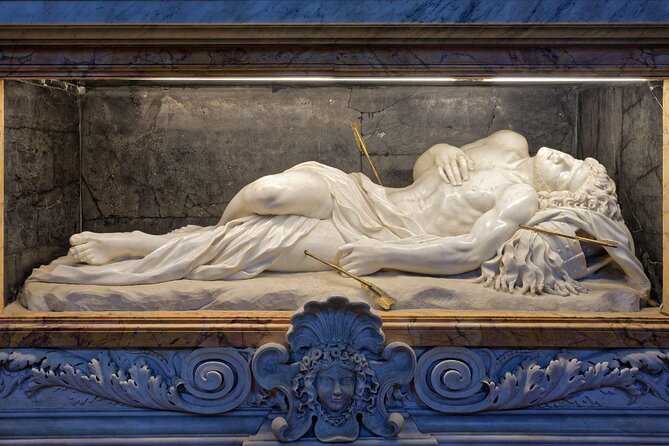
- Saint Callixtus Catacombs with headsets: you’ll hear your guide clearly while you tour the underground burial areas
- Appian Way walking time that matters: not just a photo stop—enough to feel the place
- Cecilia Metella is included: rarer than many Appian Way itineraries
- Circus of Maxentius and the Claudian Aqueduct: you get both entertainment and engineering in one loop
- Small-group feel (up to 25): usually easier to ask questions and keep track of the group
A Fast Route to the Appian Way and Rome Underground
If you’re trying to fit Rome’s highlights into limited time, this tour hits a sweet spot. You get both worlds: underground Christian-era burial spaces and the ancient road that practically set the template for how Rome moved armies and supplies.
What makes it work is the pairing. The catacombs connect you to early Rome’s burial practices and beliefs, while the Appian Way and aqueduct show how power, infrastructure, and ritual all lived side by side. You’ll walk just enough to feel like you’re out of the city, then circle back without burning your whole morning.
One more thing I appreciate: the tour doesn’t treat the Appian Way like a generic outdoor stop. It frames it as a major Roman project—symbolic and practical—so your photos have context, not just scenery.
You can also read our reviews of more tours and experiences in Rome.



Meeting at Via Cavour and the 3-Hour Timing That Fits Real Schedules
You meet at Via Cavour, 224 (central Rome, near public transportation) and the tour starts at 9:45am. The whole experience runs about 3 hours, so it’s the kind of plan you can slot between museum hours or lunch.
Transportation is part of the value. You’re not trying to stitch together buses or taxis while the day turns into chaos. Reviews mention comfortable vans, and the tour includes round-trip transportation, which means less friction and fewer “where do we meet?” moments.
You’ll also have headsets. That matters more than people think, especially when you’re outside near traffic or moving through groups. In a catacombs setting, it’s the difference between catching the story and missing it.
Catacombs of Saint Callixtus: Popes, Burial Rituals, and the Quiet Shock
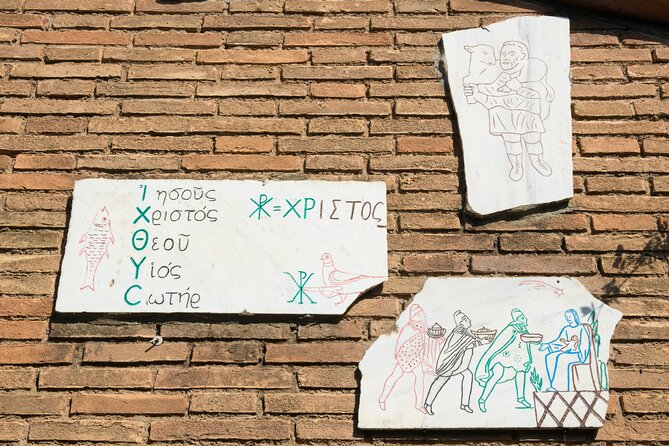
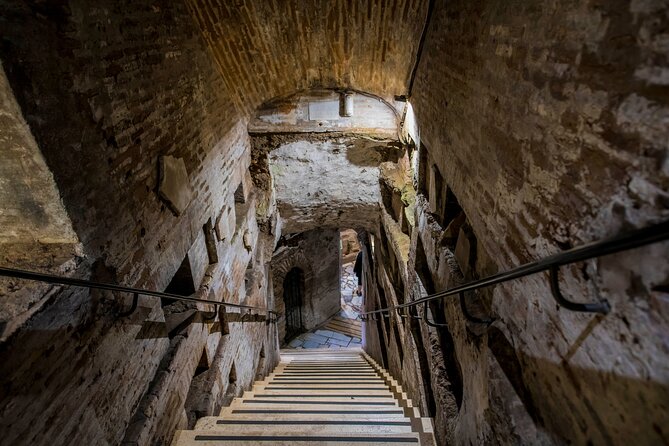
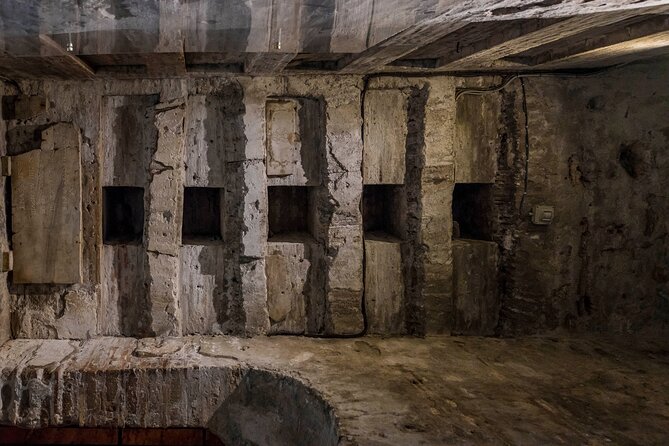
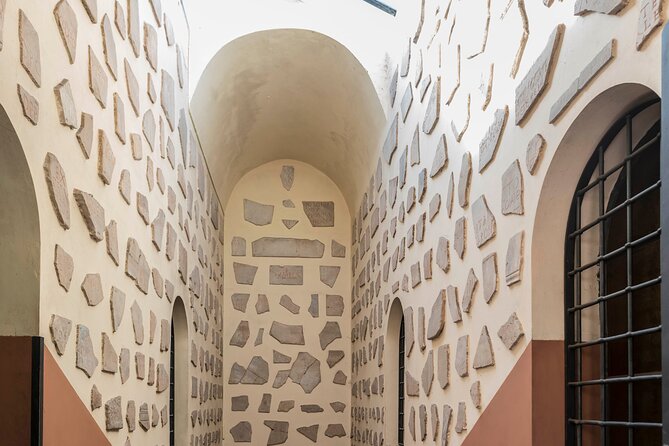
The tour’s first major stop is the Catacombs of Saint Callixtus (often called the Cemetery of Callixtus). This is one of the most important pilgrimage sites in Italy, and it’s also a place where the scale surprises you—walls of graves, turning corridors, and a feeling of time layered on top of time.
You’ll spend about one hour underground with an included admission ticket. The guide focuses on what burial looked like in the 2nd to 4th centuries: legends, burial rituals, and the idea that these weren’t just random graves. In the story your guide shares, several popes are associated with the catacombs, which gives the visit a clear thread instead of being a list of tomb names.
Practical things to know
- Photos and videos are forbidden inside the catacombs, so keep your phone put away.
- The route is underground, so even if you’re okay with tight spaces, expect a different kind of sensory experience—cooler air, darker corners, and more “walking with a purpose” than sightseeing in a bright outdoor area.
- The tour is not recommended for claustrophobic people, and I take that seriously. Even a small crowd plus enclosed tunnels can feel like a squeeze.
Why it’s worth starting here
Starting with the catacombs front-loads the most emotionally intense part of the morning. After that, the Appian Way and aqueduct feel like a shift: from private belief and burial to public engineering and travel.






Circus of Maxentius: Rome’s Stadium Vibe Without the Crowds
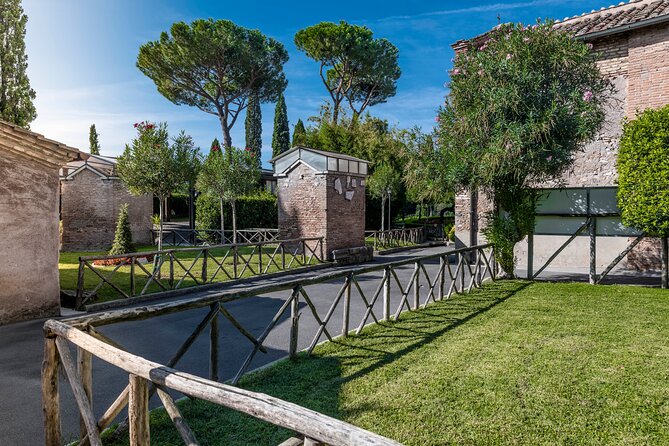
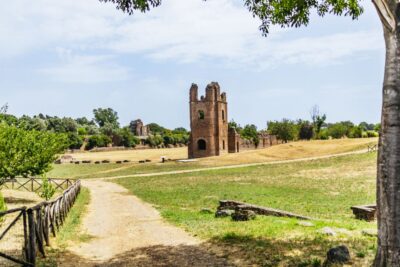
After the underground visit, you’ll see the Circus of Maxentius, a site that often gets less attention than the big-name Colosseum-era places. This one is different. It’s described as the second in size to Circus Maximus, but it’s considered the best preserved circus in Rome.
Built between 306 and 312, it sits near the basilica and the catacombs of San Sebastiano and close to the tomb of Cecilia Metella. Your timing here is about short and punchy—think “see it, learn it, move on”—but it’s still enough to understand the setting.
What you’ll notice
You’re basically looking at a Roman entertainment machine—space designed for crowd spectacle, chariot racing, and mass gatherings. Even if you’re not a sports-history person, this helps you connect the dots of Roman life. This was Rome doing community, in a way that was both political and cultural.
The stop itself is brief, and that’s intentional. It keeps your morning focused on three big anchors: catacombs, road, and water.
Mausoleum of Cecilia Metella: The Appian Way’s Rarity Stop
Here’s one of the smartest things about this itinerary: the Mausoleum of Cecilia Metella is included. Many Appian Way tours skip it, so you end up with a more complete sense of how this road lined up with elite monuments and important landmarks.
You’ll get an external visit at the Mausoleo di Cecilia Metella e Castrum Caetani in the Appia Antica archaeological park. The tour frames the mausoleum as a 1st-century BC structure built to honor Cecilia Metella, daughter of Quintus Caecilius Metellus Creticus (a prominent Roman noble). Your time here is about 30 minutes, and the admission at this stop is listed as free.
Why I like this stop for planning
External visits are often the point where your feet start to need a break. A quick look lets you absorb the monument without turning the morning into a long museum slog. It also helps you connect the Appian Way walk to the people who commissioned the road’s “statement buildings.”
And it gives you a second visual layer after the catacombs: burial underground is private and religious; monuments aboveground tell you about status, family legacy, and public memory.
Walking the Appian Way: From Myth to Main Road
The heart of the experience is the Appian Way itself. This road was completed in 312 B.C., and it’s often described as one of the earliest and longest roads of Ancient Rome. Symbolically, it’s tied to the idea that all roads lead to Rome. Strategically, it’s tied to military movement and supplies—connecting Rome to Brindisi in the southeast.
You’ll get a meaningful walk here. That’s key. Too many “Appian Way” tours give you a couple minutes on a sidewalk and then hop back into a vehicle. This one keeps the road central, which is what turns it from sightseeing into experience.
What to look for while you walk
The Appian Way is famous for its ground and edges—cobblestones and the way the path holds its shape. But the real value is mental: you start imagining how heavy loads rolled along here and why this route mattered to Roman control.
Also, it helps balance your morning. After the catacombs’ stillness and Cecilia Metella’s monument presence, the open-air road gives your brain room to reset.
Claudian Aqueduct: Ancient Engineering in Plain View
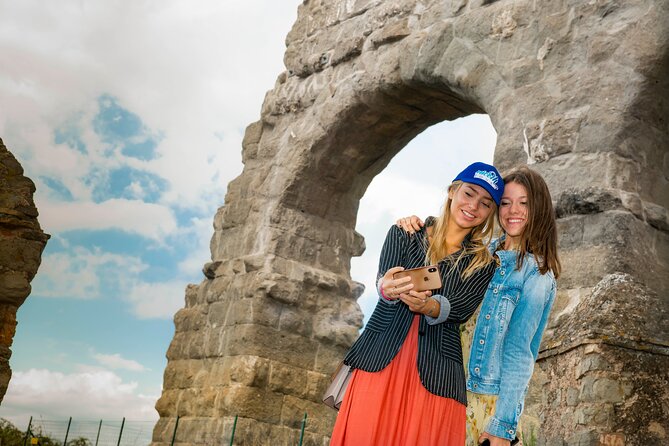
Your final big anchor is the Acquedotto Claudio (Claudian Aqueduct). This aqueduct is regarded as one of the four great aqueducts of Rome. It was erected in 52 AD and is described as spanning over 40 miles, with most of it underground.
You’ll spend about 30 minutes at this stop, and admission is listed as free. The tour’s framing includes a quick context point: by the 3rd century AD, Rome had 11 aqueducts, and what remains still feels impressive even today.
Why aqueducts can be a relief (and not just a “school fact”)
Aqueducts give your eyes something to do without being emotionally heavy like the catacombs. Plus, they make Roman life feel practical. Water systems are about daily survival, hygiene, markets, baths—things people actually depended on.
And because this tour is short, you won’t get buried in technical lectures. You’ll get enough to understand what you’re seeing, then move along.
Price and Value: What $77.14 Buys You in Rome

The price is $77.14 per person, and the tour runs about 3 hours. In plain terms, you’re paying for three things that add up fast in Rome: transportation, a licensed guide, and admission to at least one major attraction.
Catacombs admission is included, and the guide plus headsets help you make the most of your limited time. Other stops you visit (like Cecilia Metella and the aqueduct) are listed with free admission for that stop, which means the money isn’t only going to one site.
Also, it’s scheduled early at 9:45am. That timing often helps with comfort—less waiting, and fewer “we’re stuck in traffic” headaches—especially for stops outside central Rome.
If you’re comparing options, I’d treat this as a value pick if you want:
- a focused route (not an all-day marathon)
- the catacombs plus Appian Way in one plan
- Cecilia Metella, which makes it feel more complete
Group Size, Guide Style, and the Little Things That Matter
The tour has a maximum of 25 travelers. That matters because catacombs tours work better when you don’t feel like you’re sprinting to stay in line. Reviews highlight small-group moments, including groups of around five people, which makes asking questions much easier.
Guide quality shows up in the details. Names mentioned in the experience include Catia/Cathia and Giuseppe. The feedback you’ll want to pay attention to is not just praise—it’s what they did well: clear explanations, happy question-answering, and making the Appian Way feel real instead of like a checklist.
There are a couple of practical watch-outs. One review noted the guide arrived around 15 minutes later and started sharing info only after people asked. Another pointed out the catacombs visit can be with a separate group that’s a bit large. These aren’t universal problems, but they’re a good reminder that in Rome, sites run on human timing, not perfect schedules.
Who Should Book This Tour (and Who Should Skip It)
This tour is a good fit if you want a compact plan with major variety: underground burial spaces, a Roman circus, a key monument on the Appian Way, plus the Claudian Aqueduct.
It’s especially good for:
- first-time visitors who want the Appian Way without spending a full day coordinating transport
- people who like context—where a guide explains legends, burial rituals, and what these sites meant
- anyone who wants a break from central-city crowds while still staying efficient
You might want to skip or think twice if:
- you’re claustrophobic (catacombs are included and explicitly not recommended)
- you’re strict about keeping to the minute on timing (short tours can still be affected by the day’s real-world flow)
- you want lots of free time at each stop (this itinerary is intentionally tight—three big segments + short sighting blocks)
Should You Book the Catacombs and Appian Way Tour?
I’d book it if you’re balancing time and want a route that doesn’t skim the Appian Way theme. The combination is strong: Callixtus Catacombs + real road walking + Maxentius Circus + Cecilia Metella + Claudian Aqueduct. That’s a lot of Roman flavor for about three hours.
If you’re on the fence, here’s the decision rule I’d use:
- If the catacombs don’t scare you, and you like seeing several major landmarks with a guide, this is a yes.
- If tight underground spaces make you uncomfortable, choose something aboveground-only.
One last practical note: this is run by an operator that can adjust based on participation, and there have been cases where tours were canceled last minute for low bookings (with refunds issued). So if your dates are tight, keep some flexibility in your schedule.
FAQ
What is the tour price?
The tour costs $77.14 per person.
Where do you meet for the Catacombs and Appian Way Tour?
The meeting point is Via Cavour, 224, 00184 Roma RM, Italy.
What time does the tour start?
The start time is 9:45am.
How long is the tour?
The duration is approximately 3 hours.
What major stops are included?
You visit the Catacombs of Saint Callixtus, the Circus of Maxentius, the Mausoleum of Cecilia Metella (external visit), the Appian Way, and the Claudian Aqueduct.
Is the admission ticket included for the catacombs?
Yes. Admission to the Catacombs of Saint Callixtus is included.
Is there admission cost for the Mausoleum of Cecilia Metella and the Aqueduct?
Admission is listed as free for both the Mausoleum of Cecilia Metella stop and the Claudian Aqueduct stop.
Are headsets provided?
Yes, headsets are included so you can hear the guide well.
Is this tour suitable for claustrophobic people?
No. It is not recommended for claustrophobic people.
What is the photo policy in the catacombs?
Photos and videos are forbidden in the catacombs.
Is free cancellation available?
Yes. You can cancel up to 24 hours in advance for a full refund.
How big is the group?
The tour has a maximum of 25 travelers.