REVIEW · ROME
Rome: Monuments Audio Guide with Pantheon, no entry ticket
Book on GetYourGuide →Operated by ITGUIDES · Bookable on GetYourGuide
The Pantheon feels different when you slow down. This self-guided smartphone audio guide turns a crowded icon into a story you can pace yourself. I like the art-and-architecture focus, and the nearby walk means you get more than one headline sight for your time.
Two things I really liked: the Pantheon section comes with specific architecture details (dome, tombs, legends) plus an indoor map, and the app adds geo-based stops so you don’t wander in circles. One possible drawback: there’s no entry ticket included, so you still need to plan for the Pantheon ticket cost.
In This Review
- Key things to know before you go
- Why a Pantheon audio guide fits Rome so well
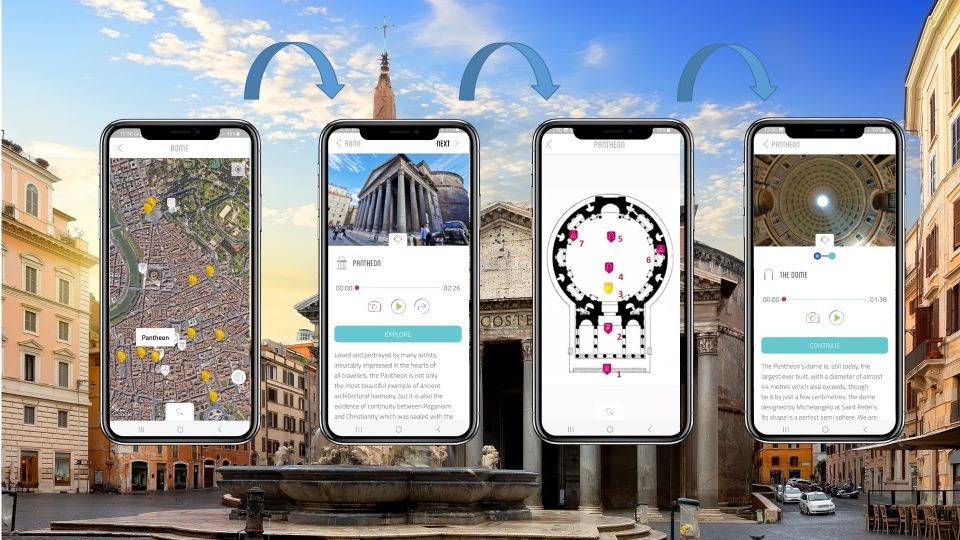
- What you get in the Itguides smartphone app
- The 5-hour plan: start at the Pantheon, then build your art walk
- Entering the Pantheon’s story: dome, tombs, and the pagan-to-Christian link
- Caravaggio steps away: San Luigi dei Francesi and S. Maria del Popolo
- Michelangelo nearby: Santa Maria sopra Minerva and the Redentore
- Bernini in Piazza Navona and the Trevi moment
- Piazza del Popolo and the logic of staying in one area
- Price, ticket reality, and value for money
- Crowds, timing, and how to make 5 hours feel right
- Phone tech check: downloading, headphones, and getting help
- Who this is best for (and who should choose something else)
- Practical tips to enjoy the walk without stress
- Should you book this Pantheon audio guide?
- FAQ
- Do I need a meeting point?
- Is the Pantheon entry ticket included?
- How long is the audio guide experience?
- Can I use this audio guide on a smartphone?
- How much audio content is included for the Pantheon?
- Are nearby monuments and churches included?
- Which specific art stops are included?
- Is there a geo map to help find the stops?
- What languages are available?
- Is it wheelchair accessible?
Key things to know before you go
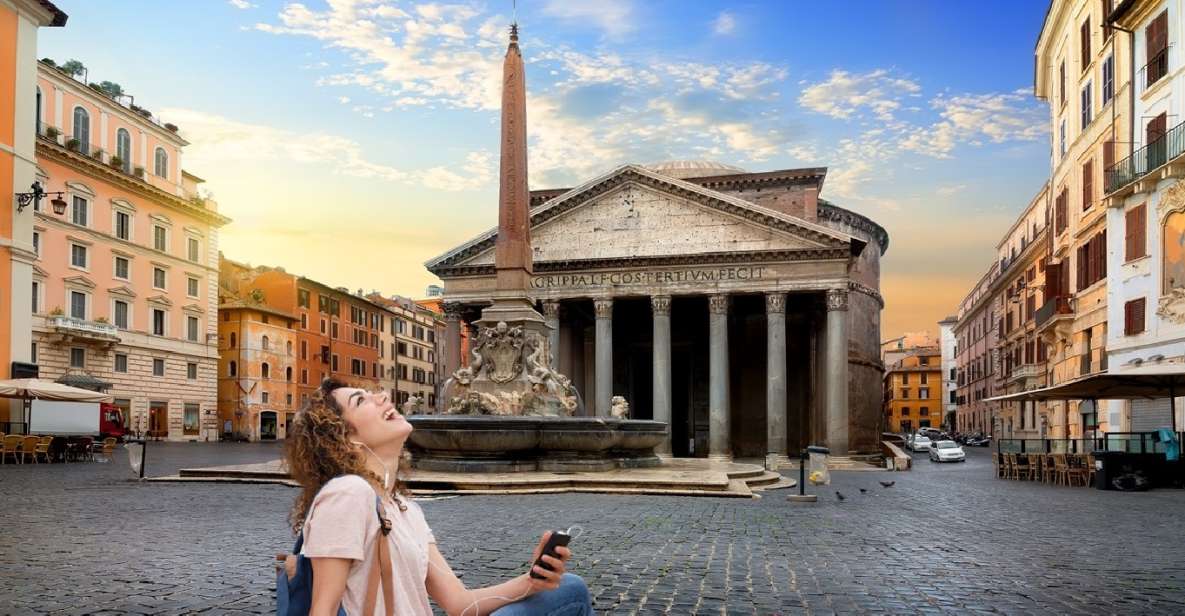
- Start at the Pantheon, no meeting point: you begin where you want in the area.
- 20 minutes of Pantheon audio plus 10 audio descriptions with an indoor map.
- More than 20 nearby audio stops tied to a geo map and photos.
- Major art stops on the walk: Caravaggio, Michelangelo, Bernini.
- Tech support exists: after purchase, an assistant helps activate the guide on your phone.
- Budget-friendly at $2.83, but remember the Pantheon entry ticket is extra (€5).
Why a Pantheon audio guide fits Rome so well
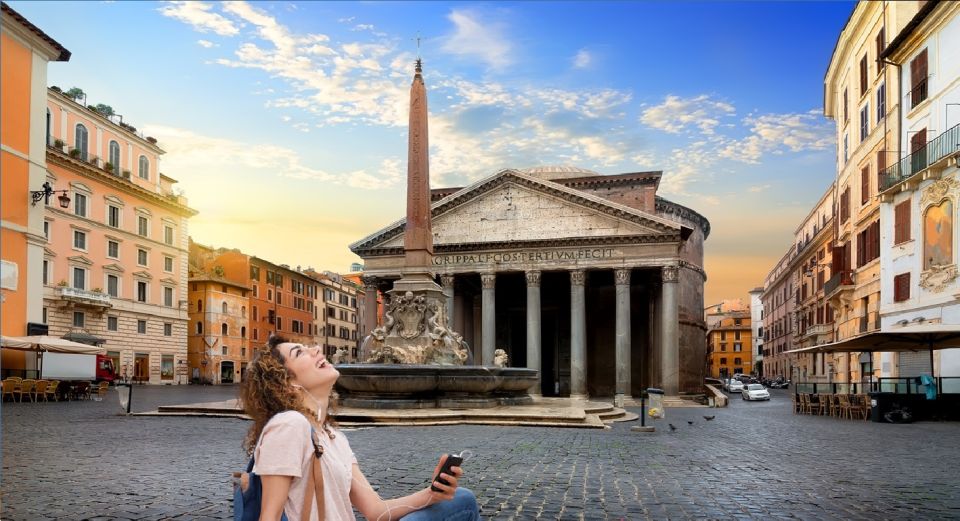
Rome rewards the slow version of sightseeing. The Pantheon is the perfect example: it’s iconic, yes, but it’s also easy to rush through if you’re just checking boxes. A phone audio guide gives you a way to stand still for the good parts, especially when crowds make quick movement the default.
This one is designed for a self-guided, on-your-own rhythm. You start at the Pantheon, listen while you’re looking, then keep walking to nearby monuments and churches while the same guide stays with you. That saves you from the usual problem of getting “sight fatigue” after one big stop.
And it’s not just ancient stone. The audio connects the Pantheon to later Christian presence, including the handover in 608 to Pope Boniface IV, tied to the Byzantine Emperor Foca—plus legends (including the darker Satan story you’ll hear about). If you’re even mildly into how places change meaning over time, this adds a layer that you can’t get from a quick photo.
You can also read our reviews of more tours and experiences in Rome


What you get in the Itguides smartphone app
The experience is delivered through the Itguides app. You can use the guide in multiple languages: Italian, English, French, German, and Spanish. That matters if you’re traveling with someone who doesn’t want to rely on your translation skills every ten minutes.
You also get more than plain audio. The guide includes hypertext, photos, and a geo map so points of interest are tied to where you’re standing. For the Pantheon specifically, it includes indoor mapping tied to the audio descriptions—useful when you’re trying to orient yourself inside instead of guessing where the story applies.
Before you buy, you can try the free demo in the app. That’s worth doing, because the product is fully online: you’ll want to get comfortable with downloading content and using the map before you arrive.
The 5-hour plan: start at the Pantheon, then build your art walk
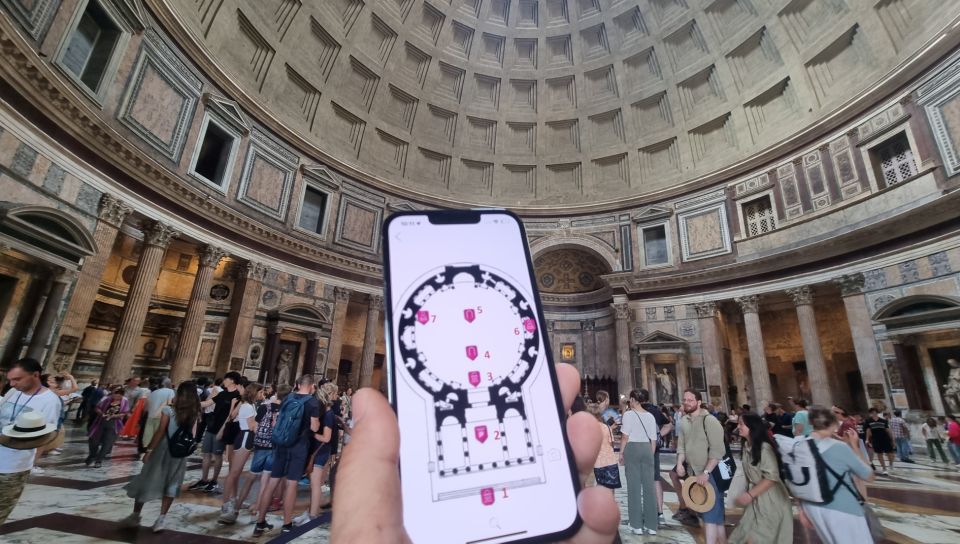
This is set up for about 5 hours. The tour is flexible because it’s self-guided, and you can pace yourself based on lines, crowds, and how long you want to pause for details. If you only have one afternoon, this is a strong way to link the Pantheon area into a mini circuit.
The Pantheon portion alone is about 20 minutes of audio. From there, the guide keeps you moving outward with nearby art and landmarks—things you can actually reach on foot without needing a complicated transit plan.
The big value is that the audio doesn’t treat the Pantheon as an isolated stop. It acts like a thread through the area, so each next location feels connected rather than random.
Entering the Pantheon’s story: dome, tombs, and the pagan-to-Christian link

Inside the Pantheon, the audio focuses on what most people notice but don’t fully understand—especially the architecture and the dome. The guide includes 10 audio descriptions specifically about Pantheon history, architecture, the dome, tombs, and legends, and it includes an indoor map to help you follow along.
One of the most interesting parts is how the guide frames continuity between paganism and Christianity. It points to the sanctuary yielding to Pope Boniface IV in 608, tied to the Byzantine Emperor Foca. Even if you already know the general outline, having it explained while you stand in the space makes it stick.
Then come the legends. The guide includes darker tales, including the story about Satan connected to the Pantheon. Whether you find that creepy or amusing, it changes the mood of your visit. You’re not just looking at ancient architecture—you’re listening to the myth layer that Rome keeps adding to older places.
Practical tip: the Pantheon is always crowded, so expect slower movement. When it’s busy, audio helps you “take in more” during the time you’re standing still anyway.
Caravaggio steps away: San Luigi dei Francesi and S. Maria del Popolo
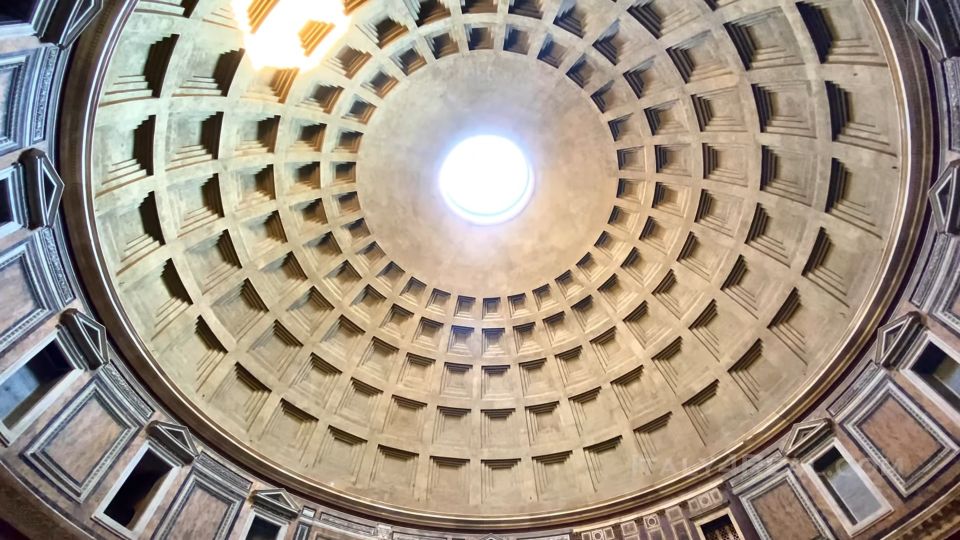
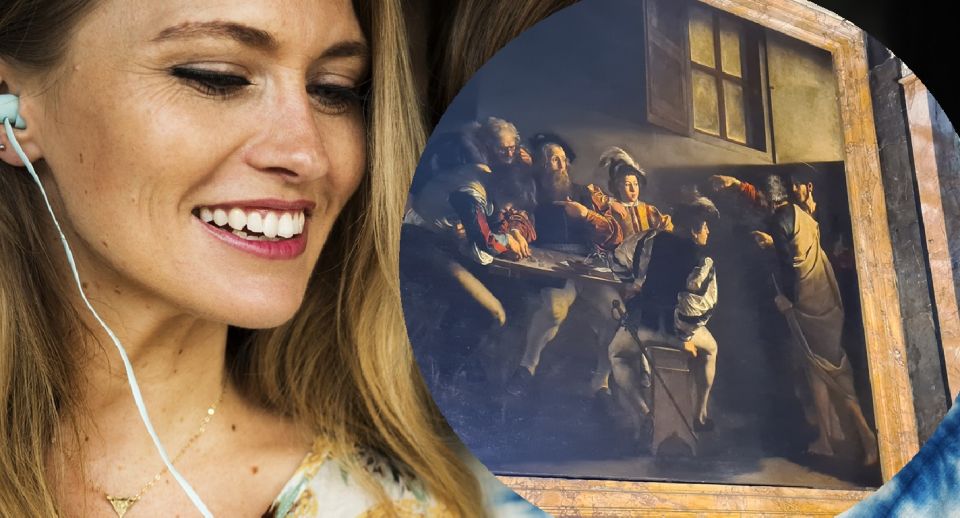
After the Pantheon, the audio guide steers you toward Caravaggio. You get named stops tied to his paintings, including San Luigi dei Francesi with three Caravaggio works, plus S. Maria del Popolo.
This is one of the smartest parts of the guide because it solves a common Rome problem: Caravaggio can be hard to plan efficiently. Here, the audio does the planning for you in the simplest possible way—keep walking, and the guide tells you what you’re looking at as you reach it.
If you love art, this section can easily become the emotional center of your afternoon. Caravaggio’s work is dramatic, and the audio’s approach—historical information plus stories—adds context without turning your visit into a lecture.
If you’re not a Caravaggio superfan, it still helps. Seeing three major paintings in one church after the Pantheon gives you a reason to keep going instead of stopping after the dome and heading back to your hotel.
You can also read our reviews of more guided tours in Rome






Michelangelo nearby: Santa Maria sopra Minerva and the Redentore
Next comes Michelangelo, with Santa Maria sopra Minerva and the sculpture known as the Michelangelo Redentore. The guide builds this as a natural continuation: you go from ancient Rome architecture to early modern artistic power without feeling like you’ve switched cities.
This is a good match for the way Rome often works. One street, one church, one monument later, and your mental timeline jumps forward. The audio helps you keep that jump from feeling chaotic.
A small consideration: the Pantheon area is dense. If you have strong mobility constraints, you’ll want to watch your energy and pace yourself because you’ll be making multiple short transfers on foot. The experience is listed as wheelchair accessible, but it’s still a walking-heavy neighborhood.
Bernini in Piazza Navona and the Trevi moment
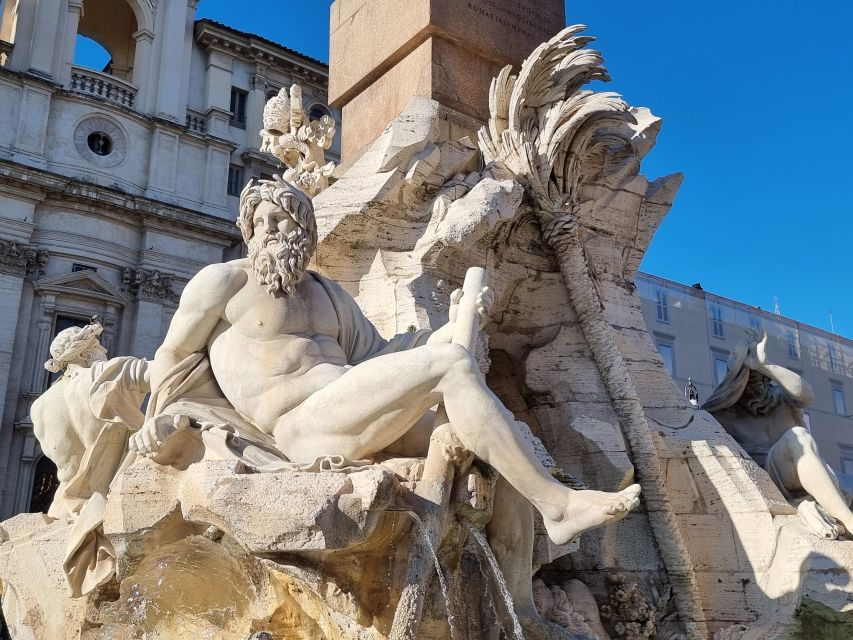
Piazza Navona is where the guide shifts from “major museum moments” to public space drama. You get Bernini statues at Piazza Navona, and that pairs nicely with the famous fountain setting because it’s a square designed to be watched from every angle.
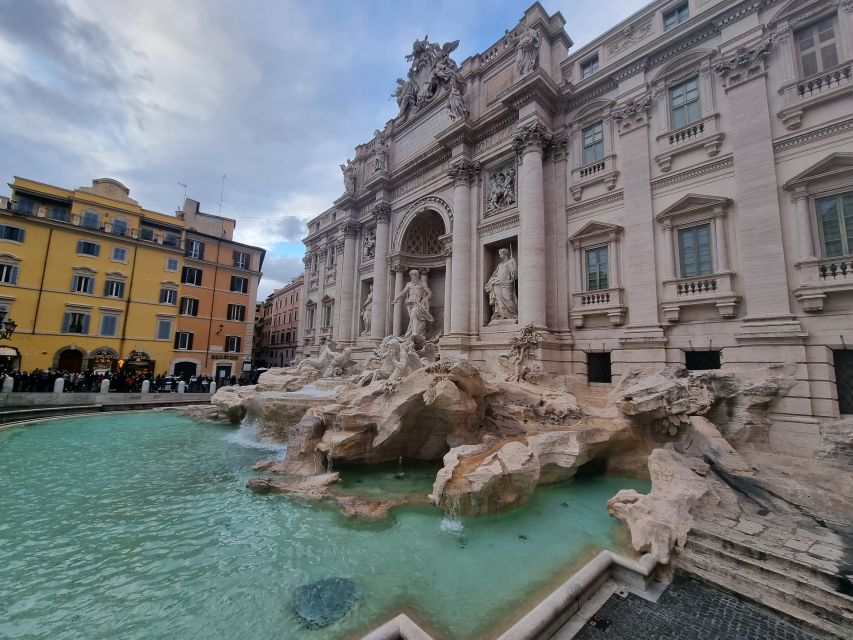
Then you hit the Fontana di Trevi. The audio guide doesn’t just mention it—it includes the classic local tradition: throw a coin if you want to be sure of returning to the Eternal City. It’s simple, yes, but it’s also a good reminder to slow down and actually look at the fountain instead of treating it like a photo stop.
If you’ve visited Trevi before, the audio can still help by tying in stories and context rather than repeating generic facts. If it’s your first time, it gives you something to listen for while your eyes figure out the details.
Piazza del Popolo and the logic of staying in one area
The guide doesn’t end at one big monument. It also includes Piazza del Popolo and frames the walk as an area exploration around the Pantheon.
This matters because Rome’s center is compact in a way that’s both blessing and curse. It’s easy to get lost, but it’s also easy to build a great day if you keep the geography logical. The geo-located audio map helps you do exactly that—your phone becomes a compass for where to go next.
I also like that the audio keeps mentioning churches alongside monuments. In Rome, churches are often where the personality lives. Seeing them as part of the route (rather than as random detours) makes your afternoon feel intentional.
Price, ticket reality, and value for money
The price is listed at $2.83 per person. For that, you’re getting the smartphone audio guide plus 10 Pantheon audio descriptions (with indoor map) and more than 20 additional points of interest around the area, including key art-focused stops.
But here’s the key catch: the Pantheon ticket is not included. The information provided lists the Pantheon ticket cost as €5. So yes, it’s budget-friendly—but you should add that €5 into your real plan.
Even with the ticket extra, the value stays strong because you’re not buying a “single-site” experience. You’re effectively paying for an organized self-guided narrative that spans the Pantheon and multiple nearby highlights, with map support and multiple languages.
Crowds, timing, and how to make 5 hours feel right
The Pantheon is packed, especially on weekends. That doesn’t mean you should avoid it, but you should plan how to handle time pressure. If you show up at the busiest moments, you may not be able to enjoy long stops inside—but you can still get a lot from audio by using it in short, smart chunks.
The good news is the Pantheon audio is structured (about 20 minutes). That makes it realistic even if you can’t linger for long. Then you keep moving to other indoor stops and nearby squares, which often lets you shift gears without losing momentum.
Also: build in flexibility. The guide is designed around your pace, and the time window (5 hours) is an estimate. If you’re the type who likes to repeat a look—back to the dome, back to the altars—this format makes it easier.
Phone tech check: downloading, headphones, and getting help
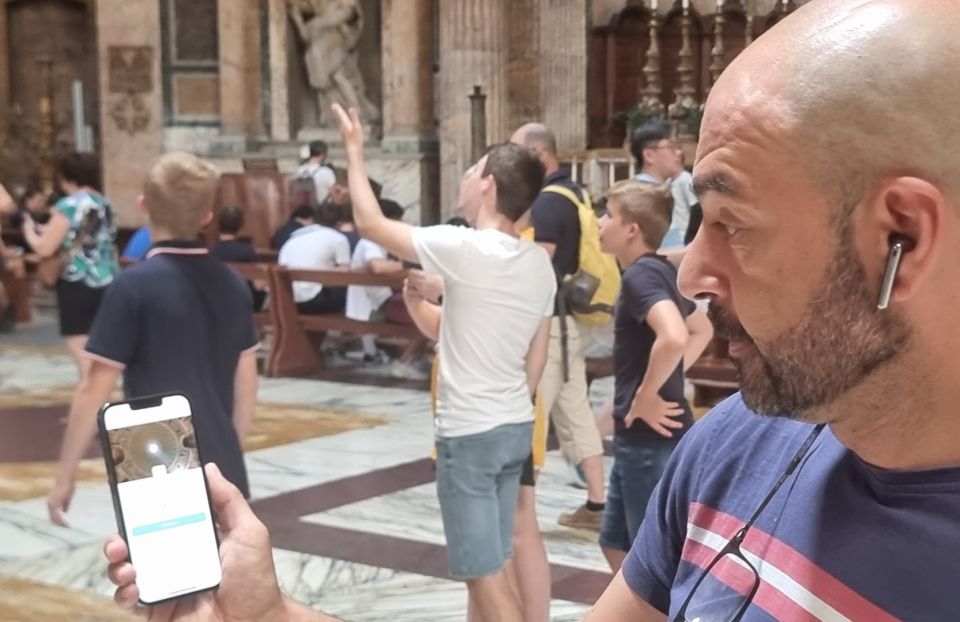
This experience is smartphone-first through the Itguides app. One important practical note: download the content with a good cellular signal or Wi‑Fi, so you don’t get stuck with dead audio when you’re in the middle of the route.
After purchase, an assistant helps get the guide active on your smartphone. Multiple comments highlight fast customer service, with support provided step-by-step. Some people used headphones and found it works hands-free.
If you want the smoothest start, I’d strongly suggest doing the app setup before your visit. The product is fully online, and getting familiar with how it runs (especially the map) will save you frustration later.
Who this is best for (and who should choose something else)
This audio guide is ideal if you like independence. You don’t have to wait for a group or match your pace to someone else’s. It’s also a good fit for art lovers who want Caravaggio, Michelangelo, and Bernini tied into one walk, without paying for multiple separate audio products.
It also works well for families, since the audio format can hold attention when kids are bored by long explanations. And because there’s no meeting point, it’s easy to fit into your Rome schedule.
Who might skip it? If you want a live guide explaining everything in real time—or if you dislike tech-based experiences—then a guided tour could feel easier. Here, the value comes from you using the phone thoughtfully.
Practical tips to enjoy the walk without stress
- Wear comfortable shoes. You’ll be moving through multiple stops in a compact area.
- Bring headphones if you prefer hands-free listening.
- Plan around crowds at the Pantheon, especially on busier days.
- Download content first if you can. It helps the experience feel smooth.
- Use the geo map as your navigation layer. It keeps your route logical.
- Bundle your art time. If you’re going to see Caravaggio and Michelangelo, give yourself enough attention to enjoy them.
Should you book this Pantheon audio guide?
Yes, if your goal is a smart, budget-friendly self-guided afternoon anchored at the Pantheon, with real art stops close by. The standout value is the combination of Pantheon architecture storytelling plus a practical map-driven walk to Caravaggio, Michelangelo, Bernini, Piazza Navona, and Trevi.
Skip it (or consider a different format) if you’re expecting the Pantheon entry ticket to be included or if you don’t want to deal with phone setup and downloading. For most independent travelers, though, the low cost plus strong content coverage makes this a very practical way to spend 5 hours in Rome’s most famous circle of stone.
FAQ
Do I need a meeting point?
No. It’s a self-guided tour, so you start where you prefer.
Is the Pantheon entry ticket included?
No. The Pantheon ticket is not included, and the listed ticket cost is €5.
How long is the audio guide experience?
The duration is listed as 5 hours.
Can I use this audio guide on a smartphone?
Yes. It’s a digital audio guide for your smartphone through the Itguides app.
How much audio content is included for the Pantheon?
You get 10 audio descriptions about Pantheon history and architecture, plus an indoor map. There is also a 20-minute Pantheon audio description.
Are nearby monuments and churches included?
Yes. The guide includes more than 20 audio descriptions of points of interest around the Pantheon, including Piazza Navona, Trevi Fountain, and other nearby sites.
Which specific art stops are included?
The guide includes Saint Luigi dei Francesi (3 Caravaggio paintings), Santa Maria sopra Minerva (Michelangelo sculpture), and Piazza Navona (Bernini fountain/statues).
Is there a geo map to help find the stops?
Yes. The audio guide is geo located and includes a map to help you find the points of interest.
What languages are available?
Languages listed are Italian, English, French, German, and Spanish.
Is it wheelchair accessible?
Yes, it’s listed as wheelchair accessible.