REVIEW · ROME
Baths of Caracalla Exclusive Private Guided Tour and Tickets
Book on GetYourGuide →Operated by Tour in the City - Travel Agency Rome - · Bookable on GetYourGuide
Caracalla’s baths feel strangely real. I love how a private art historian guide turns big ruins into everyday life, and I love spotting fragments of mosaic floors and the heating system that once powered Roman bathing. One thing to plan for: you’ll cover a moderate amount of walking over uneven ancient surfaces, so comfortable shoes matter.
I also like the small, human scale of this visit. Guides like Emilio, Evy, and Justine are singled out for making the story clear and flexible, whether you’re pairing it with the Forum or visiting with an 8-year-old.
You’re spending real time inside one of the most impressive bath complexes in the city, but it’s still a ruin site. Expect to look closely, not just snap photos from far away.
In This Review
- Key highlights at a glance
- Baths of Caracalla: why this private tour hits differently
- Starting at Viale delle Terme di Caracalla: fast start, clear focus
- What the Baths of Caracalla were, and why you should care
- Inside the baths: heating systems and the logic of the building
- Mosaic fragments and colossal ruins: what to hunt for during the walk
- Art historian storytelling: making daily life in Rome feel concrete
- How the itinerary actually plays out on the ground
- Pairing it with other Rome sights: the best way to schedule it
- Price and value: is $191.45 per person worth it?
- What to wear and bring so the tour feels easy
- A quick note on wheelchair access (and why you should confirm)
- Should you book the Baths of Caracalla private guided tour?
- FAQ
- How long is the Baths of Caracalla private guided tour?
- What language is the tour guide speaking?
- Is this a private tour?
- Where do I meet the guide?
- Are tickets included?
- Do I need a passport or ID?
- Is there a minimum number of people per booking?
- What should I wear?
- Is transportation or hotel pickup included?
- Is free cancellation available?
Key highlights at a glance
- Private, live English art historian guidance that connects architecture to daily routines
- Second-largest public baths in Ancient Rome, built 212–217 AD
- Heating system remains and mosaic fragments, showing how the baths worked
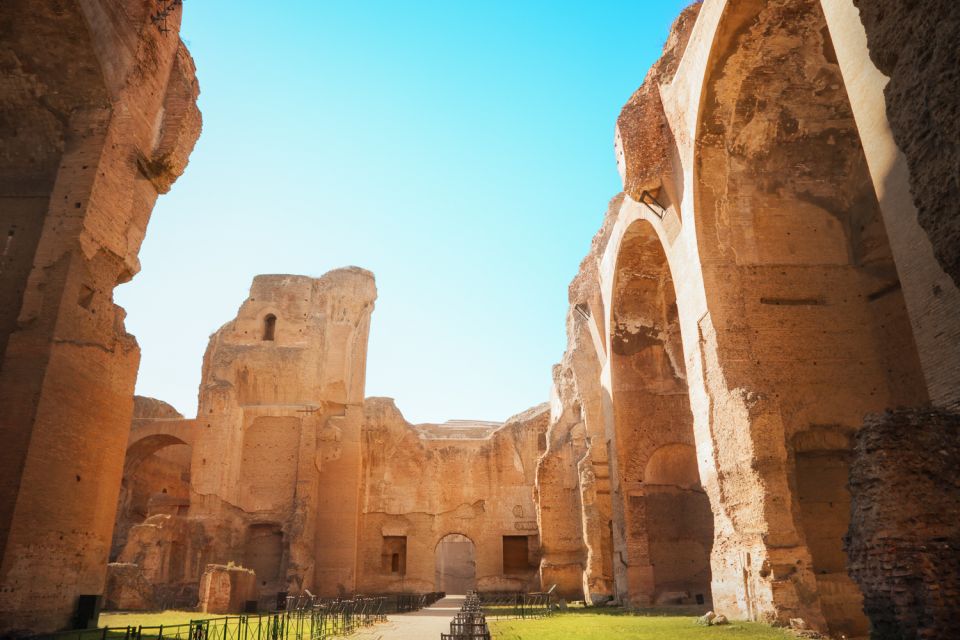
- Colossal ruins like vaulted rooms and porticoes, built for thousands
- A focused route that covers the most meaningful parts without wasting time
Baths of Caracalla: why this private tour hits differently
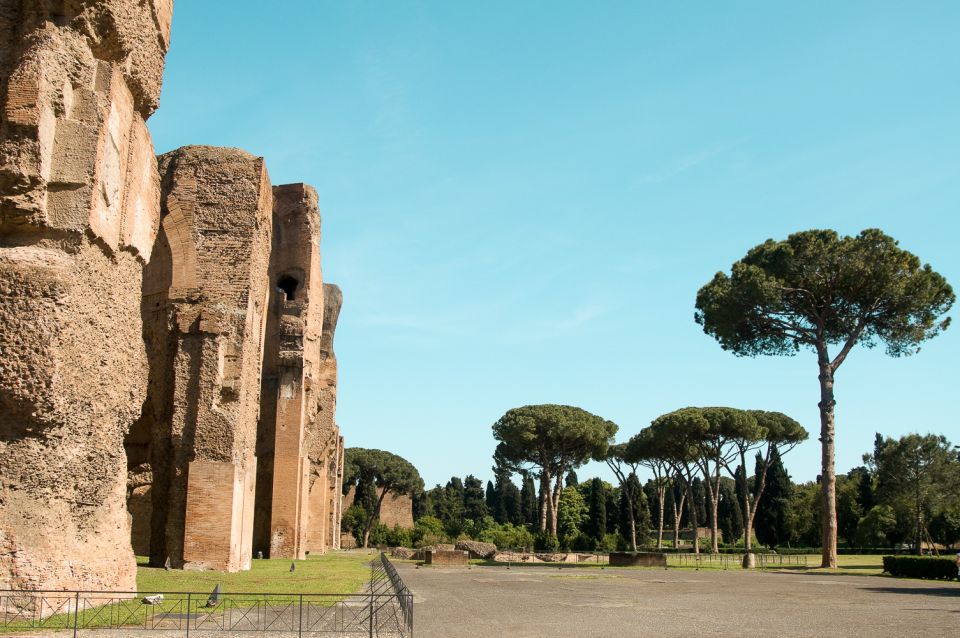
If you’ve toured Ancient Rome before, you already know the problem: too many sites feel like “big rocks with explanations.” The Baths of Caracalla solve that because the buildings are made to explain themselves. Heating channels, room-to-room movement, and decorative fragments still give clues about what Romans did hour after hour.
On this private tour, the guide does the heavy lifting. Instead of a generic overview, I like the way you get answers to the practical questions: How did people move through the complex? How did the bathing process work? Where did the noise and social life happen? That’s exactly what makes Caracalla more than a quieter alternative to the bigger headline attractions.
And yes, you’ll get impressive visuals. But the real win is understanding the baths as an entire public world: Roman baths weren’t only for washing. This complex also included a library, gym, and public gardens, so it functioned like a community hub with routines and status.
You can also read our reviews of more tours and experiences in Rome


Starting at Viale delle Terme di Caracalla: fast start, clear focus
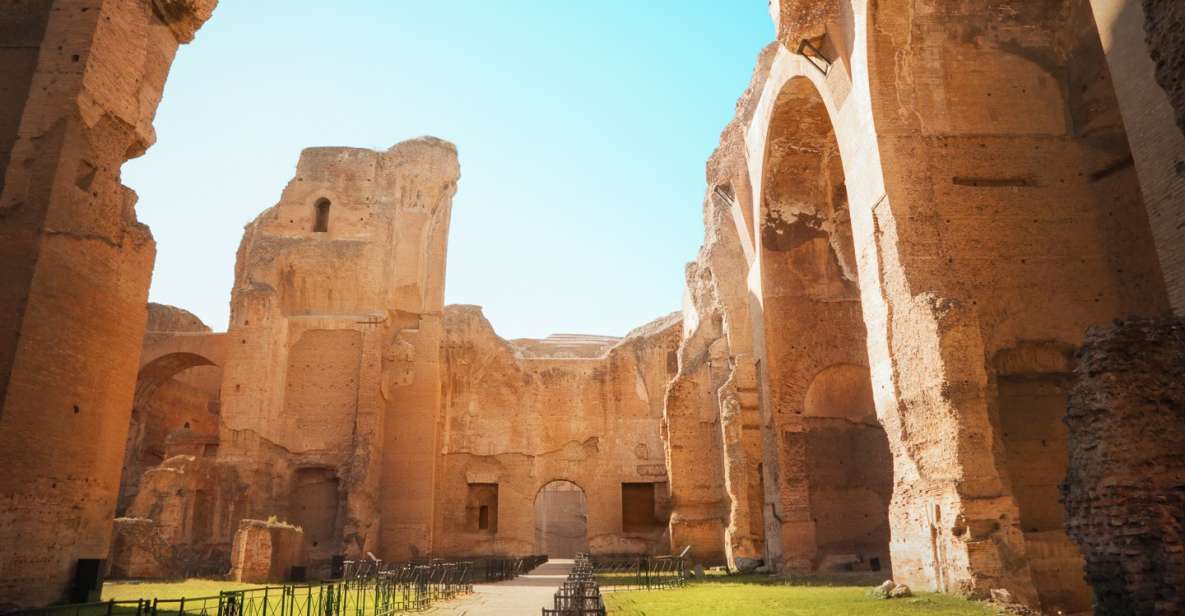
You meet at the entrance to the Baths of Caracalla on Viale delle Terme di Caracalla. I like this layout because it keeps the visit anchored. You’re not hunting down a meeting point across a maze of streets, and you start walking while the story is still fresh.
From there, the tour is built around a straightforward rhythm: arrive at the baths, walk the main circuit with a live guide, then return to the same meeting point. That means you can plan your day without worrying about complicated transfers.
A practical note: the tour is listed as about 1.5 hours, but the guided visit segment is also described as around 2 hours. Either way, it’s a compact experience. You’ll want to show up ready to walk, listen, and look.
What the Baths of Caracalla were, and why you should care
These baths date to 212 to 217 AD, during the reigns of Septimius Severus and Caracalla. They’re famous in Roman history for scale, but the most useful way to understand them is as a designed system.
One detail that helps everything click is capacity: the Baths of Caracalla could accommodate up to 1,500 people at any one time. That number isn’t just impressive trivia. It explains the architecture you see. Rooms and circulation weren’t built for a handful of visitors. They were built for crowds with predictable daily behavior.
And that’s why your guide’s explanations matter. When you understand that the complex included more than bathing—think library, gym, and public gardens—you stop seeing it as a single-purpose building. You start seeing it as a Roman lifestyle machine: sport, reading, conversation, and bathing in one place.
Inside the baths: heating systems and the logic of the building
The strongest part of this experience is how the tour keeps tying ruins back to how they worked. The baths you’re walking through weren’t simply “rooms with walls.” They were a heating-and-flow system.
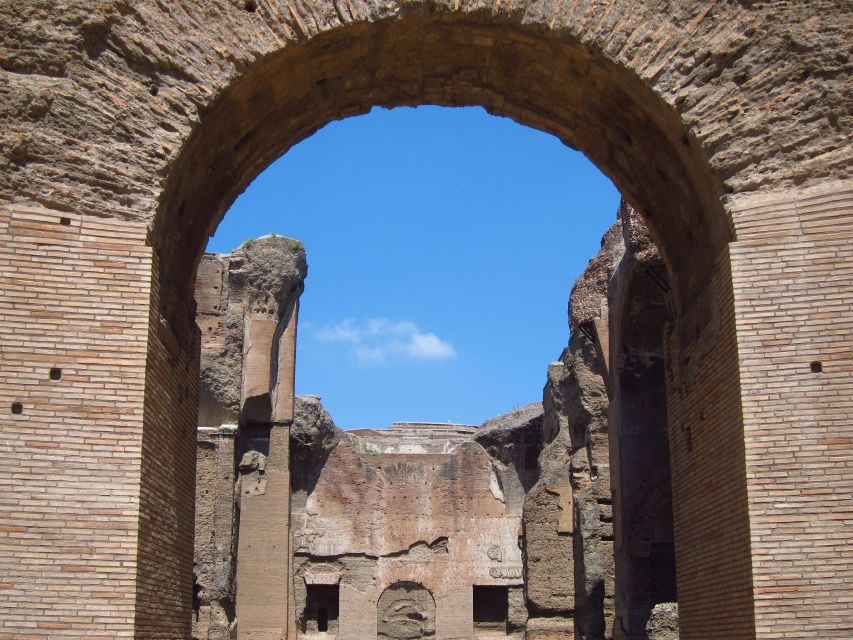
You’ll see parts of the heating system and the way the complex created different temperature zones. Even in ruins, you can often sense the purpose of the space: thick walls, engineered passages, and the placement of areas that relate to bathing stages.
Why this matters to you: it gives your eyes a job. Instead of wandering, you learn what to look for—so you actually get something from every vaulted room and portico you pass. That’s a big upgrade over simply reading a sign at your own pace.
Mosaic fragments and colossal ruins: what to hunt for during the walk
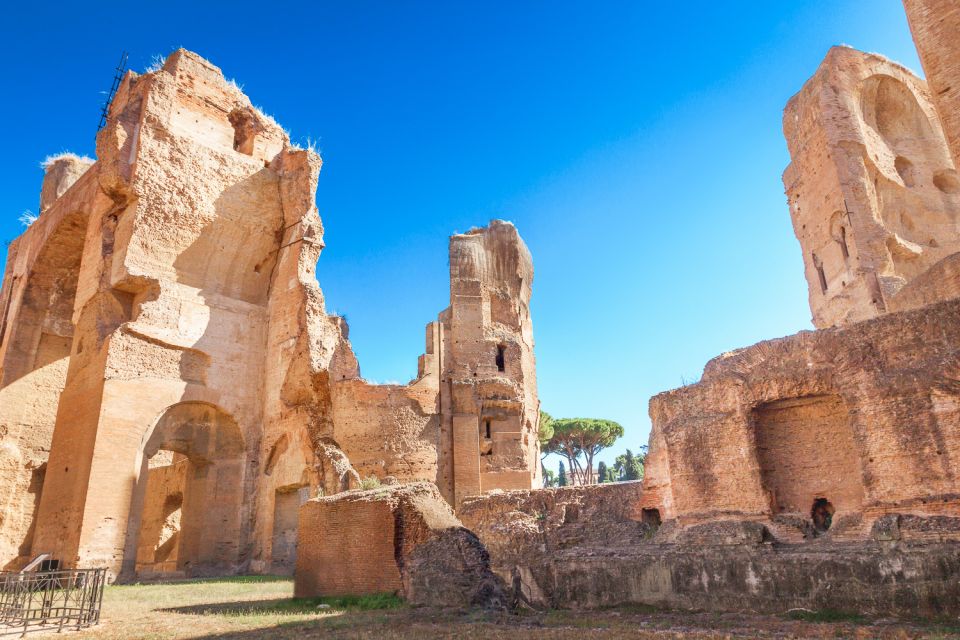
Caracalla is famous for being among the best-preserved Roman baths in Rome. During your guided circuit, you’ll have time to notice details that most self-guided visits miss.
Two things I’d put at the top of your mental checklist:
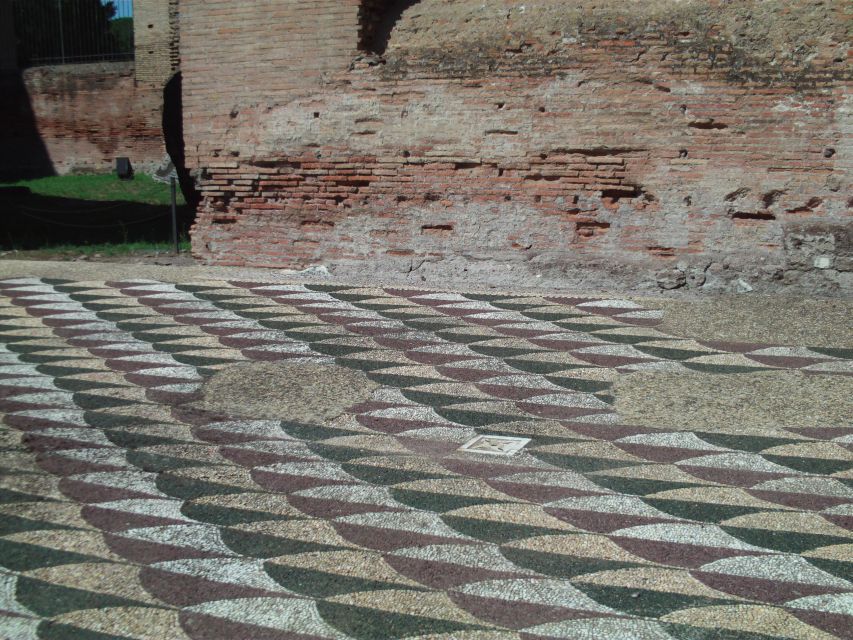
- Fragments of original mosaic floors
- Colossal ruins—especially the vaulted spaces and porticoes
Mosaics are helpful because they show decoration survived in pieces, not as a whole carpet. So when you spot a fragment, you’re seeing a surviving clue to both craftsmanship and the lived experience of the baths. In other words, the site isn’t just stone; it’s evidence of how people moved and where they looked.
The vaulted rooms and porticoes matter because they show the confidence of Roman engineering. Even though the complex is partly destroyed, the scale of these spaces is still legible. You can feel how the architects expected crowds to gather and circulate through structured, dramatic areas.
You can also read our reviews of more guided tours in Rome






Art historian storytelling: making daily life in Rome feel concrete
This tour is led by a private guide described as an art historian, and the effect is exactly what you’d hope for. Instead of treating the site like a list of dates, the guide connects design and daily routine.
The standout element in the reviews is the way guides bring references into the conversation. Emilio, for example, is praised for weaving historical and architectural context with memorable quotes. That’s not just “extra color.” It helps you remember what you saw and why it mattered.
Evy is praised for fully drawing visitors into ancient Rome and is even described as an essential complement to visiting the Forum. That’s a smart pairing. The Forum helps you understand politics and public life at street level. The Baths of Caracalla shows the everyday public side of Roman society—where people washed, socialized, worked out, and passed time in a shared space.
And if you’re traveling with kids, Justine’s feedback is especially useful. The tour is mentioned as a real pleasure even with an 8-year-old. That tells me the guide style can adapt—useful if you want the site to feel alive rather than like a lecture.
How the itinerary actually plays out on the ground
Your tour is built around three simple moments:
- Meet at the entrance on Viale delle Terme di Caracalla
- Enter and take a guided walking visit through the baths
- Return to the same meeting point
That simplicity is a strength. It keeps your day efficient and it focuses attention on the site itself. You’re not spending half the experience commuting, waiting, or trying to figure out where you are.
The time balance also matters. Since you’re in the 1.5 to 2-hour window, your guide will likely prioritize the most meaningful sections: areas tied to heating, major architectural spaces, and the surviving mosaic fragments. You should plan for a guided “best route” rather than a slow wander where you cover everything.
Pairing it with other Rome sights: the best way to schedule it
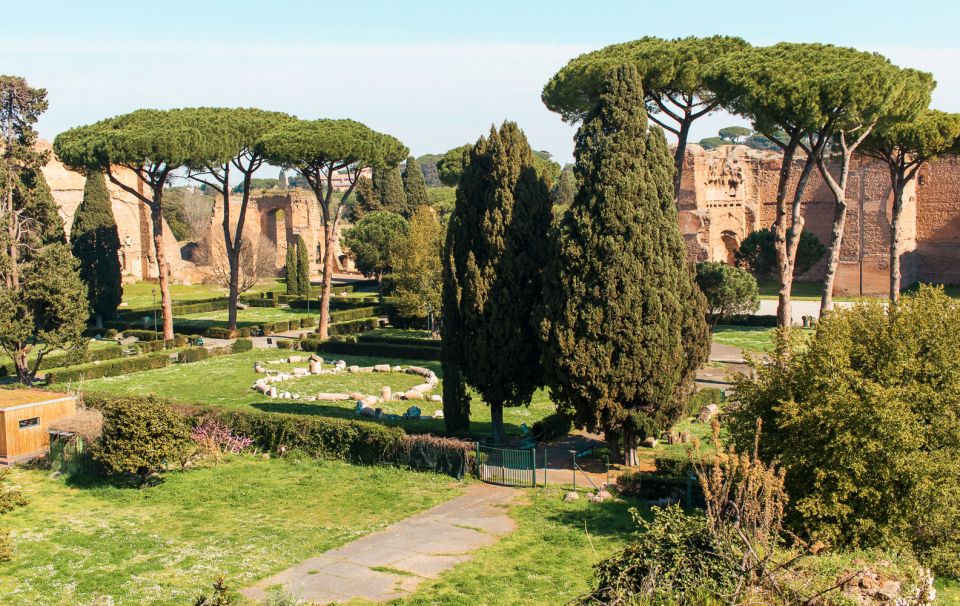
I like Caracalla when you want Ancient Rome to feel like a city, not a museum.
Here’s how it pairs well:
- With the Forum: You get public life and civic space on one side, then everyday routine and social bathing on the other. That contrast is powerful.
- With other ruins: Caracalla helps you see Roman urban planning as a system. The baths show how entertainment, fitness, and public life were built into the city’s daily rhythm.
Timing tip: if you’re also doing other major monuments, treat this as your “calm but meaningful” stop. You’ll be walking inside a complex that rewards attention, not endurance.
Price and value: is $191.45 per person worth it?
At $191.45 per person, this is not a budget add-on. But it can still be good value if you care about interpretation, not just access.
Here’s what you’re paying for, based on what’s included:
- A private art historian guide
- A private walking tour structure
- Tickets and entrance fees
- Skip the ticket line
- Live English commentary
- A private group experience
In Rome, “private guided + skip the line + tickets” often costs a lot more if you try to assemble it yourself. This option also saves you time at the entrance, which matters when your day is already packed.
The other value factor is depth. Caracalla is a big complex, but your visit is short. A strong guide helps you leave with more than a vague sense of grandeur. Instead, you’ll understand how the baths operated and what parts of the ruins correspond to what Romans were doing.
If you’re the kind of traveler who likes signs only when they’re backed by a clear explanation, this tour makes sense. If you prefer total freedom and you’re happy reading at your own pace, you might decide you’d rather go independently.
What to wear and bring so the tour feels easy
This is a working walking tour through ancient surfaces. The practical basics:
- Wear comfortable walking shoes
- Bring your passport or ID card
Smart casual is listed as the dress code, which is a nice hint: don’t show up in sandals or fancy shoes. Your feet will thank you.
What’s not allowed:
- Weapons or sharp objects
- Luggage or large bags
- Walking frames
If you’re traveling light, you’ll have a smoother experience.
On the timing side, the visit is listed as 1.5 hours (with starting times by availability). Because the guided visit is also described as 2 hours, I’d plan on a solid chunk of your morning or afternoon without squeezing in another demanding stop right after.
A quick note on wheelchair access (and why you should confirm)
The activity is described as wheelchair accessible and suitable for the whole family. But there’s also a separate note that it’s not suitable for wheelchair users. When you see a mismatch like that, you should treat it as a flag to confirm directly with the provider before you book or before you travel.
Even if access is possible, the site includes ancient uneven areas. So I’d ask what route the guide will use for your mobility needs.
Should you book the Baths of Caracalla private guided tour?
I’d book it if you want a short, high-impact tour that explains what you’re seeing. This is a great fit for history lovers, architecture watchers, and anyone who likes their Rome with clear storytelling and focused time.
It’s especially appealing if:
- You’re pairing Rome sights and want Caracalla to add everyday-life context to the bigger forums and monuments
- You want a guide who can keep things understandable (the family mention is a good sign)
- You’d rather spend your time looking closely than trying to decode ruins alone
I’d think twice if:
- You prefer self-guided wandering with maximum flexibility
- You’d rather not pay for interpretation and ticket handling in one package
- Your day schedule is so tight that a 1.5 to 2-hour stop (plus walking) would be stressful
If your goal is to leave Caracalla with real understanding—not just photos—this private tour is one of the stronger ways to do it.
FAQ
How long is the Baths of Caracalla private guided tour?
The duration is listed as 1.5 hours, with starting times depending on availability. The guided visit component is also described as about 2 hours.
What language is the tour guide speaking?
The live tour guide language is English.
Is this a private tour?
Yes, it’s a private group tour.
Where do I meet the guide?
Meet at the entrance to the Baths of Caracalla on Viale delle Terme di Caracalla, Rome. The tour ends back at the same meeting point.
Are tickets included?
Yes. Tickets and entrance fees are included, and you can skip the ticket line.
Do I need a passport or ID?
You should bring a passport or ID card.
Is there a minimum number of people per booking?
Yes, a minimum of 2 people is required per booking.
What should I wear?
Smart casual is the dress code, and comfortable walking shoes are recommended.
Is transportation or hotel pickup included?
No. Food and drinks, hotel pickup/drop-off, and transportation to and from the attractions are not included.
Is free cancellation available?
Yes. Free cancellation is available up to 24 hours in advance for a full refund.