REVIEW · ROME
Vatican Museums, Sistine Chapel Tour with St Peter’s Access
Book on GetYourGuide →Operated by CityRomeTours · Bookable on GetYourGuide
The Vatican can feel like a contest against crowds, but this tour turns it into a smooth art walk. You get fast-track entry to the Vatican Museums and Sistine Chapel, plus direct access to St. Peter’s Basilica. The two big wins for me are the guided headset narration (so you actually catch the details) and the pacing that helps you see more without getting crushed by lines. One thing to consider: if your trip is tightly scheduled, allow extra time, because slow check-in or a late start can ripple into your next plan.
You’ll also get the outdoor “pre-game” moments that many quick tours skip. From the terrace view of St. Peter’s Dome to the Pinecone-courtyard and the Museum Pio-Clementino highlights, it’s built like a story, not a checklist. Still, this isn’t a slow museum stroll: the total time is about 2.5 hours, so you’ll want to treat it as a best-of tour.
In This Review
- Key highlights you’ll feel right away
- How this Vatican Museums + Sistine + St. Peter’s combo pays off
- Price and value: is $112.15 fair for 2.5 hours?
- Meeting, security, and what to bring so the tour doesn’t slow down
- First stop rhythm: terrace views of St. Peter’s Dome
- Pinecone-courtyard: the 13-foot bronze detail most tours rush
- Museum Pio-Clementino: where sculpture makes sense of Michelangelo
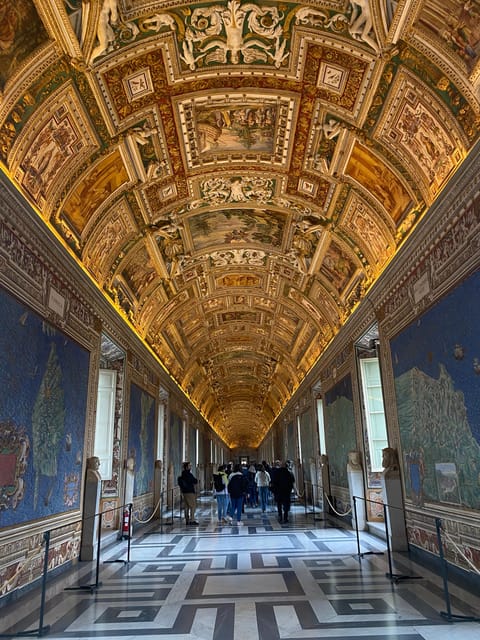
- The galleries and 120-meter maps: turning rooms into a story
- Getting to the Sistine Chapel without wasting your day
- What to do in your 30 minutes
- St. Peter’s Basilica: direct entry plus what you’ll actually see
- The guide factor: when Ulia or Fred is your guide, it clicks
- Best ways to plan around timing so you don’t lose your day
- Who should book this Vatican combo (and who should skip it)
- Should you book? My practical take
- FAQ
- How long is the tour?
- What does the ticket price include?
- Where do I meet the guide?
- Is the Sistine Chapel included?
- Are headsets provided?
- Do I get access to St. Peter’s Basilica?
- Do I need to bring any documents?
- What restrictions should I know about?
- What’s not included?
- Is it wheelchair accessible?
Key highlights you’ll feel right away
- Priority entrance means less standing around at the gates
- Headsets help you follow the licensed guide clearly in busy rooms
- Sistine Chapel focus on Michelangelo’s ceiling frescoes, including Creation of Adam and Last Judgment
- Terrace + Pinecone-courtyard stops that set up the big churches you’re heading to
- St. Peter’s Basilica dedicated entrance designed to keep you away from the longest lines
- Small practical timing (about 2 hours museums, then ~30 minutes Sistine) keeps momentum
How this Vatican Museums + Sistine + St. Peter’s combo pays off
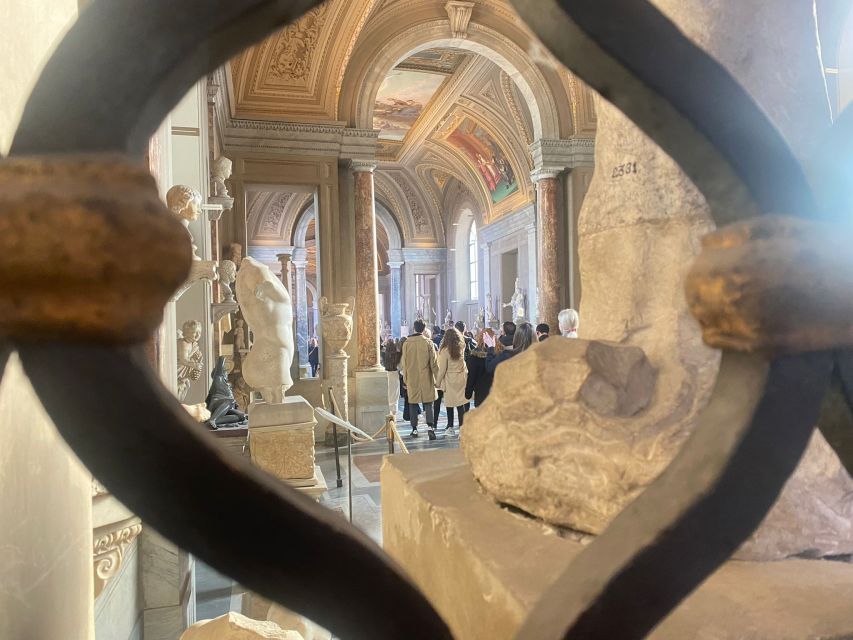
This is one of those tours where the value isn’t only the art. It’s the route. You’re seeing the Vatican’s main cultural engine in one connected flow: museums first, Sistine Chapel second, basilica last.
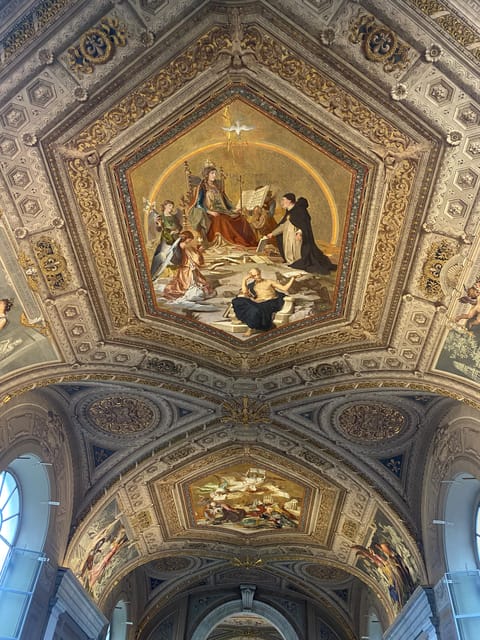
Why that order matters: the Vatican Museums train your eye. You move from classical sculpture rooms to the grand corridors and map galleries, so when you finally reach the Sistine Chapel, the ceiling feels less like a random masterpiece and more like the culmination of the Vatican’s artistic language.
I also like that the tour doesn’t treat St. Peter’s as an afterthought. You get a dedicated entry approach to the basilica, which helps you avoid the worst bottlenecks when the site is busy.
You can also read our reviews of more museum experiences in Rome



Price and value: is $112.15 fair for 2.5 hours?
At about $112.15 per person, you’re paying for three things that matter in real life: time saved, interpretation, and logistics. Most museum misery in Rome is not art—it’s waiting.
Here’s what you’re getting for the money:
- Fast-track entrance tickets for the Vatican Museums and Sistine Chapel areas
- A licensed guide for the museums and chapel segment
- Headsets (huge in crowded rooms)
- Special direct entry to St. Peter’s Basilica without waiting via a dedicated entrance
Two practical notes that keep the price honest:
- The tour is short, so you’re not paying for long bus rides or a half-day commitment—this is built for concentrated sightseeing.
- The direct basilica entry depends on timing and availability. Reservations made within 72 hours may not guarantee direct access, and Vatican closures can happen unexpectedly.
If you’re trying to fit the Vatican into a busy Rome itinerary without losing most of your day to lines, this pricing starts to make sense.
Meeting, security, and what to bring so the tour doesn’t slow down
Plan your arrival with military-style realism. The tour starts with check-in at Via Tunisi, 5a, about 15 minutes prior to your starting time. The Vatican also runs airport-style security, and everyone needs to be ready for that.
Bring:
- Your passport or ID card
Don’t bring:
- Luggage or large bags
- Pets
- Alcohol and drugs
A couple of smart scheduling tips:
- Keep your next reservation later than you think you need. Even a small delay can push you off course because the Vatican is strict about time windows.
- If you’re booking close to departure, remember the note about direct entry to St. Peter’s Basilica not being guaranteed within 72 hours.
One helpful detail: the tour provides headsets, so you can keep moving and still hear your guide clearly. That’s worth its weight in gold on busy days.
First stop rhythm: terrace views of St. Peter’s Dome
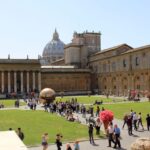
Right at the start, you get a terrace that overlooks St. Peter’s Dome. This is more than a photo stop. It’s a planning tool for your brain.
Why: once you see the dome’s scale from above, the basilica’s inside feels more coherent. You can start mentally mapping where key spaces sit relative to the exterior.
This part also helps with timing. You’re outside or at a scenic viewpoint before the heavier indoor crowds. It’s a good moment to reset and get oriented.
Pinecone-courtyard: the 13-foot bronze detail most tours rush
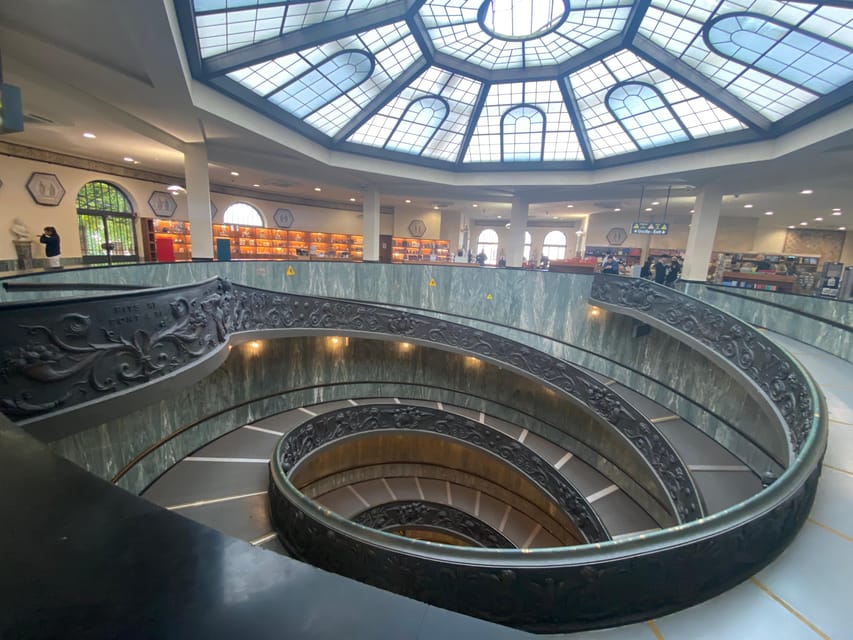
After the dome view, the tour moves outdoors to the Pinecone-courtyard. The main object is a bronze pine cone about 13 feet high, dating back to the 1st century B.C.
I like this stop because it gives you something unexpected and tangible. The Vatican isn’t only churches and frescoes—it’s also classical remnants and symbolic architecture. A pine cone that large is impossible to ignore, and it gives you a quick win early in the walk.




Museum Pio-Clementino: where sculpture makes sense of Michelangelo
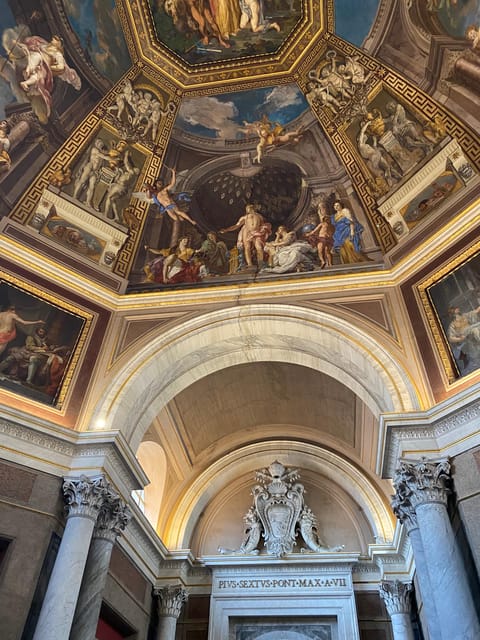
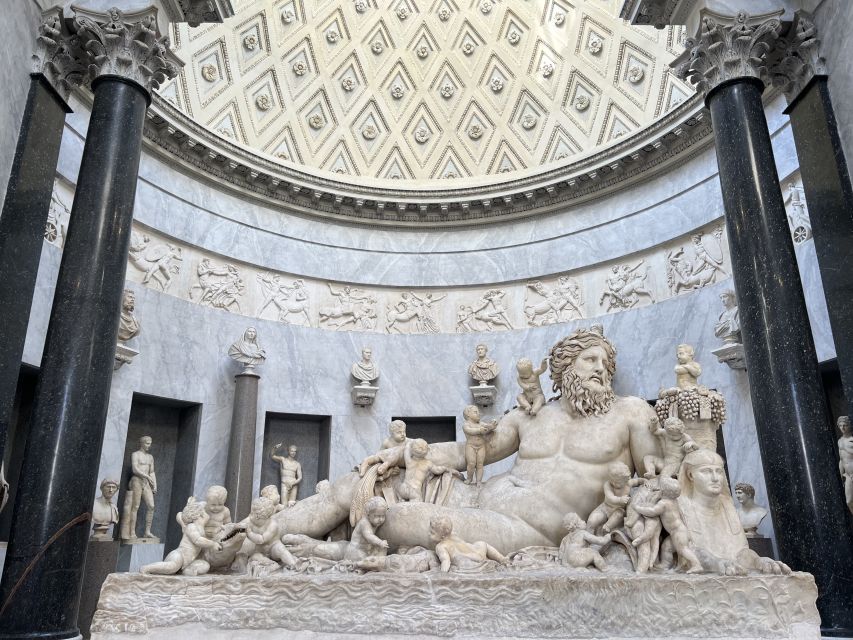
Next comes Museum Pio-Clementino, one of the Vatican’s big-ticket sculpture areas. This is where you’ll see ancient Roman works that helped shape European art for centuries.
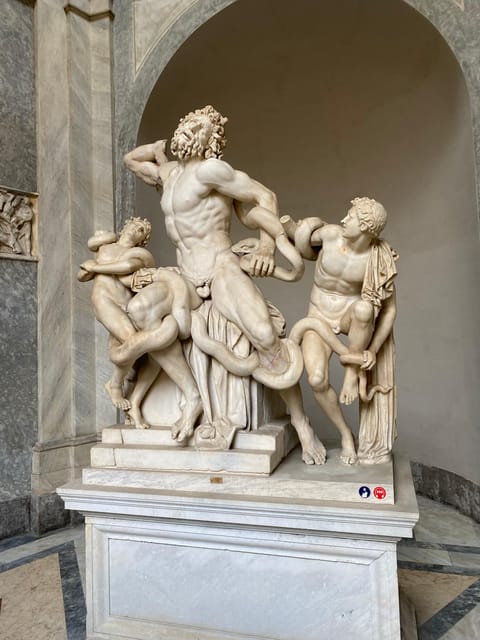
The standout named stop is Laocoön and His Sons. It was discovered in the early 1500s, and it’s often described as a major inspiration for Michelangelo. Even if you don’t memorize dates, you’ll recognize why this matters once you look closely at the drama carved into bodies—twisting torsos, strained faces, the sense of motion frozen in stone.
You’ll also move through additional named highlights, including:
- Torso del Belvedere
- the Round Hall
- decorative mosaics
These stops matter because they train your eye for form. When you later see Renaissance painting, you’ll understand how artists used anatomy and structure—sometimes they start with sculpture, then scale up to the ceiling.
One drawback to keep in mind: the pace here is efficient. You won’t have unlimited time at each room. If you’re a slow, deep-looking museum person, treat this as a “see the landmarks first” tour, then plan a return visit later.
The galleries and 120-meter maps: turning rooms into a story
From sculpture, you move into the galleries. Here, you’ll notice two things highlighted in the tour design:
- tapestries
- about 120 meters of geographical maps
Those maps are not just decoration. They help connect the Vatican’s collections and imagination to the wider world. In a place where everything feels centered on Rome and religion, the maps make the museum feel bigger than a single building.
This is also where the guided component really earns its keep. Your guide can help you understand why Raphael and Michelangelo fit into the flow—not just as famous names, but as artists connected to the Vatican’s goals and patrons.
Getting to the Sistine Chapel without wasting your day
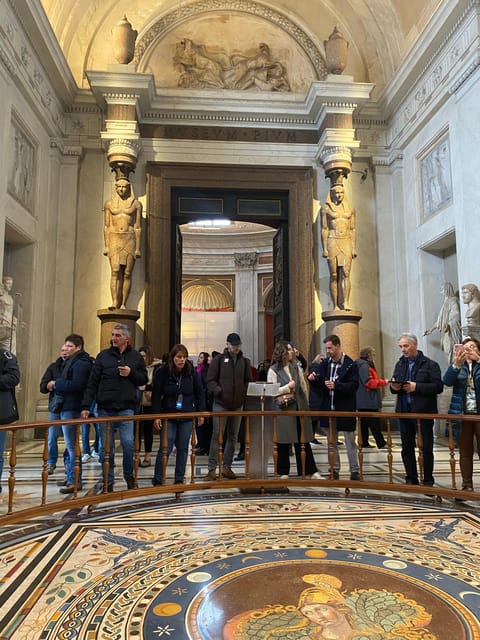
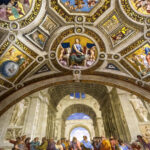
Then you reach the Sistine Chapel for about 30 minutes of guided time. That length is intentional. The Sistine Chapel is too important to skip, but it’s also one of the most crowded spaces on earth. A shorter, focused window is often the best way to avoid burnout.
Expect the guide to point you toward what to actually look for on the ceiling—especially Michelangelo’s major frescoes, including:
- Creation of Adam
- Last Judgment
With the headsets, you’ll be able to follow the explanation without constantly craning toward your guide’s voice. That small piece of comfort changes the whole experience, because it lets you keep your eyes on the art instead of the crowd.
What to do in your 30 minutes
You can’t control the flow of people, but you can control your attention. I recommend you:
- Spend the first moments locating the ceiling scenes your guide names
- Let your eyes move in the order your guide describes, rather than jumping randomly
- If you feel overwhelmed, focus on one section—Michelangelo’s ceiling rewards that approach
St. Peter’s Basilica: direct entry plus what you’ll actually see
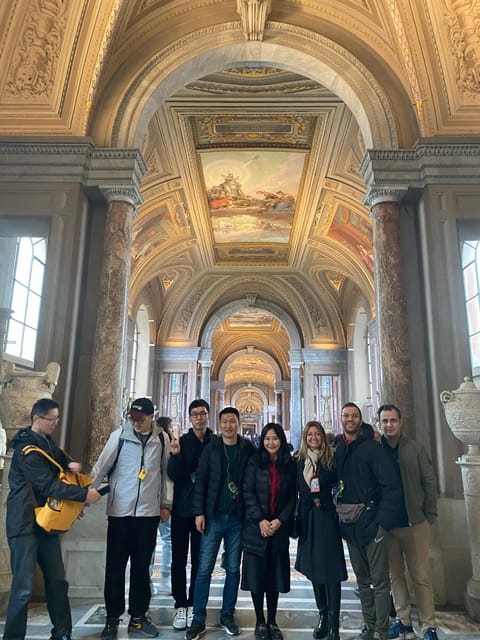
After the chapel, the tour includes special direct access to St. Peter’s Basilica using a dedicated entrance. That’s the biggest logistics upgrade here. When St. Peter’s is busy, the line situation can swallow time fast.
Inside, you’ll have a chance to explore key highlights mentioned for this tour, including:
- Michelangelo’s Pietà
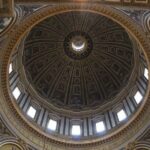
- the stunning interior views tied to St. Peter’s Dome
One important clarification from the tour info: the guide is included for the Vatican Museums and Sistine portion, and you should not count on a guide inside St. Peter’s Basilica itself. That’s not a deal-breaker; it just means your self-guiding time matters.
Also, remember that Vatican sites can close unexpectedly due to circumstances determined by the Vatican. In that scenario, the info says no refunds are possible, so don’t schedule your day with the Vatican as the only guaranteed anchor.
The guide factor: when Ulia or Fred is your guide, it clicks
Good guides turn famous art into something you understand fast. The tour includes a licensed official expert and provides headsets to keep the narration clear.
The reviews attached to this experience mention guides such as Ulia and Fred for their strong performance and friendly manner. That matches what you want in the Vatican: someone who can explain the significance without turning the whole thing into a lecture.
If you’re choosing among tour options, this is one place where I’d rather pay a bit more and get a real guide than gamble on a generic pass.
Best ways to plan around timing so you don’t lose your day
This tour runs about 2.5 hours total, with roughly:
- 2 hours for Vatican Museums
- about 30 minutes for the Sistine Chapel
Because it’s compressed, your day planning has to be smart:
- Don’t stack your next big stop immediately after. Give yourself breathing room.
- If you’re touring multiple major sights in one day, keep the second one flexible.
- Arrive early for security and check-in. The Vatican will not rush for you, and your tour can’t magically bend time.
One caution you should take seriously: the tour may start late on some days, and that can cause you to miss a separate reservation afterward. Treat this as the first priority block of your day.
Who should book this Vatican combo (and who should skip it)
This tour is a strong fit if:
- You want the big three in one go: Vatican Museums, Sistine Chapel, and St. Peter’s Basilica
- You care about interpretation, not just photos
- You want to skip long lines and save time
- You like having a set structure for a dense site
It may be less ideal if:
- You need a slow pace with long stays in each museum room
- You rely on wheelchair access (this option is listed as not suitable for wheelchair users)
- You’re the type who hates being time-boxed in sacred spaces—30 minutes in the Sistine can feel short if you love standing still
If you’ve got limited time in Rome, you’ll probably appreciate the efficiency. If you’ve got multiple days, you could also use this as a first pass, then return for a longer self-guided or smaller-group museum visit.
Should you book? My practical take
Book it if your top goal is to see the Vatican’s greatest hits without turning your day into queue management. The fast-track entry, headset narration, and direct St. Peter’s Basilica access make the price feel more like paying for time and clarity than paying for a name.
I’d only hesitate if your schedule is extremely tight with no buffer, because late starts can mess with your next booking. If you can build slack and you’re happy with a focused, best-of pace, this is a solid way to experience the Vatican with less stress and more understanding.
FAQ
How long is the tour?
The total duration is about 2.5 hours. Check availability to see starting times.
What does the ticket price include?
It includes fast-track entrance tickets, a guide, headsets, assistance on arrival, and special direct entry to St. Peter’s Basilica without waiting.
Where do I meet the guide?
You check in at the meeting point at Via Tunisi, 5a. Check in 15 minutes before the starting time.
Is the Sistine Chapel included?
Yes. You’ll visit the Sistine Chapel with a guided segment of about 30 minutes.
Are headsets provided?
Yes. Headsets are included so you can hear your tour guide clearly.
Do I get access to St. Peter’s Basilica?
Yes, the tour includes special direct entry to St. Peter’s Basilica via a dedicated entrance designed to skip the often-long lines. Note that direct access may not be guaranteed if you book within 72 hours.
Do I need to bring any documents?
Bring a passport or ID card.
What restrictions should I know about?
No pets are allowed, and you should not bring luggage or large bags. Alcohol and drugs are not allowed.
What’s not included?
Pickup and drop-off are not included. Also, a tour guide inside St. Peter’s Basilica is not included.
Is it wheelchair accessible?
This activity is listed as not suitable for wheelchair users.