REVIEW · ROME
Vatican Museums, Sistine Chapel tour + skip the line ticket
Book on Viator →Operated by onceuponatimetours · Bookable on Viator
Two hours that feel like Rome’s finest art sprint. This guided Vatican Museums and Sistine Chapel tour is built around fast, high-impact viewing, from the courtyard stops to Michelangelo’s work.
I love the skip-the-line setup because it cuts down the most painful part of this visit. I also like how the route targets big visual payoffs like the Gallery of Maps and the chapel frescoes without wasting the whole day just finding your way.
The main drawback is the physical load: expect lots of walking and stairs, and once you’re in motion, it’s a bit of a point-of-no-return day.
In This Review
- Key points
- Skip-the-Line Vatican Museums: what the ticket buys you
- Your route through the Vatican Museums: Pine Cone Courtyard to Raphael Rooms
- Courtyard of the Pine Cone and the Belvedere
- Octagonal Courtyard, Gallery of Maps, and Gallery of Candelabra
- Raphael Rooms
- Sistine Chapel with a guide: how to look without missing the plot
- What you’ll learn to notice
- The “point of no return” effect
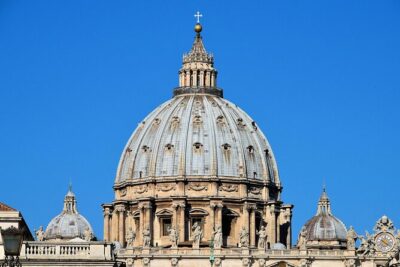
- The optional 3-hour add-on: St. Peter’s Basilica in the same plan
- Practical stuff before you go: dress code, banned items, and hearing your guide
- Dress code
- What you can’t bring
- Headsets and sound checks
- Walking load and timing
- Sede Vacante and Sistine Chapel closure
- Price and timing: is $72.10 good value for what you get?
- Who this tour is best for (and who should rethink it)
- Should you book this Vatican Museums + Sistine Chapel tour?
- FAQ
- How long is the Vatican Museums and Sistine Chapel tour?
- Does this tour include the Sistine Chapel and Vatican Museums?
- Which languages are available?
- Do I get skip-the-line entry?
- Is St. Peter’s Basilica included?
- Where do we meet for the tour?
- What is the dress code?
- What items are not allowed?
- Are headsets included?
- What happens if the Sistine Chapel is closed during Sede Vacante?
Key points
- Skip-the-line entry helps you start the Vatican flow sooner, which matters with crowds.
- Route design hits major zones in the Vatican Museums, from Belvedere to Raphael’s rooms.
- Sistine Chapel guidance makes it easier to look in the right places instead of floating around.
- Optional Basilica add-on (3-hour option) gives you a guided hour in St. Peter’s Basilica.
- Headsets for larger groups improve clarity, though you may still need to adjust for comfort.
- Closures can happen: during Sede Vacante, the Sistine Chapel may close with no refunds.
Skip-the-Line Vatican Museums: what the ticket buys you
The first thing you’re paying for is time. The Vatican Museums are famous for long lines, and a skip-the-line ticket can be the difference between arriving focused and arriving stressed. Even with timed entry, crowds can still pack up inside—so the real win is getting in faster and starting your tour before you feel drained.
This is a guided experience, not just an entry ticket. That matters because the Vatican is huge, and without a plan you can end up seeing a lot of hallways and not enough of the art you came for. With a licensed guide speaking your language, the tour is meant to steer your attention.
Group size is capped at 30 travelers, and headsets are included for groups over 11. That setup usually works well in large museums, but do be ready to adjust the volume and position if sound feels faint.
You can also read our reviews of more tours and experiences in Rome
Your route through the Vatican Museums: Pine Cone Courtyard to Raphael Rooms
Your tour starts at Via Mocenigo, 2 (00192 Roma RM), and it ends back there. From the entrance, the museum route is structured as a sequence of major landmarks, so you keep moving toward the next visual highlight instead of getting stuck between rooms.
Here’s what you can expect from the museum portion, and why each stop is worth your effort:
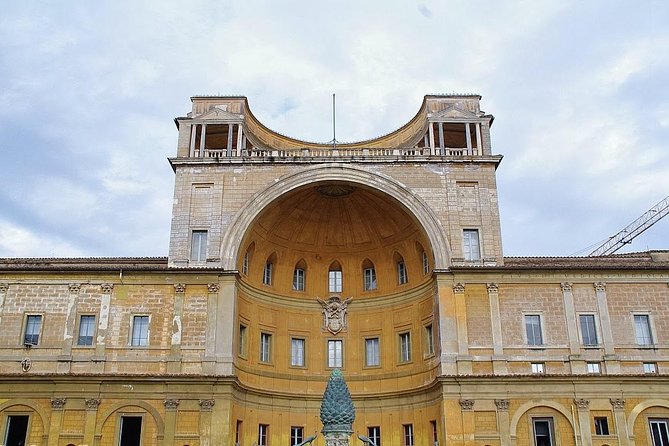
Courtyard of the Pine Cone and the Belvedere
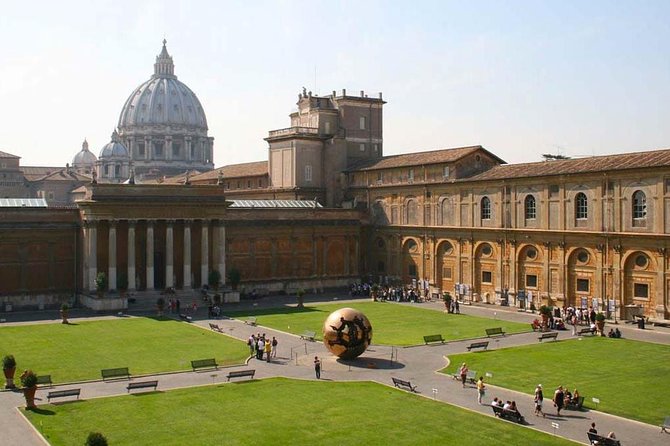
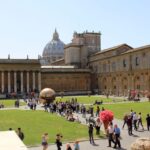
Early on, you’ll spend time around the courtyard of the pine cone area and the Belvedere. These spaces are a big clue to how the Vatican Museums operate: they don’t just store art, they stage it in dramatic architectural settings. You’re building context before you hit the galleries.
Why it helps you: you get your bearings faster. When your guide points out what you’re looking at, the rest of the museum starts to feel less random.
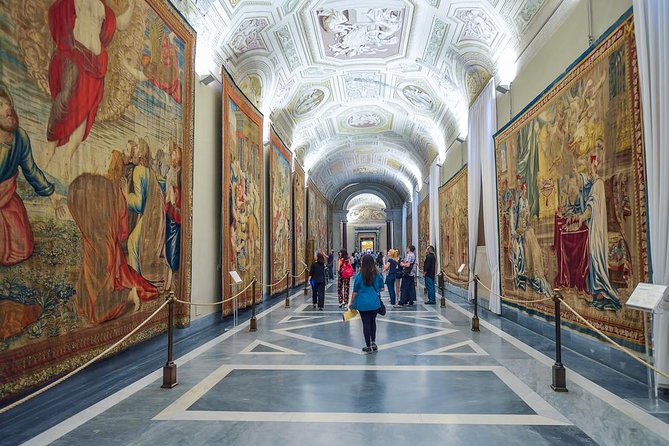
Octagonal Courtyard, Gallery of Maps, and Gallery of Candelabra
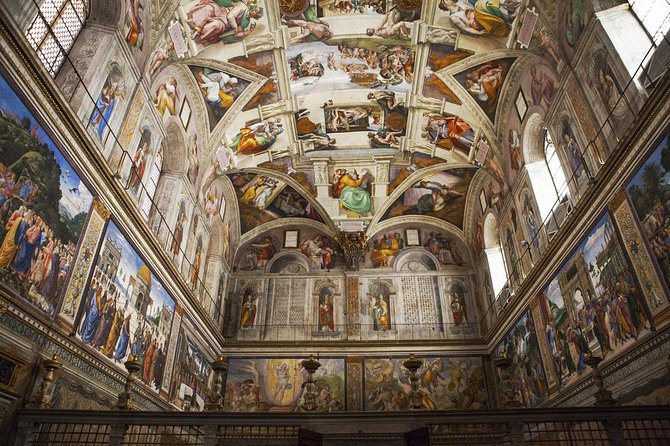
The octagonal courtyard is another major “reset” space. Then you’ll move into collections like the gallery of maps and the gallery of candelabra, which shift the mood from grand halls to eye-level viewing.
What to watch for: these galleries are great places to slow down for a minute. The art themes and the way the walls are arranged make it easier to absorb details—especially if you’ve been rushing earlier for time.
Raphael Rooms
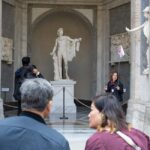
Next come the Raphael rooms, a highlight category for a reason. These rooms feel like they were designed for guided tours: there’s enough structure that a guide can connect the artworks to stories you’ll remember.
The trade-off: because this is a popular route and the Vatican keeps moving, you won’t have unlimited time in each room. If you want to sketch every corner and read every inscription, you may feel a little rushed.
You can also read our reviews of more museum experiences in Rome




Sistine Chapel with a guide: how to look without missing the plot
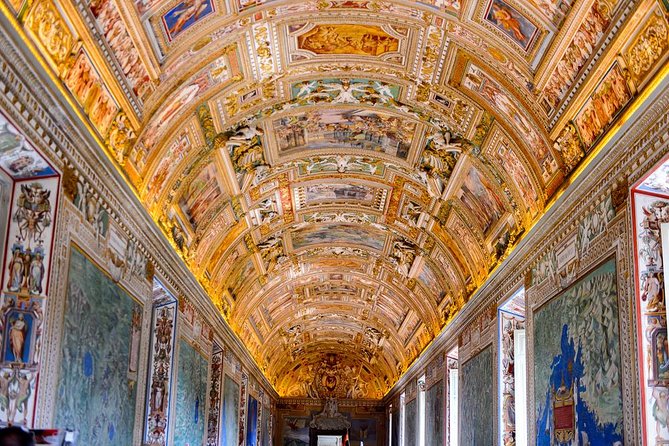
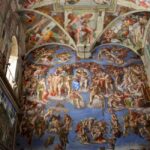
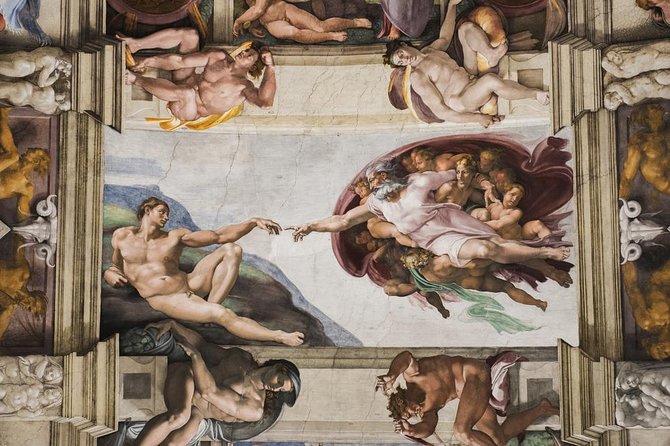
After the museum galleries, the tour transitions into the fresco experience. The core moment here is the Sistine Chapel fresco cycle, including Michelangelo’s Last Judgment and other Renaissance masterpieces.
A guide’s role in the Sistine Chapel is practical: you’re inside a space with rules, crowds, and a lot to take in. Without a guide, it’s easy to stare at one section and miss the full logic of the ceiling and walls. With a guide, you’re more likely to know where to look first.
What you’ll learn to notice
This is where the tour usually pays off most for first-timers. The guide’s job is to frame the art so it becomes more than decoration. You’ll hear context for why certain figures, scenes, and compositions are arranged the way they are, so the chapel stops feel like a story you’re following.
The “point of no return” effect
One key consideration is pace. The day is designed as a continuous flow: once you start, you’re expected to keep going until you reach the final viewing moments. That can be great for efficiency, but it can also feel intense if you’re sensitive to crowds.
Also note the physical reality: even before you get there, the walking and stair climbing add up fast. If stairs are hard for you, plan to take it seriously—comfortable shoes and a calm pace are not optional.
The optional 3-hour add-on: St. Peter’s Basilica in the same plan
There’s a 3-hour tour option that includes an added segment in St. Peter’s Basilica. If you pick this longer option, you get an additional 1 hour of guided tour in the Basilica, with admission included.
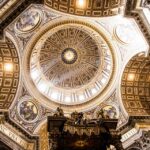
You’ll also get time to explore parts of the church on your own—specifically areas like the naves, apse, and chapels. The guide points you toward the standout architecture and art by figures such as Bramante, Raphael, and Michelangelo.
What makes this value-added: you’re connecting the Vatican Museums’ art world to the Vatican’s “big church” scale in one ticket. It’s a smart pairing because many people come to Rome for both the museum masterpieces and the drama of St. Peter’s interiors.
One caution: the Basilica can have temporary changes, and access is not guaranteed in every situation. The organizer notes that they are not responsible for temporary closure of St. Peter’s Basilica, and since Vatican City is a separate state, decisions can happen without advance notice.
Practical stuff before you go: dress code, banned items, and hearing your guide
This tour is straightforward, but the Vatican has firm rules. Before you leave your hotel, set yourself up so security doesn’t slow you down.
Dress code
You must cover knees and shoulders. I’d rather be slightly overdressed than turned away at the door. A light layer like a scarf can help if you’re arriving from warmer streets.
What you can’t bring
The tour information lists restrictions including:
- No bottles or glass containers
- No alcoholic beverages
- No aerosols
- No backpacks, camping items, and no bulky bags/luggage/trolleys
Practical move: if you’re traveling with a larger bag, plan storage ahead of time. Carrying the right bag (or no bag) will keep security smooth and reduce last-minute stress.
Headsets and sound checks
Headsets are provided for groups larger than 11, which is a big help in a place like this. Still, audio quality can vary with volume settings and where you stand. If you get there and you can barely hear, take a moment to adjust your headset before the guide gets fully into the story.
Walking load and timing
This is not a sit-and-look-around day. Expect stairs and lots of walking, and understand that the route is designed so you keep moving. Wear shoes you trust. If you need frequent breaks, bring the mindset of short pauses rather than long delays.
Sede Vacante and Sistine Chapel closure
There’s an important reality check: during Sede Vacante (the time between popes), the Sistine Chapel can close to the public due to the Papal conclave, and this may happen without prior notice. The tour notes no refunds or discounts in that situation.
If your dates are flexible, consider booking with extra breathing room. And if you’re traveling right at that window, keep your plan flexible in general—this site can change quickly.
Price and timing: is $72.10 good value for what you get?
At $72.10 per person, this isn’t a budget ticket. But in Rome, skip-the-line access plus a licensed guide can be worth paying for when the alternative is spending hours standing and then trying to self-navigate a giant museum.
Here’s what makes the price feel more reasonable:
- Skip-the-line ticket reduces the worst queue time.
- You get a licensed guide speaking your language.
- Headsets for larger groups make the guidance usable rather than just decorative.
- The museum route is planned around major stops rather than random wandering.
Where you might feel it’s less worth it:
- If you’re the type who wants to spend a lot of time reading and studying without a strict route, a guided flow can feel rushed.
- If you end up in a crowded group where pace feels too fast, you may feel like you paid for a sprint.
Timing tip: the information notes that on the last Sunday, the price is lower, the ticket can be free, and the line cannot be skipped. If you’re traveling on that specific day and you don’t mind queueing, you could save money. If you’re traveling during peak hours or with limited time, skip-the-line usually wins.
Finally, note the tour runs about 2 to 3 hours depending on option. That short window is why guided structure matters: you get a lot of key art in a manageable time frame—if you can handle the movement.
Who this tour is best for (and who should rethink it)
I think this works best if:
- You want high-efficiency viewing at the Vatican Museums.
- You prefer a guide to explain what you’re seeing at the Sistine Chapel.
- You don’t want to spend your day guessing your way through galleries.
- You’re comfortable with walking and stairs.
It might not be the best fit if:
- You’re very noise-sensitive or hard of hearing and you struggle with headsets (audio quality can vary).
- You hate feeling rushed in crowds.
- You need a slower pace with longer quiet time in each room.
Also, this is capped at 30 travelers, which helps compared to bigger groups, but it’s still the Vatican—expect density at popular moments.
Should you book this Vatican Museums + Sistine Chapel tour?
If you’re visiting Rome with a short list of must-sees, I’d book this. The combo of skip-the-line entry and a guide-led route is exactly what turns a chaotic place into a coherent experience. The Sistine Chapel portion is the real reason to book, and the museum route sets you up to appreciate the chapel without feeling lost.
But book smart:
- Choose the 3-hour option if you also want St. Peter’s Basilica guided time in the same plan.
- Plan for a lot of walking and stairs, and wear the best shoes you own.
- If your dates land near Sede Vacante, understand the Sistine Chapel may close with no refund.
If you want the simplest decision rule: if you’re short on time and you value clear direction, this tour usually makes the most sense.
FAQ
How long is the Vatican Museums and Sistine Chapel tour?
The duration is about 2 to 3 hours. The 3-hour option includes an added guided hour in St. Peter’s Basilica.
Does this tour include the Sistine Chapel and Vatican Museums?
Yes. It covers the Vatican Museums route and the Sistine Chapel frescoes with a guide.
Which languages are available?
The tour offers four language choices, and English is available for the experience.
Do I get skip-the-line entry?
Yes. The ticket includes skip-the-line entry to this popular site.
Is St. Peter’s Basilica included?
St. Peter’s Basilica is included only with the 3-hour tour option. It includes an admission ticket and about 1 hour connected to the Basilica segment.
Where do we meet for the tour?
The meeting point is Via Mocenigo, 2, 00192 Roma RM, Italy, and the tour ends back at the meeting point.
What is the dress code?
You must cover knees and shoulders.
What items are not allowed?
Banned items listed include bottles and glass containers, alcoholic beverages, aerosols, backpacks, camping items, and bulky bags/luggage/trolleys.
Are headsets included?
Yes. Headsets are provided for groups of more than 11 people.
What happens if the Sistine Chapel is closed during Sede Vacante?
During Sede Vacante, the Sistine Chapel can close to the public due to the Papal conclave, and this may happen without prior notice. The information states that no refunds or discounts will be issued in that case.