REVIEW · ROME
The Roman Jewish Ghetto: A Self-Guided Audio Tour
Book on Viator →Operated by VoiceMap Audio Tours · Bookable on Viator
Turn Rome’s ghetto walk into easy audio. This Roman Jewish Ghetto self-guided tour uses GPS to tell you what you’re seeing as you move through the quarter, with offline audio so you’re not held hostage by spotty reception.
I especially like that you can start, pause, and restart at your pace, which makes a short 30-minute outing feel flexible. I also love the value angle: lifetime access to the content, plus offline maps and geodata included.
The main catch is tech timing. If your audio doesn’t fully download before you start, you can end up with missing segments or a route that feels confusing if you don’t begin correctly.
In This Review
- Key highlights you’ll actually care about
- Roman Jewish Ghetto in 30 Minutes: What This Audio Tour Delivers
- Price and value: $8.99 that can pay off twice
- Starting right: Via di S. Maria del Pianto to Portico d’Ottavia
- Offline audio setup: the difference between a smooth tour and missing chapters
- Piazza delle Cinque Scole: why the name stuck around
- The 1904 synagogue story: Armanni and Costa’s commission
- Portico d’Ottavia: Augustus, Octavia, and the lost temples
- What’s included (and what isn’t) so you don’t get surprised
- Timing and pace: a short route that still feels complete
- Who this tour suits best
- Common hiccups to avoid (so you get the full walk)
- Should you book this Roman Jewish Ghetto audio tour?
- FAQ
- How long is the Roman Jewish Ghetto self-guided audio tour?
- How much does it cost?
- Is the audio available in English?
- Do I need cell phone reception during the tour?
- Does it work offline?
- Where do I start and where does it end?
- Is this tour private?
- What’s included in the price?
- Can I bring a service animal?
- Is it refundable if I cancel?
Key highlights you’ll actually care about
- Offline playback after a download means you can keep walking even with no cell signal
- GPS-driven audio automatically starts and stops as you reach the right spots
- Clear walking route from a set start address to a set finish point
- Meaningful stops tied to real synagogue locations and the Portico d’Ottavia story
- Lifetime access for one low price, so you can repeat later without buying again
Roman Jewish Ghetto in 30 Minutes: What This Audio Tour Delivers
This is the kind of tour that fits real life. Not a half-day commitment, not a bus ride, not a long line. Just you, your phone (that you already have), and a guided audio route through Rome’s Jewish Ghetto area at a brisk but manageable pace.
You get audio that focuses on what matters at key stops, including the story behind the name Piazza delle Cinque Scole and the big-picture shift that happened after the Ghetto period. You also get the architectural and historical framing for the Portico d’Ottavia, which connects the Jewish quarter to much older Roman layers.
And yes, it’s in English. That sounds basic, but it matters when you’re paying close attention to language and details instead of guessing what you’re looking at.
You can also read our reviews of more guided tours in Rome



Price and value: $8.99 that can pay off twice
At $8.99 per person for about 30 minutes, you’re paying for a focused, on-foot orientation—one that’s built to work offline. The lifetime access is the part that makes the math work better than many “single use” tours.
Think of it like this: if you’re the type who likes to re-walk places you understand better the second time, lifetime access gives you that option. Even if you don’t, it still functions as a low-cost way to turn a short walk into a guided mini-history.
Also, it’s priced like an activity, not like an entrance ticket. The tour itself doesn’t include museum tickets or paid entries, so you’re not paying extra for access you might not need. If you just want context while you stroll, this hits the sweet spot.
Starting right: Via di S. Maria del Pianto to Portico d’Ottavia

The tour begins at Via di S. Maria del Pianto, 22, 00186 Roma RM, and it ends at Via del Portico d’Ottavia, 39, 00186 Roma RM. That fixed start-and-finish matters more than people think.
The audio route is designed like a chain: each stop builds on the last one. When you start in the right place and let the GPS playback do its thing, you get the full story in order. If you start late, wander before pressing play, or use playback modes that don’t follow the route, the narrative can feel out of sync.
The good news: the tour is built so you can pause and restart. So if you need a breath, a photo detour, or you accidentally walk past a corner, you’re not doomed to miss the lesson.
Practical tip: plan for a quick route check on your maps app before you begin, so you’re standing in the right spot when you hit Start.
Offline audio setup: the difference between a smooth tour and missing chapters
One of the best features here is that once you download the tour, it works without cell reception. That’s perfect for Rome, where signal can drop right when you want it most.
The key is downloading properly before you start walking. The tour includes the VoiceMap application plus offline access to audio, maps, and geodata. That means the experience isn’t only audio files; the app also relies on stored route data.
Here’s what to do so you don’t run into trouble:
- Download while you’re on a reliable connection (and avoid juggling networks)
- Don’t start walking until you’re confident the download is complete
- Keep GPS permissions enabled so the app can trigger playback where it should
If the audio doesn’t fully load, you might get only the first part of the route and then lose the rest. It’s fixable, but it’s frustrating when you’re in the middle of a short 30-minute walk—so treat the download step like the start of the tour, not an afterthought.
Piazza delle Cinque Scole: why the name stuck around
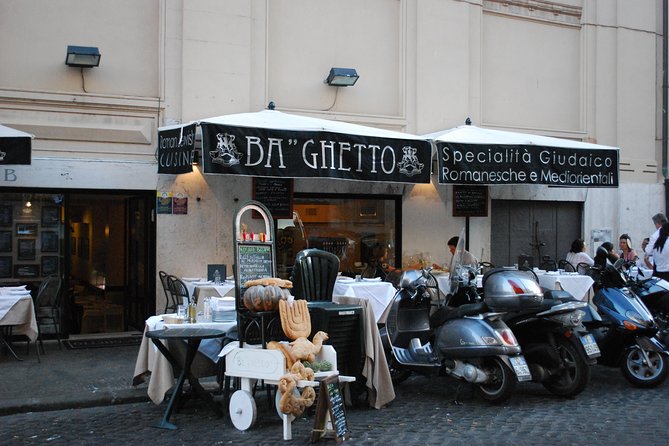
One of the most interesting stops is Piazza delle Cinque Scole. The audio explains that scola means synagogue, and that the square’s name connects to the presence of multiple synagogues historically located in the area: the Temple, New, Castilian, Catalan, and Sicilian “Scole.”
What I like about this stop is how it turns a place name into a clue. You’re not just looking at a square; you’re learning why the square still carries memory in its language.
The tour also covers the big turning point after emancipation of the Ghetto: the complex was torn down, but the name remained. That detail matters because it’s one of those quiet reminders that history doesn’t always survive in the buildings. Sometimes it survives in labels, in maps, in what locals keep calling a place long after the original structures are gone.
On the ground, you’ll get a chance to look around and connect the “Scole” naming logic to what’s actually around you now. That’s a strong use of audio: it guides your attention so you’re not just reading plaques or walking past without context.
You can also read our reviews of more tours and experiences in Rome


The 1904 synagogue story: Armanni and Costa’s commission
Another core stop is the story behind Rome’s synagogue that took over as the main place of worship after a major rebuild.
The tour notes that in 1901, the community commissioned two architects—Osvaldo Armanni and Vincenzo Costa—to design and build a new temple. In 1904, the new synagogue opened, and since then it has served as the main place of worship in Rome.
This is the kind of detail that makes an audio tour feel grounded. It’s not vague, generic “Jewish history” talk. It names people and dates. You can stand near the location and think: this isn’t only memory; it’s also a real architectural project with identifiable designers and a timeline.
If you’re curious about how religious communities evolve through time—through change, rebuilding, and shifting roles—this stop gives you a clean thread to follow. And if you prefer your history in manageable chunks, the 1901/1904 sequence is easy to remember.
Portico d’Ottavia: Augustus, Octavia, and the lost temples
The tour ends by walking you into the orbit of Portico d’Ottavia—and the audio gives you an excellent Roman anchor for your Jewish Ghetto route.
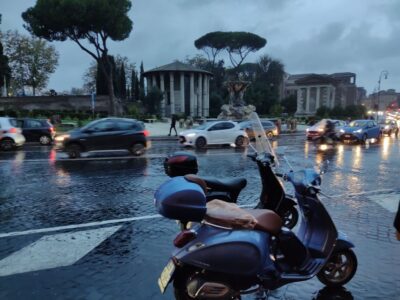
The Portico d’Ottavia was built by Augustus, the first Roman emperor, to honor his sister Octavia. The structure includes a monumental arch and facade, plus an internal portico that originally held two temples.
That last detail—two temples inside the portico—is a reminder that Rome layers sacred architecture the way it layers streets. You’re seeing a spot that already had religious function long before later eras brought new communities and new meanings to the area.
Because this tour is short, the ending has to do a lot: it should close your story, and it should also leave you with something you can look at right away. Portico d’Ottavia does that well. Even if you only catch it briefly, you get the key context: who built it, why it was built, and what it originally contained.
What’s included (and what isn’t) so you don’t get surprised
Included:
- Lifetime access to the Roman Jewish Ghetto tour content
- The VoiceMap application
- Offline access to audio, maps, and geodata
Not included:
- A smartphone (obvious, but worth stating)
- Transportation
- Food and drink
- Any tickets or entrance fees for museums or attractions along the way
So this is best when you want interpretation while you walk, not when you’re expecting built-in ticketed access to interiors. If you’re hoping to go inside a synagogue or a museum with paid entry, you’ll need to handle that separately.
Timing and pace: a short route that still feels complete
The tour is listed at about 30 minutes. That’s ideal for several situations:
- You want context but don’t want to lose half a day
- You’re pairing it with other nearby sights
- You like to stop for photos without falling behind an organized group
It’s also a good match for first-time visitors who feel overwhelmed by Rome’s scale. A GPS-driven audio route helps you move confidently through tight neighborhoods where you don’t want to spend your time constantly asking where to go next.
And because it’s self-guided, you control the pace. Pause when you want. Restart if you need to catch a point twice. You’re not locked into one tempo.
One more practical note: the tour’s operating window is essentially all day (listed 12:00 AM to 11:59 PM, Monday through Sunday), so you can fit it between meals and other plans without a big schedule scramble.
Who this tour suits best
This works well if you:
- Prefer self-paced walking over group tours
- Want a low-cost, history-forward orientation in a compact time window
- Need offline reliability while navigating Rome
- Like clear route guidance and audio narration that tells you what you’re looking at
It might feel less ideal if you:
- Want a live guide answering questions on the spot
- Expect paid entry included as part of the tour
- Don’t want to do any setup on your phone (because downloading for offline use is a must-do step)
Common hiccups to avoid (so you get the full walk)
Based on the kinds of problems people reported, there are two avoidable pitfalls.
First: incomplete downloads. If your audio files aren’t fully downloaded, you can end up with the first segment working and later segments missing. Fix: download on a steady connection before you start.
Second: not using the route playback properly. If you start in the wrong mode or without using the tour’s Start Tour flow, the experience may feel confusing and you may miss the intended sequence. Fix: start at the correct address and start the tour using the Start Tour button.
If you do those two things, you’ll likely experience what this format is meant to deliver: a smooth, structured walk with audio that matches your location.
Should you book this Roman Jewish Ghetto audio tour?
I’d book it if you want a focused, budget-friendly way to understand the Jewish Ghetto area without committing to a long guided tour. At $8.99 with lifetime access, you’re getting a short walk that can sharpen how you see the square names, the synagogue story, and the Portico d’Ottavia context.
I wouldn’t book it if your top priority is interior access with tickets included or if you strongly dislike doing phone setup. This is a smart audio tool for the street, not a ticket bundle.
If you can download first and start correctly, it’s one of those rare travel deals where the tech actually helps instead of getting in the way. In a neighborhood where details matter, that’s the whole point.
FAQ
How long is the Roman Jewish Ghetto self-guided audio tour?
The tour is listed at about 30 minutes.
How much does it cost?
It costs $8.99 per person.
Is the audio available in English?
Yes, the tour is offered in English.
Do I need cell phone reception during the tour?
No. Once you download the tour, it works without cell phone reception.
Does it work offline?
Yes. The tour includes offline access to audio, maps, and geodata through the VoiceMap app.
Where do I start and where does it end?
Start: Via di S. Maria del Pianto, 22, 00186 Roma RM, Italy.
End: Via del Portico d’Ottavia, 39, 00186 Roma RM, Italy.
Is this tour private?
Yes. It’s a private tour/activity, meaning only your group participates.
What’s included in the price?
You get lifetime access to the VoiceMap tour content, the VoiceMap application, and offline access to audio, maps, and geodata.
Can I bring a service animal?
Yes, service animals are allowed.
Is it refundable if I cancel?
The experience is non-refundable and cannot be changed for any reason.