REVIEW · ROME
Sunset in Rome Sightseeing and Piazzas with appetizer
Book on Viator →Operated by Doooing Experience · Bookable on Viator
Sunset turns Rome into a slow movie. This sunset walk strings together some of the city’s most iconic squares and landmarks—starting at Piazza del Popolo and working your way through the Spanish Steps, Trevi Fountain, the Pantheon, and on to Piazza Navona. It’s a great way to get your bearings fast because you’re not hopping around randomly; you’re moving in a sensible line of sights.
I really like that you get both a guided stroll and a built-in food moment: a traditional Italian appetizer after the sightseeing, plus snacks and drinks along the way. The main drawback to think about is simple: it’s about 3 hours of walking, and the tour requires good weather, so you’ll want comfortable shoes and a flexible plan if conditions change.
In This Review
- Key Highlights You’ll Care About
- Why This Sunset Route Works Better Than a Random Rome Walk
- Meeting at Fontana dei Leoni: Start Time, Group Size, and Staying Oriented
- Piazza del Popolo: A Wide Start With a Name That Means People
- Piazza di Spagna and the Spanish Steps: Diplomacy, Design, and 135 Steps
- Trevi Fountain at Golden Hour: Baroque Size and Cultural Pop Power
- The Pantheon: Ancient Temple to Church That Still Pulls People In
- Piazza Navona: Where a Roman Stadium Still Shapes the Square
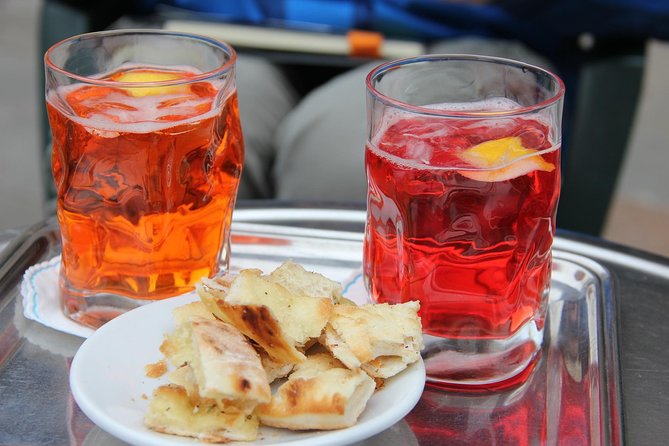
- The Appetizer Break: Snacks, Soda, Water, and a Traditional Taste
- Guides Make the Difference: How Q&A Improves the Whole Walk
- Price and Value: What $79.87 Buys You in Rome
- Who This Sunset Tour Is Best For
- Should You Book This Sunset in Rome Walk?
- FAQ
- How long is the sunset tour in Rome?
- What time does the tour start?
- Where do I meet the guide?
- Where does the tour end?
- What’s included in the price?
- What happens if the weather is bad or I need to cancel?
Key Highlights You’ll Care About
- Golden-hour timing with a 5:30 pm start, when Rome looks especially photogenic
- Big-name stops in one route: Piazza del Popolo, Spanish Steps, Trevi Fountain, the Pantheon, Piazza Navona
- Small group cap (max 20), which usually makes the experience feel more personal than a mega-tour
- A real food break: appetizer plus snacks, bottled water, and soda/pop included
- Guides with strong Q&A energy, including names like Titziana Pischedda, Luca, and Anastasia
Why This Sunset Route Works Better Than a Random Rome Walk
Rome at sunset has a rhythm. The light gets softer, the stones look warmer, and the piazzas feel like they’re doing what they were built for: gathering. This tour is smart because it’s designed as a moving loop of iconic places, so you’re not guessing how the landmarks connect.
You’ll like the structure if you want classic highlights without turning the day into a sprint. And you’ll like it even more if you care about context—why a square is shaped a certain way, why a stairway was built, or what it means when an ancient Roman site becomes a church.
You can also read our reviews of more evening experiences in Rome

Meeting at Fontana dei Leoni: Start Time, Group Size, and Staying Oriented
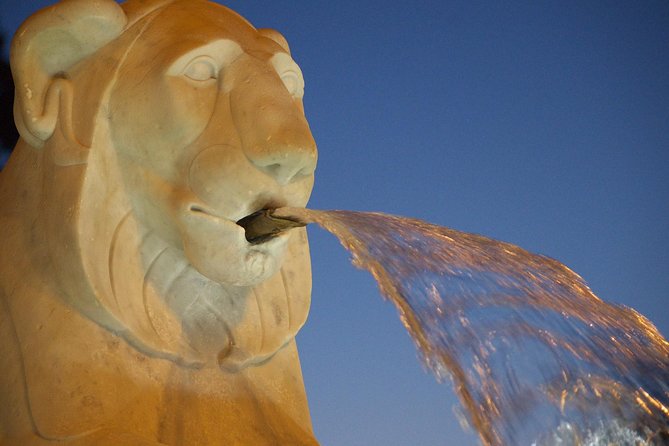
You meet at Fontana dei Leoni, in Piazza del Popolo, with a 5:30 pm start. Expect a small group—up to 20 people—which matters in Rome. When you’re walking between landmarks, smaller groups tend to move with fewer bottlenecks and more time to actually look up and around.
You’ll get a mobile ticket, and the meeting area is near public transport, which helps if you’re combining this with other plans. Service animals are allowed, and the tour is marked for most travelers, so it’s a good fit for people who want a guided overview rather than a super-technical, archaeology-heavy experience.
One more practical note: due to the Jubilee, some monuments may be under restoration, and access routes could change. It’s smart to check your messages before you go, just so you’re not surprised if a path or approach looks a little different than you expected.
Piazza del Popolo: A Wide Start With a Name That Means People
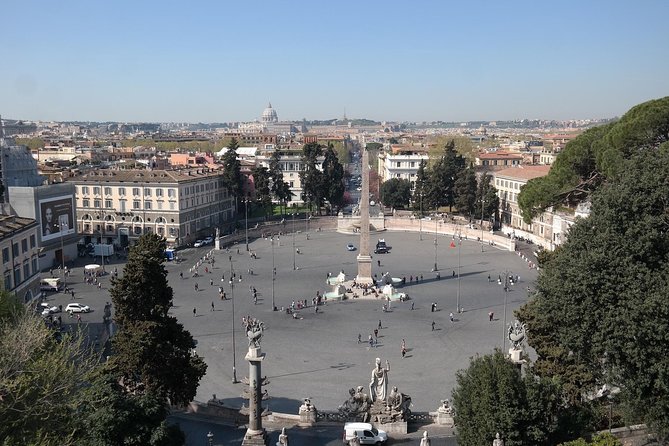
The walk begins at Piazza del Popolo, one of Rome’s big urban squares. The name in modern Italian literally means People’s Square, but it comes from the poplars—populus in Latin and pioppo in Italian—linked to Santa Maria del Popolo on the northeast corner. That little etymology detail is the kind of thing a good guide pulls out, and it instantly makes the square feel less generic.
This is also a strong place to start because it gives you a sense of scale. You’re not immediately climbing stairs or squeezing into narrow passages. Instead, you get a calm launchpad, and you can orient yourself for what comes next.
Piazza di Spagna and the Spanish Steps: Diplomacy, Design, and 135 Steps
Next up is Piazza di Spagna, at the base of the Spanish Steps. It’s famous for the way it sits in the city’s walking and meeting flow, and the name has a clear origin: the nearby Palazzo di Spagna was the seat of the Spanish embassy to the Holy See. There’s also the Column of the Immaculate Conception of the Blessed Virgin Mary—another reminder that Rome is always mixing art, religion, and politics in the open.
Then you hit the stairs themselves. The Spanish Steps rise between Piazza di Spagna and Piazza Trinità dei Monti, with the church of Trinità dei Monti dominating the top. The monumental stairway has 135 steps and was built in 1723–1725 by Étienne Gueffier, a French diplomat. The design credits go to architects Francesco de Sanctis and Alessandro Specchi—so when you’re looking at the geometry of the place, you’re looking at a planned, intentional piece of urban theater.
Practical tip: the steps are steep, and sunset can draw more foot traffic. Pace yourself, and plan to pause for photos without blocking others. This is one of those Rome moments where the views are part of the point.
Trevi Fountain at Golden Hour: Baroque Size and Cultural Pop Power
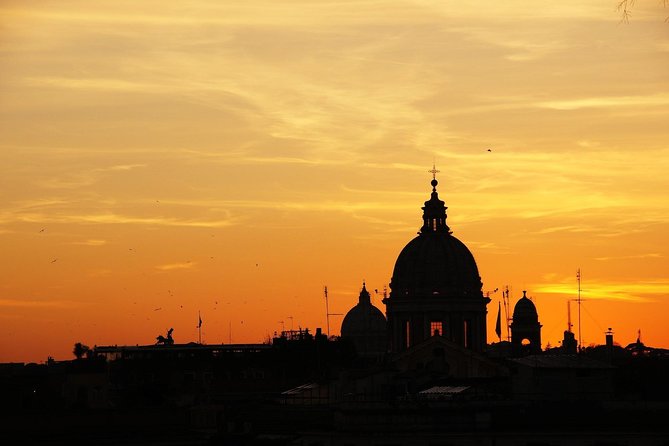
After the Spanish Steps area, you reach Trevi Fountain—Fontana di Trevi—one of the most recognizable sights in the world. It’s an 18th-century Baroque fountain designed by Nicola Salvi and completed by Giuseppe Pannini and others. What hits you isn’t just fame; it’s size. It measures 26.3 meters high and 49.15 meters wide, making it the largest Baroque fountain in Rome.
It also has serious pop-culture gravity. The fountain has appeared in films like Roman Holiday (1953), Three Coins in the Fountain (1954), La Dolce Vita (1960), Sabrina Goes to Rome (1998), and The Lizzie McGuire Movie (2003). When you know that, the fountain stops feeling like a postcard and starts feeling like a stage that Rome keeps letting Hollywood use.
The best viewing strategy is simple: don’t stare straight in one direction for the entire time. Move a bit, change your angle, and take in the whole composition. A good guide can point out what to look for so you’re not just snapping shots until your arms are tired.






The Pantheon: Ancient Temple to Church That Still Pulls People In
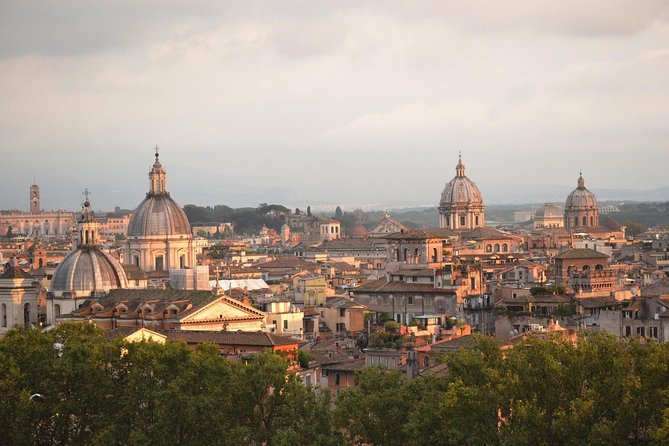
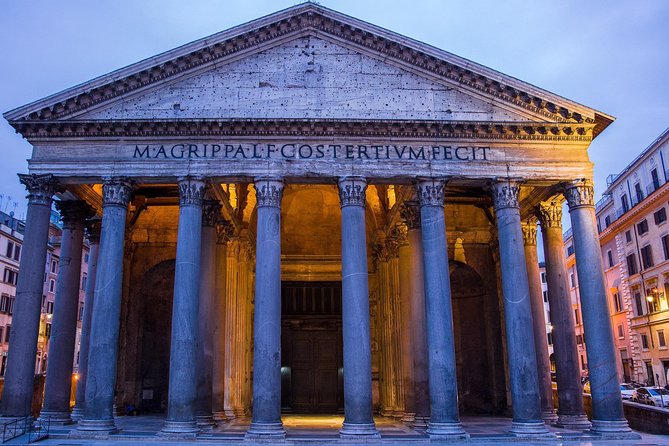
From Trevi, the route brings you to the Pantheon—a former Roman temple that has been a Catholic church since 609 AD. Its current role is listed as Basilica di Santa Maria ad Martyres (also known as Basilica of St. Mary and the Martyrs). That simple timeline is powerful: you’re standing on a site with layers, where one era’s meaning becomes another era’s worship.
The earlier temple on the site was commissioned by Marcus Agrippa during the reign of Augustus. So even if you’re not an ancient-architecture nerd, you’ll appreciate the scale of time here. A guide who can connect those dots makes the stop feel alive rather than like a quick checkbox.
Practical note: the Pantheon can be a magnet for crowds at many times of day. Sunset timing helps with atmosphere, but you’ll still want a calm, patient mindset—look, listen, then move.
Piazza Navona: Where a Roman Stadium Still Shapes the Square
The tour finishes at Piazza Navona, a public open space built on the site of the Stadium of Domitian from the 1st century AD. The layout follows the shape of the original stadium, which means your eye can trace the old form even though the setting is modern.
Rome loves naming stories, and Piazza Navona has one. In ancient times, people went there to watch the agones (games). The name is believed to have evolved over time from Circus Agonalis to in avone to navone, and eventually to navona. That’s the kind of detail that makes a final stop feel satisfying: you’re not just ending at a pretty square; you’re ending where something once had a job.
If you want a finale that feels like you can take a breath, this is it. You end in a place designed for lingering—people watching, street energy, and that last look back at the city.
The Appetizer Break: Snacks, Soda, Water, and a Traditional Taste
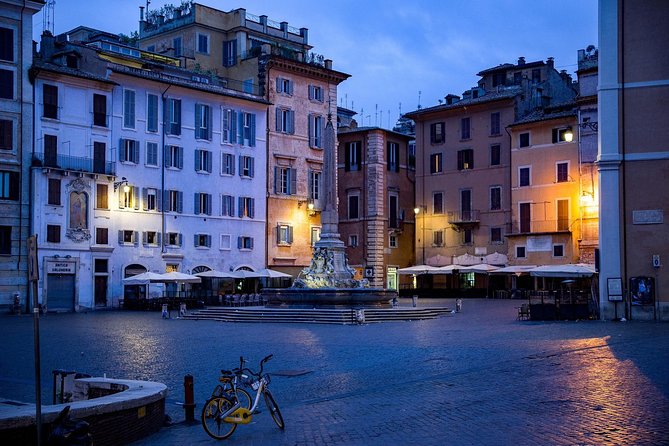
One of the smart parts of this experience is that it doesn’t ask you to power through Rome on vibes alone. Bottled water, snacks, and soda/pop are included. Then you also get a small traditional Italian appetizer at the end of the sightseeing.
That food stop is more than a perk. It turns the tour into a full evening rhythm: walk, look, learn, then settle down for a quick bite. It also helps if you’re doing multiple things in Rome that same day and need a simple reset.
The guide’s energy can make this moment better, too. People have praised guides like Luca for making the end taste good and feel thoughtful, and Anastasia for balancing classic sights with less crowded side streets.
Guides Make the Difference: How Q&A Improves the Whole Walk
A sunset tour can be beautiful, but it can also become background music if the guide stays quiet. This is why I’d pick this style of tour: it’s built for questions and conversation, not just one-way storytelling.
You’ll see that reflected in the guide feedback tied to names like Titziana Pischedda, who’s described as friendly and great at answering questions with real site knowledge. Others have highlighted Anastasia for making space for you to see both the classics and some less-trodden corners that break up the usual crowd flow. Even Luca has been singled out for combining an excellent experience with an appetizer that actually hits.
In plain terms: the best part of guided walking in Rome is when the guide helps you notice what you’d otherwise miss.
Price and Value: What $79.87 Buys You in Rome
At $79.87 per person for about 3 hours, you’re paying for three things: a focused route, live guidance, and included refreshments. This isn’t just a self-guided “see these places” list. You’re getting a structured walk that strings together Piazza del Popolo, Piazza di Spagna, Trevi Fountain, the Pantheon, and Piazza Navona—with a payoff at the end.
Value improves when you compare it to the cost of doing the sights one by one on your own while also paying for drinks and snacks. Here, bottled water, soda/pop, snacks, and an appetizer are included, which can take the edge off evening hunger.
What isn’t included is also straightforward: hotel pickup/drop-off and gratuities are not included. So you’ll want to plan how you’re getting to the starting point at Piazza del Popolo.
Who This Sunset Tour Is Best For
This fits first-timers and repeat visitors alike, especially if you want a guided route that hits major landmarks without turning into an all-day marathon. If you like piazzas, stairs, fountains, and church-adjacent stops, this evening line is a natural match.
It also works well for people who want history explained in a human way—like why a square’s name connects to poplars, why a stairway was built in the early 1700s, or why an ancient temple became a church. And if you enjoy food moments in the middle of sightseeing, the appetizer ending is a nice rhythm.
If you have limited mobility or you don’t like steep stairs, you should think hard about the Spanish Steps and the fact that the overall experience is still a walking tour. The duration is only about three hours, but Rome’s surfaces and steps can add up.
Should You Book This Sunset in Rome Walk?
Book it if you want a simple plan that delivers Rome’s famous faces in one evening, with an included food break and a guide who can answer questions. The route makes sense, the timing is good for atmosphere, and the max 20 group size keeps it from feeling like you’re in a human stampede.
Skip it or switch dates if weather looks iffy, since the tour requires good conditions. Also consider booking only if you’re comfortable with a steady walking pace and at least one major stair area.
If you’re building an evening in Rome and want something that feels organized but still very Roman, this sunset piazzas walk is one of the more practical ways to do it.
FAQ
How long is the sunset tour in Rome?
The tour lasts about 3 hours.
What time does the tour start?
The start time is 5:30 pm.
Where do I meet the guide?
You meet at Fontana dei Leoni, Piazza del Popolo, 00187 Roma RM, Italy.
Where does the tour end?
The tour ends at Piazza Navona, 00186 Roma RM, Italy.
What’s included in the price?
Included items are bottled water, snacks, soda/pop, and a small traditional Italian appetizer.
What happens if the weather is bad or I need to cancel?
The tour requires good weather. If it’s canceled due to poor weather, you’ll be offered a different date or a full refund. You can cancel for a full refund up to 24 hours before the experience start time.