REVIEW · ROME
Small Group Rome’s Jewish Ghetto and Trastevere Tour
Book on Viator →Operated by City Stories Tours · Bookable on Viator
Rome changes when you change neighborhoods. This small-group walk threads Jewish Ghetto history with the mood of Trastevere’s side streets.
You’ll see major sights along the way, guided by stories that connect architecture, power, conflict, and daily life in Rome.
I especially liked the 15-person group size, which keeps questions from getting lost in the crowd. I also loved how the guide (think Ben or Alethia) tells the history with clear structure and a respectful tone, so the difficult parts land without turning into something dry.
One thing to plan for: you won’t go inside the synagogue. The tour shows you the Tempio Maggiore di Roma from the outside, so if interior access matters to you, you’ll want a separate visit.
In This Review
- Key Highlights You’ll Feel on the Walk
- How This 2.5-Hour Walk Connects the Jewish Ghetto to Trastevere
- Meeting Point at Saint Rita of Cascia in Campitelli, Ending in Trastevere
- Teatro di Marcello and Il Portico di Ottavia: Rome’s Big-City Stage Before the Ghetto
- The Roman Ghetto: Street-Level History, Not a Lecture
- A practical tip
- Fontana Delle Tartarughe: A Beautiful Pause That Still Has a Story
- Tempio Maggiore di Roma From the Outside: What to Notice
- Trastevere Alleyways: Bohemian Streets After the Ghetto’s Heavy Weight
- Where the tour naturally leads
- Isola Tiberina Break and Pont Fabricius: Why the River Matters
- Price and Value: Is $36.05 Worth It?
- Who This Tour Fits Best (and Who Might Want Another Option)
- Tips to Get More Out of the Experience
- Should You Book This Small Group Jewish Ghetto and Trastevere Tour?
- FAQ
- How long is the tour?
- What does it cost?
- Is the synagogue visited inside?
- Is there time for gelato or drinks?
- How many people are in the group?
- Can I cancel and get a full refund?
Key Highlights You’ll Feel on the Walk
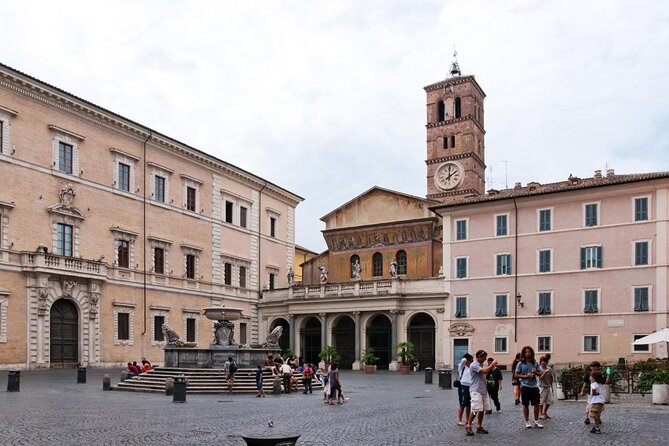
- Small group capped at 15 for better pacing and room to ask questions
- A guide who handles hard history with care, plus wit that keeps it human
- Teatro di Marcello + Il Portico di Ottavia as early anchors before you reach the Ghetto
- Trastevere after the Ghetto, so you see how Rome’s present-day street life grew from earlier eras
- Isola Tiberina break for optional gelato or coffee/drinks while the guide ties in a 2,500-year story
How This 2.5-Hour Walk Connects the Jewish Ghetto to Trastevere
This tour works because it doesn’t treat the Jewish Ghetto and Trastevere like two unrelated checkboxes. You move from Roman ruins and ancient remnants to a neighborhood shaped by centuries of exclusion and resilience, then you step into Trastevere’s lively streets where life clearly keeps going.
The timing also helps. At about 2 hours 30 minutes, you get enough time to learn what you’re seeing, without feeling like the day gets swallowed by walking. It’s the kind of outing that leaves you better oriented for the rest of Rome, not stuck with a pile of facts you can’t place.
You can also read our reviews of more tours and experiences in Rome.



Meeting Point at Saint Rita of Cascia in Campitelli, Ending in Trastevere
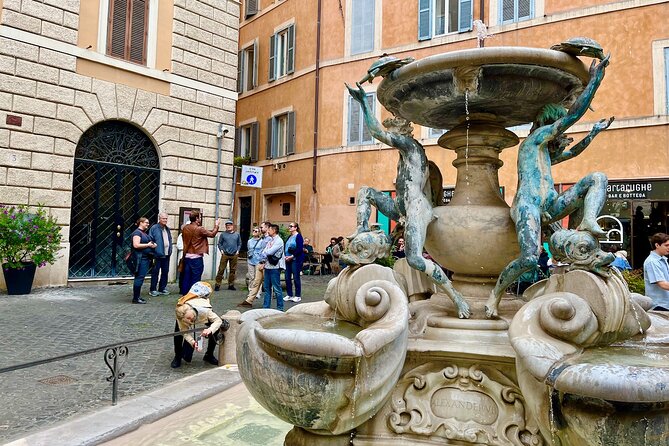
You start at Saint Rita of Cascia in Campitelli (Via Montanara, 00186 Roma). The finish is in Piazza Trilussa in Trastevere (with direction help given by your guide at the end).
I like tours that end where you actually want to wander next. Trastevere is one of those places where you’ll naturally keep exploring after the last stop—so having the tour taper out right in the neighborhood makes it easy to turn learning into a mini self-guided evening.
Teatro di Marcello and Il Portico di Ottavia: Rome’s Big-City Stage Before the Ghetto
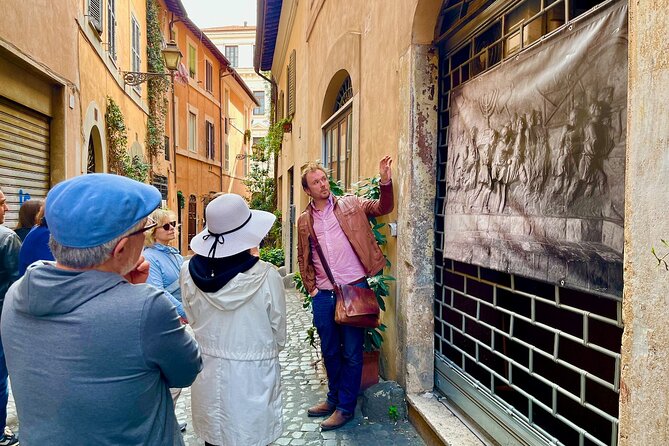
Before you hit the Jewish Quarter, the walk introduces two structures that make Rome’s layers feel real.
At Teatro di Marcello, you’ll see one of Rome’s famous ruins and get help understanding why it matters. Even if you only know it as an impressive leftover, the guide’s explanation helps you picture what Roman public life looked like when this wasn’t “just a ruin.”
Then you stop at Il Portico di Ottavia, a site with a long timeline. The story here is that its role has shifted over more than 2,000 years, beginning at a foundation dating back to the 1st century BC. This matters because it sets up how Rome can reuse space and meaning—sometimes to protect, sometimes to control.
The Roman Ghetto: Street-Level History, Not a Lecture
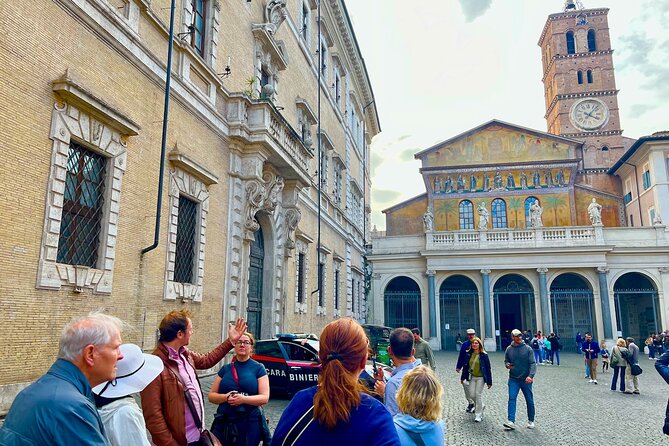
The heart of the tour is the Roman Ghetto, centered where you can still feel how carefully the neighborhood’s identity was shaped. Expect about 50 minutes focused on the Jewish community’s story in Rome—stretching back over 2,000 years.
What I’d call the real value here is not just the timeline. It’s the way the guide connects what you see on streets and buildings to the lived experience behind it. You’re learning how policies and power played out in everyday life, and you get real context for why certain moments were so difficult.
Also, this is one of the most sensitive parts of Rome to get wrong. The best part of this tour is the tone: respectful, clear, and never trying to turn tragedy into entertainment. Guides on this route (including Ben, Alethia, and others who’ve led the group) are praised for doing exactly that—honoring history while keeping it understandable.
A practical tip
If you’re the type who likes to ask questions, bring them. This is the moment where questions make sense. The small-group size helps because your guide can actually answer you instead of moving on like a conveyor belt.






Fontana Delle Tartarughe: A Beautiful Pause That Still Has a Story
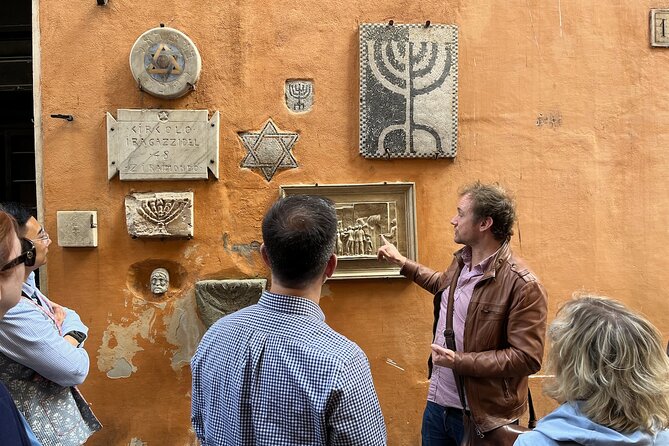
After the heavier material, the walk shifts to lighter visual energy with Fontana delle Tartarughe. This stop is short—just about 5 minutes—but it’s a useful reset.
Your guide explains the fountain’s story, which helps you see it as more than a pretty photo spot. I like stops like this because they remind you Rome’s history isn’t only dramatic events; it’s also everyday art, symbols, and local traditions.
If you’re pacing yourself through the tour, this kind of break is a smart time to breathe, check your map, and get ready for the next historical shift.
Tempio Maggiore di Roma From the Outside: What to Notice
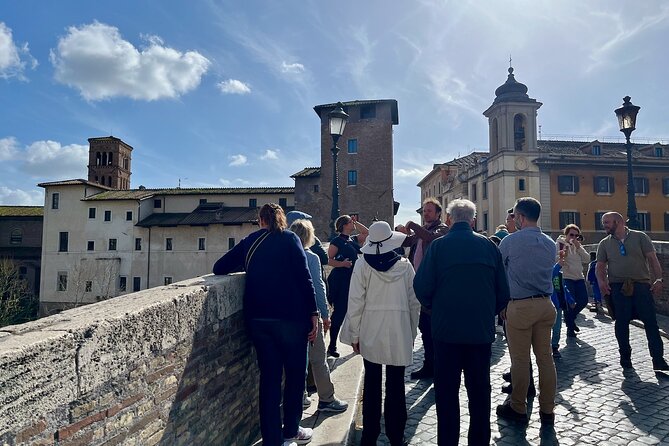
You’ll see the Tempio Maggiore di Roma—Rome’s Great Synagogue—from the outside. The guide focuses on the meaning behind the decoration and the construction choices you can observe without entering.
This outside-only approach is not a dealbreaker for most people, especially if you’re happy to use the tour as an orientation. It’s also a good way to keep the tour moving smoothly through a dense neighborhood where interior access may not be part of the plan.
Still, it’s worth flagging: if you specifically want to tour inside, plan that separately. The tour experience itself is designed for the street-level understanding first, not an interior visit.
Trastevere Alleyways: Bohemian Streets After the Ghetto’s Heavy Weight
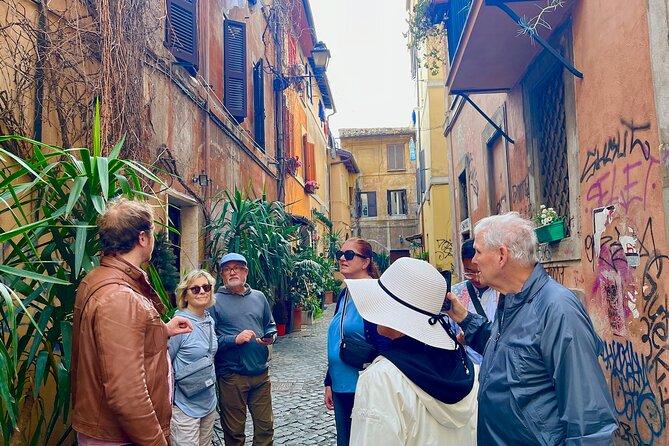
Then you step into Trastevere, which is where the tour earns its second identity.
Expect about 1 hour of walking through narrow lanes and charming streets in a neighborhood known for a bohemian feel. What I like about the way this part is taught is that it doesn’t float above the earlier stops. Your guide gives background so Trastevere feels connected to how Rome evolved, not like a theme park district.
In reviews tied to this tour, guides like Ben and Alethia are repeatedly praised for making the atmosphere work—explaining significance behind shop signs and street details you’d likely miss on your own. You finish this section feeling like you can actually walk Trastevere with confidence, not just wander blindly.
Where the tour naturally leads
Since the tour ends in Trastevere, you’ll have time right after to follow your guide’s suggestions on food and sweets. For example, there are specific mentions of ricotta and cherry pie stops after the walk, plus advice for gelato.
Isola Tiberina Break and Pont Fabricius: Why the River Matters
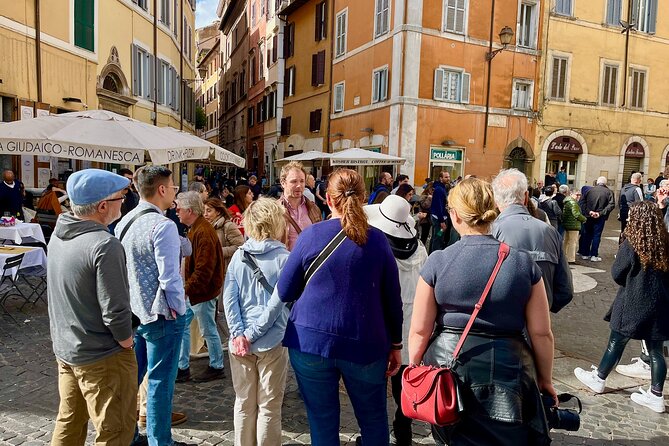
Two of the tour’s stops revolve around the river and the sites that helped shape Rome’s movement.
First comes Isola Tiberina. You’ll have an optional break for gelato or coffee/drinks for around 15 minutes before your guide tells stories tied to the island’s long past—spanning about 2,500 years.
I like this pause because it lets the history settle. If you’ve been walking through emotionally heavy context, a short refresh makes the next part more enjoyable rather than exhausting.
Then you visit Pont Fabricius, one of Rome’s oldest bridges. The guide explains why it’s significant to the city, and the stop gives you a different angle on the same theme: Rome as a place that keeps using its infrastructure and repurposing what worked before.
This is the kind of sightseeing that helps you understand why Rome’s “past” is still built into the way the city functions today.
Price and Value: Is $36.05 Worth It?
At $36.05 per person for about 2.5 hours, this tour feels priced for real value—especially because the stops are mostly free and the guide is the main cost driver.
You’re paying for:
- An expert guide who can connect sites into a story
- Small-group flow (max 15 travelers) that usually means better attention
- A structured route that covers Jewish Ghetto + Trastevere in one outing
Also, a bunch of stops have no admission required during the tour time. Even without chasing museum entries, you still get major landmarks and neighborhood interpretation—often what people struggle with most when they plan Rome solo.
If you’re trying to decide between DIY walking and a guided route, I’d frame it like this: the tour is a shortcut to understanding. Instead of spending time wondering what you’re looking at or which streets matter, your guide gives you the why.
Who This Tour Fits Best (and Who Might Want Another Option)
This tour is a strong pick if you want:
- A sensitive, story-driven intro to the Jewish Ghetto
- A clear connection from history into day-to-day Rome via Trastevere
- A guide who’s comfortable handling questions without losing the thread
It’s also ideal if you like neighborhood tours over big-ticket attractions. You get both ancient anchors (like Teatro di Marcello) and street-level context.
You might consider a different option if:
- You specifically need an inside visit to the synagogue (this one is outside only)
- You prefer purely scenic wandering with no heavy historical context
Tips to Get More Out of the Experience
A few practical things can make your walk smoother:
- Bring water. There’s a break for drinks/snacks, and you’ll appreciate it during the Trastevere stretch.
- Wear comfy walking shoes. These areas involve narrow streets and stones.
- Have 2–3 questions ready for the Ghetto section. This is the part where your curiosity will pay off fastest.
- After the tour, plan to continue on foot in Trastevere. The route ends in a place that makes it easy to keep the momentum going.
Should You Book This Small Group Jewish Ghetto and Trastevere Tour?
I’d book it if you want a small-group guide-led walk that treats Jewish history with care and turns Rome’s neighborhoods into something you can actually read. The standout strength is the storytelling—done with respect, shaped into a route that makes sense, and delivered by guides like Ben or Alethia who balance emotion with clarity and even humor.
Book it with one caveat in mind: you’ll see the Tempio Maggiore di Roma from the outside. If you want interiors, treat this tour as your first orientation and plan a separate visit for inside access later.
FAQ
How long is the tour?
The tour runs for about 2 hours 30 minutes.
What does it cost?
The price is $36.05 per person.
Is the synagogue visited inside?
No. The Tempio Maggiore di Roma is viewed from the outside only.
Is there time for gelato or drinks?
Yes. There is an optional break on Isola Tiberina where you can get gelato or coffee/drinks.
How many people are in the group?
The tour is limited to a maximum of 15 travelers.
Can I cancel and get a full refund?
Yes, you can cancel up to 24 hours in advance for a full refund. If you cancel less than 24 hours before the start time, the amount paid is not refunded.