REVIEW · ROME
Skip-the-Line Vatican Museum, Sistine Chapel & St Peter Basilica
Book on Viator →Operated by Tours and the City · Bookable on Viator
This is the fastest route to the Vatican’s biggest hits. You get skip-the-line entry into the Vatican Museums and Sistine Chapel, plus a direct pass to St Peter’s Basilica, with context that helps it all click. I also love the Cortile della Pigna stop, because it gives you a calm breather inside the museum maze.
Even with a small group capped at 20, the Vatican can still feel packed. Expect a steady pace and some crowd noise in the most popular rooms, so you’ll get the most out of this if you’re okay moving from highlight to highlight.
In This Review
- Key takeaways before you go
- Price and value: what $107.68 buys you in real time
- Meeting point and pace: how the logistics affect your experience
- Vatican Museums: seeing the best rooms without getting lost
- Cortile della Pigna: the calm break you’ll remember
- Gallery of Maps: why a 16th-century room still feels modern
- Raphael Rooms (Stanze di Raffaello): the shortcut to understanding High Renaissance
- Sistine Chapel: how to handle crowds and still see the art
- St Peter’s Basilica: direct access, no dome, and no guided walk inside
- Crowd reality check: what to expect from a small-group tour
- Guides: who you might get, and how to make the most of them
- Should you book this Vatican skip-the-line tour?
- FAQ
- How long is the tour?
- What is included for skip-the-line access?
- Is the dome at St Peter’s Basilica included?
- Will I get a guided tour inside St Peter’s Basilica?
- What language is the tour offered in?
- What group size should I expect, and can I bring a large bag?
- Where do I meet, and where does the tour end?
- Are headsets included?
- What if parts of the Vatican are closed on the day I go?
Key takeaways before you go
- Skip-the-line coverage: Vatican Museums + Sistine Chapel, plus direct access to St Peter’s Basilica.
- Headsets included so you can hear the guide in busy galleries.
- Cortile della Pigna pause with the famous bronze pinecone sculpture.
- Gallery of Maps for Renaissance cartography (Pope Gregory XIII and Ignazio Danti are part of the story).
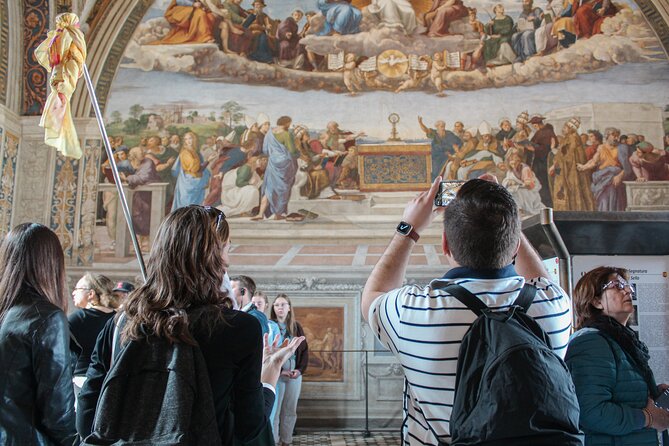
- Raphael Rooms focus on four interconnected chambers, including The School of Athens.
- Good “big picture” timing, but you won’t get St Peter’s dome access (and the chapel is the main event).
Price and value: what $107.68 buys you in real time
At $107.68 per person for about 2 to 3 hours, this tour is priced for one big thing: time saved. The Vatican lines can swallow half a day if you’re doing everything on your own. Here, you’re paying for guided entry where the bottleneck is hardest—then using that saved time to actually see the standout rooms.
You also get more than ticket access. The tour includes a guided walkthrough, headsets for clearer listening, and introductions before you step into the Sistine Chapel and St Peter’s Basilica. That matters, because these places are not just visually impressive—they’re full of names, symbolism, and background that you’ll miss if you only wander.
The one trade-off: this is a highlight route. If your dream is to linger for hours in one room, you’ll still want a plan for extra time after the tour ends.
You can also read our reviews of more museum experiences in Rome



Meeting point and pace: how the logistics affect your experience
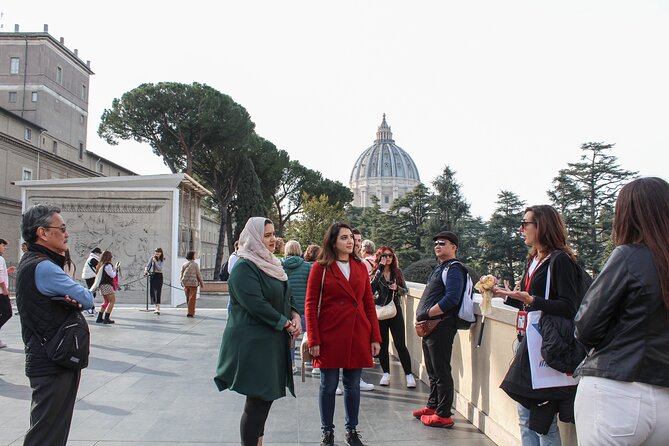
You meet at Caffè Vaticano on Viale Vaticano 100. The tour ends in St Peter’s Square (Piazza San Pietro) if the access gate from the Vatican Museums is open; otherwise it ends back at the starting area near Viale Vaticano. That detail sounds minor, but it changes how smoothly you can transition into independent sightseeing afterward.
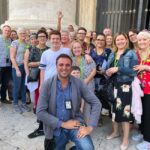
The group size is capped at 20, which is a big deal in the Vatican’s crowds. Smaller groups tend to move with fewer bottlenecks, and the guide can keep everyone together. Still, you’ll do a fair bit of walking. This tour is built around “see the core,” not “slow stroll and stare in every corner.”
One more practical note from the experience: headsets help a lot. A few guide delivery issues (like heavy accents) show up in reviews, but most people report that the audio setup keeps things understandable.
Vatican Museums: seeing the best rooms without getting lost
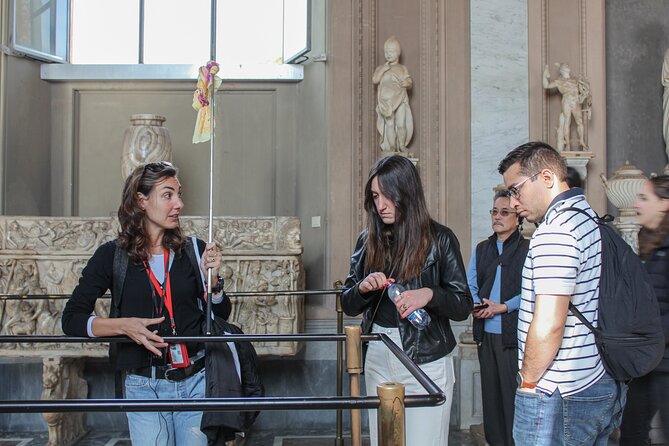
The Vatican Museums cover an enormous amount of space—think dozens of galleries and many kilometers of walking. Trying to plan that alone often turns into one of two problems: you miss the real standouts, or you spend too long fighting crowds for basic orientation.
On this tour, you get the museum experience with direction. You’re guided through key areas, including spaces such as the Belvedere Courtyard, and you’re routed to move efficiently toward the rooms people actually travel to see.
Here’s what I like about this approach. The museums can feel like a blur of marble and brushstrokes if you don’t have a map for what to notice. With a guide, you’re listening for the “why” behind what you’re seeing—where the artwork comes from, what it’s trying to communicate, and how the building’s history connects the dots.
Potential drawback: some people want more time in the Sistine Chapel and St Peter’s Basilica compared with the time spent elsewhere in the museums. If that’s you, I’d mentally treat the museum portion as the setup act, not the main performance.
Cortile della Pigna: the calm break you’ll remember
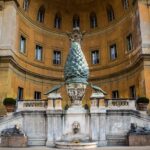
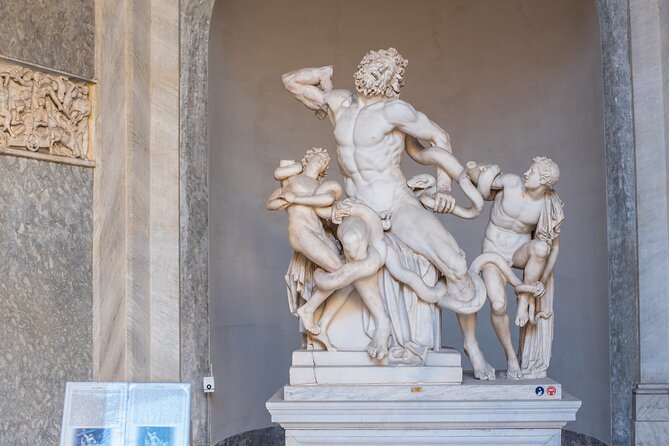
Inside the Vatican Museums you’ll reach the Cortile della Pigna, a courtyard built for a rare feeling in the Vatican: quiet. The courtyard is named for a colossal bronze pinecone at its center, tied to an ancient Roman fountain story.
Why this stop matters in the middle of a museum tour:
- You get to see one iconic piece up close without craning through a sea of heads.
- You’re outdoors, so the light and space reset your brain.
- It’s a moment where the guide’s storytelling can slow down slightly, letting you actually absorb details.
This is also one reason many people come away impressed even if they were nervous about crowded tours. The courtyard creates a mini reset.
Gallery of Maps: why a 16th-century room still feels modern
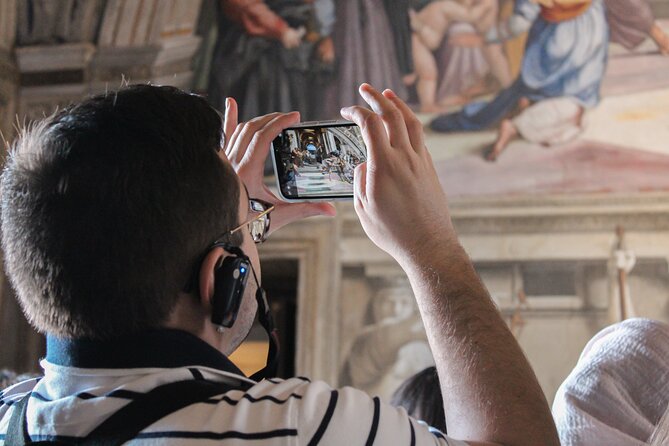
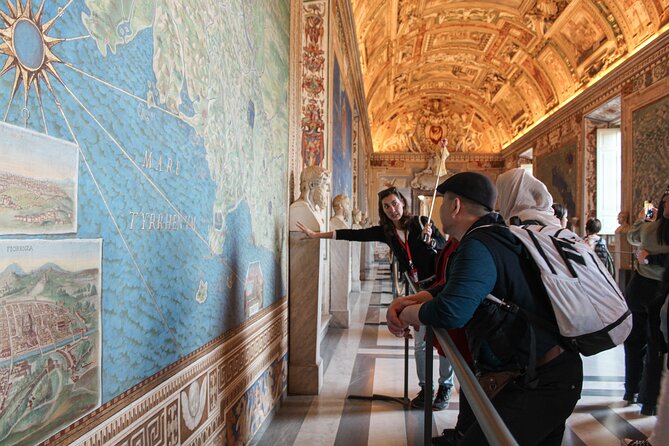
Next up is the Galleria delle Carte Geografiche—the Gallery of Maps. This is not just a collection of pictures. It’s large-scale frescoes showing maps of Italy and its regions as understood in the 16th century.
Two names are key here: the maps were commissioned by Pope Gregory XIII and executed by Ignazio Danti. That background gives you a lens for what you’re looking at: Renaissance cartography as both science and art, with political and cultural meaning baked into the visuals.
If you like details—cities, coastlines, and how people imagined the world at the time—this is the room where the tour rewards your attention. And if you’re more of a big-picture type, it still works, because the guide can connect the maps to the broader context of how the Vatican positioned itself as a keeper of knowledge.
You can also read our reviews of more tours and experiences in Rome
- Skip-the-Line Group Tour of the Vatican, Sistine Chapel & St. Peter’s Basilica
★ 4.5 · 12,779 reviews

Raphael Rooms (Stanze di Raffaello): the shortcut to understanding High Renaissance
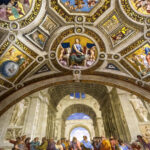
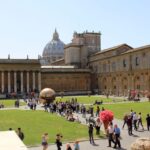
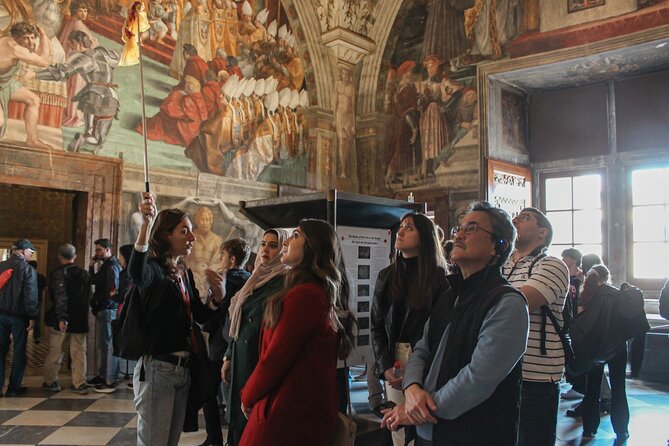
The Raphael Rooms are four interconnected chambers decorated by Raphael and his workshop, commissioned under Pope Julius II. This is where the tour delivers on one of the Vatican’s strongest ideas: masterpiece art in an environment made to frame it.
You’ll hear about the fresco program in each room, and you’ll be guided toward the most famous scene, The School of Athens. Even if you’ve seen that image online a hundred times, seeing it in the room changes the experience. The scale and composition make it feel like a living argument between ideas—philosophy, science, theology, and human curiosity stitched into paint.
A practical upside of having a guide here: the Rooms are visually dense. People can stand in front of a wall and still not know where to look first. With narration, you leave with a clearer sense of what you just saw and why it’s considered central to Renaissance art.
Sistine Chapel: how to handle crowds and still see the art
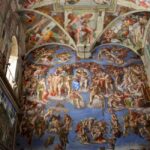
The Sistine Chapel is the highlight that almost everyone is chasing. It’s built in the late 15th century under Pope Sixtus IV, and the ceiling frescoes by Michelangelo were completed between 1508 and 1512. Scenes from Genesis include the Creation of Adam, and the altar wall features The Last Judgment. You’ll also see frescoes by other masters such as Botticelli, Perugino, and Ghirlandaio.
This tour includes an introduction before you enter, which helps you orient fast. And that’s important. Reviews and real-world experience point to a common pattern: the Chapel draws enormous crowds, so even with a guided plan you may feel time-pressure. Some people find themselves wanting a bit more time in the Chapel itself.
My advice: treat the Sistine Chapel like a short but intense meeting. You don’t need to “finish” it to appreciate it. Look for a couple anchor scenes, then let the rest come in waves. If you’re the type who gets frustrated by group movement, know that in this room the pacing is partly about crowd flow.
St Peter’s Basilica: direct access, no dome, and no guided walk inside
This is one of the strongest parts of the package: direct access to St Peter’s Basilica with skip-the-line included. The tour also provides an introduction before you enter, so you’re not stepping in totally cold.
What’s not included is just as important:
- There is no guided tour inside St Peter’s Basilica.
- There is no access to the dome.
That can disappoint people who assumed the tour would include a full church narration and dome climb. The design here is more like: you enter together, get the setup, and then you’re free to explore at your pace afterward.
If you want the dome view, plan a separate add-on. If your goal is the interior—architecture, altars, and the scale of the space—this still works well because the skip-the-line piece gets you inside without the worst delays.
Also, some reviews mention that the tour can end at St Peter’s Square when access from the Museums is open. If it’s not open, you may end back near Viale Vaticano. Either way, you’ll want to take a moment to reset before continuing on your own.
Crowd reality check: what to expect from a small-group tour
A good skip-the-line tour reduces the line time, not the crowd density. The Vatican is busy. Even with headsets and a guide keeping things moving, the busiest rooms can feel loud and tight.
Some travelers specifically warned that the audio can be tricky if the guide has a strong accent. Since headsets are included, you’ll usually be fine, but it’s smart to come with realistic expectations: you’re still in a high-attendance setting.
I’d also read this as a pacing issue. Several comments mention the tour being packed or rushed at times, often tied to crowd pressure or occasional ticket check glitches. Those problems are not the norm, but they do show why it helps to stay flexible.
Guides: who you might get, and how to make the most of them
This tour experience can feel dramatically different depending on the guide, and the reviews include plenty of names you can use as a clue for what kind of storytelling fits you.
For example:
- Lorena is praised for being funny and mixing facts with a lively delivery.
- Francesco gets credit for explaining paintings, maps, sculptures, and pottery in ways that made them feel connected.
- Sylvia and Alfredo are noted for being friendly, focused on keeping the group together, and strong on art context.
- Tatiana is described as delivering an intense overview of Vatican history and art.
- Alessandra is mentioned for engaging explanations and managing the group through crowds.
If you end up with someone whose accent is harder to follow, don’t panic. Keep the headset volume a bit higher than your comfort level and watch the guide’s gestures; that visual cue helps when audio clarity dips.
And if your top priorities are Sistine Chapel and St Peter’s Basilica, you’ll still get those key moments. Just don’t expect to linger for hours during the guided portion.
Should you book this Vatican skip-the-line tour?
Book it if:
- You want Vatican Museums + Sistine Chapel + St Peter’s Basilica in one guided sweep.
- You hate wasting time in lines and want to use your energy on art.
- You like context—names, commissioning details, and what to look for in rooms like the Raphael Chambers and the Gallery of Maps.
- You’re okay with a highlight-route pace.
Skip it (or choose a different format) if:
- You want a slow, flexible tour where you can spend half your time in one room.
- You specifically need dome access in St Peter’s, because it’s not included here.
- You’re very sensitive to crowds and group movement. This package helps with lines, but it can’t erase the Vatican’s popularity.
Overall, this is a strong value for people who want the classics without the waiting—and who appreciate an expert guide pointing your attention at the right details. If that’s your style, this is one of the easiest ways to make a short Vatican visit feel complete.
FAQ
How long is the tour?
The tour runs about 2 to 3 hours.
What is included for skip-the-line access?
You get skip-the-line entry to the Vatican Museums and the Sistine Chapel, plus direct access to St Peter’s Basilica with skip the line included.
Is the dome at St Peter’s Basilica included?
No. Dome access is not included.
Will I get a guided tour inside St Peter’s Basilica?
No. The tour includes an introduction before entering, but a guided tour inside the basilica is not included.
What language is the tour offered in?
The tour is offered in English.
What group size should I expect, and can I bring a large bag?
The maximum group size is 20 travelers, and only small bags are allowed.
Where do I meet, and where does the tour end?
You start at Caffè Vaticano, Viale Vaticano, 100, 00192 Roma. You end at Saint Peter’s Square (Piazza San Pietro) if the gate for access from the Vatican Museums is open; otherwise you end at the starting point.
Are headsets included?
Yes. Headsets are included so you can clearly hear the guide.
What if parts of the Vatican are closed on the day I go?
Certain areas can close due to religious events and national holidays, depending on your visit date.
More Skip the Line in Rome
- Skip-the-Line Group Tour of the Vatican, Sistine Chapel & St. Peter’s Basilica
★ 4.5 · 12,779 reviews