You can walk Rome’s layers in one short outing. This small-group route strings together Trastevere churches, the Jewish Ghetto area, and river-island Rome without rushing. Along the way you’ll see places most visitors skip, and you’ll hear the stories that make them make sense.
I especially like two things here. First, you get up close to a Bernini highlight inside Chiesa di San Francesco a Ripa Grande, centered on the Blessed Ludovica Albertoni. Second, the tour includes entry to Santa Cecilia in Trastevere’s underground site, with special access that adds real weight to the legend of Saint Cecilia.
One thing to consider: this is a walking tour with several short stops (about 2.5 hours total), so you’ll want decent footwear and a bit of patience for narrow streets and stair-and-crypt moments.
In This Review
- Key Highlights You’ll Actually Feel on the Walk
- Why This Trastevere + Jewish Ghetto Route Works
- Stop 1: San Francesco a Ripa Grande and Bernini’s Ludovica Albertoni
- Stop 2: Santa Cecilia in Trastevere and the Underground Apartment Story
- Stop 3: Vicolo Dell’Atleta—Quiet Street Rome with Synagogue History
- Stop 4: Isola Tiberina—River-Island Rome and Julius Caesar Lore
- Stop 5: Il Portico Di Ottavia—Ghetto Streets, Colosseum Origins, and Food Stops
- Price and Value: What $67.72 Buys You
- The Real Logistics You Should Plan For
- Who This Tour Suits Best
- A Note on the Guides You’re Likely to Encounter
- Should You Book This Tour?
- FAQ
- How much does the Rome: Trastevere Hidden Gems and Jewish Ghetto Small Group Tour cost?
- How long is the tour?
- What size is the small group?
- Is the tour offered in English?
- Where does the tour start and end?
- Is hotel pickup included?
- What admission is included during the tour?
- Do I get a mobile ticket?
- What if I need to cancel?
- Is the tour suitable for children and most travelers?
Key Highlights You’ll Actually Feel on the Walk
- Small group (max 12) keeps the pace human and the questions easy
- Bernini inside San Francesco a Ripa Grande gives you a rare art-focused stop
- Santa Cecilia underground access turns a famous saint story into something physical
- Vicolo Dell’Atleta is peaceful street-Rome with synagogue history in plain sight
- Isola Tiberina + Caesar lore adds a river-island twist to the city center
- Il Portico di Ottavia connects the Jewish Ghetto to Rome’s big monuments and everyday food culture
Why This Trastevere + Jewish Ghetto Route Works
Rome has a habit of rewarding the side streets. This tour leans into that. Instead of treating Trastevere and the old Jewish quarter like two separate sightseeing chores, it threads them together with a clear theme: how communities, faith, and power left marks in the same small part of the city.
What you’ll enjoy is the mix of scale. You start with church interiors and specific artworks, then you shift to street corners like Vicolo Dell’Atleta, then you hit a geographic moment at Isola Tiberina in the middle of the river. It’s a smart way to break up Rome’s usual “one big monument after another” rhythm.
And because it’s capped at 12 people, you’re not just following a line. You can actually hear the guide and slow down when something matters.
You can also read our reviews of more tours and experiences in Rome.



Stop 1: San Francesco a Ripa Grande and Bernini’s Ludovica Albertoni
The tour begins at Piazza di San Francesco d’Assisi & Via Jacopa de’ Settesoli. From there, you head to Chiesa di San Francesco a Ripa Grande for the first, art-and-devotion stop.
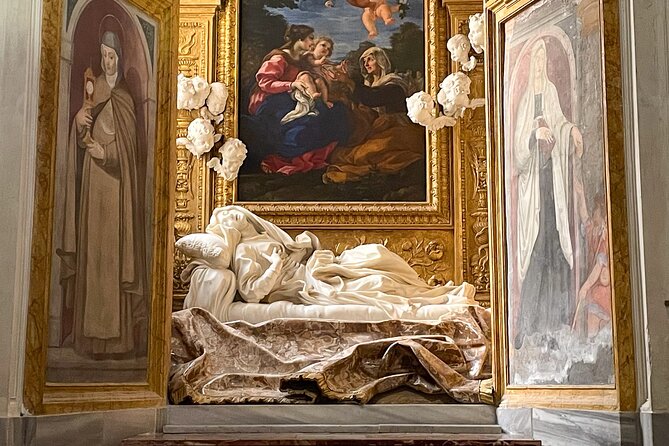
This is where the Blessed Ludovica Albertoni by Bernini comes in. The value of this start is that it sets a tone: you’re not sightseeing random churches; you’re learning how Roman art, worship, and personal spirituality connect. Even if you’re not an art buff, Bernini’s work is the kind that makes you look twice once you’re close enough to notice the details.
Practical note: entry here is free, and the stop is about 30 minutes. That means you can look, listen, and reset without feeling trapped inside.
If you’re the type of traveler who likes your Rome with a bit of “wait, how is this here?” energy, this opening stop is a strong fit. It also helps you ease into the tour before you move into the older neighborhoods.
Stop 2: Santa Cecilia in Trastevere and the Underground Apartment Story
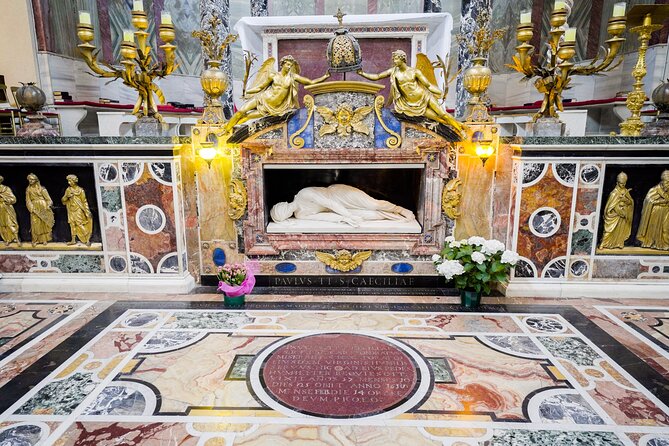
Next is Santa Cecilia in Trastevere, and this is the heart of the experience. The church connects directly to Saint Cecilia, and the tour’s approach is all about layers: different time periods built on top of each other, like Rome’s version of a history sandwich.
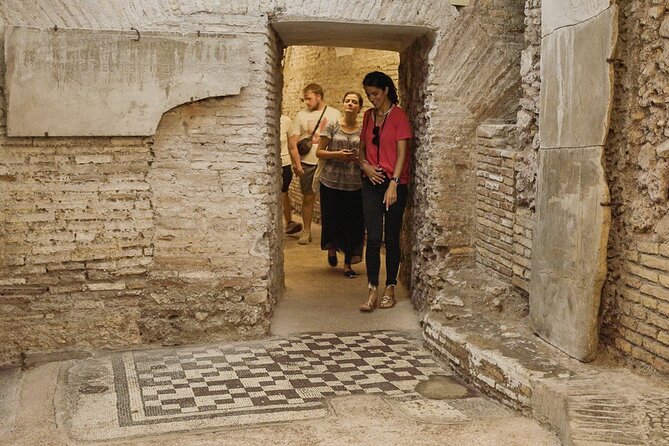
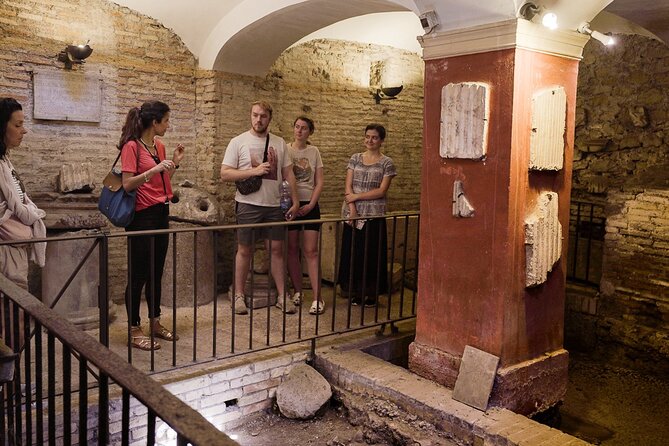
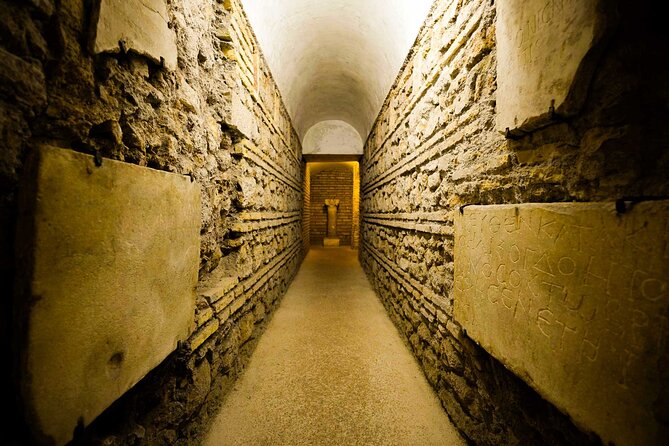
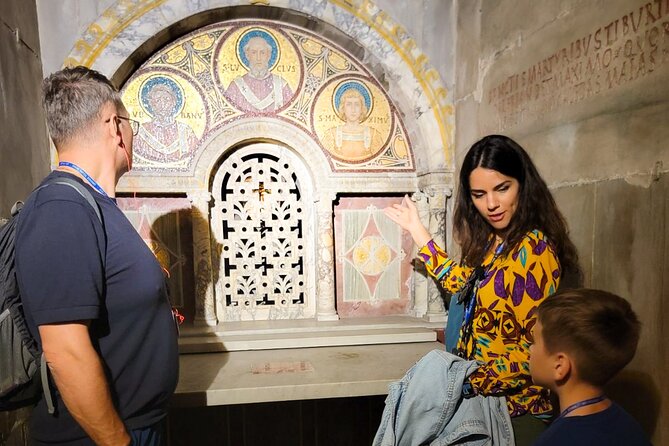
You’ll learn why Cecilia’s story is described as dramatic and resilient—then you’ll be led through the part that most visitors don’t see: the underground area tied to her “ancient apartment.” The tour includes access to this underground site, and it’s paired with the special access by the nuns mentioned in the tour format.
Why that matters: crypts and underground spaces change the emotional temperature. On a surface-level visit, a saint’s story can feel like a date and a legend. Underground, it becomes a space you can stand in. You also get a break from the street noise and daylight-only sightseeing.
This stop lasts about one hour, and the ticket for the underground crypt is included. That’s a real value point. When tours pay for special entry, it usually means less time wasted at ticket lines—or no lines at all for the included portion.
If you want a Rome tour that feels different from the standard checklist, this is the moment that does it.
Stop 3: Vicolo Dell’Atleta—Quiet Street Rome with Synagogue History
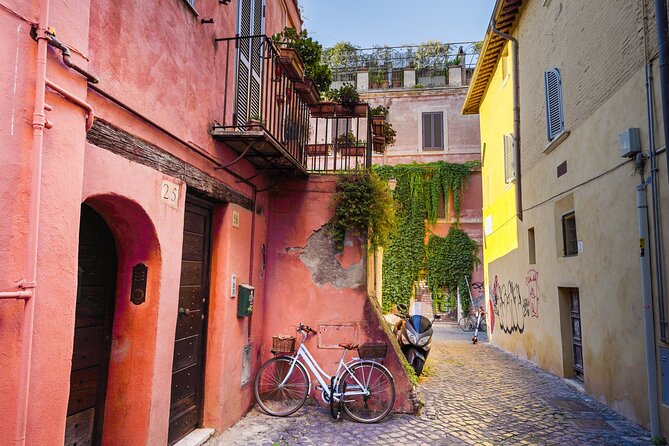
After the church, you move into the city’s quieter rhythm: Vicolo Dell’Atleta. This is one of those narrow alleys that feels like it should be missing from guidebooks. It’s described as beautiful and peaceful, and that matches how it functions on foot: fewer people, more atmosphere, more time to notice small details.
Here’s where history gets interesting in a way that doesn’t require a lecture. The alley connects to the most ancient synagogue of Rome, which today houses a restaurant. You’re basically seeing continuity and change in one glance: sacred space in the past, something lived-in now.
The stop also mentions one of the most ancient athletes of Rome. Even if you don’t memorize the name on the spot, the guide’s job is to connect the street’s physical corners to the people stories that were part of daily life.
This is the stop where I’d recommend you slow down. Look at the street form, not just the plaques. Rome’s “small” lanes often hold the biggest sense of place.
Stop 4: Isola Tiberina—River-Island Rome and Julius Caesar Lore
Then you get a scenic change of pace at Isola Tiberina, the island in the Tiber. It’s one of those locations that makes Rome feel cinematic—because it literally sits in the river’s middle.
On this part of the walk, you’ll hear the lore about what makes this place special, including the idea of where only true Romans are born. You’ll also learn about the bridge where Julius Caesar walked, described as the most ancient bridge in Rome.
Even if you’ve already seen Caesar references elsewhere, this works differently because you’re viewing it from an island perspective. It gives context to why certain places became strategic and symbol-heavy over centuries.
This stop is shorter, about 15 minutes. That’s useful here: you get the payoff without overextending it.



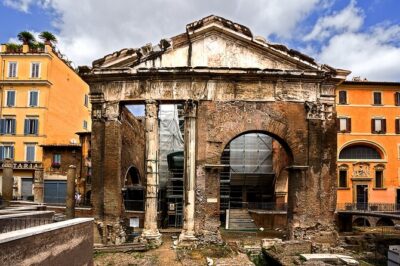
Stop 5: Il Portico Di Ottavia—Ghetto Streets, Colosseum Origins, and Food Stops
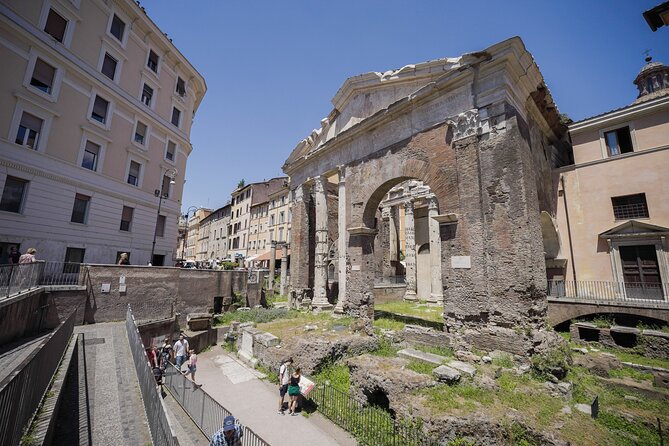
Finally, you reach Il Portico Di Ottavia, which is tied to the Jewish district also known as the ghetto. This is the neighborhood that helps you understand Rome beyond monuments: it’s where community stories and daily life shaped the urban fabric.
One of the most practical and memorable pieces of information here is that you’ll discover a building that inspired the design of the Colosseum. That kind of architectural link makes you see Rome differently. It’s easy to treat big Roman landmarks as isolated icons. This connects them back to neighborhood-scale structures and older urban planning choices.
You’ll also hear about the Jewish community of Rome, described as the most ancient Jewish community of Europe, and you’ll learn how those long timelines show up in what you see and where you walk.
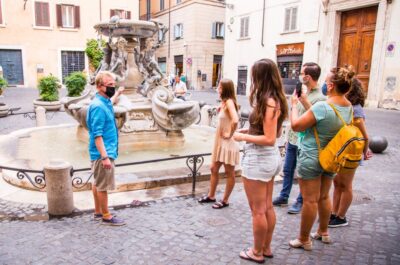
And yes, you’ll get pointed toward food destinations in the area. That matters because it gives you a next step. After the tour ends at Piazza Mattei, you’re not stranded in “okay, now what?” mode. You’ll know where to head for something satisfying.
This last stop lasts about 30 minutes, so it’s long enough to land the story without turning it into a full history seminar.
Price and Value: What $67.72 Buys You
At $67.72 per person for roughly 2 hours 30 minutes, you’re paying for two things: focused guide time and included access. The included underground crypt entry for Santa Cecilia is the biggest value lever. Those spaces can be hard to access casually, and when you’re not scrambling for tickets, your time stays on the experience.
The other value piece is the small group cap of 12. With bigger groups, a tour like this often becomes a “follow and listen from a distance” situation. Here, you get closer to the artworks and the guide can explain with room for questions.
Mobile ticket is also part of the convenience. You don’t need to hunt for paper once you’re there. And since there’s no hotel pickup, the route stays simple and walkable once you’re at the meeting points.
Bottom line: this is priced like a city walk with paid entry value baked in, not like a budget pass-through.
The Real Logistics You Should Plan For
This is designed to be near public transportation, and the meeting spot is at Piazza di San Francesco d’Assisi & Via Jacopa de’ Settesoli. The tour ends at Piazza Mattei, which is helpful because you’re finishing in a lively area tied to the Jewish quarter.
No hotel pickup is included, so plan on getting yourself to the start point. Also, because the route includes churches and an underground site, think about comfort more than fashion. Bring shoes you can trust on uneven stone and steps.
Timing-wise, the tour averages around 2.5 hours, with stops that range from 15 minutes to one hour. You won’t feel stuck for too long anywhere, but you will be on your feet for much of the time.
Who This Tour Suits Best
This tour fits you well if you want:
- A small-group Rome walk with real guide attention
- A blend of art, religion, and neighborhood storytelling
- Included entry to an underground site rather than just a viewpoint photo op
- A route that ties Trastevere’s charm to the Jewish Ghetto in a coherent way
It’s also listed as suitable for children. That doesn’t mean it’s a kid-only experience—just that it’s structured in short, manageable segments rather than one long endurance walk.
If you’re traveling with someone who loves churches but gets bored with pure sightseeing, Santa Cecilia’s underground component is often the part that bridges interest for both kinds of visitors.
A Note on the Guides You’re Likely to Encounter
The tour has earned praise for guides who are personable and strong at explaining Roman history in a way that makes you feel oriented. Names that show up in feedback include Frederica and Francesca, both highlighted for their friendly delivery and solid knowledge of the stories tied to the stops.
If you care about getting more out of each location—what you’re seeing and why it matters—this is the kind of tour where the guide makes a difference.
Should You Book This Tour?
Yes, if you want a Rome experience that feels personal and story-led, not just checkbox-driven. The included underground access at Santa Cecilia plus the Bernini stop creates a nice balance: art you can see, history you can stand in, and streets you can actually enjoy walking.
Skip it (or consider a different option) if you prefer long visits at a single major monument. This tour is intentionally distributed across several stops, with most moments lasting minutes rather than hours.
If you book, I’d recommend planning a relaxed next block after you finish in Piazza Mattei—you’ll likely want time to wander and eat while the stories are still fresh.
FAQ
How much does the Rome: Trastevere Hidden Gems and Jewish Ghetto Small Group Tour cost?
The tour costs $67.72 per person.
How long is the tour?
It runs for about 2 hours 30 minutes.
What size is the small group?
The tour is limited to a maximum of 12 travelers.
Is the tour offered in English?
Yes, the tour is offered in English.
Where does the tour start and end?
It starts at Piazza di San Francesco d’Assisi & Via Jacopa de’ Settesoli, 00153 Roma RM, Italy, and it ends at Piazza Mattei, 00186 Roma RM, Italy.
Is hotel pickup included?
No, pick-up from the hotel is not included.
What admission is included during the tour?
Entry tickets to the underground crypt are included.
Do I get a mobile ticket?
Yes, the tour includes a mobile ticket.
What if I need to cancel?
You can cancel for a full refund up to 24 hours before the experience starts, with free cancellation available.
Is the tour suitable for children and most travelers?
The tour is listed as suitable for children, and most travelers can participate.