REVIEW · ROME
Rome: Traditional Pasta, Spritz & Tiramisu Cooking Class
Book on GetYourGuide →Operated by Global Experiences · Bookable on GetYourGuide
Pasta night in Rome feels like a party. You start with prosecco, learn to shape homemade fettuccine, and finish with classic Roman sauces like carbonara or cacio e pepe plus a choice of tiramisu or spritz, guided by chefs such as Angela or Polina. I especially love the hands-on pasta rolling and the small-group, chef-led pacing. One catch: the menu isn’t designed for gluten-free, vegan, or lactose-intolerant diets.
In about 2.5 to 3 hours, you go from raw ingredients to a real meal, with sips along the way—soft drinks and water are unlimited, and alcohol is part of the experience. You’ll also leave with recipes to take home, which turns this from a one-night food binge into skills you can actually use.
In This Review
- Key things that make this class worth it
- A Rome cooking class that actually feels like Italy’s kitchen
- First sip: prosecco welcome and a quick vibe check
- Choosing your path: tiramisu or spritz (and why it’s smart)
- Rolling fettuccine in real time: from dough to cuts
- Roman sauces: carbonara or cacio e pepe from scratch
- The tasting part: sitting down with wine and letting it land
- What you take home: an ebook of recipes (so it’s not just a one-off)
- Drinks, wine, and the role of alcohol in the experience
- Small group size and the chef-led effect
- Pricing and value for a $100.82, 2.5–3 hour food-and-drink lesson
- Who this class suits best (and who should think twice)
- Diet limits you need to know before you book
- Practical tips to make your evening go smoothly
- The bottom line: should you book this Rome pasta class?
- FAQ
- How long is the cooking class?
- What do I make during the class?
- Do I get a choice of pasta sauce?
- Are vegetarian options available?
- Is the class suitable for vegans or gluten-free diets?
- What drinks are included?
- Is there an alcohol-free option?
- Will I get recipes to take home?
- Is this a small group experience?
Key things that make this class worth it

- Prosecco welcome and drink pairing as the night gets going
- Two menu paths: tiramisu or spritz, then everyone makes pasta
- Roman sauce choice: carbonara or cacio e pepe from scratch
- Chef personalities shine (multiple reviews call out specific hosts like Jem, Ida, and Ben)
- Hands-on assembly style with real work, not just watching
A Rome cooking class that actually feels like Italy’s kitchen
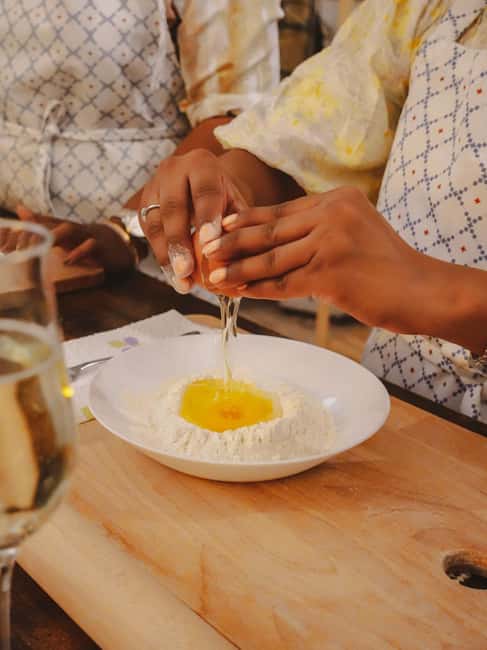
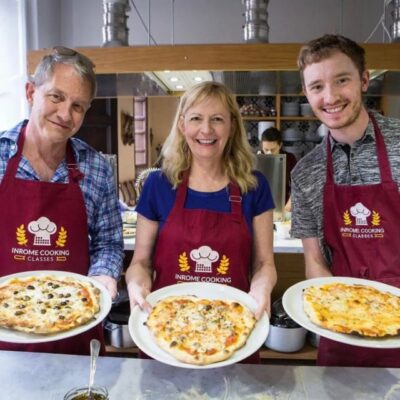
This isn’t a museum-style food demo. It’s a warm, practical class where you roll dough, cut pasta, cook sauce, and then sit down to eat what you made. That hands-on structure matters: it turns Italian cooking from something you admire into something you can repeat at home.
The other big reason I like this format is the pacing. You’re never stuck waiting forever. You start with drinks and introductions, then cooking tasks come in a steady order: dessert or spritz first, pasta second, sauces third, then the meal.
And because it’s based in the Lazio area (with a Rome focus), the menu feels like the food you actually associate with the city—things like Roman pasta shapes and signature sauce styles, not generic “Italian-American” dishes.
You can also read our reviews of more cooking classes in Rome

First sip: prosecco welcome and a quick vibe check
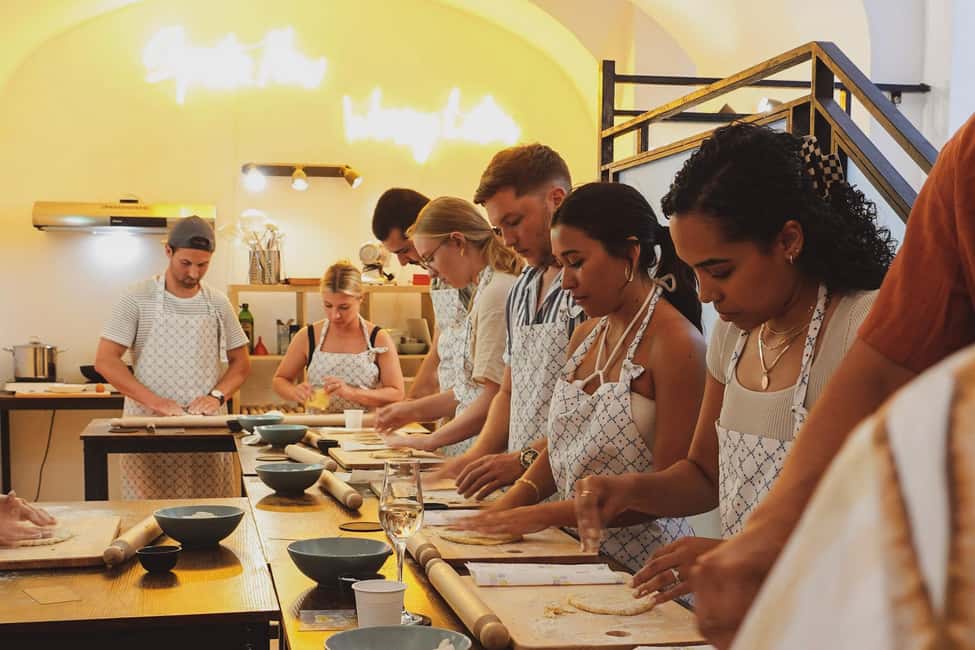
Your class begins with a warm welcome over a glass of prosecco. It’s a simple start, but it does two useful things: it slows the nerves down, and it signals that you’re here for fun as well as food.
After you meet your chef and the rest of your group (unless you booked private), you’ll get oriented to the evening’s flow. English is the class language, so you should feel comfortable following steps and asking questions while you cook.
If you’re the type who likes a lively room, this is a good fit—reviews mention upbeat music and a “good vibes” atmosphere. If you want quiet and minimal talking, you might find it a little more social than a typical kitchen tour.
Choosing your path: tiramisu or spritz (and why it’s smart)
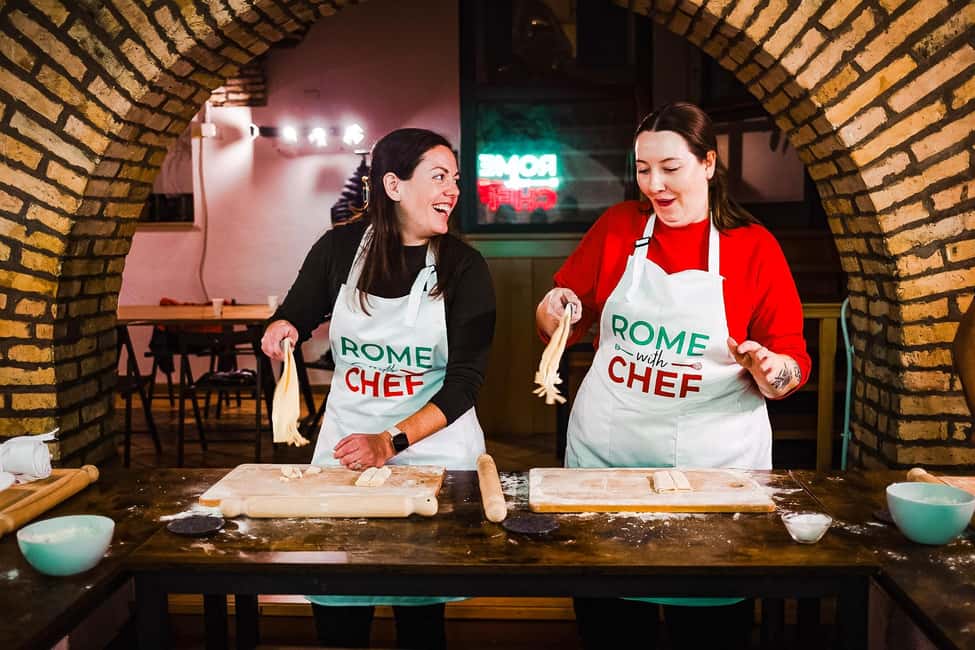
Right after introductions, you choose between making tiramisu or spritz. This choice is more than a gimmick. It gives you a second focus beyond pasta, so the class feels complete even if you’re not obsessed with dessert.
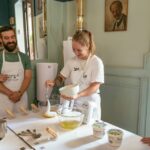
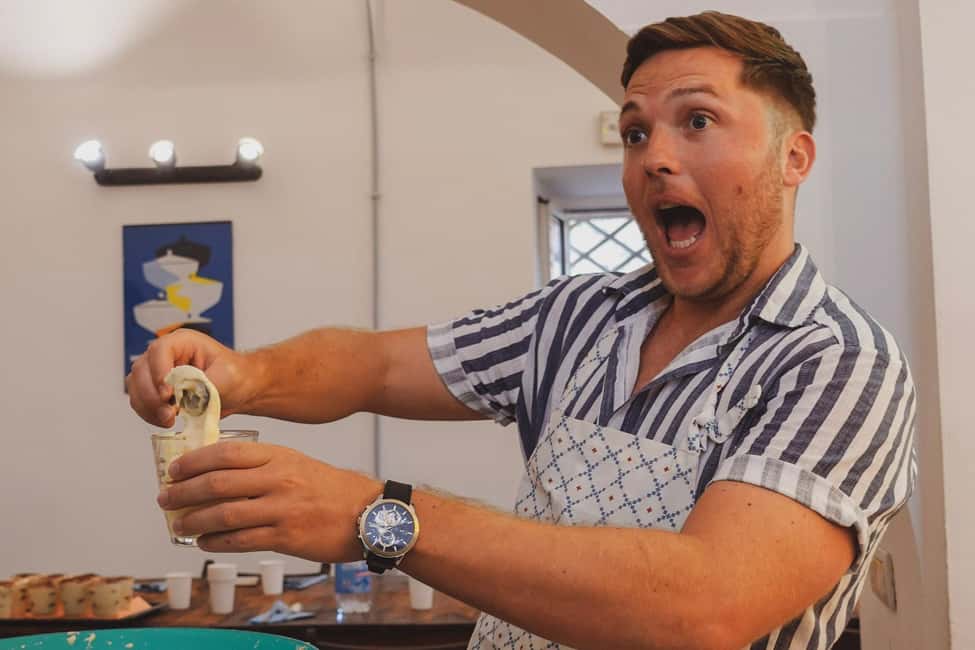
If you pick tiramisu, expect a classic creamy style dessert with steps you actively do—mixing ingredients, then assembling it into something you can enjoy at the end. One review specifically calls out a group setup where people volunteer for the mixing, and then each person assembles their own tiramisu to eat.
If you pick spritz, you’re learning how to build a popular Italian aperitivo drink—simple in concept, but better when you know the right balance. That’s a solid option if you’d rather drink and taste than bake.
In both cases, you’re using fresh, locally sourced ingredients, and the chef guides you with the kind of practical instructions that let you keep moving.
Rolling fettuccine in real time: from dough to cuts
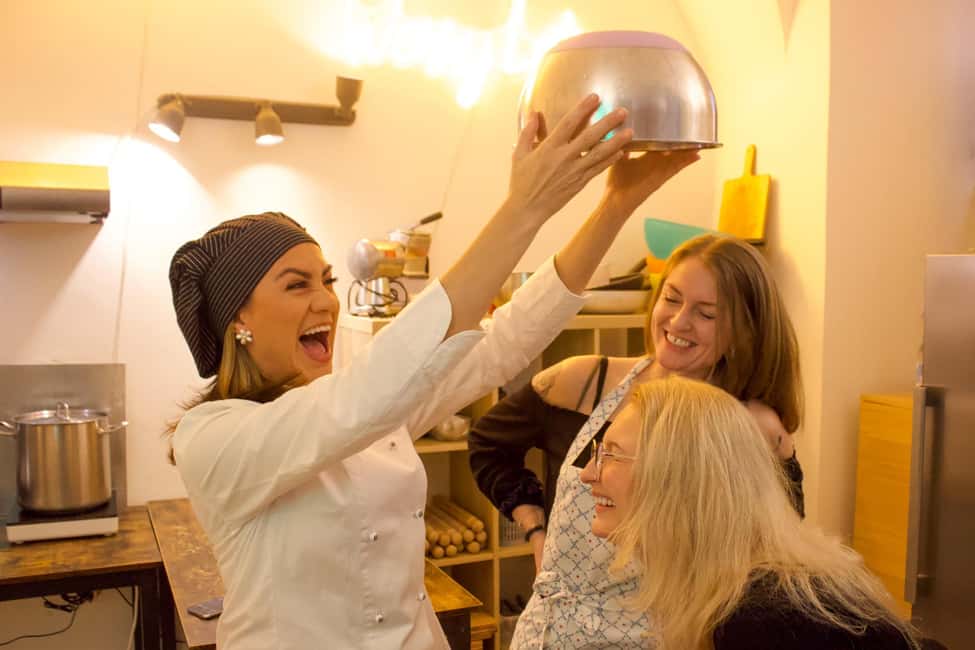
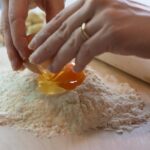
Once the dessert or spritz part is handled, the focus turns fully to pasta. Your chef walks you through mixing your dough, then rolling, shaping, and cutting it into fettuccine, which you’ll cook later.
This is where the class earns its keep. People come to Rome chasing food memories, but making pasta with your own hands is a different category of experience. You feel the dough, you see how the thickness changes, and you understand why “fresh” matters beyond marketing.
Also, the class is built so you aren’t stuck doing one tiny task. You’ll actively contribute to the process—mixing, rolling, shaping, and cutting—under an expert’s guidance. Reviews repeatedly praise the chef skill and the fact that the result tastes genuinely good.
Roman sauces: carbonara or cacio e pepe from scratch
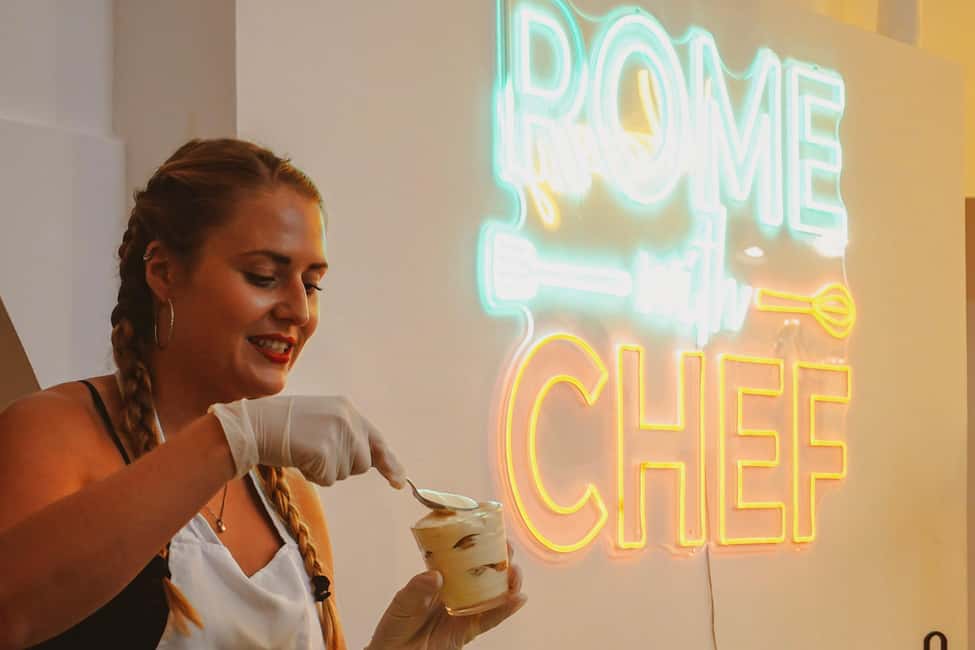
With your pasta ready to cook, it’s time for sauce. You’ll get to choose between two Roman classics: carbonara or cacio e pepe. The chef teaches you how to build the sauce from scratch, while you continue sipping drinks as the kitchen fills with the smell of cooking.
Why this choice is valuable: carbonara and cacio e pepe are both iconic, but they teach different cooking instincts. Carbonara leans into technique and timing, while cacio e pepe is all about getting the cheese and pasta water balance right. Either way, you’ll learn the logic behind the sauce, not just the ingredients.
From the reviews, a common theme is that the pasta and sauce quality can beat what people experienced eating out. That’s not a guarantee, but when you’re guided step-by-step and then you taste immediately, it’s easier to get it right than you’d think.
You can also read our reviews of more tours and experiences in Rome


The tasting part: sitting down with wine and letting it land
After cooking, you sit down to enjoy your meal with a delicious glass of local wine. This is when the class shifts from activity to reward. You’re not rushing out to find dinner elsewhere, and you get to eat at a table where the meal matches the work you did.
Then the experience ends with another signature pour: a glass of limoncello. That final sip is small but memorable, because it’s a classic closing move in Italy—sweet, bright, and very “we finished something.”
One practical plus: drinks during the class are part of the experience, and the setup includes unlimited water and soft drinks. If you prefer to keep the night lighter, you can pace yourself.
What you take home: an ebook of recipes (so it’s not just a one-off)
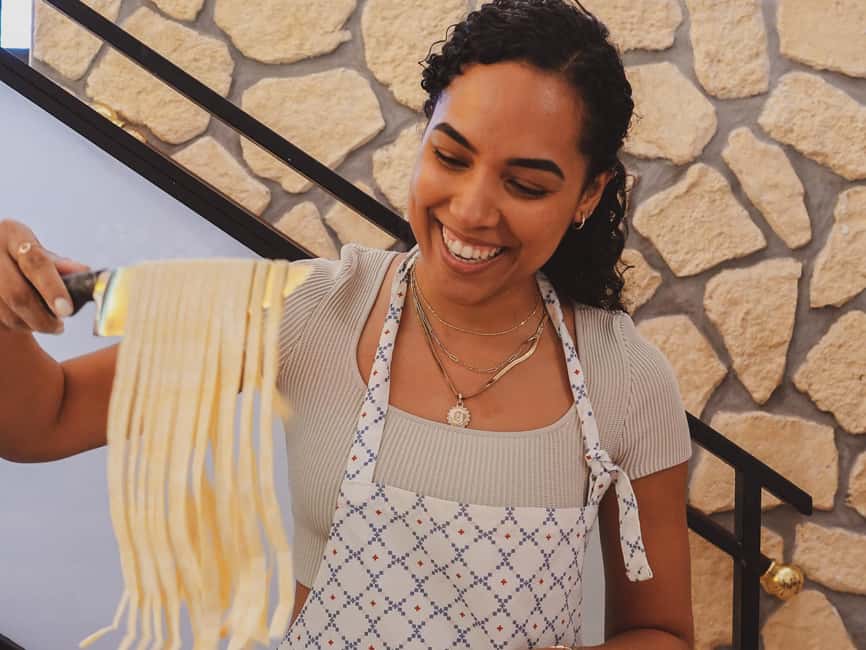
You’ll receive recipes to take home, including an ebook. That matters for two reasons. First, it helps you repeat what you learned while the steps are still fresh in your mind. Second, it turns the class into a future dinner you can cook for friends, not only a memory you tell later.
Some reviews also mention chefs sending photos and recipes through messaging apps. You shouldn’t expect that every time, but the general takeaway is that communication and follow-up can be strong.
Drinks, wine, and the role of alcohol in the experience
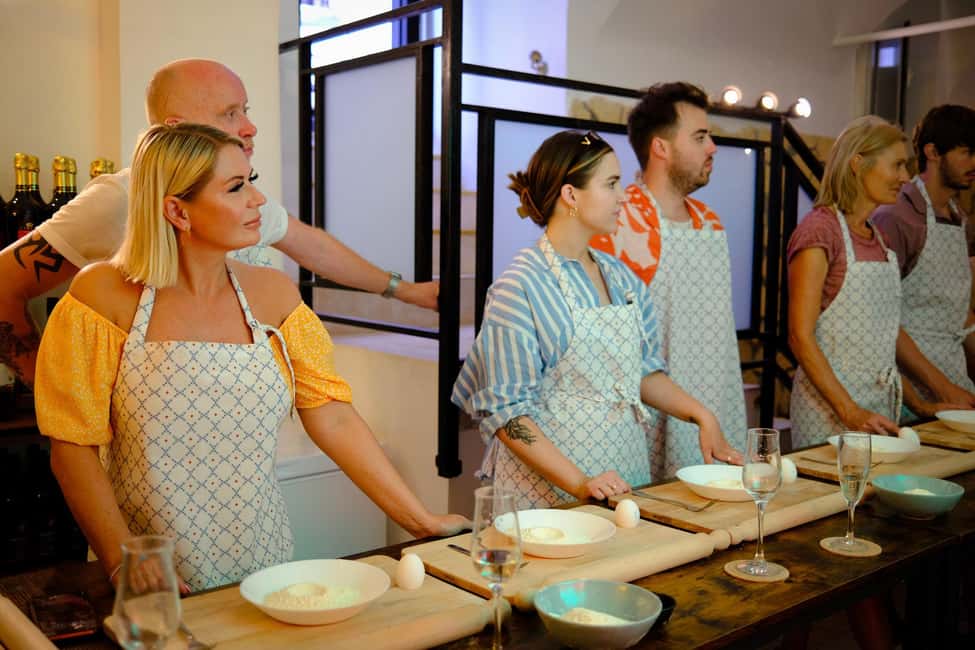
This is a cooking class that includes alcohol as part of the experience: prosecco at the start, a glass of wine with your meal, and limoncello to finish. Reviews also mention lots of alcohol and a party-like energy, so if you like a bit of celebration with your cooking, you’re in the right place.
If you don’t drink, good news: alcohol-free options are available for non-drinkers and kids. That means you can still participate fully in the menu and enjoy the cooking and meal without being pushed to drink.
Still, if alcohol is a hard no for you, message the provider before booking so you get the right setup for your group.
Small group size and the chef-led effect
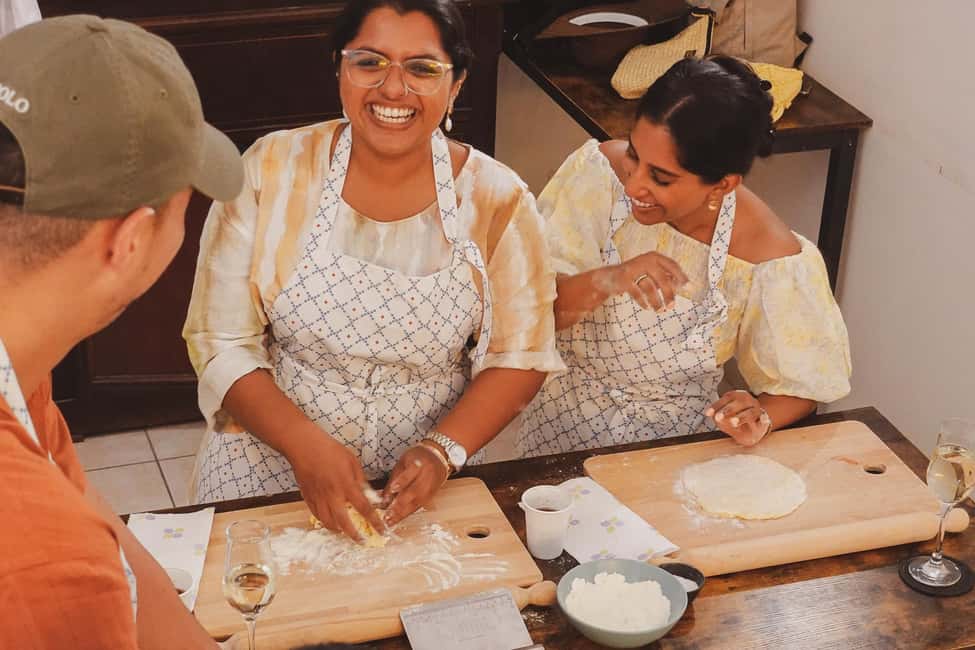
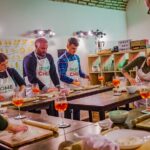
A lot of cooking classes suffer from a one-size-fits-all vibe. This one aims to keep the group small enough that the chef can actually guide you while you work.
Reviews highlight that the atmosphere stays interactive, with people chatting, learning, and moving through tasks as a team. Even when a class is small, the experience seems to hold up—some people mention having no one else booked and still getting the full attention and full fun.
If you’re traveling solo, this is a nice social format without being overwhelming. If you’re a couple, you get shared time cooking and then sharing a meal. If you’re traveling with family, it’s described as family-friendly, with at least one review mentioning teenagers enjoying it too.
Pricing and value for a $100.82, 2.5–3 hour food-and-drink lesson
At about $100.82 per person, the price feels most fair when you consider what’s included, not just the “cooking” part. You’re getting:
- A local chef and hands-on instruction
- Fresh ingredients for the pasta (vegetarian options available)
- Drinks during the class (prosecco) plus wine and limoncello
- Unlimited water and soft drinks
- Recipes to take home
For many visitors, that’s comparable to paying for a fun night out and then adding a workshop. You’re not just tasting; you’re cooking and eating your own pasta and dessert/drink choice.
One more value detail: the class teaches practical techniques for two Roman sauce types and fresh pasta shaping. That’s the kind of skill that keeps paying off every time you make pasta later.
Who this class suits best (and who should think twice)
This class is a great match if you want a hands-on Rome experience that feels local and social. It’s ideal for couples, solo travelers, and small groups of friends who want something more real than a standard dinner.
It’s also a good fit for people who enjoy learning by doing. If you’re the type who asks questions while cooking and likes tasting the results right away, you’ll get the most out of it.
But think twice if your diet doesn’t fit the menu. The class isn’t suitable for vegans, and it can’t accommodate gluten intolerance, coeliac disease, or lactose intolerance. Gluten-free, vegan, and dairy-free options aren’t listed as available.
Diet limits you need to know before you book
This is one of the most important practical notes. The class is unable to accommodate:
- Coeliac disease and gluten intolerance (gluten-free isn’t supported)
- Vegan diets
- Lactose intolerance (dairy products are used)
If you have a dietary restriction, tell the provider in advance so they can figure out what’s possible. The listing also says vegetarian options are available for the homemade pasta, which helps for many non-vegan preferences.
If you’re unsure where you land, don’t guess. Contact them before you book—because in this case, “almost” isn’t the same as “safe.”
Practical tips to make your evening go smoothly
A few things will help you enjoy the class more, even before you step into the kitchen.
First, plan your day so you can linger afterwards. It’s a 2.5–3 hour experience with food and drinks, and you’ll likely feel full and happy afterward.
Second, arrive ready to participate. This is not a sit-back-and-watch tour. The best results (and the most fun) come when you roll up your sleeves and do the steps.
Third, if you’re choosing between tiramisu and spritz, consider your mood. Want a classic dessert payoff at the end? Pick tiramisu. Want an aperitivo skill you can recreate? Pick spritz. Either way, the pasta work is the main event.
The bottom line: should you book this Rome pasta class?
Book this class if you want a fun, chef-led, hands-on Rome food experience with real take-home value. It hits the sweet spot of classic Roman flavors, interactive cooking, and a meal plus drinks that makes the night feel like a celebration.
Skip it if your diet requires gluten-free, vegan, or dairy-free accommodations. The menu is built around dairy and gluten-containing ingredients, so you’d be asking for trouble.
If you fit the standard menu, this is the kind of activity that can become one of your strongest Rome memories—because you don’t just eat the food. You make it.
FAQ
How long is the cooking class?
The class runs about 2.5 to 3 hours. Exact start times vary, so check availability for the schedule.
What do I make during the class?
You’ll make homemade pasta (fettuccine) and sauce from scratch. You’ll also choose either tiramisu or spritz as part of the experience.
Do I get a choice of pasta sauce?
Yes. You can make either carbonara or cacio e pepe, depending on your class selection.
Are vegetarian options available?
Vegetarian options are available for the homemade pasta.
Is the class suitable for vegans or gluten-free diets?
No. The menu isn’t able to accommodate vegan diets, gluten intolerance/coeliac disease, or lactose intolerance. Gluten-free options aren’t provided.
What drinks are included?
You get a glass of prosecco at the start, 1 glass of wine with your meal, and 1 glass of limoncello at the end. Water and soft drinks are unlimited.
Is there an alcohol-free option?
Yes. Alcohol-free options are available for non-drinkers and kids.
Will I get recipes to take home?
Yes. You’ll receive recipes to take home in a handy ebook.
Is this a small group experience?
It’s a small-group class, and a private group option is available if you want it just for your group.