REVIEW · ROME
Rome Squares and Fountains Tour & River Boat Hop On Hop Off
Book on GetYourGuide →Operated by Tour in the City - Travel Agency Rome - · Bookable on GetYourGuide
A morning walk with a river view beats another checklist tour. You start above the Spanish Steps with one of Rome’s great rooftop panoramas, then follow a guide through the city’s headline sights and a few quieter side streets. I love the way this mixes big moments (Trevi, Pantheon, Piazza Navona) with stories that make you look twice, and I especially like the Full Experience option that adds a 24-hour hop-on hop-off Tiber cruise after the walking portion. One thing to keep in mind: this isn’t built for strollers or wheelchairs, and the walking pace can be a bit much if you’re mobility-limited.
What really elevates it is the human factor: guides have real depth, and in at least one recent group the guide (Sabrina Vispi) brought a mix of humor and solid art-history context that kept everyone switched on. The walking route ends near Castel Sant’Angelo, which is a smart spot to finish because the river is right there and you can keep going at your own pace if you picked the boat. The possible drawback is that the river ride itself is more about views and timing than a narrated experience, so if you want a guide talking the whole way on the boat, you might find it more passive than you expect.
In This Review
- Key Points Worth Booking
- Getting Your Bearings at Piazza Trinità dei Monti
- Down the Spanish Steps to the Trevi Fountain
- Pantheon to Piazza Navona: Ancient Engineering Meets Baroque Theater
- Gelato Break, Hidden Alleys, and Sant’Agnese in Agone
- Ponte Sant’Angelo and Castel Sant’Angelo: Why the Finish Line Works
- Tiber River Hop-On Hop-Off: Views, Timing, and Best Piers
- Price and Logistics: What $73 Buys You (and How to Get Value)
- Timing, Pace, and What to Wear
- Who This Tour Suits Best (and Who Might Skip It)
- Should You Book This Rome Squares and Fountains Tour?
- FAQ
- What’s included in the Full Experience option?
- What’s included if I choose the Walking Guided Tour only?
- How long is the walking tour?
- Where do I meet the tour guide?
- Does the riverboat have a guide?
- How often do the boats depart?
- What are the riverboat operating hours?
- How long is the riverboat ticket valid?
- What if the riverboat is canceled due to weather?
- Is this tour wheelchair accessible?
Key Points Worth Booking
- Spanish Steps start with panoramic payoff from Piazza Trinità dei Monti, before you head downhill into the historic core
- A guided walk that links Trevi, Pantheon, and Piazza Navona into one clear sightseeing story
- Gelato tasting is included during the walk, though it can vary by how your group runs
- Ponte Sant’Angelo is the hinge point where the walking tour ends and the river cruise can take over
- 24-hour hop-on hop-off flexibility with boats every 30 minutes from central piers
Getting Your Bearings at Piazza Trinità dei Monti
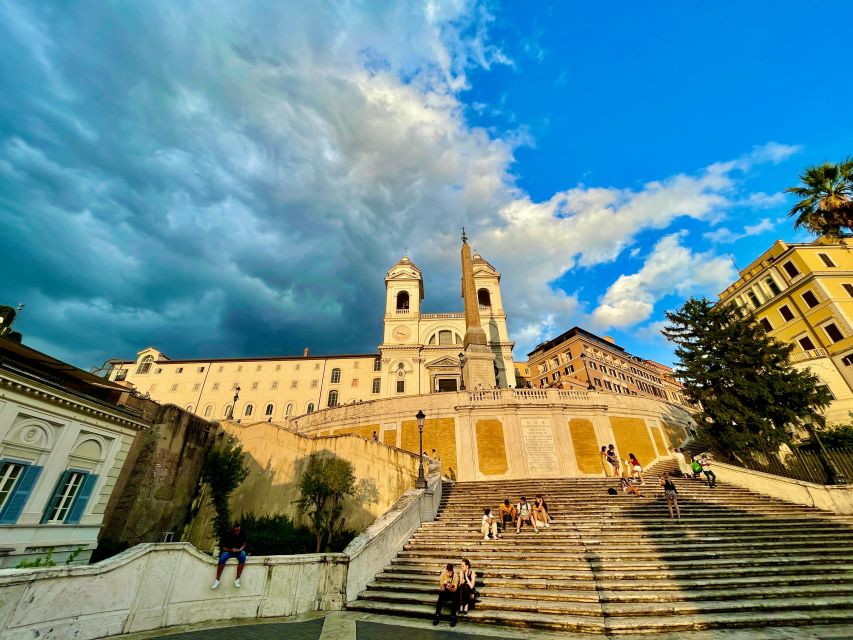
You meet in Piazza della Trinità dei Monti, right by the obelisk just above the Spanish Steps. That’s not a random starting point. You begin on higher ground, so you get a quick “this is Rome” overview before the crowd density kicks in. The view from here is the kind that makes you slow down: rooftops, church domes, and the curves of streets shrinking away toward the river.
From the meeting point, you do a short photo stop and scenic look around Santissima Trinità dei Monti. This is the moment I find most useful for setting expectations. Rome’s center can feel chaotic if you jump in too fast. Starting above it helps you mentally map where things like Piazza Navona and the Pantheon will sit in relation to each other.
Practical note: wear comfortable shoes. Even if the walk is well-paced, you’re on uneven stone for stretches, and the stops involve short hops off sidewalks and down steps.
You can also read our reviews of more boat tours in Rome



Down the Spanish Steps to the Trevi Fountain
Once you’re moving, you head down into the heart of the old city. The Spanish Steps are first, with a photo stop and time to look closely at the layout from the right angles. I like that the guide doesn’t treat this as just a postcard stop. You get context on how the sight functions in Rome’s visual culture, and then you keep rolling toward the Trevi Fountain.
Trevi is famous for a reason. But the difference here is that you hear myths and local stories tied to what you’re seeing. That kind of storytelling turns the fountain from a single photo moment into something you understand as part of a bigger artistic and political Rome. You’ll get time to view it up close, and you’ll also have a chance to appreciate the way crowds shape the experience—best taken in small bursts rather than forcing one long, sweaty stare.
This is also where the tour starts to feel like it’s teaching you how to walk through Rome. The route is structured, but the pace still gives you room to look up, look down, and notice the little details people miss when they’re only rushing.
Pantheon to Piazza Navona: Ancient Engineering Meets Baroque Theater
Next comes the Pantheon, and this is one of the stops where I think the guided format earns its keep. The Pantheon is still a marvel of ancient engineering, and a good guide can help you notice what matters: how the scale works, why the space feels the way it does, and how preserved it is compared to what you might expect from a ruin. You get a photo stop, guided time, and a brief window to stand back and take it in.
Then you reach Piazza Navona, where the tone shifts. If the Pantheon is about solid, Roman-era precision, Piazza Navona feels like performance—music in the architecture, drama in the stone. The square is grand and animated, and it’s the kind of place where you can lose 20 minutes without noticing. You’ll have a break time here, plus guided time focused on the artwork and key buildings around the square.
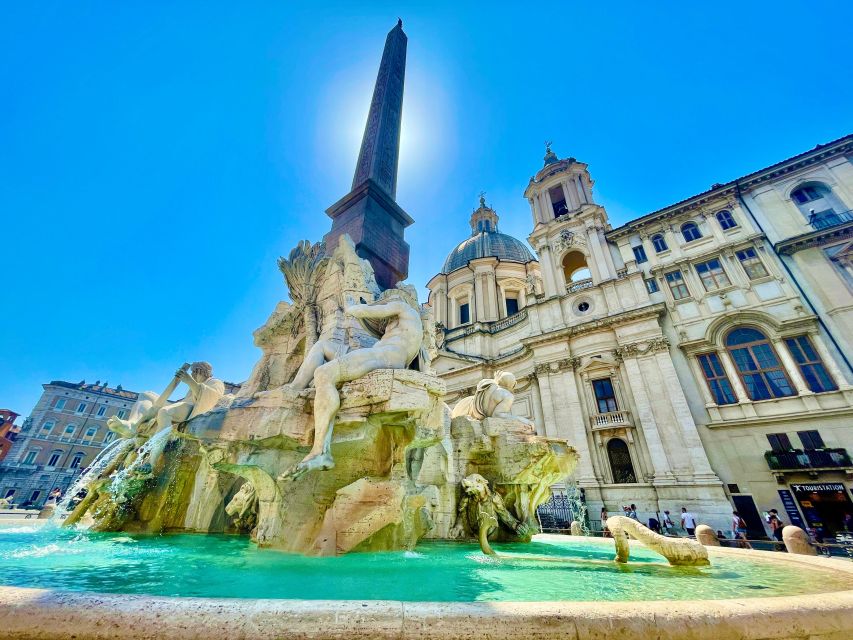
You’ll also see Bernini’s Fountain of the Four Rivers and Borromini’s Church of Sant’Agnese in Agone. This is a strong pairing because it helps you connect two different ways of “making Rome dramatic.” You’re not just seeing names—you’re learning why they belong together in the same visual story.
One small watch-out: Piazza Navona can be busy. Build a habit of stepping a little to the side for photos, then returning to your group. It’s easier than trying to fight the center flow.
Gelato Break, Hidden Alleys, and Sant’Agnese in Agone
Between the big squares, you’ll get a gelato tasting stop. It’s listed as included, and in a recent group the experience had enough structure that people felt well taken care of. Still, one practical caution: if your group timing feels tight, ask your guide when the gelato stop is happening, rather than waiting for it to appear. You want that sweet pause, not a scramble at the end.
After the break, the walk continues with Sant’Agnese in Agone, again with guided context. This stop is useful because it slows you down in a different way than the Pantheon does. It’s less about sheer size and more about how baroque design pulls your eyes around the façade and into the space.
You’ll also wander Rome’s hidden alleys—narrow lanes where you suddenly feel like the city has quieter corners. That’s where the tour feels most “alive.” Not everything is monumental, but the side streets add atmosphere and help you understand how people move through this city day to day, not just how it looks from a museum route.
Bring your patience for these lanes. They’re part of the point, but they can be tight.
Ponte Sant’Angelo and Castel Sant’Angelo: Why the Finish Line Works
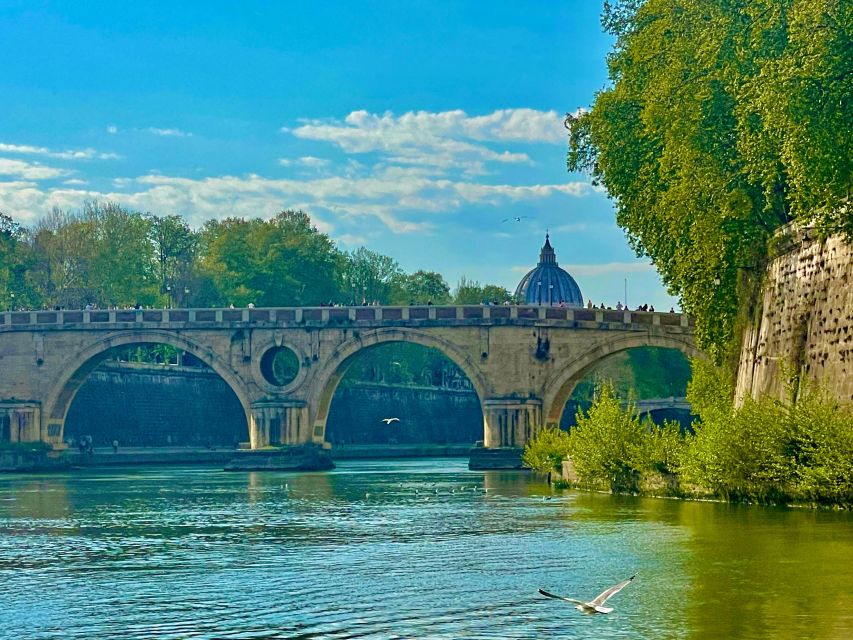
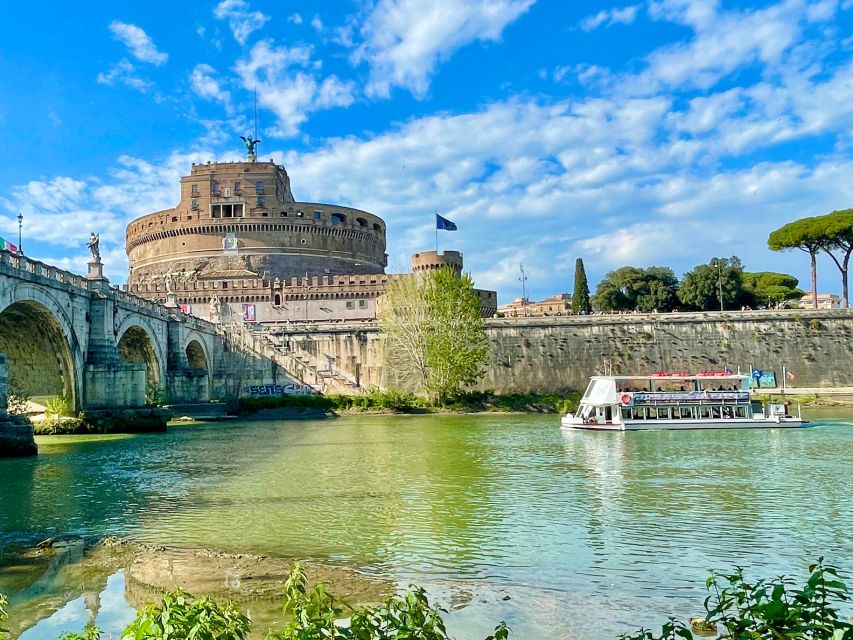
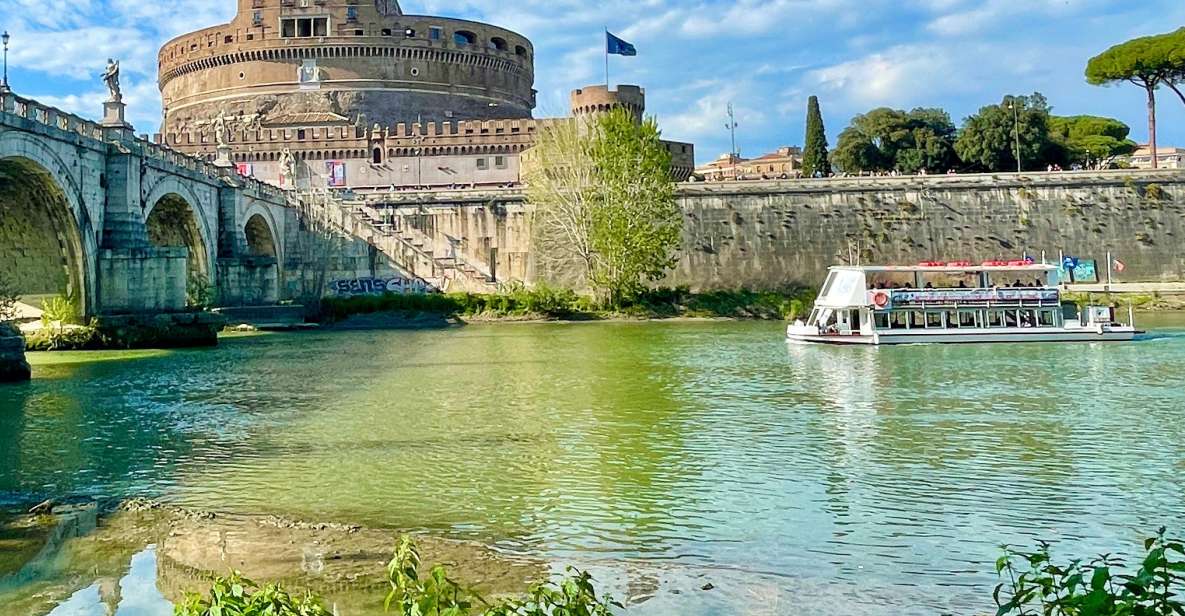
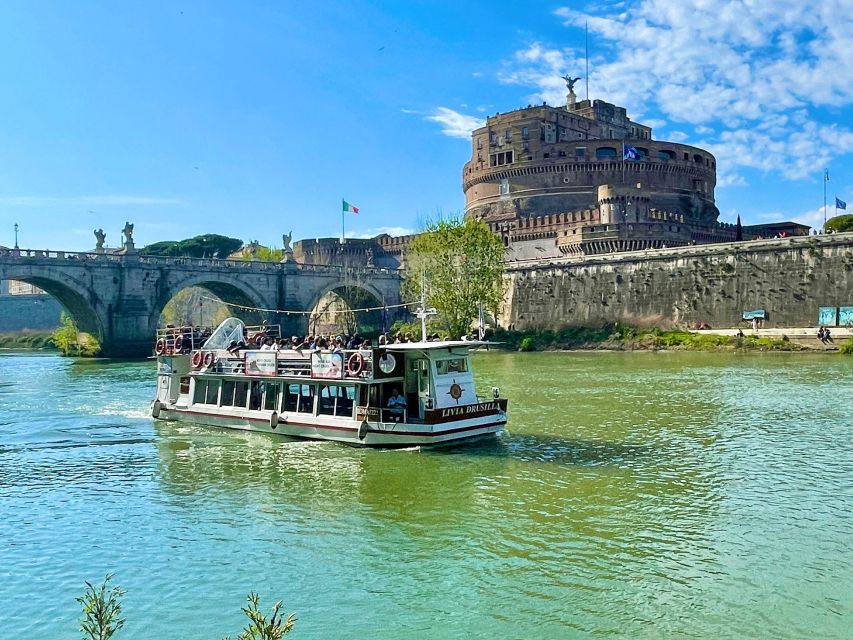
The walking tour concludes near Ponte Sant’Angelo, with a photo stop and guided time, plus scenic views toward Castel Sant’Angelo and the Tiber. This ending is smart because it gives you choices right away. If you’re doing the Full Experience, this is where you can hop into the river cruise. If you’re doing Walking Guided Tour only, you’re still finishing in a place that’s easy to return to, with views you’ll want to revisit later.
Castel Sant’Angelo is a strong visual capstone. Even if you’ve seen it in photos, seeing it from the right angles—especially with the river in view—changes how it lands. The tour also includes scenic viewpoints along the way that connect to major landmarks like St. Peter’s Basilica and Vatican City. You don’t get a deep dive into every interior space here, but the viewpoints help you place these sites within the larger map of Rome.
If you’re a “walk it all” person, you’ll like ending here because you can keep moving on your own after the guided portion. The location also makes it easier to grab a quick bite in the area rather than commuting back toward your hotel through the busiest streets.






Tiber River Hop-On Hop-Off: Views, Timing, and Best Piers
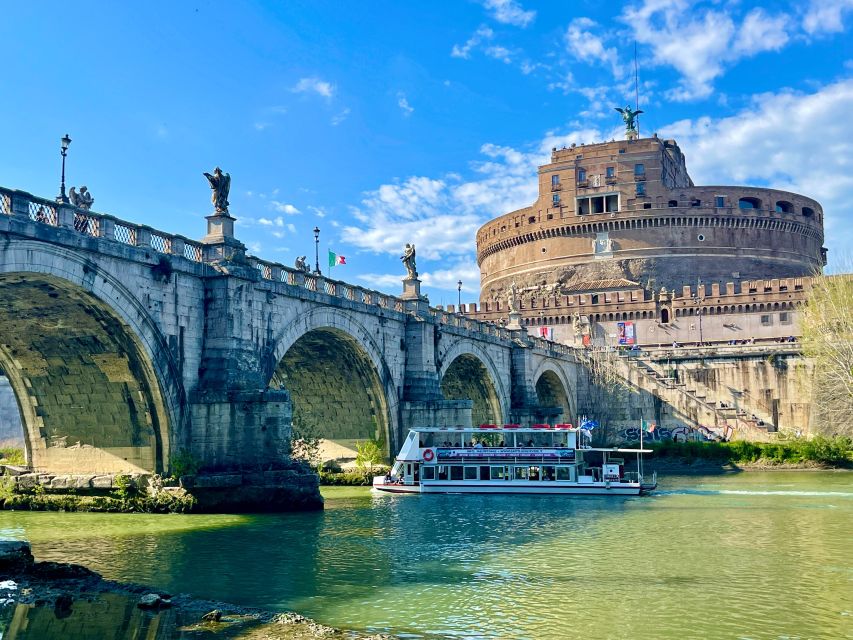
If you choose the Full Experience, you’ll get a 24-hour hop-on hop-off riverboat ticket starting from your first boarding. The river cruise is designed to be flexible: boats depart every 30 minutes from four central piers between 10:00 and 18:00 (10 a.m.–6 p.m.).
The boat ride itself is not framed as a guided lecture the whole time. The guide focus is on the walking tour; on the boat, you’re there for pace changes and scenery. That can be a plus. When you’re ready, you can stand up, look out over the river, and relax into Rome from water level instead of street level. It’s especially nice in the late afternoon, when the light softens and you don’t feel like you’re fighting for position.
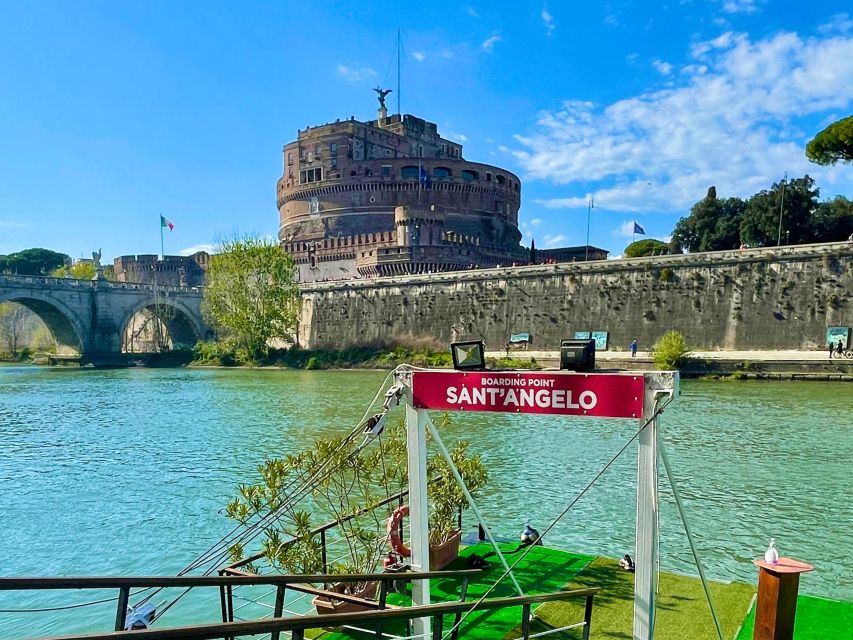
You can choose open deck or an indoor lounge, depending on weather and how hot/cool you want it to be. For boarding, the experience specifically suggests piers like Ponte S. Angelo and Isola Tiberina, which are convenient points to aim for.
From the river route, you’ll see highlights like Trastevere and a run of famous bridge-and-island moments including Ponte Vittorio Emanuele II, Ponte Sisto, Tiber Island, Pons Fabricius, and Pons Cestius. This part helps you understand that Rome isn’t just a set of monuments; it’s a city stitched together by river corridors and bridges that carry history forward.
Small reality check: the boat experience can feel more relaxed than sightseeing-by-lecture. If you want nonstop commentary, plan on getting your talking time from the walking guide, then using the boat as your decompression period.
Price and Logistics: What $73 Buys You (and How to Get Value)
At around $73 per person, the value question is simple: are you the type who wants both land-and-water perspectives in one plan? The walking portion is a structured 2.5-hour route that hits the big names—Spanish Steps, Trevi Fountain, Pantheon, Piazza Navona, and Castel Sant’Angelo—plus gelato and side-street wandering. That alone is a solid use of time, because a guide helps you see more than you’d likely manage alone in the same window.
The optional Full Experience adds the 24-hour boat ticket, which can be the difference between finishing your trip at Castel Sant’Angelo versus turning this into a two-moment experience: walk in the morning, then cruise later and return to the river at your convenience the next day.
If your schedule is tight or you’re mostly staying near the historic core, the Walking Guided Tour only may still be the smarter buy—no pressure to time your boat. But if you’re the type who enjoys repeating a great view from a different angle, the boat flexibility is where you get extra mileage from your ticket.
Also worth knowing: the boats operate every 30 minutes from 10:00–18:00. If you’re planning a late-day cruise, you’ll want to be thinking ahead so you don’t show up near closing. And if weather cancels the boat, it’s rescheduled; if you can’t switch dates, you may receive a refund amount listed per adult or kid.
Timing, Pace, and What to Wear
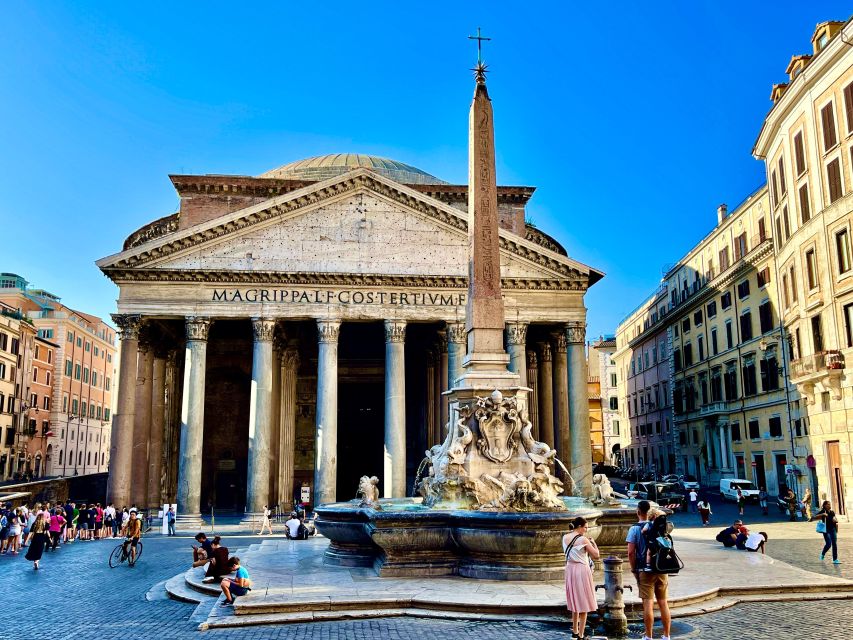
This is best approached like a smart morning plan. The guided walk is about 2.5 hours, and it covers a lot of Rome in that window. You’ll likely feel it on your feet, but the route is designed around stops and sight breaks rather than constant marching.
Boats come frequently—every 30 minutes—so once your walking tour ends, you’re not stuck waiting for hours to start cruising. Still, you’ll want to factor in time to reach the piers and time to return to your preferred viewing angle.
What to wear is straightforward: comfortable shoes and comfortable clothes. You can also bring layers, because boats can feel cooler than you expect. And one more practical note: baby strollers aren’t allowed, and smoking is not permitted indoors.
Finally, punctuality matters more than you’d think. For the walking tour, delays beyond 15 minutes can mean you’re marked as a no-show. Show up a few minutes early, grab your bearings by the obelisk, and let the day begin.
Who This Tour Suits Best (and Who Might Skip It)
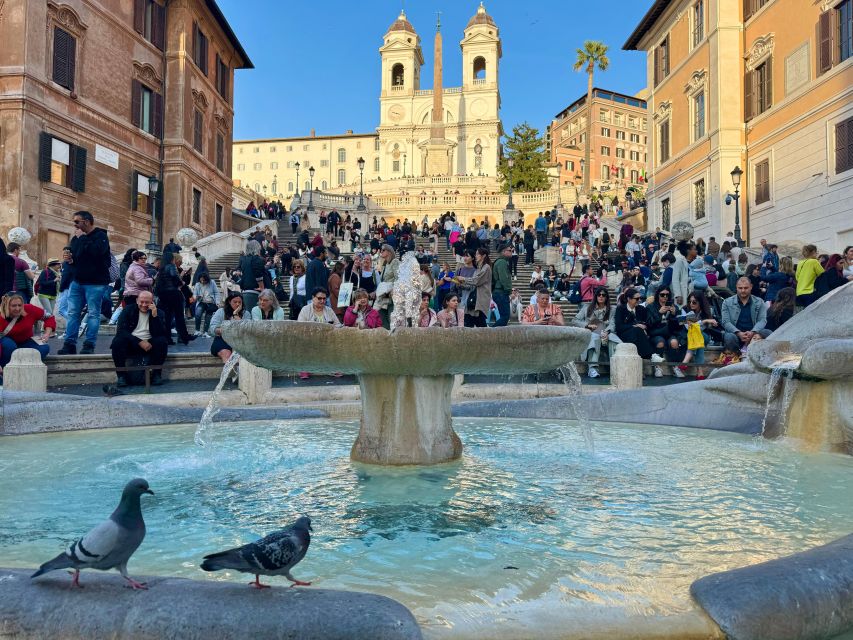
I think this tour fits best if you want a guided framework but still want freedom afterward. You get the classic Rome hits with context, then you can roam independently—especially if you add the river cruise.
It also works well for first-time visitors who feel overwhelmed by Rome’s sprawl. Starting at Trinità dei Monti and working down through Spanish Steps, Trevi, the Pantheon, and Piazza Navona helps you build a mental map of the city quickly.
On the other hand, it’s not suitable for people with mobility impairments or wheelchair users. The route involves walking through uneven streets and stairs. If mobility is a concern, it’s worth choosing a different format that’s designed around accessibility.
If you hate crowds, you may still find busy areas like Trevi and Piazza Navona challenging. The good news is that your guide helps you get the best viewing flow instead of getting stuck in the worst positions.
Should You Book This Rome Squares and Fountains Tour?
Book it if you want structure and perspective. The guided walk gives you the stories behind Trevi, the engineering wonder of the Pantheon, and the baroque drama of Piazza Navona and Sant’Agnese in Agone. The Full Experience adds a second angle—Rome from the Tiber—using a 24-hour hop-on hop-off ticket that lets you cruise more than once without cramming every moment into the same afternoon.
Skip or reconsider if you’re looking for a narrated boat ride with a live guide on the water, or if walking distance is an issue for you. And if gelato matters to you, double-check with your guide about the timing during the walk so you don’t miss it.
FAQ
What’s included in the Full Experience option?
The Full Experience includes the guided walking tour (2.5 hours), a licensed tour guide, Italian gelato tasting, and a 24-hour hop-on hop-off riverboat ticket. It also includes access to four central piers with boats every 30 minutes during the operating window.
What’s included if I choose the Walking Guided Tour only?
The Walking Guided Tour only option includes the same 2.5-hour guided walking tour, licensed tour guide, and Italian gelato tasting. The riverboat ticket is not included.
How long is the walking tour?
The guided walking tour lasts about 2.5 hours.
Where do I meet the tour guide?
Meet your guide next to the obelisk in Piazza Trinità dei Monti, above the Spanish Steps. Arrive a few minutes early.
Does the riverboat have a guide?
A tour guide on the river boat is not included, so you should expect the walking guide to be where the live commentary comes from.
How often do the boats depart?
Boats depart every 30 minutes.
What are the riverboat operating hours?
Boats operate daily from 10:00 to 18:00 (10 a.m.–6 p.m.).
How long is the riverboat ticket valid?
The hop-on hop-off riverboat ticket is valid for 24 hours from your first boarding, and you can use it before and after the guided walking tour.
What if the riverboat is canceled due to weather?
If the riverboat is canceled due to adverse weather, it will be rescheduled. If you cannot change the tour date, there is a refund amount listed for adults and kids.
Is this tour wheelchair accessible?
No. It’s not suitable for wheelchair users or people with mobility impairments.