REVIEW · ROME
Rome: Private Highlights Tour by Golf Cart
Book on GetYourGuide →Operated by Turtle Tour Rome · Bookable on GetYourGuide
Rome is easier on four wheels. A private golf cart tour is a practical way to hit Rome’s biggest icons with a local guide, while still slipping through tight old streets.
You’ll especially like two things: the pickup-and-drop convenience in the historical center, and the way guides explain what you’re seeing as you pass key monuments. Duccio and Paolina, for example, are praised for turning famous stops into clear stories, not just photo ops.
One catch to plan around: this tour does not include entry tickets, and the stops are timed—so you’ll see plenty, but not linger for full museum-level depth.
In This Review
- Key reasons this tour works so well
- Golf Cart Rome: The Smart Way to See More Without Exhaustion
- Pickup in the Historical Center (and the ZIP Code Catch)
- Comfort Gear: Water, Umbrellas, and Blanket-Proof Planning
- From Pantheon to Piazza Navona: Roman Genius Meets Baroque Theater
- Spanish Steps and Trevi Fountain: Timed Stops That Still Feel Worth It
- Colosseum and Circus Maximus: Big-Name Sites With Real Perspective
- Aventine Hill, Mouth of Truth, and Forum-Edge Stops
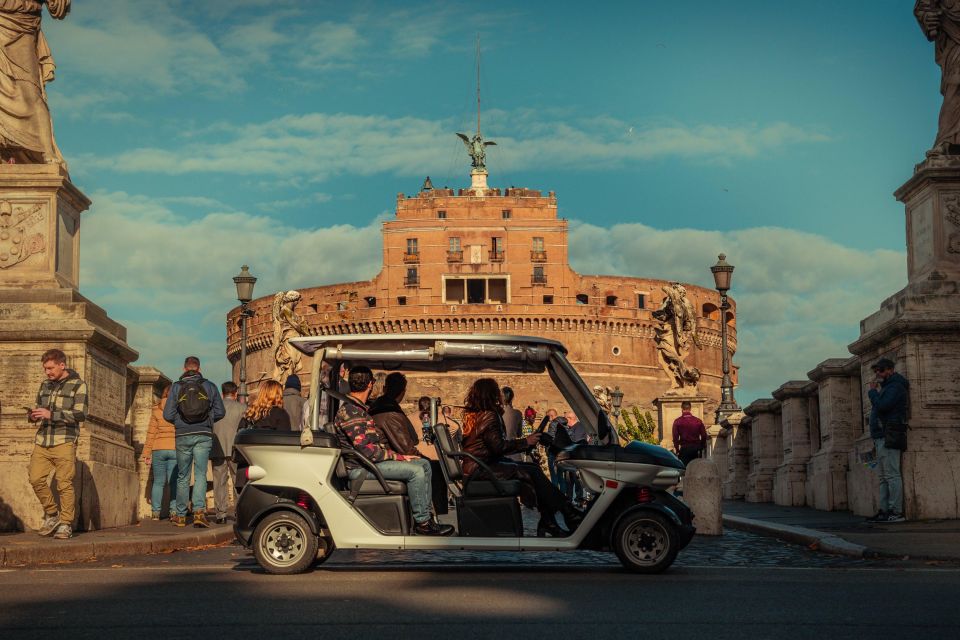
- Jewish Ghetto and Castel Sant’Angelo: Two Different Kinds of History
- Vatican City Finish: Seeing It in Context Without Getting Stuck
- Is $164.26 a Good Deal for This Private Golf Cart Tour?
- Who This Tour Fits Best (and Who Might Want a Different Plan)
- The Guide Factor: Why Duccio, Paolina, Gian Marco, and Fabio Get Mentions
- Should You Book This Rome Private Highlights Tour by Golf Cart?
- FAQ
- How long is the Rome private highlights tour by golf cart?
- Is this tour private?
- Where is pickup available?
- Which sights are included on the tour?
- Are entry tickets included?
- What languages are available for the live guide?
- What is included besides the guide?
- Is the tour wheelchair accessible?
- Can I cancel for a full refund?
- Can I reserve now and pay later?
Key reasons this tour works so well
- Golf cart comfort in Rome’s bottlenecks: park closer, walk less, and still reach areas cars can’t.
- A guide who sets the tone: clear explanations and real pacing, often tailored to what you already planned.
- Top sights plus “in-between” moments: Pantheon, Trevi, Colosseum—and the side streets between them.
- Photo-friendly structure: built-in short visits and picture stops (Aventine Hill, Theatre of Marcellus).
- Weather-friendly extras: bottled water, umbrellas/rain covers, and blankets if needed.
Golf Cart Rome: The Smart Way to See More Without Exhaustion
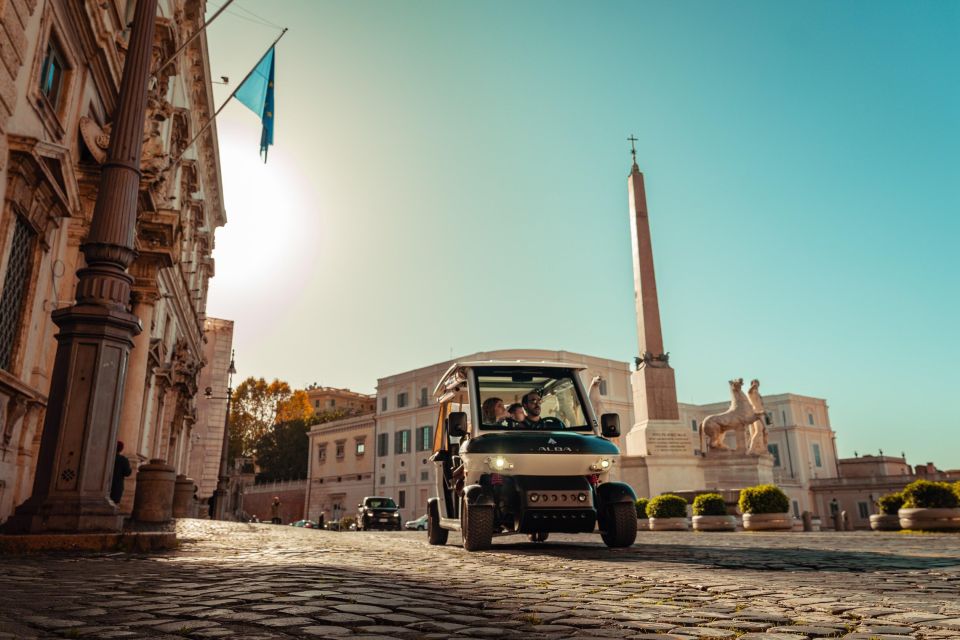
Rome looks best when you have energy left to notice details. This is exactly where a golf cart shines. Instead of spending your morning dodging crowds on foot or fighting for time windows at major sights, you get a smooth route through the historic core.
The big win is that the tour feels efficient without feeling like a treadmill. Because it’s private, the guide can adjust how long you spend at certain corners, and your group isn’t stuck waiting for strangers to shuffle along. In the feedback, guides like Gian Marco and Fabio also get praised for keeping things fun and manageable—useful if you have jet lag, kids, or just want an easier first day.
You can also read our reviews of more private tours in Rome



Pickup in the Historical Center (and the ZIP Code Catch)
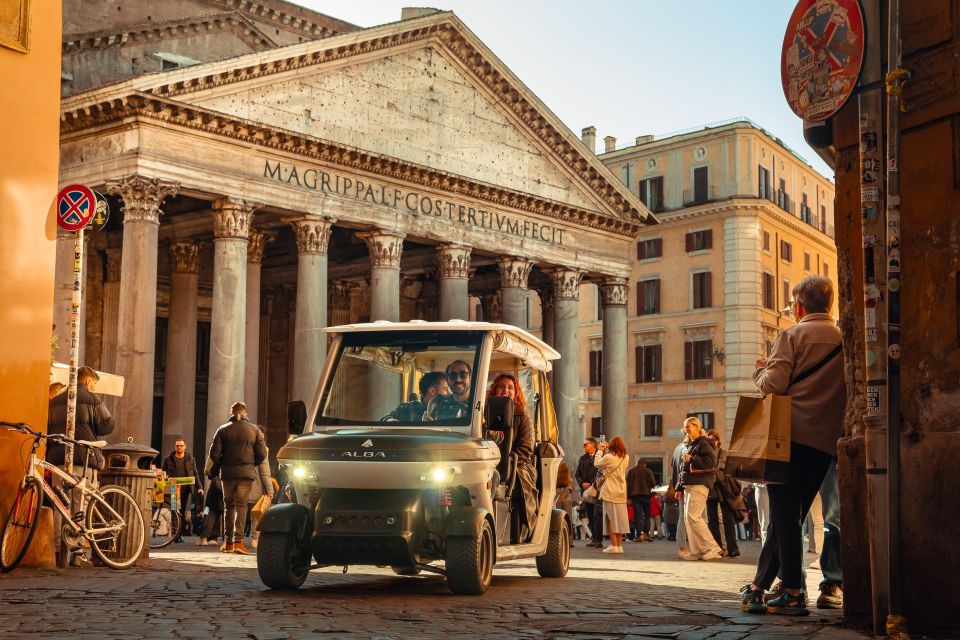
The tour starts with pickup from your accommodation in the city center. That matters in Rome, where the “meeting point” trap can waste your time. Here, you’re picked up at addresses with ZIP codes 00184, 00186, or 00187—so it’s worth double-checking before you book.
Once you’re aboard, you’ll spend less time asking how to get somewhere and more time looking at what’s actually outside your window. And if you’re picky about ending where you want—dinner near Campo de’ Fiori, a stroll by the river, or something else—the feedback hints that some guides are flexible about drop-off requests within reason.
Comfort Gear: Water, Umbrellas, and Blanket-Proof Planning
This tour includes the practical stuff that makes sightseeing less painful:
- Bottled water
- Umbrellas and rain cover (if needed)
- Blankets (if needed)
Rome’s weather can change fast, and that’s not a romantic warning—it’s just logistics. Having rain protection means you don’t lose the tour to wet shoes and blown plans. In summer, the golf cart also helps you avoid heat stress from repeated long walks between monuments.
You should still expect Rome’s streets to be… Rome. One review calls out bumpy roads as part of the normal experience. So if you’re sensitive to jolts, sit comfortably, hold on, and don’t plan to use this as your first “I never get carsick” day.
From Pantheon to Piazza Navona: Roman Genius Meets Baroque Theater
The tour often kicks off with the Pantheon. Even in a short stop, it’s worth understanding what you’re looking at: the Pantheon’s scale and engineering make it feel less like a relic and more like a working idea from the past. If you’re the kind of person who likes to know why a building still impresses, the guide’s narration is the difference between seeing a facade and understanding the space.
Next comes Piazza Navona, one of Rome’s baroque showpieces. You’re not just passing through a square—you’re arriving at a place designed for atmosphere. The fountain views, the street life, and the way the buildings frame the space make it feel like the city is performing for you.
Practical note: this is one of those areas where it can be crowded on foot, so the cart helps you keep your momentum without getting stuck in a slow-moving crush.
Spanish Steps and Trevi Fountain: Timed Stops That Still Feel Worth It
Two of Rome’s best-known photo magnets are Spanish Steps and Trevi Fountain. The timing here is usually quick—think short guided orientation plus a window to take photos and soak up the scene.
Spanish Steps are famous for a reason: the stairway acts like a natural viewpoint. You’ll want to pause long enough to look up and down the axis of the street, because that’s where the “grand staircase” feeling lands. The guide’s job is to keep you from just standing there; you’ll get context that makes the place click.
At Trevi Fountain, the guide helps you focus on what matters beyond the busy edges. If you’re hoping for that classic memory-shot, go into it with a plan: take your photos, then spend your remaining moment learning what makes the fountain more than an Instagram background. Since entry tickets aren’t part of this experience, you’re not stuck waiting on lines—you’re seeing it as part of a moving day.






Colosseum and Circus Maximus: Big-Name Sites With Real Perspective
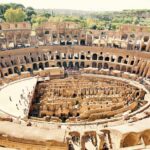
Then you’re into the heavyweight section of Rome: Colosseum. Even with a brief stop, the value is your guide’s framing. The Colosseum is easy to recognize; it’s harder to understand without context. The best guides in the feedback—people like Lisa, Max, and Claudio—are praised for explaining the story in a way that makes you look at details you might otherwise ignore.
You’ll also pass by the Vittoriano along the way (a good landmark when you’re trying to orient yourself). This helps the day feel coherent rather than like separate postcard stops.
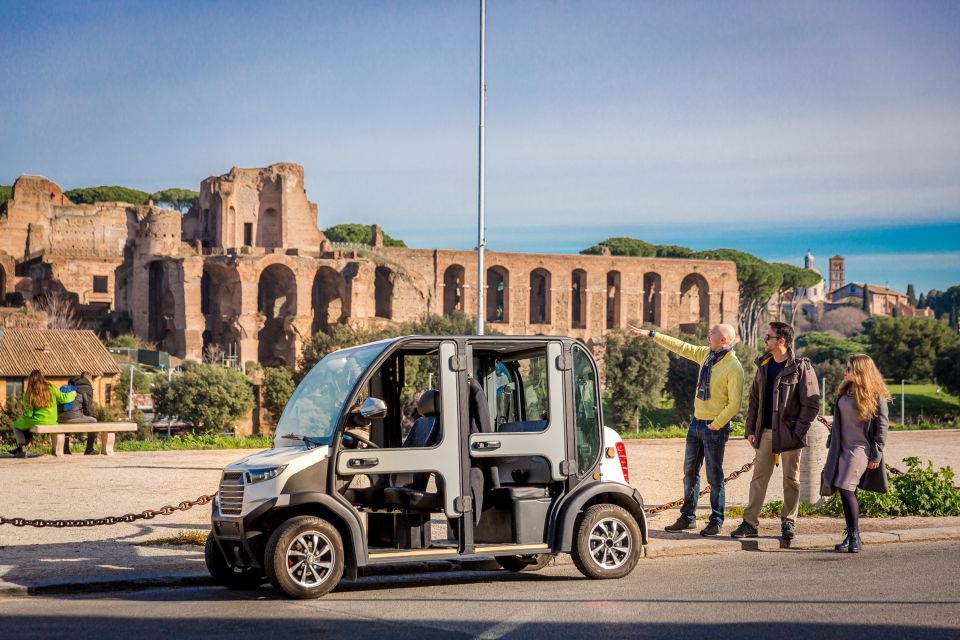
Next is Circus Maximus. This is one of the most interesting “less museum-y” places because it’s open and windy and feels like Rome in real life, not just curated history. It’s also a place where you can understand how the city’s ancient world shaped everyday movement.
Aventine Hill, Mouth of Truth, and Forum-Edge Stops
A ride through ancient Rome isn’t only about the headline ruins. The itinerary also steers you toward the stories people remember for their oddness and charm—places that connect the myths to the stone.
At Aventine Hill, you’re set up for a photo stop. This is less about ticketed sights and more about viewpoint energy: you’ll get that “Rome stretches farther than you thought” feeling.
Then comes Mouth of Truth—a stop with quick, specific focus. It’s the kind of place where the guide’s explanation helps you appreciate why it’s still a draw (and what people traditionally associate it with). Even when you’re short on time, you can leave with a real mental snapshot.
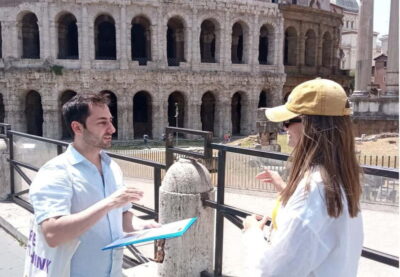
From there, you reach Forum Boarium, followed by a Theatre of Marcellus photo stop. These stops matter because they fill the gaps between the biggest sites. You’ll start noticing how different Roman spaces worked together—commerce zones, civic areas, and performance venues—without spending all day in one museum-style complex.
One small drawback: because these are shorter stops, you won’t get a long, slow walk through every layer. If you love deep archaeological study, you’ll still want to plan a separate visit later. Think of this tour as your “map of meaning,” not your final stop.
Jewish Ghetto and Castel Sant’Angelo: Two Different Kinds of History
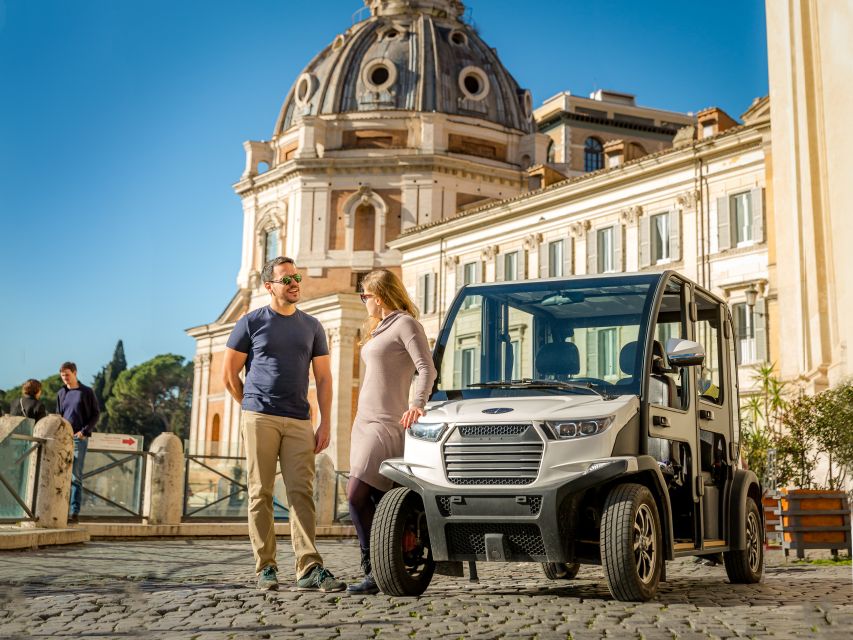
The Jewish Ghetto stop is guided, which helps. In a limited time window, a good guide can keep you respectful and informed rather than just skimming surfaces. This part of Rome can be emotionally heavier than the empire-era highlights, so having interpretation helps it land in the right way.
From there, you head toward Castel Sant’Angelo for sightseeing. This is one of those places where the views and the location matter as much as the structure itself. If you’re the type who likes to connect geography to story, this is a good moment to look around and understand why the city’s river edges were so strategic.
Vatican City Finish: Seeing It in Context Without Getting Stuck
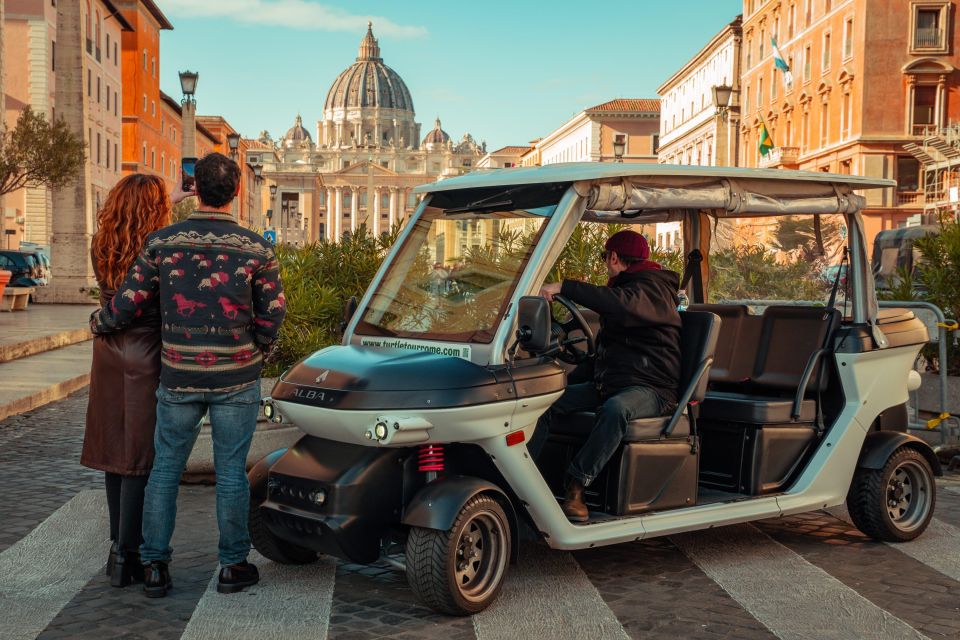
The day often closes in Vatican City. Since entry tickets aren’t included, you’re typically focused on orientation, sightseeing time, and a guided pass through the highlights that make the Vatican feel like a world inside the city.
Here’s how to make your best use of the final stretch: keep your eyes open for details beyond the obvious. The Vatican is visually dense. A guide helps you avoid information overload by selecting what to notice first—so you don’t leave thinking you saw everything and learned nothing.
If you want the Vatican’s deeper layers (museums, chapels, and the big-ticket interiors), plan those as separate visits after this tour. This one gives you the context and route memory you’ll use later.
Is $164.26 a Good Deal for This Private Golf Cart Tour?
Let’s talk value in plain terms. At $164.26 per person with a private group, you’re paying for three things:
- Time savings in a city where walking can be relentless.
- Guide attention, not a crowded shared experience.
- Transportation through areas that are slow or awkward on foot.
Because it’s private and customisable to a certain extent, the money makes more sense if you have a specific goal—like seeing the main icons plus some less-expected stops without spending your whole day in lines.
The main cost caveat is the obvious one: entry tickets aren’t included. That’s normal for tours like this, but it affects how “complete” your day feels. If you compare this to an all-inclusive ticketed tour, you may feel a mismatch. If you compare it to planning your own route and juggling tickets, it still tends to win because you get coherent pacing and narration.
Also, duration is 1.5 to 3 hours depending on your selected start time. The sweet spot for value is usually the longer end, because it allows the guide to cover more stops and give you time to actually enjoy each place rather than just rush through.
Who This Tour Fits Best (and Who Might Want a Different Plan)
This tour is especially good for:
- First-timers who want quick orientation before choosing deeper dives.
- Anyone who wants to see major sites but would rather avoid repeated long walks in Rome’s heat.
- Families who need a day that stays lively and doesn’t grind down kids or elders.
- Groups who want flexibility—the guide can adjust based on what you already did and what you still want to see.
It might be less ideal if:
- You want full museum time at multiple sites (since visits here are timed and tickets aren’t included).
- You prefer slow, solitary wandering without a schedule. This tour keeps you moving.
The Guide Factor: Why Duccio, Paolina, Gian Marco, and Fabio Get Mentions
A golf cart tour lives or dies on the guide. In the feedback, several guides stand out for doing the job well: Duccio for passionate art-and-history framing, Paolina for energy and humor, Gian Marco for pacing and avoiding repeats, and Fabio for being kind and funny while staying informative.
You’ll also notice a pattern in the praise: guides are described as adaptable, and they often tailor the route to your interests. That’s a big deal. If you’re already doing Vatican museums later, you’ll want the guide to focus on what you’re not covering. The best versions of this tour feel like a plan made for your trip, not a script.
Should You Book This Rome Private Highlights Tour by Golf Cart?
Yes—if you want a smart first-day strategy. I’d book it when you’re trying to cover Rome’s headline sights without turning your trip into a walking workout, and when having a local guide narrate the “why” matters to you.
I’d think twice if you’re the type who plans to spend hours inside specific sites immediately. This tour is best at setting you up: you leave with a map of relationships between monuments, viewpoints, and ancient streets—then you return where you want more time.
If you book, do it with a simple mindset: treat this as your orientation circuit. Then follow up on the places that grabbed you most on foot, on your own schedule, when you have the time to go deeper.
FAQ
How long is the Rome private highlights tour by golf cart?
The tour lasts 1.5 to 3 hours, depending on the starting time you choose.
Is this tour private?
Yes. It’s a private group tour.
Where is pickup available?
Pickup is available only in the historical center at addresses with ZIP codes 00184, 00186, and 00187.
Which sights are included on the tour?
You’ll see major highlights such as the Pantheon, Piazza Navona, Spanish Steps, Trevi Fountain, Colosseum, Circus Maximus, Jewish Ghetto, Castel Sant’Angelo, and Vatican City, along with photo stops like Aventine Hill and the Theatre of Marcellus, plus stops such as Mouth of Truth and Forum Boarium.
Are entry tickets included?
No. Entry tickets are not included.
What languages are available for the live guide?
The tour guide is available in English, French, German, Italian, and Spanish.
What is included besides the guide?
The tour includes pickup and drop-off in the historical center, bottled water, and umbrellas and rain cover if needed. Blankets are also provided if needed.
Is the tour wheelchair accessible?
Yes, the tour is wheelchair accessible. If you plan to bring a wheelchair or stroller, you should let the provider know beforehand.
Can I cancel for a full refund?
Yes. You can cancel up to 24 hours in advance for a full refund.
Can I reserve now and pay later?
Yes. You can reserve now and pay later, with the option to pay nothing today.