REVIEW · ROME
Rome: Private Golf Cart Tour
Book on Viator →Operated by Rome Grand Tour · Bookable on Viator
Golf carts turn Rome into a laid-back highlight reel. From wraparound views to easy pacing, this private ride is a smooth way to grasp the city fast. I like how the route is customizable, so you’re not stuck with a one-size-fits-all loop.
Two big wins: you get major sights without the strain of the metro, thanks to pickup/drop-off in central Rome, and you also get a guided explanation from a driver-guide. One watch-out: several landmarks are external stops, so if you’re craving inside-the-building time at places like the Colosseum or the Pantheon, you may still want a separate ticketed visit.
In This Review
- Key things I’d watch for before you book
- Why this Rome golf cart tour feels smarter than buses (or taxis)
- How the 2.5-hour route is paced (and what that means for your day)
- Colosseum from the outside: big scale, quick context
- St. Peter’s Square: designed for crowds, explained for humans
- Castel Sant’Angelo: Hadrian’s tomb turned fortress (and legend)
- Trevi Fountain: the myth behind the coin, plus the math of its size
- Piazza Navona: three fountains and street-life energy
- Pantheon outside: the numbers that make it feel unreal
- Spanish Steps: the embassy clue and the shopping streets
- Circus Maximus: ancient racecourse becomes a modern park
- Who this private golf cart tour is best for
- Value check: is $119.48 per person worth it?
- A few smart booking tips before you pick your time
- Should you book this Rome golf cart tour?
- FAQ
- How long is the Rome private golf cart tour?
- Is this tour private?
- Do you offer pickup and drop-off in Rome?
- What language is the tour in?
- Is this tour good for people who don’t want to use the metro?
- Are there admission tickets included for the stops?
- Which sights are included on the route?
- Can the route be customized?
- What’s the cancellation policy?
Key things I’d watch for before you book
- Pickup in central Rome: less wandering at the start and end of the tour
- Private, flexible route: tell your guide what you care about and adjust the flow
- Short sight stops (about 15 minutes each): great for orientation, not for deep museum time
- External viewing at major stops: Colosseum and Pantheon are seen from the outside here
- Driver-guide storytelling: architecture, history, and street-level culture as you ride
Why this Rome golf cart tour feels smarter than buses (or taxis)
Rome has a way of wearing you out before you even start collecting memories. This tour cuts the friction: you sit back in an airy cart, take in wide views as you roll through key neighborhoods, and keep moving without negotiating lanes on foot. For first-time visitors, it’s one of the fastest ways to get your bearings—and for people arriving from travel, it’s a relief.
The private setup matters more than it sounds. You’re not sharing the cart schedule with a large group that has its own pace. That means your guide can slow down for photos, spend a little more time where you’re most interested, and steer the day toward what you want to remember.
You can also read our reviews of more private tours in Rome



How the 2.5-hour route is paced (and what that means for your day)
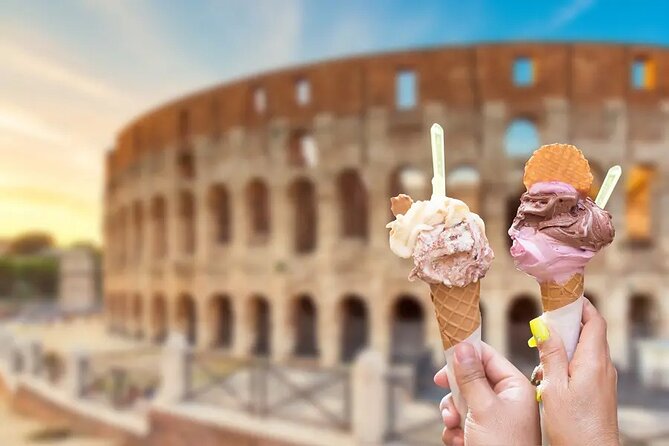
The tour runs about 2 hours 30 minutes and is built around a series of short stops—most are around 15 minutes each. That structure is ideal if you’re trying to:
- see the “I can’t believe this is real” monuments
- learn the basic story of what you’re seeing
- decide what deserves your time later
It’s also why you shouldn’t book this as your only Rome activity. Think of it as orientation. The cart gets you to the places, the guide gives context, and you leave with a clear sense of where you want to go back.
Pickup is offered, and if you don’t already have a pickup point, you can coordinate any city-center pickup. You’ll also have drop-off back in central Rome, which is a big deal when you want your time to stay efficient.
Colosseum from the outside: big scale, quick context
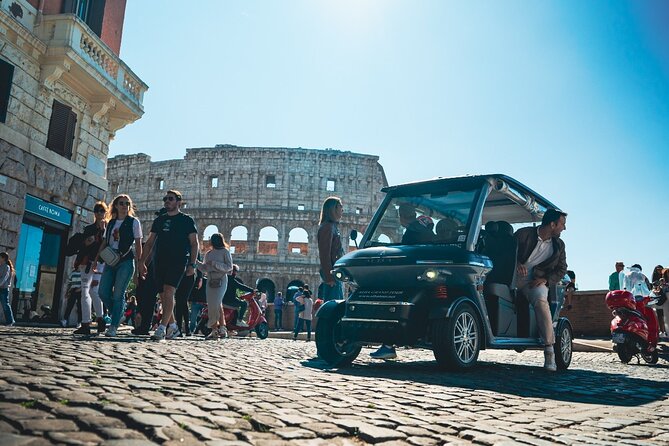
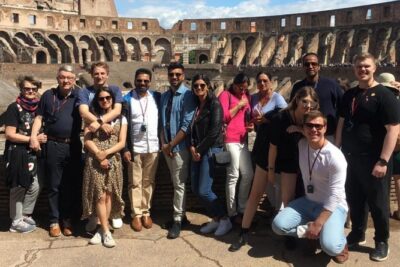
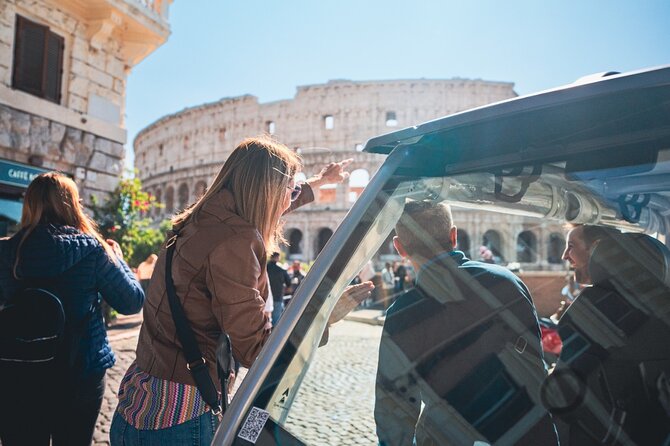
The day starts at the Colosseum, also known as the Flavian Amphitheatre. You’ll get an external visit—so you’re not doing the long entrance-and-lines experience as part of this specific tour format. Still, it hits hard in the best way: the structure is imposing, and the guide’s explanations help you understand what you’re actually looking at.
The story you’re walked through includes the Colosseum’s role in the Roman Empire: crowds of more than 50,000 enjoying spectacles under the old “Bread and Circuses” idea. With almost 2,000 years of history, it’s the kind of monument where a little context turns it from a photo subject into a real place in time.
Practical tip: if you’re someone who likes photos from different angles, ask your guide for a couple of quick reposition stops. With a cart, it’s easier than you might expect.
St. Peter’s Square: designed for crowds, explained for humans
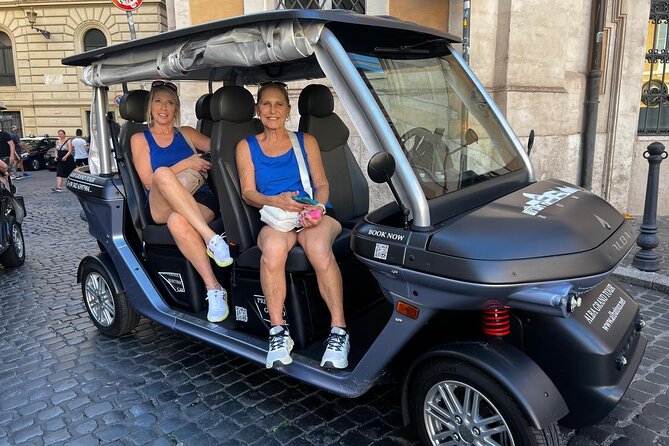
Next is St. Peter’s Square (Piazza San Pietro), one of the most famous open spaces in the world. You don’t need a ticket here; you’re set up to take it in quickly from the cart and nearby viewpoints.
This stop is all about scale and design. You’ll hear how the square was created by Bernini in the 17th century and how it can hold over 300,000 people. The guide also points out the mechanics of the space—like the 284 columns and 88 pilasters forming four rows of colonnades, plus the line of 140 statues above.
Then there’s the center: the obelisk and fountains. The obelisk is about 25 meters tall and was brought from Egypt in 1586. It’s the kind of detail that makes you look up instead of just snapping a quick shot.
Timing note: because this is a short stop, the best move is to decide in advance what you want most—wide-square photos, the columns, or the fountains.
Castel Sant’Angelo: Hadrian’s tomb turned fortress (and legend)
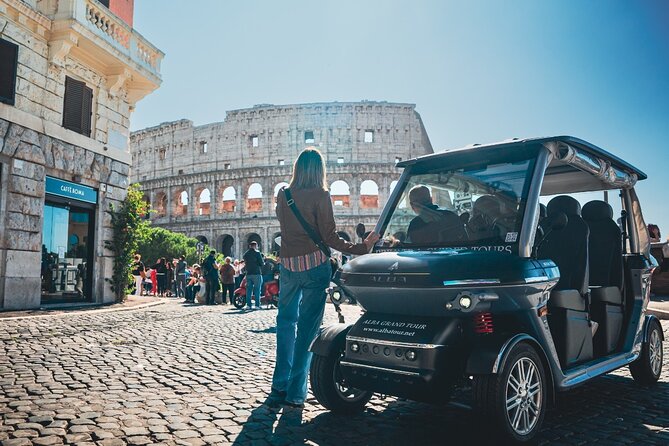
At Castel Sant’Angelo, you’re in the zone right along the Tiber, near Vatican territory. The tour frames it as Hadrian’s Tomb—construction beginning in 135 under Emperor Hadrian, completed in 139 as a mausoleum for his family.
From there, you get the evolution: it became a military building and was later integrated into the Aurelian Walls (in 403). The storytelling also touches the famous moment in 590, when Pope Gregory I reportedly had a vision of Saint Michael the Archangel during a plague—leading to the angel statue crowning the castle.
Even without long time inside, the cart ride + guide narration makes the fortress feel like more than just a silhouette on the skyline.






Trevi Fountain: the myth behind the coin, plus the math of its size
Trevi Fountain is fast, but memorable. The tour format gives you enough time to see it properly and learn the myth behind the coin-throwing tradition (without turning the stop into a long legend lecture). You’ll also hear the core facts that make it easier to appreciate once you’re there.
It’s huge: about 20 meters wide and 26 meters high. It’s also described as the largest fountain in the city. One fun piece the guide shares is the name origin: Trevi comes from Tre Vie (three ways), since it sits at the meeting point of three streets.
Practical tip: this is a photo magnet, so if you care about getting a clear shot, go a bit early in your time window and ask your guide where the best angle is before crowds fully tighten.
Piazza Navona: three fountains and street-life energy
Piazza Navona is next, and it’s built for people-watching. The tour highlights the three fountains designed during the papacy of Gregory XIII. The square’s layout also lends itself to quick “look everywhere” photos because the fountains create natural anchors.
You’ll also notice the everyday life around you: restaurants and terraces surround the square, and street artists often add motion while you wait between photo angles. It’s the kind of stop where the guide helps you notice what you’d otherwise miss if you were focused only on landmarks.
Pantheon outside: the numbers that make it feel unreal
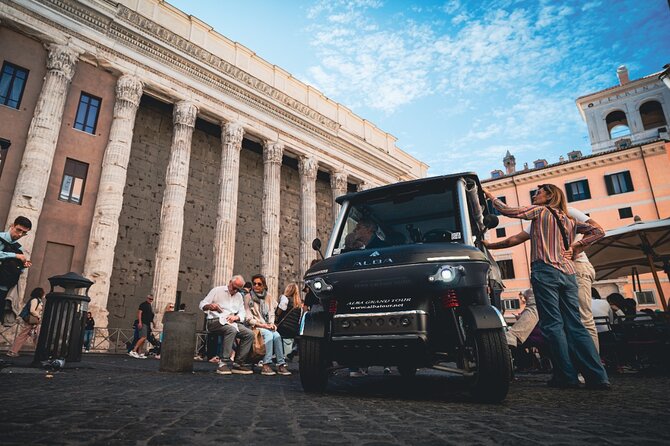
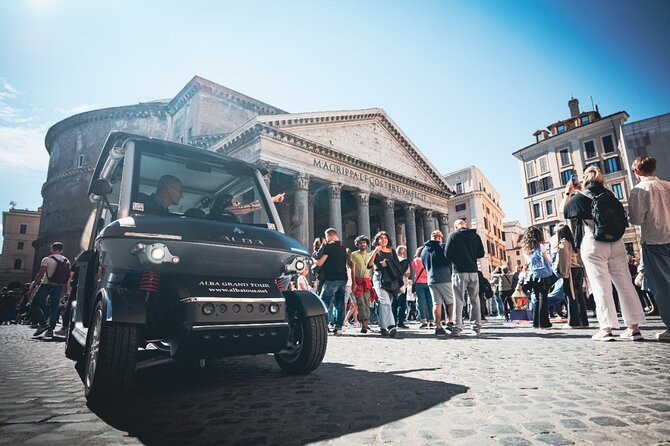
Then comes the Pantheon, with an external visit. This is one of the best-preserved ancient Rome buildings, and it’s famous for a detail that sounds like trivia until you stand near it: the dome’s dimensions. The building’s circular form has the same diameter as its height—43.5 meters—and the dome is even larger than St. Peter’s Basilica’s dome.
At the top is the opening for daylight: a 9-meter diameter opening that brings natural light into the interior. The guide also mentions the tombs inside and the presence of artworks, including Raphael.
Even from the outside, this stop often lands as a “wait, that’s math?” moment. The more the guide points out, the more you’ll understand why the Pantheon has lasted so well.
Spanish Steps: the embassy clue and the shopping streets
Spanish Steps (Piazza di Spagna) is a quick ride-and-view stop, but it’s packed with context. You’ll learn that the square takes its name from the Palazzo di Spagna, which served as the Spanish Embassy for the Vatican since the 17th century.
The guide also frames the neighborhood around it—near major shopping streets like Via dei Condotti, Via Frattina, and Via del Babuino—plus the surrounding 17th and 18th century villas in the area. It helps the steps feel less like a single photo moment and more like a doorway into how Rome’s old and new co-exist.
Practical tip: if you plan to walk those streets after the tour, this stop is a good time to mentally map where you’d like to wander next.
Circus Maximus: ancient racecourse becomes a modern park
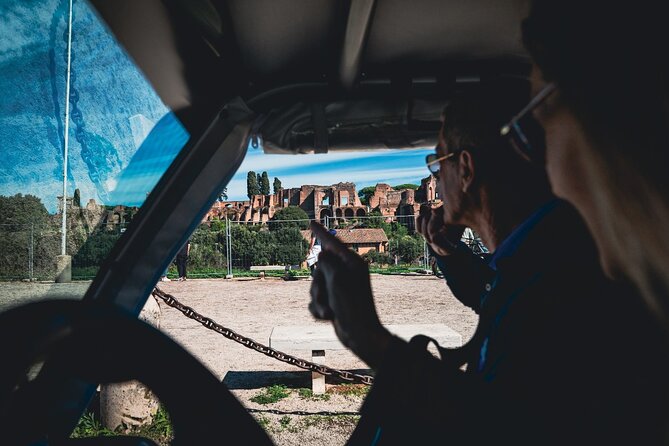
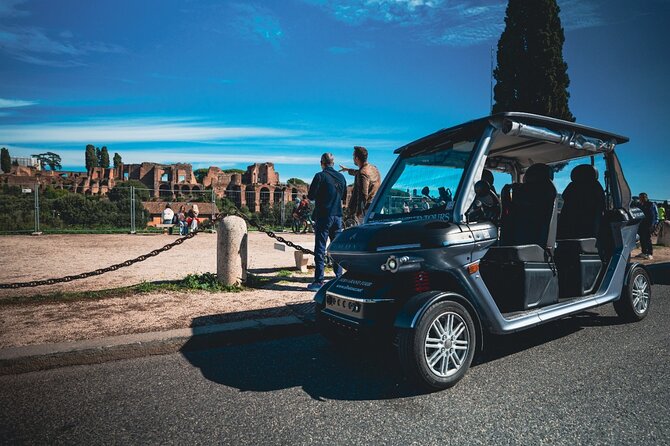
Finally, Circus Maximus wraps the day up. This was an ancient Roman chariot-racing stadium and mass entertainment venue, sitting in the valley between the Aventine and Palatine hills.
The facts are big: it was the first and largest stadium in ancient Rome, measuring 621 meters long and 118 meters wide, with the capacity for over 150,000 spectators. In its fully developed form, it became the model for circuses across the Roman Empire. Today, you’ll find the site as a public park.
What I like about this ending is that it gives Rome a slower-feeling backdrop. You’re finishing with a place that reads as ancient even if you’re just glancing at open space.
Who this private golf cart tour is best for
This tour works especially well if you:
- want a quick intro to Rome’s major sights without exhausting your legs
- are traveling with kids, because the pacing is easier than a long walking day
- have mobility limits or just don’t want to march constantly
- want photo stops plus guide context, not a lecture-only day
The guide experience can vary by person, but the pattern is consistent: guides like Giulia, Fabio, and Carlo are described as friendly, flexible, and willing to tailor stops to what you actually want to see. In one case, rain shields mattered, and the guide adjusted close to locations to shorten walking.
Also, because it’s private, it’s a good fit for a shorter visit. If you only have a day or two, this helps you decide what to revisit once the city starts making sense.
Value check: is $119.48 per person worth it?
At $119.48 per person for about 2.5 hours, it’s not the cheapest way to see Rome. But it’s often good value if your priorities are comfort, efficiency, and a guide who can explain what you’re looking at while you ride.
Here’s how I weigh the value:
- You pay for time saved (pickup/drop-off and cart transport).
- You pay for learning without doing separate planning for each stop.
- You’re paying for a private experience rather than fitting into a crowded group schedule.
Also, it’s popular enough that it’s commonly booked around 48 days in advance, which usually signals a stable demand for an easy “first overview” day.
If you’re the type who already has a plan for separate museum tickets and you just need transportation + orientation, this tour can be an efficient starting block. If you want long interior visits at every stop, you’ll likely pair it with another tour or ticketed visit.
A few smart booking tips before you pick your time
- If you’re hoping to dodge the biggest crush at the most famous spots, consider an earlier start. Some guides can shift destinations based on what you’ve already seen.
- Tell the driver-guide what you care about—architecture, photo angles, or quieter corners. The private setup is built for this.
- If you’re traveling as a family or with mobility considerations, say so at the start. The guide’s job is to keep the day comfortable, not to force a fixed route no matter what.
Should you book this Rome golf cart tour?
Yes, if you want an easy, guided way to see Rome’s headline sights in one smooth block of time—especially on your first day. It’s also a strong choice for families and anyone who doesn’t want to spend the day fighting cobblestones.
I’d skip it (or at least treat it as a warm-up) if your top goal is deep time inside major monuments, because key stops like the Colosseum and the Pantheon are external viewing in this format. In that case, book this for orientation, then plan a separate ticketed visit for the interiors you care about most.
If you want a day that feels organized, comfortable, and full of context, this private golf cart tour is a solid way to start Rome.
FAQ
How long is the Rome private golf cart tour?
It runs for about 2 hours 30 minutes.
Is this tour private?
Yes. It’s a private tour/activity, so only your group participates.
Do you offer pickup and drop-off in Rome?
Pickup is offered, and the tour includes pickup and drop-off in central Rome.
What language is the tour in?
The tour is offered in English.
Is this tour good for people who don’t want to use the metro?
Yes. Since it includes pickup and drop-off in central Rome, you avoid needing to rely on the metro.
Are there admission tickets included for the stops?
The tour lists admission ticket free for the stops included.
Which sights are included on the route?
The route includes the Colosseum, St. Peter’s Square, Castel Sant’Angelo, Trevi Fountain, Piazza Navona, the Pantheon, Spanish Steps, and Circus Maximus.
Can the route be customized?
Yes. Because it’s private, you can customize the route to suit your interests.
What’s the cancellation policy?
Free cancellation is available up to 24 hours in advance for a full refund.