REVIEW · ROME
Rome: Panoramic Off-the-beaten-track Cannondale E-Bike tour
Book on GetYourGuide →Operated by TopBike Rental & Tours · Bookable on GetYourGuide
Rome makes more sense on two wheels. This Panoramic Off-the-beaten-track E-Bike tour mixes big-city icons with tight, local-feeling lanes, all on a quality Cannondale e-bike. I love the sweeping dome-and-rooftop view from Janiculum Hill, and I really like how the ride turns into quick hops between neighborhoods like Trastevere and the Jewish Ghetto. The one thing to consider is that this is still a city ride through narrow streets and changes in terrain, so you’ll want to stay alert and wear the helmet the whole time.
You meet at a bike shop on Via Labicana 49 (about a 5-minute walk from the Colosseum), then in just 4 hours you cover roughly 18 km with about 160 m of climbing. With a small group capped at 10, the guide can pace you and explain what you’re actually looking at—many departures are led in English and other languages, and guides named Chris, Rik, Bita, Imke, Bruno, and Manuel have shown up in past groups.
In This Review
- Key highlights you’ll feel in your legs (and your photos)
- Getting your bearings from Via Labicana 49
- Circus Maximus and the “big Rome” warm-up
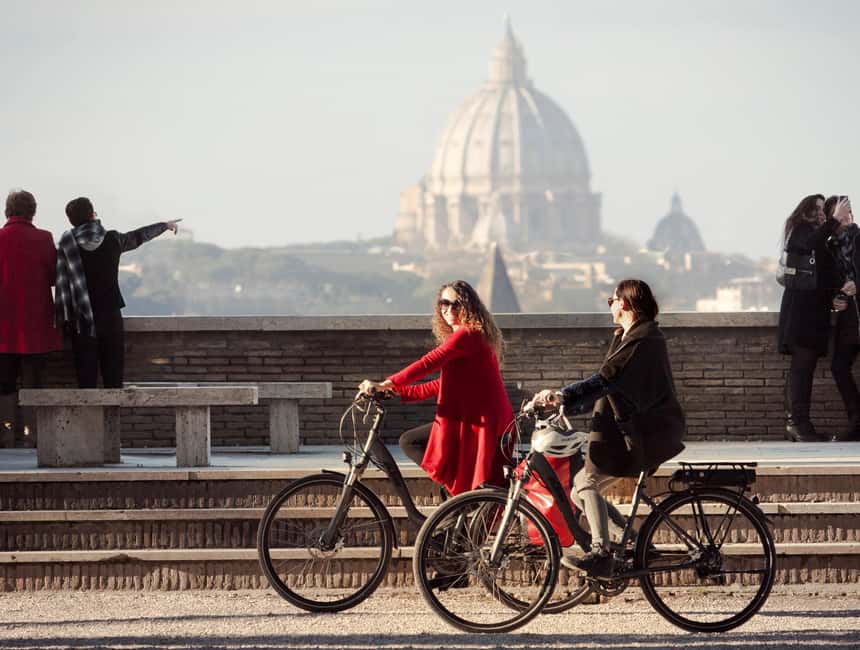
- Giardino degli Aranci: St. Peter’s dome, frame-ready
- Trastevere back alleys: the Rome you can feel
- Aventine, Janiculum, and Capitoline: the three hill payoff
- Janiculum Hill: domes and rooftops in one glance
- Capitoline Hill: the Forum from above
- St. Peter’s Square and Castel Sant’Angelo: the moment the city slows
- Campo de’ Fiori and the Jewish Ghetto: streets with texture
- Theatre of Marcellus and the Roman Forum route logic
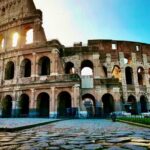
- Colosseum near the end: iconic, but calmer when timed right
- Bikes, safety, and comfort: how to make the ride easy
- What I’d wear and bring
- Weight and child considerations
- Price and value: is $100 per person worth it?
- Should you book this Rome e-bike tour?
- FAQ
- How long is the Panoramic Off-the-beaten-track Cannondale E-Bike tour?
- Where do I meet for the tour?
- What bike is included?
- How far and how much climbing is there?
- Is this tour difficult?
- How big is the group?
- Are there options for children and infants?
Key highlights you’ll feel in your legs (and your photos)
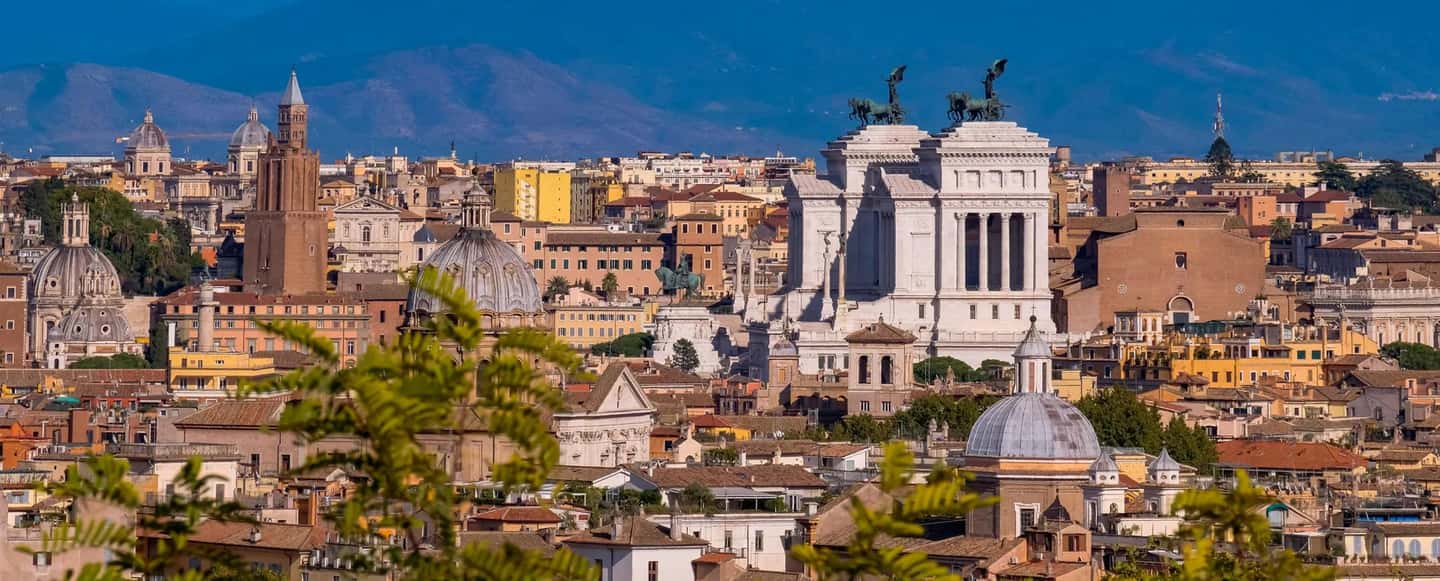
- Janiculum Hill skyline views of domes, rooftops, and the sweeping shape of Rome
- Garden of Oranges viewpoint where St. Peter’s Basilica’s dome shows up at just the right angle
- Trastevere back-alley riding that feels like you’re weaving through lived-in Rome, not just seeing postcards
- Capitoline Hill over the Roman Forum for one of the best “oh wow” vantage points
- Evening-friendly sightseeing rhythm that helps major sights feel calmer when you choose later starts
- Small-group control: limited to 10 people, so you’re not stuck behind a moving crowd of strangers
Getting your bearings from Via Labicana 49
The tour starts at Via Labicana 49, outside the bike shop. If you’re using the Colosseum as your landmark, it’s an easy walk over first—no long commute into the countryside or awkward transfers. From the first minutes, you’ll understand the appeal: Rome is huge, but the bike lets you connect points that would take forever by foot.
You’ll be on a Cannondale e-bike with anti-puncture tires and a comfortable saddle. The handlebar bag is handy for small essentials, and the tour includes a biodegradable bottle of water. The ride is 4 hours total, and the overall difficulty is listed as leisure (or intermediate with a child seat/extension setup).
You can also read our reviews of more cycling tours in Rome
Circus Maximus and the “big Rome” warm-up
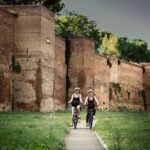
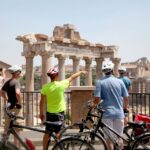
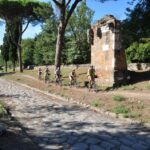
Early on, you’ll pass through the area of Circus Maximus. Even if you’ve only seen photos of this place, it hits differently when you’re riding near the scale—this is where ancient Rome did mass spectacles on a serious level. It’s also a smart warm-up: you get a sense of direction before the tour starts turning into tighter neighborhood streets.
What I like about this part is the pacing. You’re not doing a hard climb immediately, so your body gets used to the feel of the e-bike and the rhythm of city riding. If you’re someone who gets anxious with traffic, this first stretch gives you time to settle in.
A small drawback: Rome doesn’t magically become bike-friendly overnight. Expect sections where you share space with cars and where the street layout forces quick attention. Staying focused matters more than speed.
Giardino degli Aranci: St. Peter’s dome, frame-ready
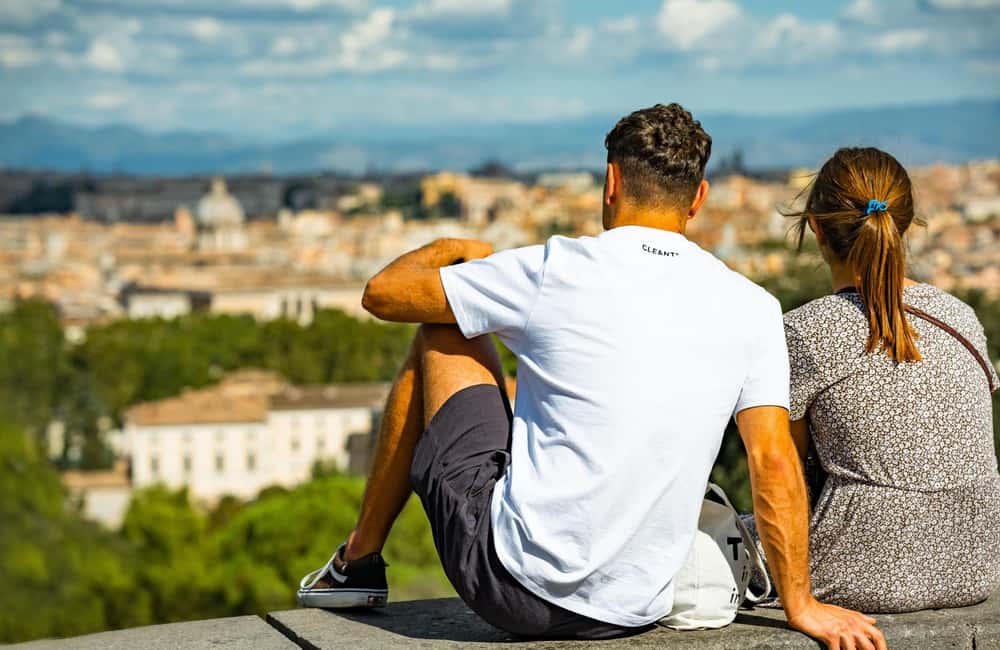
Then comes one of the tour’s most photoable moments: the Giardino degli Aranci (Garden of Oranges). This stop is famous here because it lines up with a classic Rome view—specifically, you’ll be able to admire the dome of Saint Peter’s Basilica from the garden. It’s a viewpoint that feels like an in-the-know shortcut rather than a generic roadside angle.
This is the kind of stop that works even if you’re not a formal museum person. You pause, look, and your brain finally matches street-level Rome with the grand landmarks you’ve been seeing from afar. The garden setting also breaks up the ride, which matters when you’re rolling for a full 4 hours.
If you’re visiting during warmer months, this is also a nice reset. You get a cooler, calmer moment than the middle of the road, without losing the overall momentum of the tour.
Trastevere back alleys: the Rome you can feel
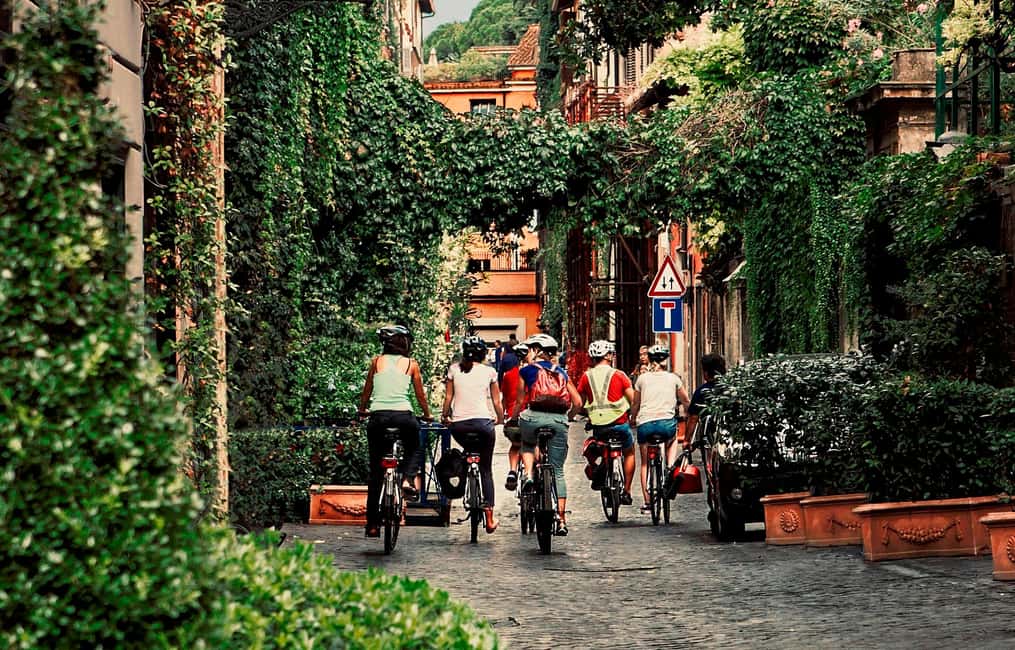
Next you’ll ride through Trastevere, and this is one of the best parts of the whole experience. Instead of moving in straight lines, you’re on winding, colorful back alleys where the city feels like it’s continuing without you. The e-bike helps here because you can take in the street character without constantly fighting the incline.
Trastevere is also a place where guides add real value. You don’t just stop at a highlight sign; you get to understand why the neighborhood feels the way it does and what you’re seeing as you pass buildings and viewpoints. Past guides associated with this tour include people like Bita, who have been praised for knowing Rome and keeping the ride entertaining.
Practical note: alley streets can be uneven. Keep your eyes up, and let the anti-puncture tires and pedal assist do their job while you stay steady.
Aventine, Janiculum, and Capitoline: the three hill payoff
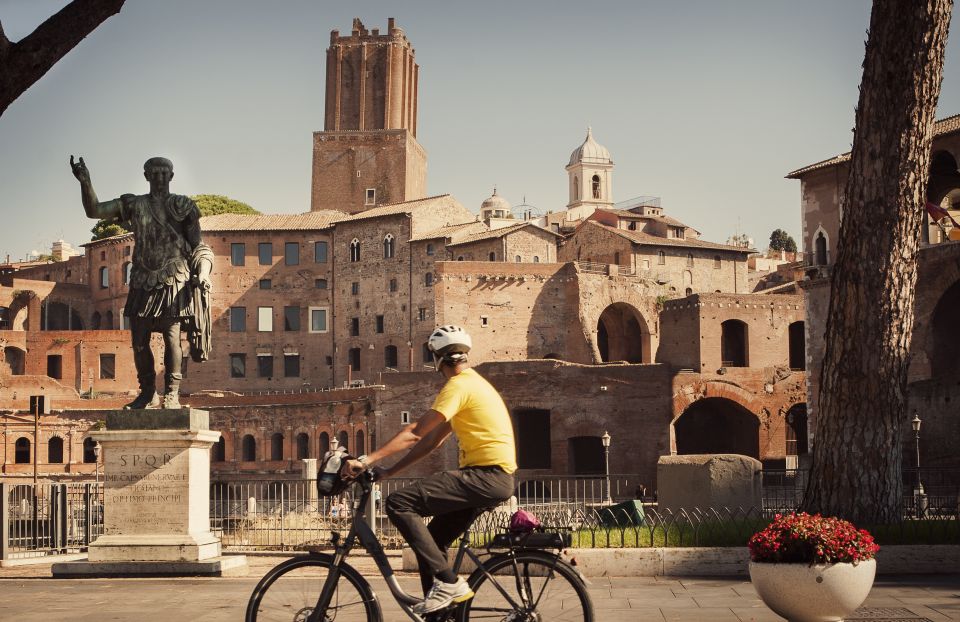
The tour includes climbing Aventine Hill, Janiculum Hill, and Capitoline Hill. These aren’t random hills for bragging rights. They’re the spine of Rome’s viewpoints—each one shifts you from street-level chaos to an “I get it now” view of domes, rooftops, and ancient ruins.
You can also read our reviews of more tours and experiences in Rome
Janiculum Hill: domes and rooftops in one glance
From Janiculum Hill, you get a breath-taking panorama of Rome’s domes and rooftops. This is the skyline payoff you’ll keep thinking about after you’ve gone back to your hotel. The e-bike matters here: you still get the effort of being outside and moving, but the uphill doesn’t wipe you out before the best views.
This is also where guides can help you orient. If you’ve been walking Rome for days and the landmarks start to blur, a hill viewpoint gives your brain something clean to map.
Capitoline Hill: the Forum from above
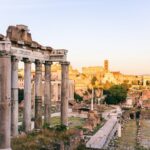
Later you’ll take in a marvelous scenic view over the Roman Forum from Capitoline Hill. Looking down toward the Forum gives you a scale shift that flat ground can’t offer. You see how the Forum sits inside the broader city, and it makes the ruins feel less like scattered stones.
The drawback here is timing and crowd level. If you’re choosing a later start, this portion can feel more relaxed. If you’re on a more peak-hour departure, expect more people in viewpoints. The bike route helps, but the view itself can still draw attention.
St. Peter’s Square and Castel Sant’Angelo: the moment the city slows
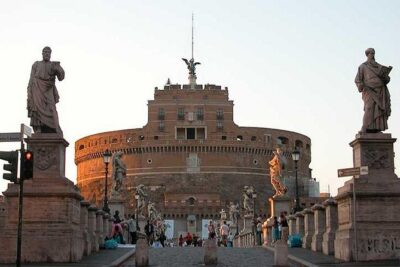
You’ll stop for St. Peter’s Basilica sightseeing and also visit Castel Sant’Angelo. This is central, monumental Rome—the kind of area that can feel overwhelming on foot. From the bike, you can cover ground without spending half the time threading through slow-moving crowds.
The key advantage is that you get “arrive, look, understand, move” instead of “stuck in one spot.” In particular, that dome angle from the Garden of Oranges sets you up for St. Peter’s proper later, so the experience feels like a sequence, not separate sightseeing stops.
Castel Sant’Angelo adds a different visual mood—more fortress-energy than church-only energy. It also helps the tour feel like a loop through Rome’s biggest themes: power, pilgrimage, and the way the city stacks eras on top of itself.
Campo de’ Fiori and the Jewish Ghetto: streets with texture
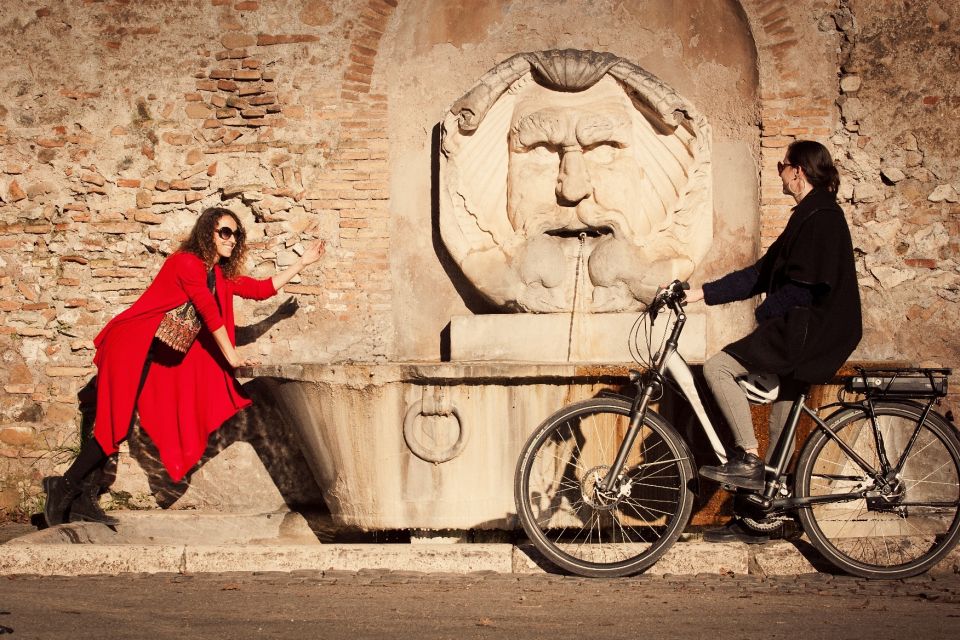
You’ll also ride past and stop at Campo de’ Fiori, a lively public square area. It’s a good contrast point in the middle of the tour: you’re shifting from hill viewpoints back into city life where people are moving around. This stop works well for photos, quick breaks, and resetting before the more historic-feeling segments.
Then the tour goes into the Jewish Ghetto area. This part is valuable because it’s not only about the landmark. The streets and the pace matter. You’re on a bike, so you can cover the area without feeling trapped in a walking bottleneck, while still experiencing the neighborhood close up.
A real plus here is how guides translate what you see into something you can hold in your head. Imke has been mentioned by past riders for giving detailed explanations without turning the tour into a lecture.
Theatre of Marcellus and the Roman Forum route logic
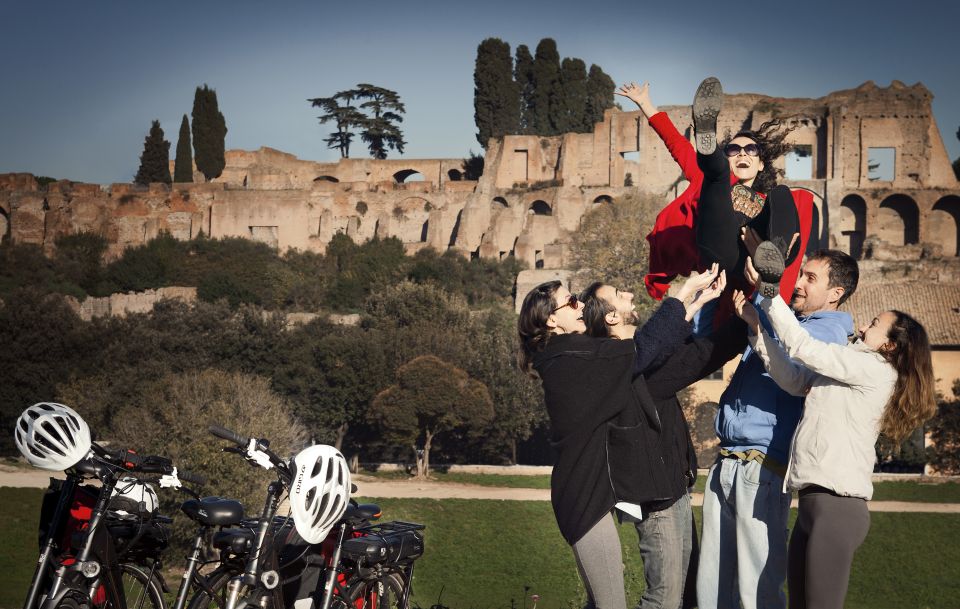
You’ll stop at the Theatre of Marcellus, another anchor for the ancient city. It’s a site that often gets less attention than the Colosseum, but from a cycling perspective, it fits the story: Rome’s entertainment spaces, civic spaces, and sacred spaces aren’t separate worlds. They connect.
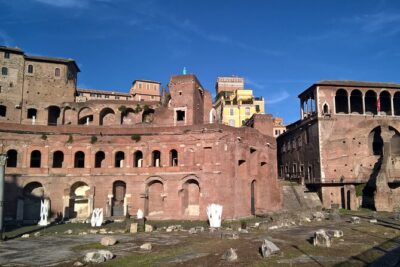
Then you’ll move into Roman Forum sightseeing, which pairs naturally with the earlier Capitoline viewpoint. Together, those moments help you build a mental model: view the Forum from above first, then come closer afterward. It’s easier to understand what you’re looking at when you’ve already seen the “map” from a hill.
Colosseum near the end: iconic, but calmer when timed right
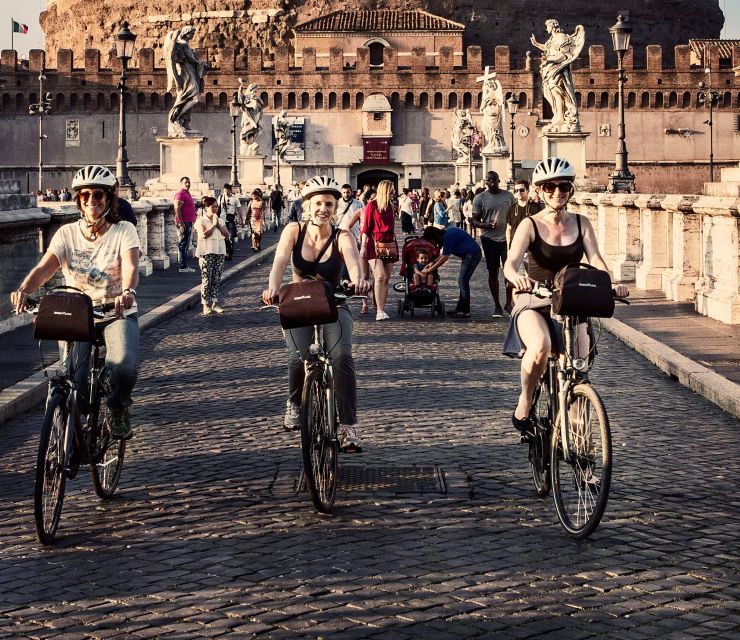
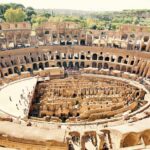
Finally, you arrive back at the Colosseum area and end your ride near the starting point on Via Labicana 49. The tour includes Colosseum sightseeing, and ending with it makes sense because by then you’ve already learned the city’s rhythm.
One practical tip: the tour timing can change the feel of major stops. Some past departures have been praised for riding at night and finding crowded places like St. Peter’s Square and Capitol/Colosseum areas with fewer people. If you can pick your starting time, I’d lean toward the cooler hours when possible. You’ll still see the landmarks, but you’ll enjoy moving around them.
Bikes, safety, and comfort: how to make the ride easy
You’ll ride a quality Cannondale E-bike with anti-puncture tires and a comfortable saddle, plus a helmet that’s mandatory for the whole tour. The pedal assist helps on the climbs, and the difficulty level is listed as leisure. Still, you’ll be cycling for 4 hours, and Rome’s streets mean you’ll need a bit of balance and attention.
What I’d wear and bring
- Comfortable closed-toe shoes (you’ll step off for viewpoints)
- Light layers for sun and breeze—Rome can shift fast in the hills
- A small day bag or the included handlebar bag for water and phone
Weight and child considerations
The bike equipment has a weight limitation of 300 lbs (136 kg). Families can travel with kids in specific setups: infants younger than 1 year aren’t allowed for safety reasons, kids aged 1–4 can ride free on a child seat, and kids aged 5–8 get a child extension. Kids aged 9 and above can ride independently on an appropriately sized e-bike.
Price and value: is $100 per person worth it?
At $100 per person, the value depends on what you want to optimize. If your goal is to cover a lot of Rome in limited time without cramming your day with transit delays, this price lines up with what you’re getting: a professional guide, a quality e-bike, helmet, a handlebar bag, and water.
The best value part is the pacing. You’re not just ticking off names; you’re cycling between viewpoints that would take too long on foot. You also get the benefit of someone helping you understand what you see—guides like Chris and Rik have been praised for making the time fly with strong information and a relaxing flow.
If you already love walking and you’re on a slow, full-day plan, you might skip the e-bike. But if you want big views plus real neighborhoods in a single afternoon, this is one of the more efficient ways to do it.
Should you book this Rome e-bike tour?
Book it if you want Rome’s highlights without spending your whole day battling distance. It’s a great choice for couples, small friend groups, and solo travelers who like structure but still want that close-up neighborhood feel. The mix of hill panoramas, Trastevere back alleys, and Forum/Capitoline viewpoints is the big reason to choose this over a standard bus-and-brochure day.
Skip it if you hate bike riding in city traffic, even at a relaxed pace, or if you’re expecting a fully low-stress stroll. You’ll be moving, you’ll pedal, and you’ll share streets with cars at times.
If you’re deciding between a morning and a later start, I’d pick later when you can. That’s when St. Peter’s area and the main sights have been described as feeling calmer, and the ride can feel like Rome letting you in instead of shouting over you.
FAQ
How long is the Panoramic Off-the-beaten-track Cannondale E-Bike tour?
The tour lasts 4 hours.
Where do I meet for the tour?
You meet at the shop on Via Labicana 49, which is about a 5-minute walk from the Colosseum.
What bike is included?
You ride a quality Cannondale e-bike with anti-puncture tires and a comfortable saddle. A helmet is also provided and mandatory.
How far and how much climbing is there?
The tour covers 18 kilometers with an elevation gain of 160 meters.
Is this tour difficult?
The difficulty is listed as leisure (or intermediate with a child seat or child extension mounted on the bicycle).
How big is the group?
The group is small and limited to 10 participants.
Are there options for children and infants?
Infants under 1 year are not allowed. Infants aged 1–4 travel on a child seat and join the tour free of charge. Children aged 5–8 receive a child extension. Children aged 9 and above can ride independently on an appropriately sized e-bike.