REVIEW · ROME
Rome: Introduction to the Colosseum and Ancient City Tour
Book on GetYourGuide →Operated by Crown Tours · Bookable on GetYourGuide
Stone and shadow, with a clear plan. This Colosseum tour gives you expert context plus skip-the-ticket-line access, then turns you loose to wander Palatine Hill and the Roman Forum on your own. I especially like how the guide connects the monument to everyday Roman life, not just dates and facts.
I also like the practical bits that make this experience smoother: you get radios/headsets to hear your guide well, and the route ends at Trajan’s Column, so you finish with a strong photo and landmark. The main drawback is simple but serious: ID is mandatory, and you won’t have a suitcase compartment, so bring a day bag you can handle inside the site.
In This Review
- Key things to know before you go
- Entering the Colosseum: skip the line, then let the guide set the scene
- Inside the Colosseum: why it was built, and why it still feels unreal
- Palatine Hill at your pace: Rome’s layers from early kingdom to modern times
- The Roman Forum: politics, religion, and money in the same stretch of stone
- Trajan’s Column finish: a strong landmark to end on
- Guides and audio: when explanations turn ruins into something you remember
- Timing, crowds, and what to bring (so the day stays calm)
- Price and value: what $58 gets you in the real world
- Who this Colosseum tour is best for
- Should you book this Colosseum tour?
- FAQ
- What’s the duration of the Rome: Introduction to the Colosseum and Ancient City Tour?
- Does this tour help me avoid the ticket line?
- Is entrance to the Colosseum included?
- Do I need an ID to enter?
- Is the tour self-paced or guided?
- Where does the tour end?
- What languages are available?
- Are radios or headsets included?
- What is the site fee for adults and children?
- What items are not allowed during the tour?
Key things to know before you go
- Skip-the-ticket-line entry helps you start faster at one of Rome’s busiest attractions
- You’ll get a guided explanation first, then self-paced time on Palatine Hill and in the Forum
- Learn the Colosseum’s purpose in plain language: politics, entertainment, and engineering
- Palatine Hill shows layered Rome, from early kingdom ruins to later imperial and modern traces
- The walk ends near Trajan’s Column, a satisfying “wrap-up” monument
Entering the Colosseum: skip the line, then let the guide set the scene
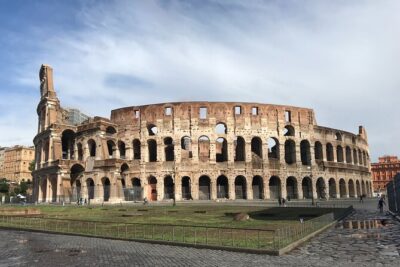
The Colosseum is one of those places where your first minute can make or break the whole visit. This tour tackles that with skip-the-ticket-line admission, so you’re not burning your limited time stuck at the entrance while the crowd inches along. Once inside, the guide helps you get oriented fast: where you are, what you’re looking at, and why it mattered to Romans.
You’ll follow a guided portion that focuses on the big picture, then move into areas where you can slow down and explore at your own speed. That mix works well here. The Colosseum is huge, and your eyes will want to jump everywhere—your guide’s job is to point you toward what to notice first, then your job is to choose where to spend extra time.
One practical note that affects everyone: your ID is required at the entrance. The site won’t bend the rules for missing documents. Bring your passport or ID card, and plan for a no-drama arrival.
You can also read our reviews of more city tours in Rome



Inside the Colosseum: why it was built, and why it still feels unreal
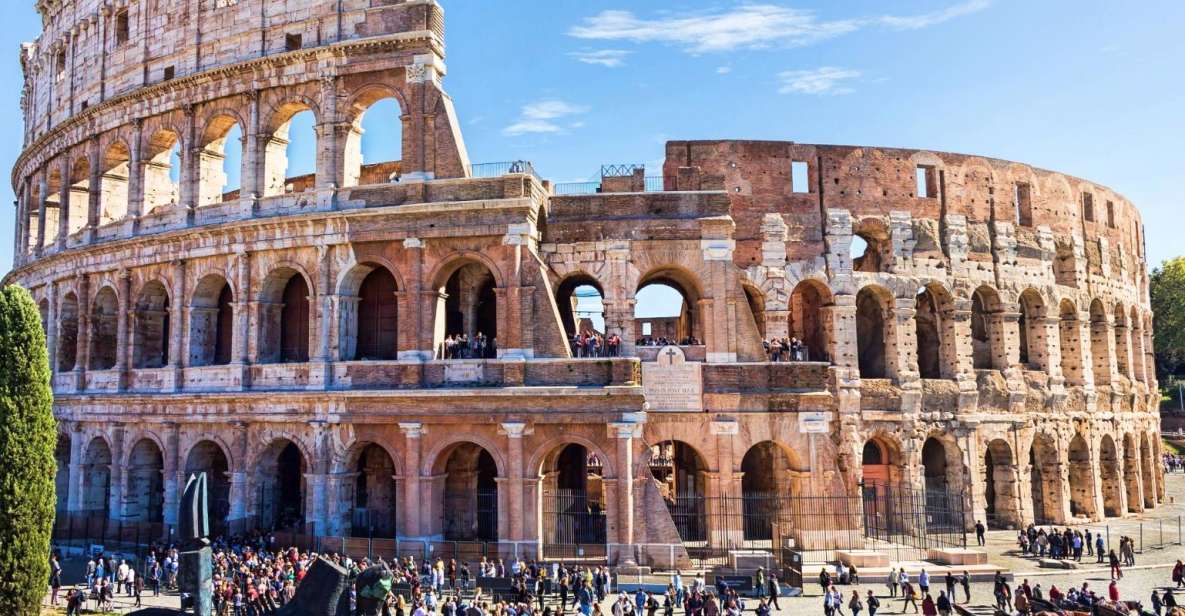
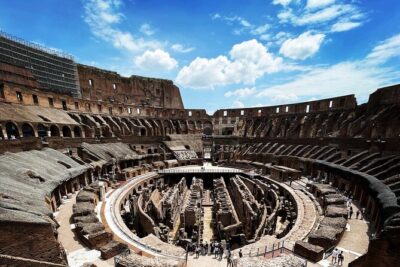
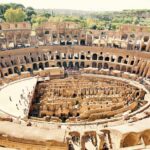
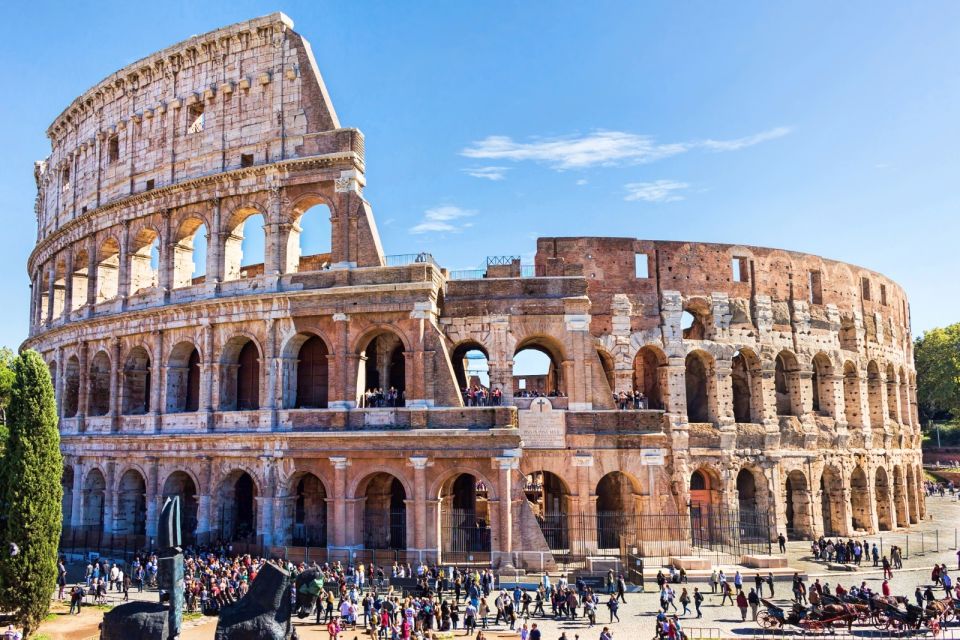
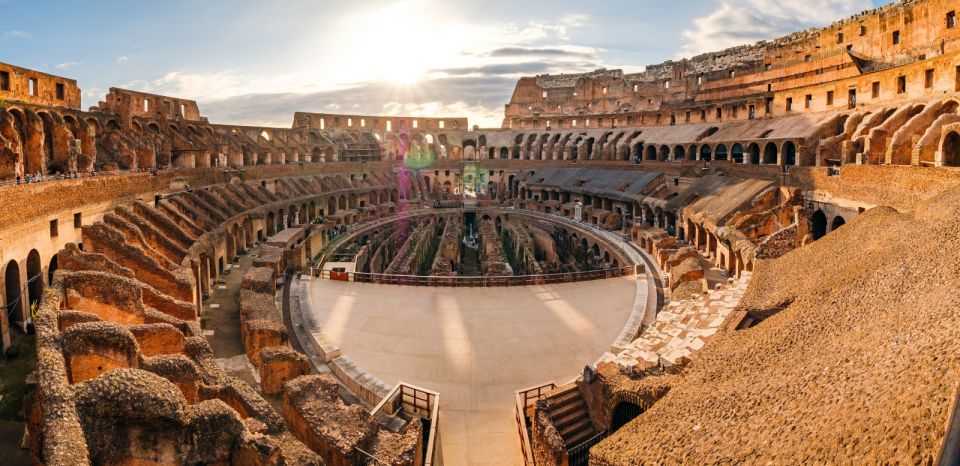
Your guide will walk you through the Colosseum with the kind of storytelling that turns ruins into a real-world system. The Colosseum had over 80 entrances and could hold about 50,000 spectators, which already hints at the engineering mindset behind it.
You’ll also learn the three core reasons it existed:
- The Flavian Dynasty built it as a gift to Roman citizens to boost their popularity
- It staged entertainment—think public spectacles on a grand scale
- It showcased Roman engineering techniques as proof they could do it
A detail I like because it gives you perspective: festivals and games could last up to 100 days. That means the Colosseum wasn’t just a one-off event location—it was a long-running social machine.
The tour’s value here is not that you’ll memorize numbers. It’s that you’ll see the logic in the structure. When you understand the Colosseum as a political and engineering statement—built to move crowds, sustain attention, and project power—you start reading the space differently. Even if you only catch a few things your guide explains, you’ll have a much better time walking around afterward.
Palatine Hill at your pace: Rome’s layers from early kingdom to modern times
After the guided part, you’ll head into Palatine Hill, where the viewpoint energy is different. This isn’t only about statues or single monuments. Palatine Hill is famous because it holds multiple eras in one compact area.
Your guide will point out what you’re looking at across time, including:
- Ruins from the early kingdom of Rome (dating to the 7th century BCE)
- Later layers connected to the Roman Republic
- The palace of Emperor Domitian from the Imperial Age
- Later presence associated with the Farnese family during the Renaissance
- And even the 20th-century presence of Mussolini
That list matters because it explains why Palatine Hill can feel both intimate and time-warped. You’re not just seeing “old stuff.” You’re seeing Rome repeatedly rebuild on top of itself, with new power replacing old power—sometimes literally in the same footprint.
You’ll also get panoramic views over the area, including sights that tie back visually to the Colosseum. The guide helps you position your eyes, then you can take the photos and slow walking breaks you want. If you like to spend time reading inscriptions, staring at brickwork, or just catching your breath away from the heaviest crowds, this self-paced freedom is a win.
The Roman Forum: politics, religion, and money in the same stretch of stone
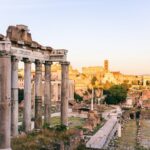
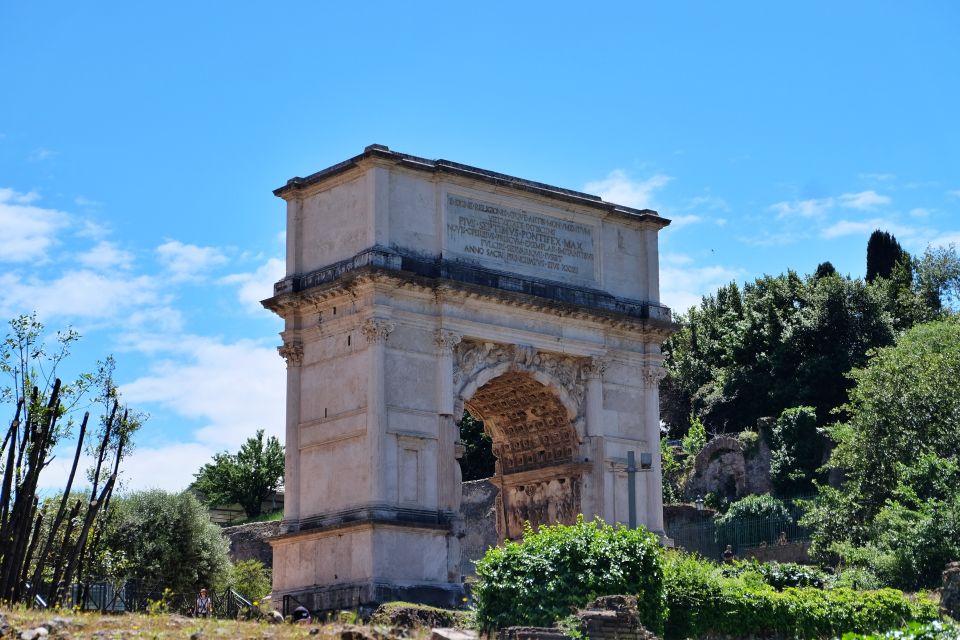
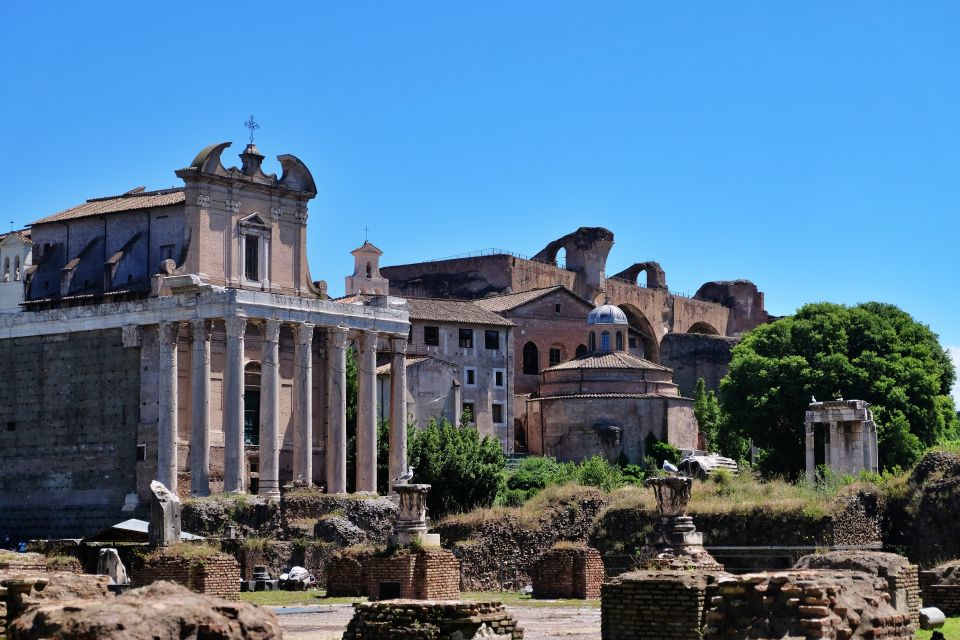
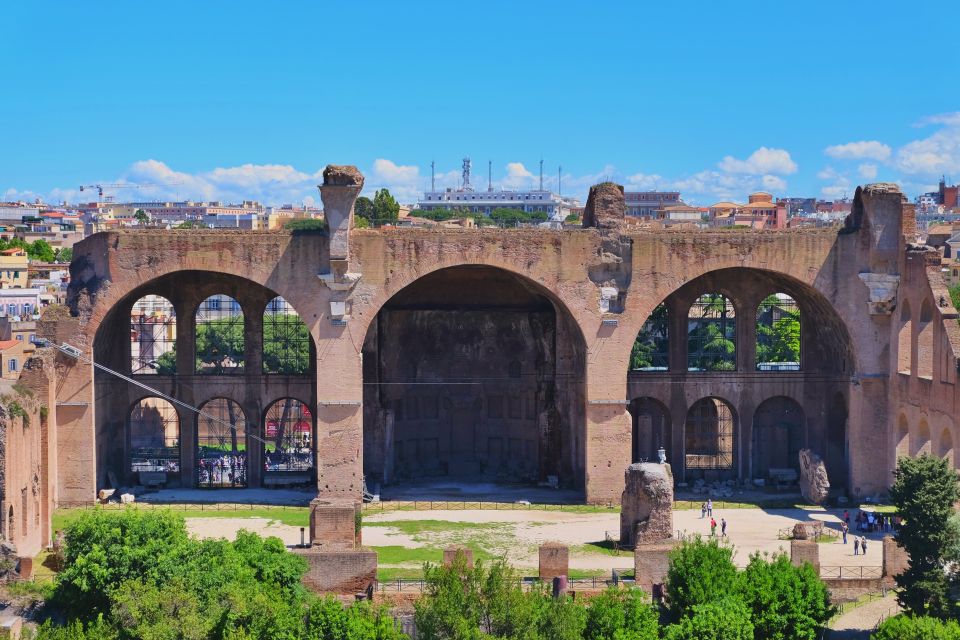
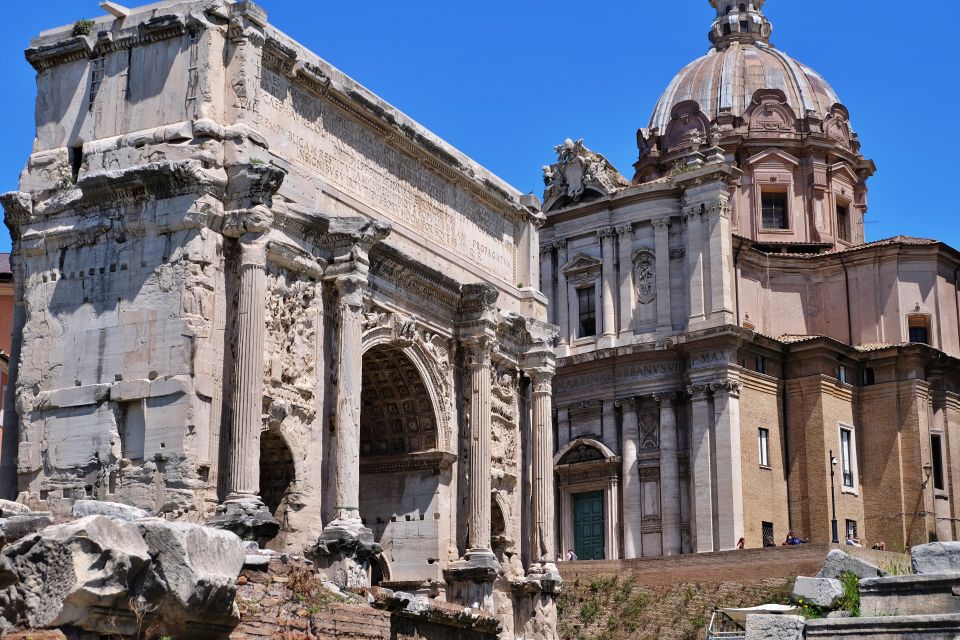
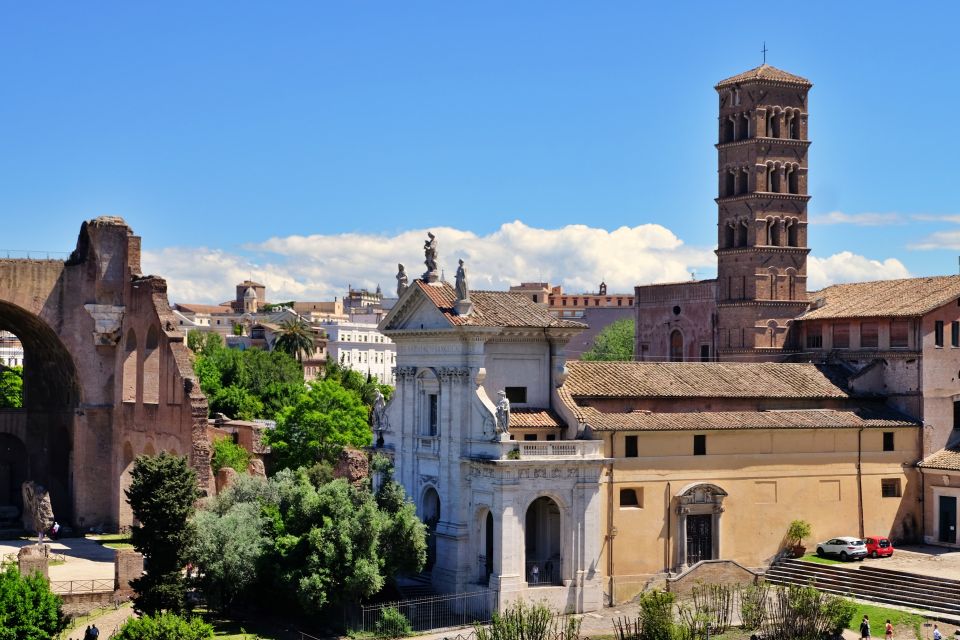
The Roman Forum is where your tour context becomes truly useful. This area was the social, political, religious, and financial center of the Roman Empire, and the ruins still show how dense and multi-purpose the space was.
Your guide will explain the Forum as a meeting ground where different layers of society rubbed shoulders daily. That includes everyone from poor people to powerful senators, all in one place. Knowing that helps you stop thinking of the Forum as a museum set of disconnected remnants. It’s more like a high-traffic “systems hub,” where decisions, ceremonies, and commerce all shared the same walkways.
As you explore, you’ll see structures still standing and get a sense for the scale of daily life. The practical value here is that the guide’s myth-and-legend storytelling gives you hooks for what you’re reading with your eyes. Without that, it’s easy to wander and feel like you’re staring at random blocks. With it, you start to recognize patterns—how people moved, what buildings likely signaled, and why some spots would have mattered more than others.
Trajan’s Column finish: a strong landmark to end on
Most Colosseum tours stop and send you back the way you came. This one aims to end at Trajan’s Column, described as a famous icon of Roman victory and power. That ending point helps you because it gives your visit a finish line.
It’s also a smart cue for your next step. Trajan’s Column is a clear landmark, so you can re-orient easily afterward and decide whether to continue your walk, stop for a meal, or connect to other sights. Even if you only care about photos, ending at a recognizable monument adds structure to the day.






Guides and audio: when explanations turn ruins into something you remember
A major reason this tour earns a high rating is the quality of the guiding. The explanations are built around clarity, including stories about gladiators and the real-world reasons the Romans did what they did. It’s the difference between hearing history as a list and understanding it as a lived system.
You’ll also have radios and headsets, which matters in the Colosseum area where sound can bounce and crowds can drown out normal conversation. I like this setup because it lets you ask follow-up questions without yelling.
Language options include French, German, English, Italian, and Spanish, so you can choose what feels easiest for you. One extra detail I’d watch for: if you’re in a smaller group, it tends to be easier to ask questions and get direct answers. Some departures have been run in very small groups (about 8 people), which is a nice advantage if you want interaction rather than just passive listening.
And yes, guide personalities matter. People have specifically called out guides such as Catherine and Alessandro Palma for being sharp, funny, and attentive, with answers that stick when you’re standing in the actual site.
Timing, crowds, and what to bring (so the day stays calm)
This tour runs about 2.5 hours. In July and August, the visit is 2 hours, so plan your expectations in peak heat. Shorter time can mean less wandering space, so if you want extra time for photos or slow reading, you might prefer going outside the hottest months.
Your biggest “don’t mess this up” items:
- Bring your passport or ID card (for adults and children)
- Avoid oversize luggage; there’s no suitcase compartment
- Don’t plan to carry restricted items inside (see the FAQ for specifics)
Also, remember that the meeting point can vary depending on the option booked. Give yourself a buffer before start time, because the area around major tour offices can feel crowded and easy to misread at first glance. If you’re prone to arriving late, this is one tour where you should build in extra minutes.
Price and value: what $58 gets you in the real world
The listed price is $58 per person for a 2.5-hour experience. That sounds like a lot until you break down what’s actually included.
What you’re paying for (based on what the tour covers):
- A tour guide who explains the Colosseum, Palatine Hill, and the Roman Forum
- Radios/headsets so you can hear the guide clearly
- Entrance to the Colosseum plus access to Palatine Hill and the Forum visit portion
- The value-add pieces that usually cost time and friction if you DIY: reservations and guided navigation of a high-demand site
And here’s the fee logic that helps you judge value: the archaeological site entrance includes an €16 adult entrance fee plus a €2 reservation fee (children under 18 have free entry). Your total tour price includes the admission and the guide services plus audio devices and reservation-related costs.
So the “value question” becomes: do you want to pay for convenience and interpretation? If you’d rather spend your time understanding what you’re seeing—and not fighting crowds while trying to decode ruins—this is a strong use of money for Rome.
Who this Colosseum tour is best for
This is a great fit if you want:
- A structured start at the Colosseum with a guide explaining the big picture
- Then free time to linger on Palatine Hill and in the Forum without a constant march
- A multilingual experience with headsets so you can focus rather than strain to hear
It also works well for first-timers. Even if you’ve seen photos of the Colosseum a hundred times, the guided setup helps you avoid the common trap: walking around without a mental map.
If you’re traveling with kids, note that children under 18 have free entry to the archaeological sites, but you still need IDs for everyone as required at the entrance. If your group needs lots of space for bags, skip this and pick something with different access rules, because oversize luggage is not allowed and there’s no suitcase compartment.
Should you book this Colosseum tour?
I’d book it if you want the smart blend: guided context first, then the freedom to linger where your interests pull you. The Colosseum is too big to “figure out” on your own unless you’re already a Roman-architecture nut. This tour gives you the hooks—why it was built, how it worked, and what to notice—so the self-paced time actually feels meaningful.
I’d skip or adjust plans if you can’t reliably bring required ID, or if you’re coming with luggage you’d need to store (since there’s no suitcase compartment). Also, if you’re visiting in July or August, know the visit is 2 hours, which can feel fast if you like long photo stops.
If your goal is a well-organized, interpretation-led Colosseum day that ends with a memorable landmark, this one is an easy yes.
FAQ
What’s the duration of the Rome: Introduction to the Colosseum and Ancient City Tour?
The tour lasts 2.5 hours. In July and August, the visit duration is 2 hours.
Does this tour help me avoid the ticket line?
Yes. It includes skip the ticket line entry.
Is entrance to the Colosseum included?
Yes. Entrance to the Colosseum is included, along with the Palatine Hill and Roman Forum visit.
Do I need an ID to enter?
Yes. ID is mandatory at the entrance, and entry cannot be guaranteed if you arrive without it.
Is the tour self-paced or guided?
It’s guided for the main portion with an expert guide, and then you can enjoy your own pace while exploring Palatine Hill and the Roman Forum after the guided portion.
Where does the tour end?
The tour ends at Trajan’s Column.
What languages are available?
The live tour guide is offered in French, German, English, Italian, and Spanish.
Are radios or headsets included?
Yes. You’ll receive radios and headsets to hear the guide better.
What is the site fee for adults and children?
The archaeological site entrance fee is €16 for adults plus a €2 reservation fee. Children under 18 have free entry.
What items are not allowed during the tour?
The tour does not allow pets, weapons or sharp objects, oversize luggage, smoking, food and drinks, alcohol and drugs, sprays or aerosols, glass objects, unaccompanied minors, or electric wheelchairs.