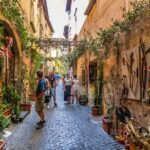
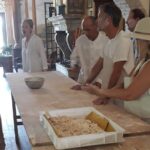
Rome has a way of surprising you—if you walk the right streets. This 3-hour route is built for that exact feeling: off-the-main-path sights, real neighborhoods, and a mix of photo views, churches, and old-school coffee stops, with a free 15-page written guide you can keep. It’s also wheelchair accessible and runs in Italian or English, so you’re not stuck if your language is limited.
I especially like two things here. First, you get Janiculum Hill views to orient yourself fast, then you slow down in major “locals’ Rome” spaces like Villa Doria Pamphili. Second, the stops are paired with practical, lived-in atmosphere: historic cafés such as Sant’Eustachio and Caffè Greco, plus neighborhood texture in places like Via Margutta and Quartiere Coppedè.
One big consideration: this isn’t a traditional guided walking tour with a person leading you step-by-step. It’s designed to be done on foot, alone, using the written material. If you’re hoping for a host accompanying you the whole time, read closely before you book.
In This Review
- Key points to know before you go
- What This Off-the-Usual-Routes Experience Really Is
- Price, value, and what $45.55 buys you
- The meeting point: how to find Rachele’s Charming House
- Stop 1 and the cocktail/prosecco moment (30 minutes)
- Janiculum Hill: Rome’s rooftop view to set the tone (self-guided)
- Villa Doria Pamphili: a large green break that actually matters (self-guided)
- Jewish Ghetto time blocks: history in lived space (self-guided)
- Sant’Eustachio: espresso stop with a classic Roman identity (self-guided)
- Largo di Torre Argentina: ancient remains in a small urban pocket (self-guided)
- Basilica of San Clemente al Laterano: early Christian + medieval levels (self-guided)
- Via Margutta: the artist street feel (self-guided)
- Quartiere Coppedè: architecture that looks like a dream (self-guided)
- Villa Borghese finale: art and nature to wrap the walk (self-guided)
- How the “Testaccio” promise fits in
- The written guide: the real product you’re buying
- Who this works best for
- Reviews rating and what it tells you to watch for
- Is it worth booking? My call
- FAQ
- How long is the Rome off-the-usual-routes route?
- Where does the experience start?
- How do I find the meeting point inside the building?
- What do I get besides the walking route?
- Which cafés are included?
- Are entrance tickets included for San Clemente?
- Does this include Testaccio and the non-Catholic cemetery?
- What are the languages available?
- Is the route wheelchair accessible?
- Can I request a driver instead of self-guided walking?
Key points to know before you go
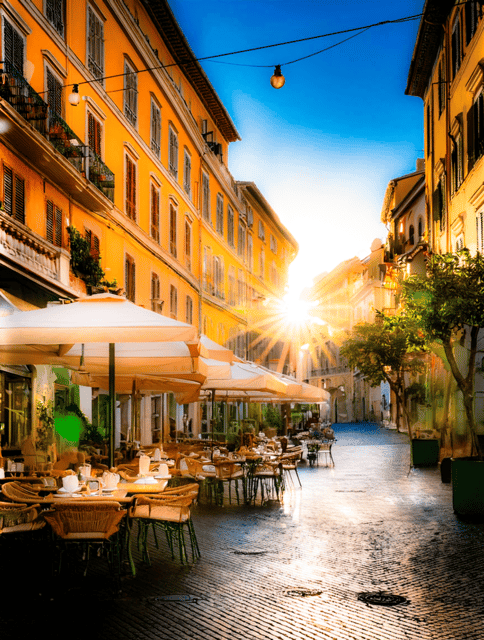
- Self-guided on foot: you follow a route and read the included 15-page guide, not a live guide walking beside you.
- Iconic viewpoint first: Janiculum Hill gets you Rome’s rooftops and instant context.
- Major nature break: Villa Doria Pamphili is a large park stop that slows the whole experience down.
- Classic Roman cafés: planned stops include Sant’Eustachio and Caffè Greco (drinks not included).
- Ancient-meets-old-Rome settings: Largo di Torre Argentina and Basilica of San Clemente are built into the route.
- A surreal architecture detour: Quartiere Coppedè adds a movie-set feeling to the walk.
What This Off-the-Usual-Routes Experience Really Is
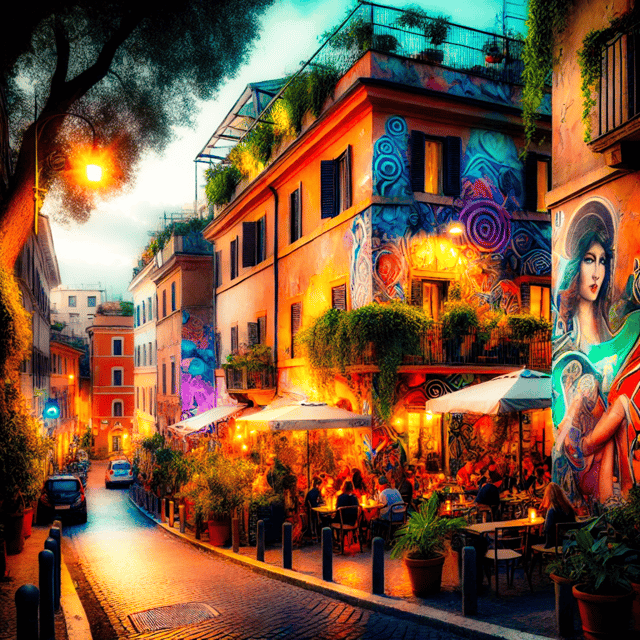
Think of this as a “route with story prompts.” You start at a guesthouse-style meeting point, then you move through a sequence of Rome highlights that sit just far enough from the most crowded streets to feel calmer. The emphasis is on less obvious places and the way they connect across centuries—ancient remains, early Christianity, art streets, and modern neighborhood life.
The format matters. You’re given an exclusive 15-page written guide with details and trivia for each location. That’s the engine of the experience. Without a live guide accompanying you, the tour works best if you’re comfortable stopping, reading, and walking at your own pace.
The good news is you still get a structured arc: you begin with a commanding viewpoint, then shift into gardens and historic districts, then end with a relaxed park finish at Villa Borghese.
You can also read our reviews of more tours and experiences in Rome.
Price, value, and what $45.55 buys you
At $45.55 per person for about 3 hours, you’re paying for a curated route plus a physical guide and some planned “experience moments.” The included items that actually move the value needle are:
- A 15-page written guide (free, and unique to the route)
- A glass of prosecco at the start area (listed as included)
- Planned stops at classic cafés (but consumptions are not included)
- Entry isn’t required in the places where the info says tickets aren’t necessary (the tour notes tickets for San Clemente are not required)
What you need to watch is expectation. If you see the word tour and picture a guide walking and explaining everything, this may feel overpriced. If you’re happy with self-guided reading and you value having a ready-made route in the “wrong direction for tourists,” the price can feel fair.
The meeting point: how to find Rachele’s Charming House
You meet at Bed & Breakfast Rachele’s Charming House in the Heart of Rome. The location is given as Via Antonio Toscani, 78.
The directions are very specific: you must use the intercom to Zinzocchi, then turn right, take stairway B, and go to the fourth floor. I like meeting points that are this clear, because it reduces that stressful first 10 minutes in a new city.
The tour also ends back at the same meeting point. So you’re not left wondering where your return plan is.
Stop 1 and the cocktail/prosecco moment (30 minutes)
Your second step is a cocktail stop (30 minutes). The included section also notes that you receive a glass of legendary prosecco from Rachele’s Charming House.
Practical take: treat this as your “get your bearings” buffer. It’s a good time to check your walking comfort, confirm you have the guide in hand, and mentally map the first viewpoint area—because once the route starts, you’re on your feet.
Janiculum Hill: Rome’s rooftop view to set the tone (self-guided)
Then comes Janiculum Hill, with 20 minutes set aside for a self-guided look.
This is a smart first proper sightseeing moment. From Janiculum you typically get broad city views and that quick mental picture you’ll use later when you’re walking through neighborhoods. Even if you’re not a “sunset person,” it helps your brain connect the dots: where the hills sit, how neighborhoods spread, and why Rome feels different street to street.
Photo tip that doesn’t require special planning: aim for a few shots that include rooftops and a landmark silhouette, so later, when you look back at your camera roll, you can remember where you were.
Villa Doria Pamphili: a large green break that actually matters (self-guided)
Next: Villa Doria Pamphilj, also 20 minutes.
This stop is valuable because it breaks the rhythm. Rome can be relentless when you’re bouncing between dense ruins and tight streets. A park stop gives you a reset—shade, calmer air, and a change in scenery that makes the second half of the walk feel easier.
Since the guide is written for the route, you’ll likely get prompts on what to notice in the park rather than just “walk around and hope.” Use the time to slow down: look, pause, and give your feet a chance to catch up.
Jewish Ghetto time blocks: history in lived space (self-guided)
You then spend time in the Jewish Ghetto, Rome, twice: one block of 30 minutes, another of 20 minutes.
That split is useful. It signals that the area is more than a single sight. You can take one stretch to orient yourself and note the architectural feel of the streets, and the other to focus on specific points the guide highlights.
Two practical things for this kind of neighborhood stop:
- Wear shoes that handle uneven pavement without complaint.
- Keep your pace steady. The route is on foot, and these blocks are long enough that you don’t want to rush your reading.
Sant’Eustachio: espresso stop with a classic Roman identity (self-guided)
After the Ghetto, you head to Sant’Eustachio for 30 minutes.
This is where the tour adds “Roman rhythm,” not just monuments. The route includes Sant’Eustachio as a café stop you can savor an espresso at. It’s a good choice for the mid-tour reset because coffee gives you energy and a reason to sit for a few minutes without derailing the schedule.
A small planning note: café consumptions are not included, so bring a bit of cash or card for what you want to order.
Largo di Torre Argentina: ancient remains in a small urban pocket (self-guided)
Then it’s Largo di Torre Argentina, with 20 minutes.
This is one of those Roman sites that feels oddly intimate because it sits right inside the city flow. The tour frames it as ancient temple remains and ties it to Rome’s deep timeline. Even with only 20 minutes, this kind of stop can be high-impact because it gives you a tangible connection to pre-imperial layers of the city.
If you tend to lose track in archaeological spaces, use the guide prompts. They’re meant to help you see patterns instead of treating it like a quick glance.
Basilica of San Clemente al Laterano: early Christian + medieval levels (self-guided)
Next: Basilica di San Clemente al Laterano, with 20 minutes set aside.
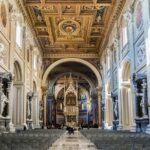
The tour describes it as an early Christian and medieval masterpiece, and it highlights the presence of underground levels guarding centuries of history. The route also states tickets for this basilica aren’t necessary.
Even without a deep timed entry, this is still a strong stop because the building is layered. Rome’s best moments often come when you realize you’re not looking at one “time period,” you’re looking at several stacking up.
Via Margutta: the artist street feel (self-guided)
Then you get Via Margutta for 20 minutes.
This street is known for its romantic, cinematic feel and its association with artists and filmmakers. The tour places it as a lighter, stroll-style interlude between heavier historic sites.
I like this kind of stop because it gives you a break from “reading stone.” Use the time to walk slowly, notice storefront details, and let the street atmosphere do its work.
Quartiere Coppedè: architecture that looks like a dream (self-guided)
Next is Quartiere Coppedè, again 20 minutes.
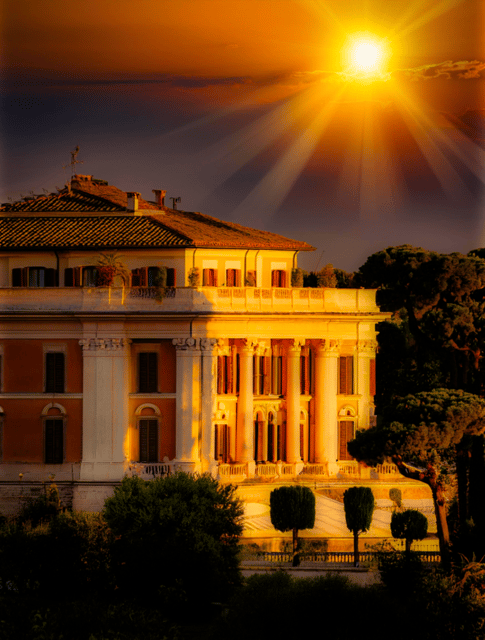
The description promises a unique mix of architectural styles that can feel magical and surreal. That’s exactly what makes Coppedè a good mid-to-late route stop: instead of chasing another “big name,” you explore a pocket neighborhood where details are the point.
Practical advice: don’t treat it like a quick photo stop. Pick one corner and really look—doors, windows, decorative stonework. It’s the kind of place where your best memories are made by attention to small elements.
Villa Borghese finale: art and nature to wrap the walk (self-guided)
You finish with Villa Borghese, 20 minutes.
The route calls it a magical garden where art and nature coexist, and it’s a fitting end because it’s a calmer environment after an afternoon of streets, churches, and neighborhoods. Even if you don’t linger long, this final pause helps you leave Rome with an “easier” feeling rather than closing the day still wound up.
How the “Testaccio” promise fits in
The highlights specifically mention Testaccio and point to the Testaccio Non-Catholic Cemetery as an atmospheric stop. The “included” section says the tour covers hidden places in Rome including Testaccio.
So if you choose this experience for the cemetery atmosphere, you’re doing it for a particular mood: contemplative, offbeat, and quieter than the standard monuments list. Just know that your time in Testaccio is part of a broader route, so you won’t have hours there.
The written guide: the real product you’re buying
The star here is the exclusive 15-page written guide. It’s described as containing historical info, trivia, and quirks about each location, and it’s said to be virtually unobtainable even on major search engines.
If you like learning on your feet—stopping for a few minutes, reading, then walking—you’ll probably get more out of this experience. If you want a live person to answer questions on the spot, this is where the concept can fall short.
Who this works best for
This route makes sense if you:
- Want less crowded streets and a “walk-and-read” style of exploring.
- Like pairing sights with atmosphere, especially historic cafés and neighborhood streets.
- Enjoy viewpoints early so you understand where you are on the city map.
It may not fit if you:
- Expect a classic guided tour with an accompanying host for the full route.
- Need real-time explanations because you don’t like stopping to read.
Reviews rating and what it tells you to watch for
The experience has a low overall rating (2.3) based on 3 reviews, and at least one negative comment focuses on a mismatch between expectations and delivery. The key complaint is that people interpreted the word tour as a fully guided experience, when the format is designed for self-guided walking using a printed brochure.
So my advice is simple: treat this as a self-guided route with a strong reading component. If that matches how you travel, you can end up with a pleasant, memorable afternoon.
Is it worth booking? My call
If your ideal Rome day includes quiet streets, a short list of meaningful stops, and a keep-sake guide that helps you notice details, I’d consider booking. The mix of Janiculum Hill, Villa Doria Pamphili, San Clemente, and the variety of neighborhoods (including Via Margutta and Quartiere Coppedè) is a good formula for seeing another side of the city without doing marathon sightseeing.
But if you want a person guiding you, answering questions live, and smoothing out every transition, skip this and look for a walking tour with a guide explicitly accompanying you. Based on the way this experience is designed—on foot, alone—your satisfaction will mostly depend on whether you’re happy being your own guide with the printed material.
FAQ
How long is the Rome off-the-usual-routes route?
The duration is listed as 3 hours.
Where does the experience start?
It starts at Bed & Breakfast Rachele’s Charming House in the Heart of Rome, at Via Antonio Toscani, 78.
How do I find the meeting point inside the building?
You use the intercom to Zinzocchi, then turn right, take stairway B, and go to the fourth floor.
What do I get besides the walking route?
You receive an exclusive 15-page written guide with unique information about each location visited, plus a glass of prosecco is included.
Which cafés are included?
The route includes planned stops at Caffè della Pace, Sant’Eustachio, and Caffè Greco. Any drinks or food you order are not included.
Are entrance tickets included for San Clemente?
The information provided says entrance fees/tickets for Basilica of San Clemente are not included and also notes they are not necessary.
Does this include Testaccio and the non-Catholic cemetery?
The experience description highlights Testaccio and the Testaccio Non-Catholic Cemetery, and the included section says Testaccio is part of the route.
What are the languages available?
The host or greeter is listed as Italian and English.
Is the route wheelchair accessible?
Yes, it is listed as wheelchair accessible.
Can I request a driver instead of self-guided walking?
Yes. The info says you can request a driver in advance by contacting Rachele Zinzocchi, with the cost agreed separately.