REVIEW · ROME
Rome- Golden Hour Golf Cart Tour
Book on Viator →Operated by RoamRome · Bookable on Viator
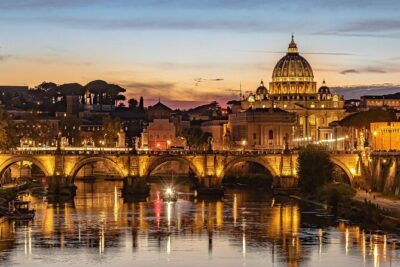
Rome gets a little gentler at dusk. This golden hour Rome golf cart tour is a fast, comfortable way to see major landmarks with fewer crowds and a sky that makes the city glow. You cover a lot of ground in a few hours, and your guide ties the sights together with clear explanations you can actually remember while you’re moving.
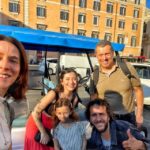
Two things I really liked: first, the guiding style. One guide I heard about by name, Domingo, was praised for being energetic, funny, and able to answer questions on the spot. Second, the small group setup keeps it more personal than the big bus crowd, so you’re not just herded past monuments.
One consideration: evening chill. If you’re touring in the cooler months, plan for cold air, and note that Parco Savello (the Orange Garden viewpoint) can be closed in the evening from October to February.
In This Review
- Key highlights worth your attention
- Golden hour on four wheels: why the golf cart matters
- Price and what you really get for $96.23
- Meeting point, timing, and how the ride flows
- Stop-by-stop: from Terrazza del Pincio to Piazza Barberini
- Colosseum, Trevi Fountain, and a quick pass by the Pantheon
- Bocca della Verità, Forum Boarium, and the small details that make it click
- Parco Savello (Orange Garden) and Piazza Navona’s baroque energy
- Largo Argentina, Piazza Venezia, and the Monti district view
- Circo Massimo and your finish at the Spanish Steps
- Who this tour suits best (and who might want a different plan)
- Should you book this Rome Golden Hour Golf Cart Tour?
- FAQ
- How long is the Rome Golden Hour Golf Cart Tour?
- What does the tour cost?
- Where do I meet the tour, and where does it end?
- Is pickup available from my hotel?
- What languages is the tour offered in?
- Is admission included for all the stops?
- What’s the group size?
- What should I do if the weather is bad?
Key highlights worth your attention
- Golden hour pacing that avoids the harsh midday heat and the worst daytime lines
- Small group (max 14) so you can ask questions and hear the stories
- Local, story-led guiding with guides who know more than just the postcard facts
- Short stops at major icons that help you build a clear mental map quickly
- Forum area details after Bocca della Verità, including temples and the Theatre of Marcellus
- Cart comfort for moving between viewpoints without turning your feet into ground beef
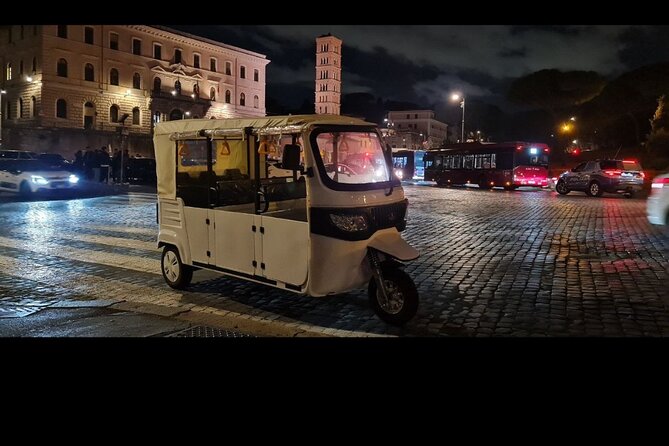
Golden hour on four wheels: why the golf cart matters
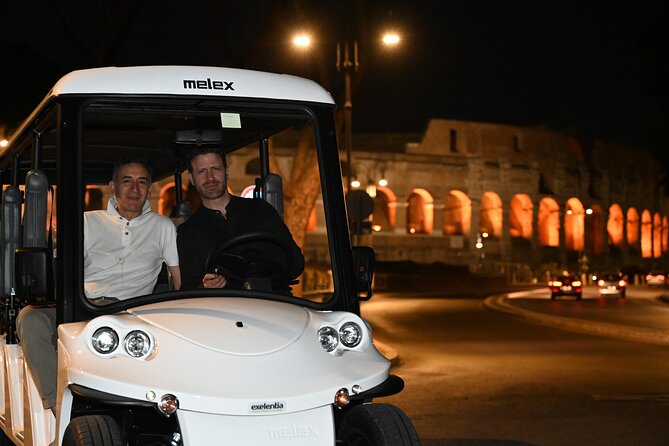
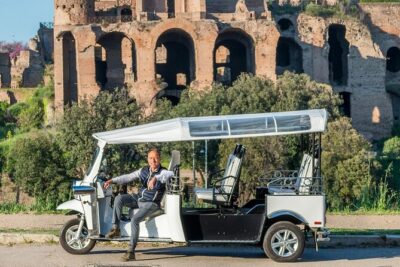
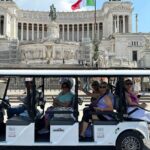
Rome is famous for being walkable. It’s also famous for being exhausting. This tour’s golf cart format helps you do what Rome does best—show you layers, angles, and details—without spending all your energy in traffic-free-between-chaos mode.
Golden hour is the sweet spot for two reasons. The first is comfort: evenings are usually less brutal than midday sun, and the streets feel calmer. The second is visual. When light hits pale stone and fountains, you see different colors than you do at noon. Even a quick stop feels more satisfying when the whole city looks cinematic.
The other big win is momentum. In 2 to 3 hours, you’re going to hit a sequence of “Rome greatest hits,” plus enough connective tissue that you understand what you’re seeing. You’re not only looking at monuments; you’re learning how the city’s ancient core and later church-and-palace Rome sit on top of each other.
And yes, you’ll still move at a tourist pace. That’s how you cover this many highlights. But the cart lets you keep a relaxed rhythm: hop off when something is worth your attention, take a photo, then roll on to the next viewpoint before the group starts to feel tight.
You can also read our reviews of more tours and experiences in Rome.



Price and what you really get for $96.23
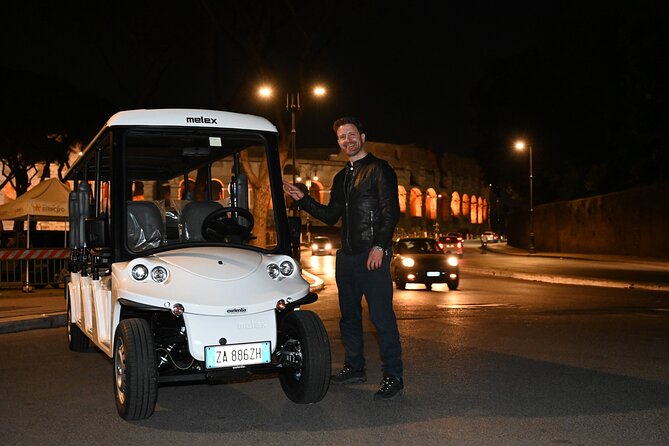
At $96.23 per person, this is not a budget throwaway. The value comes from three practical elements you can feel right away.
First, you’re buying time. You’re not spending the morning getting from one distant sight to the next. You start in the north area near Piazzale Flaminio and end at the Spanish Steps, so your route naturally strings together central Rome’s biggest landmarks.
Second, you’re buying efficiency with pacing. Many stops are short—think 3 to 10 minutes—yet they’re chosen for high payoff: classic views (Pincio), signature monuments (Colosseum, Trevi), and major squares (Navona, Venezia). You get a quick orientation, which makes the rest of your Rome days easier. If you plan to revisit places later, this tour is a strong “set your bearings fast” opener.
Third, a lot of the stops are marked as free admission (and Parco Savello includes admission). The Pantheon is the one specifically noted as not included. So the tour is mostly built to keep costs predictable while still giving you the big hitters.
Is $96.23 high compared with wandering on your own? Yes. But if you add up your time, transport friction, and the cost of missing context, a guide-led cart tour can feel like money well spent—especially if you’re on a tighter schedule.
Meeting point, timing, and how the ride flows
You meet at Piazzale Flaminio, Roma, at piazzale Flaminio 15, right in front of McDonald’s. The tour ends at the Spanish Steps (Piazza di Spagna). Drop-off at your accommodation is not provided, so you’ll need to plan an easy final walk or short ride.
Pickup is available only by request for an additional €20 fee, limited to accommodations within central Rome. If that matters to you, double-check when you book so you’re not hoping for a last-minute adjustment.
The duration is listed as about 2 to 3 hours, so treat it like an evening “highlights sprint,” not a slow museum day. The group size is capped at 14, which usually means better listening and less standing around.
One more practical note: the tour requires good weather. If Rome is doing that summer thunderstorm routine or late-day rain happens, you may be offered another date or a refund.
Stop-by-stop: from Terrazza del Pincio to Piazza Barberini
Your first meaningful payoff is Terrazza del Pincio. This is one of those places where you don’t need a long explanation to understand why people come. It’s a classic panoramic view over the Pincian Hill and the broader Villa Borghese area. Even with a short stop, you get a strong sense of where sights sit in relation to each other.
Why this works early: before you hit the icons, you need a mental grid. A viewpoint gives you that. It also sets your expectations for the rest of the tour: Rome isn’t flat, and it’s not one uniform style. You’re seeing the city’s geography and architecture in the same glance.
Then you move to Piazza Barberini. This is less about going deep and more about getting the right details. You’ll drive by the fountain connected to the Triton, highlighted as one of Bernini’s masterpieces. It’s a quick stop, but it’s the kind of moment that turns “fountain” into “art made by a specific genius at a specific time.”
This is also where the value of a good guide kicks in. When you hear what you’re looking at—who made it, why it matters—you start noticing those clues everywhere else.
Colosseum, Trevi Fountain, and a quick pass by the Pantheon
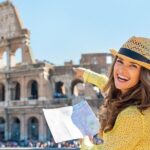
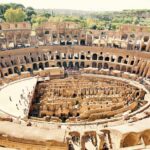
Next up: the Colosseum. You won’t be doing a long interior visit on this kind of tour, but you still get a solid exterior look. The framing matters here. The Colosseum isn’t presented as only a famous ancient ruin. It’s treated as the biggest amphitheater in the world and a symbol of Rome—something the ancient world hadn’t seen before in that form.
What I like about hitting the Colosseum from a tour versus solo, especially at golden hour: your brain is primed to connect stories to stone. You’re not just taking a photo; you’re getting the “why this structure existed” context early.
Then it’s Trevi Fountain. Again, short stop, big result. Trevi is one of those sites where crowds can make any plan feel chaotic. A golden hour timing helps, because you’re not arriving at peak daytime intensity. You still get the famous façade, the scale, and the whole magical look—without trying to negotiate a sea of people for every angle.
Pantheon follows with about a 5-minute stop, and admission is not included. That matters. You can still appreciate the exterior and the setting, but if you want to go inside, budget time and ticket cost outside the tour.
If you’re deciding whether to pay extra for the Pantheon entrance another day, this tour can help. After seeing it here, you’ll know if you want more time in a quieter moment later.



Bocca della Verità, Forum Boarium, and the small details that make it click
The mood shifts at Bocca della Verità. This is the legendary mouth of truth, but the tour expands beyond the meme-worthy photo. You also connect to the Forum Boarium, one of Rome’s oldest market areas.
Here’s where your guide’s storytelling really pays off because the stop includes multiple nearby ancient sites and names you might not find on your own without serious planning. You’ll hear about the Temple of Hercules Victor (a rare circular marble temple) and the Temple of Portunus overlooking the Tiber. You also get the Arch of Janus, described as mysterious and massive.
Then comes a bonus you’ll likely love if you enjoy layers: the Theatre of Marcellus. It’s often confused as a mini Colosseum, but the tour adds an extra twist—the Savelli family built a Renaissance palace on top of it, and people still live there. That’s the kind of detail that makes Rome feel real instead of like a theme park of ruins.
This section is short, so you’ll want to do a quick mental checklist: photo first if you need it, then listen for the specific names while you’re standing there. With that approach, a 5-minute stop doesn’t feel rushed—it feels complete.
Parco Savello (Orange Garden) and Piazza Navona’s baroque energy
Next is Parco Savello, often called the Orange Garden for a reason. You get a panoramic viewpoint vibe, and even a short visit can make the city’s layout clearer. Admission is included here, which is nice because it’s one of the few stops where you know you won’t hit an unexpected ticket wall.
There is one seasonal consideration. In the winter (October to February), Parco Savello can be closed in the evening. If you’re traveling during those months, you might want a backup evening plan, or at least be mentally ready that this stop could be limited.
After the viewpoint, you reach Piazza Navona. This square is described as baroque at its best and built on an ancient Roman stadium. That connection is exactly why it’s worth stopping: you see baroque design sitting on top of older Roman scale.
A practical tip: Navona is visual candy. If you’re trying to choose between wandering and listening, pick listening here. If your guide explains what’s under the plaza and how the stadium shaped the space, the fountain-and-statue details become more meaningful.
Largo Argentina, Piazza Venezia, and the Monti district view
At Area Sacra di Largo Argentina, you hit a powerful historical layer. It’s where Julius Caesar was assassinated, and today it’s also associated with a cat sanctuary. The tour keeps it brief, but the context makes it stick.
Then you roll toward Piazza Venezia / Ancient City. This stop is less about one monument and more about a concentration of landmarks. The area includes works attributed to Michelangelo, plus the Altar of the Fatherland. If you’re seeing these for the first time, the golden hour light helps you spot how the city’s monumental style shifts as you move through time.
You’ll also drive by Piazza delle Quattro Fontane, the church of San Carlino, and the huge Quirinale Palace, once a residence of the Pope and the king, and now the headquarters of the president of Italy. These are quick “glance and learn” moments, and they’re perfect for a cart tour format.
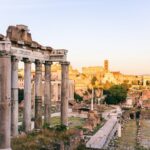
Then you pause in Rione Monti for a short stop and viewpoint. The tour frames this district as the gritty heart of ancient Rome called the Suburra. Today it’s presented as intriguing, with centuries-old alleyways, and from here you get a view opening toward the Imperial Fora. Even if you don’t go inside any ruins, the sightline helps you understand why those areas mattered.
Circo Massimo and your finish at the Spanish Steps
The last named big viewpoint stop is Circo Massimo. You look over the Circus Maximus, once described as the largest stadium in the ancient world, with the ability to hold up to 300,000 spectators. The tour connects it to chariot racing energy from popular culture and ancient reality: crowds roaring, teams racing past at speed, and emperors watching from palaces above.
Then the noise fades in your memory, but the scale lingers. That’s why this works at golden hour. The space feels open and dramatic, and your guide’s explanation helps your photos turn into real understanding.
The ride ends at the Spanish Steps. This is a great final landing zone because it’s a central, recognizable place to re-enter walking mode. Just remember: the tour doesn’t drop you at your hotel. If your accommodation is far from Piazza di Spagna, plan a short connection after you finish.
Who this tour suits best (and who might want a different plan)
This tour is ideal if you want a guided introduction that helps you plan the rest of your trip. It’s also a good fit if:
- You’re traveling with an older relative or anyone who doesn’t want nonstop walking.
- You want the Colosseum, Trevi, Pantheon area, and major squares without timing headaches.
- You’d rather listen to a guide than spend your evening rereading maps.
It might be less ideal if you’re hoping for long, slow time inside major sites. The tour is designed for short, high-impact stops and quick sightseeing windows. You’ll still be impressed, but you won’t get hours to linger inside the places that need it.
One more match check: if you hate cold evenings, bring a layer. Even with golden hour light, Rome nights can turn brisk fast.
Should you book this Rome Golden Hour Golf Cart Tour?
If you’re coming to Rome for a few days and you want a smart first move, I’d book it. The combination of golden hour timing, a small group, and guide-led storytelling turns a pile of famous landmarks into a coherent route you can revisit later with confidence.
I’d skip or reconsider if you’re traveling in a month where evenings are usually cold and you really want Parco Savello in particular, since it can be closed in the evening from October to February. Also, if Pantheon interior time is your top priority, you’ll need to plan the entry separately since admission there is not included.
FAQ
How long is the Rome Golden Hour Golf Cart Tour?
It’s listed as about 2 to 3 hours.
What does the tour cost?
The price is $96.23 per person.
Where do I meet the tour, and where does it end?
You meet at Piazzale Flaminio, Roma RM (piazzale Flaminio 15, in front of McDonald’s). The tour ends at Piazza di Spagna, at the Spanish Steps.
Is pickup available from my hotel?
Pickup is available upon request for an additional €20 fee for accommodations located within central Rome. Drop-off to your accommodation is not available.
What languages is the tour offered in?
The tour is offered in English.
Is admission included for all the stops?
Most stops are marked as free admission. Pantheon admission is not included, while Parco Savello includes admission.
What’s the group size?
The maximum group size is 14 travelers.
What should I do if the weather is bad?
The tour requires good weather. If it’s canceled due to poor weather, you’ll be offered another date or a full refund. You can cancel up to 24 hours in advance for a full refund.