Rome in 6 hours sounds like a sprint, but a private setup turns it into a smart, question-friendly walk-and-look day. I like how much ground you cover, and I love that your driver is also your guide, so you’re not stuck nodding along. The only real catch is time: the most famous photo stops are generous, but they’re still not long, so you’ll want to move when the group schedule says move.
You’ll ride in a private vehicle with efficient air conditioning, then get hotel or vacation-rental pickup and drop-off. The tour is offered in English, and it’s designed around tight, high-impact stops instead of slow wandering. If you’re booking ahead (the average booking window is about 43 days), you’ll have an easier time matching the day and pickup time to your plans.
In This Review
- What you’ll like most (key highlights)
- Why This 6-Hour Rome Sights-and-Streets Plan Works
- Getting Picked Up in Rome: Hotels, Vacation Rentals, and Airport Timing
- Circo Massimo to Vittoriano: Ancient Rome Meets the Nation Monument
- Foro di Traiano: A Forum Built on Victory and Power
- Trevi Fountain and Piazza di Spagna: How to Enjoy the Most Famous Stops Without Losing the Day
- Piazza Navona and the Pantheon: Two Stops That Explain Rome’s Rhythm
- St. Peter’s Basilica in 50 Minutes: What You’ll Actually Get
- Guide-Driver Style: The Real Benefit of Private
- Price and Value: Is $480.63 Per Person Actually Fair?
- Who This Tour Fits Best (and Who Might Want Something Slower)
- Should You Book This Private Rome City Tour?
- FAQ
- How long is the Rome city tour?
- How much does the tour cost?
- Is hotel pickup and drop-off included?
- Does the tour include a private group?
- What language is the tour offered in?
- Are admission tickets included for the stops?
- What areas are pickup available from, and are ports included?
- What is the cancellation policy?
What you’ll like most (key highlights)
- A guide-driver who answers as you go, not after the fact
- Private vehicle comfort with hotel or rental pickup and drop-off
- Icon-to-icon routing: Circo Massimo, Trevi, Pantheon, and St Peter’s in one day
- Short, focused stop times that keep you from wasting time traveling on foot
- Admission listed as free at each stop, so you’re not juggling ticket costs mid-tour
Why This 6-Hour Rome Sights-and-Streets Plan Works
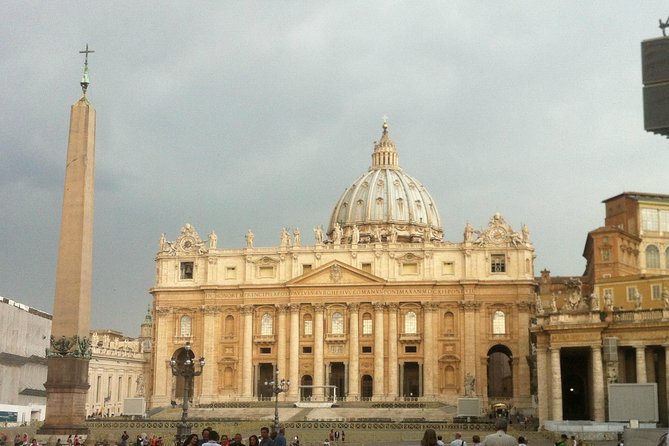
This tour is built for people who want the big Rome moments without building an entire day of planning from scratch. In about 6 hours, you’ll hit a run of major sites that cover different eras: the stadium that hosted Roman spectacles, the nation monument at Piazza Venezia, the Trajan-era forum complex, and the Vatican area.
The feel is “efficient sightseeing,” not “stand and stare forever.” That’s a feature for most first-timers. If you want slow art-museum pacing, you might feel a little rushed.
Because it’s private, you get flexibility in how quickly you move from one stop to the next. When your guide is also the driver, it’s easier to ask what you’re looking at and get answers before your eyes move on to the next landmark.
You can also read our reviews of more city tours in Rome


Getting Picked Up in Rome: Hotels, Vacation Rentals, and Airport Timing
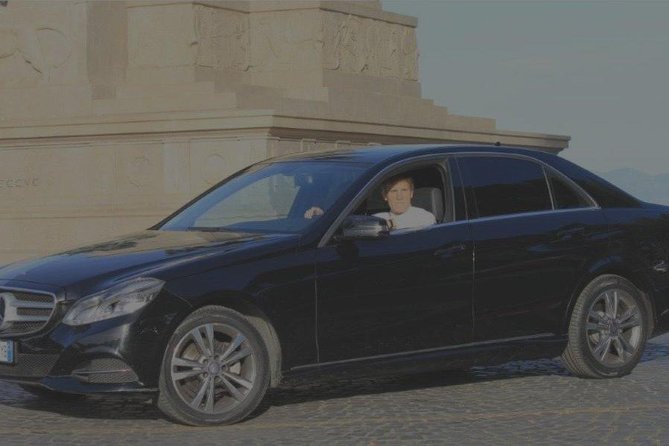
The logistics are part of the value here: pickup is offered from hotels in Rome or vacation rentals, and the tour includes drop-off afterward. That matters in Rome, where getting across town efficiently can be harder than it looks on a map.
Two practical notes you should take seriously. First, pickup is not done at ports. Second, if you’re flying in, you’ll want to share your flight number and exact arrival time correctly, since airport pickup is described as especially important for timing.
The tour also lists operating hours from 1:00 AM to 11:59 PM, Monday through Sunday. In real life, your pickup will still depend on what time you book, but the wide window suggests you can usually fit it around your schedule.
Circo Massimo to Vittoriano: Ancient Rome Meets the Nation Monument
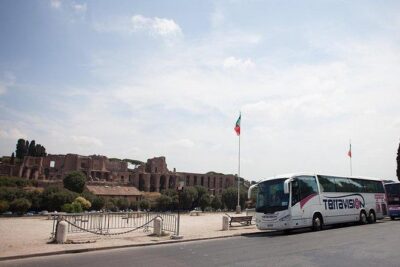
You start at Circo Massimo, also known as the Circus Maximus. This was a chariot-racing venue in Rome, first constructed in the 6th century BCE, and later used for other public events like the Roman Games and gladiator fights. It’s fascinating because it shows how Rome staged mass entertainment long before TV and stadiums existed.
Your stop is about 15 minutes, and admission is listed as free. Short stop times can feel underwhelming—but for Circo Massimo, quick context is enough to make the space legible. Even if you only get a brief look, you’ll understand what kind of “event arena” you’re standing near.
Next comes the Vittoriano (Monumento a Vittorio Emanuele II), also called Altare della Patria. It’s a massive monument built between 1895 and 1927 to honor Victor Emmanuel II, the first king of a unified Italy, located in Piazza Venezia. If Circo Massimo shows Rome entertaining the masses, the Vittoriano shows how later Italy used grand monuments to tell a national story.
Expect around 20 minutes here with admission listed as free. The setting at Piazza Venezia is busy and open, so your best move is to take a few minutes to orient your camera, then listen for what your guide explains about why this monument is so prominent.
Foro di Traiano: A Forum Built on Victory and Power
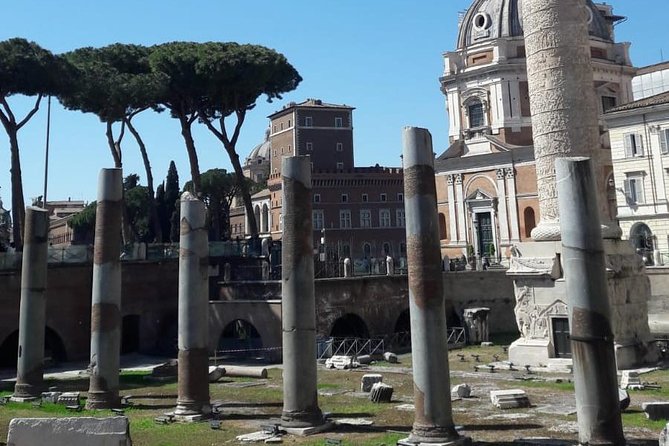
The tour’s third major stop is the Foro di Traiano (Trajan’s Forum). This complex was built on Trajan’s orders and connected to spoils of war from the conquest of Dacia, ending in 106. The forum’s inauguration is noted as 112, with Trajan’s Column erected and inaugurated in 113.
You’ll have about 25 minutes for this stop, with admission listed as free. Forums can be tricky on your own because they’re not always labeled in a way that tells you what you’re looking at. Having a guide matters here, especially when they can explain the “why” behind the buildings—power, propaganda, and the way Rome staged dominance in stone.
A consideration: since your time window is tight, you might not get the same slow, interpretive pace you’d want at a standalone archaeology visit. Still, as part of a full-day route, Trajan’s Forum works well as a reality-check. You’re not just seeing pretty views; you’re seeing Rome how it worked.
Trevi Fountain and Piazza di Spagna: How to Enjoy the Most Famous Stops Without Losing the Day
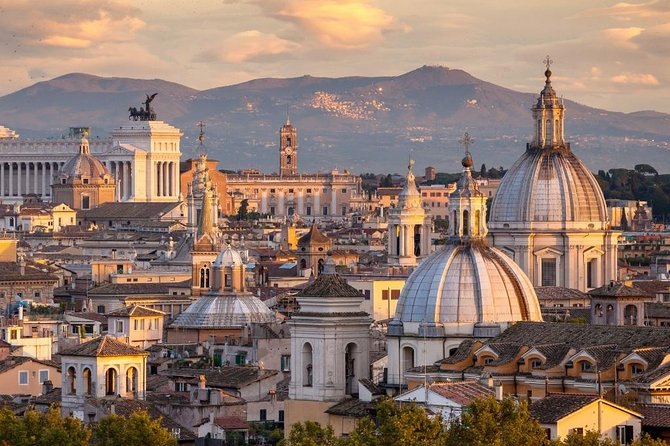
Then you’re at Fontana di Trevi, one of the world’s best-known fountains. It was designed by Nicola Salvi and completed by Giuseppe Pannini and others. It’s listed at 26.3 meters high and 49.15 meters wide, and it’s described as the largest Baroque fountain in Rome. It’s also shown in films like Roman Holiday and La Dolce Vita, which is a fun way to recognize the fountain even if you’ve never studied it.
Your stop is about 40 minutes, admission listed as free. Forty minutes sounds comfortable, but in a place this famous, the crowd energy can eat time. I like this tour’s approach: you get enough time to see it clearly, take photos, and still keep moving instead of turning Trevi into a half-day detour.
Next is Piazza di Spagna at the bottom of the Spanish Steps. The square takes its name from the Palazzo di Spagna, which was the seat of the Spanish embassy to the Holy See. You’ll also see that the Column of the Immaculate Conception of the Blessed Virgin Maria is nearby.
Again, about 40 minutes and admission listed as free. This stop is a nice “breather” between heavy monuments and major churches. It’s also a great place to notice how Rome’s power is layered—imperial stadiums, unified-nation monuments, and diplomacy all sitting in the same city.
Practical tip for you: plan to spend your Trevi and Spanish Steps time efficiently. Pick one or two angles for photos, then spend the rest just watching people and letting the space sink in.






Piazza Navona and the Pantheon: Two Stops That Explain Rome’s Rhythm
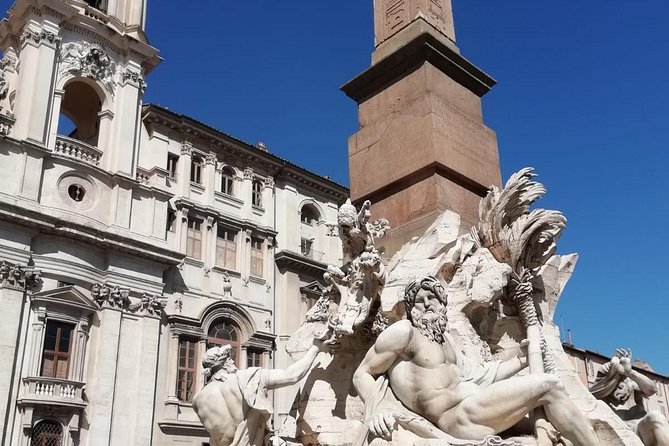
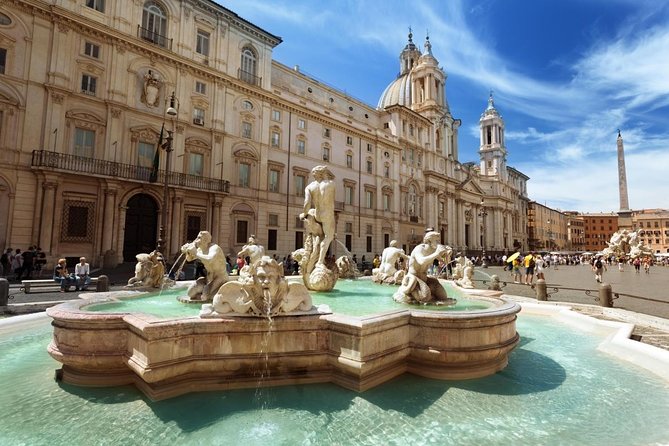
Piazza Navona comes next. It’s a plaza built on the site of the Stadium of Domitian from the 1st century AD. The ancient Romans used the area for games, and it’s believed the name evolved over time—from Circus Agonalis to Navone to Navona. That naming story is the kind of detail that makes the square feel less like a random tourist stop and more like a continuation.
Your visit is about 30 minutes, with admission listed as free. The short time is fine here because the square itself does a lot of the work visually. You’ll see why people keep walking back to it after dinner: it’s open, active, and easy to read.
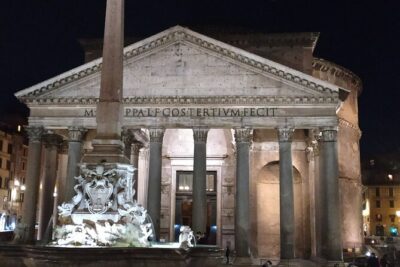
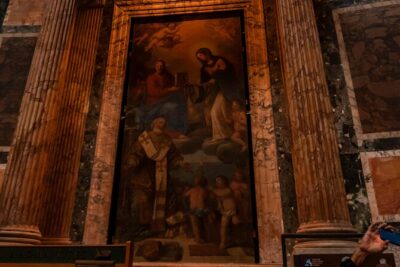
After that, you reach the Pantheon, meaning Temple of all the gods. It was originally built as a Roman temple and then rebuilt around 126 AD during Hadrian’s reign. Today it’s described as the best-preserved of all Roman buildings.
Your stop is 30 minutes, admission listed as free. The Pantheon is one of those places where the “wow” often happens in seconds, but the full appreciation takes a bit longer. I like that you get a guided stop here instead of only a quick photo. Even in half an hour, you can understand the structure and feel how serious Roman engineering was.
If you have a tendency to linger at interiors, keep an eye on time. Thirty minutes goes faster than you think once you’re looking up and trying to absorb what you’re seeing.
St. Peter’s Basilica in 50 Minutes: What You’ll Actually Get
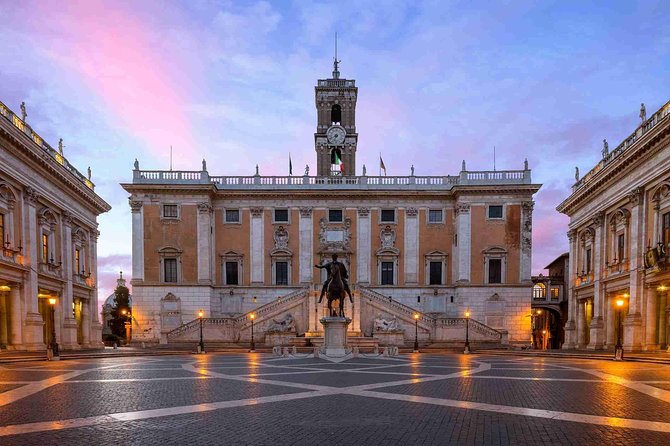
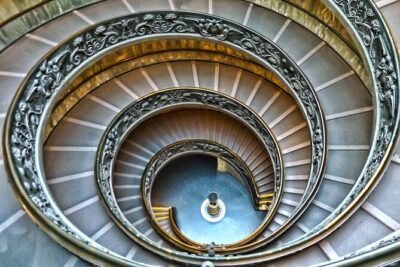
The final stop is St. Peter’s Basilica. It’s described as the world’s largest church and the center of Christianity. The basilica was built over more than 100 years by major Italian architects, and it sits on Vatican Hill across the Tiber River from central Rome.
You’ll have about 50 minutes, admission listed as free. This is the longest stop of the day, and it’s the right call. A big church like this can swallow time if you let it, so the tour’s timing is designed to give you a meaningful visit without making you late for the day.
A realistic consideration: 50 minutes is plenty for a first “I’m here” moment, but it may not be enough for deep, slow sightseeing of every corner. If you’re the type who wants to sit quietly and read everything, you’ll probably wish you had more time. Still, as a capstone, it’s a strong finish to a day that already spans ancient Rome, national monuments, and classical architecture.
Guide-Driver Style: The Real Benefit of Private
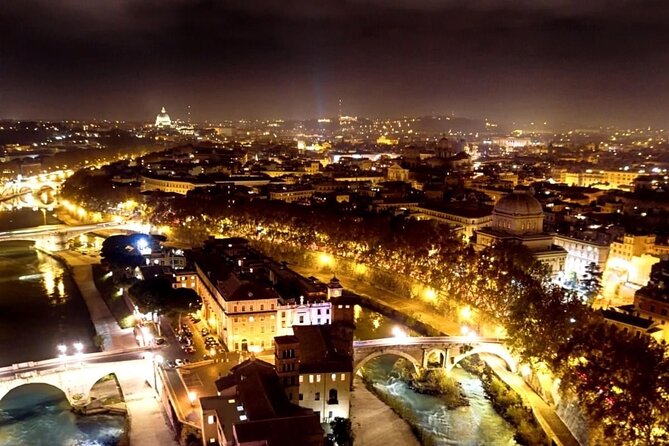
The tour’s standout strength is how much the format supports questions. You’re not just buying transportation. You’re getting a person who can explain what you see while you’re still standing in the right place.
The private vehicle also helps with pacing. You’re not waiting around for a large group to catch up. You’re not trapped in a “follow the leader” rhythm where your best photo angle happens 20 seconds after your time window closes.
Two guide names come up in the tour’s track record: Carmine and Mauricio. Carmine is described as an excellent tour guide and also the best driver, meeting expectations and making the experience feel like it couldn’t be better. Mauricio is described as knowledgeable, prompt with hotel pickup, and willing to recommend a restaurant afterward—so you can extend the Rome day beyond the landmarks.
That recommendation piece matters more than you’d think. When your guide understands your interests, you get practical next steps instead of a generic list.
Price and Value: Is $480.63 Per Person Actually Fair?
At $480.63 per person for about 6 hours, this is not the cheapest way to see Rome. But it’s also not trying to compete with mass-market bus tours. It’s priced like a private experience: private vehicle, hotel pickup and drop-off, a driver/guide, and local taxes included.
Here’s how I’d judge value if you’re deciding. You’re paying for three things that are hard to recreate on your own:
- Time saved on getting around with pickup and drop-off.
- Faster learning because the guide can explain what you’re seeing in each exact spot.
- Fewer hassles compared to coordinating transport and trying to interpret major sites solo while managing crowds.
Also, admission tickets are listed as free for each stop on this route. That doesn’t mean every attraction inside every complex will be free for you personally, but it does reduce the number of “surprise costs” that can pop up during the day.
Finally, the average booking window being around 43 days is a hint that people plan this on purpose. If you want private, dates can tighten up, so waiting can cost you your preferred day or pickup time.
Who This Tour Fits Best (and Who Might Want Something Slower)
This tour is a great fit if you:
- Want one day that gives you a strong first overview of Rome’s key icons
- Prefer learning in the moment rather than reading after the trip
- Like the idea of a private vehicle because Rome streets are not always kind to slow schedules
It’s less ideal if you:
- Want long museum-style time at a single site
- Hate the idea of moving on quickly even when you’re enjoying the view
- Are traveling on a tight budget and need the lowest-cost option
Because the route is tightly packed, you’ll get the most out of it if you come with comfy walking shoes and a camera ready for quick moments.
Should You Book This Private Rome City Tour?
If your goal is a high-impact introduction to Rome—with hotel pickup, a comfortable ride, and a guide who helps you understand the scenes—you’ll likely be happy with this. The stop sequence hits major landmarks without turning your day into a transportation puzzle. And the private guide-driver setup is exactly what makes the hours feel productive instead of chaotic.
I’d recommend booking this if you’re in Rome for a limited number of days and you want to feel like you covered the essentials. You should skip it or look for a slower alternative if your ideal day is long, unhurried exploration with zero pressure to keep pace.
If you’re deciding today, my best advice is simple: if you like structure and clear priorities, this tour matches your style.
FAQ
How long is the Rome city tour?
The tour duration is listed as approximately 6 hours.
How much does the tour cost?
The price is listed as $480.63 per person.
Is hotel pickup and drop-off included?
Yes. Hotel pickup and drop-off are included, and pickup is also offered from vacation rentals in Rome.
Does the tour include a private group?
Yes. It’s described as a private tour/activity, so only your group participates.
What language is the tour offered in?
The tour is offered in English, and it may be operated by a multi-lingual guide.
Are admission tickets included for the stops?
Admission tickets are listed as free for each stop on the itinerary.
What areas are pickup available from, and are ports included?
Pickup is available from hotels in Rome and points of interest, but it does not pick up at ports.
What is the cancellation policy?
Free cancellation is available. You can cancel up to 24 hours in advance for a full refund.