REVIEW · ROME
Rome: Catacombs of St. Sebastian Entry Ticket & Guided Tour
Book on GetYourGuide →Operated by OPERA ROMANA PELLEGRINAGGI · Bookable on GetYourGuide
Rome goes cooler underground. This short guided tour of the Catacombs of St. Sebastian leads you through Rome underground burial spaces that started as quarry holes and became a key Christian cemetery. In a tight 30 minutes, you get a clear sense of how the site evolved across centuries, from Roman burial customs to early Christian martyrs.
I love the pace and organization. The walkthrough is designed for a small group, so you’re not constantly squeezed behind other people in narrow passages. The second thing I like is the story focus: you’re not just “seeing graves,” you’re tracing how burial niches, mausoleums, and later basilica structures grew around key tombs like those of Saint Sebastian.
One thing to consider: this is underground, and it’s not suitable for everyone. If you’re claustrophobic or have mobility limitations, you should think hard before booking, because the route goes into tight, enclosed areas on foot.
In This Review
- Key highlights you’ll actually care about
- Catacombs of St. Sebastian: what you’re stepping into
- The 30-minute plan: what the guided walk covers
- Finding the ticket office and timing your arrival
- Going underground: the quarry-galleries turned cemetery
- The mausoleums and the names that anchor the era
- Constantine’s basilica and the circiforme shape
- What to pack: shoes, layers, and small comfort wins
- Group size, guide quality, and why 30 minutes can work
- Price and value: is $16 worth 30 minutes underground?
- Who should book this, and who should skip it
- Quick do’s and don’ts before you go
- FAQ
- FAQ
- How long is the Catacombs of St. Sebastian entry ticket and guided tour?
- How much does the tour cost?
- Where do I meet the tour?
- How early should I arrive before the scheduled tour?
- What languages are available for the guided tour?
- Is hotel pickup or drop-off included?
- What should I bring for the visit?
- Is photography allowed inside the catacombs?
- Is the tour suitable for people with mobility impairments or claustrophobia?
- Can I cancel and get a refund?
- Should you book this St. Sebastian Catacombs tour?
Key highlights you’ll actually care about
- 30 minutes underground: short enough to fit your day, long enough to feel like you saw something real
- Small-group feel: easier moving in single-file spaces and more listening time
- A site with layers: quarry origins, reused galleries, then Christian burials and later building projects
- Font of details: you’ll connect names and eras, from early Christian graffiti to Constantine’s era
- Practical visit rules: bring comfortable shoes and a warm layer since it can feel colder deeper down
Catacombs of St. Sebastian: what you’re stepping into
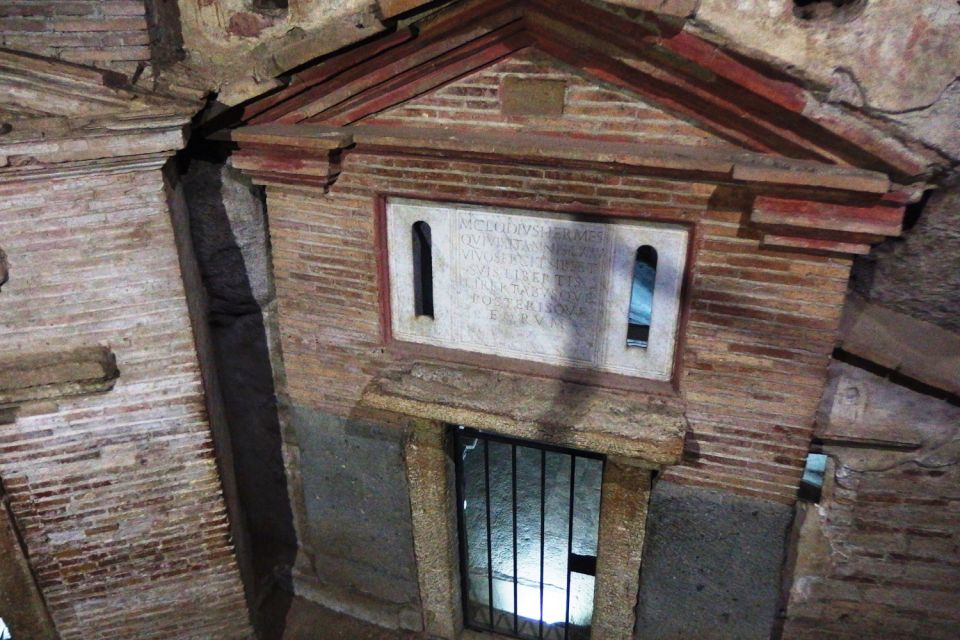
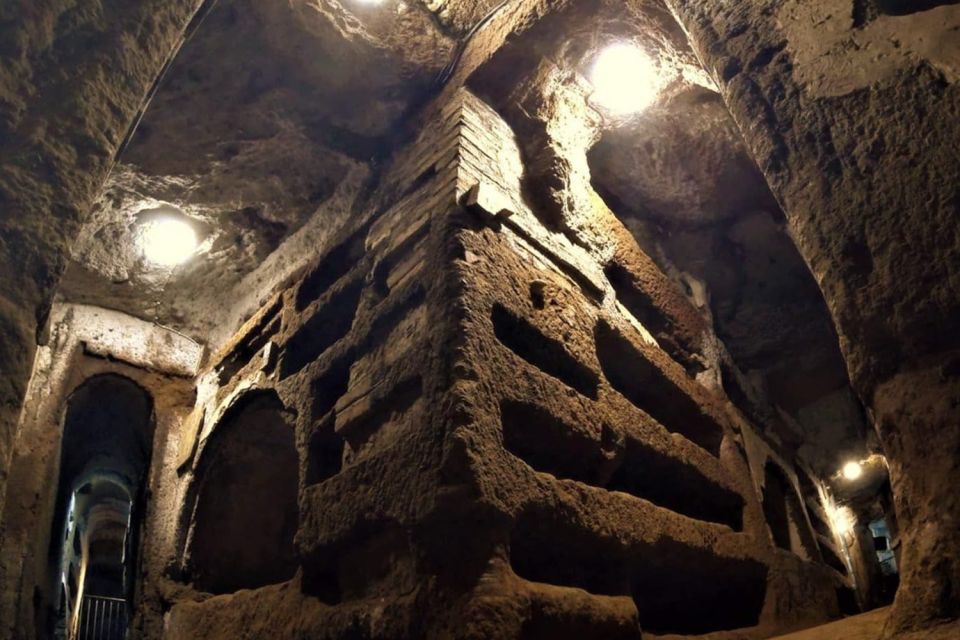
The Catacombs of St. Sebastian sit in an area that once wasn’t built cemetery at all. Long ago it was a deep depression used as a pozzolana quarry—a source of volcanic stone—known in Latin as ad catacumbas, basically near the cavities. Over time, those “cavities” became more than extraction holes; they turned into burial spaces.
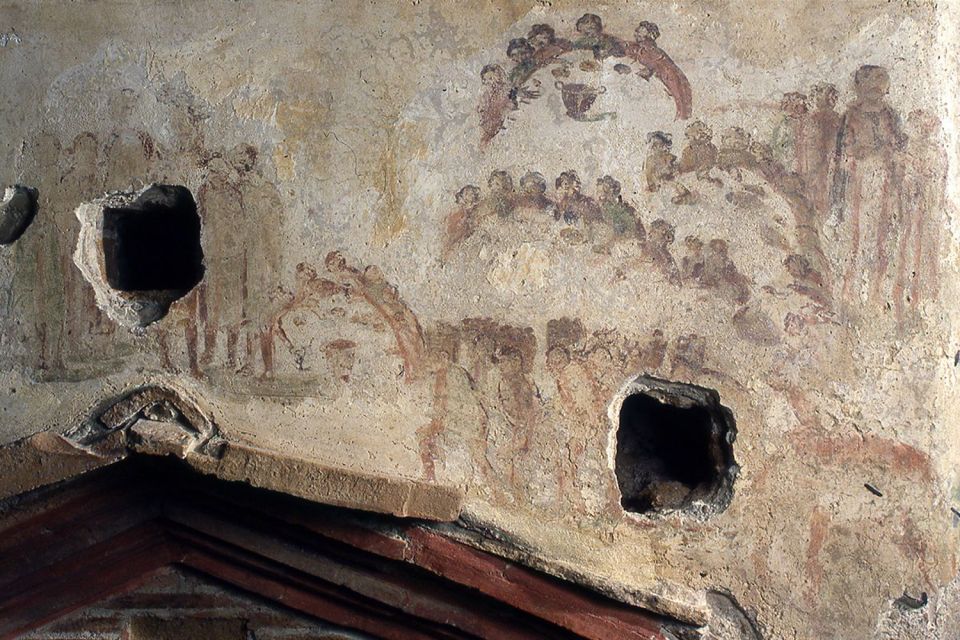
What I find powerful here is the mix of functions across the centuries. The underground galleries were reused again and again, so burial niches and memorial areas grew inside older excavations. On the surface, you also get a sense that the whole zone wasn’t purely “cemetery”—there were columbaria and even residential systems with wall decorations, which reminds you this was part of a living Roman landscape.
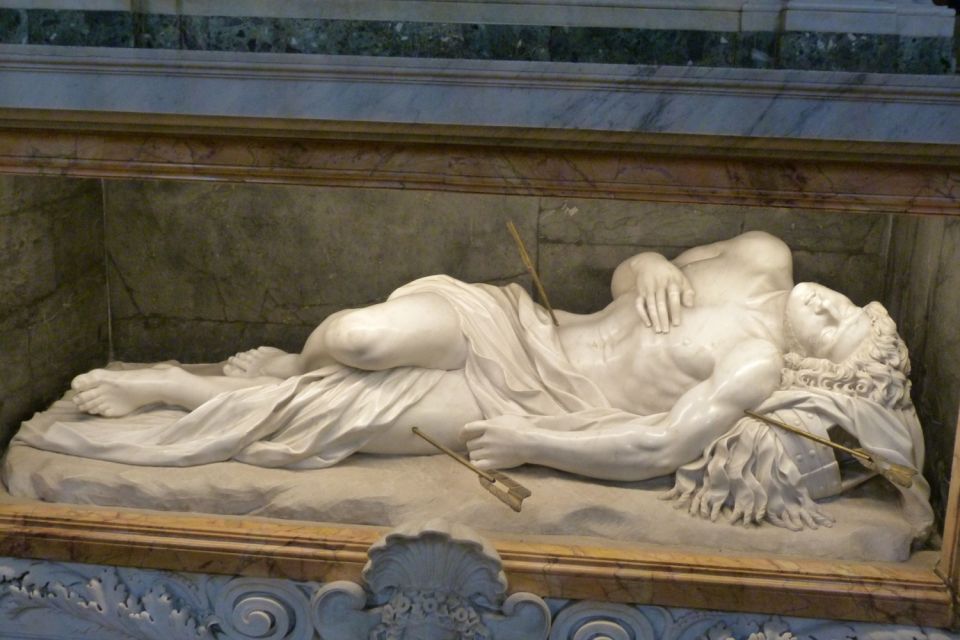
And then the Christian layer arrives in a big way. In the third century, the catacomb connected to the tombs of the martyrs Sebastian and Eutichio begins to develop. That’s when the site becomes emotionally heavier and historically sharper: you’re standing inside a place associated with early Christian burial and veneration.
You can also read our reviews of more tours and experiences in Rome


The 30-minute plan: what the guided walk covers
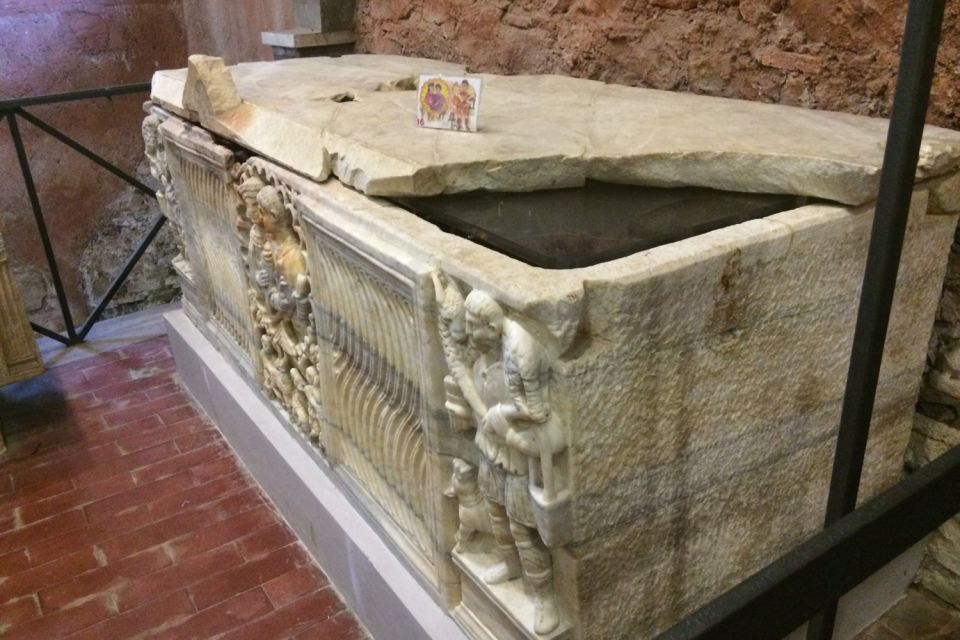
This is a compact tour, around 30 minutes, built for a guided walking route through the underground areas. You’ll be moving through burial galleries and seeing how niches and memorial spaces were arranged. Since the time window is short, the guide’s job is to keep the thread straight: quarry origin → reused underground galleries → Christian burials → the later structures that changed the site above and around it.
Expect the guide to pace you so you can actually hear the explanation while you walk. Reviews highlight that groups often aren’t packed, and that matters here, because the most interesting parts are the places where the guide stops briefly to explain names and meanings. When you’re in narrow spaces, that stop-and-listen time is what turns the visit from sightseeing into understanding.
A practical note: there are no hotel pickup or drop-offs. You’ll need to show up on your own at the ticket office (more on that next), and you should plan to be at the meeting point early so you don’t feel rushed.
Finding the ticket office and timing your arrival
This tour is straightforward: go directly to the ticket office for the catacomb and show your reservation at least 10 minutes before the scheduled start. That “10 minutes” rule is important because tours run on set time slots, and the visit is short by design.
If you’re using public transport, one helpful clue from visitors is that bus 118 can make the area easier to reach. Still, Rome travel can be unpredictable with traffic and walking distances, so I’d rather you arrive early than try to time it perfectly.
Also note the tour is offered in English, Italian, Spanish, and French, so you can pick a language that keeps the underground history crystal clear. If you’re traveling with a mix of languages, this flexibility is a real plus.
Going underground: the quarry-galleries turned cemetery
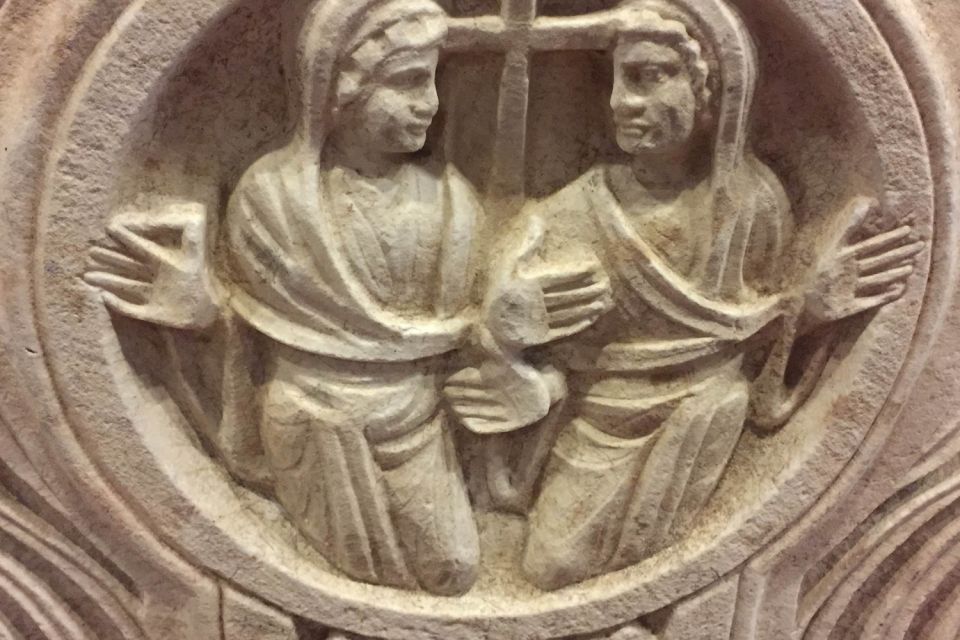
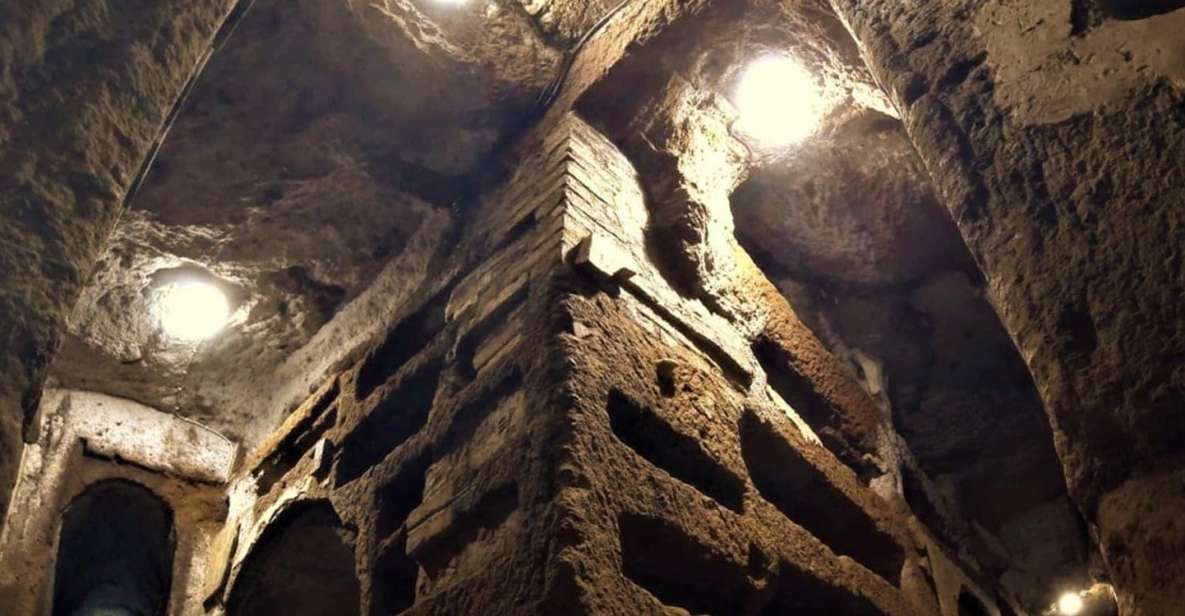
Here’s the “wow” mechanic of this site: the underground wasn’t originally designed as a cemetery. It started as an extraction zone, with galleries carved for pozzolana. Later, those spaces became burial zones, and you can feel the reuse in the way the underground route is structured.
During your walkthrough, you’ll see how burial niches and memorial areas take advantage of existing passages. That reuse is exactly why catacombs feel different from a single-era monument. Instead of one clean, planned design, it’s layered construction: new needs in old cavities.
The underground experience has a built-in tempo. As you move deeper, the spaces feel tighter and cooler, and that’s why “what to wear” matters. Bring comfortable shoes first. Then add warmth: a jacket or warm layer helps because it can feel colder as you go further underground.
One more rule that affects your photos: photography is not allowed inside the catacombs. If you want images, you’ll likely focus your camera use around areas outside the underground spaces.
The mausoleums and the names that anchor the era
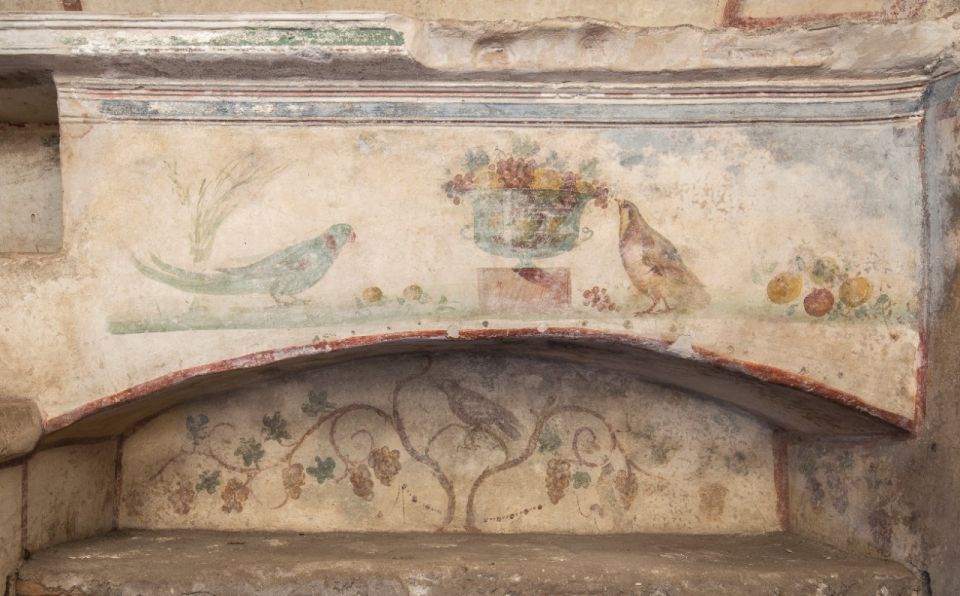
The Catacombs of St. Sebastian aren’t only about general “ancient Christian burial.” The site includes specific sequences and names tied to the development of the area.
Around the middle of the second century, the bottom of the valley was buried to create a pitch, and on one side three mausoleums were built in succession, associated with Clodius Hermes, the Innocentiores, and the Ax. Those names can sound like trivia, but your guide’s job is to connect them to what you see: why the underground spaces were expanded, reorganized, and built around changing needs.
Later, more burial activity happened to make room for the triclia, a portico bordered by a wall with graffiti invocations addressing SS. Peter and Paul, who were venerated together in this place around 250. That graffiti detail is one of the more human touches you’ll hear on this tour. It’s a reminder that people weren’t leaving formal inscriptions like a museum exhibit; they were leaving words in living memory spaces.
You can also read our reviews of more guided tours in Rome






Constantine’s basilica and the circiforme shape
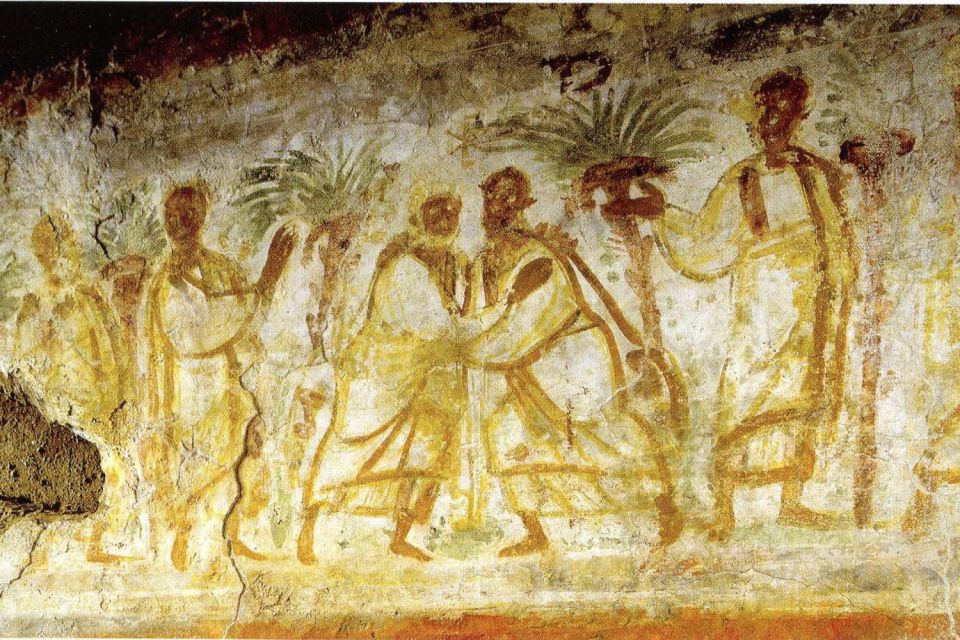
After you’ve got the underground picture in your head, the story jumps forward into the era of imperial building. On this site, Constantine (306–337) had a basilica built in the shape of a Roman circus, often called “circiforme.”
This is valuable because it ties together two different ways of honoring the sacred. Underground spaces focused on burial and veneration; aboveground architecture signaled official recognition and public religion. Seeing how those roles connect makes the whole catacomb experience feel more coherent.
Some visitors also mention the basilica area can include standout details like a hand-carved wood ceiling. That kind of moment gives your eyes a place to rest after the tight underground passages. It’s also a good reason not to rush through any “surface” sections of the route if your guide includes them.
What to pack: shoes, layers, and small comfort wins
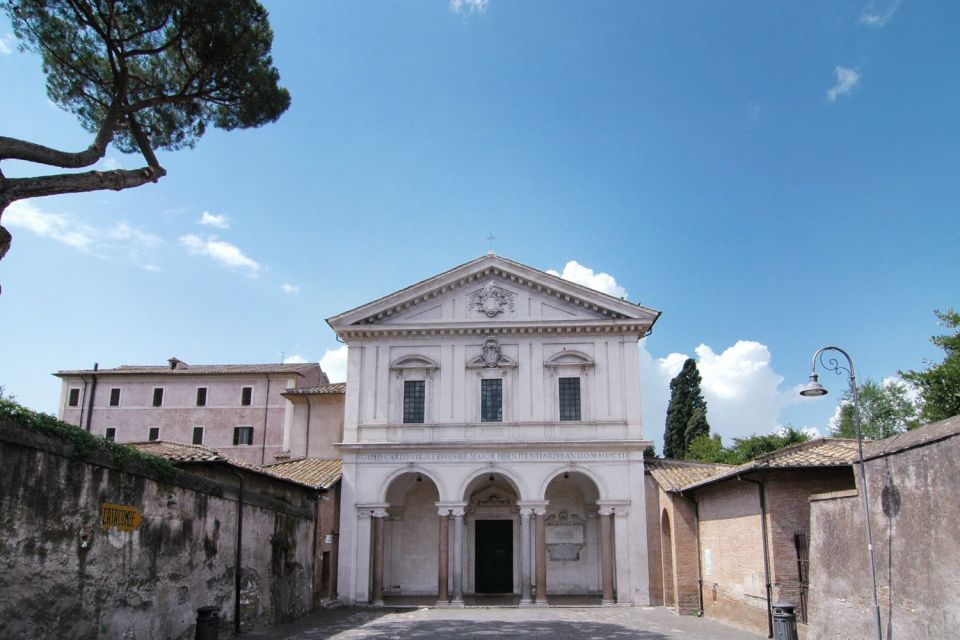
This tour is only about 30 minutes, but it’s in a place where comfort affects how well you enjoy the history.
Bring:
- Comfortable shoes for uneven, enclosed walking routes
- Warm clothing / a jacket, because it can feel colder deeper down
Leave at home:
- Baby carriages (not allowed)
If you tend to get uncomfortable in enclosed spaces, treat the trip as a caution flag rather than a casual stop. It isn’t presented as suitable for people with claustrophobia, and that matters because catacombs are, by nature, tight.
Also, plan for rules that change your behavior: no photography inside means you’ll spend less time managing your phone and more time actually listening.
Group size, guide quality, and why 30 minutes can work
For a short tour, the guide has to do a lot. The best runs keep a clean flow: clear explanations at the right stops, then forward motion before the group gets restless. Reviews you can use as a guide to expectations describe friendly, engaging guides and emphasize that small group size helps you stay oriented.
Some tour guides mentioned by name include Micah and Niko. That’s a good sign if you care about communication style—because the difference between a confusing lecture and a clear walking story is huge in underground spaces.
One realistic point: because the route is constrained by narrow areas, you might feel like you’re moving in single-file at points. That’s normal for catacombs. The tradeoff is that when the guide pauses to explain something meaningful—like the graffiti to Peter and Paul or the mausoleum names—you can actually process it instead of just passing by.
Price and value: is $16 worth 30 minutes underground?
At about $16 per person for an entrance ticket plus a guided tour, this is priced as an experience, not just an entry pass. The big value isn’t length; it’s interpretation. Without a guide, you might still see burial spaces, but you’d miss the connections between quarry origins, later construction, and the key Christian development around martyrs like Sebastian.
Is it the cheapest option? One visitor noted it can be a bit more expensive than buying on-site, and they were unsure about online vs on-site availability. Here’s the practical way I’d think about it: if you want a specific time slot and you prefer not to gamble with last-minute scheduling, booking ahead can feel worth the extra cost.
Also consider the emotional and educational value. Catacombs aren’t just “ancient Rome stuff.” They’re a physical record of how ordinary people and religious communities marked memory underground. A short guided walk helps you get the context fast, so the visit lands rather than just passing by.
The tour rating is strong—4.6 with 669 reviews—which usually signals consistent guide quality and smooth execution. Still, remember this is a quick, rules-based tour in tight spaces, not a leisurely museum stroll.
Who should book this, and who should skip it
This tour is a great fit if:
- you want a short, high-impact Rome activity
- you like guided history that explains what you’re actually seeing
- you’re curious about early Christian burial practices and Roman-era site evolution
It might be a tough fit if:
- you have mobility impairments, since the tour is not suitable
- you have claustrophobia, since underground conditions can feel too tight
If you’re visiting on a hot day, this is also the kind of plan that can make your schedule easier. One benefit repeatedly described is getting away from heat and city bustle while still seeing something distinct from Rome’s major surface sights.
Quick do’s and don’ts before you go
Do:
- wear comfortable shoes
- pack a jacket or warm layer
- arrive early and show your reservation at the ticket office
Don’t:
- expect to take photos inside the catacombs
- bring a baby carriage
- assume this is an easy walk for mobility or anxiety-related needs
FAQ
FAQ
How long is the Catacombs of St. Sebastian entry ticket and guided tour?
The guided tour is valid for 30 minutes.
How much does the tour cost?
The price listed is $16 per person.
Where do I meet the tour?
Go directly to the ticket office of the Catacomb and show your reservation.
How early should I arrive before the scheduled tour?
Arrive at least 10 minutes before the scheduled tour time.
What languages are available for the guided tour?
The live tour guide is available in English, Italian, Spanish, and French.
Is hotel pickup or drop-off included?
No. Hotel pickup and drop-off are not included.
What should I bring for the visit?
Wear comfortable shoes and bring warm clothing or a jacket.
Is photography allowed inside the catacombs?
Photography inside is not allowed.
Is the tour suitable for people with mobility impairments or claustrophobia?
No. It is not suitable for people with mobility impairments or people with claustrophobia.
Can I cancel and get a refund?
Yes. Free cancellation is available up to 24 hours in advance for a full refund.
Should you book this St. Sebastian Catacombs tour?
If you want a guided, time-efficient way to understand Rome’s underground burial story, I’d book it. The $16 price makes sense when you factor in the guide-led context for a site that spans quarry origins, reused galleries, and early Christian development tied to Sebastian.
Skip it if you know you’ll struggle with tight underground spaces or mobility limits. Otherwise, bring layers, plan to arrive early, and enjoy the fact that in a half hour you can get a real sense of how sacred memory took shape underground in Rome.