REVIEW · ROME
Rome Caravaggio and Baroque Masterpieces Private Guided Tour
Book on Viator →Operated by Tour In Rome by Tour in the City · Bookable on Viator
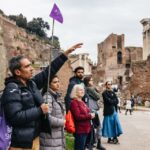
Caravaggio in three churches beats a museum shuffle. This private 3-hour Rome tour pairs an art historian guide with classic Baroque set pieces, from Santa Maria del Popolo to Piazza Navona. I love that it feels personal from the first step, not like you’re glued to a group rhythm.
I also like the focus: you don’t just see names on plaques. You stand inside churches to look at Caravaggio’s paintings up close and then connect what you’re seeing to the city around you. Guides such as Emilio or Martin are specifically praised for their passion, and one guest even described a surprise added stop at Rome’s first public library, with a 16th-century book.
One catch to plan for: you view the Pantheon from the outside, and Pantheon entry tickets are not included.
In This Review
- Key highlights at a glance
- Why This Private Caravaggio and Baroque Walk Works in 3 Hours
- Meeting at Piazza del Popolo and Ending Near Montecitorio
- Inside Chiesa di Santa Maria del Popolo: Caravaggio’s Saint Peter and Saint Paul
- Ara Pacis and Augustus’s Tomb: The Roman Past in the Middle of Modern Rome
- Church of St. Louis of the French: Caravaggio and Saint Matthew
- Piazza Navona: Bernini and Borromini’s Baroque Stage
- The Cardinal Del Monte Palace: Where Caravaggio Lived When He Arrived
- Pantheon From the Outside: Agrippa to Italian Kings
- Church of St. Ignatius of Loyola and the Baroque Square Front
- Palazzo di Montecitorio: Ending at Bernini’s Facade
- Price and Value: What $237.09 Buys You
- Practical Tips That Make the Tour Easier
- Who Should Book This Caravaggio and Baroque Tour
- Should You Book This Tour?
- FAQ
- How long is the Rome Caravaggio and Baroque Masterpieces private tour?
- Is the tour offered in English?
- Where do I meet the guide?
- Where does the tour end?
- Is this a private tour or a group tour?
- What Caravaggio sites are included?
- Are admission tickets included?
- What should I wear for church visits?
- Is pickup and drop-off included?
- Can I cancel for a full refund?
- Can I choose a morning or afternoon departure?
Key highlights at a glance
- Private guided format: only your group, with time to ask questions and adjust the pace
- Caravaggio in church interiors: see key works in Santa Maria del Popolo and the Church of St. Louis of the French
- Ara Pacis and Augustus’s tomb area: quick looks at monumental Roman power and the altar of Peace
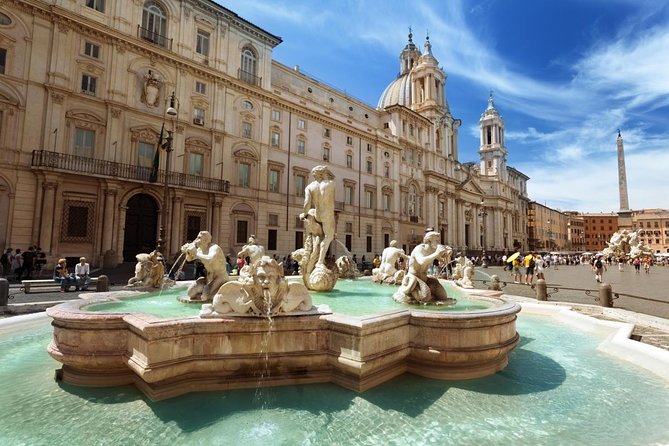
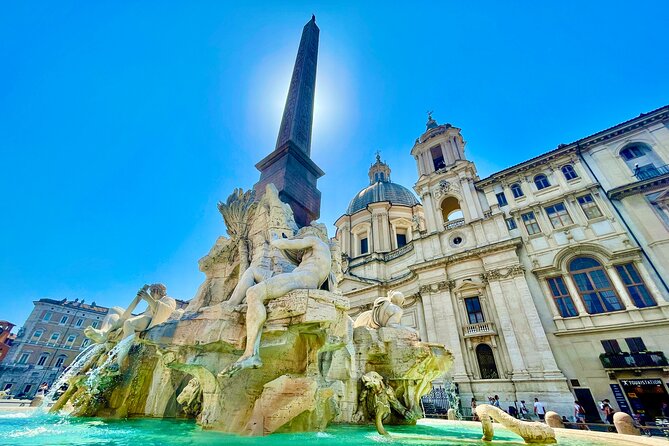
- Piazza Navona Baroque theater: Bernini’s Fountain of the Four Rivers and Borromini’s Church of Saint Agnes
- Cardinal Del Monte connection: you’ll stop at the palace tied to Caravaggio’s early days in Rome
- Pantheon viewing from outside: big story, no ticket needed for entry (since entry isn’t included)
Why This Private Caravaggio and Baroque Walk Works in 3 Hours
Rome can be a lot at once. This tour keeps it focused: Baroque Rome, told through Caravaggio, with real pauses where your guide can point out what to look for.
The format matters. You get a private tour with a professional art historian guide in English, for about three hours. That’s long enough to understand the art, but short enough that you’re not stuck doing logistics while you’re still excited.
It also helps that the route starts near major sights and ends in another easy-to-reach area. You’ll be moving on foot between landmarks, and the sites are spread in a way that keeps your energy for looking.
You can also read our reviews of more guided tours in Rome



Meeting at Piazza del Popolo and Ending Near Montecitorio
You start at Piazza del Popolo and end at Piazza di Monte Citorio. That end point is useful: it drops you near the Parliament area, where you can continue on foot for a bit more wandering or take public transport.
Times matter too. The tour offers morning or afternoon departure times, so you can match it to your day. If you’re doing other big-ticket sights, this is a nice way to anchor your day with art and storytelling instead of another long exterior-only checklist.
Also note that the order of stops can vary. So if your schedule is tight, don’t treat the exact sequence as carved in stone. The core landmarks and Caravaggio focus should still be there.
Inside Chiesa di Santa Maria del Popolo: Caravaggio’s Saint Peter and Saint Paul
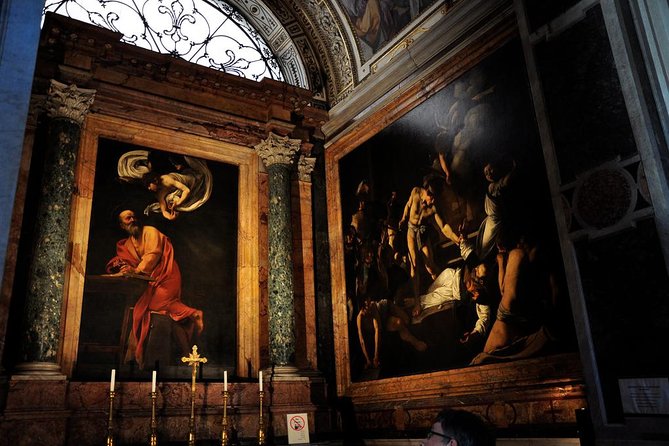
Your first art hit is Chiesa di Santa Maria del Popolo. Plan on about 20 minutes here, and the admission ticket for this church is listed as free.
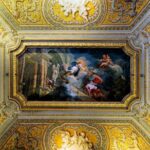
This is a smart start because it sets the theme immediately. You’ll go inside to admire Caravaggio’s paintings dedicated to the crucifixions of Saint Peter and Saint Paul. In a church like this, the art isn’t floating in a vacuum. It’s staged for worship, for devotion, and for drama.
What I like about this kind of church viewing is that you can actually look. In museums, you can lose the emotional rhythm. Here, your guide can help you notice details without you having to fight for space with tour groups.
Ara Pacis and Augustus’s Tomb: The Roman Past in the Middle of Modern Rome
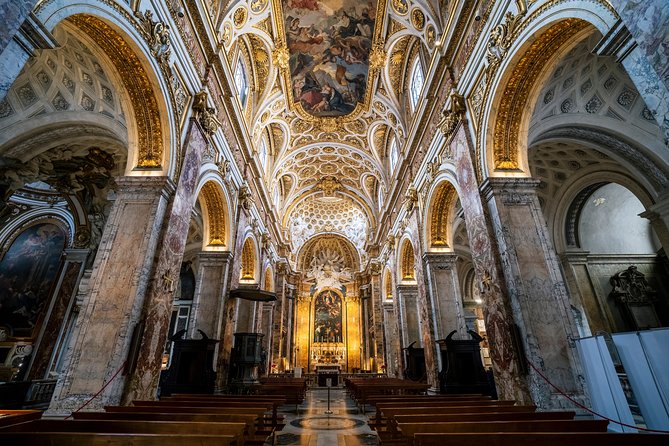
After the first church, you’ll take in the remains of Augustus’s monumental tomb and the nearby altar dedicated to Peace, known as the Ara Pacis.
You aren’t going here for a long, ticketed visit. This is more of a “get your eyes on the scale” moment. These are the kinds of structures that remind you Rome wasn’t built for paintings and tourist maps—it was built to project authority. When you then look at Baroque art a bit later, you start to see why Rome keeps re-inventing power through art and symbolism.
Practical note: this part is likely outdoors or semi-outdoors, so bring sunscreen in warm months and a layer if it’s cool. Rome lighting is great, but weather can still interrupt your photo plans.
Church of St. Louis of the French: Caravaggio and Saint Matthew
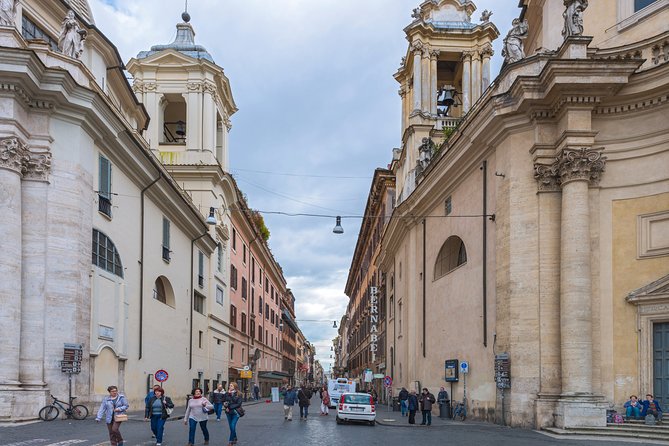
Next is the Church of St. Louis of the French. Expect about 15 minutes, and admission is listed as free.
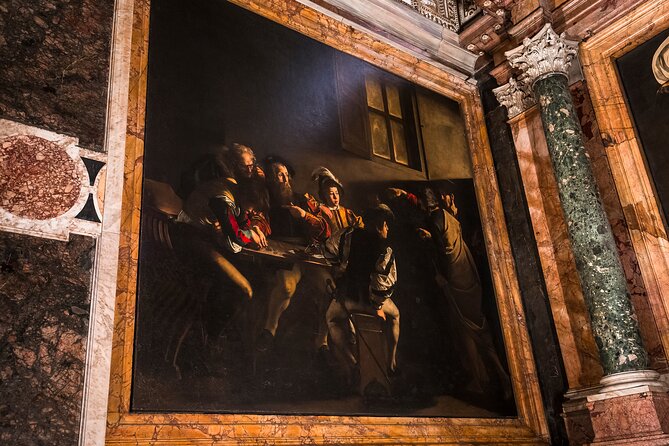
This stop is where Caravaggio shifts from Peter and Paul to Saint Matthew. You’ll look at the three paintings Caravaggio made dedicated to Saint Matthew and his life.
Why this is a standout segment: it’s not just the artist’s name repeated three times. You’re comparing themes across different biblical stories, and with a guide, you can connect the dots between how Caravaggio’s dramatic style works from painting to painting.
In a short visit like this, the guide’s job becomes crucial. You need them to help you see what you’d otherwise miss in a quick glance—composition cues, the emotional focus, the way the scenes are designed to hit you fast.
You can also read our reviews of more private tours in Rome


Piazza Navona: Bernini and Borromini’s Baroque Stage
Then you step into Piazza Navona, a square that practically demands you slow down. You’ll spend about 15 minutes here, and the admission ticket for the stops in the square area is listed as free.
Two big names define this moment:
- The Church of Saint Agnes, projected by Borromini
- The Fountain of Four Rivers, sculpted by Bernini
This is Baroque Rome at street level. The square layout, the church presence, and the fountain combine into one big visual argument: Rome wanted awe, and it wanted it outdoors, where everyone could see it.
If you’re the type who likes architecture as much as painting, this is a real payoff. And if you’re more into art history, this is where your guide can explain how Baroque design turns space into a performance—how your eye gets pulled from structure to sculpture to skyline.
The Cardinal Del Monte Palace: Where Caravaggio Lived When He Arrived
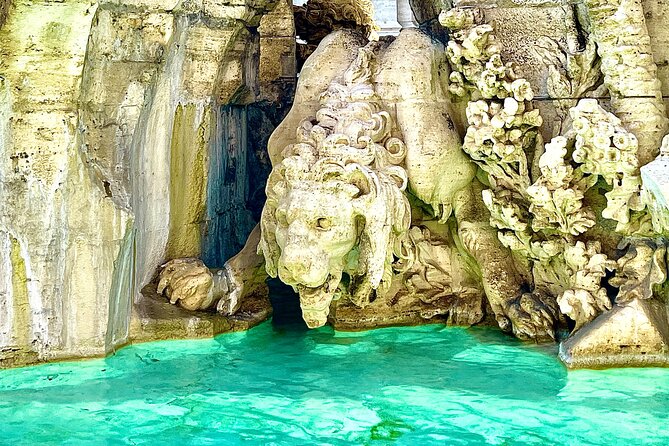
Between the major landmarks, you’ll stop at a magnificent building connected to Cardinal Del Monte, where Caravaggio lived when he arrived in Rome.
There’s a lot you can do with a stop like this, even if it’s brief. It gives Caravaggio a human timeline. You start thinking of him not just as an artist with famous paintings, but as a person in a new city—learning patronage systems, networking, and adapting to Rome’s expectations.
Even if you’re not a deep architectural person, this kind of pause helps the whole tour click. Art history becomes less like memorizing dates and more like following a trail.
Pantheon From the Outside: Agrippa to Italian Kings
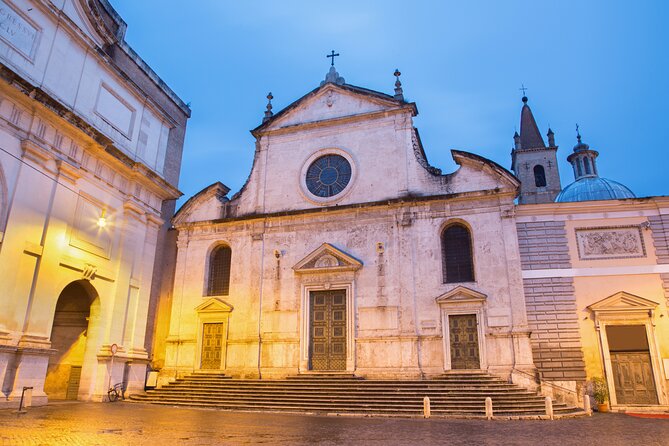
You’ll reach the Pantheon next, and here you’ll visit from outside for about 15 minutes. The tour notes that Pantheon entry tickets are not included, so don’t plan on going in during this time slot.
Still, this is worth it because the Pantheon’s story is huge and compresses centuries:
- Originally dedicated by Agrippa in the 1st century BC to all gods
- Later converted into a church in early Medieval time
- In the 19th century, it hosted the tombs of the Kings of Italy after unification in 1870
When you look at the exterior with your guide’s framing, you get a sense of why Romans kept valuing this structure. It’s not just ancient—it’s repeatedly re-used, re-purposed, and re-meaning’d.
If your dream is to stand inside under the dome, you’ll need to add that separately. But even from the outside, your understanding can grow fast with the right explanation.
Church of St. Ignatius of Loyola and the Baroque Square Front
After the Pantheon viewing, you’ll pass and look at the Church of St. Ignatius of Loyola, founder of the Jesuit Order. The square in front is highlighted as an example of Baroque Roman style.
Again, this is a “see it, orient to it, notice it” moment rather than a ticketed interior stop. And that’s okay. Baroque Rome is often best understood by how buildings shape movement and view lines, not just by stepping inside.
If you like the way churches command attention through shape and space, this square front is a great example of Rome doing theater with stone.
Palazzo di Montecitorio: Ending at Bernini’s Facade
The tour ends with Palazzo di Montecitorio, today the headquarter of the Parliament House. You’ll spend about 10 minutes here, and admission is listed as free.
This building has a long history, but one detail is singled out: the facade is the result of a Bernini project. That’s a nice way to close a Caravaggio-Baroque-focused walk. You started with Caravaggio’s dramatic scenes, and you end with Rome’s political architecture linking to one of the era’s most famous names.
It also helps that the tour ends here. You’re not deposited in a random alley. This is a central ending point you can use to keep exploring on your own.
Price and Value: What $237.09 Buys You
At $237.09 per person, this is not a bargain-basement tour. But it’s also not priced like a premium luxury car service. For most people, the value comes down to three things:
- Private guiding by an art historian
- Multiple major stops connected by a clear art theme
- Time savings from having someone route you through the right church interiors without you guessing
Also, the tour lists some stops as free admission (for the churches and square viewing parts). That helps you avoid surprise ticket costs—except for Pantheon entry, which is explicitly not included because you’re viewing from outside.
If you’re traveling with only a small group or you hate feeling rushed, a private format often works out better than you’d expect. You’re paying for interpretation and pacing, not just proximity to famous buildings.
Practical Tips That Make the Tour Easier
Here are a few things that can save you stress:
- Dress smart casual, and follow church rules: in churches, knees and shoulders must be covered for both men and women.
- Wear comfortable shoes. Even with a short duration, you’re walking between multiple landmarks.
- Plan for no pickup/drop-off. You’ll meet at Piazza del Popolo and finish near Piazza di Monte Citorio.
- Expect English guiding and a 3-hour window. Bring curiosity, not a long list of extra stops.
If you want photos, do it quickly and kindly. In church interiors, you’ll want to look first, camera second.
Who Should Book This Caravaggio and Baroque Tour
This tour is best for you if:
- You want Caravaggio explained through the places where the works are
- You like Baroque art but don’t want to spend the day hopping between unrelated attractions
- You value private pacing and question time with an art-focused guide
- You prefer art history you can see clearly in a church setting
It’s also a solid choice for first-timers in Rome who feel overwhelmed by the city’s scale. You get landmarks and art in a tight, coherent storyline.
Should You Book This Tour?
If your priority is understanding Caravaggio and how Baroque Rome built its visual power, I’d book it. The biggest reason is simple: you get church interior access for Caravaggio-focused viewing, plus landmark context like Piazza Navona and the Pantheon’s centuries-spanning story.
Don’t book it if Pantheon interior time is non-negotiable for you. Since Pantheon entry isn’t included, you’ll need to add that separately. If that’s okay, this tour is an efficient, art-centered way to spend a half-day in Rome without losing the plot.
FAQ
How long is the Rome Caravaggio and Baroque Masterpieces private tour?
The duration is approximately 3 hours.
Is the tour offered in English?
Yes, the tour is offered in English.
Where do I meet the guide?
You start at Piazza del Popolo, Roma RM, Italy.
Where does the tour end?
The tour ends at Piazza di Monte Citorio, 00186 Roma RM, Italy.
Is this a private tour or a group tour?
This is a private tour/activity. Only your group participates.
What Caravaggio sites are included?
You visit Chiesa di Santa Maria del Popolo to see Caravaggio paintings dedicated to Saint Peter and Saint Paul, and the Church of St. Louis of the French to see Caravaggio paintings dedicated to Saint Matthew and his life.
Are admission tickets included?
Many stops are listed as free admission. Pantheon entry tickets are not included, and you visit the Pantheon from outside.
What should I wear for church visits?
The dress code is smart casual. In churches, knees and shoulders must be covered for both men and women.
Is pickup and drop-off included?
No, pickup and drop-off are not included.
Can I cancel for a full refund?
Yes. Free cancellation is available up to 24 hours in advance of the experience start time for a full refund.
Can I choose a morning or afternoon departure?
Yes, you can choose between morning or afternoon departure times.