REVIEW · ROME
Relics from Passion of the Christ Tour in Rome
Book on Viator →Operated by Roman Vacations · Bookable on Viator
Five churches, one thread of sacred history. This tour is a focused way to see how Christianity’s key objects and stories show up in real Roman churches, not just in guidebook blurbs. I like the small-group feel, and I really appreciate how the guide ties each stop together with context around the relics themselves.
The main thing to consider is that you’ll be doing a solid walk and standing inside historic spaces. If you’re hoping for a totally relaxed sit-and-see outing, this isn’t that kind of tour.
In This Review
- Key takeaways before you go
- Price, timing, and what $102.25 actually buys you
- Piazza Santa Maria Maggiore: where the tour starts and how to set expectations
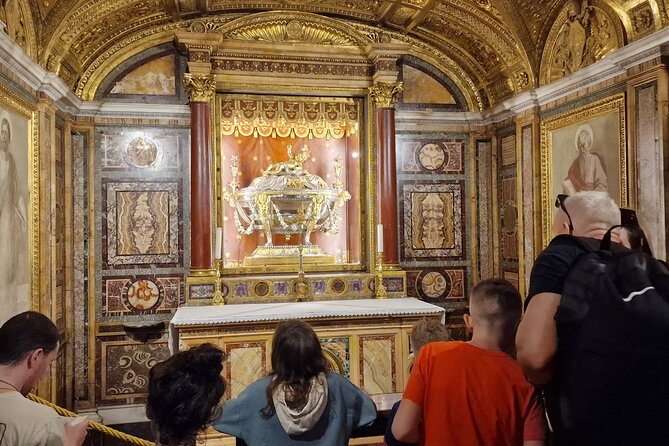
- Stop 1: Santa Maria Maggiore and the manger wood under the altar
- Stop 2: Santa Prassede’s mosaics and the scourging pillar
- Stop 3: Scala Santa (Holy Steps) and the view to the Holy of Holies
- Stop 4: San Giovanni in Laterano, Borromini, and the saints’ skulls
- Stop 5: Santa Croce in Gerusalemme and the Passion relic lineup
- Small group size and expert guides: why this works better than DIY
- What to watch for: the honest downside list
- Who this tour suits best (and who might skip it)
- Should you book this relic tour of Rome?
- FAQ
- How long is the tour?
- What’s the price per person?
- How many stops are included?
- Is the tour offered in English?
- Does the tour include admission tickets?
- Are food and drinks included?
- Will you climb the Holy Steps on your knees?
- How big is the group?
- Where does the tour start and end?
- Is free cancellation available?
Key takeaways before you go
- Entry included at every stop, so you can focus on the story instead of ticket hassle
- Max 10 travelers, which makes it easier to ask questions and move at a human pace
- A clear relic storyline, from manger wood to Holy Steps and on to Calvary-linked fragments
- Expert guides like Daniel and Paul are praised for answering questions clearly and thoroughly
- Planned pacing at each church, with short, timed visits that still feel meaningful
Price, timing, and what $102.25 actually buys you
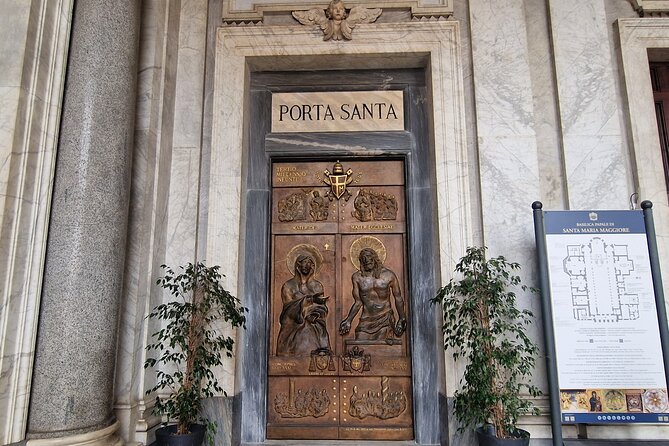
At $102.25 per person for about 3 hours, you’re paying for three things that matter in Rome: access, interpretation, and time efficiency.
You get entry to each site and an expert local guide, which is the big value. Without a guide, it’s easy to look at mosaics, columns, and altars and miss why specific objects are treated as so important. With a guide, you follow a single narrative thread across five churches while staying on schedule.
One practical note: the tour runs about 3 hours on the schedule, but in real life you should expect a bit of extra walking time. It’s not long like a half-day trek, but it’s not a quick “photo stop” either.
You can also read our reviews of more tours and experiences in Rome.



Piazza Santa Maria Maggiore: where the tour starts and how to set expectations
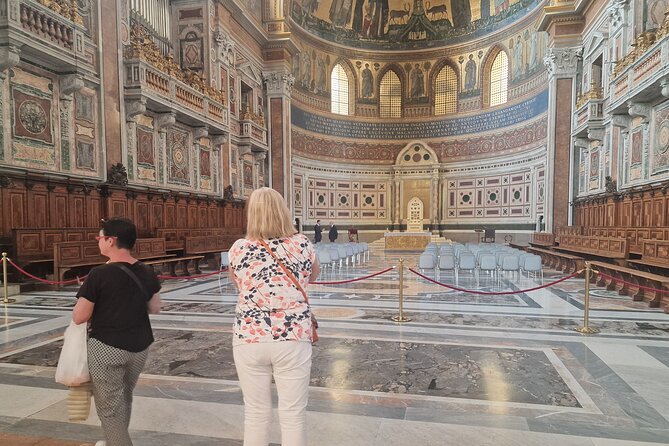
You begin at Piazza di Santa Maria Maggiore. From the first steps, the vibe is pilgrimage-meets-history: you’re moving between major church spaces where art and relics are part of the same visual language.
This is also where you should mentally switch gears. Rome has plenty to distract you. This tour keeps you focused on specific relics, and the guide helps you understand what you’re looking at—especially the parts that are easy to overlook if you’re just wandering.
If you do well with a structured route and you enjoy hearing the “why” behind what you see, you’ll probably find this format satisfying.
Stop 1: Santa Maria Maggiore and the manger wood under the altar
Your first major stop is Basilica di Santa Maria Maggiore (St Mary Major). This is one of Rome’s oldest Marian-focused churches, and the tour starts strong by pointing you toward what’s underneath the main altar.
The headline relic here is wood from the manger where baby Jesus was laid. You’ll also get context about the church itself—spanning centuries of Italian art—and a special mention of Gian Lorenzo Bernini’s association with the basilica.
What I like about starting here is the grounding effect. You begin with something that feels central to Christian storylines, then you keep moving through objects tied to later events.
Time check: it’s about 30 minutes, which is enough for a guided “see it, understand it, then move on” rhythm.
Stop 2: Santa Prassede’s mosaics and the scourging pillar
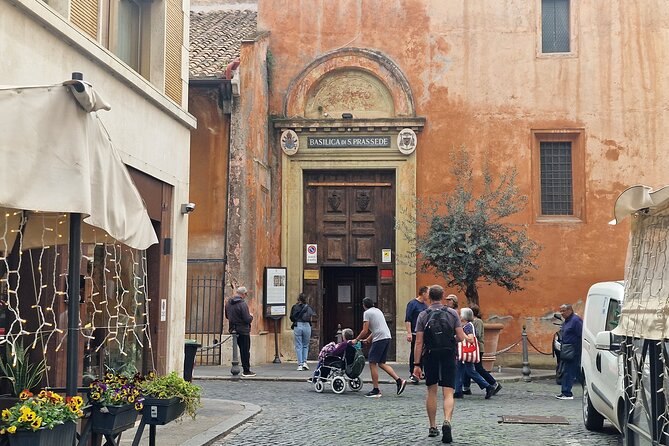
Next you walk to Basilica di Santa Prassede. This place is famous for its 9th-century mosaics, and the tour focuses your attention so you’re not just admiring decoration—you’re connecting that art to belief and memory.
The standout relic is the stone pillar on which Jesus was scourged, brought to Rome in the 13th century from the Praetorium in Jerusalem. That timeline detail matters, because it helps you understand relics here as part of a historical movement, not just objects stored behind glass.
A good guide makes this stop click. The best tours don’t hand you facts; they help you notice details at the right moment.
Time check: about 20 minutes, so come in ready to look, not ready to linger.
Stop 3: Scala Santa (Holy Steps) and the view to the Holy of Holies
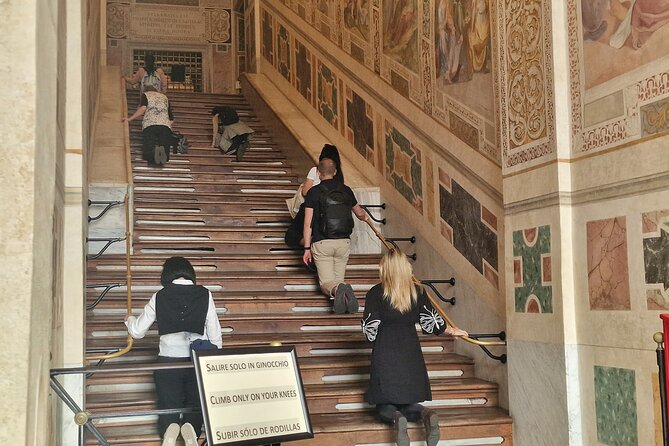
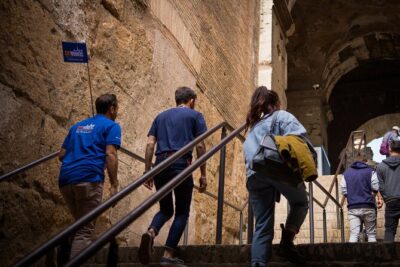
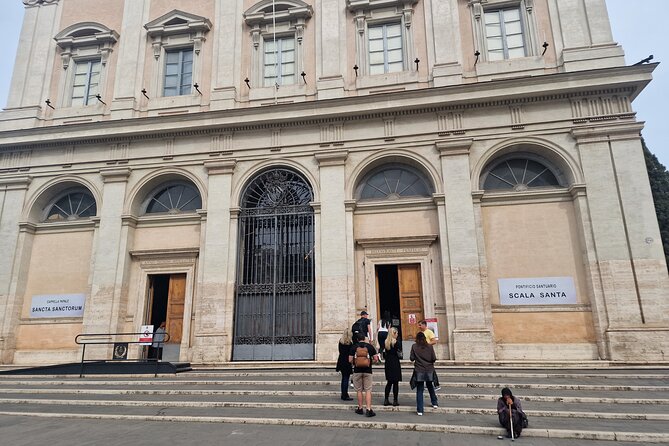
Then it’s on to Santuario della Scala Santa, known as the Holy Steps. Tradition includes climbing the steps on your knees, but this tour is realistic about the logistics: you won’t have time to do the full knee-pilgrimage version.
Instead, you’ll get the core experience: you’ll learn about how the steps were brought to Rome in the 4th century by St Helena, and you’ll still be able to peer into the Holy of Holies at the top to see the icon painted by St Luke.
This is a stop that can feel emotional even if you’re not religious in the same way as the tradition. The reason is simple: you’re dealing with a physical location linked to major events and serious devotion.
Time check: about 30 minutes, which gives you time for meaning—not just a quick look.



Stop 4: San Giovanni in Laterano, Borromini, and the saints’ skulls
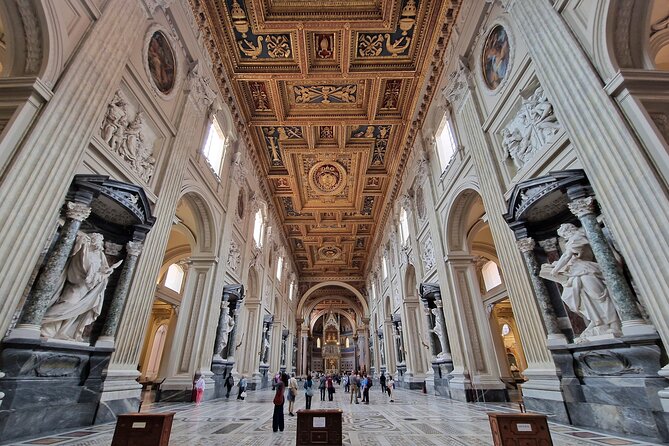
Your next stop is the Arcibasilica di San Giovanni in Laterano—the cathedral church of Rome. Here, the tour blends architecture and symbolism, especially highlighting designs attributed to Borromini and the meaning behind the stunning mosaic.
The relic-focused moment comes with something both striking and specific: the guide points out where the skulls of Saints Peter and Paul rest, located above the high altar.
If you’ve ever stood in a church and felt like you were looking at “pretty stuff,” this stop can change that feeling. You’ll be guided to understand why certain elements are placed where they are—and why that placement matters.
Time check: about 30 minutes.
Stop 5: Santa Croce in Gerusalemme and the Passion relic lineup
The tour’s climax is Basilica di Santa Croce in Gerusalemme. This is described as one of the most holy places in the world, and the reason is the density of passion-linked objects connected to the story of Calvary.
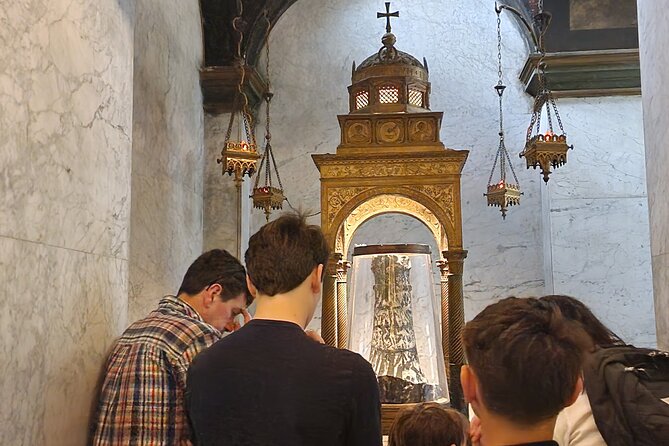
Here, you’ll learn that the basilica was built on land associated with earth brought from Calvary in the 4th century. Then you enter to see an impressive range of fragments and items tied to Jesus’ final days, including:
- Fragments of the Holy Sepulcher
- Fragments of the Cave of Bethlehem
- A nail of the Crucifixion
- Two thorns of the Crown of Thorns
- A small walnut board reading Jesus the Nazarene king of the Jews
- The wood of the Cross Jesus was crucified on
This is where the guided element really pays off. Relics can sound abstract until a guide explains what you’re seeing and how these objects are understood within Christian tradition.
Time check: about 20 minutes, which may feel short, but it also helps keep the experience from turning into a blur.
Small group size and expert guides: why this works better than DIY
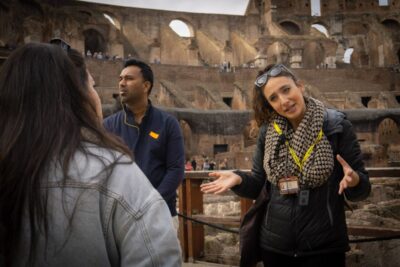
This tour is capped at 10 travelers, which changes the whole feel. In a city like Rome, a smaller group means you can ask questions without feeling like you’re interrupting a factory line.
The guides here are specifically praised for making the history and relics feel real. Names like Daniel and Paul show up in positive feedback because of the way they explain details and answer questions confidently. One-on-one-style attention can happen even on a small group when there are only a couple of people, and that kind of attention helps you connect the dots quickly.
Another detail I appreciate from how these guides teach: they tend to build anticipation. Instead of naming every relic immediately, the experience is paced so you notice the key object when you reach the right spot. It’s a small storytelling trick, but it makes the tour feel sharper.
If you’re the type who likes to understand context—why an object came to Rome, why it matters in the story—this is the right format.
What to watch for: the honest downside list
This isn’t the tour for you if you want a low-effort sightseeing day. You’re walking between multiple churches and spending time standing and moving through sacred spaces.
Also, you’re focused on a specific theme. That’s a plus for many people, but if you’re in Rome to see a wide spread of monuments like the Colosseum and Vatican highlights, you’ll likely want a different day for that.
Finally, there’s no food or drink included, so plan to eat before or after. Even if the stops are relatively short, church visits can stretch just enough to make hunger annoying.
Who this tour suits best (and who might skip it)
I’d point you to this tour if any of these fit your travel style:
- You’re a Catholic traveler, a church-history fan, or someone curious about how Christian relic traditions show up in Rome
- You like a guided narrative that helps you interpret art, architecture, and objects
- You want to get away from Rome’s busiest tourist tracks for a few focused hours
You might skip it if you:
- Prefer purely secular sightseeing or a lighter overview tour
- Get tired standing indoors for short periods
- Want an all-day itinerary with built-in meal stops
Should you book this relic tour of Rome?
If you’re looking for one honest, theme-driven morning or afternoon that connects church art with specific relics, this is a strong choice. The value is real because entry is included and the guide turns the big ideas into something concrete—like manger wood, the scourging pillar, the Holy Steps, and the passion relic collection at Santa Croce in Gerusalemme.
Book it if you’re excited by religious history and you don’t mind walking. Skip it if you want Rome in broad strokes or you dislike structured, spiritually focused sites.
My bottom line: if the idea of following the relic trail through five major basilicas sounds like your kind of day, go for it. You’ll likely leave with a clearer picture than you’d get from wandering solo.
FAQ
How long is the tour?
The tour lasts approximately 3 hours.
What’s the price per person?
The price is $102.25 per person.
How many stops are included?
There are five stops across Rome’s churches and sanctuaries.
Is the tour offered in English?
Yes, it is offered in English.
Does the tour include admission tickets?
Yes. Entry to each site is included in the tour.
Are food and drinks included?
No. Food and drink are not included.
Will you climb the Holy Steps on your knees?
No. The tour notes you won’t have time to ascend the stairs on your knees according to the pilgrim tradition, but you will peer into the Holy of Holies at the top.
How big is the group?
The tour has a maximum of 10 travelers.
Where does the tour start and end?
It starts at Piazza di Santa Maria Maggiore and ends at Basilica di Santa Croce in Gerusalemme (at Piazza di S. Croce in Gerusalemme, 10, 00185 Rome).
Is free cancellation available?
Yes. You can cancel for a full refund up to 24 hours in advance.