REVIEW · ROME
Private Vatican Tour: Egyptian and Etruscan Museum with transfers
Book on Viator →Operated by Eyes of Rome · Bookable on Viator
Vatican crowds don’t stand a chance here. This private Vatican Museums tour pairs fast-track entry with a professional Blue Badge guide, so you spend less time in lines and more time with the collection. I love the fact that it’s not just a quick highlights lap; you get the kind of access that lets you linger, including the Golden Room, mostly closed to the general public, with its famous gold jewelry.
You also get real-world convenience. The day starts with hotel pickup (limited to centrally located hotels within the Aurelian Walls), then you’re whisked straight into the museum flow. One possible snag: dress code. You must cover shoulders and knees—no shorts or sleeveless tops—so plan your outfit carefully or you could be turned away.
Key tour takeaways
- Skip-the-line, priority entry saves your limited time and energy for the art
- Private guide, Blue Badge certified means the visit is shaped for you, not a one-size script
- Special access to the Egyptian and Etruscan Museums gives you more than the usual route
- Golden Room access lets you see jewelry and artifacts that most people never get
- Sistine Chapel interpretation focuses on meaning, not just spotting famous ceiling scenes
In This Review
- What Makes This Tour Feel Private (Not Just Another Group Script)
- Skip-the-Line Priority Entry: The Time Saver That Actually Changes the Day
- Hotel Transfers Around the Aurelian Walls: The Part People Forget to Plan
- Egyptian Museum Stop: Mummies, Papyri, and a Clear Story About Egypt
- The Golden Room + Etruscan Museum: Iron Age Craft Meets Vatican Scale
- Sculptures in the Belvedere Courtyard: When Michelangelo’s Taste Shows Up
- Gallery of Maps and Tapestries: Renaissance Art That Teaches You How People Saw Italy
- Galleria delle Carte Geografiche (Gallery of Maps)
- Gallery of Tapestries
- Gallery of Candelabras: Art You Feel More Than You Study
- Sistine Chapel With a Guide: Meaning That Makes the Ceiling Make Sense
- St. Peter’s Basilica: Pietà, Bernini’s Baldachin, and the Outdoor Hit
- Price and Value: What $541.85 Buys You (and What It Doesn’t)
- Who This Tour Fits Best (and Who Might Want Another Plan)
- A Few Practical Tips to Make the Day Smoother
- Should You Book This Private Vatican Tour?
- FAQ
- Is this a private tour?
- Does the tour offer hotel pickup and drop-off?
- Can I skip the long entry lines?
- What language is the guide?
- What major sites are included?
- Is admission included?
- Are there dress code requirements?
- How long is the tour?
- What if I need to cancel?
- Do children or minors need extra arrangements?
What Makes This Tour Feel Private (Not Just Another Group Script)
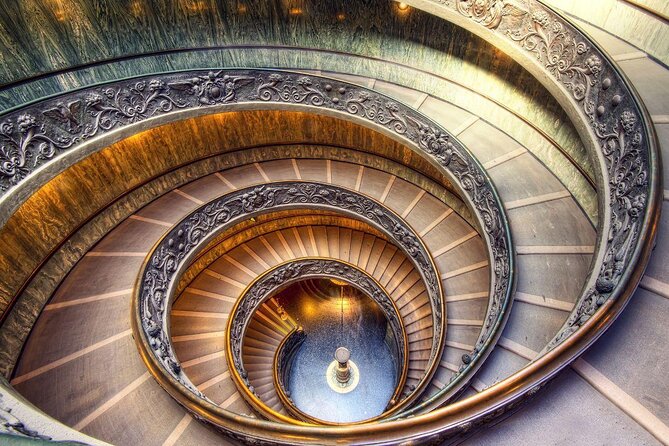
A private Vatican tour sounds fancy, but the real win is how it changes the day. You’re not stuck behind a conveyor belt of strangers while your guide reads from the same three facts. Instead, your Blue Badge guide can pace the route around what you care about, and it’s easier to pause when something grabs you—an object, a symbol, a sculpture, a detail you’d otherwise miss.
Another practical benefit: you’re covering a lot of ground in a short window—about 3 hours 30 minutes—so the guiding style matters. With a good guide, you’ll spend your time learning where it’s worth it most: the museum corners where meaning is hiding in plain sight, and the big stops where context makes the masterpieces hit harder.
If you get a guide like Serena (she’s been singled out for experience and calm navigation), you’ll likely feel even more “guided” than “shown around.” A strong guide also helps in the most stressful place of the Vatican day: moving through crowds without losing momentum.
Skip-the-Line Priority Entry: The Time Saver That Actually Changes the Day
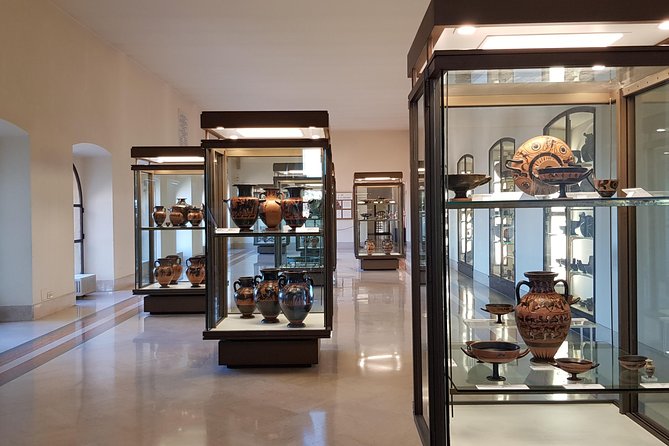
The Vatican is one of those places where the art is worth it, but the process can feel like punishment. On a busy day, you’re walking past crowds in the range of 25,000 to 30,000 visitors—and that number doesn’t care that you planned your itinerary.
This tour includes a guaranteed skip-the-long-lines approach via prebooked priority entry. That matters because it gives you more than “convenience.” It protects your attention. When you’re not burning time waiting at the entrance, you’re ready to absorb when you finally reach the rooms.
It also helps with pacing inside the museum complex. You’ll move through galleries with a set plan: Egyptian and Etruscan highlights first, then key Renaissance rooms, and finally the Sistine Chapel and St. Peter’s Basilica. The result is a day that feels like a journey, not a stampede.
You can also read our reviews of more private tours in Rome



Hotel Transfers Around the Aurelian Walls: The Part People Forget to Plan
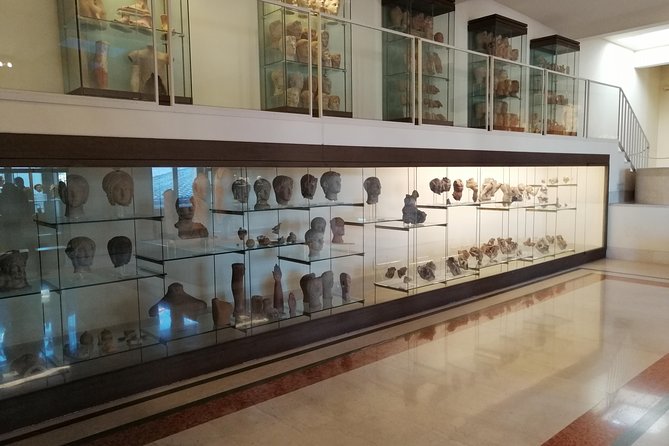
This is not a meet-at-a-central-bus-stop tour. It starts with pickup from your centrally located hotel/accommodation, but only if you’re within the Aurelian Walls zone. If you’re staying outside that area, you’ll want to double-check your address and pickup eligibility early.
Why does this matter? Because the Vatican day can get stressful fast. If you’re dragging bags to a separate meeting point, navigating transit, or dealing with early-morning walking, the “private” advantage shrinks. Here, the transfer is part of keeping the morning smooth: sanitized vehicle, then you’re dropped close to the museum entry point.
You’ll also get a mobile ticket, which helps reduce paper chaos on a day when you’ll already be juggling timing and dress code.
Egyptian Museum Stop: Mummies, Papyri, and a Clear Story About Egypt
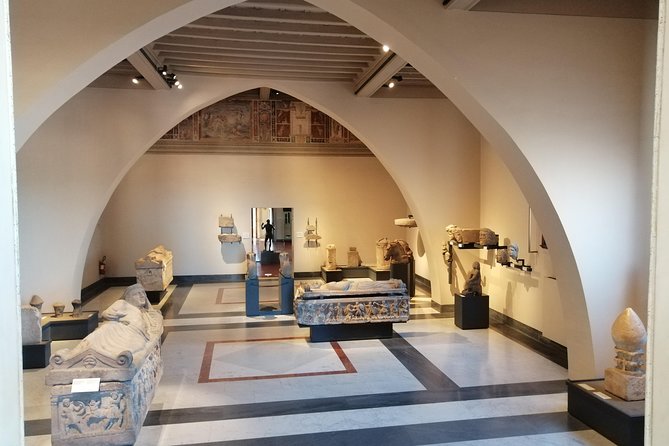
Once inside, you head to the Vatican Museums’ Egyptian side. This stop gives you a focused look at ancient Egypt through artifacts like mummies, papyri, and hieroglyphic inscriptions.
What I like about this stop is the “fit.” The Egyptian collections can feel overwhelming if you’re wandering alone—too many objects, too little connection. With a guide, you’re not just staring. You’re building a quick mental framework: what you’re seeing, why it mattered in Egyptian life, and how it’s interpreted through modern museum display.
The time you spend here is short on paper—about 10 minutes for the Egyptian Museum portion—but it’s designed to be high-impact. Instead of turning this into a slow museum crawl, the guide sets you up to appreciate the big artifacts and the overall theme quickly, and then you move on.
Practical tip: if hieroglyphs and papyri are your thing, keep your questions in your pocket. A private guide format is ideal for those “wait, what am I looking at?” moments.
The Golden Room + Etruscan Museum: Iron Age Craft Meets Vatican Scale
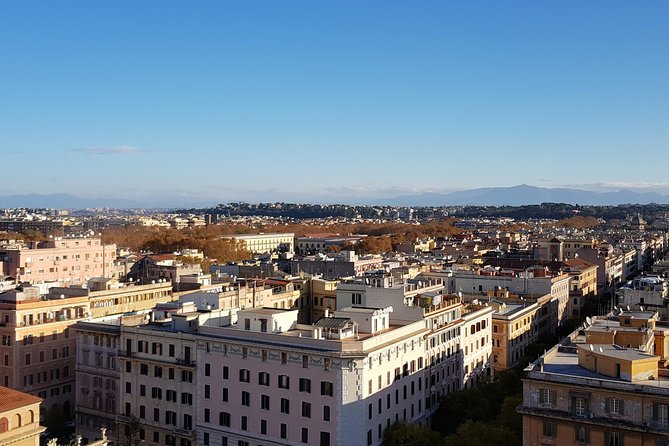
This is the stop that often makes the tour feel worth it fast. You’ll spend time in the Etruscan Museum area with special access to the Golden Room—a space mostly closed to the general public.
The focus here is Etruscan jewelry and objects dating roughly from the 9th to the 1st century BC. That time span matters. It’s not just “ancient stuff.” It tracks craftsmanship and cultural change from early Iron Age roots toward the point where Etruscan city life converged into the Roman state.
If you care about art history but hate skimming, this is a great match. Jewelry and metalwork can feel too small to matter in the Vatican—but up close, the detail does the talking. You’ll see how objects carry identity: rank, belief, and social status, all coded in materials and workmanship.
The Etruscan Museum portion itself is also short—again around 10 minutes—but the special access and guided storytelling help the time feel like more than a checklist. You’re not just collecting names. You’re learning how to interpret what you see.
Sculptures in the Belvedere Courtyard: When Michelangelo’s Taste Shows Up
After the Egyptian and Etruscan sections, the day leans into classical sculpture. You’ll pass through standout areas like the Belvedere Courtyard, then continue through key rooms where the Vatican’s sculptures are famous for a reason.
Two big names are built into the experience: the Lacoon and the Belvedere Torso. These aren’t random statues. They’re the kind of masterpieces that Michelangelo and Renaissance artists revered—objects that shaped how later artists thought about form, movement, and anatomy.
What I’d tell you to watch for: don’t treat these as “cool sculpture, next.” Look for what makes them teachable. The ways bodies are posed, the attention to surface and tension, the intentional drama. A good guide helps you spot those choices, so you’re not just admiring from a distance.
There’s also the practical angle. Sculpture galleries can be visually complex. When you’re trying to keep momentum in a short tour window, having a guide who knows where to point you keeps your time focused.
You can also read our reviews of more museum experiences in Rome




Gallery of Maps and Tapestries: Renaissance Art That Teaches You How People Saw Italy
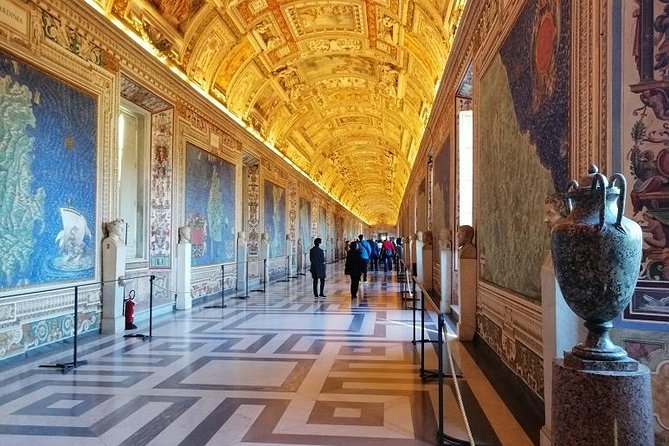
Next up are two very different galleries: maps and tapestries. Both are Renaissance in spirit, but they hit your brain in different ways.
Galleria delle Carte Geografiche (Gallery of Maps)
Here you’ll see the stunning collection of topographical maps of Italy, created in the 16th century under Pope Gregory XIII. The scale is hard to miss: the maps span about 120 meters.
This is the kind of stop that pays off when you have context. Without it, you might read the maps like decoration. With a guide, you start noticing how people of the period imagined space: borders, locations, and the idea of “Italy” as a concept in art.
Gallery of Tapestries
Then you move into the Gallery of Tapestries, with woven scenes from biblical and historical narratives. These are 15th and 16th-century works, and they’re inspired by designs from Raphael’s school.
Tapestries can be tricky to appreciate quickly because they’re detailed. The benefit of this format is you’re not stuck staring forever. You get enough guidance to understand the themes and the craft choices, then you move on before you’re museum-worn-out.
Gallery of Candelabras: Art You Feel More Than You Study
The Gallery of the Candelabras is a calmer chapter of the tour. It features Greek and Roman statues, sarcophagi, and reliefs, and it’s named for the grand marble candelabra that decorate the space.
This part works well because it breaks the day into sections. After Egyptian and Etruscan objects (small scale, intense detail) and then maps and tapestries (visual storytelling), you get an area where statues and architecture create mood.
You’ll also see that the gallery was set up in the late 18th century, which means the space isn’t only about ancient objects—it’s about how later curators framed ancient art for new audiences.
If you’re the type who worries you won’t “get” classical sculpture, this is still a good stop. You might not analyze every relief, but you can enjoy the pacing, the rhythm of figures, and the visual storytelling of the display.
Sistine Chapel With a Guide: Meaning That Makes the Ceiling Make Sense
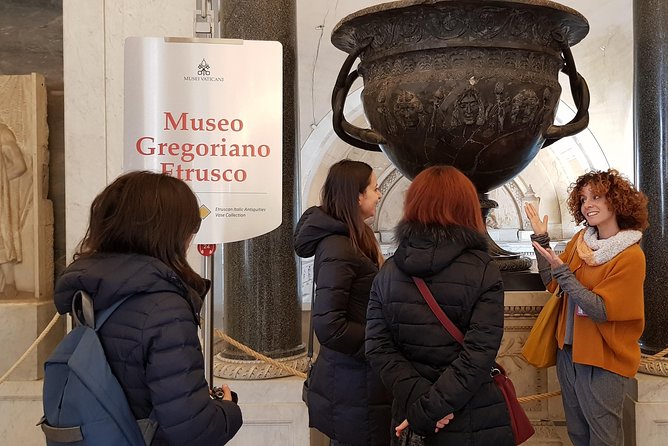
Eventually, you’ll head to the Sistine Chapel. This is where the tour’s value can really show. The Sistine Chapel isn’t hard to visit. It’s hard to understand.
With your guide, you’ll focus on details and the meaning behind Michelangelo’s frescoes. That’s the difference between looking up and actually learning what you’re looking at.
Even if you’ve seen photos before, the guide’s cues help you notice what your eye would otherwise skate over. You’re likely to remember the visit longer because you’re connecting images to themes.
This stop is also time-specific—about 15 minutes in the tour pacing—so you’ll want to come prepared to look. If you spend the whole time photographing instead of watching, you’ll miss what makes the guided approach worthwhile.
St. Peter’s Basilica: Pietà, Bernini’s Baldachin, and the Outdoor Hit
The tour finishes with St. Peter’s Basilica. You’ll have about 1 hour, with priceless artwork including Michelangelo’s Pietà and Bernini’s Baldachin.
The Baldachin is described as a bronze canopy over the high altar, soaring over 90 feet tall. It’s the kind of artwork that feels made for the human body in motion—you see it from different angles as you move, and suddenly “baroque drama” stops being an abstract term.
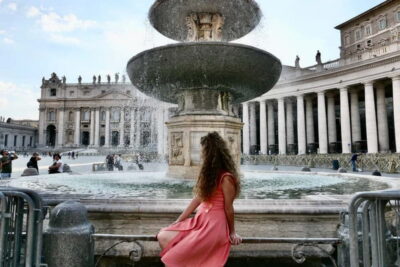
You’ll also get an outside view of the basilica from St. Peter’s Square. This is a smart add-on because it helps you place the building in context—your brain gets the whole scene first, then the interior hits with scale and detail.
And yes, after the tour time, you still have room to continue exploring Rome on your own. That leftover freedom is important. It lets you turn this from a one-time museum sprint into a day that actually supports your wider trip.
Price and Value: What $541.85 Buys You (and What It Doesn’t)
At $541.85 per person, this is not a budget Vatican option. The value comes from stacking several things that are usually separate:
- Private guide (not a shared group format)
- Guaranteed skip-the-line priority entry
- Hotel pickup and drop-off by sanitized vehicle within the Aurelian Walls
- Special access connected to the Egyptian and Etruscan Museums
- Admissions included for multiple museum stops, with St. Peter’s Basilica admission free
So you’re paying for time and friction reduction. If you’ve ever had a day in the Vatican where the line swallowed the morning, you’ll understand why priority entry is so valuable.
What this price doesn’t automatically buy: a slow, unhurried museum day. The tour is structured and time-bounded, so if you want to spend hours alone in one section, you’ll still need to plan additional independent time later.
In plain terms: this is a strong value if you want maximum art per hour with a smart guide and minimal stress.
Who This Tour Fits Best (and Who Might Want Another Plan)
This private format suits you if:
- You want one-on-one guidance through the Vatican’s confusing layout
- You care about learning meaning, not just ticking off rooms
- You’d rather avoid wasting time in queues
- You’re short on time and need a smart, focused route
It might be less ideal if:
- You hate time limits and want to roam for hours without structure
- You don’t want to follow strict dress code rules
- Your hotel is outside the pickup zone around the Aurelian Walls
If you’re traveling with mixed interests—someone who loves ancient Egypt, someone else who wants Renaissance art, and someone who simply wants the Sistine Chapel—you’ll likely appreciate how the itinerary balances those tastes.
A Few Practical Tips to Make the Day Smoother
1) Wear dress-code-proof clothing. Keep shoulders and knees covered. No exceptions.
2) Use the mobile ticket. It’s easier when you’re already navigating crowds.
3) Decide your top two interests before you go. Then let your guide steer you toward what matters most.
4) Save energy for Sistine Chapel. You’ll want your attention fully on the ceiling when the time comes.
5) If you’re hoping for the most personal feel, ask your guide one specific question early. A private format rewards curiosity.
Should You Book This Private Vatican Tour?
If you want the Vatican experience to feel human—not like a timed obstacle course—this is a smart booking. The combination of private guide, fast-track entry, and special access to the Egyptian and Etruscan Museums is exactly what turns the Vatican from overwhelming to manageable.
Book it if:
- You value learning as much as sightseeing
- You’re short on time and want a route that hits the big masterpieces without wasting hours
- Your hotel is within the pickup zone so transfers actually help
Skip it or consider a different style if:
- You want a long, free-roaming museum day
- You’re likely to struggle with dress code requirements
- Priority entry doesn’t matter much to you (for example, if you’re extremely flexible and don’t mind waiting)
Bottom line: for most people, paying extra for less stress is the right call. This tour is built for seeing the art and understanding why it matters—without burning your day in lines.
FAQ
Is this a private tour?
Yes. It’s a private activity, meaning only your group participates.
Does the tour offer hotel pickup and drop-off?
Yes, pickup and drop-off are included for centrally located hotels within the Aurelian Walls.
Can I skip the long entry lines?
Yes. The tour includes guaranteed skip-the-long-lines/priority entry access.
What language is the guide?
The tour is offered in English.
What major sites are included?
You’ll visit the Vatican Museums (including the Egyptian and Etruscan Museums areas), the Gallery of Maps, the Gallery of Tapestries, the Gallery of the Candelabras, the Sistine Chapel, and St. Peter’s Basilica.
Is admission included?
Admission ticket access is included for the Vatican Museums stops listed in the schedule, and St. Peter’s Basilica admission is free.
Are there dress code requirements?
Yes. Knees and shoulders must be covered for both men and women. Shorts and sleeveless tops are not allowed, and you may be refused entry if you don’t follow the dress code.
How long is the tour?
It runs about 3 hours 30 minutes (approx.).
What if I need to cancel?
Free cancellation is available. You can cancel up to 24 hours in advance for a full refund, based on local time.
Do children or minors need extra arrangements?
Yes. If minors under 18 are included, at least one adult must accompany them, and bookings made exclusively by unaccompanied minors aren’t accepted.