REVIEW · ROME
Private Tour – Doria Pamphilj Gallery
Book on Viator →Operated by Rome Guides · Bookable on Viator
Art that feels arranged just for you. You’re led through the Doria-Pamphilj palace collection with a guide who explains the gallery’s founding documents, and you’ll get up close to Caravaggio-level masterpieces without wasting time. One possible snag: there can be an occasional meet-up mix-up, so have your confirmation handy and be ready to call if needed.
I really like that this tour is private (only your group) and timed well for a tight Rome day. The paintings are laid out across four wings based on an old 18th-century plan, so you’re not just hopping from one famous name to another—you’re seeing how the whole display was meant to work. The main consideration is that 2 hours can feel quick if you’re the type who likes to stare at brushwork for a long time.
In This Review
- Key Points Worth Knowing Before You Go
- Why the Doria Pamphilj Gallery Works Better Than a Typical Museum Stop
- What You’ll See: A Painted Lineup From Raphael to Velazquez
- How the Tour Feels With a Real Human Guide
- Your Two-Hour Itinerary Inside Villa Doria Pamphilj
- Price and Value: What You’re Really Paying For
- Location and Timing: A 2:00 pm Start in Central Rome
- Who This Private Tour Is Best For (and Who Might Skip It)
- Should You Book the Private Doria Pamphilj Gallery Tour?
- FAQ
- FAQ
- How long is the Doria Pamphilj Gallery private tour?
- Where does the tour meet?
- What time does the tour start?
- Is admission included in the price?
- What’s included in the tour cost?
- What’s not included?
- Is this tour private or shared?
Key Points Worth Knowing Before You Go
- Private, English-guided tour with admission tickets included in the price
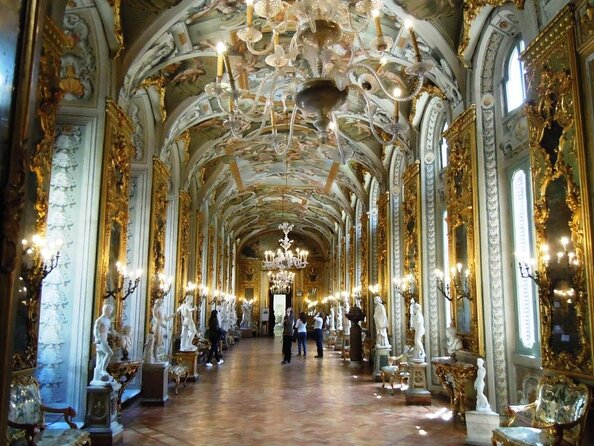
- Four-wing layout guided by an 18th-century document, not random room-hopping
- Masterpieces across big names like Raphael, Titian, Velazquez, and Caravaggio
- Your guide covers founding documents, not just surface-level art talk
- Expect a lively guide style; Vincenzo (when assigned) is praised for humor and answering questions well
Why the Doria Pamphilj Gallery Works Better Than a Typical Museum Stop
Most Rome museums feel like a maze. This one feels like a plan.
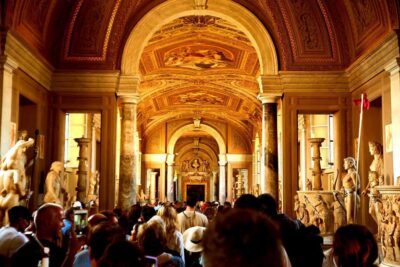
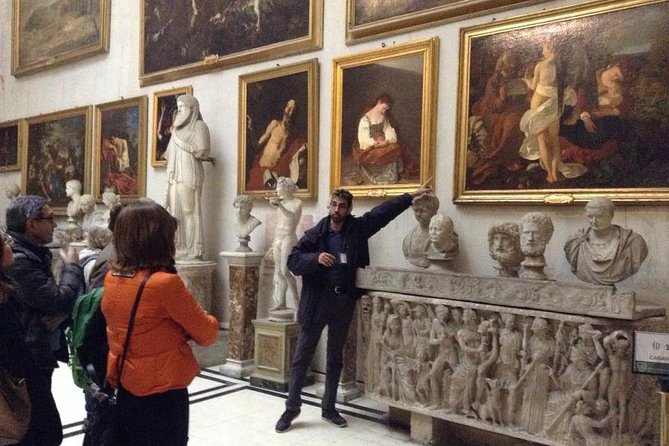
The Doria-Pamphilj Gallery sits inside the Palazzo Doria Pamphilj, a building stitched together over centuries, from the mid-1400s through the early 1700s. What makes it special is how the art is arranged: the paintings aren’t placed in a modern, convenience-first way. Instead, the display follows directions from an 18th-century document, with works positioned using symmetry, and sometimes grouped by typology and style. That means the tour doesn’t just count “famous paintings.” It teaches you how to read the collection as a designed whole.
I also like the payoff for an afternoon schedule. You’re getting a focused experience in about two hours. It’s long enough to see major works and still absorb the setting, but short enough that you can keep the rest of your day flexible.
If you’re planning Rome art days, this gallery is also a good match for travelers who don’t want a full-day marathon. You get classic Renaissance to Baroque names—Raphael through Caravaggio to Velazquez—without the feeling that you’ve been stamped through a checklist.
You can also read our reviews of more private tours in Rome



What You’ll See: A Painted Lineup From Raphael to Velazquez
This tour centers on one stop, Villa Doria Pamphilj, but it covers a lot of visual ground. Your guide steers you through the gallery’s wings and points out specific works by major artists.
Here’s the kind of lineup you can expect to run into, with some key highlights:
Raphael’s Portrait of Andrea Navagero
This is the moment where the collection signals “serious Renaissance.” You’ll want to look for how the portrait conveys status and character rather than just copying a face. A good guide will help you see what matters in the painting.
Titian’s Salome with the head of St. John the Baptist
Titian’s name is great, but it’s the scene that pulls you in. You’ll typically get a short burst of context on why this subject mattered, and then you can focus on how Titian builds drama using color and composition.
Domenichino’s Susan and the old men
This one is a reminder that “famous gallery” doesn’t mean every work is the most obvious poster image. It’s a chance to broaden your sense of the period beyond the biggest headlines.
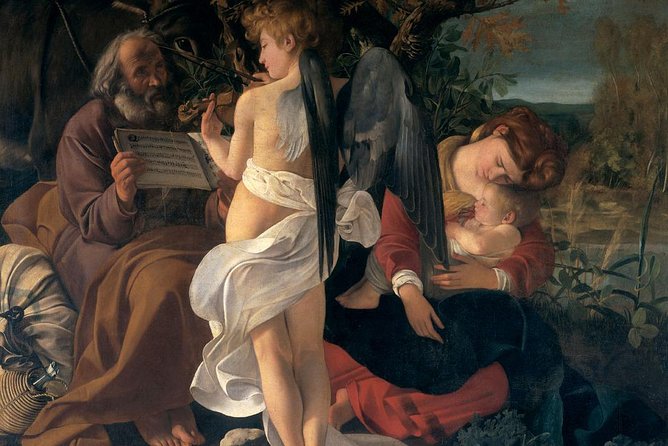
Caravaggio paintings including Rest during the flight to Egypt, St. John the Baptist, and Magdalene
Caravaggio is often the reason people book. Here, you don’t just see one entry. You get multiple works by a single master, which helps you notice recurring choices in lighting, gesture, and mood. You’ll also appreciate how the gallery’s layout keeps shifting the tone from one wing to another.
Annibale e Ludovico Carracci: Satyr and shepherd, Madonna with the Infant, St. Sebastian
This is a bridge between eras and styles. It’s especially useful if you like comparing how artists handle sacred scenes versus more narrative or symbolic material.
Mattia Preti: Magdalene repentant, St. John the Baptist, Christ conducted on the Scala Santa
Preti’s inclusion is a bonus for Baroque fans. You can expect your guide to connect themes and technique—how subject, staging, and paint handling work together.
Guercino: Erminia finds Tancred wounded, Allegory of springtime, Return of the prodigal son, St. Joseph
This is a good section for travelers who like variety in storytelling. You may find yourself switching from biblical moments to allegory-like themes without leaving the room.
Guido Reni: Madonna adoring the Infant, St. Peter repentant, Sacred and profane love
Reni can feel more controlled and graceful. It’s a good contrast point if you’ve seen more dark-and-intense works earlier in the tour.
Velazquez’s portrait of Innocent the Tenth
A portrait from Velazquez brings the focus back to presence and authority. If you’re a fan of portraiture, this is one of those “slow down” moments.
In plain terms: you get a master-to-master survey, but with a guided route that helps you connect the dots.
How the Tour Feels With a Real Human Guide
The biggest strength here isn’t the list of artists. It’s how the guide helps you understand why the list matters.
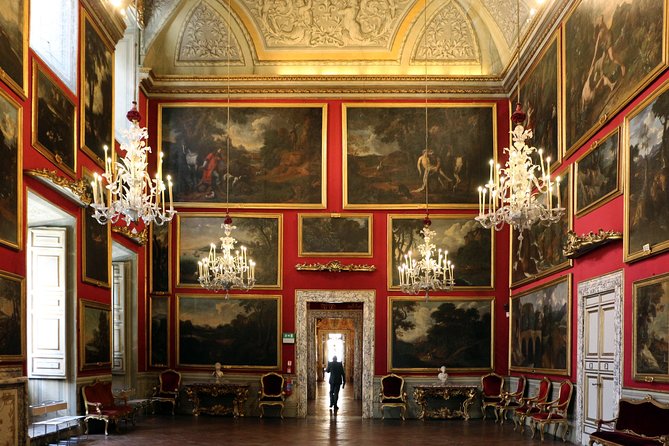
This is a private experience with your own guide, with professional guidance and tickets included. You’ll also learn about the gallery’s founding documents, which is a rare topic for a short, two-hour tour. That kind of detail changes how you look at the paintings. Instead of treating each work like a standalone celebrity, you start noticing relationships—how works are positioned and why certain pairings make sense.
The reviews also point to a certain guide style: Vincenzo gets called out for being fun and animated, and for answering questions well. That matters because art tours can go one of two ways: either they’re speeches, or they’re a conversation. The better version helps you ask questions and get straight answers in the moment.
You should also know this is offered in English. If that’s your comfort zone, great. If you prefer Italian or want audio support, you’ll want to double-check the language options before booking, since English is explicitly stated.
Your Two-Hour Itinerary Inside Villa Doria Pamphilj
This tour has one main stop: the gallery inside the Villa Doria Pamphilj. It runs for about 2 hours, starting at 2:00 pm. You return to the meeting point afterward.
Here’s what that usually means for your experience day:
First, you’ll begin with orientation and context—how the gallery is arranged and what the 18th-century plan was trying to accomplish. That’s not fluff. It gives you a mental map fast, so you can focus on what you’re seeing instead of getting lost in the room flow.
Then you move into the core art viewing across the four wings. Because the layout follows the older document criteria (symmetry, sometimes typological or stylistic affinity), the route tends to feel purposeful. You’re not bouncing randomly; you’re moving through a guided sequence that makes comparisons easier.
Your guide also highlights specific works and threads ideas between them. For example, you might be nudged to compare Caravaggio works’ emotional intensity with how a different master handles sacred subjects elsewhere in the gallery. Or you could be guided to notice how portraiture differs in mood from narrative scenes.
A practical note: 2 hours sounds fine until you realize that major works don’t deserve 45-second glances. If you know you’re a “linger” visitor, choose this tour when you don’t have to rush to another timed ticket right afterward.
Price and Value: What You’re Really Paying For
At $138.16 per person, this isn’t a cheap museum ticket. But it’s also not a slow, long-haul private tour—this is a concentrated, admission-included experience with a guide.
The value comes from three things:
- Admission tickets are included. You’re not paying a separate fee on top of the tour price.
- It’s private, so the guide can pace and respond to your questions instead of herding a crowd.
- You get more than “look at painting, next room.” The route is tied to the gallery’s historical arrangement and founding documentation, which helps you understand the collection’s logic.
There’s also mention of group discounts, which can matter if you’re traveling with friends or planning a small group. If you can share the cost with others, the per-person value often improves.
What might reduce value for some people is what’s not included: no hotel pickup and no private transportation. That’s normal for city center walking/metro access tours, but it does mean you should plan your own route and arrival time.
Bottom line: if you care about art, and you want the meaning behind the paintings (not just the names), the price starts to make sense.
You can also read our reviews of more museum experiences in Rome




Location and Timing: A 2:00 pm Start in Central Rome
The meeting point is at Galleria Doria Pamphilj, Via del Corso, 305, 00186 Roma RM, Italy. The tour begins at 2:00 pm and ends back at the meeting point.
This matters because Via del Corso is in the thick of Rome’s central action. The good news: it’s near public transportation, so you’re not locked into taxis. The other good news: the timing often works well for pairing with a morning activity and then getting your art fix before evening plans.
Because it’s near transit, you can plan a straightforward arrival. Still, give yourself a small buffer. One of the reviews described a meet-up issue where the guide didn’t receive the message correctly and had to be reached by phone. That’s rare, but it’s a reminder to keep your confirmation details ready in case you need quick coordination.
Who This Private Tour Is Best For (and Who Might Skip It)
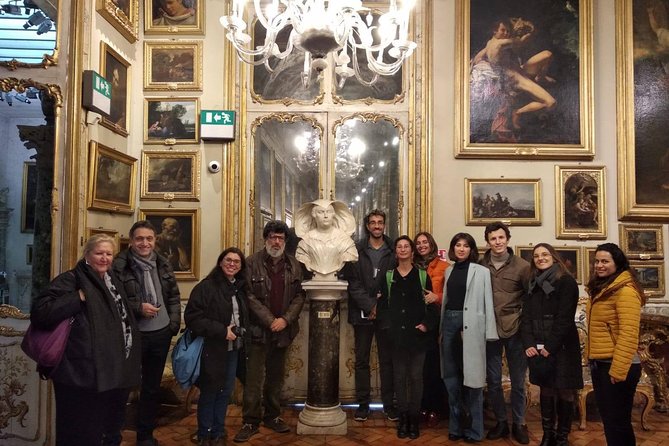
I think this tour is a great fit for:
- Art lovers who want a focused route across major artists in a short time
- Travelers who like explanations tied to the building and collection layout, not just facts
- Couples and small groups who prefer a private experience over a large group
- First-time Rome visitors who want a high-impact art stop without committing to a full museum day
You might skip it if:
- You plan to spend a lot of time reading wall labels and don’t want a guide at all
- You’re strictly budget-first and only interested in the cheapest ticket prices
- You only want one or two painters and don’t care about seeing the collection’s overall arrangement
Should You Book the Private Doria Pamphilj Gallery Tour?
Yes, if you want a smart, time-efficient art experience with real guidance.
Book it if you care about how paintings are organized, and you’d like to understand the gallery using the 18th-century layout logic and the founding documents angle. The guide experience stands out, especially with people praising Vincenzo for humor, energy, and strong answers.
Consider being cautious only about the rare meet-up confusion. To reduce stress, have your booking confirmation ready on your phone, arrive a few minutes early, and be prepared to contact the provider quickly if anything feels off.
If you’re planning an art-forward afternoon in Rome, this is one of the easier decisions: it’s private, admission is included, and you’ll walk away with a clearer sense of what the gallery is trying to say.
FAQ
FAQ
How long is the Doria Pamphilj Gallery private tour?
It’s about 2 hours.
Where does the tour meet?
You meet at Galleria Doria Pamphilj, Via del Corso, 305, 00186 Roma RM, Italy.
What time does the tour start?
The start time is 2:00 pm.
Is admission included in the price?
Yes. Admission tickets are included.
What’s included in the tour cost?
Tickets and a local guide (professional guide) are included, as well as the private tour.
What’s not included?
Hotel pickup and drop-off are not included, and private transportation is also not included.
Is this tour private or shared?
This is a private tour/activity. Only your group will participate.