REVIEW · ROME
Private Tour – Ancient Ostia
Book on Viator →Operated by Rome Guides · Bookable on Viator
Ostia Antica steals the show from Rome. This Private Tour – Ancient Ostia is a fast way to see how a real Roman city worked, and I love how the private guide helps the ruins click into place. One thing to consider: you’ll be walking around an archaeological site, so it’s not recommended for travelers with walking disabilities or if mobility is limited.
The tour starts at 3:30 pm at Ostia Antica (Viale dei Romagnoli, 717), and it ends inside the site in front of Café degli Scavi. It’s priced at $156.19 per person for about 3 hours, with tickets included, and it’s offered in English—so you get the value without the usual Rome chaos.
In This Review
- Key highlights to look for
- Why Ostia Antica beats another Rome checklist
- The 3:30 pm timing and the Ostia Antica start/finish plan
- Parco Archeologico di Ostia Antica: what you’ll actually see in 3 hours
- Thermal baths: more than a quick stop
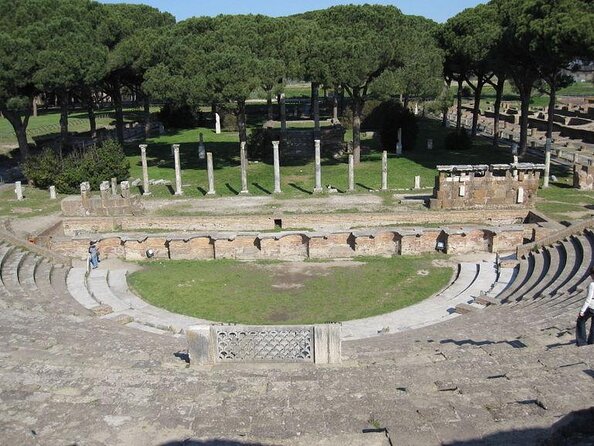
- Theatre: where community and entertainment meet
- Houses and villas: read the city through the rooms
- Religious places: the city beyond business
- Museum with sculptures and sarcophagi
- Private guiding that turns ruins into stories (Vincenzo, Roberto, and the difference it makes)
- Price and value: is $156.19 per person a good deal?
- Practical tips so your Ostia Antica visit feels easy
- Who should book this private Ancient Ostia tour?
- Should you book? My take on Ancient Ostia value for Rome visitors
- FAQ
- How long is the Private Tour – Ancient Ostia?
- What time does the tour start?
- Where do we meet for the Ancient Ostia tour?
- Are admission tickets included?
- Is transportation or pickup included?
- Is free cancellation available?
Key highlights to look for
- A private guide who can tailor the pace and what you focus on
- Thermal baths, theatre, houses, villas, and religious areas all in one walk
- Museum time with an important collection of ancient sculptures and sarcophagi
- Real city details like mosaics, plumbing, and multistory building layouts
- A quick, satisfying Roman break from the center of Rome—done in a few hours
Why Ostia Antica beats another Rome checklist
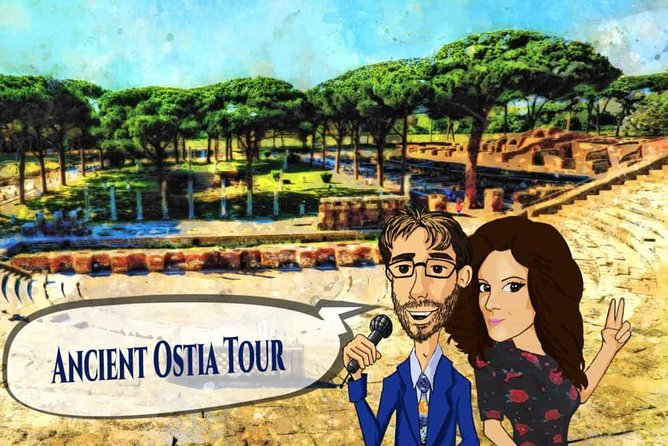
If you’ve spent time in central Rome, you’ve probably learned a key truth: many famous ruins are also many crowded ruins. Ostia Antica (the old Roman harbor city) gives you a different feeling. It’s the kind of place where you can look at stone walls and think, okay, people really lived here, worked here, worshiped here, and traded here. And with a private guide in English, the site doesn’t stay as “interesting rocks.” It turns into a functioning city map in your head.
Two things make this tour especially worth your time. First, the walkthrough covers the parts most Rome visitors skip, so you leave feeling like you saw something that actually complements the Colosseum and the forums rather than repeating them. Second, you get museum coverage too—small, but important—so your visit doesn’t stop at exterior ruins.
The main trade-off is physical. It’s described as requiring moderate fitness. If you need step-free routes or long sit-down breaks, you should think hard before booking.
You can also read our reviews of more private tours in Rome



The 3:30 pm timing and the Ostia Antica start/finish plan
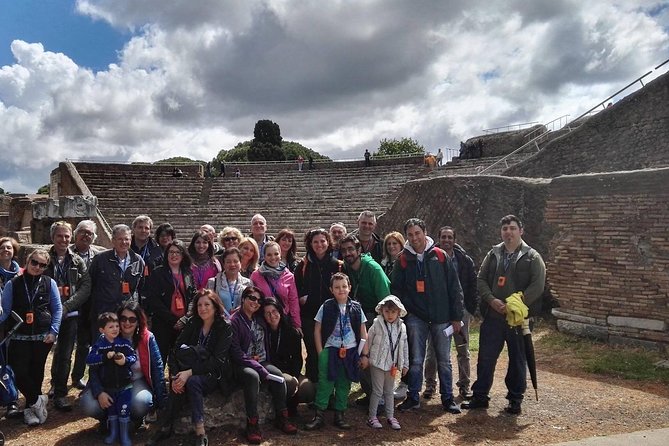
A 3:30 pm start is smart. You get a late-day visit that can work well if you’re already spending mornings in Rome. You also avoid some of the worst time pressure that can happen when you’re trying to cram big sights into one day.
You’ll meet at Ostia Antica, Viale dei Romagnoli, 717, 00119 Roma RM, Italy. That’s also the area where you’ll end: the tour finishes inside the archaeological site, in front of the café (Café degli Scavi), at the same Viale dei Romagnoli address. Practically, that means you don’t have to plot a whole extra plan for where you’ll land afterward.
Transportation is the one area you’ll need to handle yourself. Private transportation and pickup/drop-off aren’t included. The good news: the meeting point is said to be near public transportation, so you can build your day without relying on a car service.
Parco Archeologico di Ostia Antica: what you’ll actually see in 3 hours
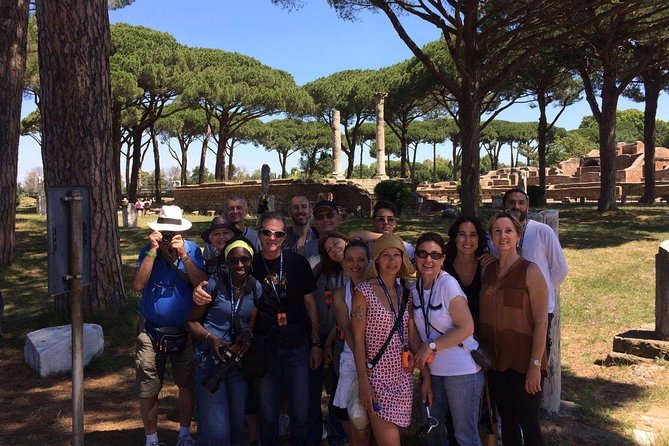
This is built to cover a lot of ground without feeling like a marathon. In about 3 hours you’ll move through multiple zones of the Parco Archeologico di Ostia Antica, the old harbor city.
Here’s the rhythm: you start in the archaeological park, then you’ll cover the thermal bath area, the theatre, houses and villas, religious places, and finally the museum. That sequence matters, because it mirrors how a city worked. You’re not only seeing entertainment and homes—you’re also seeing the infrastructure and the spiritual spaces that round out day-to-day Roman life.
Thermal baths: more than a quick stop
The thermal baths are one of those parts of the site that can feel like a “wow” moment even if you don’t know Roman plumbing from Roman poetry. The tour includes them, and that’s a big win because baths connect to daily routines: water use, practical engineering, and social time. In the guides’ storytelling, the baths become a clue for how people spent time, not just a pile of walls.
Also, the reviews highlight plumbing as something you can notice when your guide points it out. That’s exactly what you want from a private tour: attention to the details you’d probably miss on your own.
Theatre: where community and entertainment meet
Next comes the theatre. This is where you start seeing the city as more than commerce and housing. A theatre signals public gatherings and shared culture—exactly the kind of context that helps the ruins feel human.
A private guide can connect the dots for you: not just what the building looked like, but what the building likely meant to the people who lived around it. With an English-speaking guide, that context stays clear, not confusing.






Houses and villas: read the city through the rooms
The tour moves into the houses and villas. These areas tend to make the biggest impression because you can often see how spaces were organized and how daily living might have flowed. The reviews specifically call out mosaics and multistory buildings, plus the way the city was planned.
This is where you’ll start to understand why some people compare Ostia Antica to Pompeii—but without the same crowd pressure. The feeling is similar in the sense that you’re walking in a preserved urban footprint, not just viewing scattered ruins from afar.
Religious places: the city beyond business
Then you’ll reach the religious places. This matters because a Roman city wasn’t only economic. It included a system of rituals and community identity. Even if you don’t go deep into doctrine, seeing religious spaces in the same visit helps you build a fuller picture of what mattered to residents.
Museum with sculptures and sarcophagi
The museum is described as having a collection that’s small but extremely important, including ancient sculptures and sarcophagi. This is a useful pause in the itinerary because it shifts you from architecture and street layout to objects tied to belief, memory, and status.
If you’re the kind of person who likes to connect what you see outside to what those artifacts mean, you’ll appreciate this stop. And if you prefer action over stillness, you’ll still find it relevant—because these pieces help explain the people who once used the city, not just the stones that remain.
Private guiding that turns ruins into stories (Vincenzo, Roberto, and the difference it makes)
A private tour lives or dies by the guide. In this case, I like that the experience is positioned around explanation, not just access. You’re not standing around with vague directions. You’re getting someone to interpret what you’re looking at and help you make sense of the layout.
Some guides—like Vincenzo—are described as warm and friendly, with enough storytelling power to make you feel like you can picture the place in its prime. That imagination piece is real value. The goal isn’t to turn ruins into a fantasy. It’s to help your brain complete the scene: shops and traders, people moving through corridors, and civic spaces that served specific roles.
Other guides—like Roberto—are praised for helping the city come alive with pictures and stories, including details tied to daily Roman life and the kind of sections you’d associate with commerce and civic order. The review also points to a list-style feel that’s actually helpful: traders, bakers, soldiers, shop keepers, and restauranteurs. Even in a short visit, having that structure makes the city feel readable.
If you’re wondering whether your money buys more than walking, this is your answer. A guide doesn’t reduce the site into a checklist. They help you notice details—like mosaics and plumbing—that bring the city plan to life.
Price and value: is $156.19 per person a good deal?
At $156.19 per person for a private 3-hour tour, this is not the cheapest way to visit Ostia Antica. But it doesn’t pretend to be. You’re paying for a few things that add up fast:
- Admission tickets included, so you’re not doing extra line-item math on arrival
- Professional guide plus private guiding, meaning you get interpretation, not just presence
- A private format, meaning only your group participates
This pricing makes most sense if you value time and clarity. If you’re already planning an afternoon and want the site to feel understandable, the guide support is the difference between wandering and learning.
It also helps that the pace is built for a break from the main tourist circuit. You can treat this as a focused “other Rome” outing rather than a half-day that turns into a logistics headache. And because it’s said to be booked on average 105 days in advance, it’s smart to plan ahead if your dates are fixed—private slots can fill.
Practical tips so your Ostia Antica visit feels easy
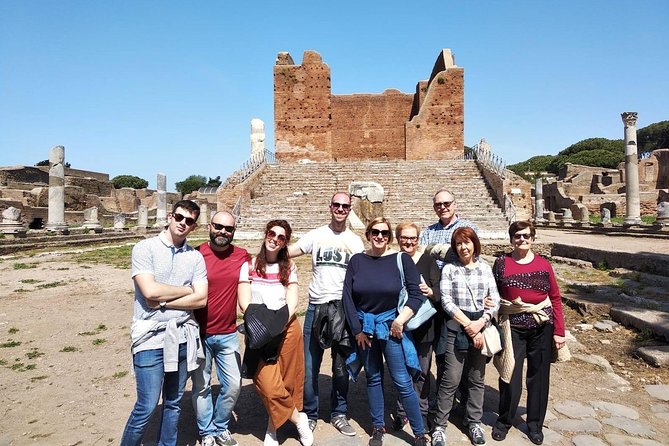
Because moderate physical fitness is mentioned, plan the day like you’re walking a site. Comfortable shoes matter, and you’ll want a water plan for the afternoon.
A couple more practical points based on how the tour is set up:
- The tour starts at 3:30 pm, so plan your Rome-to-Ostia timing accordingly.
- The finish happens inside the archaeological site, in front of the café. That makes it easy to grab coffee or tea after you wrap. (It’s noted that there is a café on-site.)
- Private transportation, pickup, and drop-off aren’t included. Build your route using public transport access since the meeting point is near it.
If you’re traveling as a couple, a small family group, or friends who want the visit shaped around your interests, private is a great format here. If you need step-free accommodations or long rest stops, you should think twice since the tour is not recommended for walking disabilities.
Who should book this private Ancient Ostia tour?
This one fits best if you want a calmer, more city-like experience than central Rome, without sacrificing context. I’d especially recommend it if you’re the type who likes to understand what you’re looking at rather than just collecting photos.
You’ll likely enjoy it if:
- You want a big variety of stops—baths, theatre, homes, religious areas, and museum objects—without committing to a full day
- You prefer a guide who can tailor the pace to your group
- You value details like mosaics, plumbing, and city planning, which tend to matter a lot more when explained
It may be a poor fit if:
- Your mobility needs more support than a moderate-fitness site visit can offer
- You’re expecting private transportation included (you’ll need to manage getting there yourself)
Should you book? My take on Ancient Ostia value for Rome visitors
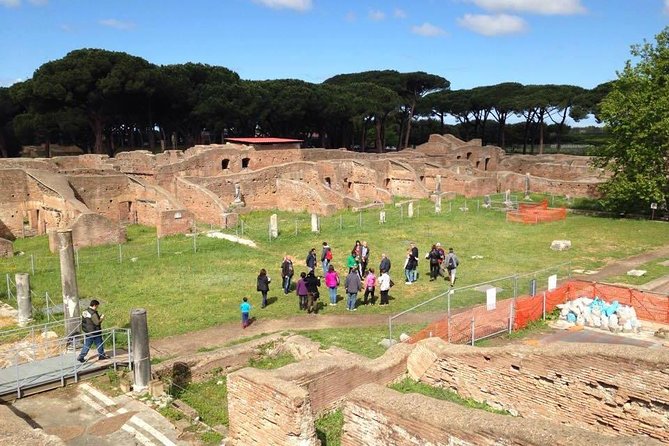
Yes, I think you should book this if you want something genuinely different from the usual Rome route. Ostia Antica gives you Roman urban life in a way many visitors miss, and the private guiding helps you notice the stuff that makes the ruins meaningful—like mosaics, plumbing, and layout details that would be hard to catch alone.
The cost is higher than group tours, but the value is strong when you add up what’s included: tickets, guided interpretation, and a format where your group stays together. And the timing—3:30 pm for about 3 hours—makes it an easy add-on for many Rome itineraries.
If your mobility is limited or you dislike walking archaeological sites, pause and reassess. Otherwise, this is a smart way to spend an afternoon and leave feeling like you saw real Roman life, not just more ruins.
FAQ
How long is the Private Tour – Ancient Ostia?
The tour lasts about 3 hours.
What time does the tour start?
The start time is 3:30 pm.
Where do we meet for the Ancient Ostia tour?
You meet at Ostia Antica, Viale dei Romagnoli, 717, 00119 Roma RM, Italy.
Are admission tickets included?
Yes. Admission tickets are included.
Is transportation or pickup included?
No. Private transportation and pick-up/drop-off are not included.
Is free cancellation available?
Yes. You can cancel for a full refund up to 24 hours in advance of the experience’s start time.