REVIEW · ROME
Private Piazza’s, Fountains, Monuments & Basilicas Rome Golf Cart
Book on Viator →Operated by Maya Tours · Bookable on Viator
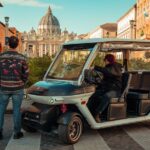
Rome’s best intro rides on a cart. This private Piazza’s, Fountains, Monuments & Basilicas Rome Golf Cart experience trades long bus rides for unobstructed views and fast first-day orientation.
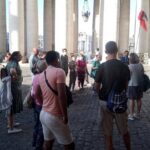
I also like the way the tour’s built around live commentary you can actually hear while you glide between major landmarks. You may roll with guides such as Ahmed, Claudio, Alfredo Noya, or Mido, and the best ones keep things clear, age-friendly, and focused on what you’re looking at.
One consideration: most big sights are seen from the outside-only view. If you want inside stops, you’ll still need to plan tickets on your own.
In This Review
- Quick hits
- What a Rome Golf Cart Tour Does Better Than a Bus
- Getting Set Up at Via Germanico, 16 (Then Rolling)
- Gianicolo Hill Views and the Fontanone’s Long Aqueduct Story
- Trastevere, Bohemian Streets, and the Romulus-and-Remus Legend
- Mouth of Truth, Aventine Orange Trees, and the Keyhole Moment
- Ancient Engineering and Imperial Power: Walls, Baths, Palatine, and Constantine
- Colosseum, Roman Forum, and Circus Maximus: Seeing the Whole Stage
- Rome by the River: Roman Ghetto, Castel Sant’Angelo, and Piazza Navona
- Pantheon, Trevi Fountain, Spanish Steps, and Villa Medici at a Comfortable Pace
- Piazza del Popolo Finish: Where the Route Leaves You Ready to Explore
- Price and Practical Value of the $150 Golf Cart Route
- Best Fit: Who This Tour Helps Most (and Who Might Want Another Format)
- Should You Book This Private Piazza’s, Fountains, Monuments & Basilicas Golf Cart Tour?
- FAQ
- How much does this Rome golf cart tour cost?
- How long is the tour?
- Is the tour offered in English, and are there different start times?
- Where do I check in, and where does the tour end?
- Is this a private tour?
- What’s included in the tour price?
- Do you enter monuments and basilicas during the tour?
- Is lunch included?
- Can I cancel for a full refund, and are service animals or children allowed?
Quick hits
- Golf cart access means smoother sighting at places that feel awkward by car or coach
- Uninterrupted sightlines so you’re not stuck peering through crowds or bus windows
- English live commentary that connects monuments to the story line of Rome
- A big-hit route that layers panoramic viewpoints, ancient ruins, and famous piazzas
- You’ll still walk some, so comfortable shoes matter even with the cart
- Private group for your party only, so the pace stays yours
What a Rome Golf Cart Tour Does Better Than a Bus
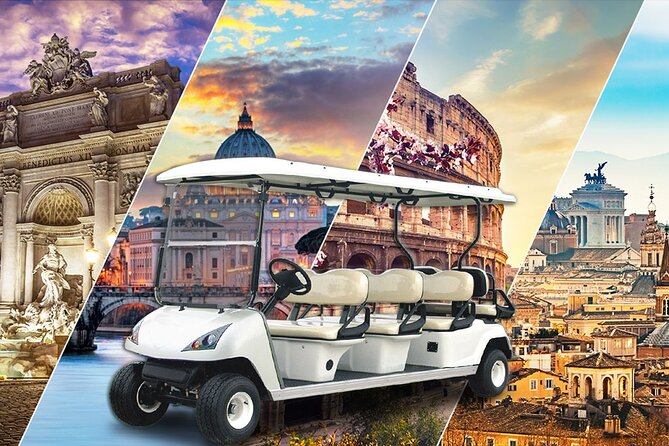
A good Rome first day is about orientation, not checking boxes. This cart tour works because it keeps you moving through the city’s main power spots without the frustration of craning your neck or waiting for a bus to squeeze through tight streets. The goal here is simple: you get the lay of the land, then you decide what deserves a slower visit later.
The other win is sightline quality. Instead of a window view, you’re up close enough to notice details like the angles of domes, the positioning of fountains on hills, and how certain neighborhoods spill into one another. That visual understanding is what helps you navigate Rome afterward.
You also get live commentary while you ride. That matters because Rome’s “same-looking stone” can feel confusing until someone explains what you’re looking at—why a wall was built, what a triumphal arch celebrates, or why a church matters to Roman Catholic history.
You can also read our reviews of more private tours in Rome

Getting Set Up at Via Germanico, 16 (Then Rolling)
The tour starts at Via Germanico, 16, 00192 Roma RM. Check in at the front desk at the Maya Tours office, and your driver will meet your group to begin the ride. You end at Piazza del Popolo (or close by, based on request), which is a handy finish point if you’re thinking about dinner nearby or heading back to a hotel.
Because it’s private, you’re not sharing the cart with strangers. That usually translates to a calmer pace and fewer group-control problems—important in a city where streets can switch from wide to tight fast.
One practical tip: if you’re traveling with kids, this kind of format tends to reduce the hassle of long transfers. In the reviews, Ahmed was singled out for safety-minded care with young children, which is exactly the sort of thing you want on your first day.
Gianicolo Hill Views and the Fontanone’s Long Aqueduct Story
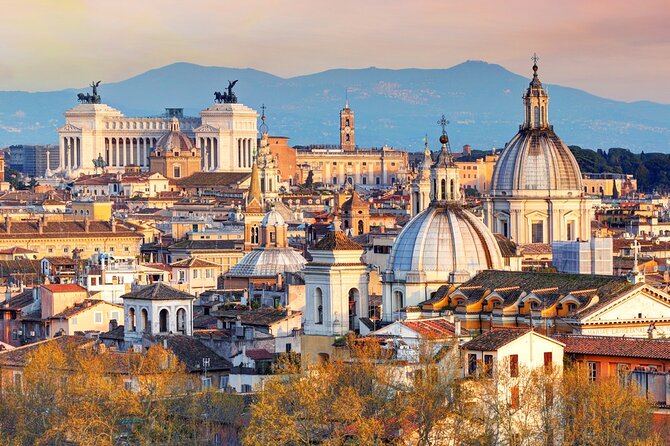
Your route climbs to a terrace with big Rome views: the Belvedere del Gianicolo. This is the kind of stop where the city suddenly looks less like scattered landmarks and more like a connected whole. The terrace sits up on the hill above the Tiber, with plane trees and an elevated perspective that makes Rome feel expansive instead of crowded.
From there, you head toward Fontana dell’Acqua Paola—often called Il Fontanone. This fountain isn’t just about the photo. It marks the end of the Acqua Paola aqueduct, built in 1612 and associated with Pope Paul V. Even if you see it from outside, it helps to understand the fountain as infrastructure turned monument. Rome loved turning engineering into theater.
Why this stop matters: hills and water explain a lot about the city’s layout. When you see where the water had to go and where the viewpoints were built, you start to “read” Rome instead of just walking through it.
Trastevere, Bohemian Streets, and the Romulus-and-Remus Legend
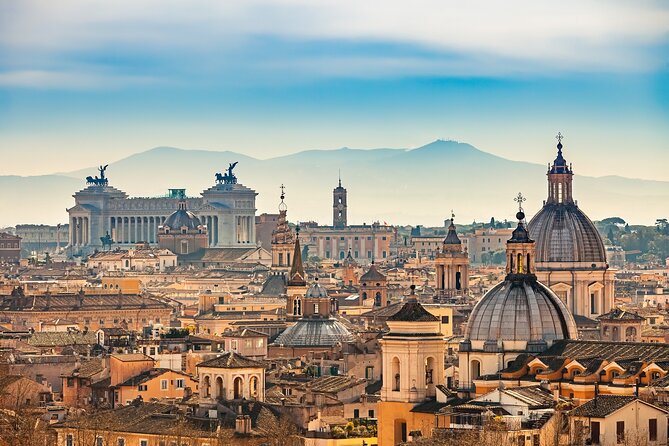
Next up is Trastevere, the area that clings to its working-class roots. It’s known for lively trattorias, craft beer pubs, artisan shops, and casual B&Bs and budget hotels. Even from a cart route, you’ll feel the vibe shift here. This is Rome with personality—less monument-museum, more neighborhood.
Then the tour leans into one of Rome’s most famous origin legends: the Romulus and Remus story. The legend places the start of Rome near the river, with the basket that held the twins drifting and the she-wolf symbol tied to their survival. It’s the kind of narrative detail that makes ancient sites click, because you aren’t just seeing geography—you’re seeing mythology assigned to geography.
A small note on expectations: if you’re hoping for a quiet, contemplative stroll at every stop, this is not that. The cart keeps the momentum, and you’ll spend more time absorbing context than wandering at leisure.
Mouth of Truth, Aventine Orange Trees, and the Keyhole Moment
One of the most memorable Rome photo stops is the Bocca della Verità area. The Mouth of Truth is an ancient Roman marble mask set against the left wall of the portico of Santa Maria in Cosmedin. Even if you don’t go inside, the location matters because it sits in the Piazza della Bocca della Verità area connected to the ancient Forum Boarium.
Then you’ll reach the Orange Trees Garden—Parco Savello on the Aventine Hill. This is where Rome gives you that classic “wait, this is the city?” view. The garden’s current design dates to 1932 by Raffaele De Vico, and the spot is famous for vantage points and a calmer feel than the busiest core streets.
Your route also includes the famous keyhole viewpoint at the Villa (Il Buco della Serratura). Looking through a small keyhole in the arch-headed portone frames the copper-green dome of Saint Peter’s Basilica at the end of an avenue. It’s a simple trick, but it’s so effective because it turns a distant landmark into a composed image, like Rome is already thinking about photography.





Ancient Engineering and Imperial Power: Walls, Baths, Palatine, and Constantine
Rome’s ancient layers show up fast on this route. You’ll see the Aurelian Walls, built between 271 and 275 AD during Emperor Aurelian’s reign, replacing earlier defenses like the Servian Wall. It’s a reminder that Rome didn’t just build monuments—it built protection.
You’ll also pass the Baths of Caracalla, the city’s second-largest public baths after the Baths of Diocletian. These thermae are linked to the reigns of Septimius Severus and Caracalla and are generally dated to the early 3rd century. Even from outside, the scale tells you why bath complexes were social hubs, not just places to clean.
From there, the Palatine Hill comes into view. As the central “first nucleus” area relative to Rome’s seven hills, it’s where Rome’s origin story becomes a physical location. It’s one of the best stops for understanding why the city expanded the way it did.
Then comes the Arch of Constantine, a triumphal arch commissioned by the Roman Senate to commemorate Constantine the Great’s victory over Maxentius at the Battle of the Milvian Bridge in AD 312. This is one of those monuments that can feel like “just another arch” until your guide connects it to the political message it was meant to deliver.
Colosseum, Roman Forum, and Circus Maximus: Seeing the Whole Stage
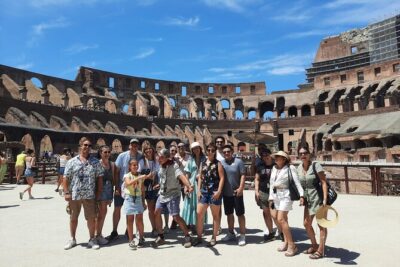
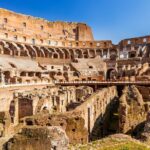
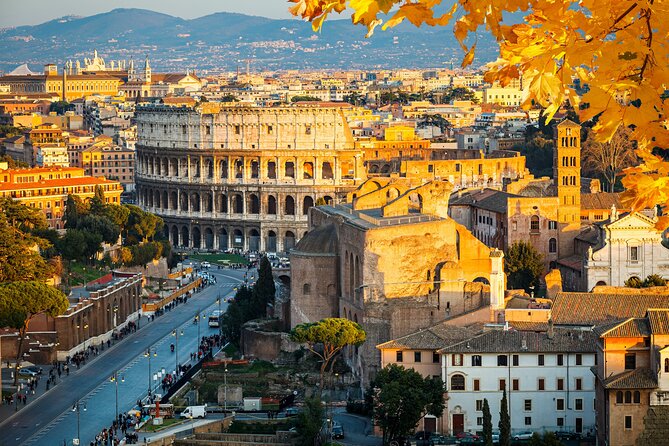
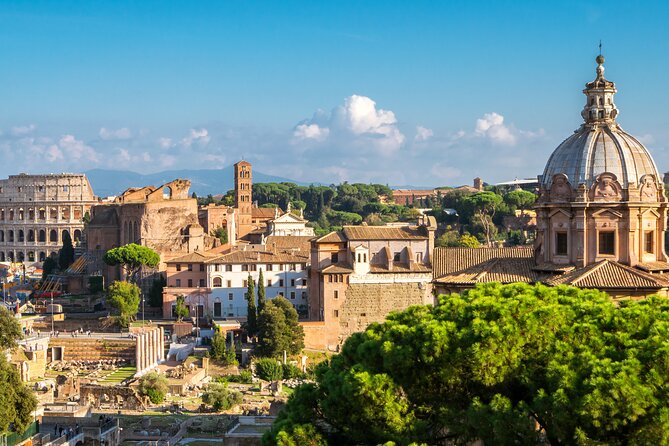
The Colosseum and Roman Forum are the heart of ancient Rome, and this tour links them in a way that helps you mentally stitch the sites together. You’ll get outside views of the Colosseum first—Rome’s giant amphitheater and still the largest standing amphitheater in the world. The elliptical shape and sheer size make it obvious why the games mattered so much.
From there, you move to the Roman Forum (Forum Romanum). It was once the Forum Magnum, a marketplace and political center surrounded by ruins of major government buildings. Seeing it as part of the same circuit as the Colosseum helps you understand that these weren’t separate worlds. One place fed the public’s entertainment appetite; the other anchored daily politics and commerce.
You’ll also spot Circus Maximus. This was Rome’s first and largest stadium for chariot racing, tucked in the valley between the Aventine and Palatine hills. Even without entering, the shape and positioning help you imagine mass entertainment on an industrial scale.
If you tend to get overwhelmed by ancient Rome, this is a good fix: you’re not learning everything. You’re building a map in your head.
Rome by the River: Roman Ghetto, Castel Sant’Angelo, and Piazza Navona
The tour also touches the Roman Ghetto area, established in 1555 in the Rione Sant’Angelo region near the Tiber. Even as an outside pass, it’s the sort of stop where the guide’s commentary can shift the mood. It’s a reminder that Rome’s history includes hardship and resilience, not just empire and marble.
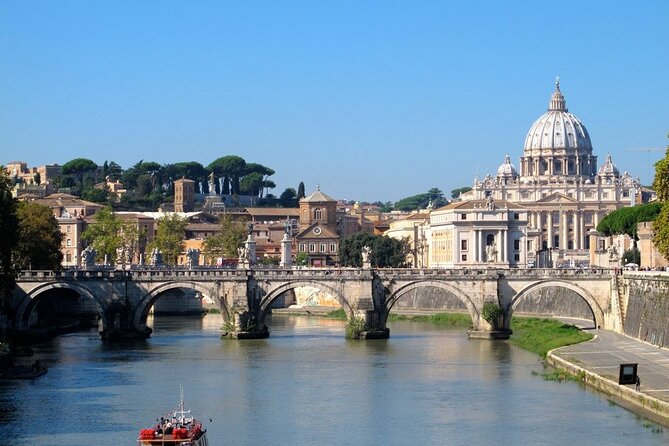
Then you’ll reach the Mausoleum of Hadrian—Castel Sant’Angelo. Originally commissioned by Emperor Hadrian as a mausoleum, it later became a fortress used by popes and is now a museum. The structure’s meaning changes over time, and that’s one reason it’s such a good Roman landmark for explanation during a moving tour.
Piazza Navona follows—built on the site of Domitian’s 1st-century stadium and shaped like an elongated oval. The square’s form still tells you what kind of entertainment it once hosted. This is also a practical stop because it’s central and easy to orient around afterward.
Pantheon, Trevi Fountain, Spanish Steps, and Villa Medici at a Comfortable Pace
After the river and big civic squares, you head into Rome’s most famous “stop-for-a-photo” zone—without committing hours to tickets.
The Pantheon is included as an outside view. It’s a former Roman temple that became a Catholic church in 609. The current building is associated with Hadrian and dedicated around AD 126. Even from outside, the scale and simplicity help you understand why it became such a long-lasting model for later architecture.
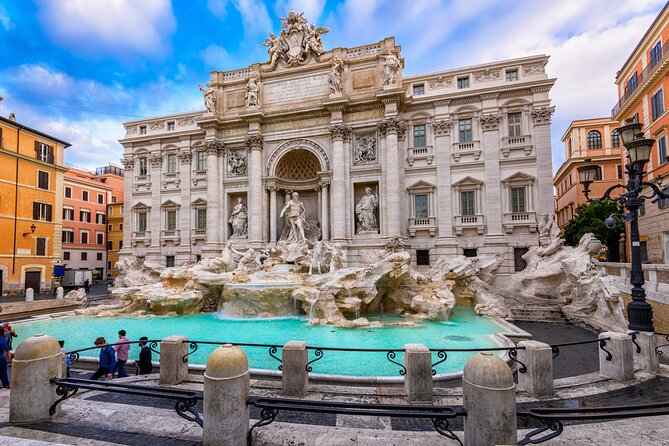
Next is the Trevi Fountain. Designed by Nicola Salvi and completed in 1762, it’s one of Rome’s signature baroque fountains. This stop is famous for a reason, but I’d treat it as a moment to learn the setting rather than just chase the perfect shot.
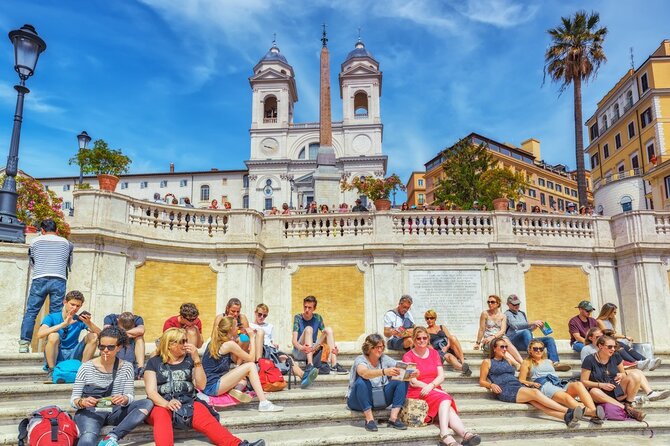
Then you’ll see the Spanish Steps, climbing between Piazza di Spagna and Piazza Trinità dei Monti, dominated by the Trinità dei Monti church. From the cart route, you get the vertical “why it works” geometry—Rome’s hills turned into a design problem and solved.
The tour also includes the Villa Medici area on the Pincian Hill next to Trinità dei Monti, an architectural complex with gardens contiguous with the Borghese gardens. It’s another example of how Rome mixes views, structures, and landscaped spaces into one system.
Piazza del Popolo Finish: Where the Route Leaves You Ready to Explore
You end at Piazza del Popolo. It’s a large urban square whose modern Italian name literally points to people’s square, historically tied to poplars and the church of Santa Maria del Popolo. Finishing here is smart because it’s a hub for walking directions and easy connections onward.
If you’ve chosen an afternoon departure, Rome’s light can make the big open spaces feel less harsh. Either way, the end point is useful: you’re dropped into a place where you can pivot—walk, grab gelato, or head toward whatever you decided was worth revisiting inside.
Also, because this tour focuses mostly on outside views, you’ll likely leave with a short list of what you want to see up close later. That’s the real value.
Price and Practical Value of the $150 Golf Cart Route
At $150.18 per person for about 3 to 4 hours, this isn’t a bargain in the budget sense. But it can be good value if you compare it to what you’d spend on transportation time, plus the cost of hiring separate local help for orientation.
You’re paying for three things:
- Private transportation by golf cart
- Live commentary in English
- A concentrated route that strings together viewpoints, major ruins, and famous piazzas in one outing
If you’re short on time, this sort of “big picture” day can prevent wasted effort. You’re not paying to read a brochure. You’re paying to walk away with direction.
One more value note: in reviews, guides like Claudio and Alfredo were praised for passion and detail, while Ahmed was noted for looking out for families. That kind of guidance changes the experience from sightseeing into understanding.
Best Fit: Who This Tour Helps Most (and Who Might Want Another Format)
This tour is a great match if you want a first pass through Rome’s highlights without turning your feet into toast. Most people can participate, and the tour is private, so families or mixed-age groups can often keep the pace smoother than a purely walking format.
It’s also a strong choice if you prefer not to plan a complex schedule. Since entry isn’t included and many sights are outside-only, you avoid the ticket-line scramble and still get the essentials.
If you’re the type who wants to spend hours inside key monuments, you may feel slightly boxed out. This experience is about seeing and understanding from the outside first, then choosing what deserves a separate visit with tickets.
Finally, if you’re looking for a super leisurely roam with lots of free time at each site, you might be happier with a slower walking tour designed for lingering. Here, you’re moving.
Should You Book This Private Piazza’s, Fountains, Monuments & Basilicas Golf Cart Tour?
I’d book it if you want the fast-track Rome orientation with proper views, English commentary, and a private cart route that keeps the city manageable in one outing. It’s especially worth it on your first day, when you need a map more than you need a checklist.
Skip it (or pair it with ticketed follow-ups) if inside access is your priority, because you’ll be mostly outside for sights that require entry.
If you do book, pack comfortable shoes and keep expectations practical: Rome is old, streets are uneven, and even with a cart, you’ll still do your share of walking. For many people, that trade is exactly what makes the day useful.
FAQ
How much does this Rome golf cart tour cost?
The price is $150.18 per person.
How long is the tour?
It runs about 3 to 4 hours.
Is the tour offered in English, and are there different start times?
Yes. The tour includes English live commentary, and you can choose between morning and afternoon timings.
Where do I check in, and where does the tour end?
Check in at the Maya Tours office at Via Germanico, 16, 00192 Roma RM. The tour ends at Piazza del Popolo, or close by upon request.
Is this a private tour?
Yes. It’s private, and only your group participates.
What’s included in the tour price?
Included are private transportation and live commentary.
Do you enter monuments and basilicas during the tour?
Entry inside monuments and attractions is not included. Sights that require tickets are visited from the outside.
Is lunch included?
No, lunch is not included.
Can I cancel for a full refund, and are service animals or children allowed?
You can cancel for a full refund if you cancel up to 24 hours in advance. Service animals are allowed, and children must be accompanied by an adult.