REVIEW · ROME
Highlights of Rome Bike Tour (Including Jubilee Sights)
Book on Viator →Operated by Fat Tire Tours Holdings LLC - Italy · Bookable on Viator
Rome looks different at bike speed. This 3-hour Rome bike tour is a fast, friendly way to see big sights without spending your whole day in lines, and I especially liked how the small group keeps things personal. I also love the bike setup with helmet and front pouch, plus guides who actually make the stories stick, like Daniele, Nico, and Elena.
You get a real mix of old Rome and church-and-square Rome, with stops timed for quick photos and short exploring breaks. The route flows through places first-timers usually cram into multiple days, and the pacing feels relaxed enough that you can still enjoy the city afterward. One heads-up: the streets are still Rome, meaning cobbles and traffic can be a stress point if you pick a crowded time window.
If you want a straightforward first look at Rome, this is a strong choice—just pick your moment well and ride with confidence.
In This Review
- Key Things That Make This Rome Bike Tour Feel Worth It
- Why This Rome Bike Tour Works for First-Time Rome
- Bikes, Helmets, and the Small-Group Rhythm
- Jewish Ghetto Start: Learning Rome’s 1555 Turning Point
- Campo de’ Fiori to Piazza Navona: Squares You’ll Want to Revisit
- The Pantheon Stop: One of Rome’s Best-Proportioned Buildings
- Sant’Ignazio di Loyola and Adriano’s Temple: City Views with Context
- Trevi Fountain and the Aqueduct Story You’ll Actually Remember
- Imperial Rome: Trajan’s Forum, Piazza Venezia, and Constantine’s Arc
- Circus Maximus: The Big Arena That Helps You Visualize Ancient Rome
- Your Guide Can Make or Break the Day
- When to Go and What to Pack for Rome’s Cobblestones
- Is This Tour Worth the Price? Value at About $54
- Should You Book This Rome Bike Tour?
- FAQ
- How long is the Rome Bike Tour?
- What does the tour cost?
- Where does the tour start?
- What’s included in the price?
- Are drinks included?
- Is it offered in English?
- Are kids welcome?
Key Things That Make This Rome Bike Tour Feel Worth It
- Small group size (max 14) keeps you from getting lost in the back of the pack
- Helmet plus bike pouch and rack means you can carry essentials without juggling bags
- Short, focused sightseeing stops help you see more without feeling rushed
- A route that covers both ancient and Baroque landmarks so your first day in Rome clicks faster
- Guides with real personality can turn architecture and empire dates into an easy story you remember
Why This Rome Bike Tour Works for First-Time Rome
Rome is huge, and your first day can turn into a stress test if you try to do everything on foot. This tour is built for orientation. In about three hours you hit central sights that normally sit on opposite sides of the city, then you leave with a mental map of how neighborhoods connect.
What makes it work is the balance. You ride enough to cover distance and keep your energy, but you still stop often enough to look closely and take pictures. It is a good match for people who want the highlights first, then plan deeper museum time later.
This is also one of those trips where the guide makes the difference. You’ll hear stories at eye level while you move, so it feels less like reading plaques and more like understanding how Rome layers time on top of time.
You can also read our reviews of more cycling tours in Rome
Bikes, Helmets, and the Small-Group Rhythm
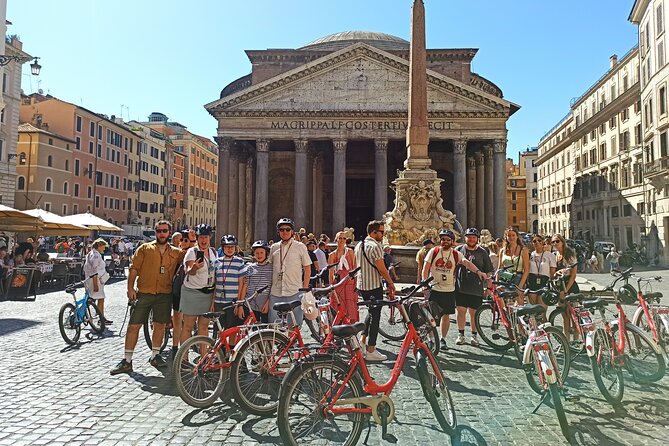
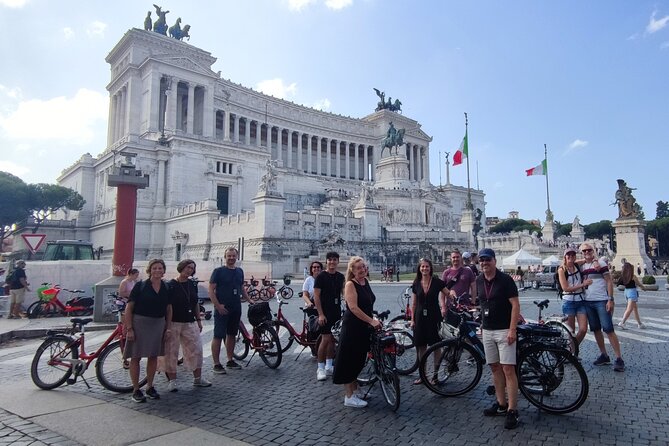
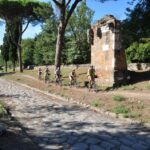
Before you roll out, you get the gear that makes a city ride actually comfortable: bike rental, a helmet, and a front bike pouch plus a back rack for your stuff. That small pouch detail matters more than it sounds. It keeps valuables where you can reach them and stops you from hauling a tote bag through crowds.
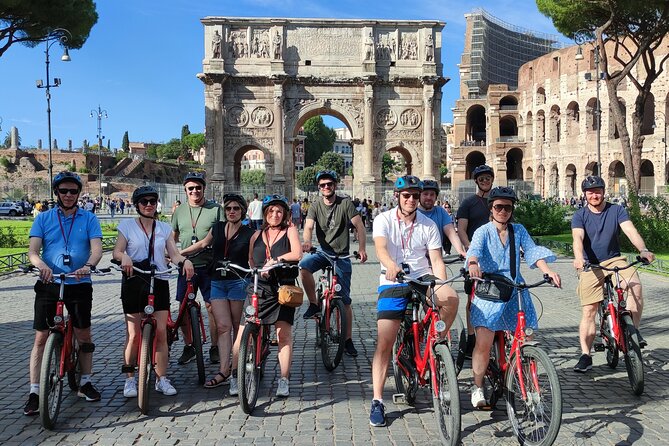
The tour runs as a small group, up to 14 people. In practice, that tends to mean you can keep track of everyone, and the guide can slow down to regroup without turning the day into constant waiting. Multiple guides on this tour have been praised for keeping the group together and for good safety habits in tricky traffic.
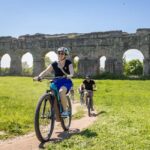
Riding style is straightforward. Reviews describe the pedal effort as manageable, and Rome is famously flat in the areas you’ll cover here. Still, you’re on cobblestones. Even if the route is easy, you need to ride like it’s uneven—relax your grip, keep your eyes up, and assume every corner has surprises.
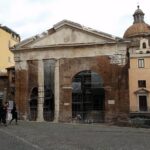
Jewish Ghetto Start: Learning Rome’s 1555 Turning Point
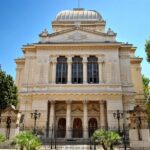
The tour begins at the Antico Quartiere Ebraico, the Jewish Ghetto of Rome. This is the kind of place that makes Rome feel like a living archive. It’s older than you expect, and it carries scars as well as culture.
Here, you get the origin story: the ghetto was created in 1555 by order of Pope Paul IV. The people living inside were required to stay there and to carry a distinctive sign of belonging to the Jewish community. That is heavy material, but the value of this stop is that you see it as a neighborhood—not as a page in a book.
You also get a reminder that Rome’s history isn’t only about emperors and marble. It is about communities, laws, survival, and identity—right on the streets you can walk through today.
Campo de’ Fiori to Piazza Navona: Squares You’ll Want to Revisit
After the ghetto, the route slides into Rome’s social heart near Campo de’ Fiori. This square feels alive all day: markets in daylight, crowds and terraces at night. Even if you don’t plan to linger, it’s a great place to understand where people naturally gather.
Then comes Piazza Navona, one of Baroque Rome’s most dramatic spaces. The shape matters here. The square follows the outline of an ancient stadium built by Emperor Domitian in 86 AD for athletics and horse racing. That means you’re looking at a modern scene with an older skeleton underneath.
Practical note: some stops are set up more for views and brief wandering than for interior visits. Piazza Navona is a great example—expect time to look, photograph, and absorb the scale, but not a deep, ticketed event inside.
The Pantheon Stop: One of Rome’s Best-Proportioned Buildings
Few buildings in Rome work on your imagination faster than the Pantheon. This tour gives you a solid introduction to why architects keep returning to it. You’ll hear how the structure’s lines and geometries have inspired designers for centuries.
The story starts way back in 27 BC, when Marcus Vipsanius Agrippa commissioned a temple dedicated to all the gods. That layer of meaning—religious purpose, political power, architectural perfection—is part of what makes the Pantheon feel timeless.
One important reality check: entry is not included here. You can enjoy the outside and the guided context during the stop, then decide later if you want to go in during a separate time slot. I like that approach. You get the wow factor first, and then you’re not trapped by timing later.





Sant’Ignazio di Loyola and Adriano’s Temple: City Views with Context
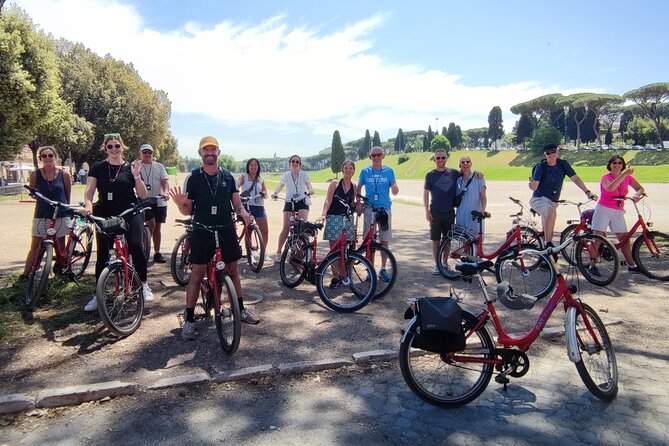
Next you roll past Chiesa di Sant’Ignazio di Loyola for a look from outside, with a quick view-and-explanation. Stops like this are useful when you want to understand how Rome’s church architecture fits into the street grid. You get the story without turning the tour into a long interior slog.
Then you hit the Tempio di Adriano, associated with Emperor Hadrian and the deified Vibia Sabina. The guide frames how the building may have been commissioned by Hadrian, then finished around 145 AD by his successor Antoninus Pius. It’s short, but it gives you a key to read these structures properly: they’re not random ruins. They’re messages left by rulers.
This is one of those places where the brief stop pays off later when you recognize similar styles elsewhere in the city.
Trevi Fountain and the Aqueduct Story You’ll Actually Remember
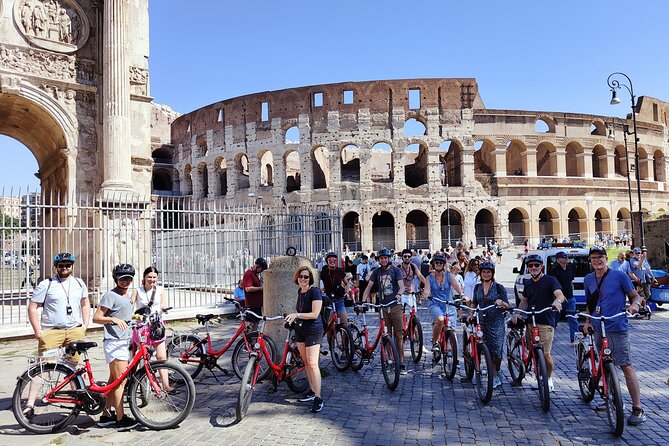
The Trevi Fountain stop is one of the big ones. It’s famous for a reason: it marks the terminal part of the Vergine aqueduct, and it’s also notable for being continuously used. That ongoing function is part of why it feels so real, not just decorative.
One practical thing: you’ll likely see the fountain from a position that lets you understand it in context with the street, not just from the edge of a crowd. You’ll also have time for a few photos before the ride continues.
And here’s the value: you’re not just seeing a postcard. You’re seeing a piece of infrastructure that evolved into civic identity. That shift is exactly what makes a guided bike stop better than a random walk-in.
Imperial Rome: Trajan’s Forum, Piazza Venezia, and Constantine’s Arc
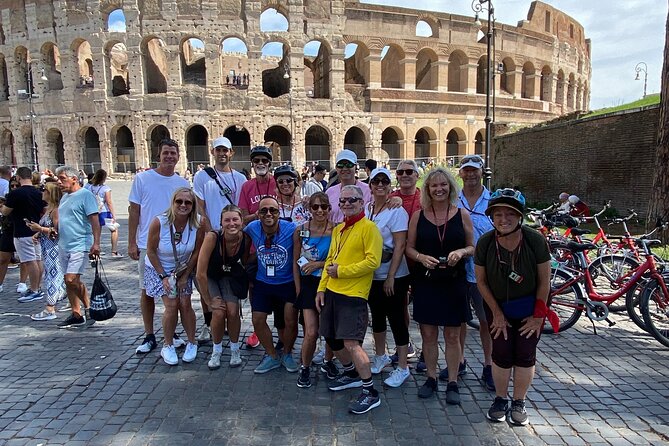
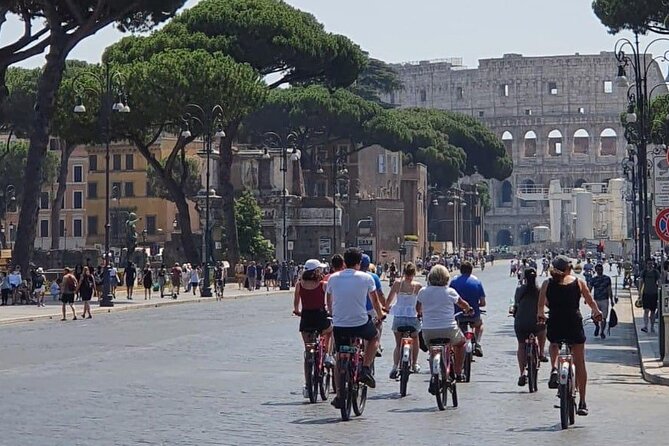
From Trevi, you move into the imperial zone with Trajan’s Forum and the larger Imperial Forum area. Even a short stop can make this feel less like a pile of stones. You get the explanation that helps you understand the layout and why this was the political and ceremonial center.
Then the tour reaches Piazza Venezia / Ancient City. The big modern landmark dominates the space—Monumento a Vittorio Emanuele II—but the guide connects it back to the older urban core between Via del Corso and Via dei Fori Imperiali. That contrast is helpful if you plan to walk here later, because it helps you mentally rotate the space from today’s street view back into the ancient plan.
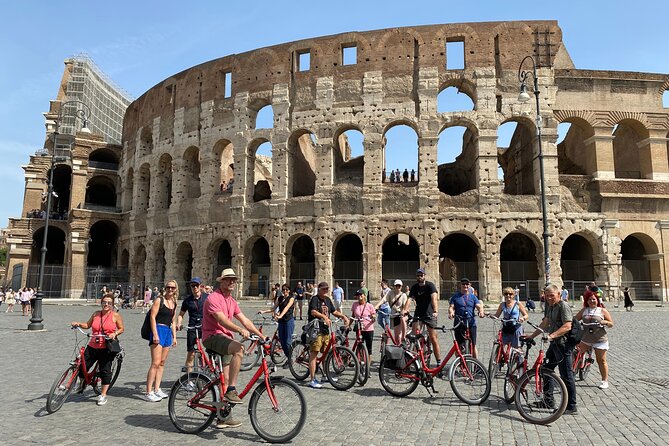
Finally, you roll toward the Arch of Constantine, one of the largest surviving honorary arches. You’ll hear the date and the purpose: it celebrates Constantine’s triumph over Maxentius on October 28, 312 AD. This is the kind of stop where you start noticing how propaganda shaped Roman stone—symbols designed to last longer than the moment.
Circus Maximus: The Big Arena That Helps You Visualize Ancient Rome
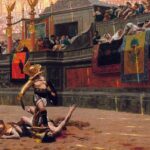
If you want a final mental image of ancient Rome at full scale, the Circus Maximus stop is it. It was the largest public entertainment venue in antiquity, and it’s easy to grasp the size once you’re in the right space.
The guide also connects it to the legends tied to Rome’s origins, including the story of the Rape of the Sabine Women. Even if you treat the legend as legend, the stop still works because it helps you picture what everyday spectacle meant in the city.
This is a great last anchor stop. By the time you reach it, your brain is already trained to see layers: ghetto to church square, aqueduct to empire forum, triumph arch to giant arena.
Your Guide Can Make or Break the Day
On this tour, the guide is the engine. Many people specifically highlight guides such as Daniele, Nico, Stefano, Matt, Sahrah, Marika, and Elena for being funny, passionate, and good at keeping the group together.
I like how this style supports real learning without making it feel like a lecture. The best guides on this route offer:
- fast context that makes the next stop make sense
- time to look and take photos
- a safety-first approach in traffic
One note for your expectations: the stops are timed and short by design. If you want deep scholarship at every monument, you may feel the pace is brief. If you want an organized first overview and strong stories you can build on later, this setup fits.
When to Go and What to Pack for Rome’s Cobblestones
Rome’s cobbled streets are part of the deal. The tour is built for it, but that doesn’t mean it’s friction-free. If you go during peak crowd hours, you may feel more stressful riding around slow-moving people.
I’d aim for a morning start if you can. You get calmer streets, better photo opportunities, and less pressure around corners and narrow lanes. One caution: some cobblestone conditions can feel extra slick at night, and traffic squeezes riders if the street is packed.
What to bring:
- Water if you tend to get thirsty quickly (drinks are not included)
- sunscreen or a hat for sunny days
- warm layers if it’s cool
- rain protection if forecasts look wet
For comfort and safety, this tour strongly discourages pregnant travelers because of cobbled streets. For kids, it’s not about age alone: children must ride comfortably for a while, navigate various surfaces, and fit the right bike size based on height. Also, anyone under 18 needs to be accompanied by an adult.
Is This Tour Worth the Price? Value at About $54
At $54.44 per person for about three hours, this is priced for people who want concentrated value. You’re paying for three things:
- guide time to connect the sites into a coherent story
- bike and safety gear (helmet, plus storage on the bike)
- time efficiency in central Rome, where walking between stops can chew up hours
You are not paying for drinks, and some major interiors are not included (Pantheon entry is not included, and other stops are similarly structured). Still, you get a strong sweep through the center, plus enough stops for you to absorb and photograph.
To me, it is especially worth it when:
- it’s your first trip to Rome and you want an outline fast
- you want to reduce how many days you must spend crisscrossing the city on foot
- you prefer a guided route that tells you where to look and why
If you already know Rome well and only need one or two monuments, you might get less value. But for first-timers, this tour is a great foundation.
Should You Book This Rome Bike Tour?
Book it if you want the highlights in a short, manageable time with a guide who turns monuments into understandable stories. It’s a solid pick for couples, solo travelers, and families with confident kids, and it pairs perfectly with a plan to return later on foot for the sites that grab you most—like the Pantheon or Trevi.
Skip it or be extra cautious if you hate cobblestones, feel uneasy in traffic, or you’re going during the most crowded, high-stress time windows. In that case, you can still see Rome, just choose a route and time that fits your comfort level.
If you want my simple decision rule: if you’ll enjoy a guided overview and you can handle uneven streets, this is one of the best ways to get your bearings fast.
FAQ
How long is the Rome Bike Tour?
It lasts about 3 hours.
What does the tour cost?
The price is $54.44 per person.
Where does the tour start?
The meeting point is Via dei Delfini, 35, 00186 Roma RM, Italy. The tour ends back at the meeting point.
What’s included in the price?
Included are the local tour guide, bike rental, and helmet plus a front bike pouch and back rack.
Are drinks included?
No, drinks are not included.
Is it offered in English?
Yes, it is offered in English.
Are kids welcome?
Kids are welcome, as long as they have been riding for a while, are comfortable riding in a group on various surfaces, and you include the child’s height to reserve the correct bike size. Anyone under 18 must be accompanied by an adult.