REVIEW · ROME
Rome: Colosseum, Arena and Palatine Hill Small-Group Tour
Book on GetYourGuide →Operated by Carpe Diem Tours · Bookable on GetYourGuide
Step into the gladiators’ doorway. This small-group tour gets you onto the arena floor and into the story of how Rome really worked, not just what it looked like. I like the direct route through the Gladiator’s Gate, and I like how Palatine Hill shifts you from spectacles to power and luxury. One drawback to consider: the day’s flow can change based on ticket timing, so you might get a different balance of Colosseum vs. Forum than you expected.
You’ll meet at the Arch of Constantine and follow your licensed guide from site to site with headphones so you can actually hear the stories. The Palatine Hill and Roman Forum stops help you connect the dots between emperors, elite neighborhoods, and the day-to-day heart of Ancient Rome. If you’re hoping for a very long, slow wander through every ruin, the total pace is still a packed 3 hours—great for most people, less great for those who want hours alone to roam.
In This Review
- Key things to know before you go
- Meet at the Arch of Constantine: how you start without stress
- Entering the Colosseum arena: the moment everything clicks
- Palatine Hill: switching from spectacle to the people in charge
- Roman Forum: the empire’s working center, not just ruins
- Small-group comfort: hearing the guide and feeling the pacing
- Fully licensed, local expertise: what makes the stories stick
- Timing and ticket variations: why your start point may differ
- What $107.62 buys you: value check for a 3-hour highlights tour
- Practical tips so your day runs smoothly
- Should you book this Colosseum, Arena, and Palatine Hill small-group tour?
- FAQ
- What does this tour include?
- How long is the tour?
- Do I get onto the Colosseum arena floor?
- Where do I meet the guide?
- Is the Colosseum admission ever free?
- Is food included?
- Is the booking refundable?
Key things to know before you go
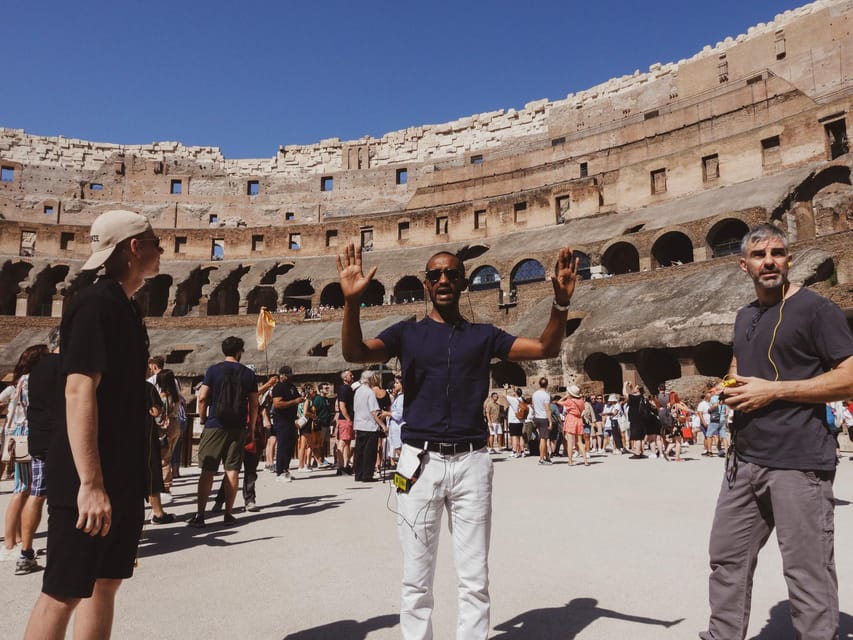
- Arena floor access via the Gladiator’s Gate: you walk the route gladiators took almost 2,000 years ago
- Licensed local expert guides: expect strong explanations and fast answers to questions
- Headphones included: makes it easier to hear in busy spaces
- Palatine Hill focus on imperial homes: see where emperors built and elites lived
- Forum finish: you end in the ruins that acted as the empire’s central “working area”
Meet at the Arch of Constantine: how you start without stress
This tour begins at the Arch of Constantine, and you’ll spot your guide by a yellow flag. The meeting instruction matters: you should meet on the side furthest away from the Colosseum, so take a minute when you arrive to confirm you’re on the correct side before you hunt for your group.
I like this kind of start because it cuts down on that Rome chaos feeling. You’re not guessing where to go once you’re already near the big stuff—you’re directed to one clear landmark.
Also, bring the ID you’ll need for entry. The tour explicitly asks for a passport or ID card, and the guide also needs full names of everyone in your group (including minors, if any). It’s one of those small details that can save you an annoying delay later.
You can also read our reviews of more tours and experiences in Rome.



Entering the Colosseum arena: the moment everything clicks
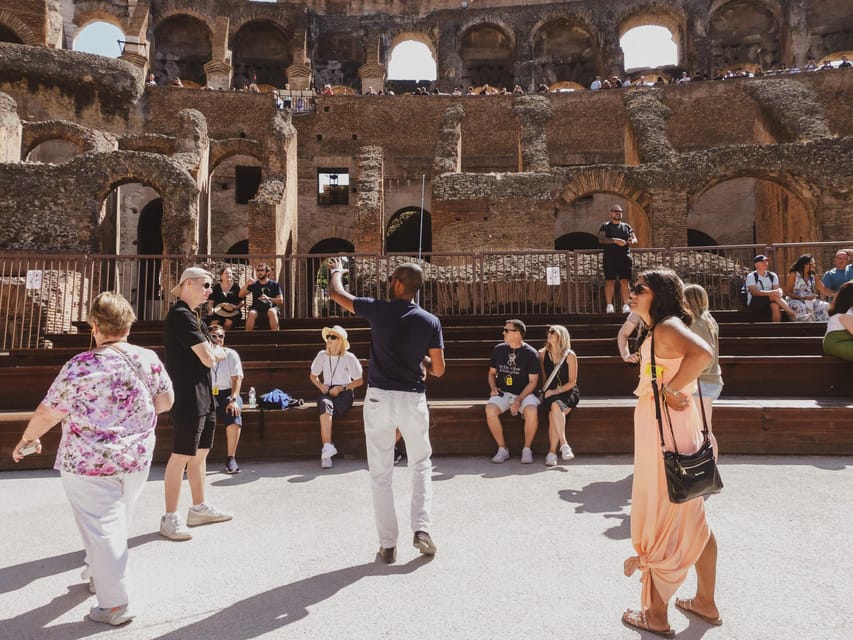
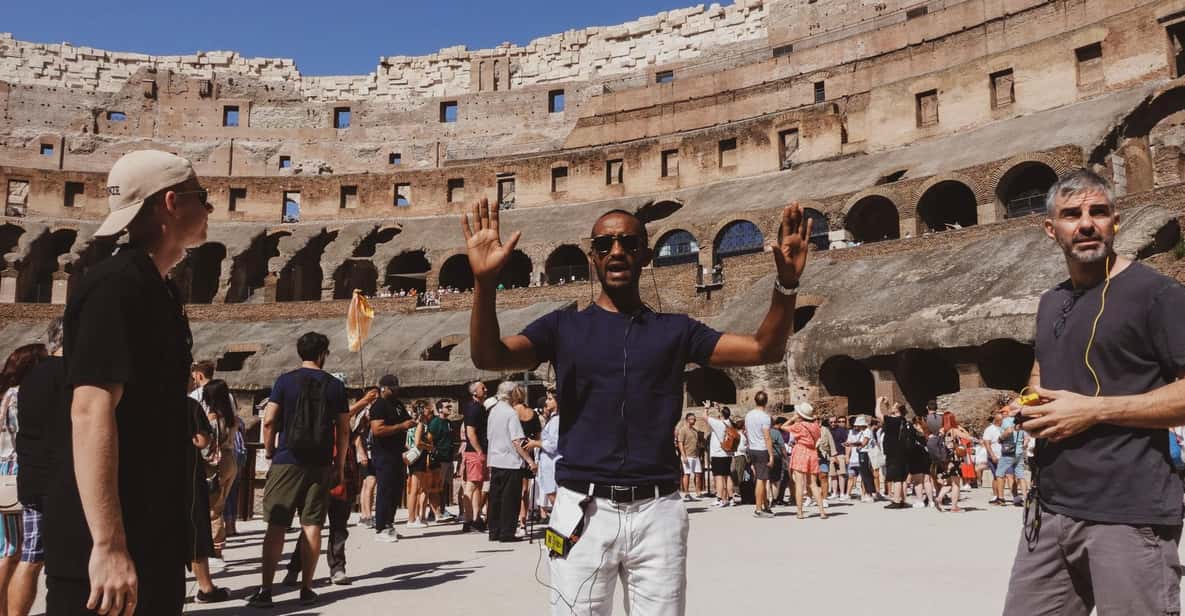
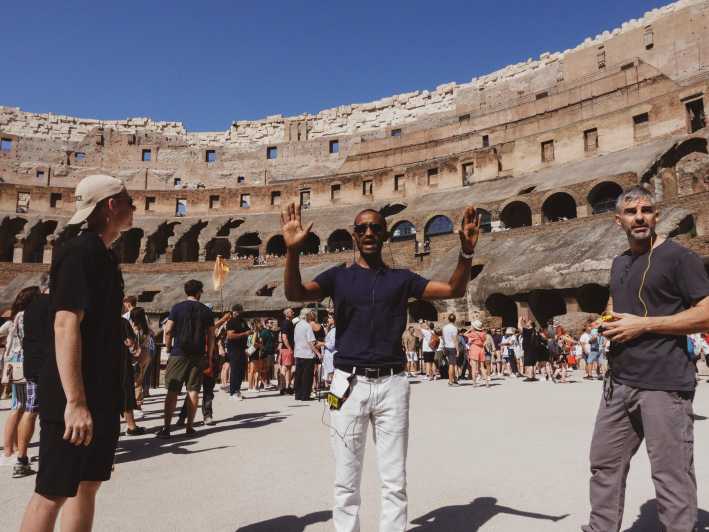
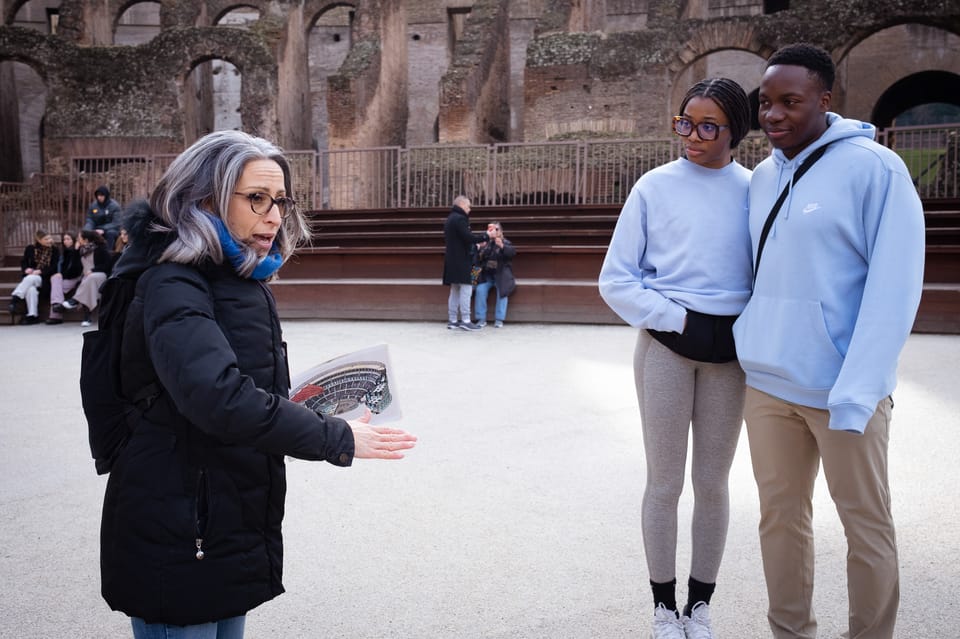
The Colosseum stop is the main event, and this version is different from the usual “stand outside and look in” approach. You go inside and then step out onto the arena floor, which is the level where gladiators fought.
What makes this so satisfying is not only the access—it’s the route. You enter through the Gladiator’s Gate, the same way gladiators would have come out. The tour descriptions and the way the experience is framed helps you picture the movement: you’re not just looking at stones; you’re walking a path that used to funnel people into a spectacle.
Expect a guided walk on the arena level with context from a local expert guide. Several guides are highlighted in the feedback, and they share the same theme: they explain what you’re seeing and tie it to how Rome thought and ruled. I especially like when a guide can answer questions on the spot—reviews mention guides like Giorgio, Lynn, and Lia using their expertise to respond directly instead of reciting a script.
If you want the Colosseum to feel like more than a photo stop, this is the right structure: you get time on the arena floor, not just quick passes.
Palatine Hill: switching from spectacle to the people in charge
After the Colosseum, the tour moves to Palatine Hill, described as the home of emperors and the place where the elite built villas. That shift is smart. The Colosseum is about public performance—power thrown into the street. Palatine Hill is the private layer behind the scenes: houses, prestige, and the neighborhoods where rulers lived.
Your guide helps connect the physical remains around you to the stories of who lived there. I like that the explanation stays grounded in what you can actually see. When the guide rebuilds the “neighborhood” concept for you, the ruins stop feeling like random fragments and start reading like a map of status.
There’s also a practical reason this stop works well on a 3-hour tour: Palatine Hill is visually striking, but it can also be confusing if you’re exploring on your own. With a guide, you get orientation fast—where you are, why it mattered, and how it relates to the rest of Rome you’ll see next.
One thing to note: the Palatine Hill segment is shorter than the Colosseum. It’s a focused hit, not a long linger. If you’re the type who could happily spend an entire afternoon just staring at views and trying to figure out “what building was this,” you may wish for more time here.
Roman Forum: the empire’s working center, not just ruins
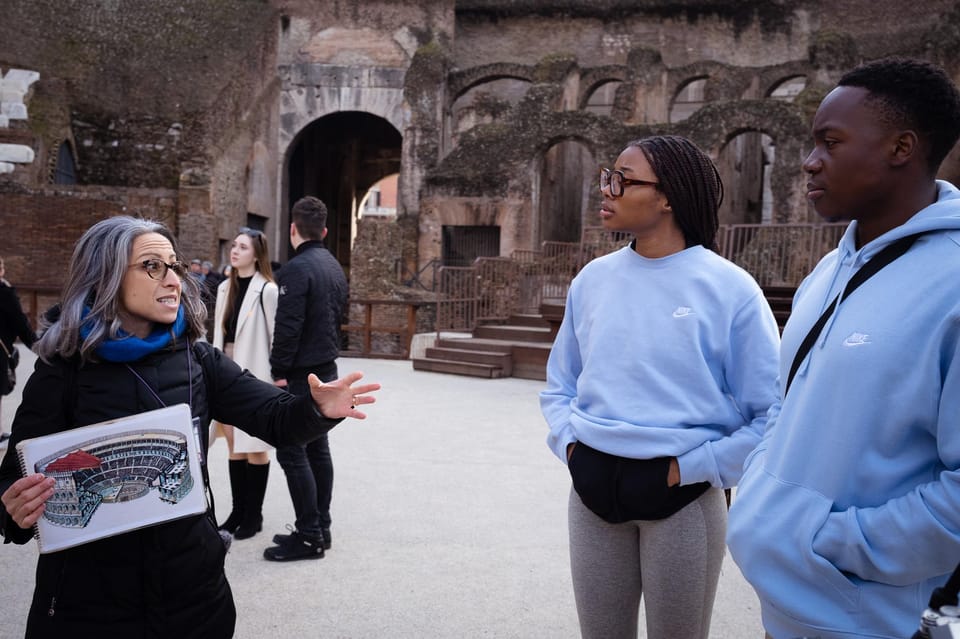
The tour finishes at the Roman Forum, and this is where you see why Ancient Rome was more than monuments. The Forum is described as the heart of Ancient Rome—where day-to-day life and the work of running the empire happened.
This matters because it changes your mental picture of the city. The Colosseum shows the spectacle. Palatine Hill hints at the power structures and wealth. The Forum gives you the busy middle: people, roles, and public life packed into one space.
Your guide weaves you through the enormous ruins with commentary aimed at how real Romans would have moved through their world, from the mythical founders to senators and even humble market stall keepers. I like this approach because it avoids the “only big names” trap. It helps you feel the scale of daily life, not just the famous headlines.
One potential downside that shows up in the feedback: some people would have liked more time in the Forum and less time at the Colosseum. If you fall into that camp, keep expectations flexible. The tour is built as a compact overview of three major sites.
Small-group comfort: hearing the guide and feeling the pacing
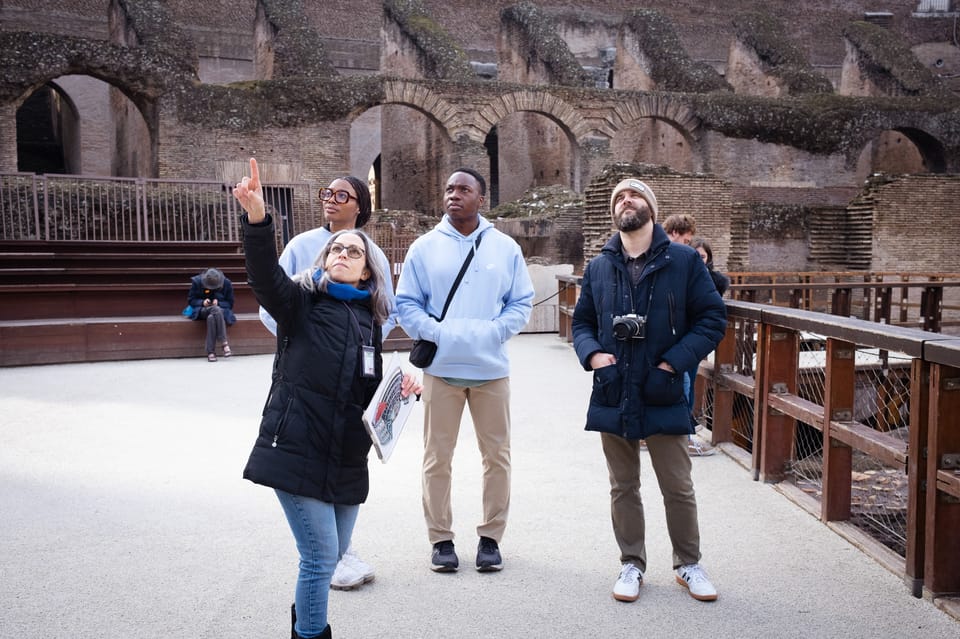
This is a small-group tour, and that choice shows up in the details. You get headphones, so you’re not playing the volume game with a group in a windy, echoing stone setting. It also makes the experience more “coach-led,” in the good way: you can hear the explanation and keep up without always asking strangers to repeat themselves.
Group size also affects the vibe. One review called out a group of 15 as manageable, and that’s about right for a tour where you’re moving through sensitive, high-traffic areas. Small enough for personal attention, big enough that it still feels like a real guided day.
The guides highlighted in feedback also point to a consistency of style: engaging delivery, humor, and the ability to answer questions. Names like Felicity, Ivana, Barbara, Susana, and Ivana appear, along with a guide described as a PhD in archaeology who handled the topics with a kind of enthusiastic clarity.






Fully licensed, local expertise: what makes the stories stick
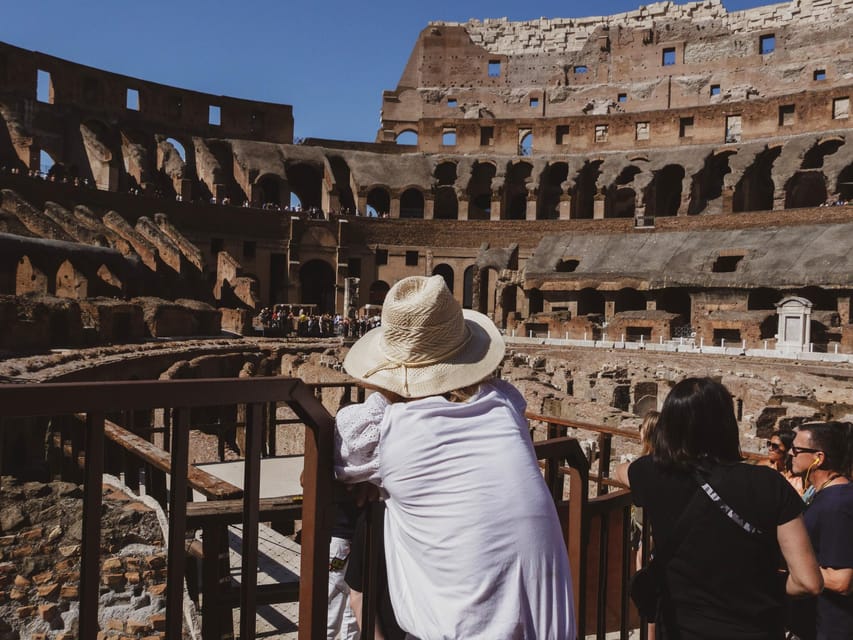
A big reason this tour rates so highly is simple: the guides seem to be strong historians and strong storytellers, and they’re not just reciting facts. If you like learning in plain language, you’ll probably enjoy how the explanations connect emperors, elite neighborhoods, and the Forum’s daily pulse.
It also helps that the guide approach often includes practical guidance for the moment. One review notes a guide making a real effort to get the group into shade during a hot, sunny day, plus helping find prime picture-taking spots. That kind of small care makes a difference when you’re working against Rome’s sun and crowds.
Another review praises the way a guide covered Colosseum, Palatine Hill, and Roman Forum in a way that stays easy to follow. And if you’re the type who asks questions, you’ll likely enjoy it more—reviews mention that guides like Giorgio can answer questions directly.
The main “watch-out” here is length and balance. A few notes suggest that some guests want more detail on Colosseum construction, or more Forum time. This is still a 3-hour overview, so the tour is optimized for coverage, not for a deep architectural lecture.
Timing and ticket variations: why your start point may differ
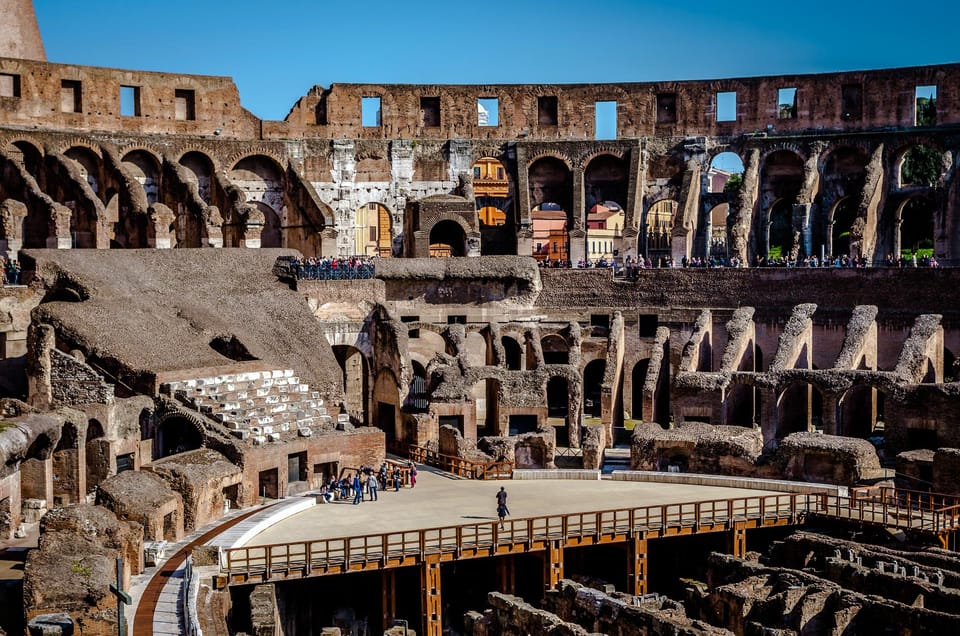
There’s an important detail that affects your expectations: the tour may start with the Colosseum or start with the Roman Forum / Palatine Hill, depending on what ticket times are available.
That’s not a flaw, but it does change the feel of the day. Starting at the arena floor makes Rome feel like a spectacle first. Starting with the Forum and Palatine Hill flips the order so you get context first and then land at the Colosseum with that framework in your head.
Either way, the tour structure keeps you moving through all three big areas. Still, if you have a strong preference—like you really want the Forum first—check your time slot when you book, and stay open-minded about the order.
Also, Colosseum admission has a special rule: it’s free on the first Sunday of the month, and tours are discounted on those days. If you’re traveling during that window, it’s worth considering. Free admission doesn’t automatically mean you’ll pay less for everything, but it does suggest a potential price advantage and a good time to go.
What $107.62 buys you: value check for a 3-hour highlights tour
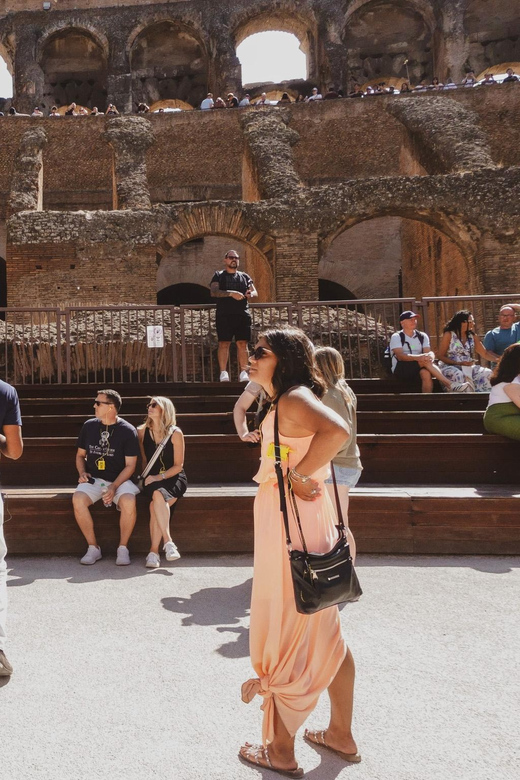
At $107.62 per person for about 3 hours, you’re paying for three things that are hard to recreate on your own efficiently:
- Arena floor entry that includes a guided experience
- A licensed guide to explain what you’re seeing as you go
- Headphones, which reduce stress and help you actually hear the commentary
You’re also getting the practical “coverage” advantage. Three major sites in one managed experience is a good use of limited time in Rome, especially if you don’t want to spend your morning stitching together timing, tickets, and meeting points.
What isn’t included is simple: food and drink. So plan on grabbing water and a snack before or after. For many people, walking those sites with the right pace means you’ll feel hungry without realizing it until you’re already out in the sun.
If you compare options, look at this tour as a structured way to see big-ticket sights while keeping your learning rate high. If you’re traveling fast and want the most impact per hour, this is the kind of tour that fits.
Practical tips so your day runs smoothly
This tour is built for walking and learning, so pack for that.
Bring:
- Passport or ID card, as required for entry
- Your patience for crowd flow. Even with small groups, the Colosseum area is busy.
Wear:
- Comfortable shoes. You’ll be moving through major ruins and uneven surfaces.
- Light layers, because weather in Rome can swing, and shade may not be constant.
Plan:
- If it’s warm, treat shade as a resource. One guide in feedback actively worked to find it for the group, which suggests you should be ready to take advantage of breaks.
Finally, think about what you want from the day. This tour is not trying to be a museum-style slow burn. It’s a guided highlights route that gets you from spectacle to power to daily life, and it does it in time for most itineraries.
Should you book this Colosseum, Arena, and Palatine Hill small-group tour?
Book it if you want an efficient, guided way to experience the Colosseum beyond the exterior. The arena floor access and the Gladiator’s Gate route are the kind of details that make the whole day feel real, not just historic.
You should also book if you care about hearing clear explanations while walking. Headphones are included, and the feedback points to guides who explain well and answer questions instead of rushing past.
Skip it, or at least temper expectations, if your priority is spending lots of time alone—especially if you want a longer, unhurried Forum visit. The balance across Colosseum, Palatine Hill, and the Forum is designed for highlights in 3 hours, so you may wish for more time in one area and less in another.
If your schedule is flexible, check the start-time and keep in mind the tour can begin at either the Colosseum or the Forum/Palatine Hill area. That order can change the mood of your day.
FAQ
What does this tour include?
You get a live English-speaking guide, and you also receive headphones to help you hear commentary while walking.
How long is the tour?
The experience runs for about 3 hours.
Do I get onto the Colosseum arena floor?
Yes. This tour takes you inside the Colosseum and out onto the arena floor, including entry through the Gladiator’s Gate.
Where do I meet the guide?
Meet at the Arch of Constantine. The guide will be holding a yellow flag on the side furthest away from the Colosseum.
Is the Colosseum admission ever free?
Colosseum admission is free on the first Sunday of the month, and tours are discounted on those days.
Is food included?
No. Food and drink are not included.
Is the booking refundable?
This activity is non-refundable.