REVIEW · ROME
Explore Colosseum and Roman Forum with an Archaeologist
Book on GetYourGuide →Operated by Askos Tours · Bookable on GetYourGuide
A quick walk through ancient Rome beats a pile of photos. This 3-hour experience links the Colosseum and Roman Forum with an archaeologist’s lens, so you see what you’re actually looking at instead of just standing there.
I especially like the pacing: you get time for big moments without feeling rushed through the details. I also like the access style, with skip-the-line entry and a guide who keeps the route moving in a logical way. One thing to consider: the route is mostly a walking experience, and it isn’t set up for wheelchair users.
In This Review
- Key things that make this tour work
- Roman Forum and Colosseum, stitched together by an archaeologist
- What your archaeologist guide does better than a standard tour
- Where to meet your guide at Colosseum Metro
- Entering the Colosseum with skip-the-line access
- The second-ring panorama and Palatine Hill views: seeing Rome like a map
- Arches and the route through Rome’s layers
- Quick stops at major arches: what the 10 minutes is really for
- Roman Forum: the heart of public life (and why the guide matters)
- House of the Vestals stop: where the story gets human
- How long the walk feels in real life
- Price and value: is $198.25 worth it?
- Before you go: IDs, names on vouchers, and key closure dates
- Who should book this tour (and who should reconsider)
- Should you book this archaeologist Colosseum and Forum tour?
- FAQ
- How long is the Colosseum and Roman Forum tour?
- Where do I meet the guide for this experience?
- What does the tour price include?
- Does this experience include skip-the-line access?
- What languages are available for the live guide?
- Is this tour suitable for wheelchair users?
Key things that make this tour work
- Skip-the-line Colosseum entry so you spend more minutes seeing and less minutes waiting.
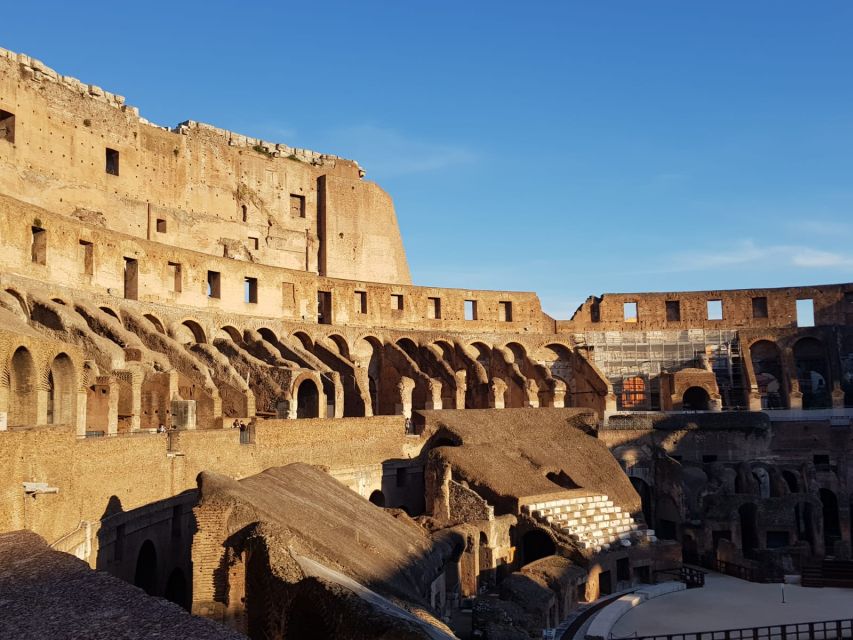
- Second-ring panoramic view of the Colosseum’s interior and the square below.
- Palatine Hill viewpoints that help you read the monument like a 3D map.
- Domus Aurea underground tunnel connection that shows how layers of Rome overlap.
- Roman Forum landmarks tied together around the House of the Vestals and the Altar of Caesar.
- Private group format with an archaeologist leading, not a lecture that ignores your questions.
Roman Forum and Colosseum, stitched together by an archaeologist
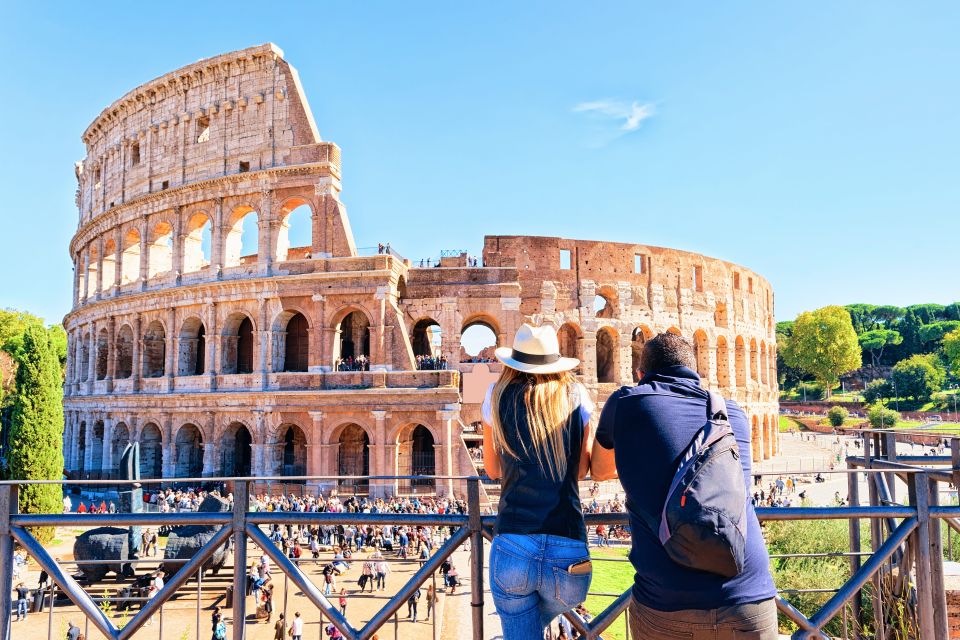
The Colosseum and the Roman Forum get studied, photographed, and day-tripped to death. The problem is you can end up seeing them like separate postcards.
This tour helps you see them as one story: a power center, surrounded by political and religious buildings, with layers of later Rome still cutting through the landscape. The archaeologist guide doesn’t just point out ruins; they explain why each spot matters and how it connects to the next one. That’s what makes the walk feel worth the time.
You’ll also get a route that keeps you in motion—so the sights don’t blur together. And because it’s a private group, you’re not fighting the crowd for the chance to ask the question that’s bothering you.
You can also read our reviews of more tours and experiences in Rome.


What your archaeologist guide does better than a standard tour
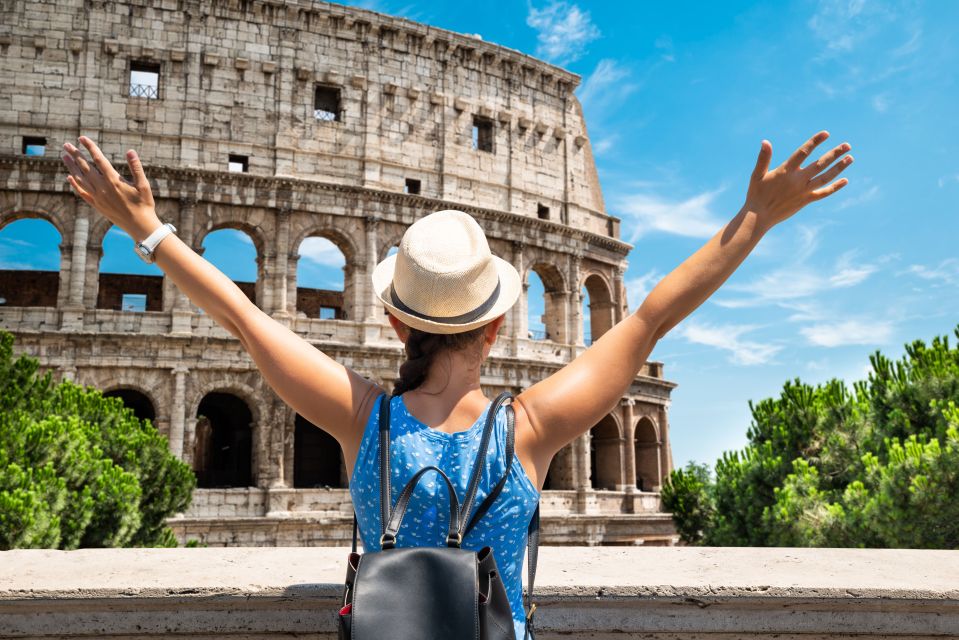
The biggest value here is interpretation. Ancient Rome is big and messy. Stones don’t label themselves.
An archaeologist guide helps you “read” the buildings. For example, at the Colosseum you don’t only see the exterior and the arena floor idea in your head. You get a viewpoint high enough to understand how the monument’s interior space works and how the surrounding square behaves at street level.
In the Forum, the guide’s job shifts from architecture to meaning. You’re not just walking past stops—you’re building a mental map of public life, religion, and imperial power. That’s how the Altar of Caesar and the House of the Vestals stop feeling random and start feeling connected.
And pacing matters. The overall structure is tight: you get guided time at key points, then move onward while momentum is still on your side.
Where to meet your guide at Colosseum Metro

Start at the Colosseum Metro Station area. Look for the green newspaper kiosk outside the exit to the station.
Your guide will hold a sign with your name written on top. That small detail matters in Rome, where meeting points can be chaos. Arrive a little early, especially if you’re navigating public transit or you’re still orienting yourself.
End is simple: the tour finishes back at the meeting point. So you’re not left trying to puzzle out how to get home from a random corner of the Forum.
Entering the Colosseum with skip-the-line access
The Colosseum is the star, but it’s also the site with the most lines. This tour’s inclusion of admission and skip-the-line tickets for the Colosseum is a real time-saver in practice.
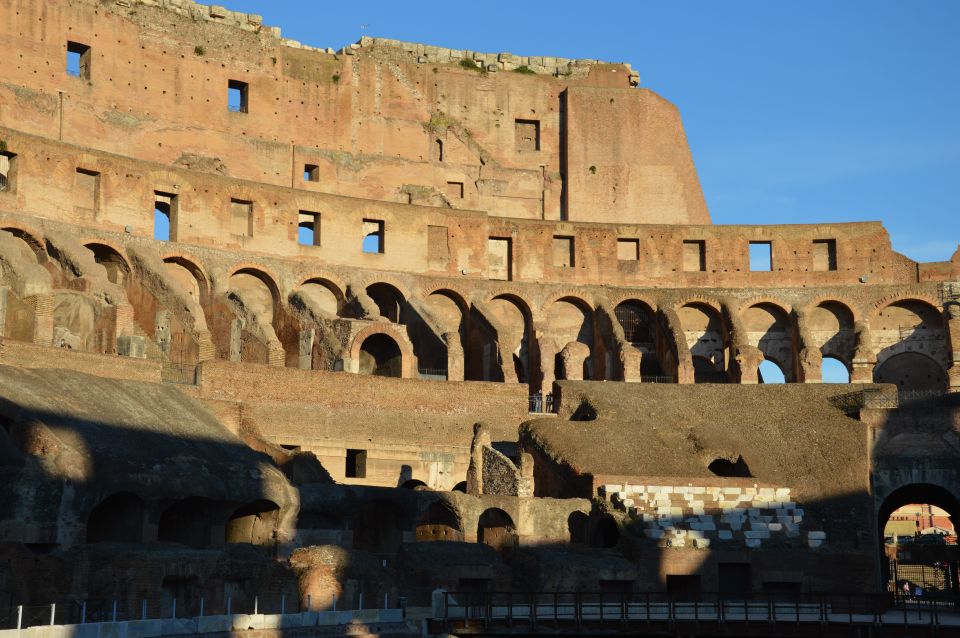
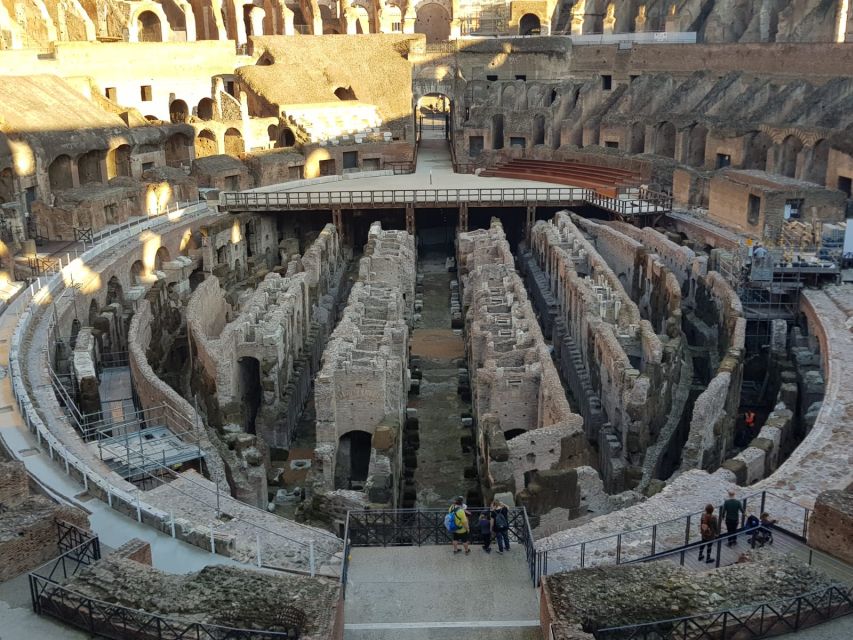
Once inside, the guided portion lasts about 75 minutes. That’s enough time to do more than snap pictures from the safest angles. You get a look that includes a climb to the second ring for a panoramic view of the monument’s interior and the square below.
From up there, the Colosseum starts to make sense as a designed space, not just a dramatic ruin. You can see the scale, the internal layout, and the way the arena relates to surrounding areas at street level.
The second-ring panorama and Palatine Hill views: seeing Rome like a map
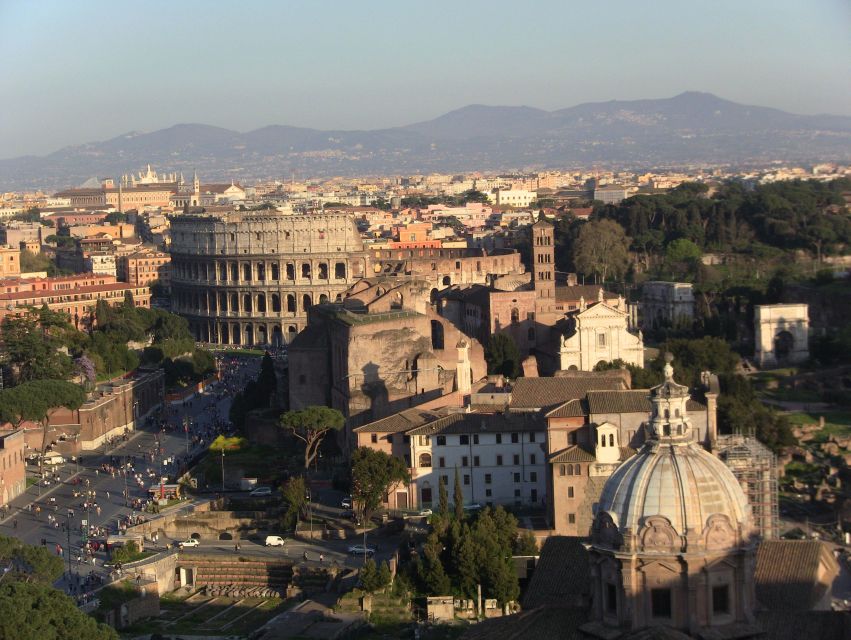
One of the smarter parts of this tour is how it uses viewpoints to teach spatial relationships.
From the elevated Colosseum vantage, you also get bird’s-eye perspective over the base of the Venus and Rome Temple, plus remains of colonnade structures and walls. That matters because it gives context to why this whole zone looked the way it did. It’s not just “random ruins on a hill.” It’s a constructed landscape.
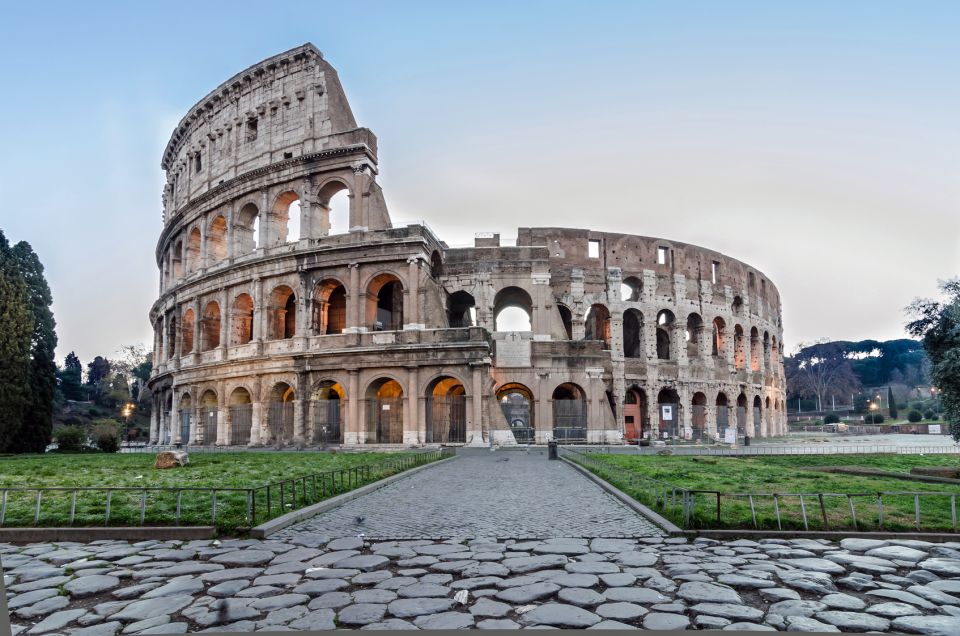
The route also includes perspective over the Imperial Fora street area and a look toward the Arch of Constantine. When you later reach the Forum, those earlier visual cues help you connect the dots faster.
If you’ve ever walked around Rome feeling like you’re always one viewpoint away from understanding, these views are the part that fixes that problem.




Arches and the route through Rome’s layers
After leaving the Colosseum, the tour keeps the narrative moving through key monuments.
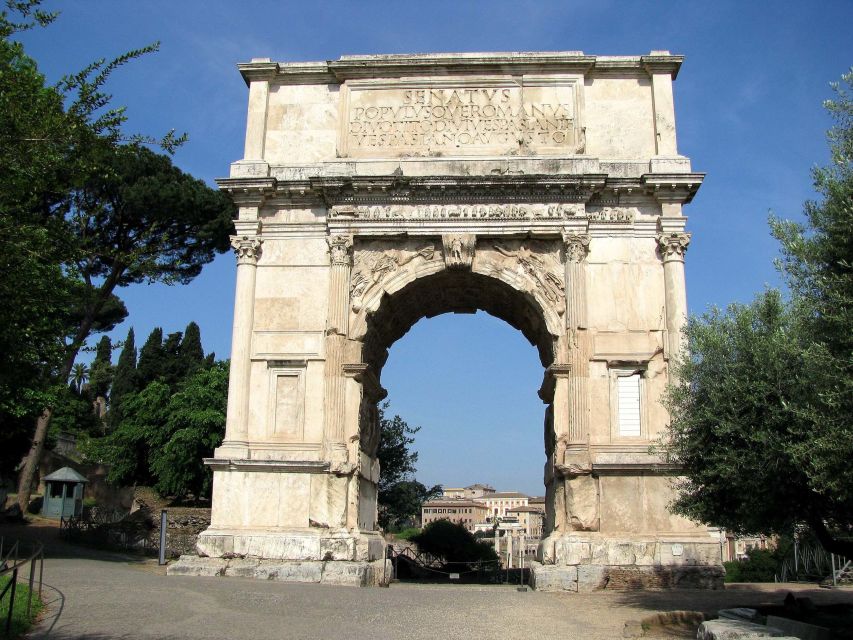
You’ll get time at the Arch of Constantine, and then continue toward the Velian Hill. Along the way, you pass the Arch of Titus.
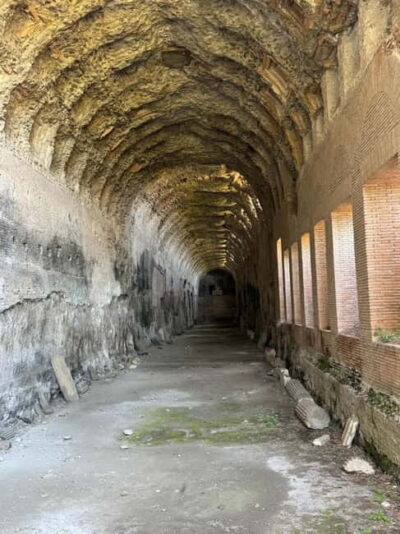
Then comes one of the most interesting logistics choices: you traverse an underground tunnel connected with the Domus Aurea. Even if you know the name, the on-the-ground experience is different. Underground passages tend to make the city’s layers feel literal: later constructions, earlier foundations, and how movement through Rome historically worked.
You’ll emerge into the Forum’s square with views that feel timed to the moment you arrive. That transition is the kind of detail that can turn a “see the ruins” tour into a coherent walk.
Quick stops at major arches: what the 10 minutes is really for
Not every stop is long, and that’s okay. This tour uses short visits strategically.
For instance, you’ll have about 10 minutes at the Arch of Septimius Severus. That may sound brief, but the goal is usually orientation: you catch the monument’s presence in the urban scene and understand how it frames the political story of the area, then you move on before fatigue slows your attention.
If you like your Roman monuments explained in context (not just admired), short stops can actually help. They keep you focused on why each place exists, not just how pretty it is.
Roman Forum: the heart of public life (and why the guide matters)
The Roman Forum is where you stop treating Rome like a museum display and start treating it like a government and society machine.
The guided time in the Forum area is about 1.5 hours, and you’ll cover major landmarks that define public life. Expect to see the Basilica of Maxentius, the House of the Vestals, the Temple of Antoninus and Faustina, and the Altar of Caesar.
Here’s the value of this lineup: they represent different functions that worked together. Courts and civic gatherings connect to religious roles. Imperial power connects to symbolism. The Altar of Caesar especially benefits from a guide’s explanation because it’s not just a relic you point at—it’s a clue about how Rome turned politics into sacred space.
The House of the Vestals is a great stop for understanding daily religious authority. The Vestals weren’t just priestesses; they were woven into Roman state legitimacy. When a guide ties that role to what you’re seeing around you, the ruins feel less like dead stones and more like evidence.
House of the Vestals stop: where the story gets human
The tour includes the House of the Vestals as a distinct guided moment after your main Forum stretch.
This is one of those places where context changes your brain’s interpretation. Without explanation, it can look like another ruin. With explanation, you start thinking about people—ritual obligations, public trust, and the way authority could be displayed through architecture.
If you care about how Rome worked day to day, this stop is a payoff.
How long the walk feels in real life
The total duration is 3 hours. The tour is described as minimal activity level, but “minimal” in Rome usually means you’ll still be walking around uneven ground and covering multiple zones.
You’ll also spend the time unevenly: a longer block at the Colosseum, then a series of monument-to-monument stops, with a bigger guided portion in the Forum. The “why” is simple: these are the sites where you’ll actually get meaning from the guide’s explanations.
A tour like this works best when you’re okay with standing still for a moment, then moving again. If you want a long, slow wander with no structure, you might find the format a bit fast. But if you want Rome that makes sense quickly, this schedule fits.
Price and value: is $198.25 worth it?
$198.25 per person is not a budget price. The tradeoff is what you avoid and what you gain.
This price includes:
- Admission and skip-the-line tickets for the Colosseum (the Colosseum ticket cost is listed as 18 euro)
- A dedicated personal tour guide
- A private group experience
So you’re paying mainly for guided interpretation plus time saved at the entry. If you’re traveling during busy periods, skipping the ticket line can be the difference between a good day and a day you lose to queues.
You’re also paying for structure that turns two major sites into one connected experience. The Roman Forum and Colosseum aren’t just “two stops.” They’re a linked narrative in stone. A guide is what ties that narrative together.
If you’re the type of traveler who likes to understand what you’re seeing—then this value makes sense.
If you’re more of a casual photo wanderer and you already have a plan for self-guided reading, you might choose differently. But for most people trying to cover the highlights without getting overwhelmed, the format is strong.
Before you go: IDs, names on vouchers, and key closure dates
A few details can cause a frustrating stop if you ignore them.
You must carry an identification document to access the Colosseum and Roman Forum. Without it, you risk being denied entry even with a purchased ticket.
You also need to provide full names and ages when booking. The voucher with full names must match what you present at the ticket office, or you may be refused entry.
And know the Colosseum closure dates:
- December 25th
- January 1st
It’s also smart to review what’s not allowed. Pets, weapons or sharp objects, oversize luggage, baby strollers, mobility scooters, non-folding strollers, unaccompanied minors, and electric wheelchairs are listed as not allowed. Wheelchair access is also called out as not suitable.
Who should book this tour (and who should reconsider)
This is a strong fit if you:
- Want the Colosseum and Roman Forum in one focused visit
- Appreciate expert explanation while you walk
- Prefer a private group format rather than a big crowd shove
- Like viewpoint moments, especially panoramic interior views
It may be less ideal if you:
- Need wheelchair accessibility (not suitable per the activity info)
- Want a fully self-paced tour with no structure
- Are traveling with items that fall into the not-allowed categories
For everyone else, the walking route is kept as “minimal,” and the guide’s pacing helps you avoid the feeling of rushing through the most important spots.
Should you book this archaeologist Colosseum and Forum tour?
Yes—if you want Rome that makes sense fast. The combination of skip-the-line entry, a second-ring panoramic perspective, and a Forum route anchored by major sites like the Altar of Caesar and the House of the Vestals is exactly how you get more from fewer hours.
I’d book it especially if this is your first time in the Colosseum/Forum area and you’d rather understand the stones than just photograph them. Just don’t treat the logistics as optional: bring your ID, make sure names match the voucher, and double-check dates.
If you’re ready to trade a little freedom for meaning, this is a good value way to do it.
FAQ
How long is the Colosseum and Roman Forum tour?
The tour lasts 3 hours.
Where do I meet the guide for this experience?
You meet at the green newspaper kiosk outside the exit to the Colosseo Metro station. Your guide will hold a sign with your name.
What does the tour price include?
It includes admission and skip-the-line tickets (with the Colosseum ticket cost listed as 18 euro) and a dedicated personal tour guide.
Does this experience include skip-the-line access?
Yes. Skip-the-line tickets for the Colosseum are included.
What languages are available for the live guide?
The live guide is available in English, Italian, Spanish, French, and German.
Is this tour suitable for wheelchair users?
No, it is not suitable for wheelchair users, and mobility scooters and electric wheelchairs are listed as not allowed.