REVIEW · ROME
Discover the famous seven hills of Rome with the calessino bee
Book on Viator →Operated by Roma To Get · Bookable on Viator
Seven hills in a ride, not a slog. This 3-hour calessino bee tour strings together Rome’s best hilltop viewpoints and ancient landmarks into an easy plan. I love the guided flow—you get context without having to map every turn—and I love the practical stops that help you see big-sight Rome in a short window. The main thing to consider is that it’s best in good weather, and some sites have admissions not included.
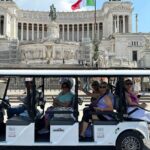
You’ll start and finish at Piazza della Repubblica, move through key hills like the Quirinale and Aventine, and make quick photo-friendly stops along the way. The experience is private (just your group) and run with an authorized English guide, with a small coffee/tea break and tiramisu tasting to keep energy up. One drawback: you’re doing multiple short stops, so if you want long, slow museum-style wandering, this won’t replace a full-day ticketed visit.
In This Review
- Key highlights you’ll notice fast
- The calessino bee approach: why this tour feels easier
- Meeting point at Piazza della Repubblica (and why it’s smart)
- Guide energy: what you get from Andrea and Marco
- Quirinale Hill and Palazzo del Quirinale: official Rome on a high note
- Giardino degli Aranci: a free viewpoint that’s worth the time
- Piazza dei Cavalieri di Malta on the Aventine: where boundaries feel blurry
- Circo Massimo: the ancient arena between Aventine and Palatine
- Campidoglio (Capitoline Hill): Rome’s civic heart
- Baths of Diocletian: a massive Ancient Rome stop on your route
- Santa Maria Maggiore: early Christian structure and a big-name basilica
- The coffee and tiramisu tasting: included, and actually useful
- Price and value: does $216.53 make sense?
- Who this tour suits best (and who might want a different plan)
- A smart way to plan your day around this ride
- Should you book the calessino bee seven hills tour?
- FAQ
- How long is the tour?
- How much does the tour cost?
- Is the tour private?
- What language is the guide?
- What’s included in the price?
- Are tickets included for each stop?
- Where does the tour start and end?
- Who can participate?
- Is the tour dependent on weather?
- FAQ
- How early should I book?
- Do I get a mobile ticket?
- When will I receive confirmation?
- Is there free cancellation?
Key highlights you’ll notice fast
- Calessino bee transport: get between hilltop areas without turning it into a stair marathon
- Quirinale, Aventine, Campidoglio, and Esquiline stops: the tour hits the hills that matter for views and landmarks
- Orange Garden (Giardino degli Aranci): free entry with a famous skyline payoff
- Aventine curiosities near Piazza dei Cavalieri di Malta: a small, magical-feeling pause with free admission
- Coffee and tiramisu tasting included: a timed break that actually helps your pace
- Guide-led tailoring: the guide asks what you want to see and adjusts the day to match
The calessino bee approach: why this tour feels easier
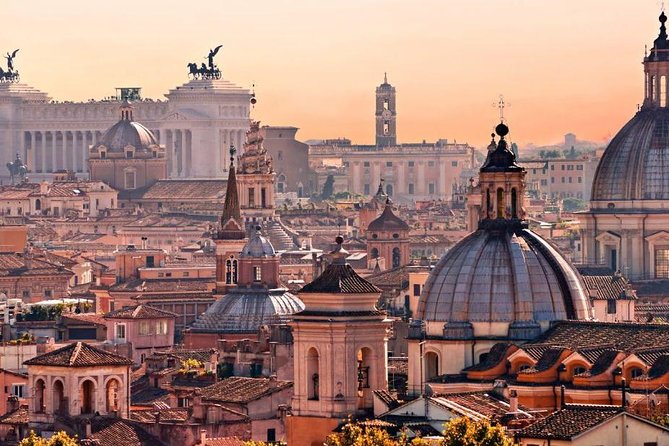
Rome can be a lot when you’re doing hills on foot. This is built to solve that problem. The calessino bee keeps you moving while your guide handles the story and the timing. You’re not stuck staring at a phone map while your legs negotiate every curb.
What I like about this style is that it respects your time. The stops are short—often around 5 to 10 minutes—so you get a steady stream of “see it now” moments. It’s perfect if you want a strong first pass at Rome’s hill identity without committing to a full day of tickets, queues, and long walking stretches.
You can also read our reviews of more tours and experiences in Rome.



Meeting point at Piazza della Repubblica (and why it’s smart)
The tour starts in Piazza della Repubblica and ends back there. That matters more than it sounds. It keeps the logistics simple at both ends, especially if you’re using public transit or you’re staying somewhere central.
Because it’s near public transportation and the ride connects multiple hilltop areas, you can treat this as your “get oriented fast” experience. Afterward, you’ll know what direction you want to return to when you have more time—whether that’s views, churches, or specific ruins.
Guide energy: what you get from Andrea and Marco
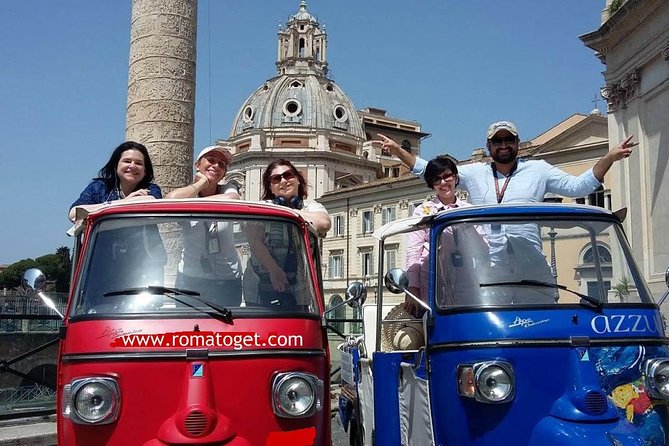
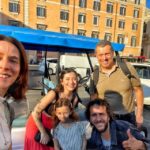
This is a private tour with an authorized tourist guide in English, and the vibe is clearly built around people. Two guide names come through in the feedback: Andrea and Marco.
Andrea is described as funny and attentive, with a habit of asking right at the start what you want to see. The practical bonus: he doesn’t just drop you back at the hotel area if another plan would work better—he can get you close to another tour instead. That’s the kind of flexibility that saves time.
Marco is praised for being available and engaging, which is exactly what you want when you’re doing a ride-with-stops format. You don’t need a lecture marathon; you want someone to turn each stop into something you’ll remember.
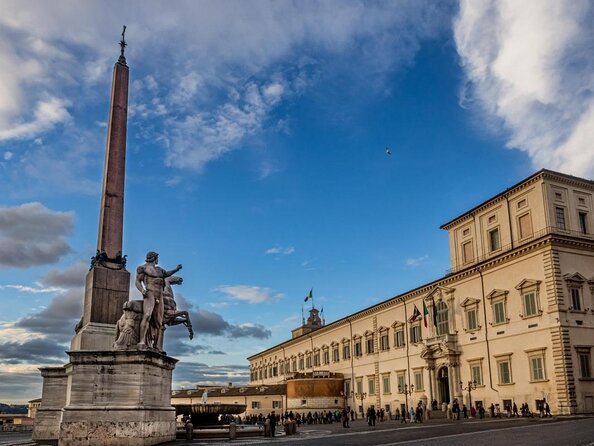
Quirinale Hill and Palazzo del Quirinale: official Rome on a high note
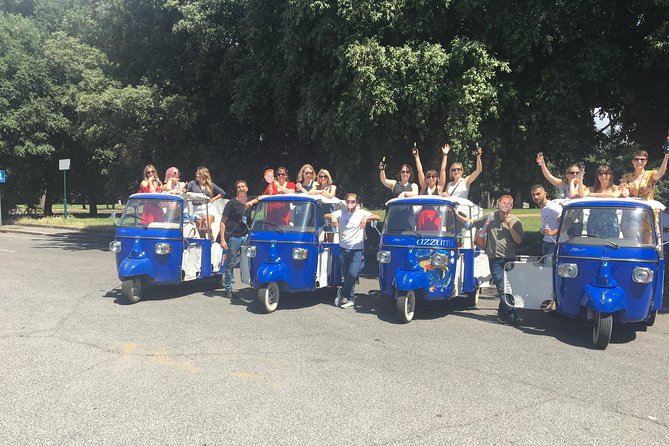
Your first big hill moment centers on the Quirinale hill, with the Palazzo del Quirinale rising there. Even if you don’t spend time inside, the surrounding area helps you understand how Rome’s hills were never just scenery. They became power, governance, and visibility.
This stop works well because it sets the tone: you’re already in elevated Rome before you hit the viewpoint pauses. It also helps you understand the city’s geography as a real system—hills connected by lines of sight and movement, not isolated “neighborhoods.”
If you like architectural presence and city structure, this is one of those stops that gives you a “feel” for where you are—fast.
Giardino degli Aranci: a free viewpoint that’s worth the time
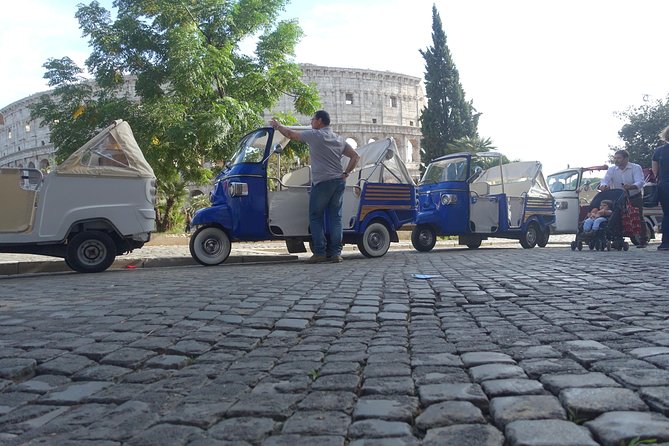
Next up is Giardino degli Aranci (Garden of Oranges). The tour lists this as about 10 minutes, and admission is free.
This is a classic Rome setup: a small green break with orange trees and a view that helps you picture how the city lays out below. It’s not a long-stay garden, but it’s timed right—just enough to catch the skyline and reset before the next hill.
Tip for your visit: treat it like a photo stop and a orientation stop. Look out, then let your guide’s context help you match what you’re seeing to where you’ll be walking later (or returning by yourself).



Piazza dei Cavalieri di Malta on the Aventine: where boundaries feel blurry
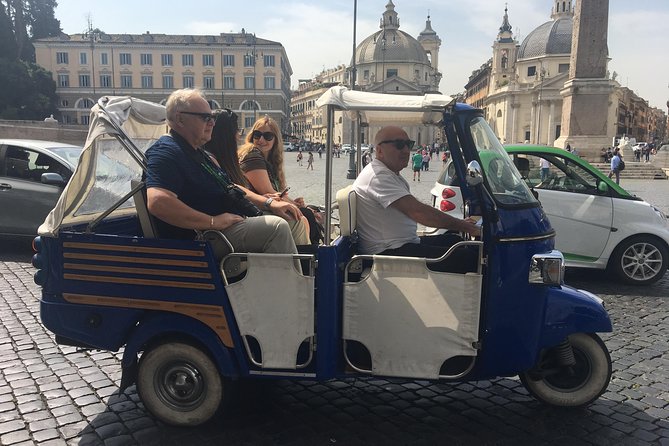
On the Aventine hill, you stop at Piazza dei Cavalieri di Malta, also listed as a 10-minute pause with free admission. The description of this place is part of its appeal: it’s framed as a spot where geographical boundaries can feel like they disappear, plus a magic lock that hides a surprise viewable by curious visitors for free.
Even without a long “museum-style” schedule, you’ll get the feeling of a Rome you can’t fully capture from the main streets. This is the kind of pause that makes the hills feel personal—like you’re finding little pockets that don’t show up in quick postcards.
A good strategy here is to slow your camera down. Instead of snapping everything, pick one direction and let your eyes adjust. The garden-and-square contrast works in your favor.
Circo Massimo: the ancient arena between Aventine and Palatine
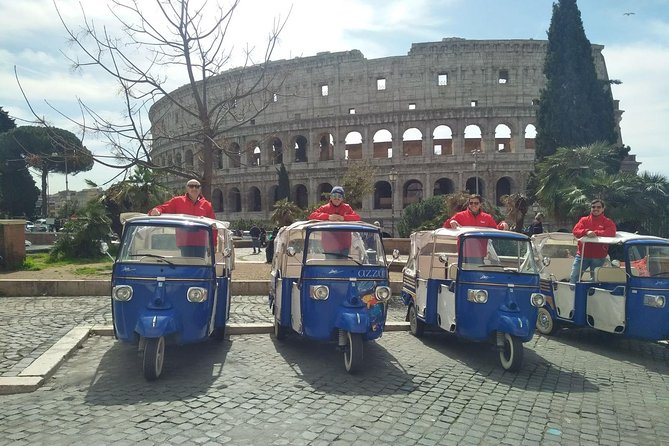
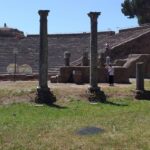
Then you reach Circo Massimo, the ancient Roman circus. The tour notes a 10-minute stop, and the admission is not included.
This is where you start seeing how the hills relate to each other. Circo Massimo sits between the Aventine and the Palatine areas, so it naturally becomes a geographic hinge. Even if you only stay briefly, your guide can help you picture the scale and purpose of the space: a place built for crowds, speed, and spectacle.
What to consider: since admission isn’t included, you may need to decide whether you want to pay for entry depending on what’s offered during your stop window. If you’re the type who likes to read plaques and linger, you might also want a separate follow-up visit later.
Campidoglio (Capitoline Hill): Rome’s civic heart
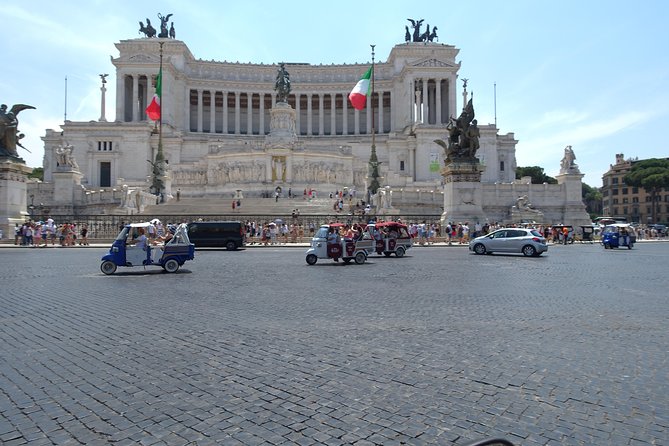
Next, the route reaches the hill of Campidoglio, also known as Capitoline Hill. The tour description points out that it houses the building where the municipality of Rome is located.
This stop is valuable even if you’re not going inside a museum. The Campidoglio area helps you connect Rome’s ancient identity to its modern administrative presence. It’s one more way the hills feel like a living map—old topography shaping today’s center.
For your photo plan, try to catch an angle where you can see how the hill rises and how streets feed into the view. It’s an easy “get your bearings” moment that pays off later when you walk around on your own.
Baths of Diocletian: a massive Ancient Rome stop on your route
You’ll also stop at the Baths of Diocletian, described as the largest spas of Ancient Rome. The tour notes the stop, but it doesn’t clearly state what’s included for admissions.
Even if you don’t spend long here, the scale idea matters. Rome isn’t just a collection of famous monuments—it’s a city that once had enormous public systems, and these baths show what that means. When your guide explains that this was a huge bathing complex, the word “ruins” starts to feel too small.
Practical note: if you’re going to spend any extra time on this site, keep an eye on the weather and your shoes. These areas can be uneven, and your best photos often depend on getting your angle right.
Santa Maria Maggiore: early Christian structure and a big-name basilica
Finally, you reach Basilica di Santa Maria Maggiore on the Esquiline Hill. The tour lists the stop at about 5 minutes, and admission is not included.
This basilica is described as one of the four papal basilicas and noted for preserving the early Christian structure. That’s why it makes sense in a short-stop format: even a brief visit can help you understand layers of faith and architecture without needing hours.
How to make the most of a short time here: focus on proportion and atmosphere. Instead of trying to see everything, pick one area to look closely, and let your guide explain what makes this basilica distinct. If you later decide to return for a longer visit, you’ll already know what to look for.
The coffee and tiramisu tasting: included, and actually useful
Included with the tour is coffee and/or tea plus a tiramisu tasting. It’s not just a snack thrown in for fun. It’s timed into a 3-hour schedule where you’ll be moving across Rome and taking quick stops.
This is especially helpful if you’re doing Rome in a busy multi-day rhythm. You’ll often find that after a hill tour, you still want energy for dinner, gelato, or a short evening walk. Having coffee and dessert already built into the plan makes the day feel smoother.
Price and value: does $216.53 make sense?
The price is listed as $216.53 per person for about 3 hours, with an authorized guide and included coffee/tea plus tiramisu. On paper, that might look steep—especially when some stops are free.
Here’s how I’d judge the value:
- You’re paying for transport efficiency via the calessino bee, which saves you from a lot of hill climbing and time loss
- You’re paying for an English guide who can connect what you see to why it matters
- You get included food at a set point, which reduces the “what now?” stress during a tight schedule
- Some admissions are not included, so you may spend extra if you want to enter every paid site
If your goal is “see the seven hills highlights without turning it into an all-day hike,” the structure is a good match for the money. If your goal is “max out every ticketed site,” you might prefer a longer, more walking-heavy day plan.
Who this tour suits best (and who might want a different plan)
This tour is described as suitable for most travelers, but there are key limits: children under 6 are not allowed, and pregnant women are not allowed. It’s also a private tour, so it’s ideal if you want a day that feels tailored to your group.
I’d say it’s a strong fit if you:
- want a fast overview of Rome’s hill geography
- prefer guided context over reading everything yourself
- would rather save your legs for later neighborhoods and dinners
- enjoy short viewpoint stops and quick monument snapshots
It might be less ideal if you:
- want to spend long hours inside churches or major sites
- get frustrated by short stops and frequent transitions
- are planning around uncertain weather and dislike flexible scheduling
A smart way to plan your day around this ride
Because the tour ends back at Piazza della Repubblica, you can treat it like an anchor. Before you go, decide what you want most after the tour:
- If you love views: plan to return to one hilltop area later by foot or transit
- If you love churches: consider a longer stop at Basilica di Santa Maria Maggiore on another day
- If you love ancient sites: you may want a second visit to Circo Massimo or the Baths of Diocletian
Also, bring a weather mindset. The experience notes it requires good weather, and that’s realistic for Rome hill viewpoints and outdoor pacing.
Should you book the calessino bee seven hills tour?
If you want an efficient, guided introduction to Rome’s hill identity—Quirinale, Aventine, the Palatine zone through Circo Massimo, Campidoglio, and Esquiline—this tour is a solid choice. The combination of calessino bee transport, English guide storytelling, and included coffee/tiramisu makes the day feel planned rather than improvised.
I’d book it if you’re short on time or if hills on foot sound like a chore. I might skip it if you’re looking for long stays at ticketed attractions or if you know you’ll want extensive independent wandering.
FAQ
How long is the tour?
It’s listed as approximately 3 hours.
How much does the tour cost?
The price is $216.53 per person.
Is the tour private?
Yes. It’s a private tour/activity, and only your group participates.
What language is the guide?
The tour is offered in English.
What’s included in the price?
A 3-hour calessino bee tour with an authorized tourist guide, plus coffee and/or tea and a tiramisu tasting.
Are tickets included for each stop?
Some entries are free (Giardino degli Aranci and Piazza dei Cavalieri di Malta). The tour notes that admission for Circo Massimo and Basilica di Santa Maria Maggiore is not included.
Where does the tour start and end?
It starts at Piazza della Repubblica and ends back at the meeting point.
Who can participate?
Children under 6 are not allowed, and pregnant women are not allowed. Most other travelers can participate.
Is the tour dependent on weather?
Yes, it requires good weather. If canceled due to poor weather, you’ll be offered a different date or a full refund.
FAQ
How early should I book?
On average, this is booked 84 days in advance.
Do I get a mobile ticket?
Yes, the tour offers a mobile ticket.
When will I receive confirmation?
Confirmation is received within 48 hours of booking, subject to availability.
Is there free cancellation?
Yes, you can cancel up to 24 hours in advance for a full refund.