REVIEW · ROME
Colosseum Self-Guided with Virtual Reality (Official Product)
Book on Viator →Operated by ANCIENT AND RECENT · Bookable on Viator
This tour layers an Oculus VR experience before you enter with a timed skip-the-line Colosseum entry, then lets you roam on your own. The two big wins for me are the way the VR sets the scene (including gladiator moments and the arena area), and the fact that the same ticket also covers the Roman Forum and Palatine Hill after the Colosseum. The main drawback to keep in mind is timing: the VR has a specific departure time, and arriving late can mean you miss that session and have to buy again.
You start at the Arch of Constantine, do VR at Piazza del Colosseo, then move into a small group (max 25) for the Colosseum entry process. Once you’re inside, you’re free to explore at your pace with mandatory security checks done first. It’s a smart setup if you want context upfront but don’t want to sit through a long lecture.
In This Review
- Key things to know before you go
- Meet at the Arch of Constantine, then head to Piazza del Colosseo
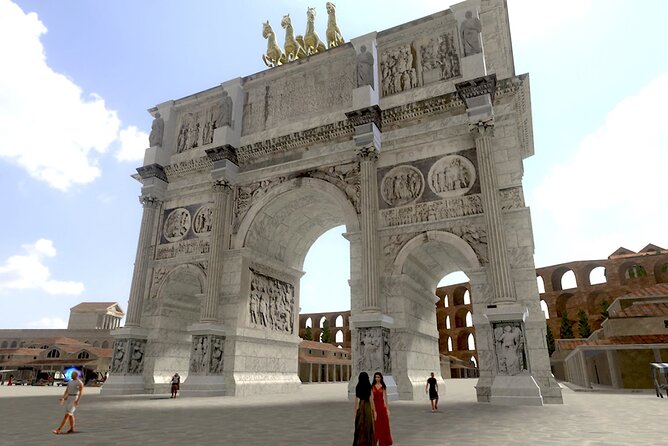
- Oculus VR outside the Colosseum: gladiators, the arena, and the underground vibe
- Skip-the-line entry after VR: small group, security checks, real momentum
- Inside the Colosseum: use your hour wisely on your own route
- Palatine Hill and Roman Forum: the same ticket, connected sites
- Price and value: what you’re really paying for
- Included vs not included: plan around the missing pieces
- Small group + strict timing: how to make the day go smoothly
- Who this tour fits best (and who may prefer another option)
- Quick call: should you book this Colosseum VR + self-guided tour?
- FAQ
- What does the ticket include besides the Colosseum?
- Where does the tour start?
- Where does the VR experience take place?
- How long does the experience take?
- Is the Colosseum skip-the-line?
- Does the ticket include the Colosseum Underground and Third Order?
- Is the VR inside the Colosseum?
- What languages are available for the audio guide?
- Can I bring luggage or 3D devices?
- What happens if I arrive late for the VR time?
Key things to know before you go
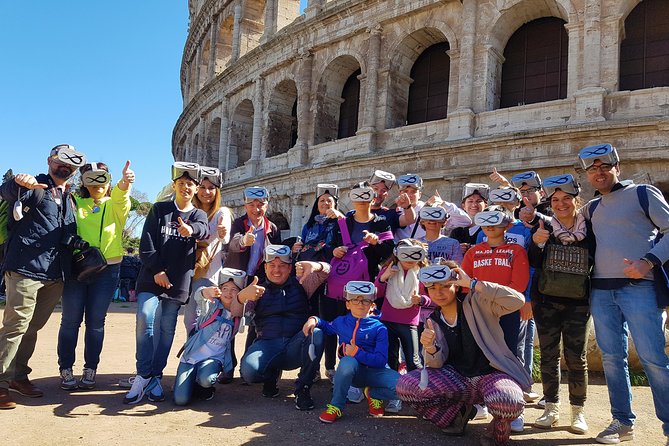
- Oculus VR happens outside the Colosseum so you get oriented before security.
- The Colosseum entry is timed and small-group based (max 25) with a skip-the-line component.
- Your ticket includes the Roman Forum and Palatine Hill after the Colosseum.
- Audio guidance is built into the VR reconstruction in multiple languages.
- Underground and Third Order access are not included, so you’re planning a more standard route.
- Timing is strict for the VR departure time, and late arrivals can’t be rescheduled.
Meet at the Arch of Constantine, then head to Piazza del Colosseo

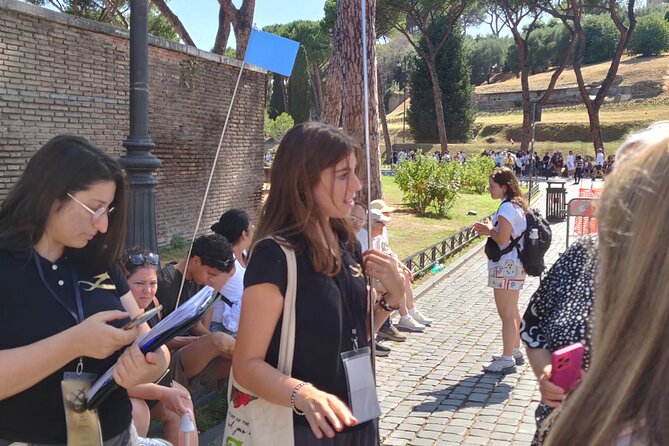
This is a straightforward flow once you know where to show up. Your tour starts at the Arch of Constantine, on the side near the Colosseum and Palatine Hill, and you’ll meet staff holding a big BLACK flag. From there, you’ll go to the Piazza del Colosseo area for the VR session.
Why that first move matters: the Colosseum can feel overwhelming on first sight. Starting with a “get your bearings fast” orientation outside helps you start noticing the architecture and layout once you step into the real site.
One more practical note: you’ll want to plan to arrive early because you’re required to show up 15 minutes prior to your arranged VR time. The tour runs regardless of weather, so comfortable shoes are not optional.
You can also read our reviews of more guided tours in Rome



Oculus VR outside the Colosseum: gladiators, the arena, and the underground vibe
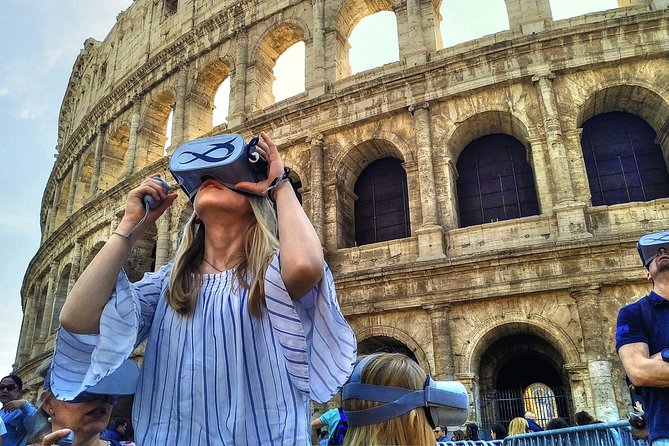
The heart of this experience happens before you enter the monument. At Piazza del Colosseo, you put on an Oculus VR headset and receive an English-speaking assistant to help you through it. The VR includes an audio guide inside the reconstruction with language options: English, Italian, Spanish, German, Portuguese, and French.
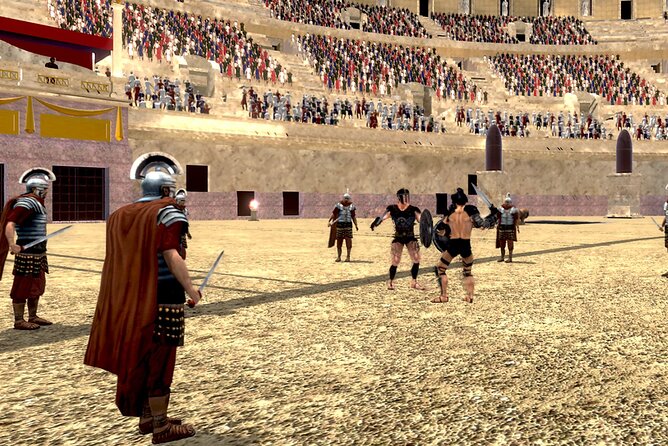
What you’ll actually do in the VR is more than a simple “watch a video” moment. You walk virtually in the Colosseum square as an ancient Roman citizen, then you enter the arena to see gladiator fight scenarios. You also get a role in the story—choosing the destiny of wounded gladiators as if you were in charge.
Then comes a detail that makes this different from many VR add-ons: you also explore a reconstructed version of the underground area where gladiators and workers prepare for shows. It’s not the same as having official underground access inside the real Colosseum (that’s not included here), but it helps you understand what you’re seeing above ground.
Important limitation: VR takes place outside, and for security reasons you cannot bring 3D devices into the Colosseum. This tour keeps the tech outside where it belongs, which is good news if you hate dealing with rules once you arrive.
The strict departure time is the other big consideration. The VR experience has a set time, and if you’re late, you can’t just slide into the next group. In the worst case you may have to re-pay for the activity.
Skip-the-line entry after VR: small group, security checks, real momentum
After VR, you join a small group (max 25) for the Colosseum entry. This is where you get the skip-the-line benefit, but it’s not a magic wand. The Colosseum still requires mandatory procedures: voucher exchange and security checks. Those checks can add wait time because they can’t be skipped.
Here’s the practical way to think about the value: the tour is paying for a reserved, organized path into the timed flow. That can save time versus showing up and waiting for the next open slot. But the Colosseum capacity rules (no more than 3000 people inside at the same time) can still cause delays, especially at peak periods.
You’ll be in the “entry process” mode for about the time it takes the group to get through procedures. Once inside, the tour switches to self-guided. That’s one of the best parts for people who don’t want a fixed script.
Inside the Colosseum: use your hour wisely on your own route
Your Colosseum visit is set for about 1 hour. That may sound short, but with a self-guided setup it can be the right length if you’re focused and pick a route instead of trying to see everything at once.
This is also where the rules affect how you plan your comfort level. You can’t enter with luggage (and there’s no luggage storage), and you need to keep in mind restrictions like no knives or cutting objects. The tour also recommends bringing your own bottle of water and wearing comfortable shoes.
What you won’t get here: this ticket does not include Underground and Third Order access. So if you’re the type who wants to go deep into the areas that require special access, you’ll need a different option. If your goal is to walk the main public levels, read the structure, and take photos from key angles, this format can work well.
My advice: during your hour, aim for a “loop.” Pick a direction, move steadily, and stop only when something pulls your attention—like the scale, the seating tiers, or the way entrances and corridors line up. Without a live guide telling you where to stand, your best strategy is to choose what you want to understand and then let the site do the rest.
Palatine Hill and Roman Forum: the same ticket, connected sites
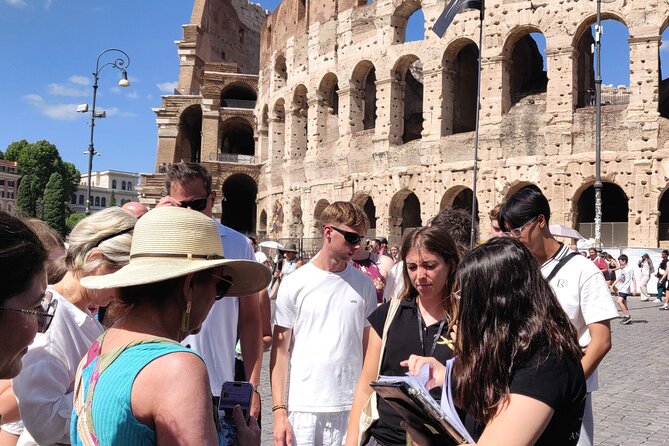
After the Colosseum, you’ll visit Palatine Hill and the Roman Forum, with about 2 hours for self-guided exploring. The sites are connected, which is a huge plus because it helps you stitch together the story of ancient Rome: entertainment and daily civic life in one outing.
The value of including these areas in the same ticket is simple. The Colosseum is the headline, but the Forum and Palatine are where the setting makes more sense. Even without a live guide, moving between these spaces on the same ticket lets you experience a bigger picture in a single trip.
Self-guided can be a mixed bag, depending on your style. If you like to wander and follow signs, the freedom is great. If you want someone to point out the most important ruins in a tight sequence, you might feel like you’re making choices without a coach. In that case, pairing this with a bit of pre-reading can make your visit feel more guided without sacrificing freedom.
You can also read our reviews of more tours and experiences in Rome




Price and value: what you’re really paying for
The price is listed at $76.51 per person, and the ticket includes a Colosseum entrance component valued at €18 plus a €2 reservation fee. That means the remaining cost covers services like the VR setup, assistant support for the headset session, and the organized skip-the-line entry process.
Is it worth it? For many people, yes—especially if VR is part of what you want. You’re not just buying a standard admission ticket. You’re paying for:
- VR orientation and audio support before entry
- staff help with the headset experience
- a timed, small-group entry process
If you’re someone who already knows the Colosseum well and just wants the fastest cheap ticket, you may feel the price is unnecessary. But if you want help translating what you see once you’re on-site, this structure can be a strong value.
Also: the reviews score is solid at 4.3 across 50 reviews, with frequent praise for the experience being fun and effective for families and for the VR making the Colosseum easier to visualize.
Included vs not included: plan around the missing pieces
To avoid surprises, here’s what this tour includes and what it doesn’t, based on the provided details.
Included:
- English-speaking assistant for the VR headset
- Oculus VR headset for the Colosseum reconstruction
- Audio guide integrated in the reconstruction (multiple languages)
- All fees and taxes
- Colosseum entrance ticket and reservation fee
- Roman Forum and Palatine Hill access with the same ticket
Not included:
- Live guide
- Access to the Underground and the Third Order
- Food and beverages
- Pick-up or drop-off
- Luggage storage
That missing Underground/Third Order piece is the one big decision point. If those areas are top priority, this specific ticket won’t satisfy that wishlist.
Small group + strict timing: how to make the day go smoothly
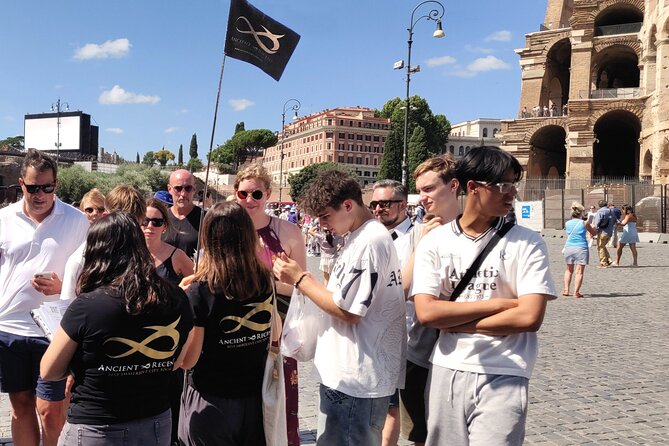
This tour blends flexibility with one key constraint: the VR has a specific departure time. If you miss it, you can’t assume you’ll be folded into the next session. The rules say you’d need to pay again to join later.
The practical outcome is simple: treat the meeting time like a train. Plan arrival early, not on the dot. If you’re traveling with kids or you know Rome crowds can slow you down, give yourself extra buffer time.
Once you’re inside, the self-guided part is where you regain control. You can move at your pace rather than matching a group tempo.
One more reality check from the entry process: despite the skip-the-line component, mandatory security checks still happen, and capacity limits can still delay movement. So I’d set expectations for a smooth flow, not a zero-wait miracle.
Who this tour fits best (and who may prefer another option)
This experience tends to click for families and for people who like structure without a long guided lecture.
It’s a good match if:
- you’re traveling with tweens and adults and want something multi-sensory
- you want VR to give you a mental map before you walk the real site
- you prefer self-guided exploring once the hard part (timed entry + orientation) is handled
It may feel less ideal if:
- you want full access to special areas like the Underground and Third Order
- you don’t handle strict times well, because late arrival can break the VR schedule
- you want a deep, live explanation as you walk the ruins (this is assistant-led for VR, not a live guide for the whole site)
Quick call: should you book this Colosseum VR + self-guided tour?
If you’re looking for a Colosseum visit that starts with context and then gives you freedom, this ticket makes sense. The VR component is the differentiator, and the fact that your entry also covers Roman Forum and Palatine Hill turns it into a more complete Rome-day outing than a Colosseum-only plan.
I’d book it if VR feels appealing and you can realistically arrive on time at the Arch of Constantine meeting point and make the VR departure. I’d reconsider if you’re chasing special access areas like the Underground or you strongly prefer a no-pressure timeline with maximum flexibility.
In short: choose this when you want the Colosseum to feel understandable fast, and you’re happy letting the tech do some of the heavy lifting before you explore for yourself.
FAQ
What does the ticket include besides the Colosseum?
Your ticket includes entry to the Colosseum, plus access to the Roman Forum and Palatine Hill afterward.
Where does the tour start?
You meet at the Arch of Constantine, on the side of the Colosseum, where staff will hold a big BLACK flag.
Where does the VR experience take place?
The VR experience is at Piazza del Colosseo, before you enter the Colosseum.
How long does the experience take?
It’s listed as about 2 to 4 hours total.
Is the Colosseum skip-the-line?
You get a privileged skip-the-line entrance after the VR experience, though mandatory security checks still apply.
Does the ticket include the Colosseum Underground and Third Order?
No. Access to the Underground and the Third Order is not included.
Is the VR inside the Colosseum?
No. The VR experience takes place outside the monument and before entering.
What languages are available for the audio guide?
The audio guide integrated in the VR reconstruction is available in English, Italian, Spanish, German, Portuguese, and French.
Can I bring luggage or 3D devices?
No luggage is allowed, and there is no luggage storage. For security reasons, 3D devices cannot be brought into the Colosseum.
What happens if I arrive late for the VR time?
The VR experience has a specific departure time. If you arrive late, you may not be able to join or reschedule and you may have to pay again, with no refund for no-shows.